
Dacia Jogger Boot Space: Dimensions, Capacity and Practicality

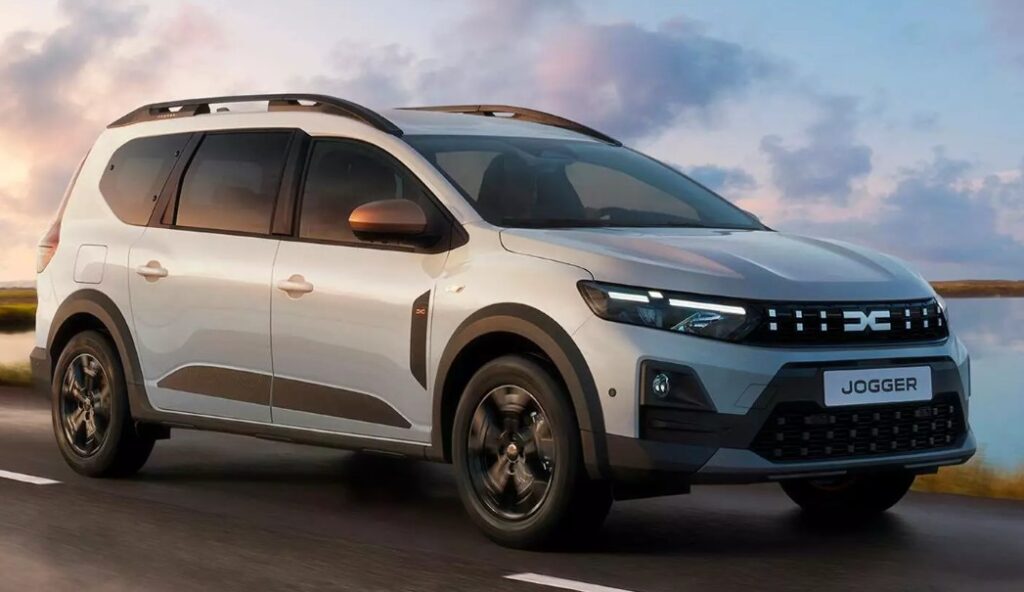
The Dacia Jogger boot space is one of the strongest reasons to consider this unusual family car. The Jogger blends elements of an estate, an MPV and a crossover, yet it avoids the bulky shape and premium price often associated with large seven-seat SUVs.
On paper, its luggage capacity looks impressive. In daily life, however, boot space is about much more than a number measured in litres. We need to know whether a pushchair fits behind all seven seats, whether the third row can be removed, how easily we can carry bicycles, and whether the Jogger remains practical when every passenger seat is occupied.
The current UK-specification Jogger provides a minimum quoted boot volume of 212 litres and a maximum capacity of up to 2,085 litres, depending on how its removable and folding seats are configured. It also has seven seats as standard in the specifications currently published by Dacia UK.
Those figures give us a useful starting point, but they do not tell the whole story. Let us open the tailgate, move the seats around and explore how useful the Dacia Jogger really is.
Content in this publication
- How Big Is the Dacia Jogger Boot?
- Dacia Jogger Boot Space With Seven Seats Up
- Dacia Jogger Boot Space in Five-Seat Mode
- Dacia Jogger Maximum Boot Capacity
- Why Boot Measurements Can Differ
- Dacia Jogger Boot Dimensions and Exterior Size
- How the Dacia Jogger Seats Fold
- Can the Dacia Jogger Carry Bikes?
- Is the Dacia Jogger Good for Camping?
- Dacia Jogger Boot Space for Dogs
- Dacia Jogger Boot Space for Family Holidays
- Does the Hybrid Jogger Lose Boot Space?
- Dacia Jogger Boot Space Compared With an SUV
- Dacia Jogger Boot Space Compared With an Estate Car
- How Much Weight Can the Dacia Jogger Carry?
- Common Dacia Jogger Boot Drawbacks
- How to Make Better Use of the Jogger Boot
- Who Should Buy a Dacia Jogger for Its Boot Space?
- What to Check During a Test Drive
- Is the Dacia Jogger Boot Space Good?
- Final Thoughts on Dacia Jogger Boot Space
- Frequently Asked Questions
How Big Is the Dacia Jogger Boot?
The Dacia Jogger’s boot capacity changes dramatically according to the seating layout.
With all seven seats available for passengers, Dacia currently quotes a minimum luggage volume of approximately 212 litres. At the opposite extreme, the latest published UK specification lists up to 2,085 litres of maximum boot volume.
In simple terms, we can think of the Jogger as having three different personalities:
- A seven-seat family carrier with a relatively small luggage area
- A spacious five-seat estate with the third row folded or removed
- A two-seat load carrier with enough room for bulky equipment
That flexibility matters more than the headline maximum capacity. Most owners will not use the Jogger in its largest configuration every day. Instead, they will switch between carrying children, shopping, pets, sports gear, suitcases and occasional oversized loads.
The Jogger does not simply offer a big empty box. It offers a cabin that can change shape like a folding pocketknife.
Dacia Jogger Boot Space With Seven Seats Up
With all three rows in use, the boot is at its smallest.
The current official specification lists a minimum boot volume of 212 litres, while earlier launch information referred to approximately 213 litres with all seats in place. The tiny difference is likely connected to measurement conventions or specification updates rather than a meaningful change in usability.
A 212-litre boot is not enormous. We should not expect to place seven large suitcases behind the third row. Nevertheless, the available area is useful for smaller everyday items.
It may accommodate:
- Several soft shopping bags
- A compact folded pushchair, depending on its dimensions
- School backpacks
- A few small cabin bags
- Coats, boots and picnic supplies
- A limited weekly grocery shop
Soft luggage works particularly well because it can be squeezed around the available space. Hard-shell suitcases are less forgiving. They behave like puzzle pieces, and the wrong combination can leave frustrating gaps.
Can We Carry Luggage for Seven People?
Technically, we can carry seven occupants and some luggage, but packing requires planning.
For a short journey, the rear boot may be sufficient for backpacks, handbags and a few compact overnight bags. For a week-long family holiday, the situation becomes more complicated. Seven people generate a surprising mountain of belongings.
A roof box, trailer-mounted cargo solution or careful use of the cabin may become necessary. Dacia also offers carrying accessories for the Jogger, including roof-related equipment and an aerodynamic cargo box designed to increase carrying flexibility while preserving boot access.
We should never place loose, heavy luggage above seatback height without securing it. In sudden braking, an unsecured bag can become a dangerous projectile.
Best Packing Strategy in Seven-Seat Mode
The smartest approach is to use several small rectangular bags rather than a few large cases.
Place heavy items low and close to the seatbacks. Use soft bags to fill awkward corners, and keep frequently needed objects near the tailgate. It is a little like packing a kitchen cupboard: the space seems small until we stop wasting the gaps.
Dacia Jogger Boot Space in Five-Seat Mode
Five-seat mode is where the Jogger begins to reveal its real strength.
The two third-row seats can be folded and, importantly, removed. Dacia describes the Jogger as capable of changing from a seven-seater into a five-seater with a substantially larger luggage area.
Earlier official Dacia information quoted 712 litres with the third-row seats folded, measured to the top of the seatbacks. That figure illustrates why the Jogger feels more like a spacious estate when we do not need all seven seats.
More recent official pages focus on the minimum and maximum figures rather than displaying every intermediate configuration. Exact usable capacity may therefore depend on the model year, powertrain, measurement method and whether the third-row seats are folded or completely removed.
Why Removing the Third Row Makes a Difference
Folding the third-row seats is convenient, but folded seats still occupy physical space.
Removing them creates a cleaner and more useful load area. It also prevents the seat assemblies from stealing height and floor length. The separate rear seats can be handled independently, so we can remove both or retain one seat when we need a six-person layout.
That means the Jogger can support several practical arrangements:
- Five passengers and a large boot
- Six passengers and additional luggage beside one rear seat
- Seven passengers and a small boot
- Two passengers and maximum cargo room
This modularity is the Jogger’s secret weapon. Many conventional SUVs have third-row seats that disappear neatly into the floor, but the floor mechanism can reduce overall depth. The Jogger takes a simpler approach: fold the seats or take them out.
Is the Jogger Boot Big Enough for a Pushchair?
In five-seat mode, most ordinary pushchairs should fit comfortably, although the result always depends on the pushchair’s folded dimensions.
A travel system, stroller or double buggy can take up much more room than its appearance suggests. The Jogger’s long body and relatively upright rear shape are helpful because the luggage area does not narrow as aggressively as it does in many fashionable coupé-style SUVs.
We would still take the actual pushchair to a dealership before ordering the car. Boot-volume figures cannot reveal whether a particular handle, wheel or frame will catch on the opening.
Dacia Jogger Maximum Boot Capacity
The current UK specification states that the Jogger can provide up to 2,085 litres of maximum boot volume.
This represents a load-focused arrangement rather than normal seven-seat family use. To approach maximum capacity, we need to remove or fold the third-row seats and fold the second-row bench forward.
Earlier Dacia launch material quoted 1,819 litres under the VDA measurement system with the second row folded and the third row removed. Dacia’s family-car guidance also continues to reference up to 1,819 VDA litres. The apparently different 1,819- and 2,085-litre figures are not necessarily contradictory because manufacturers may publish capacities measured under different methods or to different loading heights.
This is an important lesson when comparing cars. A boot figure is only useful when the measurement method is comparable.
Why Boot Measurements Can Differ
Car manufacturers and reviewers do not always measure luggage capacity in exactly the same way.
Some quote a VDA figure calculated using standardised blocks. Others calculate liquid-equivalent volume or load the compartment to a different height. Measurements may stop at the parcel shelf, the seatback line or the roof.
As a result, one source may list the Jogger at 1,819 litres while another official specification publishes 2,085 litres.
Neither figure alone tells us whether a mountain bike, wardrobe box or dog crate will fit. Shape, opening size, floor length and wheel-arch intrusion can matter just as much.
The Difference Between Capacity and Usability
Imagine two containers that each hold 500 litres. One is a neat rectangle, while the other resembles a twisted funnel. Their numerical capacity is equal, but one is much easier to load.
The same principle applies to car boots.
A practical luggage compartment should ideally provide:
- A wide tailgate opening
- Useful vertical height
- Limited wheel-arch intrusion
- A reasonably flat loading surface
- Seatbacks that fold without creating major obstacles
- Strong anchor points for securing cargo
- Easy access to commonly used items
The Jogger scores well because its boxy rear body prioritises space rather than dramatic styling.
Dacia Jogger Boot Dimensions and Exterior Size
Dacia’s current UK specifications list the Jogger at approximately 4,550 mm long, 1,853 mm wide with the mirrors folded, and 1,673 mm high. Its wheelbase is approximately 2,898 mm.
That long wheelbase is an important part of the car’s packaging. It helps create room for three seating rows without stretching the exterior into full-size SUV territory.
The overall length is substantial, but it is not outrageous. The Jogger is designed to provide maximum cabin usefulness from a relatively straightforward footprint.
Does the Jogger Feel Like a Van Inside?
In maximum-load mode, it can feel surprisingly van-like.
One Dacia owner review published on the company’s UK website describes removing the two rear seats and folding the middle row for camping, kayaking and fishing trips, comparing the result to having a van with passenger-car comforts. That is an individual owner’s experience rather than a controlled test, but it neatly captures the Jogger’s character.
The cabin is not finished like a luxury cargo lounge, and that is almost the point. The Jogger is designed to be used rather than admired from behind a velvet rope.
How the Dacia Jogger Seats Fold
The third-row seats use a 50/50 arrangement, allowing us to adjust each side separately. Dacia’s family-car information highlights that the rear row can be folded down or removed.
This independent operation is particularly helpful when we need six seats. We can remove or fold one rear seat and use the space beside the remaining seat for luggage.
The second-row bench can also be folded forward to expand the cargo area further. It may not create the perfectly seamless floor offered by every purpose-built van, but it opens a long compartment suitable for recreational equipment and bulky household items.
Seven-Seat Configuration
All three rows remain available, but luggage room is limited.
This arrangement works best for:
- School runs
- Local trips
- Airport transfers with light baggage
- Carrying additional children
- Short journeys with seven occupants
Six-Seat Configuration
One third-row seat remains in use while the other is folded or removed.
This is one of the most useful layouts because it creates a tall luggage channel without sacrificing the ability to carry six people.
It may work well for:
- A family with visiting grandparents
- Six passengers carrying several soft bags
- A long item positioned beside the occupied rear seat
- A dog crate placed on one side, when properly secured
Five-Seat Configuration
Both third-row seats are folded or removed.
For many owners, this will be the everyday sweet spot. We retain a conventional second row while gaining a boot large enough for family holidays, pushchairs, pets and sports equipment.
Two-Seat Configuration
The rear seats are removed or folded, and the second row is folded forward.
This is the maximum-cargo arrangement. It turns the Jogger into a highly capable load carrier, although it remains a passenger vehicle and should not be treated as a commercial van beyond its stated limits.
Can the Dacia Jogger Carry Bikes?
The Jogger can be a strong choice for cyclists, especially when the rear seats are folded or removed.
Depending on bicycle size, we may be able to carry one or more bikes inside after removing the front wheels and protecting the interior. Larger mountain bikes may require careful positioning because handlebar width and frame height quickly consume space.
For frequent cycling trips, an external carrier may be more convenient. Dacia lists bike-carrying and hitch-related accessories for the Jogger, including equipment compatible with its cargo solutions.
Tips for Loading Bicycles
Before placing bikes inside, we should:
- Clean mud from the tyres and frame.
- Use a waterproof boot liner or protective blanket.
- Remove front wheels where necessary.
- Secure the bicycles so they cannot move.
- Place padding between frames.
- Keep chains and pedals away from interior trim.
- Avoid blocking the driver’s rearward visibility unnecessarily.
A bicycle rolling around the cabin can damage both itself and the car. Cargo straps are inexpensive compared with replacing scratched trim or a broken derailleur.
Is the Dacia Jogger Good for Camping?
The Jogger is naturally suited to camping because its rear cabin can become a long, sheltered load area.
Dacia promotes an InNature range that includes camping-oriented accessories such as a sleep pack, blackout blinds and a tailgate tent compatible with the Jogger.
The available space can support several approaches. We can carry conventional tents and equipment, use the car as a sheltered sleeping area with suitable accessories, or combine the tailgate with an external tent.
The Jogger will not replace a fully equipped campervan. It lacks permanent cooking facilities, standing room and built-in plumbing. Still, it offers a practical bridge between an ordinary family car and an occasional micro-camper.
Sleeping in the Jogger
Sleeping comfort depends on creating a level and properly supported surface.
The folded interior may contain height changes or gaps, so a purpose-designed platform or sleep pack can be preferable to simply throwing a mattress into the back. Ventilation is also essential. We should never sleep in a sealed vehicle with the engine running.
A test setup at home is wise before the first overnight trip. Discovering that a mattress is ten centimetres too wide is funny on the driveway and considerably less funny in the rain.
Dacia Jogger Boot Space for Dogs
The five-seat configuration can provide generous room for one or more dogs, depending on their size and the crate used.
A tall, square boot is usually better for pets than a heavily sloping rear window. The Jogger’s practical roofline allows dogs to sit or stand more naturally than they might in a low coupé-style crossover.
Safety remains the priority. A dog should be restrained using an appropriate harness, partition or secured travel crate. The exact solution depends on the animal, local regulations and the seat layout.
What Dog Owners Should Check
Before buying, measure:
- The crate’s width, depth and height
- The tailgate opening
- The usable floor area between the wheel arches
- The height beneath any luggage cover
- The space remaining for bags
- Access to ventilation and water
A boot can sound enormous in litres yet still reject a particular crate because the doorway is too narrow.
Dacia Jogger Boot Space for Family Holidays
For a family of four or five, the Jogger should be highly capable in five-seat mode.
The luggage area can potentially swallow suitcases, a pushchair, beach equipment and everyday travel clutter. We should still pack intelligently because family luggage seems to multiply overnight like socks in a washing machine.
For six or seven travellers, compromise becomes necessary. We may need smaller bags, a roof box or a cargo carrier.
A Practical Holiday Packing List
A sensible loading order would be:
- Large, heavy suitcases against the seatbacks
- Medium bags beside or above them
- Soft bags pushed into side gaps
- Pushchair or travel cot positioned for easy removal
- Food, medicine and children’s essentials near the tailgate
- Loose items stored in closed containers
Avoid placing essential documents underneath everything else. Nobody wants to unload an entire car at the ferry terminal to find a passport.
Does the Hybrid Jogger Lose Boot Space?
Boot capacity can vary between powertrains because hybrid components require physical space. For that reason, buyers should verify the exact specifications for the chosen engine, trim and model year rather than assuming every Jogger has an identical load area.
Dacia’s current main technical page publishes minimum and maximum figures for the Jogger range, but specifications can differ by version and may change over time.
A dealership comparison is valuable here. Open the boots of the petrol and hybrid versions, move the seats and inspect the floor. A five-minute physical comparison can reveal details that a brochure hides behind footnotes.
What About the Bi-Fuel Model?
Dacia explains that its LPG system uses a dedicated tank installed without reducing boot volume.
Market availability and engine choices vary, so we should check the current local range. Nevertheless, the LPG installation is designed to preserve the practicality that makes the Jogger appealing.
Dacia Jogger Boot Space Compared With an SUV
The Jogger’s main advantage over many similarly priced SUVs is packaging efficiency.
SUVs often dedicate space to thick styling elements, large wheels, complex rear suspension packaging and a dramatic roofline. The Jogger adopts a more functional silhouette. Its body looks stretched because it is stretched for a reason: passengers and cargo.
Some SUVs may offer a more luxurious cabin, stronger towing capability or a neatly hidden third row. The Jogger fights back with removable seats, an upright cargo area and straightforward flexibility.
Jogger Versus Dacia Duster Boot Space
The Duster is a five-seat SUV with more off-road character, while the Jogger prioritises passenger count and cabin length.
Dacia currently quotes up to 1,696 litres for the latest Duster with its rear seats folded. By comparison, the current Jogger specification lists up to 2,085 litres, although measurement methods and configurations must be considered when comparing headline numbers.
The Duster may appeal more strongly to buyers who want SUV styling or four-wheel-drive capability in relevant versions. The Jogger makes more sense when seven seats and maximum interior flexibility dominate the decision.
Dacia Jogger Boot Space Compared With an Estate Car
Traditional estate cars often provide low loading lips, long floors and stable road manners. The Jogger borrows several of those qualities but adds a taller body and optional third-row flexibility.
Compared with a conventional estate, the Jogger may feel less polished or premium, but it can provide more vertical space and more seating combinations.
Its greatest strength is not that it beats every estate in every measurement. It is that few affordable vehicles can move so easily between family bus and cargo carrier.
How Much Weight Can the Dacia Jogger Carry?
Volume and weight are different.
A boot may physically hold a large stack of dense materials while the vehicle exceeds its legal or safe payload. Dacia’s current UK technical data lists a maximum payload, including the driver, of up to 634 kg for the displayed specification, but the figure can vary by version.
Passengers count toward payload. So do luggage, accessories and any items mounted on or attached to the vehicle.
Seven adults can consume most of the available payload before we add a single suitcase. We should check the vehicle identification plate, handbook and version-specific documents before carrying especially heavy loads.
Heavy Cargo Safety
When loading heavy items:
- Keep weight low
- Position it close to the vehicle’s centre
- Distribute it evenly
- Secure it with suitable straps
- Maintain tyre pressures recommended for the load
- Do not obstruct lights or number plates
- Never exceed axle, vehicle or accessory limits
A large boot invites us to keep adding items. The suspension, tyres and brakes still have boundaries.
Common Dacia Jogger Boot Drawbacks
The Jogger is practical, but it is not perfect.
Limited Space Behind the Third Row
The most obvious compromise is luggage capacity with seven seats occupied. The approximately 212-litre minimum volume is useful for small bags but restrictive for a large family holiday.
Removable Seats Need Storage
Removing the third-row seats creates more room, but those seats must go somewhere. Owners without a garage, shed or secure storage area may find this inconvenient.
Folded Seats Still Consume Space
Folding is quicker than removal, yet folded seats remain inside the cabin and reduce the clean cargo area.
No Boot Figure Tells the Whole Story
Different measurement systems make comparisons confusing. Buyers should focus on their own pushchair, dog crate, bicycles or suitcases rather than trusting litres alone.
A Long Vehicle Needs Parking Awareness
The Jogger’s 4,550 mm length helps create interior room, but it also demands care in short urban parking spaces.
How to Make Better Use of the Jogger Boot
A few simple accessories and habits can make the cargo area much more effective.
Use a Boot Liner
A durable liner protects against mud, spills, dog hair and wet camping equipment. A raised-edge version can contain small liquid spills before they reach the carpet.
Carry Collapsible Boxes
Foldable crates stop groceries from rolling around and collapse when they are not needed.
Install a Cargo Barrier
A suitable barrier can separate luggage or pets from the passenger compartment. It should be designed for the vehicle and installed correctly.
Choose Soft Luggage
Duffel bags use irregular corners more efficiently than large hard-shell cases.
Label Seat-Removal Hardware
When removing seats, keep related covers, fittings or accessories together. Future us will be grateful when it is time to reinstall everything.
Create a Dedicated Emergency Zone
Keep warning equipment, a torch, first-aid supplies and tyre-repair equipment accessible. Emergency gear buried beneath holiday luggage is barely emergency gear at all.
Who Should Buy a Dacia Jogger for Its Boot Space?
The Jogger is particularly well suited to:
- Large families needing occasional seven-seat capacity
- Parents carrying pushchairs and children’s equipment
- Dog owners
- Campers
- Cyclists
- Anglers and outdoor enthusiasts
- Tradespeople who need occasional cargo capacity but not a permanent van
- Buyers who value practical space above luxury materials
- Households that use one vehicle for several different roles
It is less suitable for buyers who require seven seats and seven-person holiday luggage capacity at the same time without external storage. A larger MPV, van-based passenger vehicle or full-size SUV may handle that task more naturally.
What to Check During a Test Drive
Do not spend the entire test drive behind the steering wheel. The boot deserves its own inspection.
Bring the objects that matter most, or at least record their dimensions.
Check whether:
- Your pushchair fits through the opening.
- Your dog crate sits securely.
- The third-row seats are easy for you to remove.
- You can store the removed seats at home.
- The second row folds without excessive effort.
- The loading lip is manageable.
- The tailgate clears your garage ceiling.
- The luggage cover is easy to store.
- Six-seat mode leaves enough room for bags.
- Visibility remains acceptable when loaded.
A dealership may look surprised when we arrive with a pushchair, three suitcases and a bicycle. That surprise is cheaper than buying the wrong car.
Is the Dacia Jogger Boot Space Good?
Yes, with one important qualification.
The Jogger offers excellent flexibility and a huge maximum load capacity for a vehicle positioned as an affordable family car. Its current official figures range from approximately 212 litres with the smallest luggage configuration to as much as 2,085 litres in maximum-load form.
In five-seat mode, it becomes an exceptionally useful family load carrier. In two-seat mode, it can swallow camping equipment, bicycles and bulky household items. In seven-seat mode, however, the boot becomes much smaller and requires disciplined packing.
So, is it spacious? Absolutely.
Can it carry seven people and everything seven people might want for a two-week holiday? Not without compromise.
That distinction is the key to understanding the Dacia Jogger.
Final Thoughts on Dacia Jogger Boot Space
The Dacia Jogger boot space is not impressive merely because of its maximum number. Its true appeal lies in the way the cabin adapts.
We can carry seven passengers in the morning, remove the third row for a family shopping trip in the afternoon, and fold the second row for camping equipment at the weekend. Few vehicles at this end of the market can change roles so convincingly.
Its weaknesses are equally clear. Space behind the occupied third row is limited, removable seats require storage, and official volume figures can become confusing when different measurement standards are used.
Even so, the Jogger remains one of the most practical choices for buyers who need affordable, flexible space. It may not wrap its utility in luxury leather or dramatic styling. Instead, it approaches family transport like a dependable toolbox: simple, adaptable and ready to work.
For most families, five-seat mode will reveal the Jogger at its best. For occasional seven-seat use, it is a clever solution. And when maximum cargo room is needed, the car can open up like a small moving room on wheels.
Frequently Asked Questions
1. How much boot space does the Dacia Jogger have?
The current UK specification lists a minimum boot volume of approximately 212 litres and a maximum capacity of up to 2,085 litres, depending on the seating arrangement and measurement method.
2. How big is the Dacia Jogger boot with seven seats?
With all seven seats available, the quoted minimum luggage volume is approximately 212 litres. This is suitable for shopping bags and compact luggage, but it may be restrictive for seven people taking a long holiday.
3. Can the third-row seats be removed from a Dacia Jogger?
Yes. The two third-row seats can be folded or removed, allowing the Jogger to change from a seven-seat vehicle into a five-seat car with a much larger luggage compartment.
4. Can we fit a pushchair in the Dacia Jogger?
Most pushchairs should fit easily in five-seat mode, but the available room is more limited when all seven seats are occupied. Because pushchairs vary widely, buyers should test their own model before purchasing.
5. Is the Dacia Jogger suitable for camping?
Yes. Its removable rear seats and folding second row create a long cargo area suitable for tents, bedding and outdoor equipment. Dacia also offers camping-oriented InNature accessories, including sleep-related equipment, blackout blinds and a compatible tailgate tent.
If you want to know other articles similar to Dacia Jogger Boot Space: Dimensions, Capacity and Practicality you can visit the category Service and Parts.
Vauxhall Mokka Tyre Pressure Reset: Complete Guide
How to Reset the Tire Pressure System on Your Hyundai Tucson
Hyundai Kona Tire Pressure: Complete PSI Guide
Vauxhall Corsa Timing Belt Replacement Cost UK 2026
Mazda CX-5 Tire Size Chart: 2013–2026 Guide
How to Reset a Honda Civic: Complete Step-by-Step Guide
Leave a Reply
More content of your interest