
Opel Antara vs Nissan Qashqai: Which Used SUV Is Better?

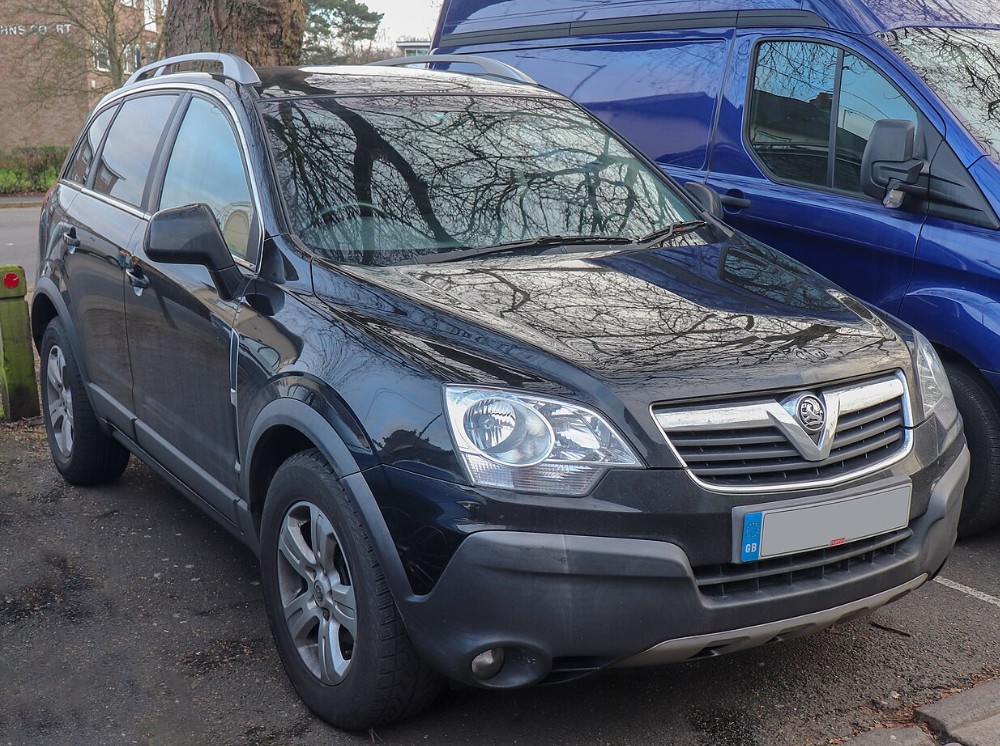
Choosing between the Opel Antara and Nissan Qashqai is not quite as straightforward as comparing two similarly sized family crossovers. Although both vehicles wear SUV clothing and can handle everyday family duties, they approach the job from opposite directions.
The Opel Antara is the heavier, broader-shouldered machine. It feels like a traditional SUV that has wandered into the crossover era wearing hiking boots and a thick winter coat. The Nissan Qashqai, meanwhile, is lighter, easier to drive and more closely connected to the modern family hatchback. It is the urban athlete of the pair: compact enough for city streets but practical enough for school runs and weekend trips.
There is also an important age difference to consider. The Antara is now strictly a used-car purchase, while the Qashqai has continued through several generations and remains in production. Opel Antara production ended during the middle of the last decade, whereas Nissan has repeatedly redesigned and modernised the Qashqai.
That means a fair comparison depends heavily on model year. A 2012 Antara should generally be compared with a first- or second-generation Qashqai, not with the considerably more advanced Qashqai sold today.
So, which one makes more sense? Let us compare their size, driving experience, engines, reliability, practicality, towing ability and ownership costs.
Content in this publication
- Opel Antara vs Nissan Qashqai at a Glance
- Understanding the Age and Generation Difference
- Exterior Design: Rugged SUV or Sleek Crossover?
- Size and Road Presence
- Interior Quality and Cabin Design
- Passenger Space and Family Comfort
- Boot Space and Everyday Practicality
- Driving Experience
- Opel Antara on the Road
- Engine Choices and Performance
- Opel Antara Engines
- Fuel Economy and Running Costs
- Four-Wheel Drive and Winter Ability
- Towing Capacity
- Safety and Driver Assistance
- Reliability: Which One Is More Dependable?
- Manual vs Automatic Transmission
- Maintenance and Parts Availability
- Used-Car Value
- What to Check Before Buying an Opel Antara
- What to Check Before Buying a Nissan Qashqai
- Which SUV Is Better for City Driving?
- Which Is Better for Motorway Driving?
- Which Is Better for Families?
- Opel Antara vs Nissan Qashqai: Pros and Cons
- Final Verdict: Opel Antara or Nissan Qashqai?
- Frequently Asked Questions
Opel Antara vs Nissan Qashqai at a Glance
Before digging into the details, here is the broad difference between these two SUVs:
| Category | Opel Antara | Nissan Qashqai |
|---|---|---|
| Vehicle type | Medium-sized SUV | Compact crossover |
| Best environment | Motorways, towing and rural driving | Cities, suburbs and mixed driving |
| Driving character | Heavy, solid and relaxed | Light, agile and easy |
| Cabin feel | Spacious but dated | Smarter and more modern |
| Fuel economy | Generally poorer | Generally better |
| Towing strength | Usually stronger | Depends heavily on engine |
| Parking ease | More difficult | Easier |
| Used purchase price | Often inexpensive | Usually higher for equivalent age |
| Long-term appeal | Good for specific needs | Better all-round family choice |
The Antara wins where physical strength matters. The Qashqai wins where efficiency, convenience and everyday usability count.
Understanding the Age and Generation Difference
The first question we should ask is not simply, “Antara or Qashqai?” It is, “Which Qashqai?”
The Opel Antara was sold in Europe primarily from the late 2000s into the middle of the 2010s. It shared much of its engineering with the Chevrolet Captiva and was offered with petrol and diesel engines, manual or automatic transmissions, and front- or four-wheel drive depending on version.
The Nissan Qashqai arrived during roughly the same period but continued evolving. Early examples were relatively simple crossovers, while later generations gained more efficient engines, improved infotainment, lighter platforms and increasingly sophisticated driver-assistance systems.
Current Qashqai models bear only a family resemblance to early versions. The modern vehicle measures 4,425 mm long, 1,835 mm wide and 1,625 mm high, and Nissan quotes up to 504 litres of luggage capacity without the parcel shelf.
Therefore, shoppers should compare like with like:
- A 2007–2013 Antara competes most naturally with an early Qashqai.
- A facelifted 2011–2015 Antara can be compared with late first-generation or early second-generation Qashqai models.
- A modern Qashqai is a far newer proposition and will generally cost substantially more.
Exterior Design: Rugged SUV or Sleek Crossover?
The Opel Antara Looks Tougher
The Opel Antara has the more traditional SUV silhouette. Its tall nose, wide body, substantial wheel arches and elevated stance give it a muscular presence. Park one beside an older Qashqai and the Opel looks as though it has arrived carrying a toolbox.
That visual strength appeals to drivers who want their vehicle to feel robust. The Antara does not disappear into a crowded car park. It looks broad and purposeful, especially in higher trim levels with larger alloy wheels and chrome exterior details.
The disadvantage is that its styling now appears dated. Thick pillars, large lamps and heavy proportions clearly belong to an earlier generation of SUV design.
The Nissan Qashqai Looks More Contemporary
The Qashqai takes a softer, more aerodynamic approach. Even early examples feel less bulky, while later models look significantly sharper and more sophisticated.
Its crossover proportions also serve a practical purpose. The Qashqai is easier to position on narrow roads and less intimidating in crowded urban areas. It gives drivers the raised seating position they want without feeling like a full-sized SUV.
Which Design Ages Better?
The Qashqai generally ages better because its shape is lighter and more balanced. The Antara still looks appropriately rugged, but its appearance is unlikely to fool anyone into thinking it is a recent model.
Our verdict on design is simple:
- Choose the Antara for tougher SUV presence.
- Choose the Qashqai for cleaner, more modern styling.
Size and Road Presence
The Antara is meaningfully larger and taller than older Qashqai models. One commonly listed Antara configuration measures approximately 4,596 mm long, 1,850 mm wide and 1,761 mm high.
By comparison, an early Qashqai was around 4,315 mm long, 1,783 mm wide and 1,606 mm high in one 2008 specification.
Those measurements reveal the real character of each vehicle.
The Antara offers:
- More physical road presence
- A higher-feeling cabin
- Greater shoulder room
- A more substantial SUV sensation
- More bodywork to manage in tight spaces
The Qashqai offers:
- Easier parking
- Better manoeuvrability
- Less intimidating dimensions
- Greater suitability for narrow urban streets
- A smaller turning and positioning burden
Drivers who regularly use underground garages or tight residential roads may find the Qashqai noticeably easier to live with. The Antara is not enormous by modern SUV standards, but its width and height can make it feel like a wardrobe on wheels when squeezing into an old city-centre parking structure.
Interior Quality and Cabin Design
Inside the Opel Antara
The Antara cabin is spacious and straightforward. Physical buttons are generally large, the driving position is high, and major controls are easy to understand.
However, interior design is one of the areas where the vehicle’s age becomes obvious. The dashboard can look cluttered, with numerous similarly shaped buttons and relatively small displays. Materials vary by trim, and some plastics feel more durable than luxurious.
That does not necessarily make the cabin unpleasant. In fact, drivers who dislike touch-sensitive controls may appreciate its old-fashioned simplicity. Everything has a defined place, and basic functions do not require navigating several digital menus.
The Antara feels more like practical outdoor equipment than fashionable furniture.
Inside the Nissan Qashqai
The Qashqai usually offers a more car-like dashboard and a better-organised driving environment. Second- and third-generation examples feel much more modern than the Antara, with clearer instruments, improved infotainment and more refined materials.
Even early Qashqai interiors often feel less visually heavy. The driving position remains elevated, but the controls and seating arrangement make the car feel closer to a conventional hatchback.
Cabin Winner
For design, technology and perceived modernity, the Nissan Qashqai wins.
The Antara remains competitive for space and simplicity, particularly when purchased inexpensively, but it cannot hide the age of its architecture.
Passenger Space and Family Comfort
The Opel Antara’s larger body gives it an immediate advantage in perceived cabin width. Front occupants receive generous space, and adults in the rear should have reasonable room when the front seats are not pushed fully backward.
Its tall roof also helps create an airy atmosphere. Parents loading children into safety seats may appreciate the elevated body and relatively accessible rear doors.
However, the Antara is a five-seat vehicle. Its large exterior should not be mistaken for seven-seat versatility. Buyers who need a third seating row must look elsewhere.
The Qashqai is also primarily a five-seat family crossover, although the old Qashqai+2 derivative added extra rear seats. Standard Qashqai models are narrower and more compact, but they use their space efficiently.
For typical family use, the difference comes down to priorities:
- The Antara feels broader and more substantial.
- The Qashqai feels less cumbersome and better packaged.
- Taller passengers may prefer the Antara’s SUV-like atmosphere.
- Urban families may value the Qashqai’s easier access and smaller footprint.
Boot Space and Everyday Practicality
Cargo figures vary by model year, trim, spare-wheel arrangement and measurement method, so buyers should avoid judging these cars using one number alone.
A 2018-market Qashqai brochure lists 430 litres with the second row upright, while the current Qashqai offers up to 504 litres without the parcel shelf and up to 1,447 litres with the rear seats folded.
The Antara has a reasonably broad cargo area, but the cabin and drivetrain packaging do not always convert its larger exterior into a dramatically larger boot. Its luggage compartment is useful for ordinary family duties, shopping and holiday bags, yet some owners may expect more space from a vehicle of its size.
Practicality Beyond the Numbers
Boot volume is only part of the story. We should also inspect:
- The height of the loading lip
- The width between the wheel arches
- Whether the rear seats fold flat
- Spare-wheel intrusion
- Tailgate opening height
- Underfloor storage
- The condition of seat-folding mechanisms
The Qashqai’s more efficient packaging often makes it the better everyday tool. The Antara becomes more appealing when bulky shape, cabin width and towing ability matter more than maximising every litre of interior space.
You may be interested in reading BMW 2 Series Years to Avoid: A Complete Used-Buyer Guide
Driving Experience
Opel Antara on the Road
The Antara drives like a heavier, older SUV. Its weight is always present, whether accelerating, braking or changing direction. That can make it feel reassuring on motorways, where the vehicle settles into a relaxed rhythm and offers a commanding view of surrounding traffic.
However, the same weight works against it on winding roads. Steering can feel slow, body roll is more noticeable and abrupt direction changes are not especially graceful.
Imagine dancing in hiking boots. It can be done, but nobody would call it delicate.
The Antara is best when driven calmly. It suits drivers who value stability and solidity rather than sharp reactions.
Nissan Qashqai on the Road
The Qashqai feels lighter and more car-like. Steering is easier, low-speed manoeuvres require less effort, and the body generally feels better controlled through corners.
It is not necessarily exciting, but that is hardly a serious criticism for a family crossover. Its mission is to reduce daily effort, and it usually succeeds.
The Qashqai is particularly pleasant in:
- City traffic
- Suburban streets
- School-run conditions
- Narrow lanes
- Multi-storey car parks
- Mixed commuting
Ride Comfort Comparison
Wheel size and suspension condition matter enormously. A Qashqai on modest wheels may ride more smoothly than a high-trim model fitted with large alloys and low-profile tyres. The same principle applies to the Antara.
In general, the Antara feels heavy and planted but can react abruptly to broken surfaces. The Qashqai tends to feel more controlled, though some versions can become firm over sharp potholes.
Overall, the Qashqai is the easier and more polished everyday drive.
Engine Choices and Performance
Opel Antara Engines
The Antara was offered with different petrol and diesel engines depending on market and year. Earlier vehicles commonly used a 2.0-litre diesel, while facelifted versions introduced a 2.2-litre diesel. A 2.4-litre petrol engine was also offered in various markets.
Diesel models generally make the most sense for the Antara’s weight. Their torque suits motorway driving, towing and climbing hills. Petrol versions may be quieter and mechanically simpler in certain respects, but fuel consumption can be heavy.
Performance is adequate rather than thrilling. Even the stronger engines must move a substantial body, automatic transmission and, in some versions, a four-wheel-drive system.
Nissan Qashqai Engines
The Qashqai has been offered with a much broader engine range across its generations. Used buyers may encounter small turbocharged petrol engines, 1.5- and 1.6-litre diesels, larger early petrol engines, mild hybrids and Nissan’s later e-Power system.
This variety gives the Qashqai a major advantage. Buyers can choose an engine aligned with their driving pattern rather than accepting the fuel needs of a large, heavy SUV.
A small petrol Qashqai may work well for short urban journeys. A diesel version may suit high annual mileage. Newer electrified versions offer smoother low-speed performance and better efficiency, though they belong to a much higher price category than the Antara.
Engine Verdict
The Antara offers useful diesel torque and a more substantial towing character. The Qashqai offers greater choice, lower running costs and a better match for ordinary family driving.
Fuel Economy and Running Costs
This category strongly favours the Qashqai.
The Antara is heavier, taller and often equipped with a larger engine and four-wheel drive. Those ingredients are useful for traction and towing, but they are not a recipe for low fuel consumption.
Real-world economy depends on engine, transmission, maintenance, route and driving style. Still, we should expect the Antara to consume more fuel than a comparable diesel or petrol Qashqai.
The difference can become particularly noticeable during:
- Short urban journeys
- Stop-start traffic
- Cold-weather operation
- Automatic-transmission driving
- Four-wheel-drive use
- Frequent acceleration on hilly roads
Fuel is not the only expense. The Antara may also require larger tyres, stronger suspension components and more expensive brake parts. Vehicle tax and insurance can vary by country, emissions rating, engine and personal profile, but the larger Opel will rarely be the cheapest option.
The Qashqai wins on:
- Fuel consumption
- Tyre affordability
- Routine servicing costs
- Urban efficiency
- Parts availability
- Resale demand
The Antara’s low purchase price can initially disguise its higher operating costs. A cheap SUV is not always a cheap vehicle.
Four-Wheel Drive and Winter Ability
The Antara has the more convincing rugged character. Many versions were designed with four-wheel-drive capability, making them appealing for rural roads, slippery hills and winter conditions.
That does not make the Antara a hardcore off-roader. Ground clearance, road-oriented tyres and electronic drivetrain systems impose limits. Nevertheless, its weight, stance and available all-wheel drive give it an advantage in poor conditions.
The Qashqai was also available with four-wheel drive on selected engines and generations, but most examples are front-wheel drive. Its smaller size and lower weight can still work well in winter when fitted with appropriate tyres.
This is worth emphasising: good winter tyres can matter more than the badge on the tailgate. Four-wheel drive helps a vehicle accelerate, but it does not magically shorten braking distances on ice.
Choose the Antara When:
- You regularly drive on muddy rural lanes.
- You live in a region with difficult winters.
- You want a stronger SUV sensation.
- You tow on uneven or slippery surfaces.
- You accept higher fuel consumption.
Choose the Qashqai When:
- Most driving occurs on paved roads.
- You value efficiency over ruggedness.
- You need easier urban manoeuvrability.
- Occasional snow is your main concern.
- You are happy to invest in quality seasonal tyres.
Towing Capacity
Towing is one of the clearest reasons to choose the Antara.
Certain 4x4 Antara versions were rated to tow up to 2,000 kg with a braked trailer, although the precise limit depends on engine, transmission, model year and local homologation. The manufacturer’s historical specification guide notes that towing figures were calculated under defined gradient, load and altitude conditions.
Qashqai towing capacity varies significantly. Some diesel versions can handle useful braked loads, while smaller petrol and electrified versions may have lower limits.
Never rely on a general internet figure when buying a tow car. Check:
- The vehicle identification plate
- The owner’s manual
- Registration documents
- Gross train weight
- Maximum braked trailer weight
- Nose-weight limit
- Tow-bar certification
For caravans, horseboxes or heavier trailers, the Antara is usually the more natural candidate. For a small utility trailer, bicycle carrier or lightweight camping trailer, a suitable Qashqai may be perfectly adequate.
Safety and Driver Assistance
Safety comparisons must account for test year because Euro NCAP protocols become more demanding over time. A star rating from one era should not be treated as directly equivalent to the same rating awarded many years later.
The original Antara was not independently tested under its own name by Euro NCAP, although its closely related Chevrolet Captiva shared substantial engineering. This makes a clean model-to-model crash-rating comparison difficult.
The Qashqai has a clearer test history. The 2021 generation received five stars under Euro NCAP’s contemporary protocol, while a later 2025 assessment awarded four stars under updated criteria.
Newer Qashqai models may include features such as:
- Automatic emergency braking
- Lane-departure intervention
- Blind-spot monitoring
- Traffic-sign recognition
- Adaptive cruise control
- Driver-attention monitoring
- Parking cameras
- Rear cross-traffic assistance
The Antara provides the fundamental safety equipment expected from its era, but it lacks the breadth of modern accident-prevention technology available in newer Qashqai models.
For buyers prioritising active safety, the newer Nissan is unquestionably ahead.
Reliability: Which One Is More Dependable?
Neither badge guarantees a trouble-free used vehicle. Age, service history and previous ownership matter more than internet folklore.
Potential Opel Antara Concerns
Depending on engine and specification, used Antara buyers should inspect for:
- Diesel particulate filter problems
- Exhaust-gas-recirculation faults
- Turbocharger wear
- Automatic transmission issues
- Clutch and dual-mass flywheel wear
- Four-wheel-drive system faults
- Suspension knocks
- Wheel-bearing noise
- Electrical warning lights
- Air-conditioning problems
- Corrosion underneath neglected examples
A diesel Antara that has spent its life performing short journeys may be riskier than one that has covered steady motorway mileage with regular servicing.
Potential Nissan Qashqai Concerns
Possible Qashqai trouble spots vary by generation and engine but may include:
You may be interested in readingBMW 2 Series Years to Avoid: A Complete Used-Buyer GuideYou may be interested in reading
BMW 2 Series Coupe vs Gran Coupe: Which Should UK Buyers Choose?- Turbocharged petrol engine issues
- Diesel particulate filter blockage
- Timing belt or timing chain concerns
- Oil consumption on certain engines
- CVT transmission problems
- Battery and stop-start faults
- Suspension wear
- Parking sensor or camera failures
- Infotainment glitches
- Air-conditioning faults
The Qashqai is more common, which can make replacement parts and specialist knowledge easier to find. Yet popularity also means the used market contains everything from cherished family cars to neglected fleet vehicles.
Reliability Winner
The Qashqai narrowly wins, mainly because buyers have more engines, generations and well-maintained examples from which to choose.
A carefully maintained Antara can still be dependable, but purchasing one without a thorough inspection is a gamble.
Manual vs Automatic Transmission
Manual transmissions can reduce purchase cost and may provide a simpler ownership proposition, although clutch and dual-mass flywheel replacement can be expensive.
Automatic Antaras suit the vehicle’s relaxed nature. They make motorway cruising and towing more comfortable, but buyers should confirm that fluid changes were performed where required. Hesitation, harsh engagement, slipping or delayed gear selection should not be dismissed as “normal for an old SUV.”
The Qashqai was offered with conventional manuals, dual-clutch systems and continuously variable transmissions depending on generation and engine.
When test-driving any automatic Qashqai, pay attention to:
- Judder when moving away
- Delayed engagement
- Unusual whining
- Engine revs rising without matching acceleration
- Warning messages
- Poor service documentation
Transmission choice should be based on condition rather than convenience alone. A healthy manual is preferable to a neglected automatic, and the reverse is equally true.
Maintenance and Parts Availability
The Qashqai’s popularity gives it a practical advantage. Independent garages are familiar with it, used parts are widely available and aftermarket support is strong.
Antara parts are still obtainable, particularly because of its connection with the Chevrolet Captiva, but availability can vary by country. Certain trim pieces, electronic modules or four-wheel-drive components may be less convenient to source.
Before buying an Antara, it is sensible to contact a local independent Opel specialist and ask about:
- Common repair costs
- Parts waiting times
- Gearbox servicing
- Four-wheel-drive repairs
- Diesel emissions equipment
- Local diagnostic support
The Antara may be inexpensive to buy because market demand is relatively low. That bargain disappears quickly when a specialist drivetrain component fails.
Used-Car Value
The Opel Antara often provides a lot of physical vehicle for the money. Buyers may find leather upholstery, four-wheel drive, diesel torque and generous equipment at prices that would only purchase a smaller Qashqai.
That can make the Opel tempting. Who would not pause when a large, well-equipped SUV costs less than a basic compact crossover?
However, depreciation is not a gift without conditions. The Antara’s low price reflects its fuel consumption, age, limited market demand and potential repair exposure.
The Qashqai generally costs more because it is easier to sell, cheaper to operate and better suited to the needs of a wider audience.
The Antara offers more metal per unit of money.
The Qashqai offers less ownership risk per kilometre.
What to Check Before Buying an Opel Antara
A thorough pre-purchase inspection should include:
- Cold engine start: Listen for rattles, knocking or uneven idle.
- Exhaust smoke: Excessive blue, white or black smoke needs investigation.
- Warning lights: Make sure all lights illuminate and then switch off correctly.
- Four-wheel drive: Check for warning messages, binding and unusual noises.
- Automatic gearbox: Test it from cold and after a longer drive.
- Clutch operation: Watch for slipping, vibration or a high biting point.
- Suspension: Listen for knocks over rough surfaces.
- Tyres: Uneven wear may reveal alignment or suspension problems.
- Service history: Look for invoices, not merely stamps.
- Towing evidence: Inspect the tow bar, rear suspension and clutch carefully.
- DPF condition: Ask how the vehicle was driven and whether regeneration issues occurred.
- Underside: Check for corrosion, leaks and off-road damage.
What to Check Before Buying a Nissan Qashqai
For the Qashqai, focus on engine-specific history:
- Confirm the exact engine code and maintenance schedule.
- Check oil level and service intervals.
- Verify timing belt replacement where applicable.
- Test the CVT or automatic transmission carefully.
- Inspect suspension components for knocking.
- Confirm air-conditioning performance.
- Test every camera, sensor and infotainment function.
- Look for stop-start or battery warnings.
- Check for uneven tyre wear.
- Inspect the clutch and flywheel on diesel manuals.
- Review recall completion.
- Avoid vehicles with vague or incomplete histories.
A diagnostic scan is worthwhile for both cars, even when no warning lights appear.
Which SUV Is Better for City Driving?
The Nissan Qashqai wins comfortably.
Its smaller dimensions, lighter steering, better fuel economy and easier parking make it far more convenient in urban environments. Later models also provide cameras, parking sensors and driver-assistance technology that remove much of the stress from tight streets.
The Antara can handle city driving, but it feels oversized for the task. Repeated short journeys are also not ideal for older diesel engines equipped with emissions-control systems.
For commuting, school runs and supermarket trips, choose the Qashqai.
Which Is Better for Motorway Driving?
This contest is closer.
The Antara’s weight and broad stance can make it feel stable at speed. Diesel torque suits long-distance cruising, and the elevated driving position gives a strong view ahead.
The Qashqai remains quieter, more efficient and easier to manage. Newer versions also offer substantially better infotainment and driver assistance.
For occasional long motorway journeys, the Qashqai is the smarter choice. For frequent towing or drivers who enjoy a heavier SUV feel, the Antara can still be appealing.
Which Is Better for Families?
For most families, we would recommend the Nissan Qashqai.
It offers:
- Lower fuel costs
- Easier parking
- Better resale demand
- More modern safety technology
- Greater availability
- A broader engine range
- Better everyday manoeuvrability
The Antara may suit a family that needs:
- Stronger towing capacity
- More cabin width
- Four-wheel-drive capability
- A higher, more substantial SUV
- A low initial purchase price
The best answer depends on whether the vehicle will spend its life navigating suburbs or pulling equipment across rural terrain.
Opel Antara vs Nissan Qashqai: Pros and Cons
Opel Antara Advantages
- Strong SUV presence
- Spacious-feeling cabin
- Useful diesel torque
- Good towing potential
- Available four-wheel drive
- Often inexpensive to purchase
- Stable motorway character
Opel Antara Disadvantages
- High fuel consumption
- Dated interior
- Heavy driving experience
- Potentially expensive mechanical faults
- Harder to park
- Limited modern safety technology
- Weaker resale demand
Nissan Qashqai Advantages
- Economical engine choices
- Easier city driving
- Better parts availability
- More modern cabin
- Stronger resale market
- Newer safety systems
- Wide selection of used examples
Nissan Qashqai Disadvantages
- Some engines and transmissions require caution
- Less rugged than the Antara
- Lower towing limits on certain versions
- Common models can feel less distinctive
- Large wheels may reduce ride comfort
- Equivalent examples may cost more
Final Verdict: Opel Antara or Nissan Qashqai?
The Nissan Qashqai is the better all-round choice for most used-SUV buyers.
It is easier to drive, cheaper to fuel, simpler to park and available in a much wider range of ages, engines and specifications. Later examples provide safety and convenience technology that the Antara cannot match.
The Opel Antara is not without merit. It offers a lot of vehicle for a modest purchase price, and its towing strength, available four-wheel drive and substantial road presence make it useful for specific buyers.
We would choose the Antara when heavy towing, rural driving or low purchase cost sits at the top of the list. We would choose the Qashqai for practically everything else.
The decision is rather like choosing between a sturdy pair of work boots and comfortable everyday trainers. The work boots are tougher and more capable in the mud, but we would rather wear the trainers most days.
Frequently Asked Questions
1. Is the Opel Antara bigger than the Nissan Qashqai?
Yes. The Antara is generally longer, taller and wider than early Qashqai models. It feels more like a traditional medium-sized SUV, while the Qashqai is a compact crossover designed to combine SUV visibility with hatchback-like usability.
2. Is the Opel Antara better for towing?
In many configurations, yes. Certain four-wheel-drive Antara versions can tow up to 2,000 kg when the trailer is braked, subject to the exact model’s legal limits. Many Qashqai versions have lower ratings, particularly smaller petrol or electrified models. Always check the specific vehicle identification plate and documentation.
3. Which is more economical, the Antara or Qashqai?
The Nissan Qashqai is generally more economical. It is lighter and was offered with smaller, more efficient engines. The Antara’s larger body, heavier weight and available four-wheel-drive system normally result in higher fuel consumption.
4. Is the Opel Antara reliable?
A well-maintained Antara can provide dependable service, but neglected examples may develop expensive diesel, transmission, suspension or four-wheel-drive faults. A full service history and professional inspection are essential.
5. Which should we buy as a family car?
The Qashqai is the stronger family choice for most drivers because it is easier to park, cheaper to run and available with more modern safety equipment. The Antara makes more sense for families that tow regularly or frequently drive on difficult rural roads.
You may be interested in readingBMW 2 Series Years to Avoid: A Complete Used-Buyer GuideYou may be interested in reading
BMW 2 Series Coupe vs Gran Coupe: Which Should UK Buyers Choose?You may be interested in reading
BMW 2 Series Years UK: Generations, Changes and Best ModelsIf you want to know other articles similar to Opel Antara vs Nissan Qashqai: Which Used SUV Is Better? you can visit the category Models.
Leapmotor C10 vs BYD Sealion 7: Which Electric SUV Makes More Sense?
Leapmotor C10 vs Geely EX5: Which Electric SUV Is Better?
Leapmotor C10 vs Jaecoo J7: Which SUV Should We Choose?
Leapmotor C10 vs Jaecoo 5: Which SUV Makes More Sense?
Leapmotor B10 vs C10: Which Electric SUV Should You Buy?
Toyota Hilux Years to Avoid: The Models We’d Inspect Twice Before Buying
Leave a Reply
More content of your interest