

Nissan Note Fuel Tank Capacity: Complete Guide by Generation

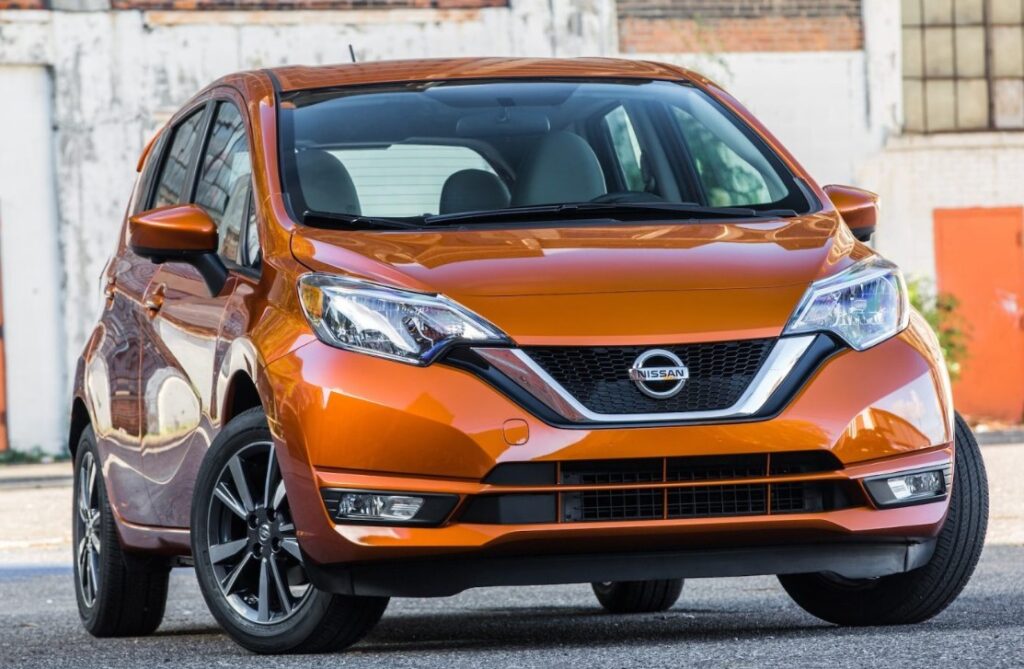
The Nissan Note fuel tank capacity is generally between 36 and 46 litres, depending on the generation, model year, engine, drivetrain, and country where the car was originally sold.
That sounds straightforward, doesn’t it? Unfortunately, the Nissan Note has worn several different hats during its life. In Europe, it began as a practical mini-MPV. In Japan, it evolved into a compact hatchback powered primarily by Nissan’s e-POWER technology. In some export markets, used Japanese versions sit alongside European-spec cars, creating a confusing mixture of specifications.
Here is the quick answer:
| Nissan Note generation | Approximate years | Typical fuel tank capacity |
|---|---|---|
| First-generation Note E11, European specification | 2006–2013 | 46 litres |
| First-generation Note E11, Japanese specification | 2005–2012 | Around 45 litres |
| Second-generation Note E12 | 2012–2020 | 41 litres |
| Nissan Note E12 e-POWER | 2016–2020 | 41 litres |
| Third-generation Note E13 e-POWER | 2020 onward | 36 litres |
A 2010 UK brochure lists the European E11 with a 46-litre tank, while a 2015 UK brochure gives the E12 a 41-litre capacity. Nissan’s current Japanese information for the newer Note states that its fuel tank holds approximately 36 litres.
Those are the headline numbers, but there is more beneath the surface. Let’s work through each generation, explain why some figures differ, and estimate how far a Nissan Note can travel on a full tank.
Content in this publication
- What Is the Nissan Note Fuel Tank Capacity?
- Nissan Note Fuel Tank Capacity by Generation
- Why Nissan Note Fuel Tank Sizes Vary
- How Far Can a Nissan Note Travel on a Full Tank?
- Why Your Nissan Note Takes Less Fuel Than Its Capacity
- When Does the Nissan Note Fuel Warning Light Come On?
- How to Confirm Your Exact Nissan Note Tank Size
- Litres, US Gallons, and Imperial Gallons Explained
- Does a Larger Fuel Tank Improve Fuel Economy?
- What Reduces Nissan Note Driving Range?
- How to Get More Range From a Full Tank
- Can We Install a Larger Nissan Note Fuel Tank?
- Common Nissan Note Fuel Gauge Problems
- Is the Nissan Note Fuel Tank Large Enough?
- Nissan Note Fuel Tank Capacity Summary
- Conclusion
- Frequently Asked Questions
What Is the Nissan Note Fuel Tank Capacity?
For most owners, the correct capacity will be one of these three figures:
- 46 litres for many European first-generation E11 models
- 41 litres for most second-generation E12 models
- 36 litres for third-generation E13 e-POWER models
In US measurements, those capacities equal approximately:
| Capacity in litres | US gallons | Imperial gallons |
| 36 litres | 9.5 US gal | 7.9 UK gal |
| 41 litres | 10.8 US gal | 9.0 UK gal |
| 45 litres | 11.9 US gal | 9.9 UK gal |
| 46 litres | 12.2 US gal | 10.1 UK gal |
The important word here is approximately. A manufacturer’s stated capacity describes the nominal size of the fuel system. It does not guarantee that we can add exactly that quantity whenever we visit a filling station.
Some fuel will normally remain when the warning light appears. The filler neck may hold a small additional amount, the vehicle may not be parked perfectly level, and fuel-pump shut-off sensitivity varies. In other words, a tank behaves less like a laboratory measuring jug and more like a suitcase with an awkward shape.
Nissan Note Fuel Tank Capacity by Generation
Identifying the generation is the safest way to find the correct number. Model year alone can occasionally cause confusion because registration dates, production years, and import dates do not always match.
First-Generation Nissan Note E11 Fuel Capacity
The first-generation Nissan Note carries the chassis code E11. It was launched in Japan in 2005 and reached European markets shortly afterward.
Most European versions have a fuel tank capacity of:
46 litres, or approximately 12.2 US gallons
A Nissan Note brochure covering the UK-market E11 lists a 46-litre tank across the featured engine range. Independent specification databases also report the same capacity for common European 1.4-litre versions.
The E11 was offered with several engines, including:
- 1.4-litre petrol
- 1.6-litre petrol
- 1.5-litre dCi diesel
- 1.5-litre petrol in several Japanese-market models
For European cars, changing from petrol to diesel usually does not mean changing the fuel tank size. The engines consume fuel at different rates, but they drink from essentially the same-sized container.
Why Do Some E11 Specifications Say 45 Litres?
Japanese-market E11 models are commonly listed with a capacity of approximately 45 litres, rather than the European car’s 46 litres. For example, available specifications for Japanese E11 variants report a 45-litre capacity.
This one-litre difference may reflect:
- Different market specifications
- Different testing or rounding conventions
- Two-wheel-drive versus four-wheel-drive packaging
- Regional emissions equipment
- Differences between nominal and usable capacity
Therefore, we should not assume that every E11 takes precisely 46 litres. A European-built Note is generally associated with 46 litres, while a Japanese import may be listed at around 45 litres.
Second-Generation Nissan Note E12 Fuel Capacity
The second-generation Nissan Note, known as the E12, arrived in 2012. It adopted a lighter, sleeker shape and moved away from the upright mini-MPV appearance of the original.
Its typical fuel tank capacity is:
41 litres, or approximately 10.8 US gallons
The 2015 UK Nissan Note brochure lists a 41-litre fuel tank, and another period specification document also records 41 litres for 1.2-litre versions.
This applies to many versions equipped with:
- 1.2-litre three-cylinder petrol engine
- 1.2-litre supercharged DIG-S engine
- 1.5-litre dCi diesel engine
- Manual transmission
- Xtronic continuously variable transmission
The E12 tank is five litres smaller than the typical European E11 tank. That reduction might appear like a step backward, but the second-generation car generally uses less fuel. Nissan could therefore reduce the tank size without necessarily reducing practical driving range.
It is rather like replacing a large water bottle with a smaller one after learning to sip instead of gulp.
Nissan Versa Note Fuel Tank Capacity
In North America, the E12-based model was sold as the Nissan Versa Note rather than simply the Nissan Note.
Depending on model year and regional specification, Versa Note information may be expressed in gallons instead of litres. Owners should verify the figure using the North American owner’s manual or the label associated with their exact vehicle.
We should also avoid mixing ordinary Versa sedan specifications with Versa Note hatchback figures. They share a name, but they are not necessarily identical in every mechanical detail.
Nissan Note E12 e-POWER Fuel Tank Capacity
Nissan introduced the Note e-POWER in Japan in 2016. Unlike a conventional petrol Note, the e-POWER model uses its petrol engine primarily to generate electricity. The electric motor drives the wheels.
The E12 Note e-POWER generally has a:
41-litre fuel tank
That is roughly:
- 10.8 US gallons
- 9.0 Imperial gallons
Published specifications for the E12 e-POWER consistently associate it with a 41-litre tank.
The name can confuse first-time buyers. “e-POWER” sounds as though the car should be plugged into a wall, but the E12 Note e-POWER is not a plug-in vehicle. We fill it with petrol in the normal way. The engine produces electricity, and the traction motor supplies the driving force.
Because the petrol engine can operate in efficient conditions, the car may travel much farther on 41 litres than a conventional petrol hatchback driven under similar urban conditions.
Third-Generation Nissan Note E13 Fuel Capacity
The third-generation E13 Nissan Note was introduced in Japan for the 2021 model year. Unlike earlier European Notes, this generation focuses strongly on Nissan’s e-POWER system.
Its typical fuel tank capacity is:
36 litres, or approximately 9.5 US gallons
Nissan’s Japanese vehicle information states that the fuel tank capacity is approximately 36 litres.
That makes it the smallest tank among the three main generations:
- E11: roughly 45–46 litres
- E12: 41 litres
- E13: 36 litres
Yet smaller does not automatically mean worse. The E13 combines an efficient series-hybrid system with regenerative braking and electric-motor propulsion. Its fuel tank may be smaller, but its economy can keep practical range competitive.
Does the Nissan Note Aura Have the Same Tank?
The Nissan Note Aura is a more premium derivative of the E13 family. Depending on the exact model, year, and drivetrain, it is commonly associated with the same approximate 36-litre capacity.
However, buyers of imported vehicles should check the Japanese specification sheet or owner’s manual. Nissan offers front-wheel-drive and electrically assisted four-wheel-drive configurations, and equipment can change over time.
Why Nissan Note Fuel Tank Sizes Vary
Fuel tank size is not selected in isolation. Engineers have to fit the tank around the rear suspension, exhaust system, passenger compartment, battery hardware, crash structures, and cargo floor.
Every component competes for space.
Generation and Platform Changes
The E11, E12, and E13 use different vehicle architectures. When Nissan redesigns the car, it does not simply place a new body over the old mechanical package.
You may be interested in reading Nissan Note Weight: Complete Guide by Generation, Engine, and Trim
A new platform can change:
- Wheelbase
- Rear suspension layout
- Underfloor shape
- Crash-protection zones
- Exhaust routing
- Battery location
- Cargo-floor height
The tank must adapt to the available space, much like water finding its way through a rocky stream.
Conventional Petrol Versus e-POWER
In a conventional Nissan Note, the petrol engine drives the wheels through a transmission. In an e-POWER Note, the engine works as an onboard generator, while an electric motor provides propulsion.
The e-POWER system requires additional electrical hardware, including:
- Traction motor
- Generator
- Inverter
- High-voltage battery
- Power-control equipment
- High-voltage cabling
Those parts affect packaging. However, better efficiency allows Nissan to use a smaller fuel tank without making the driver stop every few kilometres.
Two-Wheel Drive and Four-Wheel Drive
Some Japanese-market Notes were offered with all-wheel-drive or electrically assisted rear-wheel configurations.
Drivetrain hardware beneath the vehicle can alter the space available for a fuel tank. Although capacities may remain similar within a generation, we should never assume that every drivetrain uses an identical tank solely because the exterior looks the same.
Regional Specifications
A Nissan Note built for the UK may differ from one built for Japan, Russia, Singapore, New Zealand, or another export market.
Regional variations may involve:
- Fuel-system regulations
- Evaporative-emissions equipment
- Engine choice
- Drivetrain
- Spare-wheel arrangements
- Production plant
- Measurement conventions
This is why a registration number or vehicle identification number is more reliable than a generic online listing.
How Far Can a Nissan Note Travel on a Full Tank?
Fuel tank capacity tells us how much fuel the car can carry. Fuel economy tells us how effectively it uses that fuel.
To estimate range, we can use this formula:
Estimated range = tank capacity ÷ fuel consumption × 100
For example, suppose an E12 Note has a 41-litre tank and consumes 5.0 L/100 km:
41 ÷ 5.0 × 100 = 820 km
That is a mathematical estimate, not a promise. Real driving range will usually be lower because we rarely consume every drop in the tank.
Estimated E11 Nissan Note Range
Let’s imagine a first-generation Note with a 46-litre tank.
| Average consumption | Mathematical range |
| 5.0 L/100 km | 920 km |
| 6.0 L/100 km | 767 km |
| 7.0 L/100 km | 657 km |
| 8.0 L/100 km | 575 km |
A diesel E11 driven gently on an open road may approach the upper end of that table. A 1.6-litre petrol model used in short urban trips may sit closer to the lower end.
We should leave a safety margin instead of treating the entire 46 litres as usable driving fuel.
Estimated E12 Nissan Note Range
With its 41-litre tank, the E12 can deliver the following theoretical figures:
| Average consumption | Mathematical range |
| 4.0 L/100 km | 1,025 km |
| 5.0 L/100 km | 820 km |
| 6.0 L/100 km | 683 km |
| 7.0 L/100 km | 586 km |
A UK brochure quoted combined fuel-consumption figures that varied by engine and version, illustrating why two E12 owners can achieve noticeably different ranges despite having the same tank capacity.
Estimated E12 e-POWER Range
An E12 e-POWER with a 41-litre tank could theoretically cover:
| Average consumption | Mathematical range |
| 3.0 L/100 km | 1,367 km |
| 4.0 L/100 km | 1,025 km |
| 5.0 L/100 km | 820 km |
| 6.0 L/100 km | 683 km |
The highest figure is possible only under extremely favourable conditions and should not be treated as a normal expectation. Real-world reports commonly produce more modest results, especially at sustained motorway speeds, in cold weather, or with frequent hard acceleration.
The e-POWER system tends to shine in urban traffic, where regenerative braking and electric-motor driving can play to its strengths.
Estimated E13 Nissan Note Range
The newer E13 uses a 36-litre tank. Its theoretical range would be:
| Average consumption | Mathematical range |
| 3.0 L/100 km | 1,200 km |
| 4.0 L/100 km | 900 km |
| 5.0 L/100 km | 720 km |
| 6.0 L/100 km | 600 km |
Again, these calculations assume that all 36 litres are consumed. Sensible drivers refill before the tank is effectively empty.
Why Your Nissan Note Takes Less Fuel Than Its Capacity
Imagine the owner’s manual says 41 litres, but the fuel pump stops at 34 litres. Has the tank shrunk?
Almost certainly not.
Fuel Remains When the Warning Light Appears
The low-fuel warning is designed to give us time to find a filling station. It does not normally mean the tank is completely empty.
If the light appears while several litres remain, a 41-litre tank may accept only 34–38 litres during a routine refill.
The exact reserve cannot always be calculated from the gauge because fuel gauges are deliberately approximate.
The Pump Nozzle Shuts Off Automatically
Petrol-station nozzles stop when fuel or vapour reaches the sensing port near the nozzle tip.
The shut-off point can vary because of:
- Nozzle angle
- Pump flow rate
- Fuel foaming
- Filler-neck design
- Vehicle position
- Temperature
- Vapour movement
One pump may stop slightly earlier than another.
The Car Is Parked on a Slope
Fuel moves within the tank when the car leans forward, backward, or sideways. That movement can affect both the dashboard reading and the amount accepted during filling.
Nissan notes that hills and curves may temporarily affect fuel-level accuracy because fuel moves inside the tank.
Nominal Capacity Is Not a Refill Target
A listed 41-litre capacity is not an instruction to force 41 litres into the car at every visit.
Continuing to add fuel after the nozzle clicks can saturate the evaporative-emissions system, cause spills, or create fuel odours. Stop at the first automatic click unless the owner’s manual for the vehicle specifically provides different instructions.
When Does the Nissan Note Fuel Warning Light Come On?
The warning usually illuminates when the tank reaches a low level, but the exact remaining quantity can vary by generation, incline, driving conditions, and gauge calibration.
We should not rely on a fixed reserve such as “exactly five litres.” Even when that number appears in discussions online, it may not apply to every Note.
Once the warning comes on:
- Reduce unnecessary acceleration.
- Avoid long detours.
- Locate a suitable filling station.
- Do not repeatedly drive until the engine stops.
Running extremely low can expose the fuel pump to additional heat, draw sediment from the bottom of an ageing tank, and leave us stranded in an unsafe place.
How to Confirm Your Exact Nissan Note Tank Size
The tables in this guide provide a strong starting point, but the exact vehicle specification should always win.
Check the Owner’s Manual
Look for a section titled:
- Capacities
- Recommended fluids and lubricants
- Fuel information
- Technical specifications
- Fuel tank
The manual may express capacity in litres, US gallons, or Imperial gallons.
Use the VIN or Chassis Code
The chassis code helps identify the generation:
- E11: first generation
- E12: second generation
- HE12: commonly associated with E12 e-POWER variants
- E13: third generation
- SNE13: used for certain four-wheel-drive E13 configurations
The full identification plate offers more certainty than a seller’s advertisement.
You may be interested in readingNissan Note Weight: Complete Guide by Generation, Engine, and TrimYou may be interested in reading
Nissan Note Battery Replacement Cost: Complete 12V GuideCheck the Market of Origin
A Japanese-import Note may not match a European brochure, even when both vehicles share a similar registration year.
Useful clues include:
- Speedometer units
- Original language labels
- Chassis number format
- Import documents
- Auction sheet
- Service booklet
- Original sales brochure
Ask a Nissan Parts Department
A Nissan dealer or specialist can often identify the correct tank assembly from the VIN. This is especially useful when replacing a damaged tank or diagnosing a suspected fuel-level problem.
Litres, US Gallons, and Imperial Gallons Explained
Fuel-capacity discussions become messy when different gallon systems enter the conversation.
One US gallon equals approximately 3.785 litres, while one Imperial gallon equals approximately 4.546 litres.
Therefore:
41 litres = about 10.8 US gallons or 9.0 Imperial gallons
A website can appear to contradict another when both are actually showing the same capacity in different units.
Never compare “10.8 gallons” with “9 gallons” until checking which gallon each source uses. One missing label can turn a simple specification into a small detective story.
Does a Larger Fuel Tank Improve Fuel Economy?
No. Tank size and fuel economy are separate measurements.
A 46-litre E11 does not automatically use less fuel than a 36-litre E13. In fact, the smaller-tanked E13 may travel farther per litre because of its newer e-POWER system.
A larger tank offers potential range, but it also carries more weight when full. Petrol weighs roughly three-quarters of a kilogram per litre, with some variation according to composition and temperature.
An extra ten litres might add around 7–8 kg of fuel. That is not dramatic, but vehicle engineers chase efficiency gram by gram, like runners trimming unnecessary weight before a race.
What Reduces Nissan Note Driving Range?
Even with the correct fuel tank capacity, the distance achieved per tank can vary dramatically.
Common range reducers include:
- Short journeys with a cold engine
- Hard acceleration
- High motorway speeds
- Low tyre pressure
- Heavy cargo
- Roof boxes
- Strong headwinds
- Winter temperatures
- Air-conditioning or heating use
- Traffic congestion
- Poor wheel alignment
- Worn spark plugs
- Dirty air filters
- Binding brakes
An e-POWER Note can be very economical in city driving but may lose some of its advantage during prolonged high-speed travel. A conventional diesel Note may show the opposite personality, performing particularly well on steady open roads.
How to Get More Range From a Full Tank
We do not need to crawl along like a frightened snail. Smooth, anticipatory driving usually matters more than driving painfully slowly.
Accelerate Progressively
Hard acceleration demands more energy. Build speed smoothly and let the transmission or e-POWER system work efficiently.
Look Far Ahead
When traffic slows in the distance, lift off early. In an e-POWER model, gradual deceleration can support regenerative braking rather than wasting energy as heat.
Maintain Correct Tyre Pressure
Underinflated tyres increase rolling resistance. Check pressures when the tyres are cold and use the values printed on the vehicle placard, not the maximum number moulded into the tyre sidewall.
Remove Unnecessary Weight
A few small objects make little difference, but carrying heavy equipment every day gradually increases fuel use.
Keep the Car Serviced
Old oil, worn ignition components, clogged filters, poor alignment, and dragging brakes can quietly nibble away at efficiency.
Fuel economy rarely collapses with a dramatic bang. More often, it leaks away like air from a balloon.
Can We Install a Larger Nissan Note Fuel Tank?
In theory, custom modifications are possible. In practice, replacing the original tank with a larger one is rarely worthwhile.
A fuel tank is a safety-critical component designed around:
- Crash protection
- Mounting points
- Exhaust clearance
- Suspension movement
- Fuel-pump compatibility
- Vapour-control systems
- Ground clearance
- Vehicle regulations
An improvised tank can create fire, leakage, insurance, inspection, and legal risks.
For longer trips, planning fuel stops is safer and cheaper than redesigning the car’s fuel system.
Common Nissan Note Fuel Gauge Problems
A fuel-capacity question sometimes begins with a gauge that behaves strangely.
Possible symptoms include:
- Gauge remains on full too long
- Needle drops suddenly
- Range display changes dramatically
- Warning light appears too early
- Gauge does not rise after refuelling
- Distance-to-empty remains unchanged
Nissan’s information for newer Note models mentions that a relatively small refill may not immediately update the range display. It also warns that slopes and curves can affect the indicated level.
Other possible causes include:
- Fuel-level sender wear
- Sticking sender float
- Wiring damage
- Instrument-cluster fault
- Weak battery voltage
- Incorrect replacement fuel-pump assembly
- Software-calibration issue
Before replacing parts, park on level ground, switch the vehicle off, restart it, and allow the display time to recalculate.
Is the Nissan Note Fuel Tank Large Enough?
For a compact car, yes.
The E11’s 45–46-litre tank is generous by small-car standards. The E12’s 41-litre tank balances packaging with improved efficiency. The E13’s 36-litre tank may look small on paper, but its e-POWER system is designed to stretch each litre farther.
The best capacity depends on how we drive:
- Long rural journeys favour a larger tank.
- City drivers may value efficiency more than volume.
- Drivers in remote regions need a greater safety margin.
- Urban owners with frequent access to stations may barely notice the difference.
A fuel tank is only half the story. The other half is how quickly the car empties it.
Nissan Note Fuel Tank Capacity Summary
The key figures are easy to remember:
- European Nissan Note E11: generally 46 litres
- Japanese Nissan Note E11: commonly around 45 litres
- Nissan Note E12: generally 41 litres
- Nissan Note E12 e-POWER: generally 41 litres
- Nissan Note E13 e-POWER: approximately 36 litres
Always verify the exact specification against the owner’s manual, VIN, chassis code, or market of origin. Two cars wearing the same Nissan Note badge may have different tanks because they were built for different countries or belong to different generations.
Conclusion
The Nissan Note fuel tank capacity ranges from approximately 36 to 46 litres across its main generations.
The first-generation European E11 generally carries the largest tank at 46 litres. The second-generation E12, including the popular e-POWER version, typically uses a 41-litre tank. The latest E13 commonly holds around 36 litres.
However, capacity alone does not determine convenience. The newer Note’s smaller tank works alongside a more efficient electrified powertrain, while older petrol and diesel versions may carry more fuel but consume it faster.
Think of the tank as the size of the backpack and fuel economy as the speed at which we eat the supplies inside it. A bigger backpack helps, but careful consumption can take us just as far—or farther.
Frequently Asked Questions
1. How many litres does a Nissan Note fuel tank hold?
A Nissan Note normally holds between 36 and 46 litres. European E11 models commonly hold 46 litres, E12 models generally hold 41 litres, and E13 e-POWER models hold approximately 36 litres.
2. What is the Nissan Note E12 fuel tank capacity?
The Nissan Note E12 typically has a 41-litre fuel tank, equivalent to approximately 10.8 US gallons or 9.0 Imperial gallons.
3. What is the Nissan Note e-POWER fuel tank capacity?
The E12 Nissan Note e-POWER generally holds 41 litres. The newer E13 e-POWER usually has a smaller 36-litre tank.
4. Why can’t I put 41 litres into my Nissan Note?
Fuel normally remains in the tank when the warning light appears. Automatic nozzle shut-off, parking angle, filler-neck design, and fuel movement can also reduce the amount accepted during a refill.
5. How far can a Nissan Note travel on a full tank?
Depending on the generation, engine, road conditions, and driving style, a Nissan Note may cover roughly 550 to more than 900 km during normal use. Highly efficient e-POWER models may travel farther under favourable conditions, but drivers should maintain a reserve rather than attempting to use every litre.
You may be interested in readingNissan Note Weight: Complete Guide by Generation, Engine, and TrimYou may be interested in reading
Nissan Note Battery Replacement Cost: Complete 12V GuideYou may be interested in reading
Nissan Note Brake Light Bulb Replacement: Complete DIY GuideIf you want to know other articles similar to Nissan Note Fuel Tank Capacity: Complete Guide by Generation you can visit the category Service and Parts.
Vauxhall Adam Code 82 Reset: Meaning, Procedure, and Troubleshooting
Vauxhall Adam Engine Management Light: Causes, Fixes, and What to Do Next
Vauxhall Adam Service Theft Deterrent System: Causes, Fixes, and Reset Guide
Vauxhall Adam Dashboard Symbols: Warning Lights Explained
Vauxhall Adam Fuel Tank Capacity: Complete Owner’s Guide
Vauxhall Adam Weight: Kerb Weight, Payload and Limits
Leave a Reply
More content of your interest