
Is Nissan Note e-POWER Electric or Hybrid? The Complete Explanation

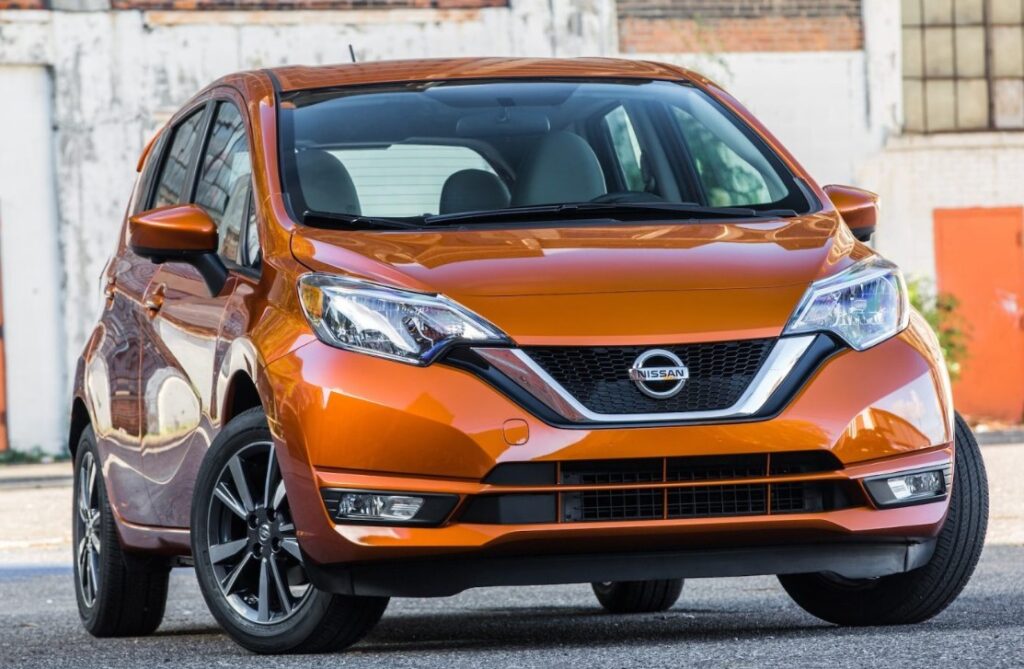
The Nissan Note e-POWER can be confusing at first glance. Nissan talks about electric-motor driving, instant torque, regenerative braking, and an EV-like experience. Yet the car still has a gasoline engine, a fuel tank, and an exhaust pipe. So, is the Nissan Note e-POWER electric or hybrid?
The most accurate answer is simple:
The Nissan Note e-POWER is a series hybrid, not a fully electric vehicle.
However, it behaves differently from most familiar hybrids. Its gasoline engine does not normally drive the wheels. Instead, the engine works as an onboard generator, producing electricity for the battery and electric motor. The electric motor alone provides the mechanical force that turns the wheels.
Think of it as an electric car carrying its own compact power station. We fill it with gasoline rather than plugging it into a charger, but the driving sensation comes primarily from an electric motor.
That unusual arrangement places the Note e-POWER somewhere between a conventional hybrid and a pure battery-electric car. Let’s untangle the technology, examine how it works, and decide what it means for everyday ownership.
Content in this publication
- Is the Nissan Note e-POWER a Hybrid?
- How Does Nissan Note e-POWER Work?
- Is Nissan e-POWER a Series Hybrid?
- Does the Nissan Note e-POWER Need Charging?
- Does the Nissan Note e-POWER Use Gasoline?
- What Does the Nissan Note e-POWER Feel Like to Drive?
- Advantages of the Nissan Note e-POWER System
- Disadvantages of the Nissan Note e-POWER
- Is the Nissan Note e-POWER Self-Charging?
- Is e-POWER Better Than a Normal Hybrid?
- How Does Nissan Note e-POWER Compare With the Nissan Leaf?
- Should We Buy a Used Nissan Note e-POWER?
- Who Is the Nissan Note e-POWER Best For?
- Common Myths About the Nissan Note e-POWER
- The Simplest Way to Understand e-POWER
- Final Verdict: Electric or Hybrid?
- Frequently Asked Questions
Is the Nissan Note e-POWER a Hybrid?
Yes. Officially and technically, the Nissan Note e-POWER is a hybrid vehicle.
More specifically, it uses a series-hybrid powertrain. Its system combines:
- A gasoline engine
- An electric generator
- A compact high-voltage battery
- An inverter
- An electric traction motor
- Regenerative braking technology
Nissan itself describes e-POWER as an electric-drive hybrid system. The company explains that the wheels are driven exclusively by the electric motor, while the gasoline engine generates electricity.
This differs from a traditional parallel hybrid, where both the engine and electric motor may send power directly to the wheels.
The word “hybrid” refers to the presence of two energy technologies: gasoline and electricity. It does not necessarily mean both power units mechanically drive the car.
Why Some Drivers Think It Is Fully Electric
The confusion is understandable because the Nissan Note e-POWER feels remarkably similar to an electric vehicle from behind the wheel.
When we press the accelerator, the electric motor delivers power immediately. There is no traditional relationship between engine speed and wheel speed. The car responds smoothly, without waiting for an automatic transmission to change gears.
The Note e-POWER also uses regenerative braking. When we release the accelerator or apply the brakes, the motor can operate as a generator, recovering some of the vehicle’s kinetic energy and returning electricity to the battery.
These are familiar electric-car characteristics.
Nevertheless, the Note e-POWER cannot operate indefinitely without gasoline. Once its fuel supply is exhausted, its onboard engine cannot produce the electricity needed to keep the system running.
Why It Is Not a Fully Electric Vehicle
A fully electric vehicle stores nearly all its usable driving energy in a large rechargeable battery. We connect it to an external electricity supply, charge it, and drive without burning gasoline.
The Nissan Note e-POWER works differently. Its battery is much smaller and is not designed to provide hundreds of kilometres of independent electric range. Instead, the gasoline engine regularly replenishes the electrical system while we travel.
It is not a battery-electric vehicle because:
- It has a gasoline engine.
- It requires gasoline for normal operation.
- It produces tailpipe emissions.
- Its traction battery is relatively small.
- It generally cannot be plugged into an external charger.
- Its electric energy is generated onboard.
A pure EV is like a smartphone with a large rechargeable battery. The Note e-POWER is more like a smartphone connected to a compact generator carried in its backpack.
How Does Nissan Note e-POWER Work?
The e-POWER system follows a surprisingly straightforward energy path.
Gasoline enters the engine. The engine powers a generator. The generator produces electricity. That electricity either supplies the electric motor, charges the battery, or does both simultaneously. The electric motor then turns the wheels.
The typical flow looks like this:
Gasoline → Engine → Generator → Battery/Inverter → Electric Motor → Wheels
The key detail is what does not happen: the gasoline engine does not need a conventional mechanical connection to the driven wheels.
Nissan introduced the Note e-POWER with an engine used specifically for generating electricity, allowing the motor to provide the actual propulsion.
What Happens When We Start Moving?
At low speeds, the car may initially use electricity stored in its battery. The electric motor responds instantly, so pulling away from a junction often feels smooth and eager.
If the battery has enough charge and power demand is modest, the gasoline engine may remain switched off temporarily. This can make the car impressively quiet during gentle urban driving.
However, this does not mean the Note possesses a meaningful all-electric driving range like a plug-in hybrid. Engine-off operation usually occurs in short intervals, depending on battery charge, speed, temperature, and power demand.
What Happens During Normal Driving?
As we continue driving, the system constantly calculates the most efficient way to supply electricity.
The gasoline engine may start to:
- Generate power for the traction motor
- Recharge the battery
- Support both tasks at once
- Maintain a suitable battery charge level
The transition is automatic. We do not need to select a charging mode, manage power sources, or understand the engineering happening beneath the floor.
At low and medium speeds, the battery may supply the motor during quieter periods. At higher speeds or under heavier demand, the engine generates electricity for propulsion and battery support. Nissan also uses regenerative braking to recover energy while slowing down.
What Happens During Hard Acceleration?
Hard acceleration demands a substantial burst of electrical power.
The battery and generator can work together to feed the traction motor. Because the motor produces torque without waiting for engine revs or gear changes, acceleration usually feels immediate and linear.
The gasoline engine may become more noticeable because it must generate additional electrical energy. Sometimes its sound does not rise and fall in perfect proportion to road speed. This sensation can surprise drivers accustomed to conventional cars.
We may hear the engine working hard while the vehicle accelerates smoothly, rather than feeling each gear engage. It is not necessarily a fault. It is a natural characteristic of a generator-based powertrain.
What Happens When We Slow Down?
When we lift off the accelerator, the traction motor can reverse its electrical role and become a generator.
Instead of wasting all the car’s movement as heat through the friction brakes, the system captures part of that energy. The recovered electricity returns to the high-voltage battery for later use.
This process is called regenerative braking.
Regeneration cannot recover every unit of energy. Physics always takes its share through aerodynamic drag, rolling resistance, heat, and conversion losses. Still, it improves efficiency, especially in stop-and-go traffic.
Is Nissan e-POWER a Series Hybrid?
Yes. The clearest technical classification for Nissan e-POWER is series hybrid.
In a series hybrid, the combustion engine generates electricity rather than mechanically driving the wheels. The electric motor remains responsible for propulsion.
This layout creates a clean division of labour:
- The engine produces electrical energy.
- The generator converts mechanical energy into electricity.
- The battery stores and releases electrical energy.
- The motor propels the car.
Nissan’s official technology archive classifies e-POWER as a series hybrid and explains that, unlike a parallel hybrid, its wheels are driven exclusively by a high-output electric motor.
Series Hybrid Versus Parallel Hybrid
A parallel hybrid can use the gasoline engine, electric motor, or both to turn the wheels. Toyota’s familiar hybrid systems broadly fall into a power-split or series-parallel category, where the engine may contribute mechanical power to propulsion.
The Nissan Note e-POWER takes another route. Its engine operates more like a generator at a power station.
| Feature | Nissan Note e-POWER | Conventional Parallel Hybrid |
|---|---|---|
| Main wheel propulsion | Electric motor | Engine, motor, or both |
| Engine connected to wheels | Generally no | Usually yes |
| External charging required | No | No |
| Fuel required | Yes | Yes |
| EV-like acceleration | Strong | Varies by model |
| Battery size | Small to moderate | Small to moderate |
| Official category | Series hybrid | Parallel or power-split hybrid |
Neither design is automatically superior. Each represents a different answer to the same question: how can we reduce fuel consumption while retaining the convenience of gasoline?
Series Hybrid Versus Plug-In Hybrid
A plug-in hybrid has a larger battery that can be charged from the electricity grid. It may travel a useful distance—sometimes dozens of kilometres—without starting its gasoline engine.
The Nissan Note e-POWER is not normally a plug-in hybrid. We do not arrive home, connect a charging cable, and refill its battery overnight.
Instead, we visit a filling station, add gasoline, and allow the vehicle to generate electricity onboard.
A plug-in hybrid prioritises externally charged electric driving. The Note e-POWER prioritises electric-motor propulsion without changing the owner’s refuelling routine.
Does the Nissan Note e-POWER Need Charging?
No external charging is normally required.
There is no routine need to locate a public charger, install a wallbox, or connect the Note e-POWER to a household power outlet. We simply refuel it with the gasoline grade recommended for the vehicle’s market and model year.
You may be interested in reading Ford Ranger GCM Upgrade Cost: Complete Global Guide
Its battery charges through two main sources:
- The gasoline engine and generator
- Regenerative braking
This makes e-POWER attractive to drivers who want an electric-style experience but cannot charge a car at home.
Can We Plug In a Nissan Note e-POWER?
Standard Nissan Note e-POWER models are not designed as plug-in vehicles.
They do not use an external charging connector in the same way as a Nissan Leaf or a plug-in hybrid. The charging system is managed internally.
That simplicity is one of e-POWER’s selling points. We drive and refuel it much like an ordinary gasoline car, even though its wheels are powered electrically.
Does the Battery Ever Become Completely Empty?
During normal operation, the control system manages the battery’s state of charge automatically. It attempts to keep sufficient energy available for acceleration, low-speed movement, and efficient system operation.
Drivers generally do not use the full theoretical capacity of a hybrid battery. The vehicle maintains a protected operating range to support reliability and battery life.
A dashboard display may show a low charge level, but that does not necessarily mean the battery is electrically empty. It means the car may soon run the engine more actively to restore its preferred charge range.
Does the Nissan Note e-POWER Use Gasoline?
Yes. The Note e-POWER requires gasoline.
Its engine may not directly propel the wheels, but it still burns fuel to generate electricity. Therefore, fuel economy remains an important ownership consideration.
The car also requires many familiar engine-related maintenance items, potentially including:
- Engine oil
- Oil filters
- Air filters
- Spark plugs
- Coolant
- Fuel-system components
- Exhaust-system inspections
The exact maintenance schedule depends on the year, market, engine specification, and operating conditions.
Can It Drive Without Gasoline?
Only very briefly under limited conditions if charge remains in the high-voltage battery. It is not intended to continue travelling normally after the fuel tank becomes empty.
Even if the battery contains some energy, the system may restrict or stop operation to protect itself. We should therefore treat the fuel gauge exactly as we would in another gasoline-powered vehicle.
Running out of fuel is not a practical way to test its electric capability.
Does It Produce Exhaust Emissions?
Yes. Whenever the gasoline engine operates, combustion gases leave through the exhaust system.
The Note e-POWER may use fuel efficiently, and the engine can operate in controlled conditions for part of the journey. Still, it is not a zero-tailpipe-emission vehicle.
This distinction matters when considering:
- Low-emission zones
- Vehicle taxes
- Registration categories
- Government incentives
- Environmental targets
- Parking privileges
Local authorities may classify hybrids differently, so we should never assume the word “e-POWER” grants the same benefits as a fully electric car.
What Does the Nissan Note e-POWER Feel Like to Drive?
The strongest argument for e-POWER is not a technical diagram. It is the way the car behaves on the road.
Electric motors respond rapidly. They do not need to build torque through a sequence of combustion events and transmission ratios. As a result, the Note can feel lively even if its official performance figures appear modest.
Around town, it often moves like a small boat pushed by a steady current—smoothly, quietly, and without dramatic gear changes.
Immediate Electric-Motor Response
Because the electric motor drives the wheels, accelerator response feels direct.
Press the pedal, and the system requests more motor torque. There is no conventional automatic gearbox searching through multiple ratios before delivering the desired response.
This can make the Note feel particularly suitable for:
- Urban intersections
- Roundabouts
- Short overtaking opportunities
- Stop-and-go traffic
- Steep city streets
The experience is not identical to a powerful battery-electric car, but the underlying character is recognisably electric.
Quiet Urban Operation
At low speeds, the engine may stop when sufficient battery energy is available. The Note can then move quietly for short periods.
Nissan says e-POWER uses full electric-motor drive, with the onboard gasoline engine dedicated to generating electricity, helping deliver a quieter cabin than a traditional gasoline-powered vehicle.
However, engine noise does not disappear permanently. When battery charge drops or electricity demand increases, the engine restarts.
Why Engine Noise Can Sometimes Seem Unusual
In a conventional car, engine speed usually follows road speed and gear selection. Accelerate harder, and the engine revs rise. Change gear, and the revs fall.
In an e-POWER car, engine speed follows electricity demand and system efficiency. It does not need to mirror wheel speed.
Consequently, the engine may:
- Start while the car is moving slowly
- Run at a steady speed during changing road speeds
- Rev during strong acceleration
- Operate while the car is stationary
- Switch off at cruising speed under suitable conditions
This disconnect can initially feel strange. After a few journeys, many drivers simply stop noticing it.
Advantages of the Nissan Note e-POWER System
The Note e-POWER tries to combine electric-car smoothness with gasoline-car convenience.
Its most meaningful advantages include the following.
No Dependence on Charging Infrastructure
Drivers who live in apartments, park on the street, or travel through areas with limited charging facilities may struggle to own a battery-electric car.
The Note e-POWER removes that barrier. It generates the electricity it needs while travelling.
We gain electric-motor propulsion without planning journeys around charging stations.
Smooth Acceleration
The motor delivers torque quickly, creating clean and predictable acceleration.
There are no traditional gear changes interrupting the power flow. In busy traffic, that smoothness can make the car feel calmer and easier to control.
Potentially Strong Urban Efficiency
Hybrid systems often perform well in urban environments because frequent deceleration creates opportunities for regenerative braking.
The engine can also stop when it is not needed, while the battery handles short low-speed demands.
Actual fuel economy will still depend on:
- Traffic conditions
- Driving style
- Temperature
- Tyre pressure
- Vehicle load
- Road gradient
- Air-conditioning use
- Journey length
A five-minute winter journey and a gentle 40-minute city commute may produce very different results.
Less Conventional Transmission Complexity
The system does not require a traditional stepped automatic transmission to manage mechanical power from the engine to the wheels.
That eliminates the familiar sensation of gear hunting and reduces the number of conventional transmission behaviours a driver must consider.
However, “no traditional gearbox” does not mean “no drivetrain components” or “no possible repair costs.” The car still contains an inverter, generator, reduction gears, control modules, cooling systems, and high-voltage equipment.
Disadvantages of the Nissan Note e-POWER
No powertrain is a magic carpet. e-POWER has compromises, and understanding them prevents disappointment.
It Still Burns Fuel
The most obvious limitation is that the Note e-POWER remains dependent on gasoline.
Fuel prices still matter. Tailpipe emissions still exist. Oil changes and combustion-engine maintenance do not disappear.
Drivers seeking a truly petrol-free vehicle should consider a battery-electric model instead.
It Cannot Be Charged With Cheap Home Electricity
A battery-electric car can often be charged overnight using residential electricity. Depending on local tariffs, that may cost considerably less per kilometre than gasoline.
The Note e-POWER does not normally offer that option. Nearly all its usable energy ultimately comes from fuel, aside from energy recovered during braking.
Regenerative braking recycles some energy, but it does not create energy from nothing.
You may be interested in readingFord Ranger GCM Upgrade Cost: Complete Global GuideYou may be interested in reading
Ford Ranger Insurance: Costs, Coverage, and Smart Ways to SaveHighway Efficiency May Not Match Urban Strengths
At sustained motorway speeds, regenerative opportunities decrease and aerodynamic drag rises sharply.
The gasoline engine may need to generate electricity continuously. Every energy conversion introduces some loss:
- Fuel becomes mechanical engine output.
- Mechanical output becomes electricity.
- Electricity passes through the inverter.
- The motor converts electricity into wheel movement.
Nissan optimises the process carefully, but physics remains in the passenger seat.
A conventional hybrid with a direct mechanical engine path may perform competitively during prolonged high-speed cruising.
The System Is Technically Complex
Although the mechanical arrangement is elegant, the complete system contains both combustion and electric components.
Owners must account for:
- Engine maintenance
- High-voltage battery health
- Electric motor condition
- Generator operation
- Inverter performance
- Cooling-system integrity
- Electronic control systems
A used Note e-POWER should therefore receive a proper inspection from someone familiar with hybrid and high-voltage vehicles.
Is the Nissan Note e-POWER Self-Charging?
The phrase “self-charging hybrid” is commonly used in automotive marketing. It means the driver does not plug the vehicle into an external charger.
In that sense, the Nissan Note e-POWER can be described as self-charging.
However, the phrase can be misleading. The car does not manufacture free electricity. Most of its energy begins as gasoline. Regenerative braking merely recovers a portion of energy that would otherwise be lost.
A more transparent description would be:
A non-plug-in series hybrid that generates electricity onboard.
It is less glamorous, but far more precise.
Is e-POWER Better Than a Normal Hybrid?
That depends on how and where we drive.
The Note e-POWER may be more appealing when we value:
- Smooth electric acceleration
- Urban responsiveness
- No external charging
- Simple refuelling
- Strong regenerative braking
- A quieter low-speed experience
A conventional hybrid may be preferable when we prioritise:
- Long motorway journeys
- Wider local servicing knowledge
- A proven power-split layout
- Specific fuel-economy results
- Greater model availability
We should compare complete vehicles rather than powertrain labels alone. Purchase price, reliability history, condition, equipment, fuel economy, insurance, and parts availability can matter more than whether the system is series or parallel.
Is e-POWER Better Than a Fully Electric Car?
Again, the answer depends on circumstances.
A fully electric vehicle may provide:
- Zero tailpipe emissions
- No gasoline consumption
- Quieter operation
- Lower routine drivetrain maintenance
- Home-charging convenience
- Potentially lower running costs
The Note e-POWER may provide:
- Fast gasoline refuelling
- No charging dependency
- Familiar long-distance flexibility
- Electric-motor driving characteristics
- Easier ownership without private parking
For someone with home charging and predictable travel, a battery EV may make more sense. For someone without reliable charging, e-POWER can serve as a bridge between conventional and fully electric motoring.
How Does Nissan Note e-POWER Compare With the Nissan Leaf?
The Nissan Leaf is a battery-electric vehicle. The Nissan Note e-POWER is a gasoline-electric series hybrid.
| Category | Nissan Note e-POWER | Nissan Leaf |
| Power at the wheels | Electric motor | Electric motor |
| Gasoline engine | Yes | No |
| Fuel tank | Yes | No |
| External charging | Normally no | Yes |
| Tailpipe emissions | Yes | None while driving |
| Main stored energy | Gasoline plus small battery | Large traction battery |
| Refuelling method | Filling station | Charging point |
| Long-distance stops | Fuel stops | Charging stops |
Both use electric motors for propulsion, but the source of their electricity is fundamentally different.
The Leaf carries its energy in a large battery. The Note e-POWER produces much of its electricity as required.
Should We Buy a Used Nissan Note e-POWER?
A used Note e-POWER can be an attractive urban car, especially in markets where Japanese imports are common.
Before buying one, we should confirm:
- Battery health
- Service history
- Warning-light status
- Engine condition
- Generator and inverter operation
- Cooling-system condition
- Fuel economy during a real test drive
- Availability of local diagnostic support
- Parts supply in our country
- Compatibility of infotainment and navigation systems
We should also inspect the vehicle’s charging behaviour—not external charging, but the way its battery level rises and falls while driving.
Unusual noises, persistent warnings, severe loss of performance, or erratic engine operation deserve professional diagnosis.
Questions to Ask the Seller
A useful inspection conversation might include:
- Has the vehicle received regular engine-oil changes?
- Has the high-voltage system ever displayed a warning?
- Has the 12-volt battery been replaced?
- Has the car suffered flood or collision damage?
- Are diagnostic records available?
- Does the heater and air conditioner work correctly?
- Are replacement parts readily available locally?
- Has the vehicle been maintained by a hybrid specialist?
The small 12-volt battery deserves attention because it powers control systems needed to start the vehicle. A weak 12-volt battery can cause confusing electronic symptoms even when the high-voltage battery is healthy.
Who Is the Nissan Note e-POWER Best For?
The Note e-POWER makes the most sense for drivers who enjoy the character of an electric motor but do not want—or cannot support—a plug-in car.
It may suit:
- Apartment residents without chargers
- Urban commuters
- Drivers facing frequent stop-and-go traffic
- Owners who value smooth acceleration
- Buyers who want high fuel efficiency without changing refuelling habits
- Drivers in regions where public charging remains limited
It may be less suitable for:
- Drivers determined to eliminate gasoline
- Owners with inexpensive home charging
- People expecting long electric-only range
- Buyers in areas without hybrid repair expertise
- Drivers who spend nearly all their time at sustained motorway speeds
Common Myths About the Nissan Note e-POWER
Myth 1: It Is a Fully Electric Car
It is electrically driven, but it is not a battery-electric vehicle. It carries and burns gasoline.
Myth 2: The Engine Never Runs While Driving
The engine starts whenever the system needs additional electricity or battery charging. It may run frequently depending on conditions.
Myth 3: Regenerative Braking Fully Recharges the Car
Regeneration recovers only part of the energy used to move the vehicle. Fuel remains the principal external energy source.
Myth 4: It Has a Conventional Automatic Gearbox
The e-POWER system does not rely on a normal multi-speed automatic transmission to transfer engine power directly to the wheels.
Myth 5: It Can Drive Like a Plug-In Hybrid
Its battery supports short electric-motor operation, but the car is not intended to provide a substantial plug-in electric range.
The Simplest Way to Understand e-POWER
Here is the whole concept in one sentence:
The Nissan Note e-POWER is a hybrid that drives like an electric car because its wheels are powered only by an electric motor, while a gasoline engine generates the electricity.
That distinction resolves most of the confusion.
It is electric in the way it delivers power to the road. It is hybrid in the way it obtains and manages energy.
Imagine a railway locomotive with an engine that generates electricity for traction motors. The energy changes form before reaching the wheels, but the final push comes from electric power. Nissan has adapted a broadly similar principle into a compact passenger car.
Final Verdict: Electric or Hybrid?
So, is the Nissan Note e-POWER electric or hybrid?
It is a hybrid—specifically, a series hybrid with fully electric-motor wheel propulsion.
Calling it a pure electric car would be inaccurate because it burns gasoline, produces exhaust emissions, and cannot normally be charged from the grid.
Calling it merely a conventional hybrid also misses what makes it unusual. Unlike many hybrids, the gasoline engine does not normally provide direct mechanical propulsion. The electric motor handles that job continuously.
The result is a car with two personalities stitched neatly together. At the fuel station, it behaves like a gasoline vehicle. On the road, it responds more like an EV.
For drivers who want smooth electric acceleration without charging cables, the Nissan Note e-POWER offers a clever middle ground. It is not the final destination of electrification, but it can be a practical stepping stone—one that brings electric-motor driving into everyday life without asking us to reorganise where and how we refuel.
Frequently Asked Questions
1. Is the Nissan Note e-POWER fully electric?
No. The Nissan Note e-POWER is not fully electric. It uses a gasoline engine to generate electricity, although an electric motor exclusively drives the wheels.
2. Is Nissan e-POWER considered a hybrid?
Yes. Nissan e-POWER is a series-hybrid system because it combines a gasoline engine, generator, battery, and electric traction motor.
3. Do we need to plug in the Nissan Note e-POWER?
No. Standard Note e-POWER models charge their batteries through the onboard gasoline generator and regenerative braking rather than an external charging cable.
4. Can the Nissan Note e-POWER run without gasoline?
It may move briefly using electricity already stored in the battery, but it is not designed to continue normal driving without gasoline. The engine is required to replenish the electrical system.
5. What is the main difference between e-POWER and a normal hybrid?
In many normal hybrids, the gasoline engine can mechanically drive the wheels. In the Nissan Note e-POWER, the electric motor drives the wheels while the gasoline engine primarily generates electricity.
You may be interested in readingFord Ranger GCM Upgrade Cost: Complete Global GuideYou may be interested in reading
Ford Ranger Insurance: Costs, Coverage, and Smart Ways to SaveYou may be interested in reading
 Is Vauxhall Adam a Good Car? An Honest Used-Car Guide
If you want to know other articles similar to Is Nissan Note e-POWER Electric or Hybrid? The Complete Explanation you can visit the category Blog.
Is Mitsubishi Pajero Sport a Good Car? A Complete Ownership Review
BYD Shark 6 Reliability: How Dependable Is This Hybrid Ute?
BYD Shark 6 Insurance Cost: What Should You Expect?
Mitsubishi Pajero Sport Reliability: Is It a Dependable SUV?
Mitsubishi Pajero Sport Years to Avoid: A Used Buyer’s Guide
Is Infiniti QX60 Reliable? A Complete Reliability Guide
Leave a Reply
More content of your interest