

Chevrolet Silverado Oil Capacity: Complete Engine Guide

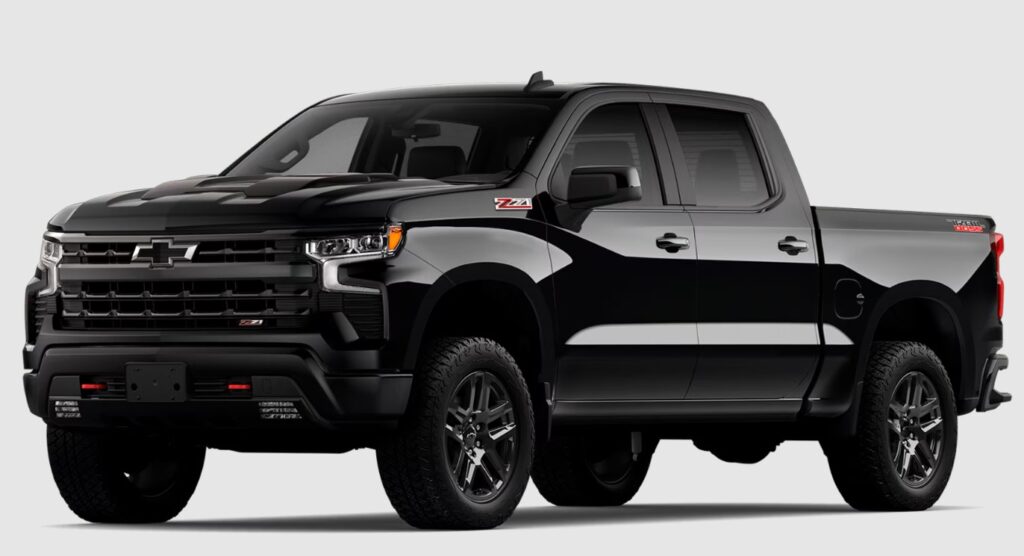
The correct Chevrolet Silverado oil capacity depends on three details: the truck’s model year, its engine, and whether we replace the oil filter during the service. That sounds simple, yet Silverado owners frequently encounter conflicting figures online. One chart says six quarts, another says eight, and a forum comment confidently recommends ten. Which number should we trust?
The answer is hiding under the hood—not in the trim badge.
A Silverado LT, RST, High Country, Custom, or Work Truck may use several different engines. Two trucks that look nearly identical can require noticeably different amounts of oil. Pouring in too little leaves vital components inadequately protected. Pouring in too much can foam the oil, increase crankcase pressure, contaminate the intake system, and potentially damage seals or emissions equipment.
As a general late-model reference, common Silverado oil capacities with a new filter include:
- 2.7-liter TurboMax four-cylinder: approximately 6 quarts
- 4.3-liter V6: approximately 6 quarts
- 5.3-liter V8: commonly 8 quarts on newer generations
- 6.2-liter V8: commonly 8 quarts
- 3.0-liter Duramax diesel: approximately 7 quarts
- 6.0-liter V8: commonly 6 quarts on applicable older HD models
- 6.6-liter gasoline V8: approximately 8 quarts
- 6.6-liter Duramax diesel: approximately 10 quarts
These figures are useful starting points, not substitutes for the manual assigned to a specific truck. Chevrolet maintains downloadable manuals for new, older, electric, and legacy vehicles, while its service guidance advises owners to consult the appropriate manual for the correct oil grade and checking procedure.
Content in this publication
- Chevrolet Silverado Oil Capacity Quick-Reference Chart
- Why the Correct Oil Capacity Matters
- Chevrolet Silverado 1500 Oil Capacity by Engine
- Chevrolet Silverado HD Oil Capacity
- Does Oil Capacity Include the Filter?
- How to Identify Your Silverado Engine
- How Much Oil Should We Buy?
- How to Fill the Silverado Without Overfilling
- Which Oil Viscosity Does a Silverado Need?
- What Is the dexos Specification?
- How Often Should Silverado Oil Be Changed?
- How Often Should We Check the Oil Level?
- What If the Dipstick Reads Low After Adding the Listed Capacity?
- What If We Accidentally Overfill the Engine?
- Common Silverado Oil-Change Mistakes
- How to Reset the Silverado Oil-Life System
- Should We Pre-Fill the Oil Filter?
- Silverado Oil Capacity Versus Usable Fill Amount
- Final Thoughts on Chevrolet Silverado Oil Capacity
- Frequently Asked Questions
Chevrolet Silverado Oil Capacity Quick-Reference Chart
The following table covers many of the engines Silverado owners are most likely to encounter. Capacities are approximate and generally assume an oil-and-filter change.
| Silverado engine | Approximate capacity with filter | Common applications |
|---|---|---|
| 2.7L Turbo / TurboMax I4 | 6 qt / 5.7 L | Late-model Silverado 1500 |
| 4.3L V6 | 6 qt / 5.7 L | Earlier Silverado 1500 |
| 4.8L V8 | 6 qt / 5.7 L | Selected older Silverado 1500 models |
| 5.3L V8 | 6 or 8 qt, depending on generation | Silverado 1500 |
| 6.0L V8 | 6 qt / 5.7 L on many applications | Older Silverado HD |
| 6.2L V8 | 8 qt / 7.6 L on many newer trucks | Silverado 1500 |
| 3.0L Duramax I6 | About 7 qt / 6.6 L | Late-model Silverado 1500 |
| 6.6L gasoline V8 | About 8 qt / 7.6 L | Silverado 2500 HD and 3500 HD |
| 6.6L Duramax diesel V8 | About 10 qt / 9.5 L | Silverado HD |
Why does the 5.3-liter V8 show more than one capacity? Because “5.3-liter Silverado” describes an engine family used across multiple generations. Oil-pan designs, internal revisions, filters, and platform changes have altered the required fill quantity over time.
For example, Chevrolet’s official 2017 Silverado manual lists the 5.3-liter and 6.2-liter V8 engines at 8 quarts with the filter, while the 4.3-liter V6 and 6.0-liter V8 are listed at 6 quarts with the filter.
That single factory chart demonstrates why identifying the engine alone is not always enough. The year matters too.
Why the Correct Oil Capacity Matters
Engine oil behaves like the bloodstream of the Silverado’s powertrain. It lubricates bearings, cools internal surfaces, suspends contaminants, reduces friction, supports hydraulic components, and helps protect moving parts from corrosion.
When the level is correct, the pump can circulate a stable supply of oil throughout the engine. When the level is wrong, the system may operate like a water pump trying to drink from a nearly empty—or wildly overflowing—bucket.
Problems Caused by Too Little Oil
An underfilled Silverado may experience:
- Low oil pressure
- Increased valvetrain noise
- Higher operating temperatures
- Accelerated bearing wear
- Timing-chain or lifter noise
- Poor lubrication during towing or hard acceleration
- Internal engine damage in severe cases
A small shortage may not trigger an immediate warning. The engine could continue running while protection quietly deteriorates, especially during long highway trips, steep climbs, heavy towing, or extended idling.
Problems Caused by Too Much Oil
More oil is not automatically more protection. Overfilling can allow the crankshaft to whip the oil into foam. Foamy oil contains air bubbles, and air does not lubricate metal surfaces effectively.
Possible consequences include:
- Aerated oil
- Unstable oil pressure
- Increased crankcase pressure
- Oil entering the intake system
- Seal or gasket leakage
- Spark-plug contamination
- Exhaust smoke
- Catalytic-converter or diesel aftertreatment issues
Chevrolet explicitly warns that operating above or below the acceptable dipstick range can harm the engine. Its guidance advises draining excess oil or limiting driving until a service professional corrects the level.
Chevrolet Silverado 1500 Oil Capacity by Engine
The Silverado 1500 has carried a broad selection of engines, from practical turbocharged four-cylinders to muscular V8s and an inline-six diesel. Let us break down the most common choices.
2.7L Turbo and TurboMax Oil Capacity
The 2.7-liter turbocharged four-cylinder typically takes approximately:
6 quarts, or about 5.7 liters, with a new filter.
This engine may have fewer cylinders than the familiar Silverado V8, but it works hard. Turbocharging creates substantial heat, and the oil helps lubricate and cool the turbocharger as well as the engine itself.
We should not pour in six quarts blindly and close the hood. A safer procedure is to add slightly less than the listed capacity, run the engine briefly, wait for the oil to drain back, and then approach the full mark gradually.
Why Turbo Engines Need Careful Oil Maintenance
A turbocharger spins at extremely high speed. Dirty, degraded, low, or incorrectly specified oil can encourage deposits inside its narrow oil passages. Regular level checks become particularly important when the truck frequently tows, idles, travels short distances, or operates in extreme temperatures.
4.3L V6 Oil Capacity
Many Silverado 1500 trucks equipped with the 4.3-liter V6 use:
6 quarts, or approximately 5.7 liters, with the filter.
Chevrolet’s 2017 factory manual confirms this six-quart figure for the 4.3-liter V6 in that model year.
The 4.3-liter V6 is sometimes overlooked beside the larger V8s, but the same filling rules apply. Replace the filter, install the drain plug correctly, add most of the specified quantity, and verify the final level manually.
5.3L V8 Oil Capacity
The 5.3-liter V8 is one of the most common Silverado engines—and one of the easiest to misunderstand.
Depending on the generation, its oil capacity may be:
- Approximately 6 quarts on some older versions
- Approximately 8 quarts on many newer versions
The 2017 Chevrolet Silverado manual specifies 8 quarts, or 7.6 liters, with the filter for the 5.3-liter V8.
This is why searching only for “5.3 Silverado oil capacity” can lead us into a ditch. A capacity posted for an older GMT800 or GMT900 truck may not apply to a later K2XX or T1-generation Silverado.
How to Avoid the 5.3L Capacity Trap
Before buying oil, confirm:
- The model year
- The engine displacement
- The engine code when available
- Whether the published capacity includes the filter
- The specification in the correct owner’s manual
The eighth character of the VIN identifies the engine code on applicable Silverado models, and Chevrolet directs owners to the vehicle specifications section for engine identification.
6.2L V8 Oil Capacity
Most newer Silverado 1500 trucks with the 6.2-liter V8 use:
8 quarts, or about 7.6 liters, with a new filter.
Chevrolet’s 2017 manual groups the 5.3-liter and 6.2-liter V8 engines together at eight quarts with the filter.
The 6.2-liter engine is designed for strong acceleration, towing, and high-output operation. Correct oil level matters even more when the truck spends its life hauling trailers, climbing grades, or operating in hot weather.
A low reading should not be ignored merely because the dashboard has not displayed a warning. The oil-pressure system and oil-level measurement are related, but they are not the same thing. A dipstick inspection remains one of the simplest forms of preventive maintenance we can perform.
3.0L Duramax Diesel Oil Capacity
The 3.0-liter Duramax inline-six commonly takes approximately:
7 quarts, or around 6.6 liters, with the filter.
Because diesel engines have different lubrication, emissions, and soot-control demands, the exact approved oil specification is crucial. We should not assume that an oil acceptable for the 5.3-liter gasoline engine is automatically appropriate for the Duramax.
Diesel oil selection may depend on the model year, emissions system, climate, and required dexos diesel specification. Capacity tells us how much oil the engine needs; the specification tells us what kind of protection must go into that space.
Chevrolet Silverado HD Oil Capacity
Silverado 2500 HD and 3500 HD trucks work in a different league. Their engines, cooling systems, payload ratings, and service demands are designed around serious work.
6.0L V8 Oil Capacity
Many older Silverado HD trucks equipped with the 6.0-liter gasoline V8 use:
6 quarts, or 5.7 liters, with the filter.
The official 2017 Silverado documentation lists the 6.0-liter V8 at six quarts.
Because this engine appeared across various years and configurations, we should still verify the capacity for the exact truck. A previous owner may also have installed a nonstandard oil pan or remote-filter arrangement, although such modifications are less common.
6.6L Gasoline V8 Oil Capacity
The modern 6.6-liter gasoline V8 used in Silverado HD models generally requires approximately:
8 quarts, or 7.6 liters, with the filter.
This engine is commonly subjected to high loads, long idle periods, commercial use, plowing, and trailer duty. Checking the oil between services is wise, particularly during demanding operating cycles.
6.6L Duramax Diesel Oil Capacity
The 6.6-liter Duramax diesel typically holds approximately:
10 quarts, or 9.5 liters, with the filter.
Ten quarts is a convenient number, but convenience should never replace confirmation. Duramax supplements and model-specific owner documentation contain the authoritative service details for each version.
Large diesel engines require more oil because they manage considerable heat, bearing loads, turbocharger lubrication, and contamination from combustion. That extra volume acts like a larger reservoir, giving the oil more capacity to carry heat and suspend soot.
Does Oil Capacity Include the Filter?
Most published Silverado engine-oil capacities refer to a complete oil change with a new filter. This detail matters because an empty filter absorbs part of the new oil during the first startup.
If we change the oil without replacing the filter, the engine may require slightly less than the full listed amount. However, skipping the filter is rarely sensible during routine service. The old filter still contains used oil and captured contaminants.
A proper oil change normally includes:
- Draining the old engine oil
- Replacing the oil filter
- Inspecting the drain plug and sealing surface
- Reinstalling the plug to the correct specification
- Adding the recommended oil
- Running the engine briefly
- Checking for leaks
- Rechecking the dipstick
- Resetting the oil-life monitor
How to Identify Your Silverado Engine
We cannot select the correct capacity until we know which engine is installed. Fortunately, there are several ways to confirm it.
Check the Owner’s Manual
The manual may cover multiple engine choices, so locate the section labeled Capacities and Specifications. Match the listed engine to the truck rather than choosing the first number in the table.
Chevrolet’s manuals portal provides access to downloadable guides for current and older vehicles.
Look at the Emissions Label
The under-hood emissions label often states the engine displacement and emissions family. It is usually located on the underside of the hood, radiator support, or another visible engine-compartment surface.
Use the VIN
The VIN can help identify the installed engine. On applicable models, the eighth character is the engine code.
A Chevrolet dealer, reputable parts catalog, or VIN-decoding system can match that code to the correct powertrain.
Inspect the Engine Cover or Badging
Some Silverados display labels such as:
- TurboMax
- 5.3L
- 6.2L
- Duramax
- Vortec
Badging can offer a clue, but it should not be our only source. Engine covers and exterior emblems can be replaced.
How Much Oil Should We Buy?
Buy enough to complete the service and leave a small reserve for topping up.
A practical shopping guide looks like this:
- For a 6-quart engine, buy at least 6 quarts; a 5-quart jug plus two individual quarts is convenient.
- For an 8-quart engine, buy 8 or 9 quarts.
- For a 10-quart diesel, buy 10 or 11 quarts.
- Keep the unopened remainder stored upright in a clean, dry place.
The reserve is useful because engines can consume a small amount between changes, particularly as mileage accumulates or when the truck works under heavy load.
How to Fill the Silverado Without Overfilling
The capacity figure is a target, not permission to dump the entire quantity in without checking.
Step 1: Park on Level Ground
An angled driveway can distort the dipstick reading. Even a modest slope may make the oil appear higher or lower than it really is.
Step 2: Drain the Oil Thoroughly
Warm oil flows more easily, but the engine and exhaust components should not be dangerously hot. Allow enough time for the old oil to drain.
Step 3: Replace the Filter
Lubricate the new filter gasket with clean oil where applicable. Make sure the old gasket did not remain stuck to the mounting surface.
A double gasket can create a dramatic leak as soon as the engine starts.
Step 4: Add Less Than the Full Capacity
For an eight-quart engine, we might begin with roughly seven to seven and a half quarts. For a six-quart engine, start around five and a half.
Step 5: Start the Engine Briefly
Let it run long enough to circulate oil and fill the new filter. Watch the oil-pressure indicator and inspect the drain plug and filter for leaks.
Step 6: Shut It Off and Wait
Oil needs time to return to the pan. Chevrolet’s guidance for a 2017 Silverado states that accuracy improves when checking a cold engine before startup. When that is not possible, the manual outlines waiting periods based on engine temperature before checking.
Step 7: Recheck and Top Up Slowly
Remove the dipstick, wipe it clean, reinstall it fully, and pull it out again. Add oil in small increments until the level reaches the correct operating range.
Never Use Capacity Alone as the Final Measurement
Small amounts of old oil can remain trapped inside the engine. Filter dimensions may vary slightly, and not every drain occurs under identical conditions. The dipstick is the final referee.
Which Oil Viscosity Does a Silverado Need?
Oil capacity and oil viscosity are two separate questions.
Capacity answers: How much?
Viscosity answers: How thick or thin should the oil behave at different temperatures?
Depending on engine and year, a Silverado may require viscosities such as:
- SAE 0W-20
- SAE 5W-30
- SAE 0W-40
- A diesel-specific viscosity listed in the Duramax documentation
For the 2017 Silverado, Chevrolet specifies SAE 0W-20 for the 5.3-liter and 6.2-liter V8 engines, while the 4.3-liter V6 and 6.0-liter V8 use SAE 5W-30 under normal conditions.
That recommendation cannot automatically be transferred to every Silverado year. Newer engine revisions may use a different grade.
What Is the dexos Specification?
GM uses dexos oil standards to define performance requirements beyond the viscosity printed on the bottle.
Two oils may both say 0W-20, yet only one may satisfy the GM specification required for a particular Silverado. The dexos approval addresses factors such as deposit control, oxidation resistance, wear protection, low-temperature performance, and compatibility with modern emissions systems.
Chevrolet’s 2017 Silverado manual instructs gasoline-engine owners to use oil meeting the applicable dexos1 specification and warns that using an unsuitable oil can lead to engine damage not covered by warranty.
When selecting oil, verify:
- Correct viscosity
- Correct GM/dexos specification
- Suitability for gasoline or diesel use
- Certification shown on the container
- Compatibility with the truck’s model year
How Often Should Silverado Oil Be Changed?
Modern Silverados use an engine oil-life system that estimates oil condition based on operating data rather than mileage alone.
The system considers factors such as:
- Engine revolutions
- Temperature
- Trip patterns
- Operating conditions
- Mileage
- Time
Chevrolet explains that the distance between oil-change alerts can vary considerably because the oil-life calculation responds to how the truck is used. The 2017 manual states that the oil and filter must still be changed at least once a year, even when the system has not requested service sooner.
Severe use may shorten the practical interval. Examples include:
- Frequent towing
- Repeated short trips
- Long periods of idling
- Dusty roads
- Commercial operation
- Extreme heat or cold
- Snowplow use
- Stop-and-go driving
The oil-life monitor is helpful, but it does not physically measure the oil level. We must still check the dipstick.
How Often Should We Check the Oil Level?
A sensible routine is to inspect the level:
- At least monthly
- Before long trips
- Before heavy towing
- After an oil change
- After discovering a leak
- Whenever warning messages appear
- More frequently on high-mileage engines
Chevrolet’s 2017 guidance recommends regular checks and specifically highlights checking before long journeys.
Checking takes only a few minutes. Replacing an oil-starved engine takes considerably more time—and money.
What If the Dipstick Reads Low After Adding the Listed Capacity?
First, make sure the truck is level and that the oil has had enough time to drain back into the pan.
Then confirm:
- The correct engine was identified.
- The capacity includes the filter.
- The dipstick is fully seated.
- The oil filter is not leaking.
- The drain plug is not leaking.
- No oil was spilled or left in the container.
- The truck has the original oil pan and dipstick.
Add oil gradually, not by the quart unless the level is clearly below the operating range. Chevrolet’s guidance for applicable models recommends adding one quart when the level is below the crosshatched dipstick area, then checking again.
What If We Accidentally Overfill the Engine?
Do not assume the excess will harmlessly burn away.
If the oil is slightly above the full mark, recheck on level ground after the engine has been off for an appropriate period. A rushed reading can be misleading.
If the level remains clearly above the acceptable range:
- Do not tow or accelerate aggressively.
- Remove the excess through the drain plug or an extraction tool.
- Recheck the level.
- Seek professional service when unsure.
- Watch for smoke, leaks, rough running, or warning messages.
The goal is not to land on a mathematically perfect number. The goal is to place the oil securely within the manufacturer’s dipstick range.
Common Silverado Oil-Change Mistakes
Even experienced DIY owners occasionally stumble over small details.
Using the Capacity for the Wrong Generation
A six-quart figure from an older 5.3-liter V8 may be incorrect for a newer 5.3-liter truck requiring eight quarts.
Confusing Engine Oil With Transmission Fluid
Silverado fluid charts contain several capacities. Always confirm that we are reading the row labeled engine oil with filter.
Forgetting the Filter
The new filter must fill during startup, which can lower the pan level after the first circulation cycle.
Relying Entirely on the Dashboard
The oil-life percentage estimates service life. It does not tell us exactly how much oil remains in the crankcase.
Checking Immediately After Shutdown
Oil still circulating through galleries and the cylinder heads may not have returned to the pan, resulting in an artificially low reading.
Mixing Up Quarts and Liters
Eight US quarts equal approximately 7.6 liters. Eight liters would be noticeably more oil.
Failing to Reset the Oil-Life Monitor
The monitor does not always reset itself. Chevrolet instructs owners to reset it after every oil change so the next service calculation begins correctly.
How to Reset the Silverado Oil-Life System
The exact menu varies by model year and instrument cluster, but a common late-model approach is:
- Turn the ignition on without starting the engine.
- Use the steering-wheel controls to open the information menu.
- Locate Oil Life.
- Press and hold the select or check-mark button.
- Confirm the reset when prompted.
- Verify that the display reads 100%.
Some older trucks can also reset the system by turning the ignition on and slowly pressing the accelerator pedal three times within five seconds. Chevrolet documents this method for applicable 2017 Silverado models.
Resetting the display without changing the oil is like turning back a clock without performing the maintenance. Do it only after the service is complete.
Should We Pre-Fill the Oil Filter?
Pre-filling depends on filter orientation and accessibility.
A vertically mounted filter may accept some clean oil before installation. A sideways or inverted filter will simply spill it. Modern engines generally build oil pressure quickly with a correctly installed dry filter, so pre-filling is not always necessary.
More important steps include:
- Using the correct filter
- Lubricating the gasket
- Cleaning the mounting surface
- Confirming the old gasket is removed
- Tightening according to filter instructions
- Checking for leaks after startup
Silverado Oil Capacity Versus Usable Fill Amount
The published capacity is approximate. The actual quantity required during a specific oil change can vary slightly because some old oil remains inside galleries, coolers, passages, and internal components.
That explains why an eight-quart engine might reach the full mark after slightly less than eight quarts—or may need nearly the complete amount after a long, thorough drain.
Think of the published capacity as the map and the dipstick as the road sign directly in front of us. We need both, but the final reading comes from the truck.
Final Thoughts on Chevrolet Silverado Oil Capacity
The most important lesson is straightforward: there is no single oil capacity for every Chevrolet Silverado.
Many late-model Silverado 1500 engines follow a predictable pattern. The 2.7-liter turbo typically uses about six quarts, the newer 5.3-liter and 6.2-liter V8 engines commonly use eight, and the 3.0-liter Duramax is generally around seven. Silverado HD engines often range from eight quarts for the 6.6-liter gasoline V8 to approximately ten quarts for the 6.6-liter Duramax diesel.
Still, model year and engine configuration rule the final decision.
Before opening the first bottle, confirm the truck’s engine, consult the correct manual, and determine whether the listed figure includes the filter. Add most of the specified quantity, circulate the oil, allow it to settle, and finish the job using the dipstick.
A few careful minutes can protect an engine expected to tow, haul, commute, and work for hundreds of thousands of miles. Oil may look like a simple amber liquid, but inside a Silverado it works like a silent crew—cooling, cleaning, cushioning, and protecting every time we turn the key.
Frequently Asked Questions
1. How many quarts of oil does a Chevrolet Silverado take?
Most Chevrolet Silverado engines take between 6 and 10 quarts with the filter. The exact amount depends on the year and engine. Common late-model capacities include about 6 quarts for the 2.7-liter turbo, 8 quarts for the 5.3-liter and 6.2-liter V8s, 7 quarts for the 3.0-liter Duramax, and 10 quarts for the 6.6-liter Duramax.
2. How much oil does a 5.3L Silverado need?
Many newer 5.3-liter Silverado engines require 8 quarts with a new filter, while certain older versions use approximately 6 quarts. Chevrolet’s official 2017 manual lists the 5.3-liter V8 at 8 quarts, or 7.6 liters, with the filter.
3. How much oil does a 6.2L Silverado take?
A newer Chevrolet Silverado with the 6.2-liter V8 commonly takes 8 quarts, or about 7.6 liters, with the filter. Always verify the figure using the manual for the exact model year.
4. What happens if I put eight quarts in a six-quart Silverado?
Two extra quarts can place the level well above the safe operating range. The oil may foam, crankcase pressure may rise, and oil can enter the intake or damage seals and emissions components. Do not continue driving until the excess is removed and the dipstick reads correctly.
5. Should I check Silverado oil hot or cold?
A cold-engine check on level ground often provides the most consistent reading. After running the engine, shut it off and allow sufficient drain-back time before checking. The appropriate waiting period can vary by model, so follow the procedure in the truck’s owner’s manual.
If you want to know other articles similar to Chevrolet Silverado Oil Capacity: Complete Engine Guide you can visit the category Service and Parts.
Volvo S90 Engine Oil: Type, Capacity & Change Guide
Volvo S90 Boot Space: Size, Capacity and Practicality
SEO Title: Volvo S90 Oil Capacity: Complete Guide by Engine

Kia Sorento Oil Type: Complete Guide by Year & Engine
Kia Sorento Engine Capacity: Complete Guide by Year

Peugeot 308 Clutch Replacement Cost: Complete UK Guide for 2026
Leave a Reply
More content of your interest