

Ford Ranger Super Duty Fuel Economy: Real-World Consumption, Range, and Running Costs

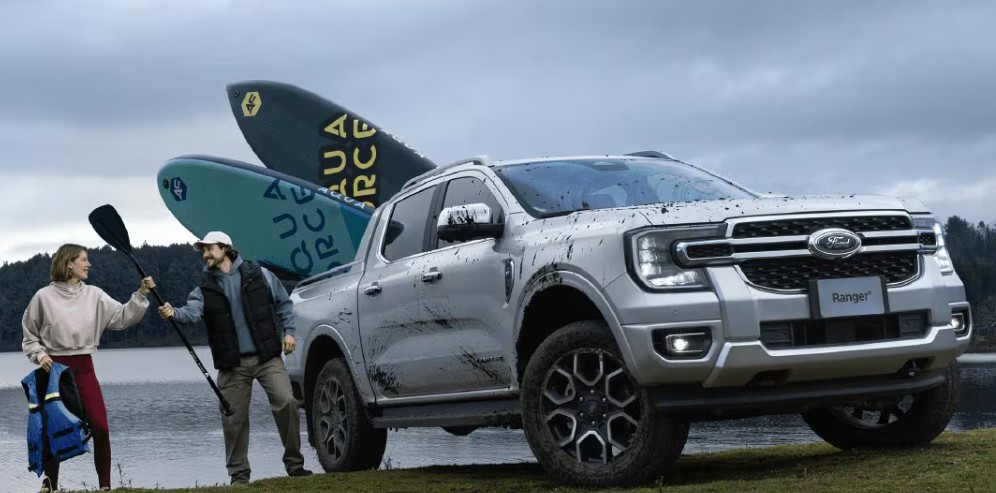
The Ford Ranger Super Duty is not designed to sip diesel like a lightweight commuter ute. It is built to haul heavy equipment, tow substantial trailers, cross rough country, and keep working when an ordinary pickup might start waving a white flag.
That raises an obvious question: what can we expect from Ford Ranger Super Duty fuel economy?
Unlike mainstream Ranger variants, the Super Duty sits in a heavier vehicle category where Ford does not currently publish a standard combined fuel-consumption figure. Independent testing has reported approximately 11–12 litres per 100 kilometres in relatively favourable driving, but that number should be treated as an early real-world reference rather than a guaranteed result.
Once we add a service body, tools, larger accessories, difficult terrain, or a heavy trailer, consumption can climb noticeably. This is not surprising. Asking a workhorse of this size to match an ordinary dual-cab Ranger would be like expecting a steel-capped boot to feel as light as a running shoe.
In this guide, we will examine likely real-world fuel use, driving range, towing consumption, operating costs, and practical ways to reduce diesel usage without compromising the truck’s working ability.
Content in this publication
- What Is the Ford Ranger Super Duty?
- Does Ford Publish an Official Fuel Economy Figure?
- Expected Ford Ranger Super Duty Fuel Economy
- How the Super Duty Compares With a Regular Ranger
- The Role of the 3.0-Litre V6 Turbo-Diesel Engine
- How Far Can the Ranger Super Duty Travel on One Tank?
- Ford Ranger Super Duty Fuel Economy When Towing
- Fuel Economy With a Heavy Payload
- Urban Fuel Economy
- Highway Fuel Economy
- Off-Road Fuel Consumption
- How Tyres Affect Ranger Super Duty Consumption
- The Effect of Accessories and Body Design
- Calculating Annual Fuel Use
- How to Measure Your Real Fuel Economy Correctly
- How to Improve Ford Ranger Super Duty Fuel Economy
- Can Modifications Improve Fuel Economy?
- Is the Ranger Super Duty Economical for Its Capability?
- Who Should Be Concerned About Its Fuel Consumption?
- What Fuel Economy Should Buyers Budget For?
- Ford Ranger Super Duty Fuel Economy Verdict
- Frequently Asked Questions
What Is the Ford Ranger Super Duty?
The Ranger Super Duty is a heavy-duty version of Ford’s familiar midsize pickup. However, describing it as merely a tougher Ranger does not tell the whole story.
Ford developed it for demanding commercial, agricultural, mining, emergency-service, infrastructure, and remote-area applications. It is aimed at buyers who need significantly more carrying and towing capability than a conventional one-tonne ute can comfortably provide.
Its reinforced hardware includes heavy-duty axles, eight-stud wheel hubs, 33-inch tyres, front and rear locking differentials, and a large 130-litre fuel tank. Ford specifically promotes the vehicle as being suitable for remote locations and demanding work.
That rugged equipment improves capability, but it also introduces several fuel-economy penalties:
- Greater vehicle mass
- Heavier wheels and tyres
- Increased rolling resistance
- More aggressive tyre tread
- Higher aerodynamic drag
- Lower gearing for heavy-duty operation
- Additional mechanical resistance
- Greater likelihood of carrying permanent equipment
In other words, the Super Duty uses more fuel partly because it is equipped to do considerably more work.
Does Ford Publish an Official Fuel Economy Figure?
At the time of writing, Ford Australia does not prominently publish a conventional combined fuel-consumption number for the Ranger Super Duty.
This differs from regular Ranger models, which generally receive standardised consumption figures that help buyers compare engines and variants. Ford explains that fuel-consumption specifications for its vehicles are normally available through the relevant model information, but the Super Duty’s heavier classification changes the applicable reporting requirements.
Therefore, we should be cautious whenever a website presents one precise Super Duty figure as though it applies to every driver.
Real-world consumption will vary according to:
- Body configuration
- Payload
- Trailer weight
- Road surface
- Average speed
- Tyre pressure
- Accessory load
- Weather conditions
- Driver behaviour
- Time spent idling
The most useful approach is not to search for one magical number. Instead, we should consider realistic consumption ranges for different operating conditions.
Expected Ford Ranger Super Duty Fuel Economy
Early independent testing suggests that an unloaded or lightly loaded Ranger Super Duty may return approximately 11–12L/100km in mixed driving. One Australian review recorded averages within that range, although the publication warned that its result should not be treated as an official figure.
For planning purposes, we can use the following broad estimates:
| Driving situation | Possible real-world consumption |
|---|---|
| Open-road driving, lightly loaded | 10.5–12.0L/100km |
| Mixed urban and highway use | 11.5–13.5L/100km |
| Urban worksite operation | 13.0–16.0L/100km |
| Moderate payload | 12.5–15.0L/100km |
| Heavy payload | 14.0–18.0L/100km |
| Towing a large trailer | 15.0–22.0L/100km |
| Sand, mud, steep tracks, or low range | 18.0–30.0L/100km or more |
These are practical estimates, not certified Ford figures. Actual results can sit outside these ranges, particularly when the vehicle carries a specialised body or operates in severe conditions.
Why a Single Consumption Number Can Be Misleading
Imagine two identical Ranger Super Duty vehicles.
The first carries an aluminium tray, travels mostly on sealed regional roads, and rarely tows. The second has a steel service body, roof-mounted equipment, spare tyres, tools, a bull bar, and a three-tonne trailer.
They may share an engine and badge, but their fuel consumption could be dramatically different.
That is why fleet managers often track consumption by vehicle rather than relying solely on brochure data. The true figure is shaped by the finished vehicle and the work it performs.
How the Super Duty Compares With a Regular Ranger
A regular Ford Ranger equipped with the 3.0-litre V6 turbo-diesel has previously carried an official combined figure of around 8.4L/100km in relevant configurations, while some four-cylinder Ranger variants have been rated at approximately 7.6L/100km.
The Super Duty is likely to use more diesel because it has:
- A stronger chassis and heavier-duty components
- Larger all-terrain tyres
- Increased ground clearance
- Higher gross vehicle ratings
- Greater mechanical capacity
- More substantial cooling requirements
- Lower gearing suited to load carrying
- A higher probability of permanent payload
A lightly loaded Super Duty returning 11.5L/100km would therefore use roughly 3.1L/100km more than a Ranger V6 rated at 8.4L/100km.
Over 20,000 kilometres, that difference represents approximately 620 additional litres of diesel.
However, this comparison needs context. A regular Ranger may require payload compromises, trailer reductions, suspension modifications, or multiple trips to complete the same task. Fuel efficiency means little if the vehicle cannot safely or legally perform the required job.
The Role of the 3.0-Litre V6 Turbo-Diesel Engine
The Ranger Super Duty uses Ford’s 3.0-litre V6 turbo-diesel architecture, although its calibration and supporting systems are tailored to heavy-duty operation.
In regular Ranger applications, the V6 is known for producing strong low-speed torque and working with a 10-speed automatic transmission. Current mainstream Ranger V6 specifications list outputs of 184kW and 600Nm, although Super Duty tuning and final specifications should always be checked for the exact model year.
Why Torque Matters for Fuel Use
A high-torque diesel can move heavy loads without constantly revving toward the top of its range. This can improve drivability and reduce unnecessary gear hunting.
Nevertheless, torque does not make fuel consumption disappear. Producing sustained pulling power requires energy, and that energy comes from diesel.
When towing uphill, the engine must overcome:
- Vehicle weight
- Trailer weight
- Gradient
- Rolling resistance
- Air resistance
- Driveline losses
The harder and longer the engine works, the more fuel it consumes.
How the 10-Speed Automatic May Help
A wide-ratio automatic transmission can keep the engine closer to its efficient operating range. On level roads, the higher gears reduce engine speed. Under load, the lower ratios provide the leverage needed to start moving or climb hills.
However, constant shifting can increase consumption when the truck is operating near its limit. On rolling terrain, a heavy trailer may cause repeated downshifts as the transmission searches for the appropriate ratio.
Smooth throttle inputs and a sensible cruising speed can make the gearbox’s job easier.
How Far Can the Ranger Super Duty Travel on One Tank?
One of the vehicle’s most useful features is its 130-litre fuel tank. Ford highlights this large capacity as part of the Super Duty’s remote-area capability.
The theoretical driving range can be estimated using this formula:
Range = usable fuel ÷ consumption × 100
Because it is sensible to retain a reserve, we should not plan journeys around using every last litre. Using approximately 117 litres—90% of the tank—provides a more practical estimate.
| Average consumption | Approximate range using 117 litres |
| 10L/100km | 1,170km |
| 11L/100km | 1,064km |
| 12L/100km | 975km |
| 13L/100km | 900km |
| 14L/100km | 836km |
| 15L/100km | 780km |
| 18L/100km | 650km |
| 20L/100km | 585km |
| 25L/100km | 468km |
Realistic Unloaded Touring Range
At 11.5L/100km, a 117-litre usable allowance would deliver about 1,017 kilometres.
That is a strong theoretical range, but remote travel demands conservative planning. Headwinds, corrugated roads, detours, soft surfaces, and extended idling can quickly shorten the distance between refuelling stops.
Realistic Towing Range
At 18L/100km, the same usable allowance provides approximately 650 kilometres.
At 22L/100km, practical range falls to around 532 kilometres.
This illustrates why the large tank matters. The Super Duty may consume more diesel than a regular Ranger, yet its expanded fuel capacity can still provide reassuring range between remote fuel stations.
Ford Ranger Super Duty Fuel Economy When Towing
Towing will probably have the greatest effect on consumption for many owners.
A trailer does more than add weight. It can also behave like a wall pushing through the air. At highway speeds, aerodynamic drag may become a larger problem than the trailer’s mass.
Expected Consumption With a Heavy Trailer
Depending on trailer shape, weight, speed, and terrain, drivers might see:
- 15–17L/100km: Moderate trailer on relatively flat roads
- 17–20L/100km: Large caravan, machinery trailer, or heavy enclosed trailer
- 20–24L/100km: Heavy towing through hills or strong winds
- Above 24L/100km: Severe terrain, high speeds, soft surfaces, or near-maximum combinations
A low-profile equipment trailer may consume less fuel than a lighter but taller caravan. Weight matters during acceleration and hill climbing, while aerodynamic shape becomes especially important at speed.
Why Speed Changes Towing Consumption So Quickly
Air resistance increases sharply as speed rises. Moving from 90km/h to 110km/h may not feel like a dramatic change inside the cabin, but the engine sees a much larger aerodynamic workload.
Reducing cruising speed by even 5–10km/h can produce meaningful savings, particularly with a tall trailer.
It also improves braking distance, tyre temperature, and overall stability. That is one of those rare situations where saving fuel and improving safety can go hand in hand.
Fuel Economy With a Heavy Payload
Payload influences consumption differently from towing.
A heavy tray load adds mass but may not create the same aerodynamic drag as a tall trailer. Consumption tends to rise most noticeably during:
- Frequent acceleration
- Stop-start urban work
- Steep climbs
- Soft road conditions
- Low-speed off-road driving
Once the truck reaches a stable speed on flat ground, the penalty may be less dramatic than expected. However, every acceleration event forces the engine to move that mass again.
Permanent Payload Matters Every Day
A service body packed with tools may add hundreds of kilograms before the day’s cargo is loaded. Bull bars, winches, underbody protection, dual batteries, water tanks, compressors, roof racks, and spare wheels also contribute.
One accessory may seem insignificant. Ten accessories become a permanent passenger that never gets out.
For fleet operation, weighing the completed vehicle is far more useful than guessing from accessory catalogues.
Urban Fuel Economy
Cities are not the natural habitat of a heavy-duty diesel pickup.
Stop-start traffic wastes energy because the truck repeatedly accelerates its mass and then converts that energy into heat through the brakes. Short trips also prevent the powertrain from reaching stable operating temperature.
Urban consumption could easily enter the 13–16L/100km range, even without a major payload.
It may rise further when the vehicle:
- Idles for extended periods
- Powers worksite equipment
- Makes short delivery runs
- Uses air conditioning continuously
- Operates in congested traffic
- Carries a permanent service body
- Performs frequent cold starts
A dashboard average expressed in litres per 100 kilometres can disguise idling consumption. The engine may burn fuel while the odometer barely moves.
For commercial vehicles, tracking litres per engine hour alongside litres per 100 kilometres can provide a clearer picture.
A truck that appears inefficient may spend hours running hydraulic, electrical, refrigeration, or safety equipment while stationary. That is operational consumption, not necessarily poor driving.
Highway Fuel Economy
The Ranger Super Duty should be at its most efficient during steady highway driving with a light load and minimal headwind.
A reasonable expectation might sit around 10.5–12.5L/100km, depending on the body and tyre configuration.
However, highway results can deteriorate quickly when we add:
- Roof racks
- Ladder racks
- Canopies
- Tall service bodies
- External spare tyres
- A trailer
- Strong headwinds
- Higher cruising speeds
Aerodynamic drag is a quiet thief. We may not see it, but we certainly pay for it at the pump.
The Benefit of Consistent Speed
Smooth, stable driving helps the engine and transmission settle into an efficient rhythm. Repeated acceleration from 90 to 110km/h burns more fuel than maintaining a steady speed.
Cruise control can help on gentle terrain, although manual throttle control may be more economical in steep country. Cruise control sometimes applies more throttle than necessary to maintain an exact speed uphill.
Off-Road Fuel Consumption
Off-road operation can produce the Super Duty’s highest consumption figures.
In mud, sand, rocks, or steep terrain, the vehicle may travel only a short distance while the engine performs substantial work. Low-range gearing, tyre slip, soft surfaces, and repeated acceleration all increase fuel use.
Consumption may rise above 20L/100km, and severe conditions can push it well beyond that level.
Why Sand Is Particularly Demanding
Soft sand constantly resists the tyres. The truck must build and maintain momentum while the engine works against the surface beneath it.
Incorrect tyre pressure makes matters worse. Excessively high pressure reduces the tyre’s footprint, causing the vehicle to dig rather than float.
Appropriate pressure reduction can improve traction and reduce strain, but tyres must be reinflated before returning to higher-speed sealed roads.
Low Range Does Not Automatically Waste Fuel
Low range increases engine speed relative to road speed, but it can still be the correct and more efficient choice in difficult terrain.
Trying to force the vehicle through an obstacle in high range can create excessive transmission slip, heat, wheelspin, and throttle demand. Selecting the right gear early often uses less mechanical effort than attacking the terrain with momentum and hope.
How Tyres Affect Ranger Super Duty Consumption
The Super Duty’s 33-inch tyres contribute to its clearance, traction, and durability. They also increase rotating mass and rolling resistance compared with smaller road-focused tyres.
Aggressive tread blocks flex as they contact the road. That deformation consumes energy.
Tyre Pressure and Diesel Use
Underinflated tyres create additional drag. The engine must work harder simply to keep the vehicle moving.
Overinflation is not a perfect solution because it may reduce grip, comfort, tyre life, and load performance. We should follow the pressure guidance provided for the vehicle’s load and operating conditions.
Pressure should be checked when tyres are cold and adjusted when:
- Payload changes significantly
- A trailer is connected
- The vehicle enters soft terrain
- Seasonal temperatures change
- Tyres or wheel specifications are altered
Even a small pressure error across six working days and thousands of kilometres can become an expensive habit.
The Effect of Accessories and Body Design
Commercial customers rarely operate a cab-chassis vehicle in factory form. The finished body can determine whether the truck is relatively economical or constantly thirsty.
Accessories With a Major Aerodynamic Effect
The following additions may increase consumption:
- Full-width ladder racks
- Roof tents
- Tall canopies
- External toolboxes
- Upright spare tyres
- Roof-mounted lights
- Signage extending above the cab
- Large frontal protection
- Poorly designed service bodies
A streamlined canopy may carry more weight yet consume less fuel than an open arrangement with equipment exposed to the airflow.
Weight Is Only Half the Story
At city speeds, weight often dominates. At highway speeds, aerodynamic drag becomes increasingly important.
This explains why removing 50 kilograms may produce little improvement while lowering or streamlining a roof-mounted load can create a noticeable difference.
Calculating Annual Fuel Use
We can estimate annual diesel use with a simple equation:
Annual litres = annual kilometres × consumption ÷ 100
For a Ranger Super Duty travelling 30,000 kilometres per year:
| Average consumption | Annual fuel use |
| 11L/100km | 3,300 litres |
| 13L/100km | 3,900 litres |
| 15L/100km | 4,500 litres |
| 18L/100km | 5,400 litres |
| 20L/100km | 6,000 litres |
At 15L/100km, the truck consumes 1,200 litres more per year than it would at 11L/100km.
For one private owner, that difference is meaningful. Across a fleet of 20 vehicles, it becomes 24,000 litres annually.
A Simple Running-Cost Formula
Use:
Fuel cost per 100km = consumption × diesel price
For example, at €1.70 per litre:
- 11L/100km costs €18.70 per 100km
- 15L/100km costs €25.50 per 100km
- 20L/100km costs €34.00 per 100km
Over 30,000 kilometres, the difference between 11 and 15L/100km would be approximately €2,040.
Businesses should replace the example price with their actual contracted or regional diesel cost.
How to Measure Your Real Fuel Economy Correctly
Dashboard computers are useful, but a full-tank calculation provides a stronger long-term reference.
Follow this process:
- Fill the tank completely.
- Reset the trip meter.
- Drive normally.
- Refill at the same station if practical.
- Record the litres added.
- Record the distance travelled.
- Divide litres by kilometres.
- Multiply the result by 100.
For example:
- Fuel added: 92 litres
- Distance travelled: 720 kilometres
- Calculation: 92 ÷ 720 × 100
- Result: 12.8L/100km
Why One Tank Is Not Enough
One result can be distorted by:
- A partially filled tank
- Pump shut-off differences
- Trailer use
- Strong winds
- Unusual idling
- Regeneration cycles
- Roadworks
- Terrain changes
Tracking five or more fills creates a much clearer average.
Fleet operators should also record payload, trailer use, engine hours, route type, and driver. Without context, consumption data is merely a number searching for an explanation.
How to Improve Ford Ranger Super Duty Fuel Economy
We cannot transform a heavy-duty work truck into a compact hybrid. We can, however, remove waste.
Ford recommends strategies such as reducing unnecessary idling, selecting routes with less stopping and starting, and avoiding unnecessary electrical loads.
The following habits can also help.
Accelerate Progressively
Heavy vehicles reward patience. Use the engine’s torque rather than flooring the accelerator after every stop.
Progressive acceleration reduces fuel use, transmission stress, tyre wear, and load movement.
Reduce Unnecessary Cruising Speed
A small speed reduction can make a substantial difference when towing or carrying bulky equipment.
Arriving a few minutes later may save litres of fuel and create a calmer journey.
Remove Equipment That Is Not Needed
Unused chains, toolboxes, spare components, water, and construction materials add weight every kilometre.
A monthly load audit can reveal equipment that has quietly become permanent.
Maintain the Correct Tyre Pressure
Pressure should reflect load and operating conditions, not guesswork.
Check pressures regularly and inspect for uneven wear, which may indicate alignment or suspension problems.
Keep the Engine and Driveline Serviced
Dirty filters, incorrect lubricants, dragging brakes, alignment issues, and overdue servicing can increase consumption.
A truck does not need to display a warning light before inefficiency begins.
Plan Routes More Carefully
Avoiding congestion, unnecessary detours, steep grades, and repeated stops can save more fuel than a collection of small mechanical modifications.
For fleets, route planning software may produce meaningful savings across multiple vehicles.
Control Idle Time
Switch off the engine when safe and appropriate. Where equipment requires stationary power, compare engine idling with auxiliary power solutions.
The cheapest litre of diesel is the one we never burn.
Can Modifications Improve Fuel Economy?
We should be sceptical of products promising dramatic improvements.
Some modifications may reduce restriction or improve drivability, but fuel savings are often exaggerated. Engine tuning can also affect emissions compliance, reliability, warranty coverage, and insurance.
Potentially helpful changes include:
- Aerodynamically designed service bodies
- Lower-profile roof equipment
- Appropriate road-biased tyres for sealed-road fleets
- Weight reduction
- Quality wheel alignment
- Optimised route and load management
Changes that may worsen consumption include:
- Larger tyres
- Suspension lifts
- Heavy steel accessories
- Aggressive engine tuning
- Wide wheels
- Roof-mounted cargo
- Poorly matched gearing
The best fuel-economy modification is often operational discipline rather than a shiny part in a box.
Is the Ranger Super Duty Economical for Its Capability?
That depends on how we define economical.
If we compare it with a small diesel SUV, the answer is clearly no. If we compare it with a larger truck required to carry the same equipment, the answer becomes more complicated.
The Super Duty may reduce operating costs by allowing a business to:
- Complete work in fewer trips
- Carry heavier equipment legally
- Tow without relying on a larger truck
- Reach remote sites without additional support
- Reduce the need for suspension and payload modifications
- Standardise a fleet around Ranger-based vehicles
Fuel consumption is only one line in the total-cost ledger.
A cheaper, lighter ute that requires two journeys may consume more total fuel than a Super Duty completing the task once.
Who Should Be Concerned About Its Fuel Consumption?
The Super Duty may not suit buyers who primarily commute, carry light recreational equipment, or tow only occasionally.
A normal Ranger will probably be cheaper to purchase, fuel, insure, and maintain for those tasks.
The Super Duty makes more sense for:
- Mining contractors
- Agricultural operators
- Emergency services
- Utility companies
- Civil construction businesses
- Heavy caravan users
- Remote-area technicians
- Forestry operations
- Mobile service fleets
- Buyers who regularly approach normal ute limits
We should choose the vehicle around the job, not the visual appeal of heavy-duty hardware.
What Fuel Economy Should Buyers Budget For?
For conservative budgeting, we would not base ownership costs on the best independent result.
A sensible planning approach could be:
- 12L/100km for mainly open-road, lightly loaded use
- 14–15L/100km for mixed commercial operation
- 17–20L/100km for regular heavy towing
- 20L/100km or more for difficult off-road or severe-duty use
Budgeting slightly high creates a financial cushion. If the truck performs better, that becomes a welcome saving rather than a rescue mission for an overly optimistic spreadsheet.
Best-Case Versus Working-Case Consumption
A best-case figure tells us what the vehicle may achieve under favourable conditions.
A working-case figure tells us what it is likely to cost while doing the job we bought it to perform.
For a Super Duty, the second number matters far more.
Ford Ranger Super Duty Fuel Economy Verdict
The Ford Ranger Super Duty will not be the most fuel-efficient Ranger in the showroom, and it was never intended to be.
Early road testing suggests an unloaded or lightly loaded figure around 11–12L/100km may be possible, but commercial bodies, payload, towing, urban operation, and off-road terrain can move consumption into the mid-teens or beyond.
Its 130-litre tank helps compensate by providing substantial potential range, particularly during remote work.
The key question is not simply, “How much diesel does it use?”
We should ask, “How much work does it complete with that diesel?”
For drivers who rarely use its capability, the Super Duty may feel like wearing armour to collect groceries. For operators who genuinely need its payload, towing capacity, rugged construction, and remote-area range, the fuel bill may be a reasonable price for having the right tool.
Frequently Asked Questions
1. What is the Ford Ranger Super Duty’s official fuel economy?
Ford does not currently publish a conventional combined fuel-consumption figure for the Ranger Super Duty. Independent Australian testing has recorded approximately 11–12L/100km under relatively favourable conditions, but real-world results will vary.
2. How far can a Ranger Super Duty travel on one tank?
It has a 130-litre fuel tank. At 12L/100km, using a conservative 117-litre allowance, the theoretical range is approximately 975 kilometres. Heavy towing or off-road driving can reduce that distance considerably.
3. How much fuel will it use while towing?
A reasonable planning estimate is approximately 15–22L/100km, depending on trailer weight, shape, terrain, wind, and cruising speed. Severe conditions may result in even higher consumption.
4. Is the Ranger Super Duty less economical than a regular Ranger V6?
Yes. Its heavier construction, larger tyres, stronger components, lower gearing, and greater working loads are likely to produce higher consumption than a regular Ranger V6.
5. Can we improve Ranger Super Duty fuel economy?
Yes, although improvements will usually be incremental. Maintain correct tyre pressure, reduce idling, drive smoothly, limit cruising speed, remove unnecessary weight, streamline accessories, and keep the vehicle properly serviced.
If you want to know other articles similar to Ford Ranger Super Duty Fuel Economy: Real-World Consumption, Range, and Running Costs you can visit the category Driving.
Kia Sorento Fuel Economy: MPG, Hybrid, and Plug-In Hybrid Explained
BYD Shark 6 Fuel Consumption: Real-World Economy, Range and What to Expect
Vauxhall Agila MPG: Real-World Fuel Economy and Engine Guide

Honda Passport MPG: Real-World Fuel Economy, Ratings, and What to Expect

Nissan Rogue Fuel Economy: MPG, Range, Costs, and Real-World Efficiency
BYD Shark 6 Long Range Fuel Tank: Is the 120L Upgrade Worth It?
Leave a Reply
More content of your interest