

Vauxhall Agila MPG: Real-World Fuel Economy and Engine Guide

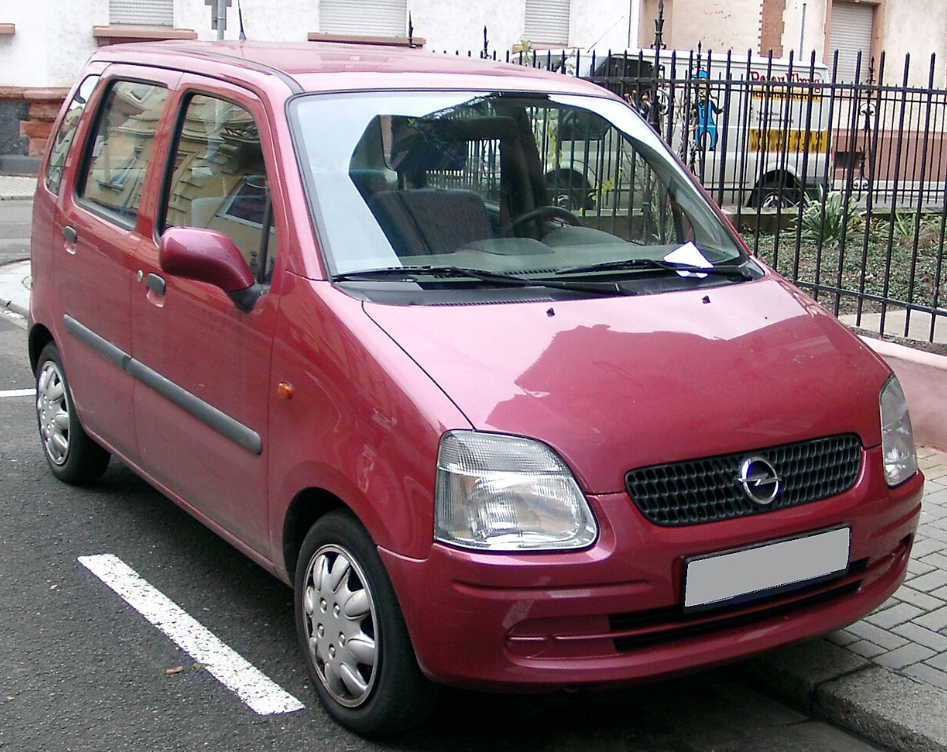
The Vauxhall Agila MPG figures are one of the main reasons this compact city car remains interesting on the UK used-car market. Small petrol engines, low weight and relatively simple mechanicals mean the Agila can deliver respectable fuel economy without the complexity of a modern hybrid.
Depending on the engine, gearbox and model year, official combined fuel economy for the second-generation Vauxhall Agila generally ranges from about 47 mpg to 63 mpg UK. Later 1.0 and 1.2 ecoFLEX models are particularly economical, while the 1.3 CDTi diesel has the highest official MPG figure.
Real-world fuel consumption is naturally lower. Owner-submitted data indicates averages of around 51 mpg for the 1.0 petrol, roughly 46–52 mpg for manual 1.2 versions, about 37 mpg for the 1.2 automatic, and nearly 59 mpg for the 1.3 CDTi ecoFLEX.
So, how economical is a Vauxhall Agila in everyday driving? Let’s look at each engine in detail.
Content in this publication
- Vauxhall Agila MPG at a Glance
- Vauxhall Agila 1.0 MPG
- Vauxhall Agila 1.2 MPG
- Vauxhall Agila Automatic MPG
- Vauxhall Agila 1.3 CDTi MPG
- First-Generation Vauxhall Agila MPG
- Vauxhall Agila MPG in Town
- Vauxhall Agila Motorway MPG
- Vauxhall Agila Fuel Tank Capacity
- How Much Does a Vauxhall Agila Cost to Fuel?
- Why Is My Vauxhall Agila MPG Low?
- How to Improve Vauxhall Agila MPG
- Which Vauxhall Agila Has the Best MPG?
- Vauxhall Agila 1.0 vs 1.2 MPG
- Vauxhall Agila Petrol vs Diesel MPG
- Is 50 MPG Good for a Vauxhall Agila?
- Does Air Conditioning Affect Vauxhall Agila MPG?
- Does Vauxhall Agila MPG Get Worse With Age?
- Frequently Asked Questions About Vauxhall Agila MPG
- Final Thoughts on Vauxhall Agila MPG
Vauxhall Agila MPG at a Glance
For later second-generation cars, these are some of the most useful fuel economy figures to know.
| Vauxhall Agila engine | Official combined MPG | Typical real-world average |
|---|---|---|
| 1.0 12v ecoFLEX | 56.5–60.1 mpg | Around 51 mpg |
| 1.2 16V manual | 47.1–55.4 mpg | Around 46.5 mpg |
| 1.2 16V ecoFLEX | 55.4 mpg | Around 51.9 mpg |
| 1.2 16V automatic | 47.1–49.6 mpg | Around 37.4 mpg |
| 1.3 CDTi 16V | 62.8 mpg | Varies |
| 1.3 CDTi ecoFLEX | 62.8 mpg | Around 58.7 mpg |
Real-world averages are based on owner-submitted data, so individual cars can perform noticeably better or worse depending on their condition, journey type and driving style.
It is also important to remember that these older Agila figures were measured under the previous NEDC-style testing system, rather than the newer WLTP procedure used for modern cars.
Vauxhall Agila 1.0 MPG
The 1.0-litre petrol engine is one of the most common engines found in used Vauxhall Agilas.
It is a small three-cylinder petrol engine designed primarily for urban driving rather than outright performance.
Official Vauxhall Agila 1.0 MPG
Earlier second-generation 1.0 models were officially rated at:
- 47.9 mpg urban
- 64.2 mpg extra-urban
- 56.5 mpg combined
Vauxhall's 2008 technical data lists the 996cc 1.0 petrol with 65PS and a combined consumption figure of 56.5 mpg.
Later ecoFLEX versions became slightly more efficient.
By 2012, Vauxhall quoted:
- 50.4 mpg urban
- 67.3 mpg extra-urban
- 60.1 mpg combined
The later engine produced 68PS while emitting 109g/km of CO2.
Vauxhall Agila 1.0 Real MPG
Official figures are useful for comparing engines, but they do not necessarily reflect everyday driving.
Owner-reported data puts the 1.0 ecoFLEX at approximately 51 mpg on average, with submitted results ranging roughly from 40 to 59 mpg.
For an older, inexpensive petrol city car, achieving around 45–52 mpg in mixed driving would therefore be quite reasonable.
Is the Agila 1.0 Good for City Driving?
Yes. This is where the small engine makes the most sense.
Its advantages include:
- Low fuel consumption
- Simple petrol-engine design
- Low weight
- Easy manoeuvrability
- Relatively inexpensive maintenance
- Good efficiency on short urban journeys
However, the engine has limited power. At motorway speeds, particularly with several passengers or luggage, we may need to use more throttle and higher revs.
That can reduce the fuel economy advantage compared with the more powerful 1.2.
Vauxhall Agila 1.2 MPG
The 1.2-litre petrol engine offers more performance while still providing good fuel economy.
For many buyers, it represents a useful compromise between efficiency and everyday usability.
Early Vauxhall Agila 1.2 Manual MPG
The original second-generation 1.2 manual was rated at:
- 40.9 mpg urban
- 60.1 mpg extra-urban
- 51.4 mpg combined
The engine produced 86PS in the 2008 model.
That means the 1.2 used slightly more petrol than the 1.0 but provided noticeably stronger performance.
Later Vauxhall Agila 1.2 ecoFLEX MPG
Later cars received a more powerful 94PS 1.2 VVT engine.
For the 2012 1.2 VVT ecoFLEX manual, Vauxhall quoted:
- 46.3 mpg urban
- 62.8 mpg extra-urban
- 55.4 mpg combined
CO2 emissions were listed at 118g/km.
The improvement meant that later 1.2-litre cars became surprisingly close to the 1.0 in terms of fuel consumption.
Vauxhall Agila 1.2 Real MPG
Owner data gives the regular 1.2 an average of about 46.5 mpg, while the 1.2 ecoFLEX performs better at approximately 51.9 mpg.
This illustrates an important point about small engines.
A smaller engine does not automatically use less fuel in every situation. If we frequently drive on faster roads, climb hills or carry several passengers, a slightly larger engine may require less effort to maintain speed.
Vauxhall Agila Automatic MPG
Drivers looking for an automatic Vauxhall Agila should pay particular attention to fuel consumption.
The automatic gearbox is available with the 1.2-litre petrol engine.
Official Agila 1.2 Automatic MPG
An early 1.2 automatic was officially rated at:
- 36.2 mpg urban
- 57.6 mpg extra-urban
- 47.9 mpg combined
That compares with 51.4 mpg combined for the equivalent manual version.
By 2012, Vauxhall quoted slightly better figures for the updated automatic:
- 40.9 mpg urban
- 56.5 mpg extra-urban
- 49.6 mpg combined
The car used a four-speed automatic transmission.
Vauxhall Agila Automatic Real MPG
The difference becomes more noticeable in real-world driving.
Owner-submitted figures show an average of approximately 37.4 mpg for the 1.2 automatic, compared with around 46.5 mpg for the regular manual 1.2 and more than 50 mpg for some ecoFLEX versions.
Therefore, buyers prioritising fuel economy will generally find the manual Agila more efficient.
Vauxhall Agila 1.3 CDTi MPG
The 1.3 CDTi diesel provides the highest official Vauxhall Agila MPG figure.
Vauxhall's original second-generation specification lists:
- 51.4 mpg urban
- 70.6 mpg extra-urban
- 62.8 mpg combined
The 1.3 CDTi produced 75PS and 190Nm of torque.
Real-World Agila Diesel MPG
Owner-submitted data for the 1.3 CDTi ecoFLEX indicates an average of approximately 58.7 mpg, with reported figures ranging from about 55.6 to 66.9 mpg.
That is impressively close to the official 62.8 mpg figure.
Is the 1.3 CDTi Worth Buying for Fuel Economy?
It depends largely on how we intend to use the car.
The diesel makes more sense for drivers covering longer distances because it can take advantage of its superior cruising efficiency.
For predominantly short urban journeys, however, an older diesel is not automatically the cheapest option.
We should also consider:
- Servicing costs
- Age of the vehicle
- Diesel-specific components
- Annual mileage
- Type of journeys
- Purchase price
- Condition and maintenance history
If we only travel a few thousand miles annually, saving several MPG may not compensate for higher repair costs if an ageing diesel develops problems.
First-Generation Vauxhall Agila MPG
The earlier Vauxhall Agila also came with small petrol engines and, later, a 1.3 diesel.
Exact figures depend on model year and specification.
Equivalent European Agila specifications from this generation list combined fuel consumption of approximately:
- 1.0 12V: 5.8 litres/100km
- 1.2 16V: around 6.0–6.3 litres/100km
- 1.3 CDTi: approximately 4.9–5.2 litres/100km
These correspond roughly to the low-to-high 40s MPG for the petrol engines and mid-to-high 50s MPG for the diesel when converted to UK imperial MPG.
When buying an early Agila, however, vehicle condition can now matter more than the original laboratory MPG figure.
Vauxhall Agila MPG in Town
Short urban trips are one of the toughest environments for fuel economy.
The engine spends more time warming up, while repeated acceleration and braking consume additional fuel.
In normal town driving, we might realistically see figures such as:
- 1.0 petrol: around 40–50 mpg
- 1.2 manual: around 38–48 mpg
- 1.2 automatic: potentially low-to-high 30s mpg
- 1.3 diesel: approximately 45–55 mpg depending on journey length
These are practical estimates rather than guaranteed figures.
A five-mile urban commute from a cold start will normally produce worse MPG than a continuous 30-mile journey.
Vauxhall Agila Motorway MPG
Despite being designed primarily as a city car, the Agila can be economical on longer journeys.
At steady speeds, a healthy 1.0 or 1.2 manual can potentially return fuel economy around or above 50 mpg.
The diesel has the greatest theoretical advantage on longer runs.
However, speed matters considerably.
Vauxhall's own economy advice noted that driving at 70 mph could use up to 9% more fuel than travelling at 60 mph under comparable conditions.
The Agila's relatively upright body also means aerodynamic drag becomes increasingly significant at motorway speeds.
Vauxhall Agila Fuel Tank Capacity
Later Vauxhall Agila models have a 45-litre fuel tank, equivalent to approximately 9.9 imperial gallons.
That gives the Agila surprisingly useful range for such a small car.
Vauxhall Agila Range on a Full Tank
Theoretical range depends on MPG.
At:
- 40 mpg: roughly 396 miles
- 45 mpg: roughly 446 miles
- 50 mpg: roughly 495 miles
- 55 mpg: roughly 545 miles
- 60 mpg: roughly 594 miles
We should not expect to use every litre of fuel before refuelling, so practical range will be lower.
For most petrol Agilas, approximately 400–500 miles between full tanks may be possible under favourable conditions.
How Much Does a Vauxhall Agila Cost to Fuel?
We can calculate fuel cost using a simple formula:
Fuel cost per mile = fuel price per litre × litres consumed per mile
For example, imagine petrol costs £1.45 per litre.
A car returning 50 mpg UK consumes approximately 5.65 litres per 100 km.
That works out at roughly 13 pence per mile at that example fuel price.
A car returning only 35 mpg would cost noticeably more.
This is why the difference between the manual and automatic Agila can become important for drivers covering higher annual mileage.
Why Is My Vauxhall Agila MPG Low?
If our Agila suddenly starts consuming significantly more fuel, there may be several explanations.
Short Journeys
Frequent cold starts can seriously reduce MPG.
An engine operating for only five or ten minutes may never reach its most efficient operating temperature.
Low Tyre Pressure
Underinflated tyres create greater rolling resistance.
Vauxhall specifically recommends maintaining the correct tyre pressures as part of economical driving.
Aggressive Acceleration
Repeatedly accelerating hard and braking sharply wastes energy.
Smooth acceleration and anticipation of traffic can produce a noticeable improvement.
Excessive Speed
Aerodynamic resistance rises rapidly with speed.
The difference between cruising at 60 mph and 70 mph can therefore be significant in a small, relatively upright car.
Mechanical Problems
Poor MPG can occasionally indicate maintenance issues such as:
- Worn spark plugs
- Dirty air filter
- Faulty oxygen sensor
- Engine temperature problems
- Binding brakes
- Incorrect wheel alignment
- Underinflated tyres
- Old or incorrect engine oil
If fuel consumption changes suddenly rather than gradually, checking the vehicle mechanically is sensible.
How to Improve Vauxhall Agila MPG
The Agila is already economical, but we can improve fuel consumption further with a few habits.
Keep the Car Properly Serviced
A correctly maintained engine is more likely to operate efficiently.
Vauxhall listed a service interval of 10,000 miles or one year for the later petrol engines in its 2012 specification.
With an older used car, maintenance history becomes particularly important.
Check Tyre Pressures Regularly
Incorrect pressure increases resistance and can affect both fuel consumption and tyre wear.
Check pressures when the tyres are cold and use the specification appropriate to the vehicle and load.
Change Gear Earlier
Vauxhall's period economy guidance suggested changing gear at around 2,500 rpm in petrol models and 2,000 rpm in diesel models when conditions allow.
We do not need to follow those numbers rigidly, but avoiding unnecessary high revs generally helps economy.
Remove Unnecessary Weight
Heavy objects in the boot mean the engine has to move more mass every time we accelerate.
Roof racks and roof boxes can have an even greater effect because they increase aerodynamic drag.
Anticipate Traffic
Looking further ahead means we can lift off the accelerator earlier rather than repeatedly accelerating toward traffic and then braking.
That simple technique can make a significant difference in urban driving.
Which Vauxhall Agila Has the Best MPG?
On official figures, the 1.3 CDTi diesel is the most economical second-generation Agila at approximately 62.8 mpg combined.
Among petrol engines, the later 1.0 ecoFLEX reaches an official 60.1 mpg combined, while the later 1.2 ecoFLEX manual achieves 55.4 mpg.
Real-world figures make the comparison more interesting.
The owner averages are approximately:
- 1.3 CDTi ecoFLEX: 58.7 mpg
- 1.2 ecoFLEX: 51.9 mpg
- 1.0 ecoFLEX: 51.0 mpg
- Regular 1.2: 46.5 mpg
- 1.2 automatic: 37.4 mpg
Therefore, the diesel may consume the least fuel, but the petrol engines can still make more sense for drivers doing mainly short journeys.
Vauxhall Agila 1.0 vs 1.2 MPG
At first glance, we might automatically assume the 1.0 is considerably more economical.
The difference is actually fairly small on later models.
Official combined figures are:
1.0 ecoFLEX: 60.1 mpg
1.2 ecoFLEX manual: 55.4 mpg
That is a difference of only 4.7 mpg.
In real-world owner data, the gap becomes even smaller:
1.0 ecoFLEX: approximately 51.0 mpg
1.2 ecoFLEX: approximately 51.9 mpg
The reason is simple: the 1.2 has more power and does not always need to work as hard.
For mixed driving, hills and faster roads, the 1.2 can therefore deliver surprisingly competitive fuel economy.
Vauxhall Agila Petrol vs Diesel MPG
For pure fuel consumption, the diesel has the advantage.
A 1.3 CDTi returning around 59 mpg will use less fuel than a petrol Agila returning around 50 mpg.
But MPG should not be our only consideration when buying an older vehicle.
Petrol Advantages
The petrol Agila generally suits:
- Low annual mileage
- City driving
- Short commutes
- Drivers wanting simpler mechanicals
- Buyers prioritising lower purchase and maintenance risk
Diesel Advantages
The diesel makes more sense for:
- Longer journeys
- Regular motorway driving
- Higher annual mileage
- Drivers prioritising maximum MPG
Since every surviving Agila is now an older used vehicle, condition and maintenance history are arguably more important than saving a few MPG.
Is 50 MPG Good for a Vauxhall Agila?
Yes.
For a petrol Vauxhall Agila, around 50 mpg in mixed real-world driving is a strong result.
It is also very close to the owner-reported averages for the 1.0 and 1.2 ecoFLEX engines.
If our petrol Agila consistently returns somewhere in the mid-to-high 40s, there is not necessarily anything wrong with it.
Driving conditions make a huge difference.
Someone travelling 20 miles on open roads may achieve considerably better economy than another owner covering two-mile urban journeys in winter.
Does Air Conditioning Affect Vauxhall Agila MPG?
Yes, although the difference varies.
Air conditioning requires energy from the engine, so fuel consumption can increase when the system is working hard.
The effect is generally most noticeable:
- At low speeds
- In hot weather
- During short journeys
- With the cabin set very cold
We would not recommend avoiding air conditioning simply to save a tiny amount of fuel. Comfort and visibility matter too, particularly because air conditioning can help demist windows.
Does Vauxhall Agila MPG Get Worse With Age?
Age itself does not automatically cause poor fuel economy, but age-related mechanical deterioration can.
An older Agila with:
- Correct tyre pressures
- Good compression
- Fresh oil
- Properly functioning sensors
- Good ignition components
- Free-moving brakes
can still deliver excellent MPG.
On the other hand, a neglected example may consume considerably more fuel than its official figure suggests.
When buying a used Agila, we would pay more attention to its maintenance history than to chasing a particular trim level purely because it has a slightly better official MPG figure.
Frequently Asked Questions About Vauxhall Agila MPG
What MPG Does a Vauxhall Agila Get?
The second-generation Vauxhall Agila has official combined fuel economy of approximately 47.1 to 62.8 mpg UK, depending on the engine, gearbox and model year. Later manual petrol models generally achieve around 50 mpg in real-world use, while the diesel can approach 60 mpg.
What Is the Vauxhall Agila 1.0 MPG?
Earlier 1.0 models were officially rated at 56.5 mpg combined, while later 1.0 ecoFLEX models improved to approximately 60.1 mpg combined. Real-world owner data averages around 51 mpg.
What Is the Vauxhall Agila 1.2 MPG?
A later 1.2 VVT ecoFLEX manual has an official combined figure of 55.4 mpg. Owner-reported averages are around 46.5 mpg for regular 1.2 models and approximately 51.9 mpg for the 1.2 ecoFLEX.
What Is the Vauxhall Agila Automatic MPG?
The later 1.2 automatic has an official combined figure of approximately 49.6 mpg, but real-world owner data averages closer to 37.4 mpg. It is therefore noticeably less economical than the manual.
Which Vauxhall Agila Engine Is Most Fuel Efficient?
The 1.3 CDTi has the highest official fuel economy at approximately 62.8 mpg combined, while the later 1.0 ecoFLEX is the most economical petrol version on official figures at up to 60.1 mpg combined.
Final Thoughts on Vauxhall Agila MPG
The Vauxhall Agila remains a genuinely economical small used car.
For most petrol versions, we can realistically expect somewhere around 45–52 mpg in normal mixed driving when the car is properly maintained. The later 1.0 and 1.2 ecoFLEX engines can return around 50 mpg or slightly more in real-world use, while the 1.3 CDTi diesel can approach 60 mpg.
The biggest exception is the 1.2 automatic. Although convenient, its four-speed automatic transmission results in significantly higher fuel consumption, with owner averages closer to the high-30s MPG.
If we mainly drive around town, the 1.0 or 1.2 manual petrol makes a lot of sense. For regular longer journeys, the 1.3 CDTi offers the strongest fuel economy.
Whatever engine we choose, we should remember that these cars are now older used vehicles. Tyre pressure, servicing, driving style, journey length and general mechanical condition can make a greater difference to Vauxhall Agila MPG than a few miles per gallon separating the original official figures.
If you want to know other articles similar to Vauxhall Agila MPG: Real-World Fuel Economy and Engine Guide you can visit the category Driving.
Honda Passport MPG: Real-World Fuel Economy, Ratings, and What to Expect
Nissan Rogue Fuel Economy: MPG, Range, Costs, and Real-World Efficiency
BYD Shark 6 Long Range Fuel Tank: Is the 120L Upgrade Worth It?
BYD Shark 6 Average Per Litre: How Far Does It Really Go on One Litre?
Mitsubishi Pajero Sport Fuel Consumption: What Should We Really Expect?
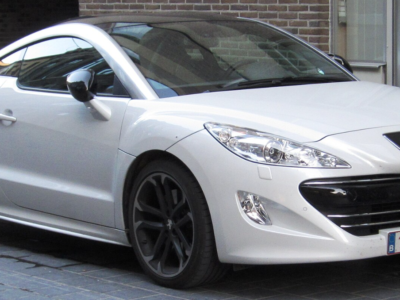
Peugeot RCZ MPG: Real-World Fuel Economy and Running Costs Explained
Leave a Reply
More content of your interest