
Honda Passport MPG: Real-World Fuel Economy, Ratings, and What to Expect

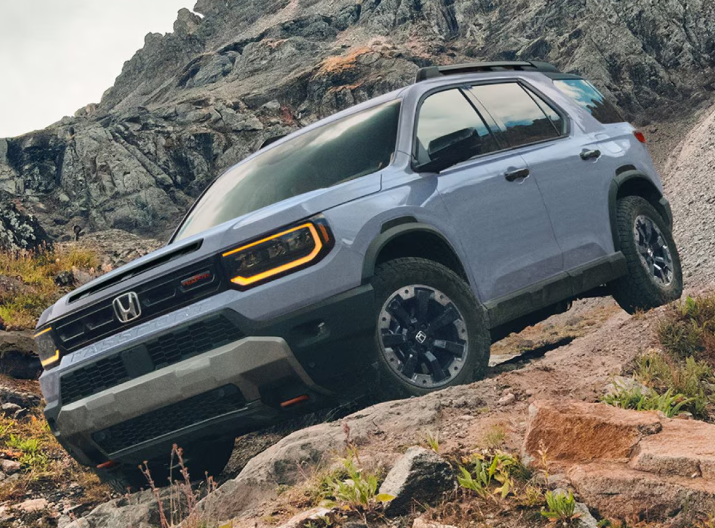
The Honda Passport MPG figures probably won’t make a hybrid owner jealous, but fuel economy is only one piece of this SUV’s personality. The Passport is built around a naturally aspirated V6, all-wheel drive, useful towing capability, a roomy cabin, and — particularly in the latest generation — a more adventurous attitude.
So, what kind of gas mileage should we actually expect?
For the 2026 Honda Passport, Honda lists EPA ratings of 19 MPG city, 25 MPG highway, and 21 MPG combined on certain configurations. TrailSport-oriented versions are rated slightly lower, at 18 MPG city, 23 MPG highway, and 20 MPG combined.
Those numbers tell us something important immediately: the Passport isn't trying to be a fuel-sipping crossover. It is more like a pair of sturdy hiking boots than lightweight running shoes. We trade a little efficiency for capability, traction, V6 performance, and the ability to wander beyond smooth suburban pavement.
But EPA numbers don't tell the entire story.
Let's dig into Honda Passport fuel economy, real-world MPG, highway range, city consumption, differences between model years, TrailSport efficiency, fuel costs, and the little changes that can stretch each tank farther.
Content in this publication
- Honda Passport MPG at a Glance
- What Is the 2026 Honda Passport MPG?
- 2025 Honda Passport MPG
- Honda Passport Highway MPG
- Honda Passport City MPG
- Honda Passport Real-World MPG
- How Far Can a Honda Passport Go on a Tank?
- Does the Honda Passport Require Premium Gas?
- Why Isn't the Honda Passport More Fuel Efficient?
- Does ECON Mode Improve Honda Passport MPG?
- How Speed Affects Honda Passport MPG
- Does Towing Reduce Honda Passport MPG?
- Do Roof Racks Hurt Honda Passport Gas Mileage?
- Tire Pressure and Honda Passport Fuel Economy
- How to Improve Honda Passport MPG
- Honda Passport MPG vs Smaller SUVs
- Is Honda Passport MPG Good for a V6 SUV?
- Honda Passport Fuel Cost Calculator
- Who Should Worry Most About Passport Fuel Economy?
- Honda Passport MPG: What Owners Should Realistically Expect
- Closing Thoughts: Is the Honda Passport Fuel Efficient Enough?
- Frequently Asked Questions About Honda Passport MPG
Honda Passport MPG at a Glance
For shoppers mainly interested in the numbers, here's the short version.
| Honda Passport | City MPG | Highway MPG | Combined MPG |
|---|---|---|---|
| 2026 standard configurations | 19 | 25 | 21 |
| 2026 TrailSport-oriented configurations | 18 | 23 | 20 |
| 2025 Passport | 19 | 24 | 21 |
Honda's current specifications show an 18.5-gallon fuel tank for the 2026 Passport, while the 2025 model used a larger 19.5-gallon tank. Both generations are designed to run on regular unleaded gasoline.
That last point matters. Although MPG isn't spectacular, we don't need to routinely feed the Passport premium gasoline, which helps soften the ownership cost.
What Is the 2026 Honda Passport MPG?
The redesigned 2026 Passport produces an interesting split in fuel economy.
Honda lists some configurations at:
- 19 MPG city
- 25 MPG highway
- 21 MPG combined
Meanwhile, more off-road-focused configurations carry ratings of:
- 18 MPG city
- 23 MPG highway
- 20 MPG combined
Honda confirms these numbers in its official specifications.
One MPG might not sound dramatic. And honestly, for many drivers, it isn't.
But over thousands of miles, the difference starts adding up.
A driver covering 15,000 miles annually at 21 MPG would burn roughly 714 gallons. At 20 MPG, the same driver would use about 750 gallons.
That's around 36 additional gallons every year.
Not catastrophic. Not invisible either.
Why Do Some Passport Trims Get Lower MPG?
This is where vehicle engineering becomes interesting.
Fuel economy isn't determined by the engine alone. Tires, aerodynamics, ride height, gearing, weight, rolling resistance, accessories, and vehicle calibration all play supporting roles.
An adventure-oriented SUV often wears equipment that works beautifully on dirt but less efficiently on pavement.
Think of running shoes versus hiking boots.
The hiking boots give us grip, protection, and confidence over difficult terrain. But we'd rather run a marathon wearing the sneakers.
The same basic principle applies here.
Honda Passport TrailSport MPG
The Honda Passport TrailSport MPG figures are especially relevant because TrailSport has become such an important part of the Passport identity.
Honda's 2026 specifications show lower EPA numbers for TrailSport-oriented configurations, dropping to approximately 18 city / 23 highway / 20 combined MPG.
That trade-off makes sense because off-road hardware isn't free from an efficiency perspective.
All-Terrain Tires Matter
All-terrain tires generally prioritize grip and durability over minimum rolling resistance.
Their tread blocks are more aggressive. The rubber and construction may differ. More energy can therefore be lost simply overcoming resistance between tire and road.
That doesn't mean the tires are bad.
It means they're doing a different job.
Off-Road Equipment Changes the Equation
Trail-focused hardware may also affect vehicle weight and airflow. Once several small penalties stack together, EPA ratings can fall.
For someone spending nearly every mile commuting on interstate highways, those compromises deserve consideration.
For somebody regularly heading toward campsites, trails, gravel roads, mountains, or snow? They might happily sacrifice one MPG.
2025 Honda Passport MPG
The previous-generation Passport provides useful context.
Every 2025 Passport trim — EX-L, TrailSport, and Black Edition — carried an official rating of:
19 MPG city / 24 MPG highway / 21 MPG combined.
Those trims used a 3.5-liter V6, nine-speed automatic transmission, AWD, and a 19.5-gallon fuel tank.
That means the headline combined MPG hasn't dramatically changed between 2025 and the more efficient versions of the 2026 Passport.
However, the underlying vehicle has evolved substantially.
2025 vs 2026 Honda Passport MPG
Put them side by side and something interesting appears.
| Model | City | Highway | Combined |
|---|---|---|---|
| 2025 Passport | 19 MPG | 24 MPG | 21 MPG |
| 2026 Passport, selected trims | 19 MPG | 25 MPG | 21 MPG |
| 2026 off-road-oriented trims | 18 MPG | 23 MPG | 20 MPG |
The highway number can improve slightly on certain 2026 configurations, while TrailSport-oriented versions sacrifice efficiency for their more rugged setup.
So if we're upgrading from a 2025 Passport purely because we expect a giant MPG improvement, we should temper expectations.
This isn't a leap from gasoline SUV to hybrid territory.
It's refinement rather than revolution.
Honda Passport Highway MPG
Highway driving is where the Passport makes its strongest fuel-economy case.
A rating of as much as 25 MPG highway for the 2026 Passport is respectable for a roomy AWD SUV with a V6.
Steady-speed driving works in its favor.
Once we're cruising at a reasonable speed, there is less constant acceleration, braking, and restarting than during urban driving.
The engine can settle into an efficient rhythm.
It's basically the automotive equivalent of walking on a moving sidewalk.
Can a Honda Passport Get Better Than EPA Highway MPG?
Possibly.
EPA ratings are standardized estimates, not a ceiling.
Drivers sometimes exceed official highway MPG when conditions are favorable:
- Moderate speeds
- Flat terrain
- Light traffic
- Properly inflated tires
- Minimal cargo
- Mild temperatures
- Smooth acceleration
- Little headwind
A long road trip at around 60–65 mph may produce very different results from hammering along an interstate at 80 mph with a roof box attached.
And that's where real-world fuel economy becomes personal.
Honda Passport City MPG
City driving exposes the less efficient side of the Passport.
The 2026 model is officially rated at approximately 18–19 MPG city, depending on configuration.
That's because city driving is brutal on fuel economy.
We accelerate thousands of pounds of SUV, brake, stop, idle, then repeat the cycle again.
Imagine pushing a loaded shopping cart down a hallway. Keeping it moving takes little effort. Stopping it completely and pushing it back up to speed every twenty feet? Suddenly we're working.
Cars experience the same basic problem.
Heavy Traffic Can Push MPG Lower
Drivers commuting through dense urban environments shouldn't be shocked to see averages below EPA city ratings.
Long idling periods hurt.
So do short journeys.
A cold engine is less efficient than one operating at normal temperature, meaning five-minute errands repeated throughout the week can consume surprisingly large amounts of gasoline.
Honda Passport Real-World MPG
This is probably the section most shoppers actually care about.
What will our Passport get?
There's no universal answer.
EPA ratings offer the most consistent benchmark because every vehicle is tested under standardized procedures. Real-world MPG changes enormously based on conditions.
A reasonable owner could experience numbers substantially above or below the official combined figure.
What Changes Real-World Fuel Economy?
Our actual Honda Passport gas mileage can depend on:
- Average driving speed
- City versus highway use
- Acceleration habits
- Tire pressure
- Tire design
- Vehicle load
- Roof racks and cargo boxes
- Outside temperature
- Terrain
- Traffic density
- Towing
- Maintenance
- Idling time
- Air-conditioning use
- Short-trip frequency
Two identical Passports living in different households could produce noticeably different MPG.
One owner might gently cruise along flat highways.
Another might tow a trailer through hills.
Same SUV. Completely different life.
How Far Can a Honda Passport Go on a Tank?
Honda lists an 18.5-gallon fuel tank for the 2026 Passport.
We can therefore estimate theoretical driving range using simple math.
At 21 MPG combined:
18.5 × 21 = 388.5 miles
At 20 MPG combined:
18.5 × 20 = 370 miles
Under highway conditions at 25 MPG:
18.5 × 25 = 462.5 miles
Of course, we shouldn't interpret those figures as guaranteed usable range.
Vehicles aren't normally driven until every drop disappears, and actual efficiency changes throughout a journey.
Still, somewhere around the high-300-mile range per tank under mixed conditions makes sense mathematically.
Highway Range Can Be Surprisingly Useful
Long-distance travel is where the Passport feels much more comfortable from an MPG perspective.
If traffic flows smoothly and we aren't pushing high speeds, the Passport can cover substantial distances between fuel stops.
That's important because range isn't simply about saving money.
It's about convenience.
Stopping every few hours for fuel becomes annoying on a 700-mile road trip. A decent highway range makes the vehicle easier to live with.
No.
Honda specifies regular unleaded gasoline for the 2026 Passport.
That's good news.
Some buyers look only at MPG when estimating running costs, but fuel grade matters too. An SUV requiring expensive premium gasoline can cost noticeably more even if it gets slightly better mileage.
The Passport's ability to operate on regular unleaded keeps the equation straightforward.
We shouldn't assume premium fuel will magically transform the Passport into an economy car.
If a manufacturer specifies regular unleaded, buying higher-octane gasoline solely in hopes of significant MPG gains usually doesn't make financial sense.
Follow the fuel recommendations in the owner's manual for your particular model.
Higher octane isn't an energy drink for engines.
If the engine doesn't require it, simply paying more at the pump doesn't guarantee meaningful efficiency improvements.
Why Isn't the Honda Passport More Fuel Efficient?
Because Honda designed it around priorities other than maximum fuel economy.
That's really the simplest answer.
The Passport is a fairly substantial vehicle with AWD, strong towing capability, generous passenger and cargo space, and a V6 powertrain.
Physics always sends us the bill.
A V6 Prioritizes Smooth Power
Smaller turbocharged four-cylinder engines have become common because manufacturers can combine relatively strong performance with impressive test-cycle efficiency.
Honda has taken a different approach with the Passport.
A naturally aspirated V6 tends to deliver predictable, linear power.
Press the accelerator and the engine responds without trying to hide what it is.
There's something refreshingly uncomplicated about that.
But six cylinders feeding a substantial AWD SUV aren't the formula we'd choose if 35 MPG were our primary objective.
AWD Also Has an Efficiency Cost
All-wheel drive adds capability but also mechanical complexity and weight.
More components are moving. More energy is traveling through the drivetrain.
Modern AWD systems minimize those losses impressively, yet they don't erase physics altogether.
We gain traction.
We pay a small fuel-economy tax.
Does ECON Mode Improve Honda Passport MPG?
The 2026 Passport includes an Econ driving mode among its available integrated drive modes. Honda lists Normal, Econ, Sport, Snow, Tow, Trail, and Sand modes across the current range.
Econ mode can help encourage more economical operation by altering vehicle responses.
But we shouldn't expect miracles.
Think of it as a coach whispering, "Easy on the throttle," rather than a secret hybrid system.
Driving Style Still Matters More
If we select Econ mode and then accelerate aggressively between every traffic light, the green button isn't going to rescue our fuel economy.
The biggest savings usually come from boring things:
Smooth acceleration.
Looking ahead.
Maintaining momentum.
Avoiding unnecessary high speeds.
Yes, boring can be beautiful when gasoline isn't cheap.
How Speed Affects Honda Passport MPG
Speed deserves its own section because it can quietly destroy highway efficiency.
Drivers sometimes assume highway driving automatically equals highway MPG.
Not necessarily.
A vehicle traveling 55–65 mph encounters significantly less aerodynamic resistance than the same vehicle charging ahead at 80 mph.
As speed rises, aerodynamic drag rises rapidly.
The Passport is also an SUV, not a low-slung aerodynamic sedan.
It has a large frontal area and relatively upright shape. At high speeds, we're asking it to punch a large hole through the atmosphere.
The Sweet Spot Isn't the Fast Lane
Suppose one driver cruises calmly at moderate highway speeds while another consistently pushes 80 mph.
Even on identical routes, their fuel economy can differ noticeably.
If maximizing Honda Passport MPG matters, slightly slowing down on long interstate journeys is among the easiest changes we can make.
No wrench required.
Does Towing Reduce Honda Passport MPG?
Absolutely.
Towing can reduce fuel economy substantially depending on trailer weight, shape, speed, elevation, and weather.
Honda lists the Passport as capable of handling serious towing duties, but adding a trailer means the engine must move more mass and often fight dramatically more aerodynamic drag.
A tall camper can behave like a parachute.
Expect Bigger Drops at Highway Speeds
The faster we tow, the harder aerodynamic drag works against us.
Headwinds make things worse.
Mountains make them worse again.
Anyone calculating vacation fuel costs while towing should therefore avoid budgeting around the Passport's normal EPA highway rating.
Leave room for reality.
Do Roof Racks Hurt Honda Passport Gas Mileage?
They can.
Crossbars, cargo baskets, rooftop tents, bike carriers, and especially roof boxes disturb airflow.
A Passport wearing a huge rooftop cargo box may look ready to cross a continent, but the air sees something else: resistance.
If an accessory isn't needed regularly, removing it can improve efficiency.
This matters most during highway driving because aerodynamic penalties grow as speed increases.
Tire Pressure and Honda Passport Fuel Economy
Underinflated tires increase rolling resistance.
That means the engine has to work harder simply to keep the SUV moving.
We're essentially making the tires slightly harder to roll every mile.
Check pressures when the tires are cold and follow Honda's recommended specification rather than blindly inflating to the maximum pressure printed on the tire sidewall.
Don't Overinflate for MPG
More pressure isn't automatically better.
Excessive inflation can hurt ride comfort, traction, and tire wear.
Fuel economy matters, but tires are safety equipment first.
We want the proper pressure, not a science experiment.
How to Improve Honda Passport MPG
There's no single magic modification that suddenly adds 8 MPG.
Instead, improvement comes from several small habits.
We can:
- Accelerate progressively instead of flooring the throttle.
- Keep tires at recommended pressures.
- Remove unnecessary heavy cargo.
- Remove roof accessories when they're not needed.
- Reduce excessive idling.
- Combine short errands into longer trips.
- Maintain sensible highway speeds.
- Keep up with scheduled maintenance.
- Use the recommended oil specification.
- Avoid aggressive stop-and-go driving.
- Anticipate traffic rather than repeatedly braking hard.
- Use cruise control where conditions make it appropriate.
None of those suggestions sound glamorous.
Neither does flossing.
Both work because consistency beats drama.
Honda Passport MPG vs Smaller SUVs
This comparison requires perspective.
If our priority is purely fuel economy, smaller crossovers and hybrid SUVs can do considerably better.
Honda's own current lineup makes that obvious. The 2026 CR-V is listed at as much as 28 city/33 highway MPG, while the 2026 CR-V Hybrid reaches ratings as high as 43 city/36 highway MPG depending on configuration.
The Passport plays in a different space.
We choose it because we want more ruggedness, V6 character, room, towing ability, AWD capability, and adventure-oriented hardware.
Comparing the Passport to a compact hybrid purely on MPG is like comparing a hiking backpack with a briefcase based on weight.
Yes, one is lighter.
But they're designed for different jobs.
Is Honda Passport MPG Good for a V6 SUV?
"Good" depends on what we're comparing it with.
Around 20–21 MPG combined won't impress drivers moving from a hybrid crossover.
But for someone evaluating naturally aspirated, AWD, adventure-focused midsize SUVs, the figure becomes more understandable.
Context changes everything.
Fuel economy should therefore be considered alongside:
- Purchase price
- Fuel grade
- Reliability expectations
- Maintenance costs
- Insurance
- Cargo capacity
- Towing requirements
- Performance
- Comfort
- Intended terrain
An SUV that saves two MPG but fails to do what we need isn't necessarily cheaper in any meaningful sense.
Honda Passport Fuel Cost Calculator
Let's make MPG feel more tangible.
Suppose we drive 12,000 miles per year and average 21 MPG.
12,000 ÷ 21 = roughly 571 gallons annually.
If gasoline costs $3.50 per gallon:
571 × $3.50 = approximately $1,999 per year.
At $4.00 per gallon:
571 × $4.00 = approximately $2,284 per year.
At 20 MPG, we'd use about 600 gallons over the same 12,000 miles.
The formula is simple:
Annual miles ÷ average MPG × fuel price = estimated annual fuel expense
Plug in your own numbers and suddenly MPG stops being an abstract statistic.
It becomes a budget.
Who Should Worry Most About Passport Fuel Economy?
Fuel consumption deserves more attention if we:
- Drive 20,000+ miles annually
- Have a long urban commute
- Live where gasoline is expensive
- Rarely use the Passport's capability
- Mostly drive alone
- Prioritize operating cost above performance
- Are comparing the Passport directly with hybrids
In those situations, even a 5 MPG difference can become significant over several years.
Who May Care Less?
The equation changes if we:
- Drive relatively few miles annually
- Frequently travel with family or cargo
- Tow
- Need AWD capability
- Spend time on rough roads
- Prefer naturally aspirated V6 power
- Value Passport practicality over maximum economy
Then fuel consumption becomes just one line on a much larger spreadsheet.
Honda Passport MPG: What Owners Should Realistically Expect
For current buyers, we'd treat the EPA numbers as the starting line:
2026 Passport: roughly 19/25/21 MPG in more road-oriented specifications.
2026 TrailSport-oriented versions: approximately 18/23/20 MPG.
2025 Passport: 19/24/21 MPG across EX-L, TrailSport, and Black Edition configurations.
Real driving can move those figures substantially in either direction.
Long relaxed highway drives may make the Passport look surprisingly respectable.
Repeated cold starts, downtown congestion, towing, rooftop accessories, mountains, aggressive acceleration, and high speeds can make the MPG display considerably less cheerful.
That's normal.
Closing Thoughts: Is the Honda Passport Fuel Efficient Enough?
The Honda Passport MPG story isn't about breaking efficiency records.
It's about balance.
The Passport gives us a substantial AWD SUV, V6 power, generous space, towing ability, regular-unleaded compatibility, and real adventure credentials while still managing roughly 20–21 MPG combined, depending on configuration.
Could it use less fuel? Absolutely.
Would a hybrid crossover save money at the pump? Almost certainly.
But purchasing a Passport solely on fuel consumption misses why the vehicle exists.
It's built for people who want more capability without stepping into something enormous. The MPG rating is the price of admission, not the main attraction.
The smart approach is simple: determine how many miles we drive, estimate our annual fuel expense, and decide whether the Passport's strengths justify that cost.
If they do, then 20 or 21 MPG suddenly feels far less mysterious.
It's simply part of the deal.
Frequently Asked Questions About Honda Passport MPG
1. What MPG does a 2026 Honda Passport get?
The 2026 Honda Passport is rated at up to 19 MPG city, 25 MPG highway, and 21 MPG combined depending on configuration. TrailSport-oriented versions can be rated around 18 city, 23 highway, and 20 combined MPG.
2. What is the Honda Passport TrailSport MPG?
For 2026, TrailSport-oriented configurations carry EPA ratings around 18 MPG city, 23 MPG highway, and 20 MPG combined. The extra off-road focus helps explain the modest efficiency penalty compared with more road-oriented versions.
3. How many miles can a Honda Passport travel on a full tank?
The 2026 Passport has an 18.5-gallon fuel tank. At 21 MPG combined, its mathematical full-tank range is roughly 389 miles, though actual usable range depends on driving conditions, fuel reserve, speed, terrain, and many other factors.
No. Honda specifies regular unleaded gasoline for the current Passport, helping keep fuel expenses lower than they would be in a vehicle requiring premium fuel.
5. How can we improve Honda Passport gas mileage?
Keep tires properly inflated, accelerate smoothly, avoid unnecessary idling, reduce excessive highway speeds, remove unused rooftop accessories, carry less unnecessary weight, maintain the vehicle properly, and anticipate traffic instead of constantly accelerating and braking.
If you want to know other articles similar to Honda Passport MPG: Real-World Fuel Economy, Ratings, and What to Expect you can visit the category Driving.
Can Nissan Rogue Pull a Boat? Complete Towing Guide
Can Nissan Rogue Be Flat Towed? Complete Towing Guide
Are Nissan Rogue Good on Gas? MPG, Fuel Economy, and Real-World Costs
Can Nissan Rogue Drive in Snow? Complete Winter Driving Guide

Kia Sorento Diesel Fuel Consumption: MPG, Efficiency and Real-World Range
Haval Jolion Hybrid Fuel Consumption: How Efficient Is It Really?
Leave a Reply
More content of your interest