
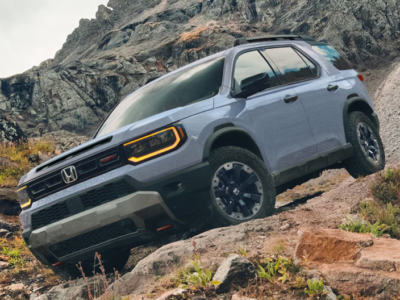
Honda Passport Best Years: Which Model Years Are Worth Buying?

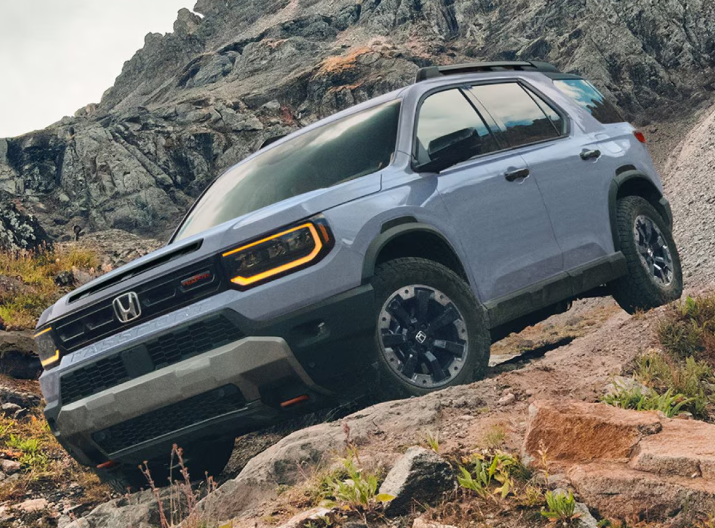
If we are shopping for a used Honda Passport, the obvious question is simple: what are the Honda Passport best years to buy? The answer, however, deserves more than the usual “pick these three years and avoid everything else” advice.
The modern Passport has changed surprisingly little mechanically between 2019 and 2025, yet individual model years differ in equipment, recall exposure, age, depreciation, and how much real-world history we have available. Then Honda hit the reset button for 2026 with an extensively redesigned Passport, a different transmission, updated technology, and considerably more serious off-road hardware.
After comparing the generations, major updates, current recall information, and the maturity of each model year, our standout choices are 2025, 2024, and 2022. The 2025 Passport is arguably the strongest late-cycle choice, the 2022 model offers an appealing price-to-features balance, while 2024 works well for buyers wanting something newer without stepping into the redesigned 2026 generation.
There is an important catch. NHTSA recall information continues to evolve. In 2026, for example, Honda recalled certain 2019–2023 Passports originally sold in U.S. salt-belt areas because corrosion could affect rear-subframe suspension mounting points. That means a buying guide written several years ago may no longer tell the whole story.
So rather than treating a model-year badge like a crystal ball, we need to look at the Passport as a complete used vehicle.
Content in this publication
- Quick Answer: What Are the Best Honda Passport Years?
- What Makes a Honda Passport Year “Best”?
- Honda Passport Generations Explained
- 2025 Honda Passport: One of the Best Years to Buy
- 2024 Honda Passport: A Strong Near-New Alternative
- 2022 Honda Passport: The Used-Value Sweet Spot
- 2021 Honda Passport: Worth Buying at the Right Price
- 2020 Honda Passport: Affordable, but Inspect Carefully
- 2019 Honda Passport: First-Year Appeal Comes With Extra Homework
- 2023 Honda Passport: Good SUV, Awkward Position
- What About the 2026 Honda Passport?
- Honda Passport Years Ranked by Buyer Type
- AWD or FWD: Which Passport Should We Prefer?
- Is the Honda Passport V6 Reliable?
- What Problems Should We Check Before Buying?
- Why a VIN Check Is More Important Than a Model-Year List
- Should We Buy a High-Mileage Passport From a Better Year?
- Which Honda Passport Trim Is Best Used?
- Our Honda Passport Best Years Shortlist
- Closing Thoughts: The Best Passport Is the Right Individual Passport
- Frequently Asked Questions
Quick Answer: What Are the Best Honda Passport Years?
For most used-SUV shoppers, we would put these model years near the top of the shopping list:
| Model year | Why it stands out | What to check |
|---|---|---|
| 2025 | Mature final year of the generation, proven powertrain, strong equipment | Auto idle-stop history and VIN-specific campaigns |
| 2024 | Near-new feel with a well-developed platform | Fuel-filler recall completion |
| 2022 | Major styling refresh, TrailSport introduced, attractive used value | FAKRA/MOST campaign, idle-stop updates, salt-belt recall eligibility |
| 2021 | Often cheaper while retaining the core V6 formula | Several applicable recalls/campaigns |
| 2019–2020 | Can be bargains | More recall exposure and greater age |
The redesigned 2026 Passport may eventually become one of the model's best years from a capability standpoint, but we would not yet call it one of the best years for proven long-term dependability. It simply has not been on the road long enough.
That distinction matters. Newer does not automatically mean better, just as older does not automatically mean unreliable.
What Makes a Honda Passport Year “Best”?
A good used Passport is a balancing act.
We are looking for the sweet spot where depreciation has already done some of the financial damage, but age has not yet invited every rubber seal, suspension component, battery, and electronic module to the retirement party.
Our criteria include:
- Powertrain maturity
- Recall history
- Known service campaigns
- Age and mileage
- Features and technology
- Purchase price
- Availability of AWD
- Updated styling and equipment
- Maintenance history
- Whether major recall work has already been completed
Notice what is missing: we do not simply count recalls and declare the year with the smallest number the winner.
A recall is a safety campaign, not a complete reliability score. One model could receive several straightforward recalls yet otherwise run faithfully for years. Another could have no recalls but suffer neglected maintenance, accident damage, or chronic owner-specific problems.
The individual vehicle remains king.
Honda Passport Generations Explained
Before choosing a year, it helps to understand where each Passport fits.
First and Second Generations: The 1990s and Early 2000s
Honda originally sold the Passport during the 1990s and early 2000s. Those vehicles belong to an entirely different chapter of the Passport story and shared their roots with the Isuzu Rodeo.
We would treat them as enthusiast or inexpensive older-SUV purchases rather than direct alternatives to a 2019–2026 Passport.
At this age, the model year matters far less than corrosion, previous repairs, transmission condition, cooling-system health, maintenance records, and general preservation.
In other words, buying a 25-year-old SUV because an online list calls that year “reliable” is like buying a house based only on the year it was built. We still need to inspect the foundation.
Modern Passport: 2019–2025
Honda revived the Passport name for 2019 as a two-row midsize SUV positioned around the mechanical architecture of the Pilot and Ridgeline.
These are the vehicles most shoppers mean when searching for the Honda Passport best years.
The formula stayed pleasantly old-school:
- Naturally aspirated 3.5-liter V6
- Nine-speed automatic transmission
- Five-passenger layout
- Available or standard i-VTM4 AWD depending on trim
- Large cargo area
- No turbocharger
- No hybrid system
The 2022 model received a significant cosmetic update and introduced the TrailSport trim. Honda says the 2022 refresh brought a new hood, front fenders, grille, bumpers and wheels, while TrailSport added standard i-VTM4 AWD and rugged-themed equipment.
The Redesigned 2026 Passport
The 2026 model represents a much bigger change.
Honda lists a 285-hp 3.5-liter V6, a 10-speed automatic transmission, second-generation i-VTM4 AWD, seven drive modes and up to 5,000 pounds of towing capacity. TrailSport versions also gain more serious off-road equipment than earlier TrailSport models.
That makes it more capable on paper.
But if our goal is identifying proven used-car years, the 2026 is still the new kid at school. We need more time before judging how the redesigned hardware ages.
2025 Honda Passport: One of the Best Years to Buy
If we wanted a Passport from the outgoing generation and budget allowed it, 2025 would be one of the first years we would investigate.
Why?
Because it sits at the end of a generation that had already been in production for years. Manufacturers often refine assembly procedures, software and individual components as a platform matures, even when the brochure looks almost unchanged.
The 2025 Passport retained the familiar 3.5-liter V6, nine-speed automatic and i-VTM4 AWD configuration available throughout the mature generation. Honda offered EX-L, TrailSport and Black Edition versions.
Even more interestingly, current NHTSA-based recall listings show no safety recall campaigns recorded specifically for the 2025 Passport as of September 2026. That is encouraging, though it should never be interpreted as proof of perfect reliability.
Why the 2025 Passport Makes Sense
The 2025 model gives us several advantages simultaneously.
It is new enough that low-mileage examples remain relatively easy to find. Yet it uses the older, thoroughly established Passport platform rather than launching an entirely new generation.
That puts it in an appealing middle ground.
We also avoid several model-year-specific campaigns affecting earlier vehicles. For example, the fuel-pump recall covers certain 2019–2020 Passports, while Honda's FAKRA/MOST rear-camera campaign included Passport model years through 2023.
The Important 2025 Caveat
There is still something buyers should know.
NHTSA opened Engineering Analysis EA25004 in March 2025 concerning allegations that Auto Idle Stop-equipped Honda vehicles could fail to restart after the engine shuts down at a stop. The investigation includes 2019–2025 Honda Passports among several Honda and Acura models. An investigation does not establish that every vehicle has a defect, but it is worth knowing before purchase.
That is why even a late-model Passport deserves a proper test drive and VIN check.
2024 Honda Passport: A Strong Near-New Alternative
The 2024 Honda Passport is another compelling year, particularly when its price sits meaningfully below an equivalent 2025.
Mechanically, there is little reason to fear it simply because it is one year older.
By this stage, Honda had been building the modern Passport for several years. The 2024 model therefore combines relatively modern equipment with a platform far removed from the uncertainties associated with a first-year redesign.
Its main documented safety recall concerns the fuel filler system.
Honda recalled certain 2023–2024 Passports because the fuel filler neck tube and filler pipe could separate, potentially allowing fuel to leak. Dealers were instructed to inspect the connection and repair it if necessary.
That sounds alarming—and any fuel-related recall deserves attention—but it does not mean we would automatically remove every 2024 Passport from consideration.
Instead, we would check the VIN and make sure any applicable recall has been completed.
When We Would Choose a 2024 Over a 2025
Price decides this battle.
If two Passports have comparable mileage, condition, trim and maintenance records, the 2025 has the cleaner current recall picture.
But suppose the 2024 costs several thousand dollars less and its applicable recall repair has already been documented.
Suddenly, the older SUV starts looking very attractive.
Used-car shopping is rarely about finding the theoretically perfect year. It is about finding the best specific vehicle for the money.
2022 Honda Passport: The Used-Value Sweet Spot
The 2022 Passport may be the most interesting year for value-focused buyers.
Honda gave the Passport a substantial exterior redesign without replacing its core powertrain. Think of it as renovating the kitchen rather than demolishing the house.
The new front styling made the SUV look broader and tougher, while TrailSport joined the lineup for the first time. The 2022 model also retained the 280-hp 3.5-liter V6 and nine-speed automatic transmission. AWD models were rated to tow up to 5,000 pounds.
That combination is appealing because we receive much of the later-generation appearance without paying late-model prices.
Why 2022 Is Easy to Recommend—with Conditions
The first condition is recall verification.
Honda's rearview-camera/MOST communication recall covered 2019–2023 Passports. Improperly manufactured coaxial cable connections could interfere with communication in the network and potentially cause intermittent or blank rear-camera images. Honda's corrective procedure involves FAKRA service cables and splice boxes.
The second issue involves Auto Idle Stop. Honda service actions addressed some Passport vehicles where the engine might not restart automatically after idle stop, and NHTSA later expanded its investigation to newer model years as well.
The third consideration is regional history.
You may be interested in reading Test Drive Review: The Fiat 500 Abarth 0-60 Acceleration
In 2026, Honda's salt-belt rear-subframe corrosion recall included certain 2019–2023 Passports. NHTSA says corrosion at suspension mounting points could eventually lead to material thinning and component failure on affected vehicles operated where road de-icing agents are heavily used.
None of these automatically makes a repaired 2022 a poor purchase.
It means documentation matters.
2021 Honda Passport: Worth Buying at the Right Price
The 2021 model can work well for buyers wanting to spend less than they would on a refreshed 2022.
Underneath, the ingredients remain familiar: V6 power, useful cargo space, available AWD and straightforward two-row practicality.
But once prices begin overlapping with 2022 models, we generally prefer the newer SUV.
Why?
The 2022 styling feels fresher, TrailSport becomes available, and we are starting with a vehicle one year younger.
The 2021 Passport also falls into several safety campaigns worth checking.
Certain 2020–2021 Passports were included in a large Honda recall involving the front passenger occupant-classification sensor. NHTSA said the sensor could potentially malfunction, affecting airbag operation.
It can also fall under the MOST/FAKRA campaign and, depending on region and VIN, the newer salt-belt subframe campaign.
Who Should Buy a 2021 Passport?
Someone finding a genuinely clean example.
Imagine one-owner ownership, consistent dealer maintenance, no accident history, completed recalls, good tires and brakes, and a price thousands below a comparable 2022.
That can easily outweigh the model-year difference.
We would rather own a meticulously maintained 2021 than a neglected 2024.
Every time.
2020 Honda Passport: Affordable, but Inspect Carefully
The 2020 Passport is where we become more selective.
Not because the basic SUV suddenly turns into a pumpkin at midnight, but because recall exposure and vehicle age begin stacking up.
Honda's large fuel-pump recall includes certain 2019–2020 Passports. The affected fuel-pump impeller could deform, potentially causing the pump to stop working and resulting in a stall or failure to start.
Some 2020–2021 models also fall under the passenger occupant sensor recall. Earlier Passport years additionally have relevant multimedia/network campaigns.
If all applicable repairs have been completed, those recalls do not automatically doom the vehicle.
But the shopping equation changes.
A 2020 needs to be meaningfully cheaper than a later Passport to attract us.
2019 Honda Passport: First-Year Appeal Comes With Extra Homework
The 2019 model relaunched the Passport nameplate and established the recipe that would carry through 2025.
There is plenty to like about it.
It is spacious, powerful, practical and often one of the least expensive ways into the modern Passport family.
Yet 2019 is also the first production year.
And its recall history gives us more boxes to check.
Certain 2019 Passports were recalled because the hood latch striker could become damaged and potentially allow the hood to open while driving. Honda's recall documentation identified 18,704 affected 2019 Passports in that campaign.
The year can also be involved in fuel-pump, network/rear-camera, Auto Idle Stop and regional rear-subframe actions depending on the individual VIN.
Does That Mean We Should Avoid Every 2019 Passport?
No.
A recall that was properly repaired is fundamentally different from an unrepaired safety defect.
If a 2019 Passport has excellent service history, a clean inspection, documented campaign completion and a substantial price advantage, it may still make sense.
We simply would not make it our first search filter.
2023 Honda Passport: Good SUV, Awkward Position
The 2023 Passport is an interesting case.
It benefits from the 2022 refresh and looks nearly as modern as the 2024 and 2025 models.
So why is it not one of our headline picks?
Because used pricing can sometimes place it close enough to a 2024 that moving one year newer makes sense, while recall history is not necessarily cleaner.
The 2019–2023 MOST/FAKRA campaign includes the 2023 model, and certain 2023 Passports fall under the fuel-filler recall affecting 2023–2024 vehicles. In salt-belt states, certain 2023 vehicles may also fall within the rear-subframe campaign.
So the 2023 is not a “bad year.”
It is simply trapped between two attractive alternatives: the cheaper 2022 and the newer 2024.
What About the 2026 Honda Passport?
If our definition of “best” means most capable, the 2026 deserves serious attention.
Honda substantially upgraded the formula.
The new version produces 285 horsepower from its 3.5-liter V6 and pairs that engine with a 10-speed automatic. Honda also introduced second-generation i-VTM4 AWD and more serious TrailSport hardware, including all-terrain tires, off-road-tuned suspension, recovery points and skid protection on applicable versions.
It looks ready to swap the suburban coffee shop for a muddy trail without changing shoes.
But reliability rankings require time.
Why We Would Not Yet Call 2026 the Best Reliability Year
A redesigned vehicle introduces more unknowns than a late-cycle model.
Even excellent engineering cannot manufacture five years of ownership data overnight.
Buy a 2026 because you want its capability, design, warranty coverage and new technology—not because somebody can already prove it will be the most durable Passport ever made.
That evidence simply does not exist yet.
Honda Passport Years Ranked by Buyer Type
Instead of pretending one year works for everyone, we can match the model to the shopper.
Best Late-Generation Choice: 2025
Choose it when we want the mature 2019–2025 formula with minimal age.
It is particularly appealing to buyers who prefer a proven generation over the newly redesigned 2026.
Best Value: 2022
Choose 2022 if depreciation matters.
The refreshed styling makes it look considerably newer than its price may suggest, while the mechanical package remains familiar.
Just verify all campaigns and recalls.
Best Near-New Alternative: 2024
Choose the 2024 when the discount versus a 2025 is significant.
Make sure the fuel-filler recall status has been checked by VIN.
Best Budget Opportunity: 2021
A clean 2021 can deliver most of the same everyday Passport experience for less money.
You may be interested in readingTest Drive Review: The Fiat 500 Abarth 0-60 AccelerationYou may be interested in reading
 Customizing Your Ride: A Comprehensive Guide to the Fiat 500 Body Kit
Condition and recall history matter more here than trim-level bragging rights.
AWD or FWD: Which Passport Should We Prefer?
For many shoppers, AWD is worth seeking.
Honda's i-VTM4 system does more than simply wait for the front tires to slip. It can distribute torque between the rear wheels, helping the Passport feel planted on loose or slippery surfaces.
Older EX-L Passports could be configured with front-wheel drive, while TrailSport and upper AWD-oriented versions make the choice easier.
We would favor AWD if we regularly encounter:
- Snow
- Unpaved roads
- Mud
- Steep terrain
- Boat ramps
- Trailering
- Outdoor recreation
But buyers living in warm climates who remain almost entirely on pavement should not assume AWD is mandatory.
Extra mechanical hardware still carries weight, maintenance and fuel-economy considerations.
Is the Honda Passport V6 Reliable?
The naturally aspirated 3.5-liter V6 is one reason the Passport appeals to buyers suspicious of tiny turbocharged engines working overtime in midsize SUVs.
It offers smooth power and avoids turbocharger hardware.
That does not make it maintenance-free.
Oil changes still matter. Cooling-system condition matters. Transmission fluid matters. AWD fluid matters. And maintenance items should be considered based on the vehicle's age, mileage and Honda's maintenance guidance.
A tough engine treated badly can age faster than an average engine treated carefully.
Service History Beats Internet Reputation
This point cannot be emphasized enough.
Suppose we find two identical 2022 Passports.
One has 55,000 miles, complete service documentation and one careful owner.
The other has 37,000 miles but missing records, mismatched tires, dirty fluids and signs of collision repair.
The lower odometer number is not automatically the safer choice.
Mileage tells us how far the vehicle traveled.
Maintenance tells us how it traveled.
What Problems Should We Check Before Buying?
Before money changes hands, we would inspect several areas.
Pay particular attention to:
- VIN-specific recall status.
- Auto Idle Stop operation.
- Rear-camera and infotainment behavior.
- Transmission engagement and shift quality.
- Battery age and starting behavior.
- AWD differential service history.
- Suspension noise or vibration.
- Uneven tire wear.
- Evidence of rust underneath the vehicle.
- Accident or flood history.
A warning light disappearing before the test drive does not magically erase its cause.
Neither does a freshly detailed engine bay.
Why a VIN Check Is More Important Than a Model-Year List
This may be the most useful advice in the entire article.
Recalls frequently affect only certain production ranges.
NHTSA specifically tells consumers that a VIN search identifies whether a particular vehicle has an unrepaired safety recall. A model-year search provides broader information, but it cannot replace checking the individual SUV sitting in front of us.
So once we find a promising Passport, we should run the VIN.
Then run it again with Honda.
A ten-minute check could tell us more than ten “best years” articles.
Should We Buy a High-Mileage Passport From a Better Year?
Possibly.
A 2022 Passport with 90,000 highway miles and meticulous maintenance might be a smarter purchase than a 2020 example with 55,000 neglected urban miles.
High mileage lowers market value, which can create opportunities.
But we should budget for wear items.
At higher mileage, inspect:
- Struts and shocks
- Control-arm bushings
- Wheel bearings
- Engine mounts
- Brakes
- Tires
- Battery
- Cooling system
- Fluid condition
- CV joints and boots
- Air-conditioning performance
A pre-purchase inspection becomes especially valuable here.
Which Honda Passport Trim Is Best Used?
The EX-L often makes the strongest financial argument.
It provides much of the comfort equipment people actually use without adding every premium feature available.
TrailSport attracts buyers who prefer its 18-inch wheels, AWD, rugged styling and outdoor personality. The 2022 TrailSport, however, was initially more of a rugged appearance and traction package than the truly enhanced off-road treatment found on the redesigned 2026 TrailSport.
Elite and later Black Edition models add luxury touches, but used prices can climb quickly.
We should buy the trim for features we will actually use—not because a badge looks expensive in the driveway.
Our Honda Passport Best Years Shortlist
If we reduce the entire discussion to a simple shopping strategy, this is where we land:
Start with 2025 when budget allows. It is a mature late-cycle Passport with a relatively clean current recall record, although the broader Auto Idle Stop investigation is still relevant.
Look closely at 2024 when it saves meaningful money versus 2025. Verify completion of any applicable fuel-filler campaign.
Target 2022 for value. It combines the refreshed design with the established V6/9-speed platform and can represent an excellent used purchase after recall and campaign verification.
Consider 2021 when inexpensive and well maintained. Documentation becomes increasingly important.
Approach 2019–2020 selectively. They can still be worthwhile, but their recall exposure and age justify a stronger inspection and larger price advantage.
Treat 2026 separately. It may be the most capable Passport yet, but it is too new for us to call it the most proven.
Closing Thoughts: The Best Passport Is the Right Individual Passport
So, what are the Honda Passport best years?
For today's used market, 2025, 2024, and 2022 are the years we would investigate first.
The 2025 gives us the benefit of a mature outgoing generation. The 2024 offers much of the same experience and may cost less. The 2022 brings the refreshed design and TrailSport era into a more affordable part of the market.
But model-year rankings should be the beginning of our search, not the finish line.
A used SUV has lived a life before meeting us.
It may have spent its weekends cruising gently down the interstate. Or it may have pulled trailers, climbed muddy access roads, missed fluid changes and survived three teenagers learning to park.
The VIN, service history and physical inspection tell that story.
Choose the right year, certainly.
Then choose the right vehicle.
Frequently Asked Questions
1. What is the best year Honda Passport to buy used?
The 2025 Honda Passport is one of the strongest choices for shoppers seeking the mature 2019–2025 generation with minimal age. The 2022 is particularly attractive for value, while the 2024 provides a good middle ground between price and newness. Individual maintenance history should still outweigh the model year alone.
2. Is the 2022 Honda Passport a good year?
Yes, the 2022 is especially appealing because Honda refreshed the exterior, introduced the TrailSport trim and retained the familiar 3.5-liter V6 and nine-speed automatic. Buyers should verify applicable recalls and service campaigns before purchasing, including VIN-specific FAKRA/MOST and regional subframe actions.
3. Should I avoid the 2019 Honda Passport?
Not automatically. The 2019 Passport can be affordable and mechanically similar to later models, but it has more recall history to investigate, including campaigns involving the hood latch and other systems. A fully inspected example with completed recalls and excellent maintenance records can still make sense.
You may be interested in readingTest Drive Review: The Fiat 500 Abarth 0-60 AccelerationYou may be interested in reading
Customizing Your Ride: A Comprehensive Guide to the Fiat 500 Body KitYou may be interested in reading
 A Trip Down Memory Lane: The 1977 Fiat 124 Spider
4. Is the 2025 Honda Passport better than the 2026?
They serve slightly different buyers. The 2025 uses the mature previous-generation formula with a 280-hp V6 and nine-speed transmission, while the redesigned 2026 brings a 285-hp V6, 10-speed automatic, updated AWD and significantly enhanced off-road equipment. The 2026 is more modern and capable, but the 2025 has more history behind its underlying platform.
5. How many miles can a Honda Passport last?
There is no mileage figure that every Passport will reach. Longevity depends heavily on maintenance, climate, driving conditions, accident history and previous ownership. Instead of shopping around an arbitrary mileage promise, we would prioritize documented maintenance, healthy fluid condition, a clean inspection and completed recalls.
If you want to know other articles similar to Honda Passport Best Years: Which Model Years Are Worth Buying? you can visit the category Models.
Honda Passport RTL vs TrailSport: Which 2026 Passport Is Right for You?
Honda Passport Competitors: The Midsize SUVs Worth Cross-Shopping
Honda Passport Years to Avoid: A Used Buyer’s Complete Guide
Honda Passport Trims: Complete 2026 Guide to Every Model

Nissan Rogue Generations: Complete Guide to Every Model Era
Nissan Rogue Trim Levels: Complete Guide to S, SV, Dark Armor, Rock Creek, and Platinum
Leave a Reply
More content of your interest