

Nissan Note vs Note e-POWER: Which One Should We Buy?

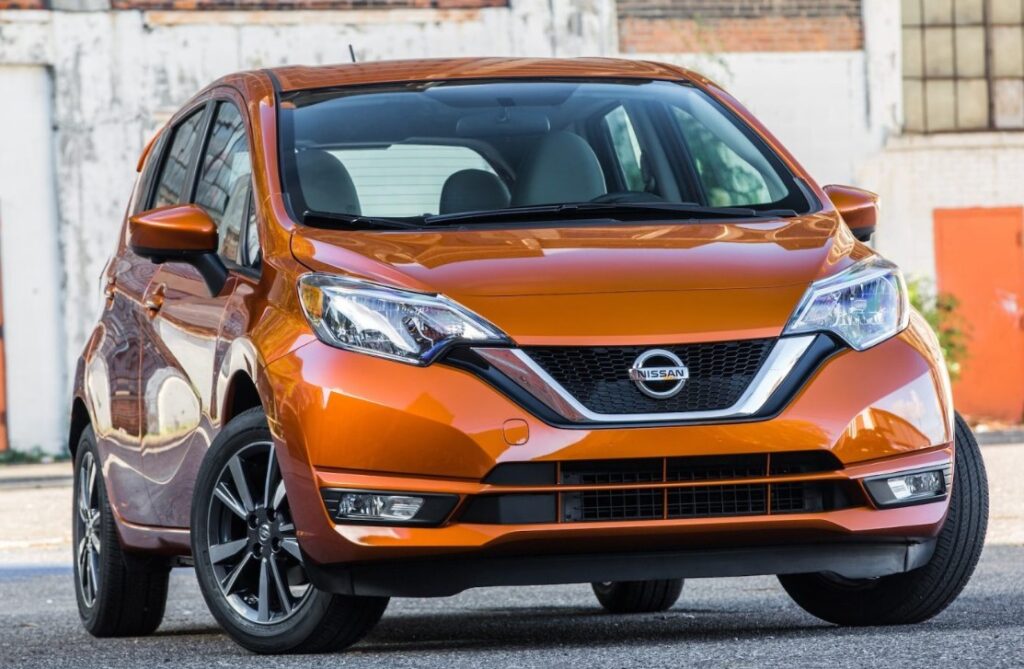
Choosing between the Nissan Note and Nissan Note e-POWER can feel confusing at first. They may share the same badge, similar dimensions, and much of the same practical hatchback personality, yet they behave like two noticeably different cars.
The conventional Nissan Note follows a familiar recipe. A petrol engine drives the wheels through a manual, automatic, or continuously variable transmission, depending on the year and market. It is simple, affordable, practical, and relatively easy to understand.
The Note e-POWER takes another road.
It still has a petrol engine and still needs fuel, but the engine does not normally drive the wheels directly. Instead, it generates electricity for a battery, while an electric motor turns the wheels. Nissan describes e-POWER as a motor-driven system that uses its onboard petrol engine to produce electricity, giving drivers an electric-car-like experience without external charging.
That difference changes acceleration, refinement, fuel consumption, maintenance considerations, and even the way the car feels in traffic.
So, which version deserves a place in our driveway? Let us compare the Nissan Note vs Note e-POWER carefully, without getting lost in technical fog.
Content in this publication
- Nissan Note vs Note e-POWER at a Glance
- What Is a Conventional Nissan Note?
- What Is the Nissan Note e-POWER?
- How the Two Powertrains Feel on the Road
- Fuel Economy: Which Note Uses Less Petrol?
- One-Pedal-Style Driving and Regenerative Braking
- Cabin Noise and Refinement
- Interior Space and Practicality
- Handling and Ride Comfort
- Reliability: Is the Petrol Note Safer to Own?
- Maintenance Costs
- Purchase Price and Resale Value
- Nissan Note vs Note e-POWER for City Driving
- Nissan Note vs Note e-POWER for Motorway Driving
- Nissan Note vs Note e-POWER for Hills
- Nissan Note vs Note e-POWER for Rural Ownership
- Safety and Driver-Assistance Features
- How to Inspect a Used Nissan Note Petrol
- How to Inspect a Used Nissan Note e-POWER
- Common Misconceptions About the Note e-POWER
- Advantages of the Nissan Note Petrol
- Disadvantages of the Nissan Note Petrol
- Advantages of the Nissan Note e-POWER
- Disadvantages of the Nissan Note e-POWER
- Who Should Buy the Standard Nissan Note?
- Who Should Buy the Nissan Note e-POWER?
- Which Nissan Note Is Better for a Family?
- Which One Will Hold Its Value Better?
- Our Nissan Note vs Note e-POWER Verdict
- Conclusion
- Frequently Asked Questions
Nissan Note vs Note e-POWER at a Glance
Before exploring every detail, here is the fundamental difference:
| Category | Nissan Note Petrol | Nissan Note e-POWER |
|---|---|---|
| Main energy source | Petrol | Petrol-generated electricity |
| What drives the wheels? | Petrol engine | Electric motor |
| External charging | Not required | Not required |
| Acceleration feel | Conventional | Immediate and electric-like |
| Urban fuel economy | Average to good | Usually better |
| Mechanical complexity | Simpler | More advanced |
| Cabin refinement | Depends on engine and CVT | Generally smoother and quieter |
| Purchase price | Usually lower | Usually higher |
| Best environment | Mixed driving and budget ownership | Urban and suburban driving |
| Used-car inspection | Standard mechanical checks | Mechanical plus hybrid-system checks |
In simple terms, the ordinary Note is the straightforward choice. The Note e-POWER is the more advanced and engaging choice.
Neither one is automatically better for everyone.
What Is a Conventional Nissan Note?
The standard Nissan Note is a compact hatchback designed around practicality. Depending on its generation and country of sale, it may use a naturally aspirated petrol engine, a supercharged petrol engine, a manual gearbox, or a CVT automatic.
Its priorities are easy to recognize:
- Compact external dimensions
- Generous passenger room
- Flexible rear seating
- Manageable fuel costs
- Easy urban parking
- Affordable everyday ownership
The Note has never tried to be a dramatic sports car. It is more like a reliable pair of trainers: comfortable, useful, and ready for everyday errands without demanding much attention.
With a conventional petrol Note, the engine creates power and sends it through the transmission to the driven wheels. Press the accelerator, the engine speed rises, the transmission responds, and the car moves forward.
That arrangement is familiar to most drivers and mechanics.
Why the Standard Note Still Makes Sense
Newer technology is attractive, but simplicity has value. A conventional Note may suit us better when purchase price, repair accessibility, and mechanical familiarity matter more than electric-style performance.
Older petrol Notes can also be easier to evaluate. A mechanic can inspect the engine, CVT, cooling system, suspension, brakes, and electronics without requiring extensive hybrid-system knowledge.
For buyers in areas with limited access to Nissan hybrid specialists, that familiarity can be reassuring.
What Is the Nissan Note e-POWER?
The Nissan Note e-POWER is best understood as an electric-drive car that carries its own generator.
Its system includes:
- A petrol engine
- An electrical generator
- An inverter
- A compact battery
- An electric traction motor
The petrol engine produces electricity, but the electric motor provides the driving force at the wheels. Nissan confirms that e-POWER vehicles are driven entirely by their electric motors, while the engine functions as an onboard source of electrical energy.
This layout separates the engine from the wheels.
That is the secret behind the e-POWER driving experience. We receive the quick response and smooth acceleration associated with an electric vehicle, but we refuel at an ordinary petrol station instead of plugging the car into a charger.
Is the Note e-POWER a Hybrid?
Yes, but it is not a conventional parallel hybrid.
In many traditional hybrids, the petrol engine and electric motor can both drive the wheels. The vehicle switches between them or combines their output.
In the Note e-POWER, the electric motor is responsible for propulsion. The petrol engine generates electricity rather than mechanically driving the wheels under normal operation.
The industry commonly describes this arrangement as a series hybrid or range-extender-style hybrid, although Nissan markets it under the e-POWER name.
Does the Note e-POWER Need Charging?
No external charging is required.
We put petrol in the tank, and the vehicle manages electricity generation automatically. Regenerative braking also recovers some energy during deceleration and sends it back to the battery.
This makes e-POWER appealing to drivers who want electric-style performance but cannot install a home charger or do not want to plan journeys around charging stations.
How the Two Powertrains Feel on the Road
This is where the comparison becomes interesting.
On paper, two Nissan Notes may look nearly identical. Behind the steering wheel, however, they can feel as different as a traditional bicycle and an electric-assisted one.
Acceleration in the Petrol Nissan Note
A conventional Note builds speed in the usual way. The engine revs, the transmission selects or adjusts its ratio, and power reaches the wheels.
Models equipped with a CVT can sometimes produce the familiar “rubber-band” sensation. Engine speed rises and remains elevated while road speed catches up. Some drivers do not mind this. Others find it noisy or disconnected.
Performance is generally adequate rather than thrilling. A petrol Note handles commuting, shopping runs, and school journeys perfectly well, but overtaking may require planning—particularly when the car is fully loaded.
Acceleration in the Note e-POWER
The Note e-POWER responds more immediately because electric motors produce strong torque from very low speeds.
There is no waiting for a conventional gearbox to downshift. We press the accelerator, and the car moves with a clean, eager surge.
It may not be a high-performance machine, but around town it can feel surprisingly lively. The response makes gaps in traffic easier to use and steep roads less stressful.
Nissan highlights instantaneous, linear acceleration as one of the core characteristics of its motor-driven e-POWER technology.
Which One Feels Faster?
The Note e-POWER normally feels faster in everyday traffic, even when maximum-speed figures are not dramatically different.
That distinction matters. Most of us do not use full power on an empty racetrack. We notice performance when:
- Leaving a junction
- Entering a roundabout
- Climbing a hill
- Joining a motorway
- Passing a slow vehicle
- Accelerating with passengers aboard
In those situations, the electric motor gives the e-POWER version a more confident character.
Fuel Economy: Which Note Uses Less Petrol?
Fuel consumption is one of the biggest reasons buyers consider e-POWER.
The answer, however, depends heavily on where and how we drive.
Urban Fuel Economy
The Note e-POWER is usually at its best in cities.
Stop-and-go traffic gives it repeated opportunities to recover energy through regenerative braking. Electric-motor propulsion is also efficient at low speeds, where conventional petrol engines may spend much of their time operating outside their ideal range.
The engine can start and stop according to electricity demand rather than running constantly whenever the vehicle moves.
For drivers facing traffic lights, congestion, short journeys, and frequent braking, the e-POWER advantage can be meaningful.
Motorway Fuel Economy
At sustained motorway speeds, the difference may shrink.
A conventional petrol car can be efficient while cruising steadily because the engine maintains a relatively stable load. The e-POWER system must convert petrol energy into electricity before the motor uses it, and every energy conversion introduces some loss.
That does not mean the Note e-POWER is inefficient on the motorway. It simply means its strongest advantage usually appears in urban and suburban driving rather than continuous high-speed travel.
Real-World Consumption Depends on the Driver
Official figures are useful for comparison, but our daily results can change because of:
- Traffic density
- Outside temperature
- Tyre pressure
- Driving speed
- Passenger and luggage weight
- Air-conditioning use
- Road gradient
- Maintenance condition
- Battery condition
- Acceleration habits
A gentle driver in a well-maintained petrol Note may achieve better results than an aggressive driver in an e-POWER model.
Technology helps, but our right foot still signs the fuel bill.
One-Pedal-Style Driving and Regenerative Braking
Many Note e-POWER models offer stronger regenerative deceleration through modes such as Eco or e-Pedal-style operation, depending on the version.
When we lift off the accelerator, the car slows more noticeably than a conventional petrol vehicle. The motor reverses part of its role and recovers kinetic energy, using it to recharge the battery.
This can reduce how often we move our foot to the brake pedal in normal traffic.
Does It Take Time to Learn?
Usually, yes—but not much.
During the first drive, strong regenerative braking can feel as though an invisible hand is gently pulling the car backward. After a few journeys, many drivers begin timing accelerator release more naturally.
The experience can make city driving calmer. Rather than alternating constantly between accelerator and brake, we modulate speed primarily with the accelerator pedal.
The car still has a conventional brake pedal, and we must use it whenever stronger or complete braking is required.
Cabin Noise and Refinement
The Note e-POWER is generally smoother than a conventional Note because the wheels are driven by an electric motor.
At low speeds, acceleration can be quiet and nearly seamless. There are no traditional gear changes, and the motor produces minimal vibration.
You may be interested in reading Nissan Note vs Nissan Micra: Which Small Nissan Wins?
Nissan explains that e-POWER can provide a quieter cabin than a conventional petrol drivetrain because propulsion comes from the electric motor and engine operation can be managed around driving conditions.
However, “quieter” does not mean silent.
The Generator Effect
When battery demand rises, the petrol engine starts to generate electricity. Under hard acceleration, on steep climbs, or when the battery charge is low, engine noise may become noticeable.
The unusual part is that the engine sound does not always rise and fall in direct proportion to road speed.
We might be travelling slowly while the engine operates at a relatively high speed to generate electricity. For drivers accustomed to a direct connection between engine sound and acceleration, this can initially feel strange.
It is not necessarily a fault. It is a characteristic of the system.
Which Is More Refined?
Around town, the Note e-POWER normally wins.
On rough roads or at motorway speeds, tyre and wind noise may become more important than drivetrain noise. At that point, wheel size, tyre choice, sound insulation, and vehicle condition can influence refinement as much as the powertrain.
Interior Space and Practicality
When comparing vehicles from the same generation, the petrol Note and Note e-POWER usually offer broadly similar passenger accommodation.
Both are designed to make clever use of a compact footprint. We typically receive good headroom, a useful rear bench, wide-opening doors, and a practical hatchback body.
The Note is often more spacious inside than its exterior dimensions suggest. It is a small car that seems to have learned a few magic tricks.
Does the e-POWER Battery Reduce Boot Space?
Battery placement varies by generation, but Nissan designs the system around maintaining everyday practicality.
There can be differences in underfloor storage, spare-wheel availability, or luggage-floor shape. However, the e-POWER version generally remains a usable family hatchback rather than becoming an impractical technology experiment.
Before buying, we should inspect the exact vehicle rather than relying on assumptions. Imported models may have different trim, repair kits, storage compartments, or seating arrangements.
Rear-Seat Flexibility
Some Notes offer sliding or folding rear seats, depending on generation and specification. This can allow us to prioritize either rear legroom or luggage capacity.
Because equipment varies widely, especially among used Japanese imports, we should check the individual car’s seat mechanisms rather than assuming every Note has the same configuration.
Handling and Ride Comfort
Neither version is primarily designed for aggressive cornering. Both focus on comfort, stability, and ease of use.
The standard Note feels light and predictable. Steering is usually easy at parking speeds, making it well suited to tight streets and small parking spaces.
The e-POWER model may feel more planted because of the additional electrical components and their placement, although exact behaviour depends on generation, suspension specification, tyres, and trim level.
Weight Differences
The e-POWER system adds hardware, including the traction motor, battery, generator, inverter, and supporting electronics.
That extra weight can influence:
- Ride quality
- Braking feel
- Tyre wear
- Cornering balance
- Suspension loads
- Energy consumption
Nissan’s archived second-generation specifications show that petrol and e-POWER Note variants could share the same basic body dimensions while using different powertrain codes and configurations.
The e-POWER version often hides its weight well because the electric motor provides immediate torque.
Reliability: Is the Petrol Note Safer to Own?
A conventional Nissan Note has fewer high-voltage components, which can make it mechanically simpler.
That does not automatically make every petrol Note more reliable. Age, service history, mileage, previous accidents, CVT condition, cooling-system maintenance, and owner care remain essential.
A neglected petrol Note can become far more troublesome than a carefully maintained e-POWER model.
Potential Petrol Note Concerns
Depending on year and engine, used buyers should inspect for:
- CVT hesitation or shuddering
- Delayed engagement
- Engine oil leaks
- Timing-chain noise
- Worn engine mounts
- Cooling-system leaks
- Ignition-coil problems
- Suspension knocks
- Wheel-bearing noise
- Electrical warning lights
Not every car will experience these issues. They are simply areas worth checking during a professional inspection.
Potential Note e-POWER Concerns
The e-POWER version adds several components that deserve attention:
- High-voltage traction battery
- Inverter
- Generator
- Electric drive motor
- Power-control electronics
- Battery cooling system
- High-voltage wiring
- DC-to-DC converter
- Conventional 12-volt battery
A fault in one of these systems may require specialist diagnosis.
On the other hand, the electric motor avoids many operations associated with a traditional transmission. There is no conventional multi-speed gearbox repeatedly changing ratios between the engine and wheels.
Do e-POWER Batteries Fail Quickly?
Not necessarily.
Automotive traction batteries are designed to operate for many years, but capacity can decline gradually with age, heat, mileage, and repeated charging cycles.
A used e-POWER car may continue driving normally even after some battery degradation. However, the engine may run more frequently, efficiency may decline, and electric assistance may feel less consistent.
A battery-health scan is therefore much more useful than guessing based on mileage alone.
Maintenance Costs
The conventional Note may have the advantage in straightforward servicing.
Most garages understand petrol engines, cooling systems, spark plugs, filters, and standard 12-volt electrical systems. Parts availability may also be broader, depending on the country.
The Note e-POWER still needs petrol-engine maintenance because it contains an internal-combustion engine. It is not maintenance-free.
Routine e-POWER Maintenance May Include
- Engine oil and filter replacement
- Engine air-filter replacement
- Coolant inspection
- Spark-plug replacement
- Brake-fluid servicing
- Tyre rotation and replacement
- Cabin-filter replacement
- 12-volt battery checks
- Hybrid-system inspections
- Software and diagnostic checks
The traction motor may reduce wear on friction brakes because regenerative braking handles part of the deceleration. Nevertheless, brake discs can still corrode, especially when the vehicle is used gently or parked for long periods.
Which One Is Cheaper to Maintain?
For predictable workshop access, the petrol Note is usually the safer bet.
For fuel savings and potentially lower brake wear, the e-POWER version can recover some of its additional complexity.
The final result depends on local labour rates, parts supply, specialist availability, annual mileage, and whether a major electrical component ever needs replacement.
Purchase Price and Resale Value
A used Nissan Note petrol generally costs less than an equivalent e-POWER version.
That lower entry price can be compelling. Why spend thousands more to save smaller amounts at the fuel pump?
The answer depends on how long we plan to keep the car and how much we drive.
When Paying More for e-POWER Makes Sense
The premium may be justified when:
- We drive significant annual mileage
- Most journeys occur in urban traffic
- Fuel is expensive
- We value smooth acceleration
- We want modern electrified technology
- Strong resale demand exists locally
- Qualified e-POWER specialists are nearby
When the Standard Note Offers Better Value
The petrol Note may make more sense when:
- Our purchase budget is limited
- We drive relatively few kilometres
- Most journeys are on open roads
- We live far from hybrid specialists
- We prioritize mechanical simplicity
- The e-POWER price premium is substantial
- We intend to own an older high-mileage vehicle
Fuel economy is only one line in the ownership ledger. Purchase price, depreciation, insurance, tyres, repairs, and financing can easily outweigh modest fuel savings.
Nissan Note vs Note e-POWER for City Driving
For regular city use, the e-POWER version is difficult to ignore.
Its instant response helps us merge into traffic. Regenerative braking suits repeated slowing. The absence of traditional gear changes makes progress smoother, and the petrol engine can remain off during some low-demand situations.
It behaves like it was designed specifically for the rhythm of urban life.
The standard Note remains competent, particularly when equipped with an automatic transmission. It is easy to park, manoeuvrable, and economical enough for many households.
Still, in heavy congestion, the e-POWER feels more natural and more polished.
City-driving winner: Nissan Note e-POWER.
Nissan Note vs Note e-POWER for Motorway Driving
The result is closer on the motorway.
The e-POWER provides strong acceleration when joining traffic or overtaking. Its electric motor responds quickly, and there is no waiting for a gearbox to find the correct ratio.
However, continuous high-speed driving may cause the engine to operate more frequently, reducing the fuel-economy advantage.
A well-maintained petrol Note can cruise efficiently and may offer a more predictable relationship between engine noise and road speed.
For occasional motorway journeys, either version works. For drivers covering long high-speed distances every week, the cheaper and simpler petrol Note may provide better overall value.
Motorway-value winner: Nissan Note petrol.
Nissan Note vs Note e-POWER for Hills
Electric torque gives the e-POWER version an advantage on steep roads.
It moves away confidently and does not depend on a conventional transmission downshifting before delivering useful power. This can make uphill driving feel easier, particularly with passengers and luggage.
You may be interested in readingNissan Note vs Nissan Micra: Which Small Nissan Wins?You may be interested in reading
Nissan Note or Similar: What Car Will You Actually Get?Regenerative braking also helps control speed while descending, while recovering some energy.
The petrol Note can handle hills, but smaller-engine versions may sound strained when fully loaded. A CVT may hold the engine at high revolutions for extended periods.
Hill-driving winner: Nissan Note e-POWER.
Nissan Note vs Note e-POWER for Rural Ownership
Rural ownership changes the calculation.
A petrol Note may be easier to repair in smaller towns where local mechanics have limited experience with high-voltage systems. Its conventional design reduces the risk of needing to transport the vehicle to a distant specialist.
Road type also matters. If we mostly travel at steady speeds on open roads, e-POWER’s urban-efficiency advantage may be less pronounced.
The e-POWER can still be an excellent rural vehicle, especially in hilly areas, but buyers should verify service support before purchasing.
Rural-practicality winner: Nissan Note petrol.
Safety and Driver-Assistance Features
Safety equipment depends more on model year and trim level than on whether the car has a petrol or e-POWER drivetrain.
Possible features include:
- Autonomous emergency braking
- Lane-departure warning
- Around-view camera
- Blind-spot monitoring
- Stability control
- Traction control
- Front, side, and curtain airbags
- Intelligent cruise control
- Parking sensors
- High-beam assistance
Some later or higher-specification e-POWER models may include more advanced technology simply because they were positioned above basic petrol versions.
However, we should never assume a vehicle has a feature based on appearance alone. Imported Notes can have specification combinations unfamiliar to local dealers.
Check the chassis number, dashboard controls, camera equipment, and original build information.
How to Inspect a Used Nissan Note Petrol
Before buying a conventional Note, we should:
- Start the engine from cold.
- Listen for rattles or timing-chain noise.
- Check for warning lights.
- Test the CVT from a complete stop.
- Accelerate gently and then firmly.
- Look for shuddering, slipping, or delayed response.
- Inspect coolant and engine-oil condition.
- Test the air conditioning.
- Listen for suspension knocks.
- Review service records and mileage history.
A pre-purchase inspection is worth the cost, especially on a CVT-equipped car.
How to Inspect a Used Nissan Note e-POWER
An e-POWER inspection should include everything we would check on a petrol Note, plus several additional steps:
- Request a full electronic diagnostic scan.
- Check traction-battery health.
- Confirm there are no hybrid-system warnings.
- Test the car in several driving modes.
- Listen for abnormal generator noise.
- Confirm smooth regenerative braking.
- Inspect the high-voltage system professionally.
- Test the 12-volt battery.
- Verify that the engine starts and stops normally.
- Confirm local parts and specialist support.
We should also observe how frequently the engine runs during a mixed test drive. Frequent operation is not automatically a problem, but unusual noise, warnings, poor performance, or erratic behaviour deserve investigation.
Common Misconceptions About the Note e-POWER
“It Is a Fully Electric Car”
It is electrically driven, but it is not a battery-electric vehicle. It carries a petrol engine and produces tailpipe emissions.
“We Must Plug It In Overnight”
No. The system charges itself using its engine and regenerative braking.
“The Petrol Engine Directly Powers the Wheels”
In the e-POWER layout, the electric motor drives the wheels, while the petrol engine generates electricity.
“It Cannot Drive When the Battery Is Low”
The engine generates electricity as required. The control system continually manages battery charge rather than allowing normal driving to drain it like an unplugged battery-electric vehicle.
“It Has No Engine Maintenance”
It still has a petrol engine, engine oil, filters, coolant, spark plugs, and other serviceable components.
Advantages of the Nissan Note Petrol
The conventional Note offers several practical benefits:
- Lower purchase price
- Simpler drivetrain
- Wider mechanic familiarity
- Potentially cheaper repairs
- Predictable long-distance behaviour
- Easier ownership in remote areas
- No traction-battery health concerns
- Strong value in the used market
It is the sensible choice for buyers who want reliable transportation without paying extra for electrified technology.
Disadvantages of the Nissan Note Petrol
Its weaknesses include:
- Slower accelerator response
- Less refined urban driving
- Usually higher city fuel consumption
- More noticeable engine vibration
- Possible CVT concerns on neglected vehicles
- Less effective energy recovery
- Fewer modern electrified features on older trims
Compared with the e-POWER, the standard car can feel ordinary. That is not always bad, but it may be noticeable after driving both versions.
Advantages of the Nissan Note e-POWER
The e-POWER model gives us:
- Immediate electric-motor response
- Smooth acceleration
- Strong urban efficiency
- Regenerative braking
- No need for external charging
- Quiet low-speed operation
- Easier hill starts
- A more modern driving experience
- Potentially reduced friction-brake wear
It brings much of the enjoyment of electric propulsion without requiring charging infrastructure.
Disadvantages of the Nissan Note e-POWER
Its drawbacks include:
- Higher purchase price
- More complex electrical systems
- Possible battery degradation
- Specialist diagnostic requirements
- Potentially expensive major repairs
- Less dramatic efficiency gains on motorways
- Engine noise that may not match road speed
- Limited local knowledge in some markets
- Insurance or parts challenges for imports
The system is clever, but clever machinery needs informed ownership.
Who Should Buy the Standard Nissan Note?
The petrol Note is a good match for drivers who:
- Need the lowest purchase price
- Drive modest annual distances
- Prefer familiar technology
- Live outside major urban centres
- Want easier access to independent repairs
- Use open roads more than congested streets
- Plan to buy an older or higher-mileage car
It is also a strong first-car option when insurance, repairability, and budget matter more than performance.
Who Should Buy the Nissan Note e-POWER?
The e-POWER version suits drivers who:
- Spend substantial time in urban traffic
- Want better low-speed response
- Appreciate smooth, quiet driving
- Cannot charge an electric car at home
- Want lower city fuel consumption
- Regularly drive on hills
- Have access to qualified Nissan or hybrid specialists
- Are willing to pay more for newer technology
It is especially appealing to drivers who want to test the waters of electrification without diving fully into battery-electric ownership.
Which Nissan Note Is Better for a Family?
For family use, both versions offer compact dimensions and useful interior space.
The petrol Note may be better for families operating on a strict budget. Its lower purchase price leaves more money for insurance, maintenance, child seats, tyres, and other real-world expenses.
The e-POWER may suit families completing frequent school runs, shopping trips, and stop-start journeys. Its smooth acceleration and quieter low-speed operation can make daily driving less tiring.
The better family car is therefore not decided by badge or technology. It is decided by the family’s routes, budget, service access, and expected ownership period.
Which One Will Hold Its Value Better?
Resale value varies by country.
In markets where e-POWER imports are popular and hybrid specialists are common, the electrified model may retain strong demand. Rising fuel costs can also make efficient vehicles more attractive.
In markets with limited parts supply or little familiarity with e-POWER, buyers may prefer the conventional petrol version because it appears less risky.
Battery-health documentation can significantly affect the resale appeal of an older e-POWER model. A clean diagnostic report and complete service history may be almost as valuable as low mileage.
Our Nissan Note vs Note e-POWER Verdict
The Nissan Note e-POWER is the more impressive car to drive.
It accelerates more smoothly, feels stronger in traffic, handles hills confidently, and uses fuel effectively in urban conditions. It offers a taste of electric mobility without asking us to find a charging point.
The conventional Nissan Note is the easier car to justify financially.
It usually costs less, can be repaired by a wider range of workshops, and makes sense for low-mileage buyers or drivers who spend most of their time on open roads.
So, which one should we choose?
Choose the Nissan Note petrol when affordability, simplicity, and broad repair access lead the decision.
Choose the Nissan Note e-POWER when urban economy, refinement, and electric-motor performance matter more.
The smartest purchase is not necessarily the newest or most sophisticated option. It is the car that fits our daily life without stretching our budget or leaving us dependent on services we cannot access.
Conclusion
The Nissan Note and Note e-POWER share a practical hatchback body, but their personalities are worlds apart.
The conventional Note is familiar and honest. It starts, drives, parks easily, and handles everyday transport without unnecessary drama. For cost-conscious ownership, it remains a convincing choice.
The Note e-POWER adds a layer of sophistication. Its petrol engine creates electricity, its motor drives the wheels, and its regenerative braking recovers energy. The result feels smoother and more responsive, especially in city traffic.
We should not buy the e-POWER simply because its technology sounds futuristic. Nor should we dismiss it because it appears more complicated.
Instead, we should look at how we really drive.
Do we crawl through traffic every morning? Do we climb steep streets? Do we have a trusted hybrid specialist nearby? Will our annual fuel savings justify the higher purchase price?
Once we answer those questions honestly, the choice becomes much clearer.
Frequently Asked Questions
1. What is the main difference between Nissan Note and Note e-POWER?
The standard Nissan Note uses its petrol engine to drive the wheels through a transmission. In the Note e-POWER, an electric motor drives the wheels while the petrol engine generates electricity for the system.
2. Does the Nissan Note e-POWER need to be plugged in?
No. The Note e-POWER is not a plug-in hybrid. Its petrol engine generates electricity onboard, while regenerative braking recovers energy during deceleration.
3. Is the Note e-POWER cheaper to run?
It can be cheaper to fuel, particularly in stop-start urban driving. However, its purchase price may be higher, and major electrical repairs can cost more. Total ownership cost depends on mileage, fuel prices, maintenance, and battery condition.
4. How long does a Nissan Note e-POWER battery last?
There is no single lifespan that applies to every vehicle. Battery condition depends on age, mileage, temperature, charging cycles, and previous use. A professional battery-health scan is essential when buying a used model.
5. Is the Nissan Note e-POWER better than the petrol Note?
It is better for smooth acceleration, urban efficiency, regenerative braking, and hill performance. The petrol Note may be better for lower purchase cost, simpler maintenance, and ownership in areas without e-POWER specialists.
You may be interested in readingNissan Note vs Nissan Micra: Which Small Nissan Wins?You may be interested in reading
Nissan Note or Similar: What Car Will You Actually Get?You may be interested in reading
 Are Ford Ranger and Mazda BT-50 the Same?
If you want to know other articles similar to Nissan Note vs Note e-POWER: Which One Should We Buy? you can visit the category Models.
Kia Sorento Models: Complete Guide to Trims, Engines and Versions

BYD Shark 6 vs Ranger vs HiLux: Which Ute Makes the Most Sense in 2026?
BYD Shark 6 vs MG U9: Which Ute Makes More Sense in 2026?
BYD Shark 6 vs Ford Ranger Raptor: Which Performance Ute Is Better in 2026?
BYD Shark 6 vs Kia Tasman: Which Ute Is Better?
BYD Shark 6 vs 7: What We Know So Far
Leave a Reply
More content of your interest