

Are Ford Ranger and Mazda BT-50 the Same?

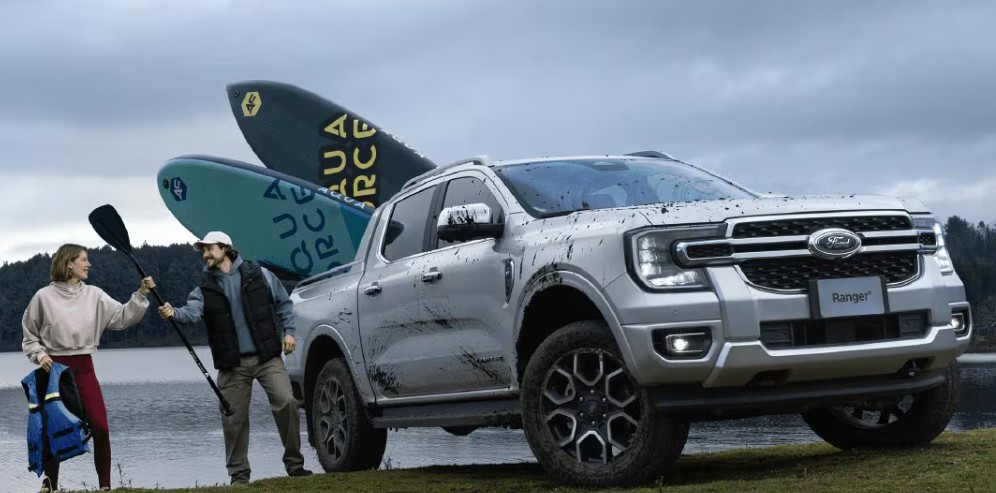
At first glance, the Ford Ranger and Mazda BT-50 can look like two branches growing from the same tree. Both are midsize pickup trucks. Both are available with diesel engines, four-wheel drive, dual-cab bodies, heavy-duty towing capability, and enough ground clearance to disappear down a muddy track without immediately regretting it.
That similarity naturally raises a common question: Are Ford Ranger and Mazda BT-50 the same?
The most accurate answer is they used to be closely related, but current models are not the same vehicle.
Older Mazda BT-50 generations shared major mechanical foundations with the Ford Ranger. They used related platforms, engines, transmissions, chassis components, and suspension designs. However, Mazda changed direction when it launched the third-generation BT-50 in 2020. The modern BT-50 is now based on the Isuzu D-Max, while the Ford Ranger continues on Ford’s own platform. Mazda itself confirms that its technical partnership with Ford once covered the B-Series/Courier and BT-50/Ranger, but that the latest BT-50 is instead twinned with the Isuzu D-Max.
So, are they twins? Not anymore.
Think of them as former roommates who once shared nearly everything but have since moved into different houses, developed different habits, and bought completely different furniture.
Content in this publication
- The Simple Answer
- Why Do People Think the Ranger and BT-50 Are the Same?
- A Brief History of the Ford–Mazda Partnership
- Were the Older Ranger and BT-50 Exactly Identical?
- What Changed in 2020?
- Ford Ranger vs Mazda BT-50 Platform
- Are the Engines the Same?
- Are the Transmissions the Same?
- Do They Have the Same Four-Wheel-Drive System?
- Are Ford Ranger and Mazda BT-50 Parts Interchangeable?
- Do Ranger Accessories Fit the BT-50?
- Ford Ranger vs Mazda BT-50 Towing Capacity
- Payload and Work Capability
- Which Pickup Has the Better Interior?
- Which One Is Better Off-Road?
- Which One Is More Reliable?
- Which One Is Cheaper to Maintain?
- Which One Should We Buy?
- How to Identify Whether a BT-50 Is Ford-Based
- Used Ranger vs Used BT-50: What Matters Most?
- Common Mistakes Buyers Make
- Are Ford Ranger and Mazda BT-50 the Same Today?
- Final Verdict
- Frequently Asked Questions
The Simple Answer
The relationship depends on the model year:
- Older Ford Ranger and Mazda BT-50 models: Closely related
- Second-generation BT-50 from 2011 to 2020: Based on the same core architecture as the corresponding Ranger
- Current Mazda BT-50 from 2020 onward: Based on the Isuzu D-Max
- Current Ford Ranger: Designed and developed by Ford
- Modern Ranger and BT-50 parts: Generally not interchangeable
That distinction matters enormously when buying used vehicles, comparing engines, ordering replacement parts, or choosing a pickup for towing and off-road use.
Why Do People Think the Ranger and BT-50 Are the Same?
The confusion did not appear out of thin air. For many years, the trucks genuinely were close mechanical relatives.
Mazda and Ford maintained a long technical partnership that stretched back decades. During that period, Mazda’s utility vehicles and Ford’s pickups frequently shared engineering resources. The first-generation BT-50 continued the connection established by the earlier Mazda B-Series and Ford Courier.
When the second-generation Mazda BT-50 arrived in 2011, its relationship with the Ford Ranger became especially obvious beneath the bodywork. The two pickups wore different faces, badges, cabins, and trim details, but much of the heavy engineering underneath was closely connected.
That meant buyers could encounter:
- Similar diesel engines
- Comparable transmissions
- Related ladder-frame chassis designs
- Similar towing capacities
- Shared suspension concepts
- Comparable four-wheel-drive hardware
- Overlapping service and repair knowledge
To the casual observer, they appeared different. To a mechanic looking underneath, the family resemblance was much harder to miss.
A Brief History of the Ford–Mazda Partnership
The Mazda B-Series and Ford Courier Era
Before the BT-50 badge existed, Mazda sold its compact pickup as the B-Series. Ford marketed related versions under names such as Courier in several international markets.
These vehicles were not always identical in every region, but they frequently shared substantial engineering. Manufacturers often use this strategy to reduce development costs. Building a pickup from scratch is expensive, rather like constructing a house before deciding whether anyone wants to live in it.
Sharing platforms allows two brands to spread engineering costs while giving each vehicle a different identity.
The First Mazda BT-50 Arrived in 2006
Mazda introduced the BT-50 name in 2006. Its first generation replaced the Mazda Bravo or B-Series in several markets.
This model remained closely associated with Ford’s pickup engineering. It was offered in multiple cab styles, with two-wheel-drive and four-wheel-drive configurations. Mazda’s historical overview notes that early versions used 2.5-litre and 3.0-litre turbo-diesel engines, with the 4x4 model offering up to 2,500kg of braked towing capacity.
Although the exterior styling and cabin details helped create a Mazda identity, the truck still lived firmly within the Ford–Mazda partnership.
The Second-Generation BT-50 Deepened the Connection
The second-generation BT-50 launched in 2011. This is the version most responsible for today’s belief that the Ford Ranger and Mazda BT-50 are essentially the same.
It was closely related to the Ford Ranger built on Ford’s T6 architecture. Mazda added dramatic, passenger-car-inspired styling, while Ford gave the Ranger a chunkier, more traditionally rugged appearance.
Underneath, however, both trucks shared major engineering themes.
The BT-50 offered:
- A 2.2-litre four-cylinder turbo-diesel
- A 3.2-litre five-cylinder turbo-diesel
- Manual and automatic transmissions
- Rear-wheel-drive and four-wheel-drive layouts
- Up to 3,500kg of braked towing capacity
- A ladder-frame chassis
- Work-focused cab-chassis and pickup configurations
Mazda records that the second-generation BT-50’s 2.2-litre diesel produced 110kW and 375Nm, while the larger 3.2-litre five-cylinder generated 147kW and 470Nm.
Those specifications will sound very familiar to anyone who has studied the equivalent Ford Ranger.
Were the Older Ranger and BT-50 Exactly Identical?
No. Even during their closest period, calling them completely identical would oversimplify the relationship.
They shared the bones, but not always the personality.
Different Exterior Styling
The Ford Ranger generally presented a square-jawed, work-boot image. The Mazda BT-50 took a softer and more expressive styling direction, particularly during its second generation.
The Ranger looked ready to pull a tree stump out of the ground. The BT-50 looked as though it might tow the stump away and then stop outside a stylish café.
Mazda applied its own grille, headlights, bonnet, bumpers, body panels, wheels, colours, and badges. Consequently, many exterior panels were not interchangeable even when the underlying trucks were related.
Different Interior Treatments
Cabin architecture sometimes showed clear similarities, but upholstery, trim, equipment packages, infotainment systems, switches, and dashboard details could differ.
Mazda typically aimed for a more car-like ambience. Ford often leaned into a tougher and more practical presentation, although higher Ranger trims increasingly became luxurious.
Different Suspension Tuning
Shared hardware does not always create identical road manners.
Manufacturers can adjust:
- Spring rates
- Shock absorber tuning
- Steering calibration
- Tyre choices
- Anti-roll characteristics
- Electronic stability programming
These changes can make two related vehicles feel surprisingly different. One may ride more softly, while the other feels more controlled when heavily loaded.
Different Trim Levels and Standard Equipment
Ford and Mazda structured their model ranges independently. A feature included on a mid-level Ranger might only appear on a higher BT-50 grade, or vice versa.
Equipment differences could include:
- Leather upholstery
- Navigation
- Climate control
- Locking differentials
- Parking sensors
- Driver-assistance systems
- Wheel sizes
- Tub liners
- Sports bars
- Towing equipment
Therefore, comparing badges alone rarely told the whole story.
What Changed in 2020?
In 2020, Mazda ended the BT-50’s direct mechanical relationship with the Ford Ranger.
The third-generation Mazda BT-50 became an Isuzu-based pickup. Mazda officially stated that the new model would be supplied by Isuzu and built from an Isuzu pickup foundation.
Mazda then applied its own exterior design, interior treatment, equipment strategy, branding, and market positioning.
From that point forward, the Ranger and BT-50 followed separate roads.
The Current Mazda BT-50 Is an Isuzu D-Max Relative
The modern BT-50 shares its fundamental engineering with the Isuzu D-Max.
Depending on market and model year, that relationship can include:
- Diesel engines
- Six-speed transmissions
- Ladder-frame chassis architecture
- Suspension components
- Four-wheel-drive hardware
- Electronic systems
- Cab structure
- Safety technology
Mazda differentiates the BT-50 through styling, feature combinations, interior materials, dealership support, warranty conditions, and brand identity.
The Current Ranger Uses Ford Engineering
The current Ford Ranger belongs to Ford’s newer-generation pickup family.
In Australia, the 2026 Ranger range offers a 2.0-litre turbo-diesel producing 125kW and 405Nm, a 3.0-litre V6 turbo-diesel producing 184kW and 600Nm, a plug-in hybrid powertrain, and a high-performance petrol engine in the Ranger Raptor.
The Ranger’s engine range alone demonstrates how far it has moved from the current BT-50.
The contemporary Mazda BT-50, meanwhile, uses different diesel powertrains. Mazda’s 2026 Australian range includes a 2.2-litre diesel and a 3.0-litre diesel, both paired with six-speed automatic transmissions.
Ford Ranger vs Mazda BT-50 Platform
Older Models
Older Ranger and BT-50 models shared closely related platforms. Their ladder-frame construction, drivetrain layouts, suspension designs, and major mechanical systems often overlapped.
You may be interested in reading Are Ford Ranger and VW Amarok the Same? A Complete Comparison
This can make older models feel remarkably similar from behind the wheel.
Current Models
Current models do not share a platform.
The modern Ford Ranger uses Ford architecture, while the current BT-50 uses an Isuzu-derived foundation. Their wheelbases, body structures, chassis mounting points, electronic systems, drivetrains, and suspension arrangements differ.
In practical terms, this means we should treat them as entirely separate vehicles when discussing:
- Parts
- Servicing
- Modifications
- Tuning
- Towing upgrades
- Bullbars
- Suspension kits
- Canopies
- Electrical accessories
Are the Engines the Same?
Older Ranger and BT-50 Engines
Many older versions shared closely related diesel engines.
The best-known examples include the 2.2-litre four-cylinder and 3.2-litre five-cylinder turbo-diesels fitted to the second-generation BT-50 and corresponding Ranger models.
Depending on market, model year, emissions specification, and transmission, outputs or supporting components could vary slightly. Even so, the core engines belonged to the same mechanical family.
That is why repair advice for a 3.2-litre Ranger can sometimes overlap with advice for a 3.2-litre BT-50.
Current Ranger and BT-50 Engines
Modern engines are completely different.
The current Ranger’s mainstream diesel choices include Ford’s 2.0-litre four-cylinder and 3.0-litre V6 units. The Ford range also extends to plug-in hybrid and performance petrol variants.
The BT-50 uses Isuzu-family diesel powertrains, including a 3.0-litre four-cylinder diesel producing 140kW and 450Nm in current Australian specifications. Mazda also introduced a newer 2.2-litre diesel producing 120kW and 400Nm for selected 2026 variants.
So, when comparing a new Ranger and new BT-50, there is no shared engine story.
Are the Transmissions the Same?
Older models may use related manual or automatic transmissions, depending on their engines, years, and markets.
Current models do not.
The mainstream 2026 Ranger diesel range uses Ford’s 10-speed automatic transmission, while current Australian BT-50 variants use six-speed automatic transmissions.
That difference affects more than the number displayed on a specification sheet. It influences:
- Gear spacing
- Highway engine speed
- Towing behaviour
- Acceleration
- Fuel consumption
- Maintenance requirements
- Driving feel
- Repair costs
The Ranger’s 10-speed gearbox changes ratios frequently to keep the engine in its preferred operating zone. The BT-50’s six-speed unit uses broader steps and may feel more conventional.
Neither approach is automatically better for every driver.
Do They Have the Same Four-Wheel-Drive System?
Older models can have similar four-wheel-drive layouts because of their shared engineering.
Current models use different systems.
The BT-50’s Isuzu-derived system and the Ranger’s Ford-developed four-wheel-drive technology vary by grade. Certain Ranger versions offer full-time four-wheel-drive capability, selectable drive modes, Trail Control, Trail Turn Assist, and specialised off-road suspension.
The BT-50 follows a more traditional ute formula, although higher trims include useful off-road and driver-assistance equipment.
Before buying, we should compare the exact trim rather than assuming every 4x4 badge represents the same capability.
Are Ford Ranger and Mazda BT-50 Parts Interchangeable?
Parts for Older Models
Some parts may interchange between related older Ranger and BT-50 models, including selected:
- Engine components
- Filters
- Sensors
- Belts
- Transmission parts
- Suspension components
- Brake components
- Driveline hardware
- Service items
However, compatibility should never be assumed purely because the vehicles share an engine size.
Part numbers can vary according to:
- Model year
- Production location
- Transmission
- Drivetrain
- Emissions standard
- Body style
- Electrical specification
- Software calibration
A component that physically fits may not communicate correctly with the vehicle’s electronics.
Always Verify the VIN
The safest approach is to check the vehicle identification number and compare original-equipment part numbers.
A mechanic, Mazda dealer, Ford dealer, or reputable parts supplier can confirm whether a component is genuinely compatible.
Guessing with vehicle parts is like trying random keys in a lock. Occasionally one works, but frustration usually arrives first.
Parts for Current Models
Current Ranger and BT-50 parts are generally not interchangeable.
The BT-50 now shares more components with the Isuzu D-Max than with the Ranger. Current Ford accessories, engine parts, suspension kits, transmission components, and electronic modules should not be expected to fit a modern BT-50.
Do Ranger Accessories Fit the BT-50?
For older related generations, some underbody or mechanical accessories may cross over. Even then, body differences can cause problems.
Accessories that may require careful compatibility checks include:
- Bullbars
- Snorkels
- Canopies
- Tow bars
- Roof racks
- Side steps
- Bash plates
- Suspension kits
- Long-range fuel tanks
- Sports bars
- Tub covers
Mounting holes, front-end designs, sensor locations, airbag compatibility, camera positions, and body dimensions can differ.
For current vehicles, accessories should be purchased specifically for the Ranger or BT-50. A bullbar designed for a Ranger may interfere with the BT-50’s radar sensors, airbags, cooling airflow, or body mounting points.
Ford Ranger vs Mazda BT-50 Towing Capacity
Both current pickups can tow up to 3,500kg in appropriately specified versions.
Ford states that the Ranger can tow up to 3,500kg when properly equipped, although the Ranger Raptor is limited to 2,500kg.
Mazda’s current BT-50 also offers up to 3,500kg of braked towing capacity in relevant configurations.
That makes them look equal on paper, but the headline figure is only the opening chapter.
We must also consider:
- Gross combination mass
- Gross vehicle mass
- Kerb weight
- Payload
- Tow-ball download
- Passenger weight
- Accessories
- Tray or canopy weight
- Axle limits
A pickup may legally tow 3,500kg only when lightly loaded. Add five adults, a canopy, tools, camping equipment, a bullbar, and a heavy tow-ball load, and the available payload can vanish like ice on hot pavement.
Which Feels Stronger When Towing?
The Ranger’s available 3.0-litre V6 diesel produces 600Nm, significantly more than the BT-50 3.0-litre diesel’s 450Nm.
That extra torque may make the Ranger feel more relaxed when accelerating with a heavy caravan or climbing steep roads.
The BT-50 remains a capable towing vehicle, but drivers comparing top diesel engines will notice the Ranger’s stronger output.
Payload and Work Capability
Payload varies widely according to cab style, drivetrain, trim, and installed equipment.
Ford lists a maximum Ranger payload of up to 1,412kg in certain configurations. Higher-specification pickup models generally carry less because luxury equipment and heavier drivetrains increase kerb weight.
The BT-50 also offers work-oriented cab-chassis models and a broad selection of 4x2 and 4x4 variants. Its 2026 Australian range spans 20 configurations, from basic single-cab work trucks to heavily equipped dual-cab lifestyle models.
For tradespeople, farmers, or fleet operators, the smartest vehicle is not necessarily the one with the biggest engine. A lighter base model may deliver a more useful legal payload.
Which Pickup Has the Better Interior?
This question depends heavily on trim level.
You may be interested in readingAre Ford Ranger and VW Amarok the Same? A Complete ComparisonYou may be interested in reading
 Vauxhall Adam vs Fiat 500: Which Stylish City Car Is Better?
Ford Ranger Interior
The current Ranger has a distinctly modern cabin, with large portrait-oriented touchscreens on many trims, digital displays, connected features, multiple storage areas, and advanced towing technology.
Higher trims such as Wildtrak and Platinum aim to feel more like premium SUVs than traditional work trucks.
Mazda BT-50 Interior
The BT-50’s cabin reflects its Isuzu roots but adds Mazda-specific trim, materials, styling details, and equipment combinations.
It generally feels clean, straightforward, and easy to understand. Mazda often leans toward tasteful presentation rather than visual theatre.
The Ranger may appear more technologically ambitious. The BT-50 can feel simpler and less distracting.
One cabin resembles a modern command centre. The other feels like a sturdy, well-organised workshop. Which is better depends on whether we prefer screens and features or familiarity and simplicity.
Which One Is Better Off-Road?
Both pickups can be very capable, but the Ranger offers a broader range of specialised off-road models.
Ford’s Tremor and Raptor variants go well beyond standard four-wheel-drive equipment. Depending on model, available features include:
- All-terrain tyres
- Upgraded dampers
- Additional ground clearance
- Rock Crawl mode
- Trail Control
- Trail Turn Assist
- Locking differentials
- Underbody protection
- Specialised drive modes
Ford lists 261mm of ground clearance for the Ranger Tremor and 272mm for the Raptor.
The BT-50 remains capable on rough roads, farms, beaches, and tracks, especially in 4x4 form. Yet buyers seeking a factory-built high-performance off-road pickup will find more extreme choices in the Ranger range.
For ordinary touring, however, tyre selection, suspension condition, driver experience, and vehicle weight often matter more than dramatic badges.
Which One Is More Reliable?
Reliability is not determined by the badge alone.
For older shared-generation vehicles, Ranger and BT-50 reliability can be similar because many major mechanical systems overlap. Maintenance history becomes more important than whether the grille carries a blue oval or Mazda wings.
A well-serviced BT-50 may be a far better purchase than a neglected Ranger, and the reverse is equally true.
For current models, the comparison changes because the vehicles use different engines, transmissions, electronics, and platforms.
Potential buyers should examine:
- Service records
- Recall completion
- Oil-change intervals
- Cooling-system condition
- Transmission behaviour
- Diesel particulate filter operation
- Injector condition
- Towing history
- Off-road damage
- Aftermarket modifications
- Corrosion
- Tyre wear
Brand reputation provides context, but an individual vehicle’s history tells the real story.
Which One Is Cheaper to Maintain?
Maintenance costs depend on location, dealer pricing, parts availability, engine choice, and vehicle use.
Older shared-platform models may benefit from broad aftermarket support because many workshops understand their common 2.2-litre and 3.2-litre diesel systems.
The current BT-50 may benefit from mechanical overlap with the Isuzu D-Max, while the Ranger benefits from strong sales volumes and widespread parts support in major markets.
However, the Ranger’s more complex variants can carry additional long-term costs. A V6 diesel, 10-speed transmission, advanced four-wheel-drive system, or Raptor suspension may cost more to repair than a simpler BT-50 configuration.
Complexity is a little like luggage: helpful when everything works, burdensome when we must carry it uphill.
Which One Should We Buy?
Choose an Older Ford Ranger When:
- We prefer Ford styling
- We want wider trim availability
- We need strong aftermarket support
- We find a vehicle with excellent service history
- We want popular resale appeal
Choose an Older Mazda BT-50 When:
- We want similar mechanical ability for potentially less money
- We prefer Mazda styling or equipment
- We find a cleaner, lower-mileage example
- We value condition more than badge prestige
- We want shared-era Ranger capability without paying the Ranger premium
Choose a Current Ford Ranger When:
- We want stronger engine options
- We prefer a V6 diesel
- We want advanced towing technology
- We value modern infotainment
- We need specialised off-road trims
- We are interested in a plug-in hybrid
- We want the broadest model range
Choose a Current Mazda BT-50 When:
- We prefer simpler diesel powertrains
- We like Mazda’s design
- We value the Isuzu-derived mechanical platform
- We want conventional six-speed automatic operation
- We find a strong deal or attractive warranty package
- We prefer straightforward controls over maximum technology
How to Identify Whether a BT-50 Is Ford-Based
The easiest method is to check the generation and production year.
First-Generation BT-50: 2006–2011
This model belongs to the Ford–Mazda partnership era.
Second-Generation BT-50: 2011–2020
This is the model most closely associated with the Ford Ranger. It commonly features the 2.2-litre four-cylinder or 3.2-litre five-cylinder diesel engine.
Third-Generation BT-50: 2020–Present
This model is based on the Isuzu D-Max rather than the Ford Ranger. Mazda’s own history describes the third generation as beginning in late 2020 and continuing to the present.
Used Ranger vs Used BT-50: What Matters Most?
When comparing used examples from the shared-platform era, we should not automatically choose the Ranger because it is more popular.
Instead, compare:
- Complete service history
- Engine cold-start behaviour
- Transmission shift quality
- Four-wheel-drive engagement
- Differential noise
- Chassis damage
- Evidence of heavy towing
- Suspension wear
- Diesel particulate filter condition
- Injector and turbocharger health
- Cooling-system maintenance
- Quality of aftermarket modifications
A pristine BT-50 with complete records is usually a wiser purchase than a battered Ranger wearing expensive wheels.
Used vehicles do not read brand rankings. They respond to how previous owners treated them.
Common Mistakes Buyers Make
The partnership changed over time. A part that fits a 2018 BT-50 may have no relevance to a 2022 BT-50.
Comparing Engine Size Alone
A current 3.0-litre BT-50 engine is not the same as the Ranger’s current 3.0-litre V6. The identical displacement number hides radically different engineering.
Ignoring Payload While Focusing on Towing
The 3,500kg headline does not guarantee that a fully loaded pickup can legally tow a 3,500kg trailer.
Buying Accessories Without Checking Compatibility
A product described vaguely as suitable for “Ranger/BT-50” may apply only to older shared-generation models.
Choosing the Badge Instead of the Vehicle
Condition, servicing, price, configuration, and intended use matter more than brand loyalty.
Are Ford Ranger and Mazda BT-50 the Same Today?
No. Today’s Ford Ranger and Mazda BT-50 are separate vehicles developed from different platforms.
The Ranger is a Ford-engineered pickup with Ford engines, Ford transmissions, a broad range of trims, and several advanced or performance-focused variants.
The BT-50 is a Mazda-styled pickup based on Isuzu D-Max engineering. It uses Isuzu-family mechanical components while adding Mazda design, equipment, and dealership support.
They compete in the same category and can perform many of the same jobs, but that does not make them mechanically identical.
A Labrador and a German Shepherd are both dogs. Both can run, swim, guard a home, and steal food from an unattended table. We still would not call them the same breed.
Final Verdict
So, are Ford Ranger and Mazda BT-50 the same?
They were once very closely related, particularly during the second-generation BT-50 era from 2011 to 2020. Those models shared substantial engineering with the Ford Ranger, including major engines, chassis concepts, transmissions, and drivetrain components.
However, even those older trucks were not identical in every detail. Styling, interiors, suspension tuning, equipment, electronics, and trim strategies differed.
Since 2020, the relationship has ended. The current Mazda BT-50 is based on the Isuzu D-Max, while the current Ranger follows Ford’s own engineering path.
For used buyers, the model year is the key. For new buyers, we should compare them as distinct rivals rather than rebadged twins.
The Ranger generally offers more powertrain variety, technology, and specialised off-road capability. The BT-50 counters with straightforward Isuzu-derived engineering, Mazda styling, and a broad selection of practical configurations.
They once shared the same road map. Today, they are travelling in different directions.
Frequently Asked Questions
1. Is the Mazda BT-50 just a Ford Ranger with a different badge?
Older BT-50 models were closely related to the Ford Ranger, but they were not simple badge swaps. Mazda used different styling, interiors, equipment, tuning, and body components. Current BT-50 models are based on the Isuzu D-Max, not the Ranger.
2. What year did the Mazda BT-50 stop using Ford engineering?
The major change occurred with the third-generation BT-50 launched in 2020. From that generation onward, the BT-50 became Isuzu D-Max-based.
3. Does the Mazda BT-50 have a Ford engine?
Older second-generation BT-50 models used engines closely related to those fitted to the Ford Ranger, including 2.2-litre and 3.2-litre turbo-diesels. Current BT-50 models use Isuzu-derived diesel engines.
You may be interested in readingAre Ford Ranger and VW Amarok the Same? A Complete ComparisonYou may be interested in reading
Vauxhall Adam vs Fiat 500: Which Stylish City Car Is Better?You may be interested in reading
Vauxhall Adam vs Corsa: Which Small Car Is Better?4. Can Ranger parts fit a Mazda BT-50?
Some mechanical parts may fit older shared-generation models, but compatibility depends on year, engine, drivetrain, transmission, and part number. Current Ranger parts generally do not fit the current Isuzu-based BT-50.
5. Which is better, the Ford Ranger or Mazda BT-50?
The Ranger may be better for buyers wanting stronger engines, advanced technology, specialised off-road models, or plug-in hybrid availability. The BT-50 may suit buyers who prefer simpler diesel engineering, Mazda design, and Isuzu-derived mechanical foundations. The best choice depends on price, trim, towing needs, servicing, and intended use.
If you want to know other articles similar to Are Ford Ranger and Mazda BT-50 the Same? you can visit the category Models.
Honda Passport vs Toyota 4Runner: Which SUV Is Better?
Honda Passport vs Ford Bronco: Which SUV Is Better?
Honda Passport vs Ford Explorer: Which SUV Is Better?
Honda Passport or Pilot: Which SUV Is Better?
Honda Passport vs Jeep Grand Cherokee: Which SUV Is Better?
Honda Passport vs Nissan Pathfinder: Which SUV Is Better?
Leave a Reply
More content of your interest