
Peugeot 206 Weight: Kerb Weight, Payload and Model Guide

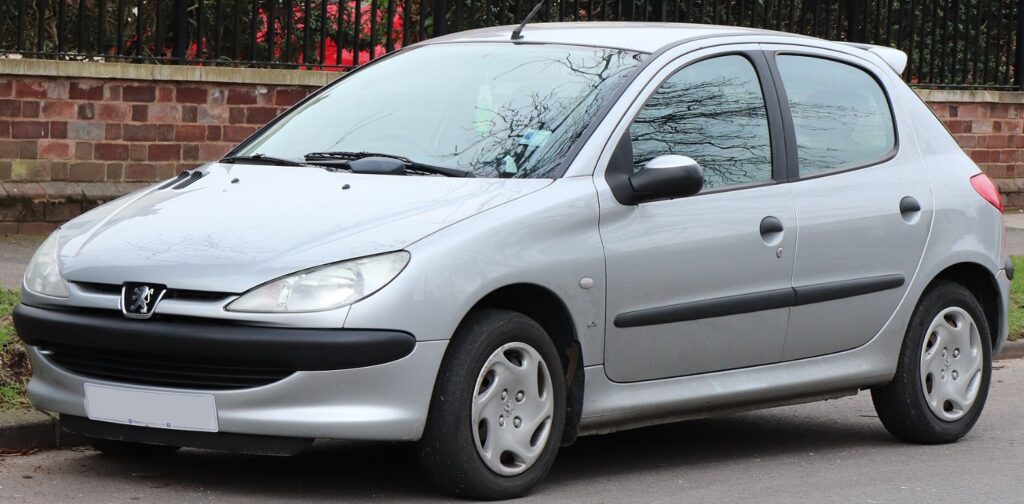
The Peugeot 206 weight is not represented by one universal number. Depending on the engine, transmission, body style, trim level and production year, a Peugeot 206 can weigh considerably more—or less—than another car carrying the same familiar badge.
A basic three-door petrol hatchback may weigh roughly 910 kg, while a diesel-powered Peugeot 206 CC with its folding metal roof can reach around 1,210 kg. Between those two extremes sit dozens of versions, including five-door hatchbacks, automatics, diesels, GTi models, the high-performance RC, the practical SW estate and regional sedan variants.
That difference matters more than we might initially think. Vehicle weight affects acceleration, fuel consumption, braking, tyre pressures, payload, towing ability and even the way the car feels when turning into a corner.
In this guide, we will break down the Peugeot 206’s approximate weight by body style and engine, explain the terminology found on vehicle documents and show why checking the exact version is essential. Think of it as putting the 206 on a virtual scale—without having to drive it to a weighbridge.
Content in this publication
- How Much Does a Peugeot 206 Weigh?
- Peugeot 206 Weight in Kilograms and Pounds
- Peugeot 206 Kerb Weight Explained
- Peugeot 206 Gross Vehicle Weight
- Peugeot 206 Payload Capacity
- Peugeot 206 Hatchback Weight
- Peugeot 206 1.1 Weight
- Peugeot 206 1.4 Weight
- Peugeot 206 1.6 Weight
- Peugeot 206 Diesel Weight
- Peugeot 206 GTi Weight
- Peugeot 206 RC and GTi 180 Weight
- Peugeot 206 CC Weight
- Peugeot 206 SW Weight
- Peugeot 206 Sedan Weight
- Peugeot 206+ Weight
- What Changes the Weight of a Peugeot 206?
- How Weight Affects Peugeot 206 Performance
- How Weight Affects Fuel Economy
- How Weight Affects Braking and Tyres
- Can You Tow a Peugeot 206 on a Trailer?
- How to Find the Exact Weight of Your Peugeot 206
- Should You Use an Online Weight Database?
- Is the Peugeot 206 a Lightweight Car?
- Peugeot 206 Weight Compared With Its Size
- Common Mistakes When Checking Peugeot 206 Weight
- Peugeot 206 Weight Summary Table
- Final Thoughts on Peugeot 206 Weight
How Much Does a Peugeot 206 Weigh?
Most standard Peugeot 206 hatchbacks have an approximate kerb weight of 910 to 1,100 kg, equivalent to roughly 2,006 to 2,425 lb.
However, broader versions of the range can fall outside that window:
- Lightweight entry-level hatchbacks: around 910 kg
- Mid-range petrol or diesel hatchbacks: approximately 950–1,090 kg
- Peugeot 206 GTi: around 1,050 kg
- Peugeot 206 RC or GTi 180: approximately 1,059–1,100 kg
- Peugeot 206 SW estate: generally around 1,050–1,160 kg
- Peugeot 206 CC: approximately 1,140–1,210 kg
- Peugeot 206+ models: commonly just over 1,000 kg
For example, published specifications place the early 1.1-litre hatchback at about 910 kg, the 206 GTi at approximately 1,050 kg, and the 206 RC at around 1,100 kg.
These figures should be treated as a guide rather than a replacement for the identification plate or registration document. Two cars with the same engine can still have different official weights because of their doors, gearbox, safety equipment, air conditioning and market specification.
Peugeot 206 Weight in Kilograms and Pounds
Many owners search for the Peugeot 206 weight in pounds, particularly when checking transport limits, trailers or overseas vehicle specifications.
Here are some useful approximate conversions:
| Peugeot 206 weight | Approximate weight in pounds |
|---|---|
| 910 kg | 2,006 lb |
| 950 kg | 2,094 lb |
| 1,000 kg | 2,205 lb |
| 1,050 kg | 2,315 lb |
| 1,100 kg | 2,425 lb |
| 1,150 kg | 2,535 lb |
| 1,200 kg | 2,646 lb |
| 1,210 kg | 2,668 lb |
To convert kilograms into pounds, multiply the kilogram figure by approximately 2.205.
For example:
1,050 kg × 2.205 = approximately 2,315 lb
Simple enough, right? The difficult part is not the conversion. It is identifying which weight figure applies to your exact Peugeot 206.
Peugeot 206 Kerb Weight Explained
Kerb weight—sometimes written as curb weight—is usually the figure people mean when asking how much a Peugeot 206 weighs.
It describes the weight of the vehicle in road-ready condition, normally including:
- Standard factory equipment
- Engine oil
- Coolant
- Brake fluid
- A specified quantity of fuel
- A spare wheel or tyre repair equipment, where fitted
Depending on the country and measurement standard, the quoted kerb weight may or may not include a driver. This is why two trustworthy specification sources can provide slightly different numbers for what appears to be the same model.
A manufacturer may quote weight according to a European standard that includes a nominal driver and luggage allowance, while another database may list the vehicle without a driver. Before comparing figures, we need to make sure we are comparing like with like.
Kerb Weight Is Not the Car’s Empty Shell
The term “kerb weight” does not mean a completely empty vehicle stripped of fluids. It represents a car that is largely prepared for normal operation.
Remove the fuel, oils, coolant, spare wheel and accessories, and we move closer to dry weight. Add passengers, shopping, luggage and aftermarket equipment, and we move toward the vehicle’s actual running weight.
That is why a Peugeot 206 listed at 1,050 kg may easily weigh 1,250 kg or more when carrying several adults and their bags.
Peugeot 206 Gross Vehicle Weight
Gross vehicle weight refers to the total permitted weight of the car when loaded. It may also appear as:
- Gross vehicle weight rating
- GVWR
- Maximum authorised mass
- Maximum technically permissible laden mass
- Gross laden weight
This figure includes the car itself, occupants, luggage, accessories and anything else being carried.
A basic Peugeot 206 hatchback may have a gross weight of around 1,400 kg, while heavier and more powerful models can have maximum permitted weights closer to 1,550–1,600 kg. One published specification for the 1.1-litre hatchback lists a gross weight of approximately 1,405 kg, while the GTi is listed at around 1,560 kg.
The exact limit must always be taken from the vehicle identification plate or official documents rather than a general online chart.
Why Gross Weight Matters
Gross weight is not a decorative figure hidden on a plate for mechanics to admire. It establishes the safe and legal loading limit of the vehicle.
Exceeding it can affect:
- Braking distance
- Steering response
- Suspension control
- Tyre temperature
- Fuel consumption
- Mechanical wear
- Legal compliance
- Insurance coverage
An overloaded 206 may still move, but that does not mean it is safe. It is a little like carrying an overfilled suitcase by a fragile handle: everything seems fine until the weakest part complains.
Peugeot 206 Payload Capacity
Payload is the amount of weight the car can carry after subtracting its kerb weight from its maximum permitted weight.
The basic formula is:
Payload = Gross vehicle weight − Kerb weight
Suppose a Peugeot 206 has:
- Kerb weight: 1,050 kg
- Gross vehicle weight: 1,560 kg
Its theoretical payload would be:
1,560 kg − 1,050 kg = 510 kg
A published specification for the Peugeot 206 GTi uses these same approximate figures, producing a payload of about 510 kg.
However, payload must cover everything added to the standard car:
- Driver
- Passengers
- Luggage
- Child seats
- Tools
- Roof-mounted equipment
- Audio upgrades
- Items stored in the boot
- Trailer nose weight, where applicable
Four adults can consume most of the available payload surprisingly quickly. Add holiday luggage and a roof box, and the remaining margin can disappear like ice under summer sunlight.
Peugeot 206 Hatchback Weight
The hatchback is the best-known and usually the lightest body style in the Peugeot 206 family.
Early entry-level versions were particularly light. A 1999 Peugeot 206 1.1 three- or five-door hatchback is commonly listed at approximately 910 kg without a driver.
Later models gained equipment, stronger safety structures and more sophisticated engines, which often increased their kerb weight.
A reasonable approximate range for the original hatchback is:
- 1.1 petrol: 910–1,000 kg
- 1.4 petrol: 950–1,050 kg
- 1.6 petrol: 1,000–1,090 kg
- 1.9 diesel: around 1,040–1,100 kg
- 1.4 HDi: around 980–1,060 kg
- 2.0 HDi: around 1,080–1,140 kg
- GTi and RC: approximately 1,050–1,100 kg
These ranges overlap because body style, door count, gearbox and specification can alter the final number.
Three-Door Versus Five-Door Weight
A three-door Peugeot 206 is generally slightly lighter than a comparable five-door model.
The five-door body requires:
- Two additional doors
- Extra hinges
- More locking mechanisms
- Additional window hardware
- Different structural reinforcements
- Extra interior trim
The difference may be modest, often only several kilograms or a few tens of kilograms. Still, manufacturers sometimes quote separate kerb weights for each version.
For ordinary driving, the difference is unlikely to transform the experience. Yet it can contribute to small changes in performance, emissions and official fuel-economy results.
Peugeot 206 1.1 Weight
The 1.1-litre petrol Peugeot 206 sits near the lightest end of the range.
An early 1.1 hatchback is widely listed with a kerb weight of approximately 910 kg, or around 2,006 lb. Its low weight helped a modest 60 hp engine move the car without making every journey feel painfully slow.
Later versions, particularly the facelifted 206+, could weigh more. Published figures for some 206+ 1.1 models sit around 1,013–1,020 kg, depending on whether the vehicle has three or five doors.
That is a notable increase over the earliest basic model. Additional bodywork, safety equipment and specification can make the newer car more than 100 kg heavier.
Is the 1.1 Peugeot 206 Too Heavy for Its Engine?
Not necessarily, but expectations matter.
The 1.1 was designed for affordable urban transport, not motorway domination. In a lightly loaded car, it can feel acceptable around town. Add four passengers, luggage and a steep hill, however, and the limited power becomes more obvious.
Weight affects a low-powered engine more dramatically because each extra kilogram represents a greater proportion of the car’s available performance.
Peugeot 206 1.4 Weight
The Peugeot 206 1.4 was one of the most common versions, available with petrol and diesel engines across multiple trims.
Depending on the year and body style, a 1.4-litre 206 hatchback will often weigh approximately 950 to 1,060 kg.
Basic petrol versions normally sit toward the lower end. Automatic models, highly equipped trims and diesel versions can weigh more because of additional transmission components, engine hardware and emissions equipment.
The 1.4 often provides a sensible balance. It remains relatively light but usually offers more flexibility than the 1.1, especially when carrying passengers.
Peugeot 206 1.6 Weight
A Peugeot 206 1.6 hatchback generally weighs around 1,000 to 1,090 kg, although the exact result depends heavily on the specification.
One published figure for a 1.6 16V hatchback is 1,088 kg, equivalent to approximately 2,399 lb. The same source lists a maximum weight of around 1,553 kg for that particular configuration.
Why does a 1.6 weigh more than a basic 1.1?
The larger engine is only part of the story. Many 1.6 models also include:
- Larger wheels
- Bigger brakes
- More equipment
- Air conditioning
- Heavier trim
- Automatic transmission on certain versions
- Additional safety or comfort features
We therefore cannot assume that engine displacement alone determines weight.
Peugeot 206 Diesel Weight
Diesel Peugeot 206 models are usually heavier than equivalent petrol cars.
A diesel engine tends to use stronger internal components because it operates at higher compression. Turbochargers, intercoolers, fuel-injection hardware and emissions systems also contribute additional weight.
Common diesel versions included:
- 1.9 D
- 1.4 HDi
- 2.0 HDi
- 1.6 HDi in selected later derivatives
Approximate diesel hatchback weights frequently fall between 1,000 and 1,140 kg. A heavier body style, such as the CC or SW, can move beyond that range.
The extra weight is not automatically a disadvantage. Diesel engines typically provide stronger low-speed torque, which can make a loaded car feel less strained.
Does Diesel Weight Affect Handling?
Yes, especially because much of the extra mass sits over the front axle.
The Peugeot 206 is front-engined and front-wheel drive, so a heavier diesel engine can make the nose feel more substantial when turning. Suspension settings may differ to account for this, but the car can still feel less eager to change direction than a lighter petrol model.
On the other hand, the added weight may provide a more planted sensation at higher speeds. Whether that feels better depends on the driver and the road.
Peugeot 206 GTi Weight
The Peugeot 206 GTi, also known as the S16 in some markets, has a kerb weight of approximately 1,050 kg, or roughly 2,315 lb.
That may not sound astonishingly light beside the basic 1.1, but it is still modest by modern performance-car standards.
The GTi’s weight includes:
- A larger 2.0-litre engine
- Performance-oriented suspension
- Bigger brakes
- Larger wheels and tyres
- Sportier seats
- Additional trim
- Greater standard equipment
Its relatively compact body and reasonable mass helped create a lively power-to-weight ratio. The result is a car that can feel playful rather than merely powerful.
Peugeot 206 RC and GTi 180 Weight
The high-performance Peugeot 206 RC—called the GTi 180 in the United Kingdom—is generally quoted at around 1,059 to 1,100 kg, depending on the source and measurement convention.
Its 2.0-litre engine produces approximately 177 PS, giving the car considerably more performance than ordinary versions. The RC could accelerate from 0–100 km/h in about 7.4 seconds and reach around 220 km/h, according to published specifications.
The RC is slightly heavier than the standard GTi because it carries upgraded components. Yet the increased power more than compensates for those extra kilograms.
Peugeot 206 RC Power-to-Weight Ratio
Using a weight of 1,100 kg and output of 177 PS, the approximate power-to-weight ratio is:
177 PS ÷ 1.1 tonnes = approximately 161 PS per tonne
That figure helps explain why the RC feels energetic without requiring an enormous engine.
Power-to-weight ratio often reveals more than horsepower alone. A lighter car with moderate power can feel more responsive than a heavy vehicle with a bigger headline figure.
Peugeot 206 CC Weight
The Peugeot 206 CC is one of the heaviest 206 derivatives.
Most versions weigh approximately 1,140 to 1,210 kg, with the exact amount depending on the engine and trim. A published figure for the 1.6 HDi CC is around 1,210 kg, with a gross vehicle weight near 1,600 kg.
Why is the little convertible so heavy?
Its folding steel roof requires:
- Electric motors
- Hydraulic or mechanical operating equipment
- Hinges and locking mechanisms
- Roof storage hardware
- Additional wiring
- Structural reinforcement
A fixed-roof hatchback gains much of its rigidity from the roof itself. Once that roof becomes movable, the floor and body structure must work harder. Reinforcement adds weight, even before we count the metal roof mechanism.
Why the 206 CC Feels Different
The CC may share its face and dashboard with the hatchback, but it does not drive exactly the same way.
Its extra mass can affect:
- Acceleration
- Braking
- Body control
- Fuel consumption
- Ride quality
- Steering response
The difference is not necessarily unpleasant. Some drivers enjoy the more substantial feel. Still, anyone expecting the CC to handle exactly like a lightweight three-door hatchback may notice the contrast.
Peugeot 206 SW Weight
The Peugeot 206 SW is the estate or station-wagon version, created for buyers needing more luggage space without moving into a much larger car.
Its kerb weight commonly falls around 1,050 to 1,160 kg, depending on engine and equipment.
The SW weighs more than the hatchback because it has:
- A longer body
- A larger rear structure
- More glass
- Additional interior trim
- A bigger tailgate
- Greater load-carrying equipment
- Potentially heavier rear suspension components
Although heavier, the SW remains relatively compact. It offers the practicality of a small estate while preserving much of the 206’s easy-to-drive character.
Does the SW Carry More Weight?
The SW may provide more cargo volume, but additional space does not mean unlimited payload.
A large boot can tempt us to fill it completely. Yet bulky luggage may reach the vehicle’s maximum permitted weight before every corner of the load area is occupied.
Always consider both volume and mass. A boot full of pillows is very different from a boot full of tiles.
Peugeot 206 Sedan Weight
The Peugeot 206 sedan was produced for selected international markets. It uses a separate boot rather than the hatchback’s rear door.
Depending on the engine, market and equipment, its weight can sit around 1,050 to 1,150 kg.
The sedan’s longer rear body and different structure add mass, although the exact comparison varies. Regional manufacturing specifications can also differ from European hatchback versions.
For an accurate sedan figure, check the VIN plate and local registration documentation. Importantly, avoid assuming that a European hatchback specification applies to an Iranian-, Chinese- or South American-built sedan.
Peugeot 206+ Weight
The Peugeot 206+ was a heavily updated derivative with styling influenced by the Peugeot 207.
Although still related to the original 206, it generally weighs more than the earliest hatchbacks. Published examples of the 206+ 1.1 weigh approximately 1,013 kg for a three-door model and 1,020 kg for a five-door version.
Several factors contributed to the increase:
- Updated body panels
- Revised interior components
- Additional standard equipment
- Newer safety requirements
- Differences in measuring standards
This is why searching only for “Peugeot 206 1.1 weight” can produce answers ranging from around 910 kg to just over 1,020 kg. Both figures may be correct—they simply describe different generations or specifications.
What Changes the Weight of a Peugeot 206?
The engine receives most of the attention, but many components influence the final figure.
Engine and Fuel Type
Larger engines usually weigh more. Diesel engines often carry additional mass from stronger construction, turbocharging and fuel-system equipment.
Manual or Automatic Transmission
An automatic gearbox can be heavier than a manual transmission. It may also require extra cooling components and fluid.
Three or Five Doors
Five-door versions typically carry a small weight penalty due to additional doors, hardware and reinforcement.
Trim Level
Premium trims may add:
- Alloy wheels
- Air conditioning
- Electric windows
- Larger audio systems
- Leather or heavier seats
- Panoramic or glass roof components
- Extra airbags
- Additional sound insulation
No individual feature seems dramatic, but together they can add dozens of kilograms.
Optional Equipment
A factory sunroof, air conditioning or upgraded interior can alter kerb weight. Aftermarket accessories can increase it further.
Common additions include:
- Tow bars
- Roof racks
- Subwoofers
- Larger wheels
- Body kits
- Protective plates
- LPG systems
- Boot organisers
- Spare parts and tools
Cars tend to collect objects over time. Open the boot of an older vehicle and we may find enough forgotten equipment to stock a small workshop.
How Weight Affects Peugeot 206 Performance
Weight influences how much work the engine must do.
Imagine two cyclists with equal strength. One rides an empty bicycle; the other carries a heavy backpack. Both can move, but one accelerates more easily and uses less energy.
The same principle applies to the Peugeot 206.
A lighter version will generally:
- Accelerate more quickly with the same engine
- Require less energy to climb hills
- Place less demand on the brakes
- Feel more agile
- Use slightly less fuel
- Put less strain on suspension components
This is why the 1.1 can feel acceptable in an early lightweight hatchback but sluggish in a heavier, well-equipped derivative.
Passenger Load Makes a Noticeable Difference
Four adults can add roughly 250–350 kg to the vehicle, depending on their individual weights.
In a 910 kg car, an additional 300 kg increases the moving mass by about one-third. That is enormous from the engine’s point of view.
Drivers may notice:
- Slower acceleration
- More frequent gear changes
- Longer braking distances
- Increased tyre pressure requirements
- Greater suspension movement
- Higher fuel consumption
The car has not suddenly developed a fault. It is simply working harder.
How Weight Affects Fuel Economy
A heavier vehicle needs more energy to accelerate. In stop-and-start traffic, where the car repeatedly gains speed and slows down, additional mass can noticeably increase fuel use.
On a flat motorway at a constant speed, aerodynamics play a larger role, so weight may have less influence. However, it still matters on hills and during acceleration.
To avoid carrying unnecessary mass:
- Remove unused items from the boot
- Take off roof racks when not required
- Avoid carrying heavy tools permanently
- Remove seasonal equipment when unnecessary
- Do not use the car as long-term storage
We do not need to obsess over every kilogram, but carrying 40 kg of forgotten cargo throughout the year is like travelling with an invisible passenger.
How Weight Affects Braking and Tyres
More weight means the brakes must absorb more energy when slowing the car.
A heavily loaded Peugeot 206 may:
- Take longer to stop
- Feel less responsive under braking
- Generate more brake heat
- Wear pads and discs faster
- Place greater stress on tyres
Tyre pressures may need adjustment when the car is fully loaded. The correct figures are normally shown on a label inside the driver’s door, door pillar, glove compartment or fuel-filler flap, depending on the version.
Never inflate tyres solely according to the maximum number printed on the sidewall. That figure is not the manufacturer’s normal operating recommendation.
Can You Tow a Peugeot 206 on a Trailer?
When transporting a Peugeot 206, we must consider its actual weight rather than relying on a rough description such as “small hatchback.”
For a typical car transporter, allow for:
- Peugeot 206 kerb weight
- Fuel in the tank
- Personal items inside the vehicle
- Spare parts
- Trailer weight
- Straps and loading equipment
A 1,050 kg 206 on a 500 kg trailer creates a combined trailer load of approximately 1,550 kg before extra equipment.
The towing vehicle must have adequate:
- Braked towing capacity
- Gross train weight allowance
- Tow-ball limit
- Axle capacity
- Licence compatibility
A 206 CC may be 200–300 kg heavier than an early basic hatchback, so guessing can create a serious miscalculation.
How to Find the Exact Weight of Your Peugeot 206
The most reliable figure is attached to the vehicle itself or recorded in its official documents.
Check the following locations:
- Vehicle registration certificate
- Manufacturer identification plate
- Owner’s manual
- Certificate of conformity
- Peugeot dealer records
- Official technical inspection documents
- Public weighbridge
The identification plate usually displays several maximum-weight figures. These may include:
- Maximum vehicle weight
- Maximum train weight
- Front axle limit
- Rear axle limit
The plate does not always show kerb weight directly, so the registration document may be more useful for that figure.
Using the VIN for Accurate Identification
The Vehicle Identification Number helps identify:
- Production year
- Engine type
- Body style
- Factory specification
- Market version
A Peugeot dealer or specialist parts system may be able to decode the VIN and provide specification details.
This is particularly valuable when the car has an unusual trim, automatic gearbox, imported specification or regional body style.
Should You Use an Online Weight Database?
Online databases are useful for obtaining a quick estimate, but they should not be treated as infallible.
Conflicting figures can appear because sources may use:
- Different measurement standards
- Different model years
- Three-door instead of five-door specifications
- Manual instead of automatic versions
- Weight with or without a driver
- Market-specific equipment
- Rounded numbers
- Incorrectly matched engines
Use online information to narrow the answer, then verify it against the vehicle’s documents when the number affects safety, legality, towing or transport.
Is the Peugeot 206 a Lightweight Car?
By modern standards, yes.
Many current small cars weigh well over 1,100 kg, while electrified models can be heavier still. Early Peugeot 206 hatchbacks beginning around 910 kg are notably light by comparison.
This low mass contributes to the car’s character. Even versions with modest power can feel eager and easy to place on narrow roads.
However, low weight also reflects the engineering and safety standards of its era. A lighter older car should not automatically be assumed to provide the crash protection of a heavier modern vehicle.
Weight alone does not determine safety. Structural design, airbags, stability systems and crash engineering matter enormously.
Peugeot 206 Weight Compared With Its Size
The original hatchback measures approximately 3.8 metres long, placing it firmly in the supermini category. Published specifications commonly list a wheelbase of around 2,442 mm and a width near 1,652 mm for standard hatchbacks.
Its compact dimensions and moderate weight make it:
- Easy to park
- Suitable for urban roads
- Relatively economical
- Simple to manoeuvre
- Less demanding on tyres and brakes than a larger vehicle
The 206 is light without feeling like a microcar. That balance helped make it popular across Europe and numerous international markets.
Common Mistakes When Checking Peugeot 206 Weight
Several errors repeatedly create confusion.
Using Gross Weight as Kerb Weight
A listing showing 1,500 kg may refer to the maximum loaded weight, not the empty road-ready car.
Assuming Every 1.4 Model Is Identical
A 1.4 petrol three-door manual and a 1.4 diesel five-door can have very different weights.
Ignoring the Body Style
The hatchback, SW, sedan and CC do not share one weight figure.
Confusing the 206 With the 206+
The later 206+ can be noticeably heavier than an early original 206.
Forgetting Aftermarket Modifications
An LPG conversion, tow bar, large audio installation or oversized wheels can add meaningful weight.
Comparing Different Measurement Standards
Some figures include a nominal driver; others do not. Always read the small print.
Peugeot 206 Weight Summary Table
The following table provides a practical overview. Figures are approximate and can vary by year, trim, gearbox and market.
| Peugeot 206 version | Approximate kerb weight |
| 1.1 early hatchback | 910–1,000 kg |
| 1.4 petrol hatchback | 950–1,050 kg |
| 1.4 HDi hatchback | 980–1,060 kg |
| 1.6 petrol hatchback | 1,000–1,090 kg |
| 1.9 diesel hatchback | 1,040–1,100 kg |
| 2.0 HDi hatchback | 1,080–1,140 kg |
| 206 GTi/S16 | Around 1,050 kg |
| 206 RC/GTi 180 | 1,059–1,100 kg |
| 206 SW | 1,050–1,160 kg |
| 206 CC | 1,140–1,210 kg |
| 206 sedan | 1,050–1,150 kg |
| 206+ hatchback | Around 1,010–1,100 kg |
Use this table as a starting point—not as legal proof of your individual car’s mass.
Final Thoughts on Peugeot 206 Weight
The Peugeot 206 weighs approximately 910 to 1,210 kg, depending on the version. Most hatchbacks occupy the middle of that range, while entry-level early models are the lightest and folding-roof CC versions are generally the heaviest.
If we need only a quick estimate, around 950–1,100 kg is a sensible range for a typical hatchback. For transporting, towing, calculating payload or checking legal limits, however, an estimate is not enough.
The precise answer lies in the vehicle’s registration document, identification plate or certificate of conformity.
Ultimately, the 206’s relatively low weight is one of the qualities that shaped its personality. It does not lumber down the road like a wardrobe on wheels. Instead, it feels compact, manageable and light on its feet—particularly in its simpler hatchback forms.
Frequently Asked Questions
1. What is the average Peugeot 206 weight?
A typical Peugeot 206 hatchback weighs approximately 950 to 1,100 kg, or around 2,094 to 2,425 lb. Entry-level early models may weigh less, while CC and estate versions can weigh more.
2. How much does a Peugeot 206 1.1 weigh?
An early Peugeot 206 1.1 hatchback weighs around 910 kg, although later versions and the 206+ can weigh approximately 1,000 to 1,020 kg.
3. How much does a Peugeot 206 GTi weigh?
The standard Peugeot 206 GTi has an approximate kerb weight of 1,050 kg, equivalent to about 2,315 lb.
4. Why is the Peugeot 206 CC heavier than the hatchback?
The 206 CC uses a folding steel roof, operating motors and additional structural reinforcement. These components raise its weight to approximately 1,140–1,210 kg, depending on the engine.
5. Where can I find my Peugeot 206’s exact weight?
Check the vehicle registration document, manufacturer identification plate, certificate of conformity or owner’s manual. A public weighbridge can provide the car’s actual current weight when loaded.
If you want to know other articles similar to Peugeot 206 Weight: Kerb Weight, Payload and Model Guide you can visit the category Service and Parts.
BYD Shark 6 Weight: Kerb Weight, Payload, GVM and What It Means
BYD Shark 6 Towing Capacity: Complete Towing Guide
Peugeot RCZ Engine Swap: Options, Costs, Compatibility, and What You Need to Know
Mitsubishi Pajero Sport Engine Size: Complete Engine Guide
Mitsubishi Pajero Sport Weight: Kerb Weight, GVM, Payload and What It Really Means
Mitsubishi Pajero Sport Service Reset: Complete Step-by-Step Guide
Leave a Reply
More content of your interest