
GMC Sierra vs Toyota Tundra: Which Full-Size Truck Wins?

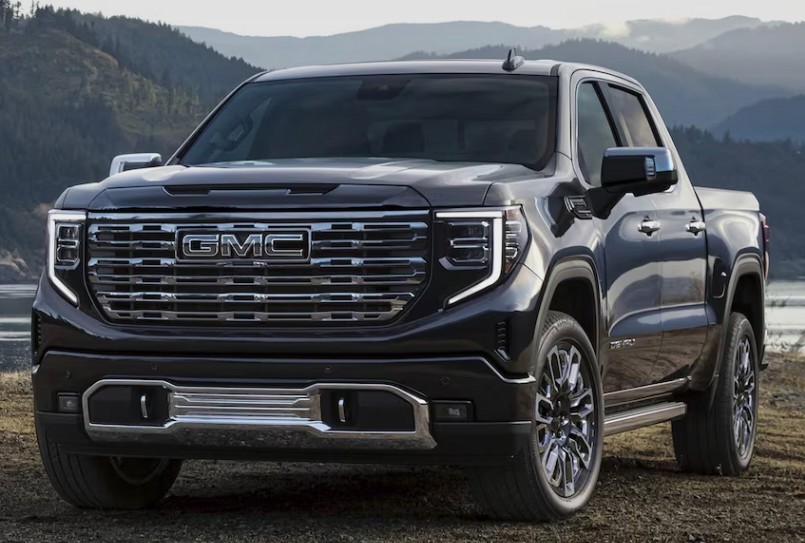
Choosing between the GMC Sierra and Toyota Tundra feels a little like picking between a tailored work boot and a rugged hiking boot. Both can get dirty. Both can pull serious weight. Both can serve as comfortable daily transportation. Yet they approach the full-size pickup formula from noticeably different directions.
The GMC Sierra 1500 leans heavily into variety. We can order it with a turbocharged four-cylinder, two different gasoline V8s, or a six-cylinder diesel. It can be configured as a basic work truck, an off-road machine, a chrome-covered luxury cruiser, or something between those extremes.
The Toyota Tundra takes a more concentrated approach. Every current Tundra uses a twin-turbocharged V6, while upper versions may add an electric motor through the available i-FORCE MAX hybrid system. Toyota offers fewer mechanical combinations, but its lineup remains broad enough to cover work, recreation, luxury, and serious trail driving.
So, which truck deserves our money?
The Sierra generally wins for maximum towing, engine selection, bed and cab flexibility, highway efficiency with the diesel, and traditional V8 character. The Tundra fights back with its muscular hybrid powertrain, composed ride, straightforward configuration choices, standard safety technology, and distinct Toyota personality.
Neither truck dominates every category. The right answer depends on what we carry, where we drive, what we tow, and how much luxury we expect from something that still has a cargo bed.
Content in this publication
- GMC Sierra vs Toyota Tundra at a Glance
- Understanding the Two Trucks
- Engine Choices: Variety Versus Concentration
- Performance and Acceleration
- Towing Capacity
- Payload and Bed Utility
- Ride Quality and Everyday Comfort
- Interior Design and Technology
- Cab Space and Family Use
- Fuel Economy and Operating Costs
- Off-Road Capability
- Safety and Driver-Assistance Features
- Reliability and Long-Term Ownership
- Warranty Coverage
- Luxury Trims: Denali Ultimate vs Capstone
- GMC Sierra vs Toyota Tundra for Work
- GMC Sierra vs Toyota Tundra for Daily Driving
- Price and Value
- Which Truck Should We Buy?
- Final Thoughts
- Frequently Asked Questions
GMC Sierra vs Toyota Tundra at a Glance
Before diving into the details, here is the basic personality of each truck:
| Category | GMC Sierra 1500 | Toyota Tundra |
|---|---|---|
| Overall character | Configurable, polished and traditional | Bold, modern and focused |
| Engine choices | Turbo four-cylinder, V8s and diesel | Twin-turbo V6 or hybrid V6 |
| Maximum advertised towing | Up to 13,200 pounds | Up to 12,000 pounds |
| Best performance option | 6.2-liter V8 | i-FORCE MAX hybrid |
| Best efficiency option | 3.0-liter Duramax diesel | Standard twin-turbo V6 |
| Luxury flagship | Denali Ultimate | Capstone |
| Main off-road models | AT4 and AT4X | TRD Pro and TRD-equipped trims |
| Best reason to buy | Choice and capability | Power, comfort and simplicity |
Maximum figures depend on the selected cab, bed, drivetrain, axle ratio, equipment package and trim. A showroom truck may tow substantially less than the headline number printed in an advertisement.
Understanding the Two Trucks
What Is the GMC Sierra 1500?
The Sierra 1500 is GMC’s light-duty, full-size pickup. It shares its basic platform and several mechanical components with the Chevrolet Silverado 1500, but GMC gives the Sierra a more upscale design, different trim structure and stronger emphasis on premium equipment.
That distinction becomes obvious in models such as the Denali and Denali Ultimate. These trucks mix genuine towing capability with large screens, high-quality materials, advanced driver-assistance technology and cabins that would not feel out of place in an expensive luxury SUV.
At the other end of the lineup, the Sierra Pro remains a practical truck designed for work. Between those bookends sit the SLE, Elevation, SLT, AT4 and AT4X.
In other words, the Sierra lineup stretches like an accordion. We can keep it basic, turn it into a trail truck or load it with almost every comfort feature GMC offers.
What Is the Toyota Tundra?
The Tundra is Toyota’s full-size pickup and the larger sibling of the Tacoma. The current generation moved away from the naturally aspirated V8 used by its predecessor and adopted a twin-turbocharged V6 platform.
Toyota offers the Tundra in trims such as SR, SR5, Limited, Platinum, 1794 Edition, TRD Pro and Capstone. Equipment availability can vary by model year and market, but the general hierarchy moves from practical fleet-oriented versions to increasingly luxurious or adventure-focused trucks.
The Tundra’s identity is less traditional than before. Its turbocharged engines, coil-spring rear suspension, available hybrid assistance and dramatic interior design make it feel more like a modern interpretation of a pickup than a tribute to old-school truck engineering.
Engine Choices: Variety Versus Concentration
GMC Sierra Engine Options
The Sierra’s engine menu is one of its strongest advantages. Depending on configuration, current models may offer:
- A TurboMax turbocharged four-cylinder
- A 5.3-liter gasoline V8
- A 6.2-liter gasoline V8
- A 3.0-liter Duramax turbo-diesel inline-six
The TurboMax produces 310 horsepower and 430 pound-feet of torque. GMC rates properly equipped versions to tow as much as 9,400 pounds, making the entry engine far more capable than its cylinder count might suggest.
The 5.3-liter V8 occupies the middle ground. It delivers familiar V8 sound, respectable performance and broad availability without the thirst or cost of the larger 6.2-liter engine.
Move up to the 6.2-liter V8 and the Sierra becomes significantly more energetic. It is the choice for buyers who want immediate throttle response, strong passing power and the emotional appeal of a large-displacement gasoline engine.
The 3.0-liter Duramax is the long-distance specialist. Its strong low-rpm torque, relaxed highway behavior and towing efficiency make it especially attractive for drivers who regularly pull campers, boats or enclosed trailers.
Why the Sierra’s Engine Range Matters
The Sierra lets us tailor the powertrain to the job.
A contractor who mainly carries tools may be perfectly satisfied with the TurboMax. A recreational buyer might choose the 5.3-liter V8. Someone who wants maximum gasoline performance can select the 6.2-liter, while a high-mileage trailer owner may prefer the Duramax diesel.
That flexibility is valuable because full-size truck buyers rarely use their vehicles in exactly the same way.
Toyota Tundra Engine Options
The Tundra lineup revolves around Toyota’s twin-turbocharged 3.4-liter V6. Output varies by trim and configuration, with stronger versions producing roughly 389 horsepower and 479 pound-feet of torque.
The available i-FORCE MAX powertrain adds an electric motor to the system. Toyota lists combined output at 437 horsepower and 583 pound-feet of torque. Rather than functioning primarily as a fuel-saving hybrid, it uses electrical assistance to provide stronger low-end response and more effortless acceleration.
The hybrid feels particularly muscular when merging, climbing grades or accelerating with passengers aboard. Torque arrives quickly, so the Tundra moves with the urgency of a smaller vehicle despite its considerable size.
Does the Tundra Need a V8?
Some truck enthusiasts still miss the sound and linear response of Toyota’s previous V8. That reaction is understandable. A V8 has a certain rhythm—a deep mechanical pulse that turbocharged engines rarely duplicate.
Yet the current V6 powertrains do not leave the Tundra feeling weak. Quite the opposite. The standard engine provides serious performance, while the hybrid delivers more torque than many traditional gasoline V8s.
The real question is not whether the Tundra needs a V8 to move quickly. It does not. The question is whether we personally value the simplicity, soundtrack and familiarity associated with one.
Performance and Acceleration
The Sierra’s performance changes dramatically with the selected engine. TurboMax models feel strong at low speeds but do not offer the same high-rpm confidence as the larger engines. The 5.3-liter V8 is balanced and predictable. The 6.2-liter V8 feels genuinely quick for a full-size pickup, while the diesel emphasizes steady torque rather than dramatic acceleration.
The Tundra delivers a more consistent personality across its lineup. Even non-hybrid models provide eager acceleration once the turbochargers build boost. The hybrid is the star, launching with a thick wave of torque that makes the truck feel lighter than it is.
In a straight-line contest, a 6.2-liter Sierra and an i-FORCE MAX Tundra are the headline performers. The GMC responds with the smooth surge and soundtrack of a large V8. The Toyota punches forward with immediate electrically assisted torque.
Choosing between them is almost emotional:
- The Sierra 6.2-liter feels theatrical.
- The Tundra hybrid feels forceful and technical.
- The Sierra diesel feels calm and unstoppable.
- The standard Tundra V6 feels quick without demanding the hybrid upgrade.
Towing Capacity
How Much Can the GMC Sierra Tow?
A properly configured 2026 GMC Sierra 1500 can tow up to 13,200 pounds with the available diesel powertrain. GMC publishes detailed trailering charts because capacity changes according to engine, drivetrain, cab, bed, axle ratio and optional equipment.
That maximum gives the Sierra a numerical advantage over the Tundra. More importantly, GMC offers a mature collection of trailering equipment, including integrated trailer-brake controls, multiple camera views, trailer profiles and available packages that increase cooling and axle capability.
The diesel deserves special attention for frequent towing. It does not merely provide a strong maximum rating. Its low-rpm torque and relaxed power delivery make heavy trailers feel less demanding during long highway journeys.
How Much Can the Toyota Tundra Tow?
Toyota rates a properly equipped Tundra to tow up to 12,000 pounds. Standard or available towing features may include Trailer-Sway Control, integrated trailer-brake control, towing drive modes, camera assistance and blind-spot functions designed to account for a connected trailer.
A 1,200-pound difference in maximum ratings looks significant on paper, but it should not decide the comparison by itself. Many owners tow trailers weighing far below either truck’s limit.
What matters more is the rating of the exact truck we plan to purchase.
A luxurious four-wheel-drive crew cab with large wheels and heavy options may have less available towing and payload capacity than a lighter configuration. The certification label, manufacturer towing guide and actual trailer weight should always take priority over a general marketing figure.
You may be interested in reading GMC Sierra vs Dodge Ram: Which Full-Size Truck Is Better?
Towing Verdict
The Sierra wins for maximum advertised capacity and powertrain variety. The Tundra remains fully competitive for boats, utility trailers, medium-size travel trailers and many car-hauling applications.
For occasional towing below 8,000 pounds, either truck should offer ample capability when properly equipped. For repeated towing near 10,000 pounds or more, the Sierra—particularly the Duramax—becomes the more compelling tool.
Payload and Bed Utility
Payload includes the people, cargo and accessories carried by the truck. It also includes the trailer’s tongue weight. That last point surprises many buyers.
Suppose a trailer places 900 pounds on the hitch. Add four adults, luggage, a toolbox and a bed cover, and we can approach the truck’s payload limit long before reaching its maximum tow rating.
The Sierra typically offers more cab-and-bed combinations, giving buyers greater control over passenger space and cargo length. GMC’s available MultiPro tailgate also provides several configurations for loading, stepping into the bed, supporting long items and creating a work surface.
The Tundra counters with a durable composite bed. This material resists dents and corrosion and does not require the same protection as a conventional painted steel surface. Toyota also offers useful bed power, tie-down and storage accessories.
The better bed depends on our priorities:
- Choose the Sierra for configuration variety and the MultiPro tailgate.
- Choose the Tundra for its tough composite bed construction.
- Check the door-jamb payload label before adding passengers, accessories or trailer tongue weight.
Ride Quality and Everyday Comfort
Modern pickups spend more time commuting than crossing ranches, so ride quality matters.
The Tundra uses a coil-spring rear suspension instead of traditional rear leaf springs. On broken pavement, it often feels composed and controlled, particularly when the bed is empty. The rear end generally reacts less sharply to expansion joints and potholes than an old-fashioned work truck.
The Sierra continues to feel unmistakably truck-like, but its ride varies considerably by trim, wheels and suspension. A road-focused SLT or Denali can be smooth and quiet. An AT4X with aggressive tires and off-road hardware naturally feels heavier and more deliberate.
Neither truck drives like a compact crossover. Both are wide, tall and substantial. Parking garages shrink around them. Tight urban streets can feel like threading a sofa through a hallway.
Still, once we adjust to the dimensions, both trucks make excellent highway companions. Their elevated seating positions, quiet cabins and strong passing power reduce fatigue on long drives.
Interior Design and Technology
Inside the GMC Sierra
The Sierra’s cabin ranges from functional to lavish. Lower trims use simpler materials and straightforward controls. Upper versions add larger displays, richer leather, open-pore wood, extensive stitching and numerous comfort features.
Denali and Denali Ultimate models are particularly convincing. They do not merely add chrome to a work-truck interior. They create a genuinely premium environment, especially when equipped with features such as a head-up display, advanced trailering cameras and hands-free highway driving technology where available.
GMC also retains physical controls for many frequently used functions. That matters when we are wearing gloves, bouncing over rough roads or simply trying to adjust the temperature without navigating a menu.
Inside the Toyota Tundra
The Tundra’s cabin has a bolder, more architectural appearance. The dashboard is broad, the vents are prominent and the available 14-inch multimedia screen dominates the center stack.
Toyota’s interface is visually clean and generally easy to understand. Large knobs and switches reinforce the truck’s practical character. Material quality rises substantially in Platinum, 1794 Edition and Capstone models.
The Tundra does not always feel as traditionally luxurious as a top Sierra Denali Ultimate. Instead, it mixes rugged shapes with premium materials. Some buyers will find that design more interesting; others may prefer the calmer, more tailored atmosphere of the GMC.
Interior Verdict
The Sierra wins at the highest luxury level. The Tundra offers the more distinctive dashboard and an excellent large-screen interface.
For work-truck simplicity, both provide sensible controls. For executive-level comfort, the Sierra Denali Ultimate holds the advantage. For a modern cabin that still feels adventurous, the Tundra hits a sweet spot.
Cab Space and Family Use
Crew-cab versions of both trucks provide generous rear-seat space. Adults can sit comfortably in the second row, and wide-opening rear doors make it easier to install child seats or load bulky items.
The flat or nearly flat rear-floor areas are useful for dogs, groceries, luggage and work equipment. Rear-seat storage arrangements vary by trim, but both trucks can serve as convincing family vehicles.
The main challenge is external size rather than internal comfort. A full-size crew-cab pickup with a long bed can be cumbersome in dense cities. Before purchasing, we should measure the garage, test the turning circle and confirm that the truck fits into the parking spaces we use most often.
A truck that cannot fit comfortably at home becomes annoying surprisingly quickly.
Fuel Economy and Operating Costs
Fuel economy depends heavily on engine, drivetrain, tire choice, axle ratio, driving style and payload. Neither truck is inexpensive to fuel, especially in stop-and-go traffic.
The Sierra’s 3.0-liter diesel is generally the efficiency champion for steady highway use. It can deliver impressive range while producing the low-end torque trailer owners want. The trade-off is diesel fuel pricing, emissions-system complexity and potentially higher service costs.
The TurboMax can be economical when lightly loaded, although real-world results may drop when towing or driving aggressively. The 5.3-liter and 6.2-liter V8s trade efficiency for familiar performance, with the 6.2-liter naturally carrying the largest appetite.
The Tundra hybrid needs context. The i-FORCE MAX system is designed largely around performance and torque, not maximum fuel savings. It can improve drivability and efficiency in some situations, but buyers should not expect compact-hybrid fuel consumption from a large, heavy pickup.
For annual operating cost, consider more than fuel:
- Insurance premiums
- Tire replacement
- Oil and filter requirements
- Diesel exhaust fluid where applicable
- Registration and taxes
- Scheduled maintenance
- Depreciation
- Cost of premium fuel if recommended for a selected engine
- Repairs after the warranty period
Off-Road Capability
GMC Sierra AT4 and AT4X
The Sierra AT4 blends everyday comfort with useful trail equipment. Current versions may include a factory suspension lift, four-wheel drive, skid plates, a two-speed transfer case and off-road tires. The Duramax diesel is available and comes standard in some AT4 configurations, depending on model year.
The AT4X goes further. It adds more specialized dampers, locking differentials and hardware designed for difficult terrain. It is the Sierra we would choose for repeated travel over rocks, ruts and deeply uneven trails.
The AT4X is capable, but it is also expensive and heavy. Buyers who mainly drive on pavement may be paying for equipment they rarely use.
Toyota Tundra TRD Pro
The TRD Pro is Toyota’s flagship off-road Tundra. It combines the i-FORCE MAX hybrid powertrain with upgraded suspension components, protective equipment, all-terrain tires and distinctive styling.
It feels energetic on loose surfaces because the hybrid powertrain delivers torque quickly. The suspension is designed to absorb rough terrain without making the truck unbearable during ordinary driving.
Toyota also offers TRD packages on less expensive trims, allowing us to obtain useful off-road equipment without moving all the way to the TRD Pro.
Off-Road Verdict
The AT4X is the more specialized crawler-style option, particularly when equipped with front and rear locking capability. The TRD Pro offers a compelling combination of power, ride control and high-speed dirt-road confidence.
For moderate trails, the Sierra AT4 or a Tundra with a TRD Off-Road package will usually make more financial sense than either flagship.
Safety and Driver-Assistance Features
Toyota equips the Tundra with its Toyota Safety Sense package, although the included functions and version may vary by model year. Common systems include automatic emergency braking, adaptive cruise control, lane-departure alert and automatic high beams.
The Sierra offers its own collection of active safety technologies, with equipment varying more noticeably by trim and package. Available features may include forward-collision warning, automatic emergency braking, blind-zone monitoring, rear cross-traffic assistance and a surround-view camera system.
GMC earns bonus points for trailering visibility. Its available camera technology can make hitching, reversing and monitoring a trailer considerably less stressful.
You may be interested in readingGMC Sierra vs Dodge Ram: Which Full-Size Truck Is Better?You may be interested in reading
GMC Sierra or Similar: The Best Full-Size Truck AlternativesToyota’s strength is the breadth of standard driver assistance. GMC’s strength is the sophistication of its available towing and highway technology.
No electronic system replaces attentive driving. Cameras become dirty, lane markings disappear and sensors can misread difficult conditions. These features are backup singers, not the lead vocalist.
Reliability and Long-Term Ownership
Reliability comparisons require care. A brand’s historical reputation does not guarantee the performance of a specific engine, transmission or model year.
Toyota carries a formidable long-term durability image, and older Tundras helped build that reputation. However, the current generation uses a newer twin-turbocharged platform with more electronics and, in some versions, hybrid components. It should be judged on its own service record rather than automatically inheriting every virtue of previous V8 models.
The Sierra uses several established powertrain families, but complexity varies. Cylinder-deactivation hardware, turbocharging, diesel emissions equipment and sophisticated electronics can all influence long-term repair costs.
Maintenance history matters enormously. A carefully serviced Sierra may outlast a neglected Tundra, just as a well-maintained Tundra may prove far less troublesome than an abused Sierra.
Before buying used, we should:
- Obtain a vehicle-history report.
- Review maintenance receipts.
- Check for unresolved recalls.
- Scan all control modules for stored codes.
- Test the four-wheel-drive system.
- Inspect for leaks and accident repairs.
- Confirm that every camera, screen and power accessory works.
- Arrange an independent pre-purchase inspection.
Warranty Coverage
Both manufacturers generally provide three-year/36,000-mile basic coverage and five-year/60,000-mile powertrain coverage in the United States, although terms, exclusions and market-specific conditions should be confirmed before purchase.
Toyota also includes ToyotaCare on new vehicles, covering specified factory-scheduled maintenance and roadside assistance for a limited period. Hybrid Tundras receive separate coverage for designated hybrid components and the traction battery, subject to the applicable warranty terms.
GMC advertises longer powertrain coverage for its TurboMax engine in certain applications, so buyers considering that powertrain should examine the current written warranty carefully rather than assuming every Sierra engine receives identical coverage.
Luxury Trims: Denali Ultimate vs Capstone
The Sierra Denali Ultimate is the more traditional luxury statement. It uses premium leather, detailed stitching, upscale trim and extensive technology to create an atmosphere closer to a luxury SUV than a conventional work truck.
The Tundra Capstone answers with its own premium leather, large wheels, acoustic glass, substantial technology and bright exterior detailing. It feels expensive and distinctive, though its bold design may not appeal to buyers seeking restraint.
The choice comes down to taste:
- Denali Ultimate feels tailored and established.
- Capstone feels modern and dramatic.
- Denali offers stronger traditional luxury cues.
- Capstone provides Toyota’s most refined Tundra experience.
Both become extremely expensive once fully equipped. At that point, we should compare not only monthly payments but also insurance, depreciation, tire costs and how often the premium equipment will genuinely improve our daily life.
GMC Sierra vs Toyota Tundra for Work
The Sierra is usually the stronger work-truck platform because it offers more engine, cab and bed configurations. Fleet buyers can choose a relatively simple model, while specialized users can match a diesel or V8 to heavier duties.
Its higher maximum towing rating also creates more breathing room for demanding trailer applications.
The Tundra remains a credible work truck, especially in SR and SR5 form. Its composite bed is durable, its turbocharged V6 provides strong torque and its spacious cab works well for crews. However, the lineup offers fewer mechanical paths.
For commercial use, the Sierra is the sharper tool. The Tundra is better suited to buyers who want one powerful, comfortable truck for both work and personal travel without navigating a maze of engine combinations.
GMC Sierra vs Toyota Tundra for Daily Driving
For everyday driving, the Tundra’s composed rear suspension and consistent powertrain behavior make it easy to enjoy. The standard V6 feels strong, and the hybrid provides effortless acceleration.
The Sierra counters with greater customization. A diesel model can be a superb highway commuter, an SLT can balance comfort and price, and a Denali can function as a luxury family vehicle.
Urban drivers should test both trucks on narrow roads and in parking garages. Visibility technology helps, but no camera can shrink a crew-cab pickup.
For most daily drivers, the decision may come down to cabin design and dealership experience rather than capability. Both trucks can perform routine commuting duties with ease.
Price and Value
Base prices change by model year, destination charge and market, while discounts can shift the real-world comparison dramatically. The Sierra often appears less expensive at the entry level because it offers basic configurations and the TurboMax engine.
The Tundra’s standard twin-turbocharged V6 gives even lower trims substantial performance, but the initial price may be higher than that of a basic Sierra.
At the luxury end, both trucks can climb deep into premium-vehicle territory. A fully equipped Denali Ultimate, AT4X, TRD Pro or Capstone demands careful consideration.
Value is not simply the truck with the lowest sticker price. It is the truck that delivers the equipment we will actually use without forcing us to pay for hardware we will not.
Which Truck Should We Buy?
Choose the GMC Sierra If We Want:
- The highest maximum towing figure
- A diesel engine
- Traditional V8 power
- More cab, bed and powertrain combinations
- The MultiPro tailgate
- Advanced trailer-camera technology
- A highly polished luxury interior
- Greater ability to tailor the truck to a specific job
Choose the Toyota Tundra If We Want:
- Strong standard turbocharged performance
- An available high-torque hybrid
- A comfortable coil-spring rear suspension
- A durable composite bed
- Broad standard safety equipment
- A bold, modern interior
- A simpler powertrain decision
- Toyota styling and ownership experience
Our Overall Winner
The GMC Sierra 1500 is the more versatile truck. Its broader engine range, higher maximum towing capacity, extensive configuration choices and impressive luxury trims allow it to serve more types of buyers.
The Toyota Tundra is the more focused alternative. It offers strong performance in every trim, a compelling hybrid option, a comfortable ride and a distinctive design without requiring buyers to choose among four very different engines.
For frequent heavy towing, long-distance diesel travel or highly specific work requirements, we would lean toward the Sierra.
For mixed family use, recreational towing, daily driving and occasional off-road travel, the Tundra deserves serious consideration—particularly in SR5, Limited or TRD-equipped form.
Final Thoughts
The GMC Sierra versus Toyota Tundra contest is not a battle between a good truck and a bad truck. It is a choice between two different philosophies.
The Sierra says, “Tell us exactly what job you need done, and we probably have a configuration for it.” It is flexible, polished and deeply rooted in the traditional American truck formula.
The Tundra says, “Here is a powerful modern platform—choose how rugged or luxurious you want it.” It sacrifices some mechanical variety but offers a confident, cohesive experience.
We should begin with the trailer, cargo and passengers—not the truck. Calculate the real weights, decide how often we will tow, identify the bed length we need and determine whether a diesel or hybrid genuinely benefits our routine.
Then drive both trucks on familiar roads. Test parking, rear-seat comfort, screen usability, braking response and highway noise. Specifications can narrow the field, but the right truck should also feel natural from the driver’s seat.
On paper, the Sierra wins more categories. In person, the Tundra may still be the truck we want to take home. That is what makes this comparison interesting.
Frequently Asked Questions
1. Is the GMC Sierra better than the Toyota Tundra?
The GMC Sierra is better for buyers who prioritize maximum towing, diesel availability, V8 engines, bed-and-cab variety and high-end luxury. The Tundra may be better for buyers who prefer strong standard performance, an available hybrid, a composed ride and simpler configuration choices.
2. Which can tow more, the Sierra or Tundra?
A properly configured GMC Sierra 1500 can tow up to 13,200 pounds, while the Toyota Tundra is rated for up to 12,000 pounds. Actual capacity depends on the exact engine, cab, bed, drivetrain, trim and towing package.
3. Is the Tundra hybrid more fuel-efficient than the Sierra diesel?
Not necessarily. The Tundra’s i-FORCE MAX system emphasizes torque and performance rather than maximum fuel savings. The Sierra’s 3.0-liter Duramax diesel is often the more efficient choice for long highway trips, although diesel fuel and maintenance costs must also be considered.
4. Which truck is better off-road?
The Sierra AT4X is exceptionally capable on technical terrain, while the Tundra TRD Pro combines powerful hybrid performance with specialized off-road suspension. For less extreme use, a Sierra AT4 or Tundra with a TRD Off-Road package may provide better value.
You may be interested in readingGMC Sierra vs Dodge Ram: Which Full-Size Truck Is Better?You may be interested in reading
GMC Sierra or Similar: The Best Full-Size Truck AlternativesYou may be interested in reading
 GMC Truck Like Raptor: Which Model Comes Closest?
5. Which truck should we buy for everyday use?
The Tundra is appealing for daily use because of its strong standard engine and composed rear suspension. The Sierra may be preferable when we want a diesel highway cruiser, a traditional V8 or a more luxurious Denali interior. A back-to-back test drive is the best way to decide.
If you want to know other articles similar to GMC Sierra vs Toyota Tundra: Which Full-Size Truck Wins? you can visit the category Models.
BMW i7 vs Porsche Taycan: Luxury EVs With Very Different Personalities
BMW i7 vs 7 Series: Which BMW Flagship Makes More Sense?
BMW i7 vs Mercedes EQS: The Ultimate Luxury EV Comparison
BMW i7 vs M760e: Electric Luxury or Plug-In Hybrid Power?
NFINITI QX60 or Similar: Luxury SUVs Worth Comparing
Infiniti QX60 vs VW Atlas: Which Three-Row SUV Makes More Sense?
Leave a Reply
More content of your interest