
Ford Taurus Fuel Tank Capacity: Complete Guide by Model Year

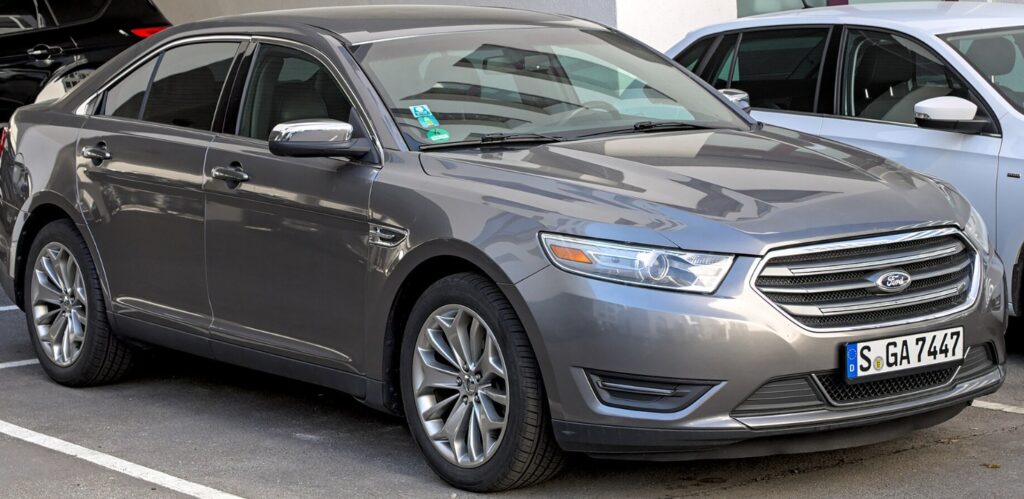
The Ford Taurus fuel tank capacity generally ranges from 16 to 20.5 US gallons, depending on the model year, generation, body style, drivetrain, and trim level. Most of the final-generation Taurus sedans hold approximately 19 gallons, while several older models use 16- or 18-gallon tanks.
At first glance, this should be an easy specification to find. A fuel tank is just a fuel tank, right? Not quite. The Ford Taurus remained in production across multiple decades, went through six major generations, appeared as a sedan and station wagon, disappeared briefly from the market, and later returned as a much larger vehicle.
Because of that long history, there is no universal tank size that applies to every Taurus.
In this complete guide, we will examine the Ford Taurus gas tank size by generation and model year. We will also convert gallons into liters, estimate driving range, explain why a fill-up may use less fuel than the official capacity, and show you how to verify the correct specification for your particular vehicle.
Content in this publication
- Ford Taurus Fuel Tank Capacity at a Glance
- Why the Taurus Fuel Tank Size Changes
- First-Generation Ford Taurus Fuel Tank Capacity: 1986–1991
- Second-Generation Ford Taurus Fuel Tank Capacity: 1992–1995
- Third-Generation Ford Taurus Fuel Tank Capacity: 1996–1999
- Fourth-Generation Ford Taurus Fuel Tank Capacity: 2000–2007
- Fifth-Generation Ford Taurus Fuel Tank Capacity: 2008–2009
- Sixth-Generation Ford Taurus Fuel Tank Capacity: 2010–2019
- Ford Taurus SHO Fuel Tank Capacity
- How Far Can a Ford Taurus Travel on a Full Tank?
- Why a Fill-Up Uses Less Than the Official Capacity
- How to Find the Exact Tank Capacity
- Ford Taurus Fuel Gauge Problems
- Can You Install a Larger Fuel Tank?
- How to Improve Range Without Increasing Tank Size
- US Gallons Versus Imperial Gallons
- Is the Ford Taurus Tank Large for a Sedan?
- What to Check When Buying a Used Taurus
- Final Thoughts
- Frequently Asked Questions
Ford Taurus Fuel Tank Capacity at a Glance
For readers looking for a fast answer, the most common Taurus tank capacities are summarized below.
| Ford Taurus model or period | Approximate fuel tank capacity |
|---|---|
| Early first-generation models | 16.0 US gallons |
| Some early extended-range versions | Up to 18.6 US gallons |
| Most second-generation standard models | 16.0 US gallons |
| Some older Taurus SHO models | Around 18.4 US gallons |
| Early fourth-generation models | Around 16.0 US gallons |
| Many 2004–2007 Taurus models | Around 18.0 US gallons |
| 2008–2009 Taurus sedan | Around 20.0–20.5 US gallons |
| Most 2010–2019 Taurus models | Around 19.0 US gallons |
These figures provide a useful starting point, but they should not replace the specifications in the owner’s manual. Two Taurus vehicles from different years may look similar while using different fuel tanks.
Ford Taurus Tank Capacity in Liters
Drivers outside the United States may find liters more useful than US gallons.
| US gallons | Approximate liters | Imperial gallons |
| 16.0 | 60.6 liters | 13.3 gallons |
| 18.0 | 68.1 liters | 15.0 gallons |
| 18.4 | 69.7 liters | 15.3 gallons |
| 18.6 | 70.4 liters | 15.5 gallons |
| 19.0 | 71.9 liters | 15.8 gallons |
| 20.0 | 75.7 liters | 16.7 gallons |
| 20.5 | 77.6 liters | 17.1 gallons |
Manufacturer figures are often rounded. For example, a 19-gallon tank may be described as holding approximately 72 liters.
Why the Taurus Fuel Tank Size Changes
Ford did not simply update the headlights and interior each time it redesigned the Taurus. Some generations used completely different platforms, body structures, suspension systems, engines, and drivetrains.
A fuel tank must fit beneath the vehicle while leaving enough room for:
- The rear suspension
- Exhaust pipes and heat shields
- Fuel and vapor lines
- All-wheel-drive components
- The spare tire compartment
- Crash-protection structures
- Emissions-control equipment
- The passenger and cargo areas
Even a small change in rear suspension design can force engineers to reshape or resize the tank.
The Taurus also evolved from a relatively conventional midsize family sedan into a much larger full-size-style sedan. As the vehicle grew, Ford had more space to install a larger fuel tank.
First-Generation Ford Taurus Fuel Tank Capacity: 1986–1991
The original Taurus arrived for the 1986 model year with an aerodynamic design that looked radically different from many American sedans of the period. Its smooth body and front-wheel-drive platform helped make it one of Ford’s most important vehicles.
Most standard first-generation Taurus models came with a fuel tank of approximately:
- 16 US gallons
- 60.6 liters
- 13.3 Imperial gallons
Some configurations were available with an extended-range tank holding approximately 18.6 US gallons, or around 70 liters.
Standard and Extended-Range Tanks
Not every early Taurus carried the same amount of fuel. Depending on the model year and equipment, buyers could encounter:
- A standard 16-gallon tank
- An optional extended-range tank
- A body-style-specific tank
- A performance-model configuration
This variation is especially important when purchasing replacement parts for an older car.
Sedan Versus Station Wagon
The first-generation Taurus was available as both a sedan and station wagon. Although many mechanical components were shared, the rear structure of the wagon was different.
The cargo floor, spare-wheel area, suspension packaging, and exhaust routing could influence the size and shape of the tank. Therefore, a replacement tank listed for a Taurus sedan should not automatically be assumed to fit the wagon.
How to Verify an Early Taurus Tank
For a first-generation model, check:
- The owner’s manual
- The vehicle identification number
- The original build information
- The fuel tank part number
- The body style and engine
- The production date
Older cars may have received replacement tanks during previous repairs. The tank currently installed may not be identical to the one fitted at the factory.
Second-Generation Ford Taurus Fuel Tank Capacity: 1992–1995
Ford redesigned the Taurus for 1992 while maintaining the rounded styling and front-wheel-drive layout that had made the original successful.
Many standard second-generation sedans use a tank of approximately:
- 16 US gallons
- 61 liters
- 13.3 Imperial gallons
However, the high-performance Taurus SHO could have a larger capacity.
Ford Taurus SHO Tank Size
Some second-generation SHO versions are commonly listed with a fuel tank of approximately 18.4 US gallons, equal to roughly 69.7 liters.
That means two 1995 Taurus sedans may not have identical specifications. A regular Taurus and a Taurus SHO can share the same basic name while differing in engine, suspension, equipment, and fuel capacity.
Why the SHO May Need More Fuel
The SHO was created for drivers who wanted something faster and more engaging than the standard family sedan.
A larger fuel tank can help compensate for:
- Higher engine output
- More aggressive driving
- Greater fuel consumption under acceleration
- Long-distance highway use
- Performance-oriented gearing
A larger tank does not necessarily make the vehicle less efficient. It simply increases the amount of fuel available before the next stop.
Third-Generation Ford Taurus Fuel Tank Capacity: 1996–1999
The third-generation Taurus adopted one of the most recognizable designs of the 1990s. Ford used oval shapes throughout the headlights, rear window, dashboard, and exterior styling.
Many models from this generation use a tank close to 16 gallons, although capacity may vary according to model year, engine, body style, and trim.
Why Exact Configuration Matters
When researching a 1996–1999 Taurus, confirm whether the vehicle is:
- A sedan
- A station wagon
- A standard model
- A Taurus SHO
- Equipped with a particular engine
- Built for a specific emissions market
A supplier may also ask about the production date because manufacturers sometimes change components in the middle of a model year.
Replacement Tank Compatibility
Two tanks can hold the same amount of fuel and still be incompatible.
Differences may include:
- Filler-neck position
- Vent-line connections
- Mounting strap locations
- Fuel-pump openings
- Tank depth
- Overall shape
- Electrical connector design
Capacity alone should never determine whether a replacement tank will fit.
Fourth-Generation Ford Taurus Fuel Tank Capacity: 2000–2007
The fourth-generation Taurus moved away from the radical oval-heavy design of its predecessor. It became a practical, familiar sedan used by families, companies, rental agencies, and government fleets.
Fuel tank capacity changed during this generation.
2000 Ford Taurus Fuel Tank Capacity
Many 2000 Taurus models use a fuel tank of approximately:
- 16 US gallons
- 60.6 liters
- 13.3 Imperial gallons
If a 2000 Taurus averages 20 miles per gallon, its theoretical range would be:
16 gallons × 20 mpg = 320 miles
That does not mean the driver should expect to travel exactly 320 miles before stopping. Weather, traffic, fuel reserve, and driving behavior all affect the real result.
2001–2003 Taurus Tank Capacity
Tank specifications during the early part of the fourth generation may vary by configuration. Many versions remain close to the 16-gallon figure, although owners should verify the exact capacity using the manual or VIN.
A generic online specification can accidentally combine data from:
- Different trims
- Different engines
- Sedan and wagon models
- Fleet and retail versions
- Different production years
2004–2007 Ford Taurus Fuel Tank Capacity
Many Taurus models from 2004 through 2007 are commonly listed with an 18-gallon tank.
That equals approximately:
- 68.1 liters
- 15 Imperial gallons
The two-gallon increase over a 16-gallon tank may provide 40 to 50 additional miles of practical range, depending on fuel economy.
Estimated Range With an 18-Gallon Tank
At different average fuel economy figures, an 18-gallon Taurus could theoretically travel:
- 324 miles at 18 mpg
- 360 miles at 20 mpg
- 396 miles at 22 mpg
- 450 miles at 25 mpg
A larger tank can be especially convenient during long highway trips. It gives us more flexibility to choose where we stop instead of rushing toward the first station when the low-fuel warning appears.
Fifth-Generation Ford Taurus Fuel Tank Capacity: 2008–2009
The Taurus name briefly disappeared from Ford’s US lineup before returning for 2008. Ford renamed the Five Hundred sedan as the Taurus, creating a vehicle that was much larger than the Taurus models sold earlier in the decade.
The 2008 and 2009 Taurus sedan generally has one of the largest tanks used in the model’s US history.
2008 Ford Taurus Fuel Tank Capacity
The 2008 Taurus is commonly listed with a capacity of approximately:
- 20 to 20.5 US gallons
- 75.7 to 77.6 liters
- 16.7 to 17.1 Imperial gallons
The difference between 20 and 20.5 gallons may result from rounding, database variations, usable capacity, or trim-specific reporting.
2009 Ford Taurus Fuel Tank Capacity
The 2009 Taurus generally retains a tank near the 20-gallon range.
This relatively large tank suits the size and character of the vehicle. The fifth-generation Taurus was taller, heavier, and more spacious than many previous versions.
Ford Taurus Versus Taurus X
The Taurus X should not be confused with the Taurus sedan.
The Taurus X was a three-row crossover derived from the Ford Freestyle. It commonly used a fuel tank near 19 gallons, while the 2008 Taurus sedan is often listed with approximately 20 to 20.5 gallons.
When shopping for parts or reading specifications, confirm whether the listing refers to:
- Ford Taurus sedan
- Ford Taurus X crossover
- Ford Five Hundred
- Mercury Sable
The names and platforms are related, but the vehicles are not identical.
Sixth-Generation Ford Taurus Fuel Tank Capacity: 2010–2019
The sixth-generation Taurus arrived for 2010 with bold styling, a spacious cabin, and a range of V6 engines. Depending on the year, it was available in SE, SEL, Limited, and SHO trims.
Most models from this generation are commonly listed with a tank near 19 US gallons.
2010 Ford Taurus Fuel Tank Capacity
Specifications for the 2010 Taurus may show approximately 19 to 20 gallons, depending on the source.
That converts to roughly:
- 72 to 76 liters
- 15.8 to 16.7 Imperial gallons
When specification databases disagree, the owner’s manual should be treated as the primary reference for the individual vehicle.
2011–2012 Ford Taurus Gas Tank Size
Many 2011 and 2012 models continue with a tank close to 19 gallons.
The exact amount accepted during a fill-up will normally be lower because the tank is rarely completely empty.
2013 Ford Taurus Fuel Tank Capacity
The 2013 Taurus is generally associated with a tank near:
- 19 US gallons
- 71.9 liters
- 15.8 Imperial gallons
The redesigned exterior introduced for this period did not dramatically alter the basic fuel-capacity range.
2014–2016 Ford Taurus Fuel Capacity
Most Taurus models produced between 2014 and 2016 also hold approximately 19 gallons.
Available engines during the broader generation included:
- Naturally aspirated V6 engines
- Turbocharged EcoBoost engines
- The twin-turbocharged SHO powertrain
- Front-wheel-drive configurations
- All-wheel-drive configurations
The tank size may remain similar even when fuel economy changes significantly.
2017 Ford Taurus Fuel Tank Capacity
The 2017 Taurus commonly carries a 19-gallon tank.
A model averaging 18 mpg in city driving would have a theoretical city range of:
19 × 18 = 342 miles
At 27 mpg on the highway, the calculation becomes:
19 × 27 = 513 miles
These figures assume that the full nominal capacity can be used, which is rarely advisable.
2018 Ford Taurus Fuel Tank Capacity
The 2018 Taurus also generally holds:
- 19 US gallons
- Approximately 72 liters
- Approximately 15.8 Imperial gallons
With steady highway driving, this tank can give the Taurus an impressive cruising range.
2019 Ford Taurus Fuel Tank Capacity
The 2019 model, the final US-market Taurus, is commonly listed with a 19-gallon fuel tank.
At 26 mpg, its theoretical highway range would be:
19 × 26 = 494 miles
Real-world range may be lower because of fuel reserve, traffic, temperature, vehicle condition, and driver behavior.
Ford Taurus SHO Fuel Tank Capacity
The Taurus SHO was produced across multiple generations, so it does not have one universal tank size.
Depending on the year, the SHO may hold:
- Approximately 18.4 gallons in some older versions
- Approximately 19 gallons in many later models
- A capacity shared with other trims from the same generation
Does the Taurus SHO Use More Fuel?
The modern SHO uses a twin-turbocharged V6 engine and all-wheel drive. Under aggressive acceleration, it can consume fuel more quickly than a standard Taurus.
However, fuel tank capacity and fuel economy measure different things.
The tank tells us how much fuel the vehicle can store. Fuel economy tells us how quickly that fuel is consumed.
Think of the tank as a water bottle. The bottle’s size remains the same, but how quickly it empties depends on how thirsty the person carrying it becomes.
Conditions That Reduce SHO Driving Range
SHO range may decrease because of:
- Frequent turbo boost
- Hard acceleration
- High cruising speeds
- All-wheel-drive energy losses
- Cold temperatures
- Long idling periods
- Underinflated tires
- Heavy city traffic
How Far Can a Ford Taurus Travel on a Full Tank?
The basic range formula is:
Fuel tank capacity × average fuel economy = theoretical driving range
For example, a Taurus with a 19-gallon tank averaging 24 mpg has a theoretical range of:
19 × 24 = 456 miles
That calculation is helpful for planning, but it should not be treated as a promise.
Estimated Range by Fuel Tank Size
| Tank capacity | Range at 18 mpg | Range at 22 mpg | Range at 26 mpg |
| 16 gallons | 288 miles | 352 miles | 416 miles |
| 18 gallons | 324 miles | 396 miles | 468 miles |
| 19 gallons | 342 miles | 418 miles | 494 miles |
| 20 gallons | 360 miles | 440 miles | 520 miles |
| 20.5 gallons | 369 miles | 451 miles | 533 miles |
The table assumes that every gallon is usable. Drivers should normally refill well before the vehicle consumes the entire nominal capacity.
Factors That Reduce Real-World Range
Actual distance per tank can fall because of:
- Stop-and-go traffic
- Cold starts
- Short trips
- Winter gasoline blends
- Strong headwinds
- Heavy cargo
- Roof-mounted accessories
- Aggressive driving
- Underinflated tires
- Worn spark plugs
- Dirty filters
- Wheel misalignment
- Brake drag
- Extended idling
A Taurus on an open highway may stretch each gallon like an experienced traveler managing supplies. The same car trapped in urban traffic can drain the tank far more quickly.
Why a Fill-Up Uses Less Than the Official Capacity
A driver may own a Taurus with a 19-gallon tank but add only 15 or 16 gallons when the gauge reaches empty.
That does not automatically indicate a problem.
The Tank Is Rarely Completely Empty
The low-fuel warning normally appears while some gasoline remains in the tank.
This reserve helps:
- Prevent unexpected stalling
- Protect the electric fuel pump
- Compensate for fuel movement on slopes
- Give the driver time to find a station
- Reduce the risk of running completely dry
The official capacity represents the approximate total tank volume, not the amount added during every normal refill.
Fuel Needs Expansion Space
Gasoline expands as its temperature rises. The fuel system therefore needs vapor space above the liquid fuel.
This is one reason the fuel nozzle stops before every corner of the tank is filled.
Why You Should Not Top Off the Tank
Continuing to add fuel after the nozzle clicks can:
- Saturate the charcoal canister
- Damage the evaporative-emissions system
- Trigger the check-engine light
- Create fuel odors
- Cause spills
- Waste money
Stopping after the first automatic click is normally the safest practice.
How to Find the Exact Tank Capacity
Because capacities vary, the most reliable answer comes from vehicle-specific documentation.
Check the Owner’s Manual
Look under sections such as:
- Capacities and specifications
- Fuel and refueling
- Technical information
- Maintenance specifications
- Vehicle data
The manual may list both US gallons and liters.
Use the Vehicle Identification Number
The VIN can identify important information, including:
- Model year
- Engine
- Body style
- Assembly plant
- Drivetrain
- Production configuration
A Ford dealer or qualified parts supplier can use the VIN to find the correct tank and related components.
Inspect the Existing Fuel Tank
When replacing an older tank, check:
- Stamped part numbers
- Manufacturer labels
- Tank shape
- Filler-neck position
- Vent fittings
- Fuel-pump opening
- Strap mounting points
Do not order a replacement based only on the number of gallons.
Ford Taurus Fuel Gauge Problems
Sometimes the tank is the correct size, but the fuel gauge provides inaccurate information.
Possible causes include:
- A worn sending unit
- A sticking float
- Corroded connectors
- Damaged wiring
- Instrument-cluster faults
- Fuel-pump module problems
- An incorrect replacement tank
- Tank deformation
Symptoms of an Inaccurate Fuel Gauge
Common warning signs include:
- The gauge remains full for too long
- The needle suddenly drops
- The gauge reads empty after refueling
- Distance-to-empty changes unpredictably
- The low-fuel light appears unusually early
- The car runs out while the gauge shows fuel remaining
Do Not Judge Capacity From One Fill-Up
A single refill cannot prove the exact capacity.
Pump sensitivity, vehicle angle, temperature, fuel foam, and remaining fuel can all change the amount accepted.
Recording several fill-ups provides a more useful picture.
Can You Install a Larger Fuel Tank?
Installing a larger tank in a Ford Taurus is theoretically possible through custom fabrication, but it is rarely practical.
A replacement must not interfere with:
- Suspension movement
- Exhaust heat
- Ground clearance
- Crash structures
- Fuel and vapor lines
- The fuel pump
- Emissions equipment
Why an Original-Style Tank Is Usually Better
A factory-style replacement generally provides:
- Correct fit
- Proper venting
- Reliable gauge operation
- Safe mounting
- Correct ground clearance
- Easier installation
- Emissions-system compatibility
Fuel tanks are safety-critical components. Improvised modifications can create serious fire, leak, and crash risks.
How to Improve Range Without Increasing Tank Size
We cannot physically enlarge the tank through better driving, but we can make each gallon last longer.
Maintain Proper Tire Pressure
Underinflated tires increase rolling resistance. The engine must work harder to move the vehicle, reducing fuel economy.
Check tire pressure when the tires are cold and follow the specification on the driver’s door-jamb label.
Drive Smoothly
Hard acceleration consumes more fuel, while sudden braking wastes the momentum already created.
Smooth driving means anticipating traffic and maintaining a steady pace whenever conditions allow.
Reduce Unnecessary Idling
An idling Taurus burns fuel while traveling zero miles. Occasional short periods may not matter much, but repeated long idling quietly reduces range.
Remove Excess Weight
Carrying unused tools, boxes, or equipment adds weight to every journey.
One small object has little effect, but a trunk permanently filled with heavy clutter is like wearing a loaded backpack everywhere we go.
Keep the Engine Properly Maintained
Fuel economy can decline because of:
- Incorrect engine oil
- Worn spark plugs
- Dirty air filters
- Faulty oxygen sensors
- Incorrect thermostat operation
- Wheel misalignment
- Dragging brakes
- Fuel-system problems
A sudden decrease in range deserves attention, especially when accompanied by a warning light.
US Gallons Versus Imperial Gallons
A gallon is not the same size in every country.
One US gallon equals approximately:
- 3.785 liters
- 0.833 Imperial gallons
One Imperial gallon equals approximately:
- 4.546 liters
- 1.201 US gallons
Therefore, a 19-US-gallon Taurus tank equals approximately:
- 71.9 liters
- 15.8 Imperial gallons
Always confirm which gallon is being used when comparing international specifications.
Is the Ford Taurus Tank Large for a Sedan?
A tank holding 18 to 20 gallons is relatively generous compared with many modern midsize sedans.
The later Taurus was a large and heavy vehicle designed for comfort, highway use, and long-distance travel. A substantial fuel tank helped balance its size and fuel consumption.
Benefits of a larger tank include:
- Fewer fuel stops
- Better road-trip convenience
- More flexibility in rural areas
- A useful winter-driving buffer
- Less dependence on expensive highway stations
The disadvantage is that filling the tank from nearly empty can be expensive. A high pump total does not always mean the vehicle has terrible fuel economy. It may simply mean we are purchasing more gallons at once.
What to Check When Buying a Used Taurus
The official tank capacity matters less than the condition of the fuel system.
Inspect the vehicle for:
- Gasoline odors
- Rust around the tank
- Wet areas beneath the vehicle
- Damaged mounting straps
- Difficulty refueling
- An inaccurate gauge
- Evaporative-emissions warning codes
- Fuel-pump noise
- Evidence of previous tank repairs
Fuel Nozzle Keeps Clicking Off
If the nozzle repeatedly stops before the tank is full, possible causes include:
- A blocked vent line
- A damaged filler neck
- A restricted vapor hose
- A saturated charcoal canister
- A kinked hose
- An incorrectly installed tank
Do not keep forcing fuel into the filler neck. The venting system should be inspected.
Gasoline Smell After Refueling
A continuing fuel smell may be caused by:
- A loose fuel cap
- A damaged cap seal
- A cracked vapor hose
- A leaking filler neck
- A damaged fuel-pump seal
- Tank corrosion
- Fuel spilled during topping off
Strong gasoline odors should be investigated promptly because fuel and vapor leaks create fire and health risks.
Final Thoughts
The Ford Taurus fuel tank capacity generally ranges between 16 and 20.5 US gallons across the model’s long production history.
Many early Taurus sedans hold approximately 16 gallons. Some extended-range and SHO models carry more. Several 2004–2007 vehicles use tanks near 18 gallons, while the larger 2008–2009 Taurus sedan holds approximately 20 to 20.5 gallons. Most 2010–2019 Taurus models are commonly listed with a 19-gallon capacity.
To find the exact figure, match the specification to the model year, engine, trim, body style, and drivetrain. The owner’s manual and VIN-based parts information remain more reliable than a generic online chart.
The tank may be hidden beneath the car, but it plays a major role in how practical the Taurus feels. Understand its capacity, maintain the fuel system, and each fill-up can carry this large Ford a surprisingly long distance.
Frequently Asked Questions
How many gallons does a Ford Taurus hold?
Most Ford Taurus models hold between 16 and 20.5 US gallons. Many late-model 2010–2019 Taurus sedans have a tank of approximately 19 gallons.
What is the 2019 Ford Taurus fuel tank capacity?
The 2019 Ford Taurus commonly holds 19 US gallons, equivalent to approximately 72 liters or 15.8 Imperial gallons.
How far can a Ford Taurus go on a full tank?
Depending on the engine, model year, traffic, and driving conditions, a Taurus may travel approximately 300 to 500 miles per tank. A 19-gallon model averaging 24 mpg has a theoretical range of 456 miles.
Why does my Taurus take fewer gallons than its rated capacity?
The tank is probably not completely empty. The low-fuel warning usually appears while some gasoline remains, and the system also needs vapor space for fuel expansion.
Does the Ford Taurus SHO have a larger tank?
Some older SHO models have larger tanks than standard Taurus versions, including capacities near 18.4 gallons. Many later SHO models use a tank near 19 gallons.
If you want to know other articles similar to Ford Taurus Fuel Tank Capacity: Complete Guide by Model Year you can visit the category Service and Parts.
Peugeot RCZ Engine Swap: Options, Costs, Compatibility, and What You Need to Know
Mitsubishi Pajero Sport Engine Size: Complete Engine Guide
Mitsubishi Pajero Sport Weight: Kerb Weight, GVM, Payload and What It Really Means
Mitsubishi Pajero Sport Service Reset: Complete Step-by-Step Guide
Mitsubishi Pajero Sport Boot Space: Complete Cargo and Luggage Guide
Mitsubishi Pajero Sport Towing Capacity: Complete Towing Guide
Leave a Reply
More content of your interest