

Ford Taurus Generations: A Complete Guide to Every Era

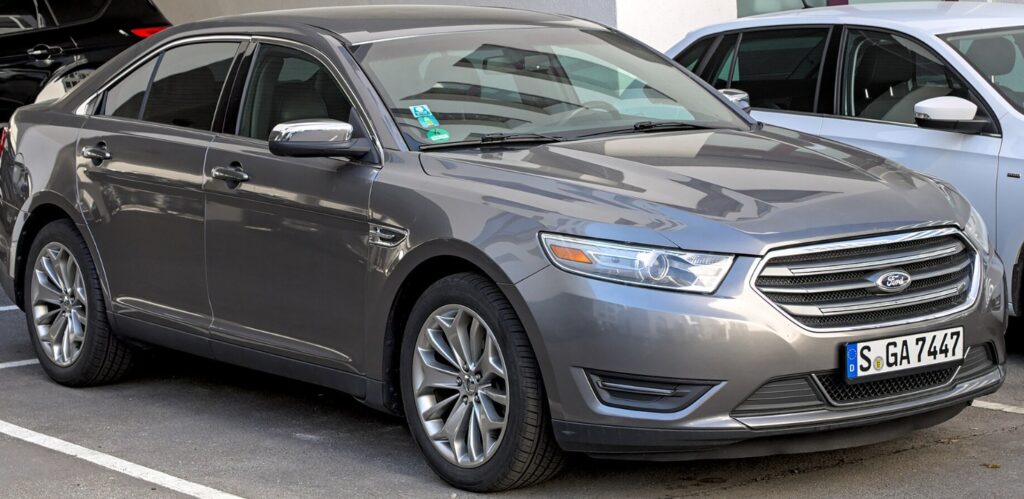
The Ford Taurus is more than an old American sedan with a familiar blue oval on its grille. It is a car that helped reshape Ford, influenced automotive design, dominated sales charts, disappeared from showrooms, and later returned as a much larger and more sophisticated machine.
Across six generations, the Taurus changed dramatically. The earliest cars were aerodynamic midsize sedans designed to replace the square shapes of the past. Later versions became conservative family vehicles, performance sleepers, rental-fleet regulars, police cars, and full-size premium sedans.
Few nameplates have experienced such a complicated journey.
The Taurus was introduced for the 1986 model year and remained part of Ford’s North American lineup, with a short interruption, until 2019. During that period, it evolved from a practical front-wheel-drive family car into a large sedan with available all-wheel drive, twin-turbocharged power, advanced safety equipment, and luxury-inspired features.
In this complete guide to Ford Taurus generations, we will explore every era, examine the most important redesigns, compare engines and body styles, discuss the famous SHO versions, and determine which generation may be the best choice for different buyers.
Content in this publication
- Ford Taurus Generations Overview
- Why the Ford Taurus Was an Important Car
- First-Generation Ford Taurus: 1986–1991
- Second-Generation Ford Taurus: 1992–1995
- Third-Generation Ford Taurus: 1996–1999
- Fourth-Generation Ford Taurus: 2000–2007
- Fifth-Generation Ford Taurus: 2008–2009
- Sixth-Generation Ford Taurus: 2010–2019
- How the Ford Taurus Changed Across Six Generations
- Which Ford Taurus Generation Is Best?
- Which Ford Taurus SHO Generation Is Best?
- What to Inspect Before Buying a Used Ford Taurus
- Are Ford Taurus Parts Easy to Find?
- Ford Taurus Collectibility
- Did the Ford Taurus Save Ford?
- The Legacy of the Ford Taurus
- Conclusion
- Frequently Asked Questions
Ford Taurus Generations Overview
The American-market Ford Taurus is generally divided into six generations:
- First generation: 1986–1991
- Second generation: 1992–1995
- Third generation: 1996–1999
- Fourth generation: 2000–2007
- Fifth generation: 2008–2009
- Sixth generation: 2010–2019
The first four generations followed a traditional midsize sedan and station-wagon formula. Beginning with the fifth generation, the Taurus moved into the full-size sedan category.
That change is important because a late-model Taurus is not simply a newer version of the original car. It is larger, heavier, more powerful, and aimed at a somewhat different buyer.
Why the Ford Taurus Was an Important Car
When Ford developed the original Taurus, the company needed a major success. Imported sedans were becoming increasingly popular, fuel economy mattered more than before, and many American vehicles still looked heavy, square, and outdated.
The Taurus arrived like a smooth stone dropped into a box of bricks.
Its rounded body, flush surfaces, aerodynamic profile, and front-wheel-drive layout gave it a futuristic appearance. Instead of copying the large rear-wheel-drive sedans that came before it, Ford created something modern and practical.
The design was not only about style. Better aerodynamics helped reduce wind noise, improve highway efficiency, and create a more refined driving experience.
Soon, other manufacturers adopted similar rounded designs. The Taurus did not invent aerodynamic cars, but it helped make the look mainstream in North America.
It also became a symbol of Ford’s modernization. The car demonstrated that an American manufacturer could build a front-wheel-drive family sedan capable of competing with increasingly respected Japanese rivals.
First-Generation Ford Taurus: 1986–1991
The first-generation Taurus was introduced for the 1986 model year. It replaced the midsize Ford LTD and represented a major departure from Ford’s previous design language.
Its smooth bodywork, sloping hood, flush headlights, and grille-free front end looked radically different from many American vehicles of the period.
Some people compared its shape to a jelly bean. That description may sound amusing today, but the car’s rounded design felt genuinely advanced in the mid-1980s.
First-Generation Design
The original Taurus featured a long, curved roofline and clean side panels. Its bumpers blended into the body instead of appearing like separate metal bars.
The sedan offered a large trunk and a comfortable rear seat, while the station wagon added substantial cargo room.
Ford offered the Taurus in two main body styles:
- Four-door sedan
- Five-door station wagon
The wagon played an important role in the Taurus family. Before crossovers dominated suburban streets, station wagons were one of the most practical choices for parents, travelers, and drivers carrying sports equipment or luggage.
Interior and Everyday Comfort
Inside, the first-generation Taurus was designed to feel modern without becoming confusing.
Controls were grouped logically, the dashboard curved toward the driver, and the seating position provided good outward visibility. Some models were available with a front bench seat, allowing the car to carry six people.
The cabin was not luxurious by modern standards, but it felt spacious and thoughtfully designed. Compared with many older American sedans, it seemed lighter, more efficient, and easier to operate.
First-Generation Engines
Most early Taurus models used V6 power, although a four-cylinder engine was available in some versions.
Common engines included:
- A 2.5-liter four-cylinder
- A 3.0-liter Vulcan V6
- A 3.8-liter Essex V6 in selected models
- A high-output Yamaha-developed V6 in the SHO
Regular Taurus models emphasized smoothness and practicality rather than excitement. The front-wheel-drive layout delivered predictable handling, while the suspension favored comfort.
The four-cylinder engine was economical in theory, but the Taurus was not especially light. As a result, V6 versions generally provided a more satisfying driving experience.
The First Taurus SHO
The Ford Taurus SHO arrived for the 1989 model year.
SHO meant Super High Output, and the car was unlike almost anything else in Ford’s lineup.
Under the hood was a Yamaha-developed 3.0-liter V6 capable of revving far higher than the engines found in regular Taurus models. It was paired with a five-speed manual transmission, transforming the practical sedan into a genuine performance car.
The SHO looked relatively subtle. It received unique wheels, body trim, badges, and suspension upgrades, but it did not resemble an aggressive muscle car.
That quiet appearance made it an early example of a modern sleeper sedan.
Why the Original Taurus SHO Was Special
The first Taurus SHO combined several qualities that rarely appeared in the same car:
- A spacious family-friendly cabin
- A powerful high-revving engine
- A manual transmission
- Front-wheel-drive practicality
- Understated exterior styling
- A lower price than many European sports sedans
The result was a car that could carry children to school during the week and entertain an enthusiastic driver on an empty road during the weekend.
First-Generation Strengths
The first Taurus generation remains important because of its originality and influence.
Its strongest qualities include:
- Revolutionary aerodynamic styling
- Comfortable ride
- Spacious passenger area
- Useful station-wagon version
- Historical importance
- Collectible SHO models
- Distinctive 1980s character
First-Generation Weaknesses
Today, the main concerns are related to age rather than design alone.
Potential buyers should watch for:
- Rust
- Aging electrical systems
- Worn suspension components
- Automatic-transmission problems
- Interior trim deterioration
- Cooling-system leaks
- Limited availability of some model-specific parts
A preserved first-generation Taurus can be a fascinating classic. A neglected one can quickly become expensive despite its low purchase price.
Second-Generation Ford Taurus: 1992–1995
The second-generation Taurus arrived for the 1992 model year.
Instead of completely changing the successful formula, Ford refined it. The basic aerodynamic shape remained familiar, but the body panels, lighting, interior, and trim were updated.
The second generation looked smoother and more mature. It was like the original Taurus after a careful haircut and a better-fitting jacket.
Refined Exterior Styling
The second-generation car maintained the rounded appearance of its predecessor but used more conventional details.
The front end gained a more defined grille treatment, the headlights looked cleaner, and the rear bodywork became slightly more formal.
Both sedan and wagon body styles continued.
The wagon remained particularly practical, offering the cargo flexibility of a modern crossover without the higher ride height.
The Taurus at Its Sales Peak
During the early 1990s, the Ford Taurus became one of the most familiar cars in the United States.
It was used as:
- A family sedan
- A company car
- A rental vehicle
- A government fleet car
- A police or administrative vehicle
- A practical station wagon
From 1992 through 1995, the Taurus was widely recognized as one of America’s bestselling passenger cars.
That success made the vehicle almost impossible to avoid. It appeared in neighborhoods, parking lots, television shows, airports, and corporate fleets.
The Taurus had become more than a Ford model. It had become part of everyday American life.
Second-Generation Engines
Engine options generally followed the formula established by the first generation.
Regular versions used V6 engines designed for smooth everyday driving, while the SHO remained the performance option.
The 3.0-liter Vulcan V6 was known more for durability and simplicity than power. The available 3.8-liter V6 provided stronger low-end torque but could bring its own maintenance concerns.
Automatic transmissions were common across the lineup, while manual transmissions were mostly limited to SHO versions.
Second-Generation Taurus SHO
The Taurus SHO continued with updated styling and a more polished cabin.
Manual-transmission versions retained the high-revving Yamaha-developed V6. Ford later introduced an automatic SHO with a larger 3.2-liter V6, making the performance model accessible to drivers who did not want a clutch pedal.
The automatic SHO was easier to use in traffic, but enthusiasts generally preferred the more engaging manual version.
Why the Second Generation Is a Sweet Spot
For many Taurus fans, the second generation offers the best balance of classic design and everyday usability.
It retained the identity of the original while adding:
- More refined styling
- Improved comfort
- Better safety equipment
- Updated interior materials
- Wider model availability
- Continued SHO performance
It was less revolutionary than the first generation, but it represented the Taurus formula at its commercial peak.
Second-Generation Buying Concerns
Anyone considering a second-generation Taurus should inspect:
- Transmission shifting
- Cooling-system condition
- Cylinder-head-gasket history on certain engines
- Suspension wear
- Power windows and locks
- Air-conditioning operation
- Rust around the wheel arches
- SHO maintenance documentation
A clean example can still be enjoyable, but condition is far more important than the number shown on the odometer.
Third-Generation Ford Taurus: 1996–1999
For the 1996 model year, Ford abandoned the safe evolutionary approach and introduced one of the most controversial designs in Taurus history.
The third-generation Taurus was built around an oval design theme.
Oval headlights, oval rear windows, oval dashboard controls, oval air vents, and curved body panels appeared throughout the car.
It was bold, strange, and impossible to ignore.
The Controversial Oval Design
The exterior looked lower, wider, and more sculpted than the previous Taurus.
The sedan featured a dramatically curved roofline and a rounded rear section. The station wagon retained a more upright cargo area but still followed the same soft design language.
Some buyers admired the futuristic styling. Others thought Ford had taken the oval theme too far.
A mainstream family sedan usually succeeds by appealing to a broad audience. The third-generation Taurus risked the opposite approach: it demanded that buyers accept a strong visual personality.
Third-Generation Interior
Inside, the oval obsession continued.
The center stack combined the audio and climate controls into a large oval panel. The design looked distinctive but made aftermarket radio installation more complicated.
The cabin remained comfortable, and some versions could still carry six occupants with a front bench seat.
However, the dramatic dashboard and curved exterior did not always translate into maximum interior efficiency.
The Taurus looked large, but certain competitors offered better packaging and a more open cabin feel.
Third-Generation Engine Options
Regular models commonly used one of two 3.0-liter V6 engines:
- The pushrod Vulcan V6
- The dual-overhead-cam Duratec V6
The Vulcan was simple and generally easy to understand. It delivered modest power but acceptable low-speed performance.
The Duratec felt more modern. It offered stronger acceleration and better high-rpm breathing, making it the more desirable choice for drivers who wanted confident highway performance.
The V8 Taurus SHO
The third-generation Taurus SHO represented a major departure from earlier versions.
Instead of the previous high-revving V6 and manual transmission, the new SHO used a 3.4-liter V8 and a four-speed automatic.
The V8 was developed with Yamaha involvement and gave the car a smooth, distinctive exhaust note.
However, the absence of a manual transmission disappointed some enthusiasts. The new SHO felt more like a refined performance cruiser than a sharp sports sedan.
Camshaft Sprocket Concerns
The V8 SHO is known for possible camshaft sprocket failure.
If a sprocket separates from the camshaft, serious internal engine damage can occur. Many owners choose preventative cam welding to reduce the risk.
Anyone shopping for a V8 SHO should look for documentation showing that this work has been completed.
Without such evidence, the purchase price should reflect the potential cost and risk.
You may be interested in reading Mitsubishi Outlander Competitors: The Best Alternatives Compared
Why the Third Generation Lost Ground
The third generation faced several challenges:
- Controversial styling
- Strong competition from Toyota and Honda
- Growing interest in SUVs
- Heavy dependence on fleet sales
- A less prestigious public image
- Limited appeal of the automatic-only SHO
The Taurus had once set the design trend. By the late 1990s, it was struggling to convince buyers that its vision remained relevant.
Still, the third generation has aged into an interesting piece of automotive history. Its unusual styling now gives it a character that many conservative competitors lack.
Fourth-Generation Ford Taurus: 2000–2007
Ford responded to criticism of the third generation by making the fourth-generation Taurus far more conservative.
Introduced for the 2000 model year, the new design softened the oval theme and returned to a more conventional sedan shape.
The result was easier to accept, though less memorable.
More Traditional Styling
The fourth-generation Taurus received:
- More conventional headlights
- A clearer grille
- A taller and more formal trunk
- A less dramatic roofline
- Simpler interior controls
- Reduced emphasis on oval shapes
Ford clearly wanted the car to feel familiar again.
The styling was not revolutionary, but that was probably intentional. The Taurus had become a practical family car focused on comfort and value.
Engines and Performance
Regular fourth-generation models continued using familiar 3.0-liter V6 engines.
The Vulcan V6 produced modest power and emphasized simplicity. The available Duratec V6 delivered stronger performance and was generally the better choice for highway driving.
Both engines were paired with four-speed automatic transmissions.
By the mid-2000s, that transmission technology felt outdated. Competitors were offering five-speed automatics, stronger V6 engines, better fuel economy, and more refined driving dynamics.
The Taurus remained adequate, but it no longer felt like a market leader.
Sedan and Wagon Models
Ford continued to offer both sedan and station-wagon versions for part of this generation.
The wagon provided excellent cargo capacity and a low loading floor. It was useful for families, travelers, and anyone who needed space without buying an SUV.
Unfortunately for the Taurus wagon, the market was moving rapidly toward crossovers.
Vehicles with higher seating positions and rugged styling became more desirable, even when traditional wagons offered similar or better practicality.
Fleet-Sales Reputation
The fourth-generation Taurus became extremely common in rental fleets, corporate fleets, and government service.
That helped maintain sales volume but weakened the model’s image among private buyers.
A vehicle seen frequently at airport rental counters can struggle to feel desirable, even when it is comfortable and affordable.
Used-car buyers benefited from this situation. Large numbers of Taurus sedans entered the secondhand market at low prices.
For many people, the fourth generation became an inexpensive first car, commuter vehicle, or family sedan.
The End of the Original Taurus
Ford gradually shifted attention toward newer vehicles such as the Fusion, Five Hundred, and Freestyle.
Production of the original Taurus sedan ended in 2006, with remaining vehicles sold primarily as 2007 fleet models.
At that moment, it seemed the Taurus name had reached the end of the road.
It had started as a futuristic design statement and ended its first production run as a familiar fleet vehicle.
Fourth-Generation Advantages
A well-maintained fourth-generation Taurus may still offer:
- Comfortable ride quality
- Spacious seating
- Low purchase prices
- Easy-to-find routine parts
- Straightforward controls
- Useful wagon availability
- Simple everyday usability
Fourth-Generation Disadvantages
Common drawbacks include:
- Aging four-speed automatic transmissions
- Modest fuel economy
- Plain interior materials
- Limited performance
- Weak resale value
- Possible suspension wear
- Neglected maintenance on cheap used examples
The low value of these cars can be a double-edged sword. They are affordable, but previous owners may have delayed repairs because the vehicle was worth so little.
Fifth-Generation Ford Taurus: 2008–2009
The Taurus returned for the 2008 model year, but not in the way many people expected.
Ford had introduced the Five Hundred as a large sedan. The vehicle was spacious and practical, yet its unfamiliar name struggled to gain recognition.
Ford decided to rename the updated Five Hundred as the Taurus.
As a result, the fifth-generation Taurus was not a direct redesign of the previous midsize model. It was a full-size sedan based on a different platform.
A Larger Taurus
The new Taurus was taller, wider, and more spacious than earlier versions.
Its main features included:
- A tall seating position
- Large doors
- Excellent rear-seat space
- A huge trunk
- A 3.5-liter V6
- A six-speed automatic transmission
- Available all-wheel drive
- Good outward visibility
The elevated seating position made the car feel almost like a crossover from behind the wheel.
That characteristic appealed to drivers who wanted easier entry and exit without moving completely into an SUV.
Improved Engine Performance
The fifth-generation Taurus used a 3.5-liter V6 producing approximately 263 horsepower.
This represented a substantial improvement over the engines available in the outgoing fourth-generation model.
The six-speed automatic also provided a more modern driving experience than the previous four-speed transmission.
Acceleration was respectable, though the Taurus remained a large and relatively heavy sedan.
Practical but Conservative
The fifth generation excelled in practicality.
Its cabin was spacious, the trunk was enormous, and all-wheel drive made it attractive in regions with snow or heavy rain.
However, the exterior styling lacked emotional appeal. It looked clean and respectable, but not especially exciting.
Compared with bold sedans such as the Chrysler 300, the Taurus could feel anonymous.
Why the Fifth Generation Was So Short
The fifth-generation Taurus lasted only for the 2008 and 2009 model years.
That short lifespan does not necessarily mean it was a poor car. It acted as a transitional model while Ford prepared a more dramatic redesign.
The following generation would retain the full-size concept but add more expressive styling, better technology, and a revived SHO performance model.
Sixth-Generation Ford Taurus: 2010–2019
The sixth-generation Taurus arrived for the 2010 model year and transformed the car’s personality again.
It was large, muscular, modern, and far more visually dramatic than the fifth generation.
A high beltline, broad grille, thick body panels, pronounced wheel arches, and aggressive lighting gave the car a commanding presence.
This Taurus no longer resembled an ordinary family sedan. It looked like a premium flagship.
Sixth-Generation Exterior Design
The final American Taurus appeared wide and substantial.
Its exterior communicated strength rather than lightness. The original 1986 Taurus had looked aerodynamic and futuristic, while the 2010 model looked powerful and protective.
The body design included:
- A tall shoulder line
- A broad front grille
- Large wheel openings
- A short decklid
- A sloping rear window
- Thick doors and pillars
- An imposing front end
The design had presence, but it also contributed to reduced outward visibility.
Interior and Technology
Ford equipped the sixth-generation Taurus with a long list of available features.
Depending on trim and model year, buyers could find:
- Adaptive cruise control
- Blind-spot monitoring
- Cross-traffic alert
- Collision warning
- Push-button start
- Heated front seats
- Ventilated front seats
- Heated rear seats
- Massaging front seats
- Premium audio systems
- Touchscreen infotainment
- Automatic high beams
- Rain-sensing wipers
- All-wheel drive
These features helped position the Taurus as an alternative to more expensive premium sedans.
The Interior-Space Contradiction
The sixth-generation Taurus looked enormous from the outside, but its cabin did not always feel as large as expected.
A wide center console, thick doors, high dashboard, and rising window line created an enclosed cockpit.
Some drivers liked the secure and substantial feeling. Others found it restrictive.
This was one of the final Taurus generation’s biggest contradictions: it occupied a large amount of road space yet did not always provide class-leading interior room.
Standard Engine Choices
Most sixth-generation Taurus models used a naturally aspirated 3.5-liter V6.
Early versions produced around 263 horsepower, while later models increased output to approximately 288 horsepower.
The engine delivered smooth acceleration and reasonable highway performance, though the car’s weight prevented it from feeling especially quick.
Ford also offered a turbocharged 2.0-liter EcoBoost four-cylinder in certain model years.
The smaller engine produced approximately 240 horsepower and aimed to improve fuel efficiency. However, some buyers preferred the smoother and more relaxed nature of the V6.
The Return of the Taurus SHO
The SHO returned for the 2010 model year after a decade-long absence.
This version used a twin-turbocharged 3.5-liter EcoBoost V6 producing approximately 365 horsepower.
It also included standard all-wheel drive and a six-speed automatic transmission.
The revived SHO was very different from the original manual-transmission model. It was larger, heavier, more luxurious, and far more powerful.
Its turbocharged engine delivered strong acceleration, especially from low and medium speeds.
The all-wheel-drive system helped the car use its power effectively, even in poor weather.
SHO Performance Character
The sixth-generation SHO was not a lightweight sports sedan.
It behaved more like a high-speed grand touring car. It was comfortable, stable, powerful, and capable of covering long distances quickly.
We might compare it to a large athlete wearing a tailored suit. It could move with surprising speed, but it never felt delicate or minimal.
SHO Performance Package
Certain SHO models could be ordered with a performance package.
Depending on the model year, upgrades could include:
- More aggressive gearing
- Improved cooling
- Performance-oriented suspension tuning
- Upgraded brakes
- Summer tires
- Revised stability-control settings
- Additional engine-cooling components
These changes improved the car’s performance character, but the Taurus remained a heavy sedan.
2013 Ford Taurus Refresh
Ford updated the Taurus for the 2013 model year.
Changes included revised front and rear styling, improved interior technology, updated engines, and additional driver-assistance systems.
The grille became more prominent, while the headlights and taillights received cleaner designs.
The standard V6 gained more power, and the available EcoBoost four-cylinder joined the lineup.
The update helped keep the car competitive without changing its basic identity.
Police Interceptor Sedan
The sixth-generation Taurus platform also formed the basis of the Ford Police Interceptor Sedan.
This law-enforcement model replaced the aging Crown Victoria Police Interceptor in many fleets.
You may be interested in readingMitsubishi Outlander Competitors: The Best Alternatives ComparedYou may be interested in reading
Mitsubishi Outlander ES vs SE: Which Trim Is Better?Police versions could include:
- Heavy-duty cooling
- Reinforced suspension components
- Specialized electrical systems
- All-wheel drive
- Upgraded brakes
- Police-specific seats
- Engine-hour monitoring
- Additional structural reinforcement
The Police Interceptor Sedan looked similar to a retail Taurus, but it was designed for severe-duty use.
Used police examples may seem inexpensive, but buyers should inspect them carefully. High idle hours, hard acceleration, curb impacts, and long periods of operation can create wear that ordinary mileage does not reveal.
The End of U.S. Taurus Production
By the late 2010s, American buyers had moved heavily toward SUVs, crossovers, and pickup trucks.
Traditional large sedans were losing market share, and Ford decided to reduce its North American passenger-car lineup.
Production of the U.S.-market Taurus ended in March 2019.
The name continued in certain international markets on a different sedan, but the six-generation American Taurus story had concluded.
How the Ford Taurus Changed Across Six Generations
The Taurus experienced one of the most dramatic transformations in the American sedan market.
From Midsize to Full-Size
The first four generations were midsize family cars.
They competed with models such as:
- Toyota Camry
- Honda Accord
- Chevrolet Lumina
- Dodge Intrepid
- Nissan Maxima
The fifth and sixth generations moved into the full-size category.
Their rivals included:
- Toyota Avalon
- Chevrolet Impala
- Chrysler 300
- Buick LaCrosse
- Dodge Charger
This explains why a 2019 Taurus feels completely different from a 1995 model. The name remained the same, but the mission changed.
Ford Taurus Styling Evolution
Each Taurus generation reflected a different design philosophy.
1986–1991: Aerodynamic Revolution
The first generation looked smooth, futuristic, and unlike traditional American sedans.
1992–1995: Careful Refinement
The second generation polished the original formula without losing its identity.
1996–1999: Oval Experiment
The third generation became one of Ford’s boldest and most controversial designs.
2000–2007: Conservative Recovery
The fourth generation returned to conventional styling and focused on comfort and value.
2008–2009: Full-Size Practicality
The fifth generation offered a tall roof, huge interior, and optional all-wheel drive.
2010–2019: Muscular Technology
The sixth generation emphasized power, safety features, luxury equipment, and road presence.
Which Ford Taurus Generation Is Best?
The best generation depends on what we want from the car.
Best for Historical Importance: First Generation
The original Taurus is the most influential version.
It changed Ford’s design direction and helped popularize aerodynamic styling among mainstream American vehicles.
Best Classic Daily Driver: Second Generation
The second generation combines classic Taurus styling with greater refinement.
It also represents the period when the model reached peak popularity.
Best for Unusual Design: Third Generation
Drivers who appreciate bold 1990s styling may prefer the third generation.
It looks unlike almost any other sedan from its era.
Best Budget Option: Fourth Generation
Fourth-generation models are generally inexpensive and mechanically familiar.
A well-maintained example can provide comfortable transportation for relatively little money.
Best for Passenger and Cargo Space: Fifth Generation
The fifth generation offers one of the roomiest cabins and trunks in the Taurus family.
It is especially appealing for drivers who value easy entry, comfort, and available all-wheel drive.
Best for Performance and Technology: Sixth Generation
The sixth generation provides the most advanced safety equipment, strongest engines, and most luxurious options.
It is also the only Taurus generation available with the 365-horsepower twin-turbocharged EcoBoost engine.
Which Ford Taurus SHO Generation Is Best?
The answer depends on the type of driving experience we prefer.
First-Generation SHO
Choose this version for historical importance, manual-transmission involvement, and the original Yamaha-powered character.
Second-Generation SHO
This generation offers a slightly more refined version of the early SHO formula.
Manual models remain especially desirable.
Third-Generation SHO
The V8 SHO appeals to collectors who want rarity and unusual engineering.
However, camshaft sprocket concerns must be taken seriously.
Sixth-Generation SHO
The final SHO is best for outright speed, turbocharged torque, all-wheel-drive traction, and modern comfort.
It is the easiest SHO to use as a fast daily driver, though it is also the most mechanically complex.
What to Inspect Before Buying a Used Ford Taurus
Regardless of generation, condition and maintenance history matter more than appearance alone.
A proper inspection should include:
- Automatic-transmission operation
- Engine oil leaks
- Coolant leaks
- Cooling-system condition
- Suspension noises
- Steering response
- Tire wear
- Brake condition
- Air-conditioning performance
- Power windows and locks
- Warning lights
- Rust underneath the vehicle
- Accident history
- Service documentation
Additional Checks for Older Taurus Models
For first- through fourth-generation cars, pay special attention to:
- Rust
- Transmission shifting
- Engine mounts
- Head-gasket history
- Cooling-system components
- Aging wiring
- Interior trim
- SHO-specific maintenance
Additional Checks for Sixth-Generation Models
For later Taurus models, inspect:
- All-wheel-drive system maintenance
- Power transfer unit condition
- Water-pump history on certain V6 engines
- Turbocharger operation on SHO models
- Infotainment functionality
- Electronic safety systems
- Climate-control features
- Police-service history
A low purchase price does not always mean a low ownership cost. Complex mechanical systems can turn an inexpensive used sedan into an expensive repair project.
Are Ford Taurus Parts Easy to Find?
Parts availability depends heavily on the generation.
Routine mechanical parts for fourth-, fifth-, and sixth-generation models are often easier to locate because these vehicles were produced in large numbers and shared components with other Ford products.
Parts for first- and second-generation cars can be more difficult to find, especially:
- Interior trim pieces
- Clean body panels
- Original lights
- SHO-specific engine components
- Manual-transmission parts
- Electronic modules
The third-generation V8 SHO can be especially challenging because of its unique engine and limited production.
Anyone buying a rare Taurus should research parts availability before completing the purchase.
A cheap collector car loses its appeal quickly when a small broken component cannot be replaced.
Ford Taurus Collectibility
Most Taurus models were built as everyday transportation, not as future classics.
However, collector interest often grows when clean examples become difficult to find.
The most collectible Taurus models may include:
- Early first-generation sedans
- Low-mileage station wagons
- Manual-transmission Taurus SHO models
- Well-preserved second-generation SHO versions
- Properly maintained V8 SHO models
- Sixth-generation SHO sedans
- Final-year 2019 examples
- Original, unmodified cars with complete records
The Taurus was extremely common, which once made it seem ordinary. Today, that familiarity creates nostalgia.
Many enthusiasts want the vehicles they remember from childhood, and few American sedans were more visible during the 1980s and 1990s.
Did the Ford Taurus Save Ford?
People often say the Taurus saved Ford.
The statement is somewhat simplified, but the car certainly played an important role in Ford’s modernization and recovery.
The original Taurus represented:
- Aerodynamic design
- Front-wheel-drive engineering
- Improved manufacturing quality
- Customer-focused development
- Better fuel efficiency
- Strong mainstream appeal
Its success helped Ford prove that an American manufacturer could produce a modern family sedan capable of competing against imports.
No single car can save an entire corporation by itself. Ford’s trucks, financial decisions, other vehicle programs, and broader restructuring also mattered.
Still, the Taurus became the public symbol of Ford’s transformation.
It was the product customers could see, drive, and understand.
The Legacy of the Ford Taurus
The history of Ford Taurus generations mirrors the history of the American family sedan.
In the 1980s, the Taurus represented innovation.
In the early 1990s, it represented mainstream success.
In the late 1990s, it represented the risks of bold design.
In the 2000s, it became associated with affordability, rental fleets, and practical transportation.
After its revival, it became a large, powerful, technology-rich sedan.
The Taurus also served many different roles during its life:
- Family car
- Station wagon
- Performance sedan
- Rental vehicle
- Company car
- Police vehicle
- Full-size flagship
- All-weather highway cruiser
Few nameplates have changed personality so many times.
The Taurus never remained frozen in one era. It adapted, sometimes successfully and sometimes awkwardly, to changing consumer tastes.
Conclusion
The six Ford Taurus generations form one of the most interesting stories in American automotive history.
The first generation introduced revolutionary aerodynamic styling.
The second refined the formula and achieved enormous popularity.
The third took a bold but controversial design direction.
The fourth returned to conservative comfort and affordability.
The fifth revived the Taurus name on a much larger full-size platform.
The sixth transformed it into a muscular, technology-packed sedan with available twin-turbocharged performance.
Not every generation was equally beautiful, reliable, or desirable. That uneven journey is exactly what makes the Taurus worth studying.
For collectors, the early SHO models offer rarity and historical value. For practical used-car buyers, later standard versions provide substantial space and comfort. For performance enthusiasts, the final EcoBoost SHO remains an impressive sleeper.
The Ford Taurus may no longer be part of Ford’s American lineup, but its influence remains. It helped modernize the American sedan, changed public expectations, and became a familiar presence on North American roads for more than three decades.
Frequently Asked Questions
How many Ford Taurus generations are there?
There are six recognized generations of the U.S.-market Ford Taurus. They cover the 1986 through 2019 model years, although the nameplate briefly disappeared before returning for 2008.
What years belong to the first Ford Taurus generation?
The first-generation Ford Taurus was sold from the 1986 through 1991 model years. It introduced the aerodynamic design that made the Taurus famous and included the original Taurus SHO.
Which Ford Taurus generation is the most reliable?
Reliability depends on the engine, transmission, maintenance history, and individual condition. Simpler fourth-generation models may be affordable to repair, while later cars offer more technology but also greater complexity.
What is the best Ford Taurus SHO generation?
The first and second generations are best for manual-transmission enthusiasts. The third generation is attractive for its unusual V8, while the sixth generation is best for turbocharged power, all-wheel drive, and daily comfort.
Why did Ford discontinue the Taurus?
Ford discontinued the U.S.-market Taurus because buyers increasingly preferred SUVs, crossovers, and pickup trucks. The company reduced its traditional sedan lineup and redirected investment toward more profitable vehicle categories.
You may be interested in readingMitsubishi Outlander Competitors: The Best Alternatives ComparedYou may be interested in reading
Mitsubishi Outlander ES vs SE: Which Trim Is Better?You may be interested in reading
Mitsubishi Outlander Years to Buy: The Complete Used-SUV GuideIf you want to know other articles similar to Ford Taurus Generations: A Complete Guide to Every Era you can visit the category Models.
Honda Passport vs Toyota 4Runner: Which SUV Is Better?
Honda Passport vs Ford Bronco: Which SUV Is Better?
Honda Passport vs Ford Explorer: Which SUV Is Better?
Honda Passport or Pilot: Which SUV Is Better?
Honda Passport vs Jeep Grand Cherokee: Which SUV Is Better?
Honda Passport vs Nissan Pathfinder: Which SUV Is Better?
Leave a Reply
More content of your interest