

Ford Taurus vs Mondeo: Which Ford Sedan Is the Better Buy?

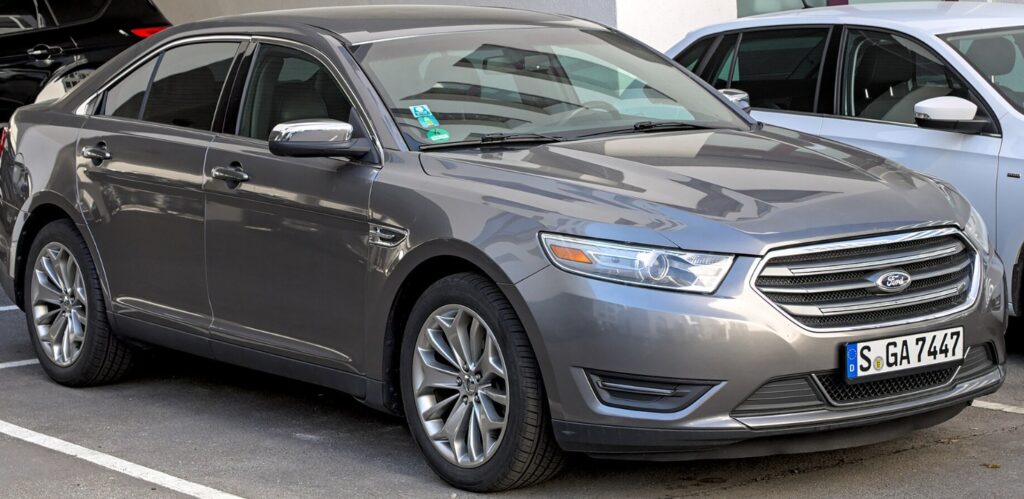
Comparing the Ford Taurus vs Mondeo is not as straightforward as parking two identical-size sedans beside each other and choosing the one with shinier paint. These cars were created for different roads, different buyers, and different corners of the world.
The Taurus reflects the traditional American interpretation of a large family sedan: broad, comfortable, powerful, and relaxed. The Mondeo follows a more European recipe, combining family practicality with efficient engines, responsive steering, and body styles designed to handle everything from business travel to weekend luggage.
There is another important wrinkle. The model names do not represent one fixed specification. The Taurus evolved through several North American generations and later continued in selected international markets. Meanwhile, the European Mondeo was sold in sedan, liftback, and wagon forms with petrol, diesel, and hybrid powertrains.
So, rather than comparing one narrowly selected trim, we are going to examine what each nameplate generally offers, with particular attention to the used models most buyers are likely to encounter.
Which one is better? The answer depends on whether we want a highway cruiser built like a comfortable lounge or an adaptable family car that feels lighter on its feet.
Content in this publication
- Ford Taurus vs Mondeo at a Glance
- Understanding the Two Cars
- Exterior Size and Road Presence
- Interior Space and Seating Comfort
- Cargo Space and Everyday Practicality
- Engine Choices
- Ford Taurus Engine Options
- Performance and Acceleration
- Handling and Steering
- Fuel Economy and Running Costs
- Reliability and Common Ownership Risks
- Safety and Driver Assistance
- Interior Quality and Technology
- Taurus vs Mondeo for Family Use
- Taurus vs Mondeo for Highway Driving
- Taurus vs Mondeo for City Driving
- Used-Car Value
- Which Version Should We Buy?
- Ford Taurus vs Mondeo: Pros and Cons
- Ford Taurus vs Mondeo: Final Verdict
- Frequently Asked Questions
Ford Taurus vs Mondeo at a Glance
Before diving into the details, here is the basic personality difference:
| Category | Ford Taurus | Ford Mondeo |
|---|---|---|
| Vehicle character | Large, comfort-oriented sedan | Midsize European family car |
| Common body styles | Four-door sedan | Sedan, liftback, and wagon |
| Typical strengths | Cabin width, power, highway comfort | Handling, fuel economy, versatility |
| Typical engines | Naturally aspirated V6, turbocharged engines | Petrol, diesel, and hybrid engines |
| Drivetrain availability | Front-wheel drive or all-wheel drive | Mainly front-wheel drive, some AWD versions |
| Best suited for | Long highways and spacious commuting | Mixed driving and practical family use |
| Performance highlight | Taurus SHO | Mondeo ST-Line or powerful EcoBoost versions |
| Main drawback | Size, weight, and fuel consumption | Powertrain complexity on some versions |
The Mondeo’s dimensions vary by body style, but Ford listed the later five-door model at approximately 4,867 mm long. That places it firmly in the large European family-car class, although it generally feels narrower and more manageable than the North American Taurus.
Understanding the Two Cars
What Is the Ford Taurus?
The Ford Taurus is one of the most recognizable sedan names in Ford’s history. Originally introduced in North America during the 1980s, it eventually developed into a large four-door car aimed at buyers who valued room, comfort, and everyday usability.
Earlier Taurus generations were mainstream family vehicles. Later versions became larger, heavier, and more formal. By its final North American generation, the Taurus occupied the space between a typical midsize sedan and a traditional full-size automobile.
It was not trying to dance through narrow streets like a compact hatchback. It was designed to stretch its legs on broad highways.
Common late-model North American versions include:
- SE
- SEL
- Limited
- SHO
- Police Interceptor Sedan derivatives
The regular models emphasized comfort, while the SHO turned the Taurus into a surprisingly rapid all-weather performance sedan.
The Taurus name later continued in Middle Eastern and Asian markets on vehicles that were mechanically different from the discontinued North American model. For example, Ford’s 2020 Middle Eastern Taurus used a 2.0-liter EcoBoost four-cylinder engine rather than the large V6 engines commonly associated with the last U.S.-market generation.
That difference is crucial when shopping. We should never assume that every Taurus sold worldwide shares the same platform or engine.
What Is the Ford Mondeo?
The Ford Mondeo was Ford’s major European family car for decades. Introduced in the 1990s, it replaced the Sierra and was developed as a global-minded model capable of serving both private owners and company fleets.
Where the Taurus typically came as a sedan, the Mondeo offered more body-style variety:
- Four-door sedan
- Five-door liftback
- Estate or station wagon
That flexibility is one of the Mondeo’s greatest advantages. The liftback looks like a conventional sedan from some angles, yet its large rear opening makes loading bulky objects far easier. The estate goes even further, becoming a genuinely useful family and business vehicle.
The European Mondeo line ended after the 2022 model year, although the name later appeared on a separate sedan for China and some export markets. The familiar European Mondeo was produced across five generations from 1993 to 2022.
Are the Taurus and Mondeo the Same Car?
No, not generally.
Some Ford products have been rebadged across regions, and the Mondeo was closely related to the Ford Fusion sold in North America. However, the large North American Taurus was a separate vehicle.
That distinction often causes confusion because all three cars occupied overlapping market positions:
- Mondeo in Europe
- Fusion in North America
- Taurus above the Fusion in Ford’s U.S. sedan range
Therefore, a Taurus-versus-Mondeo comparison is less like comparing twins and more like comparing cousins raised in different countries.
Exterior Size and Road Presence
The Taurus Feels Substantially Larger
The Taurus has the stronger visual presence. Its tall beltline, wide body, and substantial front end make it look solid and expensive, especially in Limited or SHO trim.
That size has advantages. The car feels planted on fast roads, and its broad stance creates a sense of security. Yet the same dimensions can become inconvenient in older city centers, underground parking garages, and narrow residential streets.
Driving a Taurus through a crowded European town can feel like wearing hiking boots inside a small apartment. It works, but we are always aware of the extra bulk.
The Mondeo Is Easier to Place on the Road
The Mondeo is hardly tiny, especially in later generations. Nevertheless, it generally feels more manageable from the driver’s seat.
Its proportions suit European roads, and visibility is often easier to judge. Steering inputs produce a more immediate response, helping the car feel smaller than its exterior measurements suggest.
For drivers who regularly deal with:
- Tight parking spaces
- Narrow roads
- Urban roundabouts
- Multistory car parks
- Busy city traffic
the Mondeo is usually the less stressful companion.
Which Car Is Better for Parking?
The Mondeo wins.
Parking sensors and cameras help both vehicles, but technology cannot entirely hide the Taurus’s width and long body. The Ford Taurus is manageable once we learn its dimensions, yet the Mondeo requires less concentration in confined spaces.
Interior Space and Seating Comfort
Front-Seat Experience
Both cars can provide comfortable front seats, but their cabin philosophies differ.
The Taurus surrounds the driver with a tall dashboard and broad center console. Some owners enjoy this cockpit-like effect because it feels substantial and protective. Others find that the thick console steals knee room from a car that is physically enormous.
The Mondeo’s dashboard generally feels more open. It may not always create the same sense of luxury, but it uses its available space efficiently.
In simple terms:
- The Taurus feels wider and more enclosed.
- The Mondeo feels airier and more functional.
Rear-Seat Space
The Taurus has the physical size to be a limousine-like family sedan, but its packaging does not always make full use of that footprint. Rear passengers still receive good room, particularly in width, yet the cabin may not feel as enormous as the exterior suggests.
The Mondeo is narrower, but later versions offer respectable rear legroom. The flatter roofline of some models can slightly reduce headroom for very tall occupants, while the estate usually feels more accommodating.
For three adults across the rear bench, the Taurus’s width is helpful. For two adults or children, both work well.
Seat Comfort on Long Trips
The Taurus is the better choice for relaxed interstate or motorway journeys. Its seats, suspension tuning, and low-effort character encourage us to settle in and let the miles roll underneath.
The Mondeo is also an excellent long-distance vehicle, especially with supportive seats and a diesel engine. However, it tends to keep the driver more engaged.
The difference is subtle but noticeable:
- The Taurus says, “Relax; we will arrive eventually.”
- The Mondeo says, “Let’s enjoy the road on the way.”
Cargo Space and Everyday Practicality
Taurus Trunk Capacity
The Taurus sedan has a large conventional trunk. It can swallow suitcases, shopping bags, and family travel equipment without complaint.
The limitation is not the basic volume. It is the shape of the opening.
A sedan trunk has a fixed metal shelf beneath the rear window, so tall or awkward objects can be difficult to load even when enough space exists inside.
Mondeo Liftback and Estate Versatility
This is where the Mondeo lands a heavy punch.
The five-door Mondeo’s hatch opens with the rear glass, creating a much larger loading area than a traditional trunk lid. Fold the rear seats, and it can carry items that would never fit comfortably inside a Taurus sedan.
The estate is even more useful. It is ideal for:
- Dogs
- Bicycles
- Baby equipment
- Camping gear
- Business samples
- Flat-packed furniture
- Large airport luggage loads
Practicality Winner
The Mondeo wins decisively if we choose the liftback or estate.
You may be interested in reading Mitsubishi Outlander Years to Avoid: A Used-Buyer’s Guide
The Taurus offers plenty of luggage capacity for a sedan, but the Mondeo’s body-style options make it a more adaptable machine. It is the automotive equivalent of a well-designed backpack: perhaps less imposing, but full of clever ways to carry things.
Engine Choices
Ford Taurus Engine Options
Late North American Taurus models commonly used V6 engines.
Depending on year and trim, buyers may find:
- A naturally aspirated 3.5-liter V6
- A turbocharged 2.0-liter EcoBoost four-cylinder in certain years
- A twin-turbocharged 3.5-liter EcoBoost V6 in the SHO
The standard V6 is smooth and appropriately powerful, although it must move a heavy vehicle. It works best when driven calmly rather than constantly pushed to its limits.
The SHO is a different creature. Its twin-turbocharged engine delivers muscular acceleration, making the conservative-looking Taurus much faster than most people expect.
International Taurus models require separate research because their powertrains can be completely different. Ford’s current Middle Eastern Taurus range, for example, has included 2.0-liter EcoBoost and 1.5-liter hybrid options in selected markets.
Ford Mondeo Engine Options
The Mondeo traditionally offered a broader engine range. Depending on generation and country, we may encounter:
- Small turbocharged petrol engines
- Larger EcoBoost petrol engines
- TDCi or EcoBlue diesel engines
- Petrol-electric hybrid systems
- Manual or automatic transmissions
This variety makes the Mondeo easier to match to a specific driving pattern.
A high-mileage motorway driver may prefer a diesel. An urban owner may choose a petrol engine. Someone prioritizing quiet operation and lower city fuel use might consider the hybrid.
However, choice creates complexity. Two Mondeos from the same year can have dramatically different maintenance requirements and driving characteristics.
Which Has the Better Engine Range?
The Mondeo offers greater variety.
The Taurus counters with stronger performance at the upper end, particularly in SHO form. Therefore:
- Choose the Mondeo for efficiency and powertrain choice.
- Choose the Taurus for effortless V6 character or turbocharged performance.
Performance and Acceleration
Standard Taurus Performance
A regular Taurus is not a sports sedan. Its engine usually provides enough power for confident overtaking, but the car’s weight softens the sense of speed.
Press the accelerator, and the Taurus gathers momentum like a large aircraft beginning its takeoff roll. It is smooth and capable, but rarely delicate.
The automatic transmission suits the car’s relaxed nature. Depending on maintenance history, however, shifts may become less refined as mileage increases.
Taurus SHO Performance
The SHO transforms the experience.
With twin turbochargers and available all-wheel drive, it launches with impressive force and remains stable in poor weather. It is a sleeper: a car that looks ready for an office parking lot but can deliver serious straight-line pace.
Still, physics never disappears. The SHO remains heavy, so brakes, tires, suspension components, and drivetrain parts work hard.
Mondeo Performance
Most Mondeos prioritize balance over brute force. Even modest engines can feel lively because the car responds quickly to steering and throttle inputs.
More powerful petrol and diesel versions provide strong overtaking performance, while sporty trims sharpen the appearance and sometimes the suspension.
The Mondeo may lose a drag race against a Taurus SHO, but on a twisting road it often feels more natural and easier to control.
Performance Winner
The Taurus SHO wins for acceleration.
The Mondeo wins for agility.
Choosing between them is like choosing between a powerful speedboat and a responsive road bicycle. One surges forward with authority; the other changes direction with far less effort.
Handling and Steering
How the Taurus Drives
The Taurus prefers wide, flowing roads. Its steering is usually light, and the suspension filters out many surface imperfections.
At moderate speeds, it feels secure and predictable. Increase the pace on a winding road, however, and the weight becomes obvious. The body leans more, the front tires work harder, and the car asks us to slow down earlier.
All-wheel-drive versions provide extra traction, but AWD does not reduce mass. It helps the car put power onto the road; it does not magically turn it into a lightweight sports sedan.
How the Mondeo Drives
Handling has long been one of the Mondeo’s defining strengths.
The steering tends to feel more direct, the body remains better controlled, and the chassis communicates more clearly. Even ordinary family-oriented versions can be enjoyable without becoming uncomfortable.
The Mondeo achieves something valuable: it makes sensible driving feel less like a chore.
Ride Comfort Comparison
The Taurus generally offers the softer, more isolated ride. On long, straight journeys, that calmness is difficult to beat.
The Mondeo feels firmer but more controlled. It may transmit more information from broken pavement, particularly with large wheels, yet it settles quickly after bumps.
Our preference depends on what we call comfort:
- If comfort means isolation, choose the Taurus.
- If comfort means controlled body movement, choose the Mondeo.
Fuel Economy and Running Costs
Taurus Fuel Consumption
The Taurus’s size and weight work against fuel efficiency.
Standard V6 versions can be reasonable during steady highway driving, but city traffic quickly exposes their appetite. The SHO may consume considerably more fuel when its turbocharged performance is frequently used.
Other ownership costs may also be higher because the Taurus can require:
- Larger tires
- More fuel
- Heavier-duty brakes
- More expensive AWD servicing
- Additional turbocharger-related maintenance on SHO models
Mondeo Fuel Consumption
The Mondeo normally has the advantage, especially with a well-maintained diesel or hybrid powertrain.
Small petrol engines can also be economical, although real-world consumption depends heavily on load, traffic, transmission, and driving style.
A diesel Mondeo makes the most sense when regularly driven long distances. Using one mainly for short urban trips can contribute to emissions-system problems because diesel particulate filters need suitable driving conditions to regenerate.
Which Is Cheaper to Run?
The Mondeo is usually cheaper in fuel, especially outside North America.
Parts availability changes the calculation. In the United States or Canada, a Mondeo can be rare or nonexistent, while Taurus components may be relatively easy to source. In the United Kingdom and much of Europe, the opposite is true.
Therefore, the cheapest car to operate is not automatically the one that burns less fuel. Local parts supply and mechanic familiarity matter just as much.
Reliability and Common Ownership Risks
Ford Taurus Problems to Check
Potential issues vary by engine, drivetrain, and model year, but used Taurus buyers should examine:
- Automatic transmission behavior
- Suspension wear
- Wheel bearings
- Electronic accessories
- Air-conditioning operation
- AWD system maintenance
- Turbocharger condition on SHO models
- Cooling-system leaks
- Water-pump concerns on some V6 applications
A pre-purchase inspection is especially important on the Taurus SHO. Fast sedans sometimes attract enthusiastic owners, and enthusiastic owners do not always drive gently.
We should look for evidence of regular oil changes, correct fluids, quality tires, and responsible modifications.
Ford Mondeo Problems to Check
A used Mondeo may require attention in areas such as:
- Diesel particulate filters
- Exhaust-gas recirculation systems
- Dual-mass flywheels
- Clutches
- Turbochargers
- Automatic transmission servicing
- Electrical accessories
- Infotainment systems
- Hybrid battery condition
- Suspension bushings
Certain PowerShift automatic transmissions deserve careful investigation. Their design and servicing requirements vary, so buyers should confirm the exact gearbox code rather than relying on a seller’s simple description of “automatic.”
Which Is More Reliable?
Neither model earns an automatic victory.
You may be interested in readingMitsubishi Outlander Years to Avoid: A Used-Buyer’s GuideYou may be interested in reading
 Renault Koleos Years to Avoid: A Used-Buyer’s Guide
A naturally aspirated, front-wheel-drive Taurus may be mechanically simpler than a diesel Mondeo with a complex emissions system and dual-clutch transmission. Conversely, a carefully serviced manual Mondeo with a suitable engine may be cheaper to maintain than an AWD Taurus SHO.
Condition beats reputation.
A well-maintained example with complete records is almost always a safer purchase than a neglected car from a supposedly superior model year.
Safety and Driver Assistance
Both vehicles offered increasingly sophisticated safety equipment as they evolved.
Depending on year and trim, features may include:
- Stability control
- Multiple airbags
- Blind-spot monitoring
- Adaptive cruise control
- Lane-departure warning
- Automatic emergency braking
- Parking sensors
- Reversing cameras
- Tire-pressure monitoring
We should compare the exact vehicles rather than the model names. A high-spec Mondeo may have more driver-assistance technology than a basic Taurus, while a newer Taurus may outperform an older Mondeo.
Tire condition also matters more than many buyers admit. A sophisticated AWD system cannot compensate for four worn or mismatched tires.
Interior Quality and Technology
Taurus Cabin
Higher Taurus trims can feel pleasantly upscale, with leather upholstery, heated seats, premium audio equipment, and generous convenience features.
The design, however, can appear bulky. Thick pillars, a high center console, and deeply set controls contribute to the car’s substantial feeling but may reduce outward visibility.
Older infotainment systems can also feel dated beside modern smartphone-based interfaces.
Mondeo Cabin
The Mondeo often emphasizes function rather than theater. Its controls are generally logical, and later models may offer SYNC infotainment, digital displays, heated seats, and advanced driver assistance.
Some cabin plastics may not feel as rich as those in premium European rivals, yet the layout tends to work well in daily use.
Technology Winner
A late, high-spec Mondeo has the advantage for modern driver assistance and interface design.
A well-equipped Taurus Limited may feel more luxurious in a traditional sense, particularly for buyers who value soft seats, cabin width, and a powerful climate-control system.
Taurus vs Mondeo for Family Use
The Mondeo is the more versatile family vehicle.
Its liftback and estate body styles make school runs, holidays, pet transport, and large shopping trips easier. It is also simpler to maneuver around urban areas.
The Taurus has advantages for families who prioritize:
- Rear-seat width
- Highway comfort
- A large traditional trunk
- Strong air conditioning
- Available all-wheel drive
- Smooth long-distance performance
For a family with three growing children, the Taurus’s width can be useful. For a family carrying strollers, bicycles, or a dog, the Mondeo estate is difficult to beat.
Taurus vs Mondeo for Highway Driving
The Taurus feels born for broad highways.
Its quiet character, soft ride, and stable stance help reduce fatigue. The V6 engine rarely feels strained, and passing slower traffic requires little drama.
The Mondeo remains an excellent motorway car, especially with a diesel engine. It can travel long distances efficiently while offering better steering precision.
Our choice depends on priorities:
- Taurus: greater isolation and effortless cruising
- Mondeo: lower fuel use and more responsive control
Taurus vs Mondeo for City Driving
The Mondeo wins.
It is easier to position, more economical in most configurations, and available with body styles that make everyday loading simpler.
A Taurus can work in a city, particularly with parking sensors and a reversing camera, but its size becomes a daily consideration. Fuel consumption may also rise sharply in stop-and-go traffic.
Used-Car Value
Why the Taurus Can Be a Bargain
Large sedans have lost popularity as buyers move toward crossovers. That trend can make the Taurus surprisingly affordable.
For the price of a smaller used SUV, we may find a Taurus with:
- Leather seats
- Strong V6 performance
- AWD
- Premium audio
- Heated and ventilated seats
- A spacious trunk
The risk is that low purchase prices can hide higher fuel and repair expenses.
Why the Mondeo Offers Strong Value
The Mondeo can also be excellent value because European buyers increasingly prefer SUVs and premium-brand company cars.
Used examples often deliver impressive equipment and road manners for the money. Estates are particularly attractive because they combine passenger comfort with near-SUV practicality without the extra height or weight.
The main danger is choosing a complex drivetrain with incomplete service history.
Which Version Should We Buy?
Best Taurus Choice for Most Buyers
For ordinary ownership, a well-maintained front-wheel-drive Taurus with the naturally aspirated V6 is often the sensible option.
It avoids some of the added complexity of turbochargers and AWD while retaining the qualities that make the Taurus appealing.
The SHO is tempting, but it should be purchased as a performance car, not simply as a cheap family sedan. We need a larger maintenance budget and a thorough inspection.
Best Mondeo Choice for Most Buyers
The ideal Mondeo depends on usage.
- For mixed driving, consider a conventional petrol engine.
- For frequent long-distance travel, a serviced diesel may be economical.
- For urban and suburban use, the hybrid can be appealing.
- For maximum practicality, choose the estate.
- For easier loading without wagon styling, choose the liftback.
Manual versions can reduce transmission complexity, although clutch and dual-mass-flywheel condition still require inspection.
Ford Taurus vs Mondeo: Pros and Cons
Ford Taurus Pros
- Spacious and wide cabin
- Smooth highway ride
- Strong V6 performance
- Large trunk
- Available all-wheel drive
- Excellent SHO acceleration
- Often inexpensive on the used market
Ford Taurus Cons
- Heavy and physically large
- Higher fuel consumption
- Less agile handling
- Sedan-only practicality in common versions
- Some expensive drivetrain repairs
- Limited availability outside traditional markets
Ford Mondeo Pros
- Responsive handling
- Better fuel economy
- Liftback and estate availability
- Broad engine selection
- Easier city maneuverability
- Strong long-distance ability
- Practical family interior
Ford Mondeo Cons
- Some complex diesel systems
- Certain automatic transmissions require caution
- Less rear-seat width than the Taurus
- Engine choice can be confusing
- Parts availability varies outside Europe
- Discontinued European production may affect long-term support
Ford Taurus vs Mondeo: Final Verdict
The Ford Taurus vs Mondeo contest does not produce one universal winner because these cars solve different problems.
The Taurus is the better choice when we want a broad, comfortable, powerful sedan that feels relaxed on long highways. It delivers the classic large-car experience: a smooth ride, strong engines, generous width, and an almost effortless cruising personality.
The Mondeo is the more versatile all-rounder. It handles better, uses fuel more efficiently in most forms, fits European roads more naturally, and offers useful liftback and estate bodies. For mixed city and motorway driving, it is generally easier to live with.
Our overall recommendations are simple:
- Choose the Taurus for space, highway comfort, V6 power, and traditional sedan character.
- Choose the Mondeo for handling, economy, cargo flexibility, and everyday practicality.
- Choose the Taurus SHO when straight-line performance matters and higher maintenance costs are acceptable.
- Choose the Mondeo estate when family versatility is the main priority.
Were we buying one car to handle almost every ordinary task, we would lean toward a carefully maintained Mondeo liftback or estate. It is the sharper multi-tool.
Were we planning frequent long-distance journeys on wide roads, especially with several passengers, the Taurus would become far more tempting. It is not subtle, but neither is a comfortable armchair—and nobody complains about an armchair after eight hours on the road.
Ultimately, the badge matters less than the individual vehicle. Compare service records, inspect the transmission, test every electronic feature, check the tires, and arrange an independent mechanical examination.
A clean Taurus is better than a neglected Mondeo. A well-serviced Mondeo is better than an abused Taurus. In the used-car world, history always speaks louder than horsepower.
Frequently Asked Questions
1. Is the Ford Taurus bigger than the Mondeo?
Yes, the late North American Ford Taurus is generally wider, heavier, and more imposing than the European Mondeo. The Mondeo is still a substantial family car, but it usually feels easier to maneuver and park.
2. Is the Ford Mondeo the same as the Taurus?
No. The European Mondeo was more closely related to the North American Ford Fusion than to the large U.S.-market Taurus. International naming and platform changes can cause confusion, so buyers should verify the model year and market.
3. Which is more fuel-efficient, the Taurus or Mondeo?
The Mondeo is usually more fuel-efficient, particularly with a diesel, smaller petrol engine, or hybrid powertrain. Large V6 Taurus models generally consume more fuel, especially in urban traffic.
4. Which is more reliable, the Ford Taurus or Mondeo?
Reliability depends heavily on the engine, transmission, drivetrain, and maintenance history. A simple naturally aspirated Taurus can be dependable, while a well-maintained petrol or manual Mondeo may also provide strong service. Complex turbocharged, AWD, diesel, hybrid, and dual-clutch versions require closer inspection.
You may be interested in readingMitsubishi Outlander Years to Avoid: A Used-Buyer’s GuideYou may be interested in reading
Renault Koleos Years to Avoid: A Used-Buyer’s GuideYou may be interested in reading
 BMW 8 Series Years: Generations, Best Years, and Complete History
5. Which car is better for a family?
The Mondeo liftback or estate is usually the better family vehicle because of its flexible cargo area and easier maneuverability. The Taurus may suit families who prioritize rear-seat width, highway comfort, and a large conventional trunk.
If you want to know other articles similar to Ford Taurus vs Mondeo: Which Ford Sedan Is the Better Buy? you can visit the category Models.
Kia Sorento Models: Complete Guide to Trims, Engines and Versions
BYD Shark 6 vs Ranger vs HiLux: Which Ute Makes the Most Sense in 2026?
BYD Shark 6 vs MG U9: Which Ute Makes More Sense in 2026?
BYD Shark 6 vs Ford Ranger Raptor: Which Performance Ute Is Better in 2026?
BYD Shark 6 vs Kia Tasman: Which Ute Is Better?
BYD Shark 6 vs 7: What We Know So Far
Leave a Reply
More content of your interest