

BMW iX2 Range KM: Real-World Range, Battery and Charging Guide

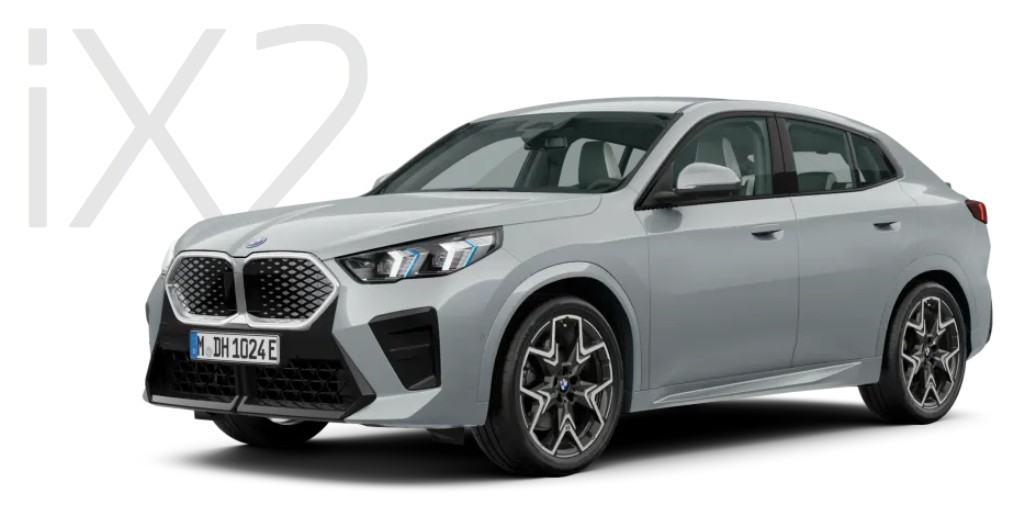
The BMW iX2 range in km is one of the first numbers most buyers want to know before considering BMW's electric coupe-SUV. After all, electric vehicles can look spectacular in brochures, but the question we actually care about is much simpler: how far can the BMW iX2 realistically travel before we need to plug it in?
The answer depends heavily on which iX2 we choose.
Current versions include the efficiency-focused BMW iX2 eDrive20 and the considerably more powerful BMW iX2 xDrive30. Depending on specification and market, the eDrive20 can officially travel roughly 478 km or more under WLTP testing, while certain European specifications quote figures exceeding 500 km. The more powerful dual-motor xDrive30 generally sits around the 449 km WLTP mark in markets such as Australia. BMW's UK specifications currently show approximately 296–318 miles for some eDrive20 versions and 277–296 miles for the xDrive30, highlighting how wheels, equipment and market specifications can affect the published number.
Those figures give us the starting point. They don't tell the entire story.
Let's dig into the battery, motorway performance, city efficiency, weather effects and charging speeds to determine what BMW iX2 owners can realistically expect.
Content in this publication
- What Is the BMW iX2 Electric Range in KM?
- BMW iX2 xDrive30 Range in KM
- What Size Battery Does the BMW iX2 Have?
- What Is the Real-World BMW iX2 Range?
- How Weather Affects BMW iX2 Range
- BMW iX2 Energy Consumption
- How Fast Can the BMW iX2 Charge?
- Should We Charge the BMW iX2 to 100%?
- What Reduces BMW iX2 Range the Most?
- Does Wheel Size Affect BMW iX2 Range?
- Can the BMW iX2 Handle Long Trips?
- BMW iX2 eDrive20 vs xDrive30: Which Has Better Range?
- How Does the iX2 Range Compare With Its Battery Size?
- How to Get More Range From a BMW iX2
- Is 450–500 KM Enough Electric Range?
- Is the BMW iX2 Good for Daily Driving?
- BMW iX2 Range KM: Final Verdict
- Frequently Asked Questions
What Is the BMW iX2 Electric Range in KM?
BMW's official figures vary slightly by market, wheel size and specification.
A useful snapshot looks like this:
| BMW iX2 version | Drive system | Approx. official WLTP range |
|---|---|---|
| iX2 eDrive20 | Single motor, front-wheel drive | Up to around 478–515 km |
| iX2 xDrive30 | Dual motor, all-wheel drive | Around 446–476 km |
Australian BMW specifications list the iX2 eDrive20 at up to 478 km, paired with a roughly 64.8 kWh battery. BMW's current UK specifications can show higher figures, with selected eDrive20 configurations reaching as much as 320 miles—roughly 515 km.
The xDrive30 sacrifices some efficiency for considerably stronger performance and all-wheel-drive traction. Australian 2026 examples list a WLTP figure around 449 km, while BMW UK specifications currently span approximately 277–296 miles, equivalent to roughly 446–476 km.
So when somebody asks, "How many kilometres does a BMW iX2 do?", saying simply "around 450 km" isn't entirely wrong, but it hides an important difference between versions.
BMW iX2 eDrive20 Range
The eDrive20 is the long-distance champion of the range.
Its single electric motor drives the front wheels and produces 150 kW (204 hp) and 250 Nm of torque. BMW Australia lists combined WLTP electricity consumption of around 15.3 kWh/100 km and an official electric range of up to 478 km.
Some European configurations stretch farther.
BMW UK currently advertises certain eDrive20 versions at up to 320 miles, or approximately 515 km, although other trim and wheel combinations are quoted lower.
Why the variation?
Because wheels, tyres, equipment, aerodynamics and homologation specifications differ between versions and countries. Think of the official range less like a fixed brick wall and more like a window.
Who Should Choose the eDrive20?
For us, the eDrive20 makes the most sense if maximum range matters more than explosive acceleration.
It still reaches 100 km/h in approximately 8.6 seconds, which is perfectly respectable for ordinary driving, while avoiding the additional weight and energy consumption of the xDrive30's second motor.
That combination makes it particularly attractive for commuting, mixed urban driving and frequent longer journeys.
BMW iX2 xDrive30 Range in KM
The BMW iX2 xDrive30 takes a different approach.
Instead of prioritising every last kilometre, BMW adds a second electric motor and all-wheel drive.
The result is significantly more performance.
BMW lists approximately 230 kW (313 hp) of maximum system output for current European versions, along with 494 Nm and a 0–62 mph time of around 5.6 seconds.
That extra punch comes with a range penalty.
Current Australian examples quote approximately 449 km WLTP, while BMW UK figures of roughly 277–296 miles translate to around 446–476 km depending on configuration.
In practical terms, we might give up somewhere around 30–60 km of official range compared with an efficient eDrive20 specification.
For some drivers, that's an easy trade.
The xDrive30 feels more like a genuinely quick premium EV, and its all-wheel-drive system adds confidence when accelerating hard or driving in poor conditions.
Why Does the xDrive30 Have Less Range?
Adding another electric motor doesn't magically create free performance.
More power usually means additional weight, mechanical losses and greater opportunities to consume energy aggressively.
The xDrive30 also weighs more than the eDrive20. BMW's UK specifications list approximately 1,960 kg for the eDrive20 and around 2,095 kg for the xDrive30 in comparable configurations.
Every time we accelerate that additional mass, energy has to come from somewhere.
The battery pays the bill.
What Size Battery Does the BMW iX2 Have?
BMW specifications vary slightly by market and measurement convention, but current iX2 versions use a battery of roughly 65 kWh.
BMW Australia currently quotes approximately 64.8 kWh for the eDrive20, while BMW UK lists about 65–65.2 kWh depending on the version.
That might sound modest beside electric SUVs carrying enormous 90 or 100 kWh packs.
Yet there's an advantage.
A smaller battery keeps vehicle weight and charging requirements under control. Instead of brute-forcing range with a huge battery, BMW relies heavily on efficiency.
It's a little like travelling with a smaller fuel tank but learning to sip rather than gulp.
What Is the Real-World BMW iX2 Range?
Here we reach the number that matters more than any brochure figure.
Official WLTP testing is useful because it creates a standardised comparison between vehicles. It is not a promise that we'll achieve exactly the advertised number on every journey.
BMW itself notes that real-world electric range depends on factors including driving style, route, outside temperature, heating or air-conditioning use, vehicle load and preconditioning.
In moderate weather and mixed driving, an efficient iX2 can get reasonably close to its WLTP rating when driven gently.
Motorway driving changes the picture.
An eDrive20 officially rated around 478 km shouldn't automatically be expected to cover 478 motorway kilometres at sustained high speed.
For everyday planning, we would treat the WLTP number as a benchmark rather than a guaranteed destination.
BMW iX2 City Range
Electric cars love cities.
It sounds backwards at first. Petrol vehicles normally become less efficient in stop-start traffic, while EVs often thrive there.
Why?
Electric motors don't waste fuel idling at traffic lights, and regenerative braking can recover some energy when the vehicle slows down.
At modest urban speeds, aerodynamic drag also falls dramatically.
Consequently, an iX2 driven gently around town in mild weather may sometimes approach—or under especially favourable circumstances even outperform—the efficiency implied by its combined WLTP figure.
This is where the eDrive20 feels particularly comfortable.
BMW iX2 Highway Range
Highways are a different animal.
At 100–120 km/h, aerodynamic resistance becomes increasingly important. Push faster and the battery gauge can begin dropping like sand through an hourglass.
The sleek coupe-inspired profile helps the iX2, but physics always gets the final vote.
Drivers completing long motorway journeys should therefore leave a meaningful buffer rather than calculating charging stops from the full advertised WLTP distance.
If the navigation says our destination is almost exactly the maximum theoretical range away, stopping briefly is usually smarter than gambling on the last few kilometres.
Does Driving at 130 KM/H Reduce iX2 Range?
Absolutely.
The difference between cruising at 90 km/h and 130 km/h can be substantial in almost any EV.
Air resistance rises rapidly with speed, so the motor must continuously work harder just to push the vehicle through the atmosphere.
The effect can become particularly noticeable on long European motorway journeys.
Slowing slightly often saves more time than we'd imagine because fewer or shorter charging stops may be required.
How Weather Affects BMW iX2 Range
Temperature has a meaningful effect on electric vehicles.
Lithium-ion batteries generally work most efficiently within a comfortable temperature window. When conditions become very cold, battery chemistry becomes less efficient and the vehicle must also spend energy heating the cabin and battery.
Hot weather creates another drain because climate control has to cool the interior.
BMW explicitly identifies outside temperature and heating or air-conditioning among the variables affecting real-world range.
That means somebody driving an iX2 through a mild spring day shouldn't expect exactly the same consumption as somebody tackling a freezing winter motorway.
BMW iX2 Winter Range
Winter is normally the toughest season.
Cabin heating requires energy, battery performance changes and wet or snowy roads may increase rolling resistance.
Short journeys can be especially inefficient because the car repeatedly spends energy warming itself without driving long enough to spread that energy cost across many kilometres.
Preconditioning while connected to a charger can help.
Instead of pulling all the required heating energy from the battery after departure, the vehicle can prepare the cabin while connected to external power.
BMW iX2 Summer Range
Moderate summer weather is generally friendly to range.
Extreme heat is less helpful.
Running powerful air conditioning continuously consumes electricity, while battery thermal management may need additional energy.
Still, in many climates, summer efficiency will usually be closer to the official figures than performance during very cold winter conditions.
BMW iX2 Energy Consumption
Efficiency is arguably more revealing than maximum range.
BMW Australia currently lists approximately 15.3 kWh/100 km WLTP for the eDrive20.
That is a strong figure for a premium crossover of this size.
The xDrive30 consumes somewhat more because it has two motors, higher performance and additional weight.
When comparing EVs, we can think of kWh/100 km exactly as we would think about litres per 100 km in a combustion vehicle: lower is generally better.
A car consuming 15 kWh/100 km travels farther from the same battery than one requiring 20 kWh/100 km.
That's the secret sauce behind the iX2's respectable range.
BMW hasn't simply stuffed an enormous battery beneath the floor.
It has made the available energy work hard.
How Fast Can the BMW iX2 Charge?
Range anxiety becomes less important when charging is quick and predictable.
The iX2 supports DC fast charging at up to 130 kW, according to current BMW specifications. BMW states that charging from 10% to 80% can take approximately 29 minutes under suitable conditions.
That's not among the absolute fastest charging speeds available in the EV market, where some newer architectures exceed 200 or even 300 kW.
But peak charging power isn't everything.
What matters during a road trip is how much usable range we can recover during an ordinary stop.
BMW Australia says the eDrive20 can add roughly 132–152 km after ten minutes of high-power charging, depending on conditions.
That's enough to turn a coffee break into meaningful additional travel.
BMW iX2 10–80% Charging Time
The quoted 29-minute 10–80% figure is particularly useful because drivers rarely fast-charge an EV from completely empty to completely full.
Charging normally slows considerably as the battery approaches 100%.
On long journeys, arriving at a rapid charger with a relatively low state of charge and departing around 70–80% can often be quicker than waiting for the final 20%.
BMW notes that charging performance varies with battery state, ambient temperature, driving history and electrical consumers.
So 29 minutes should be treated as an optimal reference rather than a stopwatch guarantee.
BMW iX2 Home Charging
Home charging transforms how we think about range.
Instead of visiting a filling station only when the tank is almost empty, an EV can begin many mornings with plenty of energy already available.
BMW lists AC charging at up to 11 kW, with 22 kW capability shown for compatible configurations/charging arrangements in some specifications. Published minimum 0–100% AC charging times are approximately 6 hours 30 minutes at 11 kW and around 3 hours 45 minutes under the faster supported setup.
For owners with overnight charging access, that makes the maximum theoretical range less important in everyday life.
Should We Charge the BMW iX2 to 100%?
BMW states that it recommends charging the iX2 battery to around 80% to help optimise battery health and life, while the advertised WLTP range figures are measured after charging to 100%.
For ordinary daily driving, 80% may therefore be perfectly adequate.
If our eDrive20 theoretically offers around 478 km from 100%, then 80% still represents a substantial amount of everyday driving.
Before a long road trip, however, charging to 100% can make sense because we're going to use that additional energy immediately.
The distinction matters.
The maximum range figure describes what the vehicle can deliver from a full battery. It doesn't necessarily describe how owners will charge it every night.
What Reduces BMW iX2 Range the Most?
Several factors can noticeably shorten the distance between charging stops:
- Sustained high motorway speeds can increase aerodynamic energy consumption.
- Cold weather can reduce battery efficiency while increasing cabin-heating demand.
- Aggressive acceleration repeatedly asks the motors for large bursts of energy.
- Large wheels and performance tyres can increase rolling and aerodynamic losses.
- Heavy passenger or luggage loads require more energy during acceleration and climbing.
- Roof boxes and external carriers disturb airflow and may produce a surprisingly large motorway penalty.
- Strong heating or air-conditioning increases electrical consumption.
- Mountainous routes require additional energy while climbing, although regeneration can recover some of it on descents.
- Low tyre pressures increase rolling resistance.
- Frequent short journeys in winter can be less efficient than one longer continuous trip.
None of these automatically destroys the iX2's usability.
They simply explain why two owners can drive identical cars and report completely different range figures.
Does Wheel Size Affect BMW iX2 Range?
Yes, and it's an easy factor to overlook.
Large alloy wheels look excellent on a coupe-inspired SUV like the iX2, but style can carry an efficiency cost.
Wider tyres usually increase rolling resistance and aerodynamic drag. Larger wheels can also add rotating mass.
That helps explain why manufacturers publish a range interval rather than one universal number for every version.
If maximum kilometres per charge are our priority, the smallest efficient factory wheel-and-tyre combination will generally be the smarter choice.
If appearance matters more, larger wheels may be worth sacrificing a few kilometres.
There isn't a wrong answer—only a trade-off.
Can the BMW iX2 Handle Long Trips?
Yes.
The eDrive20's roughly 478 km-or-better official capability, depending on specification, places it firmly within useful long-distance EV territory. Pair that with roughly 29-minute 10–80% DC charging and touring becomes entirely practical when charging infrastructure is available.
Suppose we're taking a 700 km journey.
We don't need a 700 km battery.
We need sufficient initial range plus well-positioned fast chargers.
A brief meal or coffee stop can overlap with charging, turning what sounds like an inconvenience on paper into something fairly natural.
The equation becomes less attractive in regions with sparse public charging infrastructure. In those areas, route planning matters considerably more.
How Often Will the BMW iX2 Need Charging on a Road Trip?
That depends on speed, weather and how much buffer we're comfortable maintaining.
Experienced EV drivers rarely aim to arrive at a charger with exactly 0%.
Likewise, they don't necessarily wait until 100% before leaving.
A strategy built around roughly 10–80% charging tends to make better use of rapid chargers.
On long motorway routes, that means individual driving legs will generally be shorter than the complete WLTP range.
That's normal.
Think of the battery as a water bottle on a hike. We don't need to drain every final drop before finding another tap.
BMW iX2 eDrive20 vs xDrive30: Which Has Better Range?
For pure range, the eDrive20 wins.
Its simpler single-motor front-wheel-drive system consumes less electricity and carries less weight.
The xDrive30 fights back with significantly stronger acceleration and all-wheel-drive traction.
Our choice therefore depends on priorities.
If we commute long distances, frequently travel between cities or simply dislike charging more often than necessary, we'd lean toward the eDrive20.
If we want stronger performance, all-weather traction and that addictive instant dual-motor acceleration, the xDrive30 may justify its shorter range.
Neither version is objectively superior.
They're solving different problems.
How Does the iX2 Range Compare With Its Battery Size?
This is where the BMW becomes interesting.
A roughly 65 kWh battery isn't gigantic by modern electric-SUV standards, yet the iX2 can approach or exceed the high-400-kilometre mark under WLTP testing.
That indicates solid drivetrain efficiency.
Large batteries certainly provide benefits, but they also add weight and cost.
More weight requires more energy to move, meaning the solution can eventually begin fighting the problem.
BMW's approach with the iX2 is relatively balanced: enough battery for genuine touring ability without turning the vehicle into a rolling power station.
How to Get More Range From a BMW iX2
Range doesn't require hypermiling at bicycle speeds.
Small habits matter more.
Smooth acceleration avoids unnecessary energy spikes. Moderate motorway speeds reduce aerodynamic drag. Correct tyre pressures minimise rolling resistance. Preconditioning the cabin while connected to a charger can preserve battery energy, particularly in winter.
Navigation matters too.
EV route planning can account for chargers and battery requirements, helping us arrive at fast chargers with an appropriate state of charge.
Above all, don't obsess over every one-percent change on the battery display.
The iX2 is designed to be driven.
Efficiency should make journeys easier, not turn every drive into an accounting exercise.
Is 450–500 KM Enough Electric Range?
For the overwhelming majority of everyday journeys, yes.
Someone driving 40 km per day theoretically uses only a small portion of the iX2's battery before returning home.
Even drivers covering 100 km daily have considerable reserve.
Range becomes more important during occasional long-distance travel, and that's where charging speed and infrastructure become part of the equation.
A car with 700 km of theoretical range but painfully slow charging isn't automatically a better touring EV than one with 480 km and convenient charging.
We should judge the complete system.
Is the BMW iX2 Good for Daily Driving?
The specifications suggest the iX2 hits a useful sweet spot.
It provides enough range that most owners won't need to charge every day, while its battery remains manageable enough to replenish overnight at home.
The eDrive20 is particularly convincing for commuters because efficiency takes priority.
Meanwhile, the xDrive30 gives us performance approaching genuinely sporty territory without dropping into impractically short-range territory.
That balance is arguably one of the iX2's strongest characteristics.
BMW iX2 Range KM: Final Verdict
So, what should we remember about the BMW iX2 range in km?
The iX2 eDrive20 offers the longest range, with current official figures around 478 km in Australia and potentially more than 500 km in favourable European configurations. The iX2 xDrive30 typically provides around 449 km WLTP in Australian specification, with European figures varying according to trim and equipment.
Real-world distance will fluctuate.
Cold weather, motorway speeds, wheel choice, cabin climate, hills and driving style can all pull the number downward. Conversely, gentle city driving in mild weather may deliver excellent efficiency.
The 130 kW DC charging capability and approximately 29-minute 10–80% charging time also mean we shouldn't judge the iX2 purely by its maximum battery range.
For buyers who value efficiency and maximum distance, the eDrive20 is the obvious pick.
For those willing to exchange some kilometres for substantially stronger performance and all-wheel drive, the xDrive30 makes a compelling argument.
Either way, the BMW iX2 demonstrates something increasingly important in the EV world: a useful electric car doesn't need the biggest battery—it needs to use its battery intelligently.
Frequently Asked Questions
How many kilometres can a BMW iX2 travel on one charge?
Depending on version, equipment and market, official BMW iX2 WLTP range figures generally fall around the mid-400 km to low-500 km region. BMW Australia currently lists up to approximately 478 km for the eDrive20, while certain BMW UK eDrive20 configurations are rated higher.
What is the BMW iX2 eDrive20 range in km?
BMW Australia currently quotes up to approximately 478 km WLTP for the iX2 eDrive20. Some European specifications can exceed 500 km depending on wheels, trim and homologation configuration.
What is the BMW iX2 xDrive30 range?
Current Australian 2026 xDrive30 examples quote approximately 449 km WLTP. BMW's UK specifications show a range of roughly 277–296 miles for certain versions, equivalent to approximately 446–476 km.
How long does a BMW iX2 take to charge?
BMW lists maximum DC charging power of approximately 130 kW, with an optimal 10–80% charging time of about 29 minutes. Actual charging time varies with battery temperature, state of charge, charger capability and environmental conditions.
Which BMW iX2 has the longest range?
The BMW iX2 eDrive20 generally offers the longest electric range because its single-motor front-wheel-drive layout is lighter and more efficient than the dual-motor xDrive30. Buyers prioritising maximum kilometres between charges should therefore favour the eDrive20.
If you want to know other articles similar to BMW iX2 Range KM: Real-World Range, Battery and Charging Guide you can visit the category Driving.
Kia Sorento Fuel Economy: MPG, Hybrid, and Plug-In Hybrid Explained
BYD Shark 6 Fuel Consumption: Real-World Economy, Range and What to Expect
Vauxhall Agila MPG: Real-World Fuel Economy and Engine Guide
Honda Passport MPG: Real-World Fuel Economy, Ratings, and What to Expect

Nissan Rogue Fuel Economy: MPG, Range, Costs, and Real-World Efficiency
BYD Shark 6 Long Range Fuel Tank: Is the 120L Upgrade Worth It?
Leave a Reply
More content of your interest