

Nissan Frontier Gas Mileage: MPG, Real-World Economy, and Ways to Save Fuel

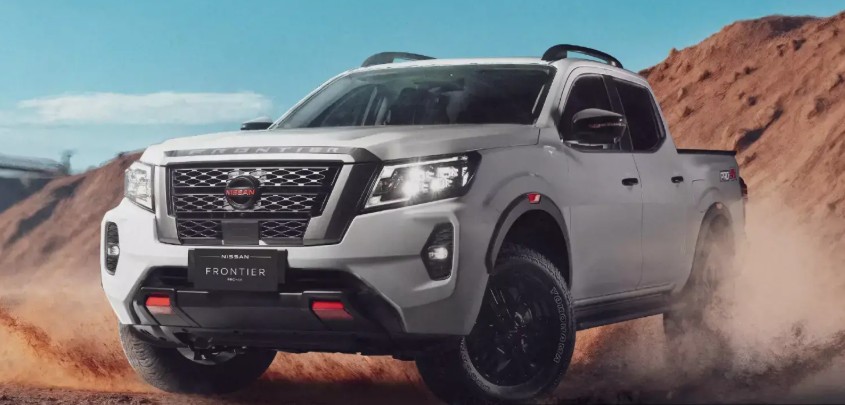
When we shop for a midsize pickup, fuel economy is rarely the only thing on our minds. We want towing ability, useful torque, a practical bed, decent comfort, and enough capability to handle work during the week and adventure on the weekend. Still, every time we pull into a gas station, Nissan Frontier gas mileage suddenly becomes very important.
The Frontier sits in an interesting position. It isn't trying to behave like a tiny economy car wearing work boots. The current truck uses a naturally aspirated 3.8-liter V6 producing 310 horsepower and 281 lb-ft of torque, paired with a nine-speed automatic transmission. Nissan says the 2026 Frontier can achieve up to 19 mpg city and 24 mpg highway, depending on configuration.
Those numbers tell only part of the story, though.
Drive a Frontier through stop-and-go traffic, add aggressive all-terrain tires, tow a trailer, climb mountain roads, or spend weekends crawling across dirt trails and your mileage can look very different. Conversely, gentle highway driving can make the Frontier considerably easier on fuel than its rugged appearance might suggest.
So, how fuel-efficient is the Nissan Frontier really? Let's dig into the numbers, the variables behind them, and what owners can realistically expect.
Content in this publication
- What Is the Nissan Frontier Gas Mileage?
- Why Nissan Frontier Fuel Economy Varies So Much
- Nissan Frontier 4x2 vs 4x4 Gas Mileage
- Nissan Frontier PRO-4X Gas Mileage
- How the 3.8-Liter V6 Affects Frontier MPG
- Does the Nissan Frontier Need Premium Gas?
- Nissan Frontier Highway MPG
- Nissan Frontier City MPG
- Real-World Nissan Frontier Gas Mileage
- Does Towing Reduce Nissan Frontier MPG?
- Does Payload Affect Frontier Fuel Economy?
- How Tires Change Nissan Frontier MPG
- Does Lifted Suspension Reduce Frontier MPG?
- Does Air Conditioning Affect Nissan Frontier MPG?
- Nissan Frontier MPG and Cold Weather
- Can Maintenance Improve Nissan Frontier Gas Mileage?
- How to Calculate Your Frontier's Real MPG
- How to Get Better Gas Mileage From a Nissan Frontier
- Is Nissan Frontier Gas Mileage Good for a Truck?
- Is the Nissan Frontier Expensive to Fuel?
- Which Nissan Frontier Gets the Best Gas Mileage?
- Final Thoughts: Understanding Nissan Frontier Gas Mileage
- Frequently Asked Questions About Nissan Frontier Gas Mileage
What Is the Nissan Frontier Gas Mileage?
For the 2026 model year, Nissan advertises fuel economy of up to 19 mpg in the city and 24 mpg on the highway.
The exact figure depends heavily on drivetrain and trim.
A 4x2 Frontier is generally the fuel-economy champion because it carries less drivetrain hardware and doesn't have to spin the additional components required by four-wheel drive. Once we move into 4x4 territory—and especially the trail-oriented PRO-4X—fuel use increases.
Nissan's 2026 Frontier brochure lists a Frontier 4x4 at 19 mpg combined, while the PRO-4X 4x4 is rated at 16 mpg city, 20 mpg highway, and 18 mpg combined.
That spread highlights something important: asking, "What gas mileage does a Nissan Frontier get?" is a bit like asking how fast someone can run without mentioning whether they're on pavement or climbing a hill.
Configuration matters.
Nissan Frontier MPG at a Glance
Depending on configuration, current Frontier mileage generally falls around these EPA-estimated figures:
- Up to 19 mpg city
- Up to 24 mpg highway
- Around 21 mpg combined for certain 4x2 configurations
- Around 19 mpg combined for Frontier 4x4 models
- Around 18 mpg combined for the PRO-4X 4x4
Nissan's own comparison information lists the 2026 Frontier King Cab S 4x2 at 19 city, 24 highway, and 21 combined mpg.
Those aren't class-leading economy-car numbers, obviously, but context matters. We're dealing with a midsize pickup powered by a 310-horsepower V6 rather than a small turbocharged four-cylinder designed primarily around efficiency.
Why Nissan Frontier Fuel Economy Varies So Much
Two people can own nearly identical Frontiers and report surprisingly different fuel economy.
One might average 22 mpg.
Another might struggle to reach 17.
Neither driver necessarily has a mechanical problem.
Fuel economy depends on dozens of variables including speed, elevation, outside temperature, traffic, tires, cargo weight, accessories, driving style, and terrain.
Think of the EPA rating as a standardized reference point rather than a promise engraved in stone.
City Driving Hurts MPG
Pickup trucks dislike stop-and-go traffic for a simple reason: repeatedly accelerating several thousand pounds requires energy.
Every red light turns momentum into wasted energy through braking. Then the V6 must burn additional fuel to bring the truck back up to speed.
Heavy urban traffic, short journeys, prolonged idling, and frequent acceleration can therefore push real-world Nissan Frontier gas mileage below the official city estimate.
Drivers who spend most of their time commuting through crowded downtown streets shouldn't expect the same results as somebody cruising steadily down an interstate.
Highway Driving Helps
The Frontier becomes considerably more efficient once we're traveling at a stable speed.
Its nine-speed automatic transmission can settle into a tall gear, engine speed falls, and repeated acceleration disappears.
That's why the difference between city and highway economy can be significant.
The best official highway rating reaches 24 mpg on current models.
There's a catch, however: speed matters.
Cruising at 60 or 65 mph can deliver noticeably better mileage than maintaining 80 mph. Aerodynamic resistance grows rapidly as speed increases, and a pickup truck has considerably more frontal area than a sleek sedan.
The faster we push it through the air, the harder the engine works.
Nissan Frontier 4x2 vs 4x4 Gas Mileage
For shoppers who care strongly about fuel economy, drivetrain selection deserves serious consideration.
Four-wheel drive offers an obvious advantage when conditions become slippery or the pavement ends. But that capability isn't free.
Why 4x2 Usually Gets Better MPG
A rear-wheel-drive Frontier carries a simpler drivetrain.
Four-wheel-drive models add components such as a transfer case and additional driveline hardware. That typically means more weight and additional mechanical losses.
Neither penalty is enormous by itself, but together they affect fuel consumption.
For someone living in a mild climate who spends virtually all of their time on paved roads, 4x2 may therefore make more financial sense.
When 4x4 Is Worth the Fuel Penalty
Fuel economy shouldn't become an obsession at the expense of capability.
If we regularly travel through snow, deep mud, loose terrain, construction sites, ranch roads, or rough trails, 4x4 may be worth every extra gallon.
The smarter question isn't simply, "Which Frontier gets the best mileage?"
It's:
Which Frontier gives us the capability we actually need without paying for capability we'll never use?
That distinction can save money both at the dealership and at the pump.
Nissan Frontier PRO-4X Gas Mileage
The PRO-4X attracts drivers who want their Frontier prepared for trails straight from the factory.
But off-road equipment and maximum fuel economy rarely go hand in hand.
Nissan lists the 2026 PRO-4X 4x4 at approximately 16 mpg city, 20 mpg highway, and 18 mpg combined.
Why the difference?
Off-road-oriented equipment changes the efficiency equation. Tires designed to claw through loose surfaces generally create more rolling resistance than highway-focused rubber. Rugged configurations may also carry additional weight and generate more aerodynamic drag.
It's the automotive equivalent of hiking in heavy boots rather than running shoes. The boots are better when the path gets ugly, but they demand additional effort.
Is the PRO-4X Bad on Gas?
"Bad" depends on expectations.
If we're comparing it with a compact crossover getting around 30 mpg, then yes, the PRO-4X drinks considerably more fuel.
But that's hardly a fair comparison.
The PRO-4X is a four-wheel-drive midsize truck designed for off-road use while retaining serious everyday capability. Its fuel economy should be evaluated against similarly equipped pickups rather than commuter cars.
For buyers who rarely leave pavement, choosing the PRO-4X purely for appearance may result in unnecessary fuel expenses.
For someone using its capability regularly, the trade-off becomes much easier to justify.
How the 3.8-Liter V6 Affects Frontier MPG
One characteristic distinguishes the Frontier from some rivals: simplicity.
The current Frontier uses Nissan's 3.8-liter naturally aspirated V6, which produces 310 horsepower and 281 lb-ft of torque.
There isn't a complicated menu of tiny turbo engines, hybrids, diesels, and high-output alternatives.
For shoppers, that makes the powertrain decision refreshingly straightforward.
Power Versus Efficiency
A naturally aspirated V6 delivers predictable throttle response and good power without relying on turbochargers.
The downside is straightforward too: 3.8 liters of displacement feeding six cylinders will generally consume more gasoline than a smaller engine under light loads.
Nissan partly counteracts that through direct injection and the nine-speed automatic transmission. Nissan specifically credits direct injection with helping the engine deliver responsive performance while achieving up to 19 city and 24 highway mpg.
Still, the Frontier's personality leans toward dependable muscle rather than hyper-efficient minimalism.
No special diet is required for mainstream Frontier ownership.
Nissan lists regular gasoline as the recommended fuel for the 2026 Frontier S 4x2 in its comparison specifications.
That's an understated ownership advantage.
Imagine two vehicles achieving similar mileage while one requires premium gasoline. Even with identical mpg, the premium-fuel vehicle can cost considerably more to operate.
Because fuel prices vary constantly by location, we shouldn't attach a fixed dollar amount to that advantage. But using regular fuel makes calculating everyday Frontier expenses much easier.
Nissan Frontier Highway MPG
Highway driving represents the Frontier's efficiency sweet spot.
With the best configuration reaching an EPA-estimated 24 mpg highway, owners covering long distances can achieve respectable range without sacrificing traditional pickup capability.
But achieving strong highway economy requires resisting one temptation: speed.
Why 70 MPH Can Be Better Than 80 MPH
Aerodynamic drag doesn't increase gently with speed.
It ramps up dramatically.
A truck moving at 80 mph must push significantly harder through the atmosphere than the same truck traveling at 65 or 70 mph. Since a Frontier isn't shaped like a teardrop, that resistance becomes meaningful.
Drivers chasing better Nissan Frontier highway mpg should concentrate on maintaining a steady, moderate speed rather than constantly accelerating and passing.
Cruise control can help on relatively flat roads, although a skilled driver may sometimes outperform it in rolling terrain by allowing small speed variations instead of forcing the engine to maintain an exact speed uphill.
Nissan Frontier City MPG
City mileage is where the Frontier's size and power become more obvious.
The best current rating reaches approximately 19 mpg city, while the off-road-oriented PRO-4X is rated lower.
Short urban trips can produce even worse results because the engine may spend much of the journey warming up.
Add air conditioning, traffic jams, frequent stops, and aggressive acceleration and the fuel gauge begins moving like sand through an hourglass.
How to Improve City Mileage
Driving smoothly makes a surprisingly large difference.
Rather than racing toward the next red light, lift the accelerator early and preserve momentum whenever possible.
Similarly, avoid flooring the throttle every time traffic starts moving.
A powerful V6 makes brisk acceleration tempting, but every enthusiastic launch effectively converts gasoline into entertainment.
Occasionally, that's part of owning a truck.
Doing it at every intersection becomes expensive.
Real-World Nissan Frontier Gas Mileage
EPA estimates are useful because every vehicle is tested under standardized procedures.
Real life isn't standardized.
Our daily commute might include steep hills. Someone else's may consist of flat rural highway. Another owner might tow a boat every weekend.
So real-world Frontier mileage will inevitably spread above and below its official numbers.
What MPG Should We Realistically Expect?
A sensible expectation is to treat the official combined figure for your exact drivetrain and trim as a baseline.
Mostly highway driving may push average economy toward the highway figure.
Heavy city use will drag it toward the city rating.
Off-road use, towing, roof accessories, oversized tires, cold weather, prolonged idling, or high-speed interstate travel can reduce it further.
Rather than judging consumption from one tank, track several fill-ups.
That gives us a much cleaner picture of actual efficiency.
Does Towing Reduce Nissan Frontier MPG?
Absolutely.
And sometimes dramatically.
The 2026 Frontier is available with towing capability of up to 7,150 pounds, depending on configuration.
Being capable of pulling that weight doesn't mean fuel economy remains unchanged while doing it.
Why Trailers Consume So Much Fuel
Weight matters, particularly when accelerating or climbing hills.
Yet aerodynamic drag can be an even bigger enemy at highway speeds.
A tall enclosed trailer behaves somewhat like a giant sail turned sideways against the airflow. The truck must continually spend energy overcoming that resistance.
A relatively light but boxy travel trailer can therefore cause a bigger highway fuel-economy penalty than we might expect from weight alone.
Trailer Shape Matters Too
Low-profile trailers generally cut through the air more cleanly than tall enclosed trailers.
This is why two Frontier owners towing the same weight can see noticeably different MPG.
Payload, terrain, headwinds, speed, temperature, and trailer design all play a role.
When budgeting fuel for a towing trip, we should never assume we'll achieve the unloaded EPA highway estimate.
Does Payload Affect Frontier Fuel Economy?
Every pound requires energy to move.
Load the bed with tools, construction materials, camping equipment, or recreational gear and the engine has more mass to accelerate.
The effect may be relatively modest during steady highway cruising, but it becomes more noticeable in urban driving and mountainous terrain.
An empty truck repeatedly accelerating through traffic requires less energy than the same truck carrying a heavy load.
This doesn't mean we should be afraid to use the Frontier like a truck.
That's what it's built for.
It simply means that lower fuel economy under load isn't automatically evidence of a mechanical issue.
How Tires Change Nissan Frontier MPG
Tires are one of the most overlooked fuel-economy variables.
Large aggressive tires look fantastic on a pickup. They can also transform off-road traction.
But there is no free lunch.
All-Terrain Tires Versus Highway Tires
Off-road tires typically use heavier construction and more aggressive tread patterns.
That can increase rolling resistance.
A road-focused tire tends to roll more easily across pavement, requiring less energy from the engine.
Owners who install substantially larger aftermarket tires may notice additional losses because of increased rotational weight and altered effective gearing.
Tire Pressure Matters
Underinflated tires create additional rolling resistance.
They're essentially making the engine push the truck through invisible mud.
Maintaining the pressure recommended for the vehicle and load can improve efficiency while also promoting predictable handling and more even tire wear.
Always use the appropriate vehicle specifications rather than randomly inflating tires to the maximum pressure printed on the tire sidewall.
Does Lifted Suspension Reduce Frontier MPG?
Usually, yes.
A suspension lift pushes more of the truck into the airflow and may expose additional underbody components.
Combine that with oversized off-road tires and fuel economy can fall noticeably.
The modifications may absolutely be worthwhile for drivers building a trail-focused Frontier.
But anyone constructing a lifted truck should accept that factory EPA ratings are no longer an accurate representation of the modified vehicle.
Capability and efficiency often sit on opposite ends of the seesaw.
Does Air Conditioning Affect Nissan Frontier MPG?
Air conditioning requires energy.
The compressor adds load to the engine, meaning fuel consumption can increase while the system operates.
However, switching off the AC and opening every window at high highway speeds isn't necessarily a magical solution. Open windows create aerodynamic turbulence and drag.
At low urban speeds, the difference may be minor.
At highway speeds, aerodynamics become increasingly important.
We'd rather focus on bigger fuel-saving opportunities—speed, tire pressure, unnecessary idling, acceleration habits, cargo, and maintenance—than sweat through summer trying to save a tiny amount of gasoline.
Nissan Frontier MPG and Cold Weather
Winter can be surprisingly tough on fuel economy.
Engines take longer to reach optimal operating temperature. Winter fuel formulations may differ. Tire pressures naturally fall as temperatures decline. Drivers may idle the truck longer while heating the cabin or clearing windows.
Snowy and slippery roads also create additional resistance.
A Frontier that regularly averages around one figure in summer may therefore return lower numbers during winter without anything being mechanically wrong.
Fuel economy should be evaluated seasonally rather than panicking after one disappointing cold-weather tank.
Can Maintenance Improve Nissan Frontier Gas Mileage?
Routine maintenance won't transform a Frontier into a hybrid sedan, but neglected maintenance can certainly make efficiency worse.
Engine-management systems are sophisticated enough to compensate for many small issues, yet mechanical condition still matters.
Dirty or damaged components, incorrect tire pressure, dragging brakes, poor wheel alignment, or certain sensor problems can increase consumption.
Warning Signs of Abnormally Poor MPG
Pay attention when fuel economy drops suddenly without an obvious lifestyle change.
Suppose we normally achieve similar mileage every month and suddenly lose several mpg while driving the same roads with the same loads.
That's different from losing mileage after installing larger tires or towing a trailer.
Potential warning signs include rough running, unusual exhaust smell, warning lights, poor acceleration, abnormal idle, tire-pressure problems, or brakes that feel unusually hot after driving.
A sudden unexplained change deserves diagnosis rather than guessing.
How to Calculate Your Frontier's Real MPG
The truck's onboard fuel economy display is convenient, but manually calculating mileage occasionally provides a useful reference.
Fill the fuel tank and reset the trip odometer.
Drive normally.
At the next fill-up, divide miles driven by gallons required to refill the tank.
If we drove 400 miles and needed 20 gallons, for example, the result would be 20 mpg.
Repeat that process for several tanks before drawing conclusions.
One refill can be distorted by different pump shutoff points, driving conditions, towing, wind, traffic, or an unusual route.
Long-term averages tell the real story.
How to Get Better Gas Mileage From a Nissan Frontier
There isn't one secret modification that suddenly gives a Frontier compact-car economy.
Improving MPG is usually about stacking several small gains.
Drive smoothly. Reduce unnecessary idling. Keep tires properly inflated. Remove heavy cargo you genuinely don't need. Avoid excessive highway speeds. Maintain the truck according to Nissan's schedule. And understand that roof racks, oversized tires, lifts, and heavy accessories may carry an efficiency penalty.
Most importantly, stop treating every green light like the starting grid at a drag strip.
The Frontier's 310 horsepower isn't going anywhere.
You don't need to summon all of it every time the light changes.
Is Nissan Frontier Gas Mileage Good for a Truck?
The answer depends on what we're comparing.
Against an efficient compact car or hybrid crossover, the Frontier obviously loses.
Against the needs of someone who wants a traditional midsize pickup with a standard V6, available four-wheel drive, off-road capability, and substantial towing capacity, the mileage becomes easier to accept.
That distinction matters.
Efficiency isn't simply about achieving the largest mpg number possible. It's about achieving reasonable fuel consumption while doing the job we bought the vehicle to perform.
A 40-mpg hatchback looks brilliant at the gas pump but useless when we need to tow a sizable trailer.
Likewise, buying a pickup for a commute that never requires pickup capability means we're voluntarily carrying additional size and weight every day.
The right vehicle depends on the mission.
Is the Nissan Frontier Expensive to Fuel?
MPG is only one side of fuel cost.
Annual mileage matters just as much.
Someone driving 5,000 miles per year may hardly care whether the truck averages 19 or 21 mpg.
Someone covering 25,000 miles annually certainly will.
To estimate annual fuel consumption, divide yearly mileage by expected MPG.
For instance, at 12,000 miles per year and 20 mpg:
12,000 ÷ 20 = 600 gallons per year.
Multiply those 600 gallons by your local average fuel price.
That calculation is more useful than simply saying the Frontier is "good" or "bad" on gas because it converts mileage into a personal ownership expense.
Which Nissan Frontier Gets the Best Gas Mileage?
For buyers prioritizing fuel economy above maximum off-road capability, a lighter 4x2 configuration is the logical place to begin.
Nissan lists the 2026 Frontier King Cab S 4x2 at 19 mpg city, 24 highway, and 21 combined.
Meanwhile, the PRO-4X 4x4 sacrifices some efficiency for greater trail-oriented capability, with Nissan listing it at 16 city, 20 highway, and 18 combined mpg.
Neither one is inherently better.
They're designed for different owners.
Choose 4x2 If Efficiency Matters Most
A 4x2 makes sense when we primarily drive paved roads, live somewhere four-wheel drive isn't regularly needed, and want to minimize operating costs.
Choose 4x4 When Capability Matters More
The 4x4 makes more sense for challenging terrain, harsh weather, job sites, recreation, or situations where additional traction matters.
Choose PRO-4X for the Trail
PRO-4X buyers generally aren't choosing the Frontier because they want every last fraction of an MPG.
They're choosing it because off-road capability sits higher on the priority list.
And that's perfectly rational—assuming those capabilities will actually get used.
Final Thoughts: Understanding Nissan Frontier Gas Mileage
The Nissan Frontier gas mileage story is fairly straightforward once we separate the configurations.
Current 2026 models can reach up to 19 mpg city and 24 mpg highway, while four-wheel-drive and off-road-focused versions generally consume more fuel.
The Frontier isn't attempting to rewrite the laws of physics. It's a midsize truck powered by a standard 310-horsepower, 3.8-liter V6 and nine-speed automatic transmission.
That gives us meaningful power and capability, but moving a pickup takes fuel.
Your actual mileage will depend on where and how you drive. Highway commuters can expect substantially better results than drivers dealing with dense urban traffic. Towing, heavy payloads, oversized tires, off-road driving, aggressive acceleration, high speeds, and suspension modifications can all pull consumption in the wrong direction.
The biggest takeaway?
Don't judge the Frontier by a single MPG number.
Judge it by what you need your truck to accomplish.
If you need V6 power, useful towing capacity, truck-bed practicality, and available 4x4 capability, its fuel economy becomes part of the package rather than the entire story.
And if saving fuel remains high on your list, choose the simplest configuration that meets your needs and drive it intelligently. Sometimes the cheapest efficiency upgrade isn't hidden under the hood.
It's underneath our right foot.
Frequently Asked Questions About Nissan Frontier Gas Mileage
1. What MPG does a Nissan Frontier get?
The 2026 Nissan Frontier can achieve up to 19 mpg city and 24 mpg highway, depending on configuration. A 4x2 Frontier can reach approximately 21 mpg combined, while 4x4 and off-road-focused versions may be lower.
2. What is the Nissan Frontier PRO-4X gas mileage?
Nissan lists the 2026 Frontier PRO-4X 4x4 at approximately 16 mpg city, 20 mpg highway, and 18 mpg combined. Its all-terrain-oriented setup prioritizes off-road capability over maximum fuel economy.
3. Does the Nissan Frontier get better MPG on the highway?
Yes. Steady highway driving generally allows the nine-speed transmission to maintain higher gears and avoids the repeated acceleration required in city traffic. Current Frontier configurations can achieve up to 24 mpg highway.
Mainstream Frontier configurations use regular gasoline; Nissan's current specifications identify regular fuel for the Frontier S 4x2. That helps control operating expenses because drivers aren't forced to pay for premium fuel simply to achieve the vehicle's normal performance.
5. How can I improve Nissan Frontier gas mileage?
Smooth acceleration, moderate highway speeds, proper tire inflation, reduced unnecessary idling, sensible cargo loads, and regular maintenance can all help. Keeping factory-size road-oriented tires can also favor efficiency compared with oversized aggressive off-road tires. Remember that towing, heavy payloads, lifts, and extensive off-road driving naturally reduce MPG.
If you want to know other articles similar to Nissan Frontier Gas Mileage: MPG, Real-World Economy, and Ways to Save Fuel you can visit the category Driving.
Kia Sorento Fuel Economy: MPG, Hybrid, and Plug-In Hybrid Explained
BYD Shark 6 Fuel Consumption: Real-World Economy, Range and What to Expect
Vauxhall Agila MPG: Real-World Fuel Economy and Engine Guide

Honda Passport MPG: Real-World Fuel Economy, Ratings, and What to Expect

Nissan Rogue Fuel Economy: MPG, Range, Costs, and Real-World Efficiency
BYD Shark 6 Long Range Fuel Tank: Is the 120L Upgrade Worth It?
Leave a Reply
More content of your interest