

Are Ford Ka and Fiat 500 the Same? The Real Connection Explained

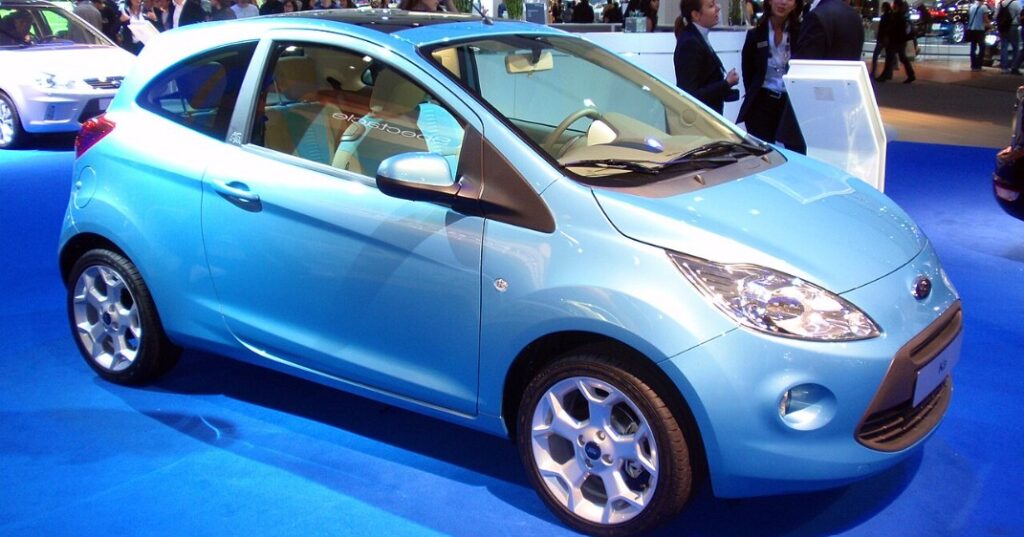
If we park a second-generation Ford Ka next to a Fiat 500, it does not take long before a question pops into our heads: are Ford Ka and Fiat 500 the same car?
At first glance, they clearly are not identical. The Fiat 500 looks retro, cheerful, and unmistakably Italian, while the Ford Ka has its own sharper, more playful personality. Look beneath the bodywork, though, and the story becomes much more interesting.
The second-generation Ford Ka and the modern Fiat 500 are closely related. They were developed using much of the same underlying architecture and were even manufactured at the same Fiat plant in Poland. They also shared several mechanical components, including engines and other drivetrain parts.
But calling them exactly the same car would be misleading.
Think of them as cousins who grew up in the same house. They share plenty of DNA, yet their personalities, clothes, behavior, equipment, and even the way they feel from behind the wheel can differ.
In this guide, we will explain exactly how the Ford Ka and Fiat 500 are connected, what they share, where they differ, and which one might make more sense as a used car.
Content in this publication
- Are Ford Ka and Fiat 500 the Same Car?
- Why Do People Think the Ford Ka Is a Fiat 500?
- Which Ford Ka Shares Parts With the Fiat 500?
- Do Ford Ka and Fiat 500 Use the Same Platform?
- Were Ford Ka and Fiat 500 Built in the Same Factory?
- Do the Ford Ka and Fiat 500 Have the Same Engine?
- Do Ford Ka and Fiat 500 Share a Gearbox?
- Do Ford Ka and Fiat 500 Share Suspension Parts?
- Ford Ka vs Fiat 500 Exterior Design
- Are Ford Ka and Fiat 500 Interiors the Same?
- Which Is Bigger: Ford Ka or Fiat 500?
- Are Ford Ka and Fiat 500 Parts Interchangeable?
- Is the Ford Ka Basically a Cheaper Fiat 500?
- Which Is More Reliable: Ford Ka or Fiat 500?
- Ford Ka vs Fiat 500 Maintenance Costs
- Ford Ka vs Fiat 500 Fuel Economy
- Which Is Better for City Driving?
- Which Is Better for a First Car?
- Is the Fiat 500 More Premium Than the Ford Ka?
- Is the Ford Ka a Rebadged Fiat 500?
- Does the Ford Ka Drive Like a Fiat 500?
- Which One Looks Better?
- Which Used Car Should We Buy: Ford Ka or Fiat 500?
- Ford Ka and Fiat 500: Similarities at a Glance
- What About the Abarth 500?
- Can Fiat 500 Parts Make the Ford Ka Easier to Own?
- What Should We Check Before Buying a Ford Ka?
- What Should We Check Before Buying a Fiat 500?
- Are Ford Ka and Fiat 500 the Same Underneath?
- Why Did Ford Work With Fiat?
- Are Ford Ka and Fiat 500 the Same? Final Verdict
- Frequently Asked Questions
Are Ford Ka and Fiat 500 the Same Car?
No, the Ford Ka and Fiat 500 are not technically the same car, although certain generations share substantial mechanical DNA.
The confusion mainly concerns the second-generation Ford Ka, introduced in Europe around 2008. That Ka was developed through cooperation between Ford and Fiat and used architecture closely related to the Fiat 500 and Fiat Panda.
The original Ford Ka from the 1990s was a completely different story. It was largely Ford-developed and had no such connection with the Fiat 500.
Likewise, the later Ford Ka+, introduced in some markets after the second-generation Ka, was based on Ford's global small-car engineering and was not simply another Fiat 500 relative.
So when somebody says, "The Ford Ka is basically a Fiat 500," we need to ask one important question:
Which Ford Ka?
For the second generation, the statement contains quite a bit of truth. For other generations, it does not.
Why Do People Think the Ford Ka Is a Fiat 500?
There is a good reason for the comparison.
The second-generation Ka was produced at Fiat's manufacturing facility in Tychy, Poland, where the Fiat 500 was also built. Both cars used closely related small-car architecture and shared numerous components.
That means certain mechanical parts underneath the skin can feel remarkably familiar.
It was not simply a case of Ford purchasing finished Fiat 500s, changing the badges, and sending them to dealerships, though. Ford gave the Ka its own styling, chassis tuning, interior treatment, equipment choices, and brand identity.
We can think of the platform as the skeleton. Ford and Fiat started with similar bones, but they dressed and tuned their cars differently.
This is where generation matters enormously.
First-Generation Ford Ka
The first Ford Ka arrived in Europe during the 1990s and became famous for its unusual "New Edge" styling.
This model was fundamentally a Ford product and shared mechanical roots with other Ford vehicles of its era rather than the modern Fiat 500.
Therefore:
First-generation Ford Ka = not Fiat 500 based.
Second-Generation Ford Ka
The second-generation Ka is the model responsible for almost all the Ford-Fiat confusion.
Introduced around 2008, it was developed in partnership with Fiat and built alongside Fiat small cars.
Therefore:
Second-generation Ford Ka = closely related to Fiat 500.
Ford Ka+
The Ka+ was a different proposition again.
It was larger, more practical, and based on Ford's global small-car architecture rather than the Fiat 500 platform.
Therefore:
Ford Ka+ = not essentially a Fiat 500.
That distinction is worth remembering whenever we are shopping for replacement parts or comparing used models.
Do Ford Ka and Fiat 500 Use the Same Platform?
For the relevant second-generation Ford Ka, broadly speaking, yes.
The car used an architecture closely related to the platform underpinning the Fiat 500 and Fiat Panda.
Platform sharing is extremely common in the automotive industry.
Manufacturers do it because developing a completely new small-car platform costs an enormous amount of money. Sharing structural and mechanical foundations allows manufacturers to reduce development expenses while still creating vehicles with different identities.
Imagine two houses built on similar foundations. One might have brick walls and traditional furniture while the other uses glass panels and modern décor.
The foundations may be related, but the finished houses can feel surprisingly different.
That is essentially what happened with the Ford Ka and Fiat 500.
Were Ford Ka and Fiat 500 Built in the Same Factory?
Yes, the related versions were manufactured at Fiat's Polish production facility.
This is one of the strongest reasons people assume the cars are identical.
But sharing a factory does not automatically make two vehicles the same.
Modern automotive factories frequently produce multiple models from different brands. Cars can travel along similar production lines while receiving different suspension specifications, body panels, interiors, software, options, and final calibration.
Ford engineers were also involved in making sure the Ka behaved like a Ford rather than simply feeling like a Fiat wearing different clothes.
Do the Ford Ka and Fiat 500 Have the Same Engine?
Some versions use engines from the same Fiat engine families, while the exact engine availability varies depending on year and market.
One of the most familiar engines found in the second-generation Ka is the 1.2-litre petrol engine, closely associated with Fiat's FIRE engine family.
Diesel versions were also offered in certain European markets using Fiat-derived diesel technology.
This shared powertrain background is one reason mechanics sometimes notice familiar components when working on both vehicles.
Ford Ka 1.2 Petrol vs Fiat 500 1.2 Petrol
These two versions are especially closely related mechanically.
Both are small, naturally aspirated petrol engines designed primarily for affordable urban transportation rather than outright performance.
They are generally:
- Simple compared with modern turbocharged engines
- Economical when driven gently
- Relatively inexpensive to maintain
- Well suited to short urban journeys
- Modest rather than exciting in straight-line performance
If our main concern is straightforward ownership, that simplicity can actually be attractive.
Are the Engines Completely Identical?
Not necessarily in every specification.
Even when the fundamental engine architecture is shared, manufacturers can use different engine management settings, accessories, emissions equipment, exhaust components, gear ratios, or calibration depending on model and year.
That is why we should never buy a component purely because somebody says, "It fits a Fiat 500, so it must fit a Ford Ka."
Always verify the exact engine code and part number.
Certain versions share closely related Fiat-sourced manual transmission components.
Again, this depends on engine and model year.
Both cars were primarily designed as compact European city cars, so conventional manual gearboxes were common.
The important point for owners is that mechanical similarities can sometimes increase parts availability. Independent specialists familiar with Fiat small cars may also recognize many components underneath the second-generation Ka.
However, gearbox ratios, linkage components, clutch specifications, and ancillary parts should still be checked individually.
"Similar" is not the same as "interchangeable."
They share fundamental architectural similarities, but Ford put significant effort into tuning the Ka's chassis differently.
This is one of the most interesting aspects of the partnership.
Ford had developed an excellent reputation for making even inexpensive small cars enjoyable to drive. The company did not want its Ka to feel like a rebadged Fiat.
Suspension geometry, spring rates, dampers, anti-roll characteristics, steering calibration, and other chassis details can influence how dramatically two cars using related platforms behave.
Which Handles Better: Ford Ka or Fiat 500?
Many drivers find the Ford Ka particularly enjoyable around town and on twisting roads.
The steering and suspension were tuned to give it the nimble, slightly cheeky character that Ford buyers expected.
The Fiat 500 can also be entertaining, but its priorities lean more heavily toward personality, design, and urban usability.
If we value driving feel above image, the Ka can be surprisingly appealing.
If we want a car that makes us smile before we even turn the key, the Fiat's styling may win.
Neither approach is wrong.
Ford Ka vs Fiat 500 Exterior Design
This is where any illusion that the two cars are identical quickly disappears.
The Fiat 500 deliberately references the classic Fiat 500 produced decades earlier. Rounded headlights, compact proportions, chrome details, and a cheerful face give the car its famous retro personality.
The Ford Ka follows a different philosophy.
Ford gave it sharper shapes and styling linked to the company's design language of the period.
Fiat 500 Styling
The Fiat communicates personality almost instantly.
It is cute without necessarily looking childish, retro without appearing ancient, and customizable enough that two examples can look surprisingly different.
The 500 became as much a fashion object as a small car.
Ford Ka Styling
The Ka looks sportier and less nostalgic.
Its design aims for youthful energy rather than retro charm. Curved surfaces remain, but the overall effect is noticeably different.
Put them side by side and few people would mistake one for the other.
Underneath, however, the family resemblance becomes much stronger.
Are Ford Ka and Fiat 500 Interiors the Same?
No.
There are similarities in packaging and certain hidden components, but the cabins look substantially different.
Fiat leaned heavily into the 500's retro theme. Its dashboard uses large areas of body-coloured trim on many versions, circular instruments, and playful design details.
Ford created a more conventional but still youthful dashboard for the Ka.
The result is a fascinating contrast.
The Fiat feels like stepping into a stylish café.
The Ford feels more like putting on a pair of sporty trainers.
Both are small. Both are lively. But the atmosphere is different.
Which Is Bigger: Ford Ka or Fiat 500?
The related models sit in broadly the same city-car class and have very similar footprints.
Neither is designed to swallow wardrobes or comfortably carry four tall adults across a continent.
You may be interested in reading Hyundai Santa Fe Best Years: Which Models Should You Buy?
They are happiest in crowded streets, tight parking spaces, and short-to-medium journeys.
Interior packaging differs slightly, though, so specifications such as boot volume, rear-seat room, and storage can vary.
In practical terms, we should consider both primarily small city cars.
Rear Seat Space
Rear accommodation is limited in both vehicles.
Children should be reasonably comfortable, but adults may find longer journeys cramped, particularly if taller passengers occupy the front seats.
Boot Space
Neither boot is enormous.
For weekly groceries, backpacks, or small luggage, they work.
For a family holiday with four large suitcases?
We might need a miracle—or a roof box.
Are Ford Ka and Fiat 500 Parts Interchangeable?
Some mechanical parts can be shared or closely related, but we should never assume everything is interchangeable.
Components that may have similarities include certain:
- Engine parts
- Filters
- Clutch components
- Transmission components
- Suspension pieces
- Braking components
- Electrical sensors
- Service items
Body panels, lighting, dashboards, interior trim, and many brand-specific components are obviously different.
Even mechanically similar parts can carry different specifications.
Always Check the Part Number
This rule can save us considerable frustration.
Before buying any Fiat 500 component for a Ford Ka—or vice versa—we should compare:
- Model year
- Engine size
- Engine code
- Transmission type
- OEM part number
- Vehicle identification details
Online sellers sometimes list a component as fitting several Fiat, Ford, Lancia, or Alfa Romeo models because related platforms can share hardware.
That does not mean every version uses exactly the same piece.
Is the Ford Ka Basically a Cheaper Fiat 500?
This description is tempting, but it oversimplifies things.
On the used market, the Ford Ka can often represent strong value because it generally lacks the fashion-driven image attached to the Fiat 500.
The Fiat's iconic styling helps maintain demand.
Buyers sometimes specifically want "a Fiat 500," not merely a small city car.
The Ka tends to attract people focused on affordability, simplicity, or driving characteristics.
That can create an interesting opportunity for used-car shoppers.
We may get much of the underlying mechanical package without paying as much for the fashionable badge and retro design.
Why Can the Ford Ka Be Cheaper?
Used-car values are influenced by more than engineering.
Brand perception matters.
Design matters.
Demand matters.
Image matters.
The Fiat 500 developed a strong lifestyle identity, while the Ka remained primarily an affordable city car.
Consequently, two mechanically related cars can have surprisingly different used prices.
Which Is More Reliable: Ford Ka or Fiat 500?
There is no universal winner because reliability depends heavily on engine, year, mileage, servicing, and previous ownership.
Given the shared mechanical foundations of certain versions, it should not surprise us that some faults overlap.
A neglected Ka can become expensive.
A neglected Fiat 500 can become expensive.
A carefully maintained example of either can provide perfectly sensible everyday transportation.
When shopping used, condition should normally matter more than the badge.
Common Areas Worth Checking
Before buying either model, we would inspect:
- Clutch operation
- Gearshift quality
- Suspension noises
- Steering behavior
- Cooling system condition
- Warning lights
- Electrical functions
- Oil leaks
- Timing-belt history where applicable
- Service records
- Brake condition
- Tyre wear
- Corrosion underneath the vehicle
A cheap city car with incomplete maintenance can quickly become an expensive city car.
The purchase price is merely the entrance ticket.
Ford Ka vs Fiat 500 Maintenance Costs
Because these are relatively simple small cars, routine maintenance can be reasonably affordable compared with larger or more complicated vehicles.
Shared mechanical components can also help with parts availability.
The Fiat 500's enormous popularity means replacement parts are widely available in many markets. Because the Ka uses several related mechanical components, it can benefit indirectly from that supply network.
Routine Maintenance Items
Typical ownership expenses include:
- Engine oil and filter changes
- Air filters
- Spark plugs
- Brake pads and discs
- Tyres
- Batteries
- Timing-belt service on applicable engines
- Coolant replacement
- Suspension bushes
- Clutch replacement as mileage increases
Labor prices vary dramatically between countries, so there is no single maintenance figure that applies everywhere.
Independent garages familiar with Fiat-derived engines may be particularly comfortable servicing the second-generation Ka.
Ford Ka vs Fiat 500 Fuel Economy
Neither car was designed to drink fuel like a thirsty V8.
Their compact dimensions, modest engines, and low weight make them naturally suitable for economical driving.
Actual fuel economy depends on the engine, gearbox, traffic conditions, temperature, tyre pressure, and driving style.
In city traffic, repeated cold starts can hurt consumption noticeably.
On a steady open road, both can deliver far more respectable efficiency.
The difference between them is usually less important than how we drive them.
Push a small engine aggressively everywhere and it may surprise us how thirsty it becomes.
Drive smoothly and the fuel gauge suddenly seems much more relaxed.
Which Is Better for City Driving?
Both cars are in their natural habitat in the city.
They are compact, easy to maneuver, and generally inexpensive to operate.
The Ford Ka may appeal more strongly to us if we prioritize driving dynamics and value.
The Fiat 500 may win if design, personalization, and character rank higher.
Advantages of the Ford Ka
The second-generation Ka can offer:
- Fun handling
- Compact dimensions
- Good urban maneuverability
- Familiar mechanical components
- Attractive used prices
- Less fashion-driven pricing
Advantages of the Fiat 500
The Fiat 500 can offer:
- Iconic styling
- Huge model recognition
- Extensive customization
- Wide parts availability
- Strong used-market demand
- Numerous trim and engine combinations
The better choice depends on what makes us happy every morning when we see the car parked outside.
Which Is Better for a First Car?
Both can make logical first cars under the right circumstances.
Their modest dimensions make parking easier, while smaller engines usually help control running costs.
Yet we should not buy purely based on size.
Insurance costs, safety equipment, repair history, servicing, and condition matter just as much.
A beautifully maintained Ka with complete documentation is probably a smarter purchase than an abused Fiat 500 bought simply because we prefer its appearance.
The reverse is equally true.
For New Drivers, Condition Beats Badge
When shopping for a first vehicle, we would prioritize:
- Full service history
- Good tyres
- Healthy clutch
- No major warning lights
- Evidence of proper timing-belt maintenance where required
- Smooth gearbox operation
- Clean accident history
- Reasonable insurance quote
- Independent pre-purchase inspection
A shiny badge cannot repair worn suspension.
In image terms, generally yes.
The Fiat 500 has long been marketed as more than basic transportation. Special editions, stylish trims, color combinations, accessories, and premium touches helped position it as an aspirational city car.
Ford took a more straightforward approach with the Ka.
That does not automatically mean the Fiat is mechanically superior.
It means the ownership experience was packaged differently.
Fiat sold a lifestyle.
Ford sold a small Ford.
For some buyers, the Fiat's extra personality is worth paying for. Others may look underneath, notice how much engineering is shared, and happily pocket the difference.
Is the Ford Ka a Rebadged Fiat 500?
Not really.
A true rebadge typically involves taking essentially the same vehicle and changing badges, grilles, lights, or relatively minor styling elements.
The second-generation Ka received enough Ford-specific development to deserve its own identity.
Its exterior design is different.
Its interior is different.
Its chassis tuning is different.
Its branding and equipment strategy are different.
The mechanical relationship is significant, but "rebadged Fiat 500" makes the partnership sound much simpler than it was.
A more accurate description would be:
The second-generation Ford Ka is a Ford-designed city car built using Fiat-related architecture and mechanical components.
That might not fit neatly into a pub conversation, but it tells the story better.
Does the Ford Ka Drive Like a Fiat 500?
Not exactly.
Platform sharing does not erase chassis tuning.
Ford traditionally placed considerable emphasis on steering response and handling, even with inexpensive vehicles.
The Ka's suspension setup was developed to deliver a more Ford-like driving character.
That can make it feel slightly different from the Fiat despite the mechanical family connection.
You may be interested in readingHyundai Santa Fe Best Years: Which Models Should You Buy?You may be interested in reading
Hyundai Santa Fe Generations: Complete History and EvolutionWe may notice differences in:
- Steering weight
- Body control
- Ride comfort
- Cornering behavior
- Suspension response
- Overall road feel
Whether those differences are "better" comes down to personal preference.
The Ka can feel energetic.
The 500 can feel charming.
Two flavors from a similar kitchen.
Which One Looks Better?
Now we enter dangerous territory because styling is entirely subjective.
The Fiat 500 has an unmistakable design. Even people with little interest in cars can usually recognize one.
Its retro styling gives it unusually strong identity for an inexpensive hatchback.
The Ka looks less iconic but perhaps more youthful and sporty.
If we want our city car to feel like a fashion accessory, the Fiat probably wins.
If we prefer something less obvious and potentially cheaper, the Ka deserves attention.
Would We Pay More for Style?
That is the real question.
Imagine two cars with similar mileage, comparable servicing, and related mechanical foundations.
One costs noticeably more because buyers love its design.
Would we still choose it?
Some of us absolutely would.
Cars are emotional purchases as much as practical ones. We see them every day. We sit inside them. We wash them, park them, photograph them, and occasionally glance back at them after walking away.
Buying purely with a calculator can sometimes miss half the point.
Which Used Car Should We Buy: Ford Ka or Fiat 500?
If our priority is value, the Ford Ka can be the smarter choice.
If our priority is style and character, the Fiat 500 has obvious appeal.
Mechanically, certain versions are similar enough that condition becomes far more important than the badge on the bonnet.
A properly maintained Ka beats a neglected 500.
A properly maintained 500 beats a neglected Ka.
Simple.
Choose the Ford Ka If We Want
The Ka makes particular sense when we want:
- Lower used purchase prices
- Fun city driving
- Straightforward styling
- Familiar Fiat-derived mechanical components
- Good value for money
Choose the Fiat 500 If We Want
The Fiat becomes more attractive when we want:
- Retro styling
- A highly recognizable design
- Greater personalization
- Larger owner communities
- Strong parts support
- Wider choice of trims and derivatives
Ford Ka and Fiat 500: Similarities at a Glance
The relationship becomes easier to understand when we separate shared engineering from visible differences.
| Category | Ford Ka vs Fiat 500 |
|---|---|
| Same exact car? | No |
| Related platform? | Yes, for the second-generation Ka |
| Same factory? | Yes, related versions were built in Poland |
| Shared engines? | Some versions do |
| Shared gearbox components? | Some versions |
| Same exterior? | No |
| Same interior? | No |
| Same suspension tuning? | No |
| Similar dimensions? | Yes |
| Parts interchangeable? | Some mechanical parts only |
| Same driving feel? | Not exactly |
| Same brand positioning? | No |
This table captures the central idea nicely.
They are closely related beneath the surface without being identical products.
What About the Abarth 500?
The Abarth versions deserve separate treatment.
Although they share the broader Fiat 500 family roots, Abarth models were developed as performance-oriented cars with different engines, suspension, brakes, styling, exhaust systems, and calibration.
Comparing a basic Ford Ka directly with an Abarth 500 would therefore be misleading.
One is fundamentally an affordable city car.
The other was engineered to inject considerably more performance into the small Fiat formula.
They might attend the same family reunion, but one arrives wearing racing shoes.
Can Fiat 500 Parts Make the Ford Ka Easier to Own?
Potentially, yes.
One of the hidden advantages of platform sharing is component availability.
Since the Fiat 500 has been extremely popular, the aftermarket for servicing components is substantial in many European markets.
When compatible parts are shared, Ka owners may benefit from that broader ecosystem.
However, compatibility should always be verified.
We should never order something merely because the photographs look identical.
Vehicle components can differ by millimeters, electrical connector, calibration, mounting point, or manufacturing revision.
Those tiny differences can transform a bargain into a useless paperweight.
What Should We Check Before Buying a Ford Ka?
A second-generation Ka deserves the same careful inspection as any aging small car.
Pay particular attention to maintenance history and signs of neglect.
Small cars often spend their lives doing short urban journeys, jumping over speed bumps, scraping curbs, and repeatedly cycling through clutches and brakes.
That lifestyle can be surprisingly hard on mechanical components.
During a test drive, listen carefully.
Suspension knocking, clutch judder, vague steering, difficult gear selection, overheating, unusual warning lights, or excessive engine noise should never be ignored.
A professional inspection is inexpensive compared with repairing several neglected systems after purchase.
What Should We Check Before Buying a Fiat 500?
Much of the same logic applies.
Do not allow the charming styling to distract us from the mechanical condition.
Check servicing documentation carefully.
Test every electrical function.
Listen to the suspension.
Inspect the tyres.
Confirm the clutch behaves smoothly.
Look for dashboard warning lights.
Examine the body for accident repairs.
And whenever an engine uses a scheduled timing belt, confirm exactly when it was last replaced.
A seller saying "I think it was done" is not the same as an invoice proving it was done.
Are Ford Ka and Fiat 500 the Same Underneath?
This phrase is closer to reality than saying the cars are simply identical.
The second-generation Ka and Fiat 500 share important structural and mechanical foundations.
Yet underneath does not mean everything.
Ford still developed its own chassis characteristics and numerous unique components.
The easiest way to understand the relationship is through four layers:
- Platform: closely related.
- Powertrain: shared on certain versions.
- Body and interior: distinctly different.
- Driving calibration: individually tuned.
So yes, there is plenty of Fiat underneath certain Ford Kas.
But there is plenty of Ford there too.
Why Did Ford Work With Fiat?
Building small cars profitably is difficult.
Customers expect affordable prices, yet designing engines, platforms, safety structures, electronics, factories, and manufacturing systems costs billions.
Partnerships allow manufacturers to spread those development expenses across larger production volumes.
Instead of reinventing every nut and bolt, Ford could use an established small-car architecture while concentrating resources on creating its own version.
Fiat benefited from increased manufacturing volume.
Ford gained access to proven small-car hardware.
Consumers received two noticeably different vehicles.
When cooperation works properly, everyone can gain something.
Are Ford Ka and Fiat 500 the Same? Final Verdict
So, are Ford Ka and Fiat 500 the same?
No—but the second-generation Ford Ka and Fiat 500 are much more closely related than their styling suggests.
They share important architectural foundations, were produced in the same Polish factory, and certain versions use closely related engines, transmissions, and mechanical components.
Yet Ford did not merely slap a blue oval onto a Fiat 500.
The Ka received its own exterior, interior, chassis calibration, brand positioning, and personality.
The simplest way to remember it is this:
The Ford Ka and Fiat 500 are mechanical relatives, not identical twins.
If we are shopping for a used city car, that relationship can actually work in our favor. The Ka can provide much of the simple, proven hardware associated with the Fiat family while sometimes costing less because it lacks the 500's fashionable reputation.
The Fiat, meanwhile, offers an unmistakable design, massive personality, and broader lifestyle appeal.
Which would we choose?
If our wallet gets the deciding vote, perhaps the Ka.
If our heart gets the deciding vote, the Fiat 500 might steal the keys before we even finish comparing prices.
Frequently Asked Questions
1. Is the Ford Ka made by Fiat?
The second-generation Ford Ka was developed through cooperation between Ford and Fiat and manufactured at Fiat's factory in Poland. However, it remained a Ford-branded vehicle with its own styling, interior, chassis tuning, and specifications.
2. Does a Ford Ka have a Fiat engine?
Some second-generation Ford Ka models use Fiat-derived engines. The popular 1.2-litre petrol engine, for example, is closely related to Fiat's FIRE engine family. Engine availability varies by year and market.
3. Can I use Fiat 500 parts on a Ford Ka?
Some mechanical components may be compatible because the cars share important engineering foundations. However, not every Fiat 500 part fits a Ford Ka. Always compare OEM part numbers, engine codes, model years, and vehicle specifications before buying.
4. Which is better, Ford Ka or Fiat 500?
The Ford Ka can be better for buyers prioritizing value and lively handling, while the Fiat 500 generally appeals more strongly to buyers who value retro styling, customization, and brand image. For used cars, condition and service history matter more than the badge.
5. Is a Ford Ka basically a Fiat 500 underneath?
The second-generation Ford Ka shares substantial underlying architecture and certain mechanical components with the Fiat 500, but it is not simply a rebadged Fiat. Ford gave the Ka unique styling, cabin design, suspension tuning, equipment, and driving characteristics.
You may be interested in readingHyundai Santa Fe Best Years: Which Models Should You Buy?You may be interested in reading
Hyundai Santa Fe Generations: Complete History and EvolutionYou may be interested in reading
 Nissan Frontier SV vs PRO-4X: Which Truck Is Better?
If you want to know other articles similar to Are Ford Ka and Fiat 500 the Same? The Real Connection Explained you can visit the category Models.
Kia Sorento Models: Complete Guide to Trims, Engines and Versions
BYD Shark 6 vs Ranger vs HiLux: Which Ute Makes the Most Sense in 2026?
BYD Shark 6 vs MG U9: Which Ute Makes More Sense in 2026?
BYD Shark 6 vs Ford Ranger Raptor: Which Performance Ute Is Better in 2026?
BYD Shark 6 vs Kia Tasman: Which Ute Is Better?
BYD Shark 6 vs 7: What We Know So Far
Leave a Reply
More content of your interest