

Nissan Frontier Reliability by Year: Best and Worst Years

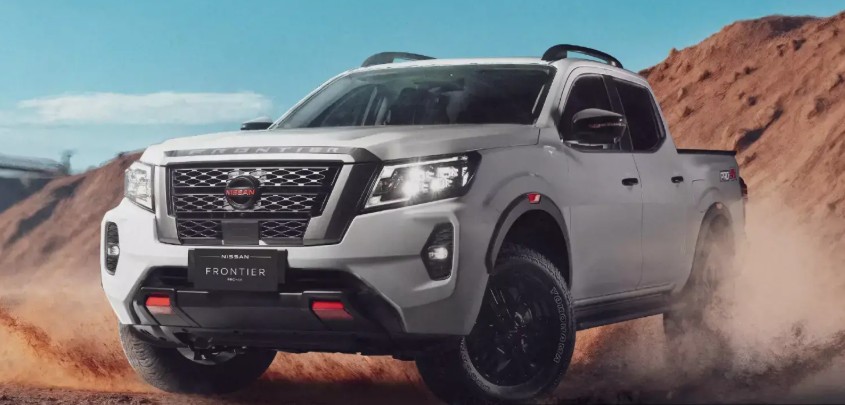
The Nissan Frontier reliability by year story is surprisingly interesting because this pickup has lived several very different lives. Some Frontiers are old-school little trucks that feel nearly agricultural. Others are modern midsize pickups packed with technology, driver-assistance systems, and a nine-speed automatic transmission.
Yet one characteristic keeps popping up: simplicity.
For much of its history, the Frontier has avoided chasing every trend in the pickup market. Nissan often kept engines, transmissions, chassis components, and basic mechanical layouts around for years. That may have made some generations feel dated compared with newer rivals, but it also gave Nissan plenty of time to work through problems.
So, is the Nissan Frontier reliable?
Generally, yes—but the model year matters enormously.
Some years are excellent used-truck candidates. Others require careful inspection because expensive problems can turn what looks like a bargain into a money pit.
In this guide, we'll walk through Nissan Frontier reliability by year from the earliest models through the current generation, identify the strongest years to buy, highlight years we'd approach cautiously, and explain what actually matters when shopping for a used Frontier.
Content in this publication
- Nissan Frontier Reliability by Year at a Glance
- How Reliable Is the Nissan Frontier Overall?
- Understanding the Three Main Frontier Eras
- 1998 Nissan Frontier Reliability
- 1999–2000 Nissan Frontier Reliability
- 2001–2002 Nissan Frontier Reliability
- 2003–2004 Nissan Frontier Reliability
- 2005 Nissan Frontier Reliability
- 2006–2007 Nissan Frontier Reliability
- 2008–2010 Nissan Frontier Reliability
- 2011 Nissan Frontier Reliability
- 2012 Nissan Frontier Reliability
- 2013–2014 Nissan Frontier Reliability
- 2015–2016 Nissan Frontier Reliability
- 2017–2018 Nissan Frontier Reliability
- 2019 Nissan Frontier Reliability
- 2020 Nissan Frontier Reliability
- 2021 Nissan Frontier Reliability
- 2022 Nissan Frontier Reliability
- 2023 Nissan Frontier Reliability
- 2024 Nissan Frontier Reliability
- 2025 Nissan Frontier Reliability
- 2026 Nissan Frontier Reliability
- Which Nissan Frontier Years Are the Most Reliable?
- What Nissan Frontier Years Should You Avoid?
- Best Nissan Frontier Year for a Used Truck
- How Many Miles Can a Nissan Frontier Last?
- What to Check Before Buying a Used Nissan Frontier
- Is a High-Mileage Nissan Frontier Worth Buying?
- Does the Frontier Have a Reliable Engine?
- Nissan Frontier Reliability vs. Toyota Tacoma
- Why Late Second-Generation Frontiers Are So Appealing
- Are New Nissan Frontiers Reliable?
- Final Verdict: Nissan Frontier Reliability by Year
- Frequently Asked Questions
Nissan Frontier Reliability by Year at a Glance
Before digging into each generation, here's our simplified overview.
| Model Year | Reliability Outlook | Our Take |
|---|---|---|
| 1998 | Good | Simple first-year truck, inspect age-related wear |
| 1999 | Good | Generally durable |
| 2000 | Good | Solid older Frontier |
| 2001 | Good | Good mechanical simplicity |
| 2002 | Good | Strong used-truck candidate if maintained |
| 2003 | Very Good | One of the better first-generation choices |
| 2004 | Very Good | Mature first-generation model |
| 2005 | Below Average | Early redesign; inspect carefully |
| 2006 | Below Average | Higher-risk used choice |
| 2007 | Below Average | Watch cooling and transmission history |
| 2008 | Average | Improved, but still inspect carefully |
| 2009 | Average | Better than early D40 trucks |
| 2010 | Average | Transitional improvement year |
| 2011 | Good | Stronger used choice |
| 2012 | Good | Mature platform |
| 2013 | Very Good | Simple and well sorted |
| 2014 | Very Good | Excellent used-truck candidate |
| 2015 | Very Good | Proven mechanical package |
| 2016 | Very Good | One of our preferred years |
| 2017 | Very Good | Mature and straightforward |
| 2018 | Very Good | Strong reliability reputation |
| 2019 | Very Good | Excellent late D40 choice |
| 2020 | Average | New V6 and nine-speed transmission |
| 2021 | Good | Better sorted than 2020 |
| 2022 | Average | Full redesign; first-year caution |
| 2023 | Good | Improved redesign-year formula |
| 2024 | Good to Very Good | Strong modern choice |
| 2025 | Good to Very Good | Promising, but still relatively new |
| 2026 | Too New to Judge | Long-term reliability not established |
These ratings are a buying-oriented assessment rather than a promise that every truck from one year will behave identically. Maintenance history can easily matter more than a one-year difference.
How Reliable Is the Nissan Frontier Overall?
The Frontier has historically benefited from something buyers sometimes underestimate: mechanical consistency.
Consider the second-generation truck. While competitors repeatedly introduced new powertrains, transmissions, turbochargers, and electronics, Nissan let the Frontier age gradually.
It became the pickup equivalent of a trusty pair of work boots. They might not have looked fashionable anymore, but they were familiar, straightforward, and usually willing to keep going.
Later versions of that generation are particularly attractive because many early weaknesses had already been identified and addressed.
That doesn't mean every Frontier deserves a reliability trophy.
Older trucks can develop leaks, suspension wear, corrosion, electrical problems, worn timing components, damaged driveline parts, and neglected fluids just like anything else. Mileage and ownership history matter.
But compared with many complicated modern vehicles, a well-maintained Frontier can be refreshingly straightforward.
Understanding the Three Main Frontier Eras
When discussing Nissan Frontier reliability by year, separating the truck into generations makes everything easier.
First Generation: 1998–2004
These trucks are compact, relatively simple, and increasingly old.
Reliability can be excellent, but age has become the dominant concern. We're now talking about vehicles that have survived decades of heat cycles, winters, potholes, towing, owners, modifications, and repairs.
Second Generation: 2005–2021
This is where the Frontier really built its reputation.
The D40 generation remained in production for an unusually long time. Early examples had some noteworthy concerns, but later examples benefited from years of refinement.
The result?
A late second-generation Frontier can be one of the most appealing traditional midsize pickups on the used market.
Third Generation: 2022–Present
The 2022 redesign brought a dramatically more modern body, cabin, safety technology, and overall driving experience.
Interestingly, its 3.8-liter V6 and nine-speed automatic weren't completely new. Nissan had introduced that powertrain in the previous-generation Frontier for 2020, essentially giving it some real-world development time before the new truck arrived.
Still, newer trucks introduce more electronics, sensors, software, and convenience equipment, so we're cautious about declaring any very recent model bulletproof.
1998 Nissan Frontier Reliability
The 1998 Frontier introduced Nissan's Frontier nameplate to American buyers.
Mechanically, these early trucks were comparatively basic. That's good news today because simplicity generally means fewer expensive electronic systems waiting to surprise us.
The challenge isn't necessarily design weakness.
It's age.
A surviving 1998 Frontier might have experienced more than two decades of work, weather, neglected maintenance, and backyard repairs.
Check cooling-system health, oil leaks, frame condition, suspension wear, steering components, clutch operation on manuals, and automatic transmission behavior.
A clean 1998 can still be dependable, but we'd buy condition rather than mileage.
1999–2000 Nissan Frontier Reliability
The 1999 and 2000 trucks continued the same straightforward formula.
These years can be reliable little pickups when properly maintained. Four-cylinder examples are particularly simple, though naturally they're not especially quick.
V6 trucks provide better performance but introduce additional components and maintenance considerations.
Rust is increasingly important.
A beautifully running engine isn't much consolation if serious corrosion has attacked structural parts underneath.
For an inexpensive work truck, these early Frontiers can still make sense. Just don't assume old Nissan automatically means indestructible.
2001–2002 Nissan Frontier Reliability
By 2001, the Frontier had become more refined and visually distinctive.
These trucks generally remain appealing for buyers who prioritize mechanical simplicity over comfort or modern safety features.
Our buying approach is straightforward: look for evidence of attentive long-term ownership.
A truck with documented fluid changes, proper cooling-system maintenance, decent tires, and a clean chassis is far more appealing than a cosmetically shiny truck with mystery maintenance.
At this age, maintenance receipts are practically love letters.
2003–2004 Nissan Frontier Reliability
If we wanted a first-generation Frontier today, 2003 and 2004 would be among our preferred years.
Why?
They're late-production examples of an established design.
Manufacturers typically improve manufacturing processes and make small revisions as a generation ages. More importantly, late-generation vehicles give us years of accumulated real-world knowledge.
The 2004 Frontier is particularly interesting for buyers who want the old compact-truck feel before the substantially larger second generation arrived.
Again, rust and previous ownership matter immensely.
2005 Nissan Frontier Reliability
Now we reach one of the most important years in this entire discussion.
The 2005 Frontier was redesigned.
It became larger, stronger, more powerful, and much more competitive with modern midsize trucks.
The available 4.0-liter V6 provided serious performance for its era, and the redesigned chassis made the Frontier feel like a considerably more substantial machine.
But first-year redesigns come with risk.
The 2005 truck sits inside the group of 2005–2010 Frontiers associated with the well-known radiator and transmission contamination concern.
That matters enormously when shopping used.
Why the Radiator Matters
On affected automatic-transmission trucks, a failure involving the radiator's internal transmission cooler could potentially allow coolant and transmission fluid to contaminate one another.
That's not the sort of problem we shrug at.
Transmission repair can quickly erase whatever money you saved by buying a cheap older truck.
A 2005 isn't automatically a bad vehicle, particularly if it has already been properly repaired or upgraded. But we'd want unusually good documentation before buying one.
2006–2007 Nissan Frontier Reliability
The 2006 and 2007 trucks sit inside the same early second-generation period.
Mechanically, these Frontiers can be tough. The 4.0-liter V6 provides strong power, and many examples have accumulated impressive mileage.
Yet we'd still rank these years below later Frontiers because the potential downside is bigger.
When shopping, we'd inspect the cooling system carefully, check transmission fluid condition, verify what radiator work has been performed, listen for unusual engine noises, and look underneath for leaks or corrosion.
A cheap truck isn't cheap when it needs a transmission shortly after purchase.
That's why we're picky here.
2008–2010 Nissan Frontier Reliability
Things begin improving as we move deeper into the second generation.
The 2008, 2009, and 2010 models can make reasonable purchases, particularly when the truck's service history shows that known concerns have already been addressed.
Still, these model years remain part of the period where radiator and automatic-transmission history deserves extra attention.
So we wouldn't shop by mileage alone.
Imagine two trucks parked side by side.
Truck A has 110,000 miles, virtually no service documentation, old fluids, and an unknown radiator.
Truck B has 150,000 miles, detailed maintenance records, cooling-system work, fresh fluids, and evidence of responsible ownership.
We'd probably inspect Truck B first.
Service history often tells us more than the odometer.
2011 Nissan Frontier Reliability
The 2011 Frontier marks the beginning of what we consider a particularly attractive period.
By this point, Nissan's midsize pickup platform was mature. Owners weren't buying cutting-edge technology; they were buying a truck whose basic mechanical formula had already spent years on the road.
That's exactly why used-truck shoppers like these.
Mechanically, we'd generally prefer a well-maintained 2011 over an equivalent 2005–2007 truck.
2012 Nissan Frontier Reliability
The 2012 Frontier continues the positive trend.
You may be interested in reading Is Toyota Estima the Same as Tarago? Complete Comparison
By now the truck's formula was extremely familiar: body-on-frame construction, naturally aspirated engines, traditional transmissions, and comparatively modest technology.
That combination can age well.
This year sits comfortably in the middle of the mature D40 period, making it a sensible used choice when maintenance history is solid.
2013–2014 Nissan Frontier Reliability
Now we're entering the sweet spot.
The 2013 and 2014 models combine a thoroughly established mechanical platform with enough age to offer attractive used prices.
They're not luxurious.
They're not particularly fuel-efficient.
The interior may remind us that automotive dashboards once considered acres of hard plastic perfectly acceptable.
But reliability buyers often don't care.
We'd rather have a slightly plain truck that starts every morning than a technological spaceship constantly demanding attention.
For shoppers interested primarily in long-term ownership, 2013 and 2014 are among the Frontier years we'd actively search for.
2015–2016 Nissan Frontier Reliability
The 2015 and 2016 Frontier are arguably even more appealing.
By this stage, Nissan wasn't reinventing anything. The truck was mature—very mature.
Competitors might have looked fresher, but the Frontier's age became a strange advantage. Mechanics knew it. Parts availability was strong. Common repair patterns were understood.
And buyers knew exactly what they were getting.
Is 2016 a Good Nissan Frontier Year?
We'd say yes.
The 2016 Nissan Frontier is one of our favorite reliability-focused choices, assuming inspection and maintenance history check out.
It strikes a nice balance between age, price, mechanical maturity, and everyday usability.
2017–2018 Nissan Frontier Reliability
The 2017 and 2018 trucks continue the Frontier's remarkably stable late-generation run.
If your priorities are smartphone-like screens and the latest cabin architecture, these probably aren't your dream trucks.
If your priorities are durability and simplicity?
They're far more interesting.
The 2018 model, in particular, sits comfortably inside the period we'd consider when trying to minimize first-year engineering surprises.
2019 Nissan Frontier Reliability
For buyers who want the proven 4.0-liter V6 and five-speed automatic combination, the 2019 Frontier deserves serious attention.
It's essentially the old Frontier recipe after years and years of baking.
There's little mystery left.
That's valuable.
The 2019 model doesn't have the newer 3.8-liter V6 and nine-speed automatic introduced the following year, meaning buyers who prize established hardware may actually prefer it.
We consider 2019 one of the safest bets among late second-generation trucks.
2020 Nissan Frontier Reliability
The 2020 Frontier is unusual.
From the outside, it still looks like the old truck.
Under the hood, however, Nissan introduced the newer 3.8-liter V6 and nine-speed automatic that would eventually power the redesigned Frontier.
Think of 2020 as a bridge between generations.
Performance improved, but reliability-focused buyers lost one major benefit of the 2019 truck: a powertrain with years of accumulated service history.
Certain 2020–2022 Frontiers were also involved in a transmission parking-pawl recall associated with the possibility of the truck not fully securing itself in Park.
That doesn't make every 2020 Frontier unreliable.
It simply means we'd check recall completion and service history carefully.
2021 Nissan Frontier Reliability
The 2021 Frontier gets the same newer powertrain while retaining the familiar older body.
For us, that makes it slightly more attractive than the 2020 model because Nissan had another year of production experience with the engine and transmission combination.
If you want the old Frontier's straightforward body and chassis but prefer the newer 3.8-liter engine, a well-kept 2021 can be an appealing middle ground.
2022 Nissan Frontier Reliability
The 2022 model finally delivered the redesigned Frontier.
And what a difference.
The cabin looked decades newer. Exterior styling became muscular and modern. Safety technology improved. Comfort improved. Infotainment improved.
The truck finally looked like it belonged in the same showroom as Nissan's newer SUVs.
But 2022 remains a first-year redesign, and we normally approach those cautiously.
The 2022 Frontier was also included in the transmission parking-pawl recall affecting certain trucks.
Would we completely avoid 2022?
No.
But we'd choose a later 2023 or 2024 truck at a similar price.
2023 Nissan Frontier Reliability
The 2023 Frontier is where the redesigned truck begins becoming more appealing from a reliability perspective.
We're past the initial launch year, yet we're still getting essentially the same modern truck architecture.
That's often the sweet spot with redesigned vehicles.
Manufacturers can make production adjustments, suppliers can correct early inconsistencies, and dealers become more familiar with diagnosing the new platform.
Overall, we'd rank the 2023 Frontier above the 2022 for used shoppers.
2024 Nissan Frontier Reliability
The 2024 model looks increasingly attractive.
Its core powertrain has now been around since the 2020 Frontier, while the redesigned platform has accumulated several model years of real-world use.
That combination matters.
The engine isn't brand-new.
The transmission isn't brand-new.
The body isn't in its first production year.
For modern Frontier shoppers, 2024 is one of the years we'd prioritize.
Of course, a 2024 truck hasn't had enough time to tell us what happens at 200,000 miles.
But early-to-medium-term confidence is stronger than we'd have with the debut-year 2022 truck.
2025 Nissan Frontier Reliability
The 2025 Frontier remains too young for a truly authoritative long-term reliability verdict.
That's an important distinction.
A truck can have few early complaints and still develop expensive patterns at 120,000 miles. Conversely, a model with an early recall may become highly dependable once the issue is corrected.
So rather than pretending we have a crystal ball, we'd call the 2025 Frontier promising but not yet proven long-term.
The advantage is that Nissan is no longer dealing with the first production year of the current generation.
For buyers wanting a relatively new Frontier without jumping immediately to the newest available model, 2025 makes sense.
2026 Nissan Frontier Reliability
The 2026 Frontier is simply too new to evaluate meaningfully for long-term durability.
We can evaluate specifications.
We can evaluate engineering changes.
We can evaluate early owner experiences.
But reliability means what happens after years of heat, towing, potholes, winter starts, heavy loads, and thousands of transmission shifts.
That evidence doesn't exist yet.
So our rating is too new to judge, not bad.
That's an important difference.
Which Nissan Frontier Years Are the Most Reliable?
If reliability were our primary concern and we were shopping used, we'd focus heavily on the later years of the long-running second generation.
Our standout group would include 2013 through 2019, with especially strong interest in 2014, 2015, 2016, 2017, 2018, and 2019.
Why these?
The mechanical design was mature, the major early-generation concerns were well understood, and the newer 3.8-liter and nine-speed drivetrain hadn't yet replaced the long-established 4.0-liter V6 setup.
You may be interested in readingIs Toyota Estima the Same as Tarago? Complete ComparisonYou may be interested in reading
 BMW iX2 vs iX1: Which Electric BMW SUV Is Better?
Among newer trucks, we'd lean toward 2023–2025 rather than the first-year 2022, assuming comparable price and condition.
What Nissan Frontier Years Should You Avoid?
We wouldn't automatically blacklist any Frontier purely because of the calendar year.
However, we'd be most cautious about 2005–2007 trucks, followed by certain 2008–2010 examples without evidence that cooling-system concerns have been addressed.
We'd also scrutinize 2020–2022 trucks for completion of the transmission parking-pawl recall rather than assuming the repair was performed.
The lesson?
Avoid neglected trucks, not merely numbers on a registration card.
Best Nissan Frontier Year for a Used Truck
If we wanted one straightforward answer, 2019 might be our favorite used Nissan Frontier year.
It sits near the end of an exceptionally mature generation and retains the proven 4.0-liter V6 and five-speed automatic combination.
The 2016–2018 trucks are also excellent targets and may offer better value.
Want something newer?
Look closely at 2023 and 2024.
Want something cheaper?
A well-maintained 2011–2015 truck can still be compelling.
That's the beauty of the Frontier. There's a useful version at almost every reasonable used-truck budget.
How Many Miles Can a Nissan Frontier Last?
There's no legitimate mileage number at which every Frontier suddenly expires.
A truck isn't a carton of milk.
How long it lasts depends on oil changes, cooling-system maintenance, transmission servicing, driving conditions, corrosion, towing history, accident repairs, and simple mechanical luck.
A carefully maintained higher-mileage Frontier may be a safer purchase than a lower-mileage truck that spent its life towing overloaded trailers while receiving occasional oil changes whenever somebody remembered.
When we're evaluating longevity, we care about maintenance quality per mile, not merely total miles.
What to Check Before Buying a Used Nissan Frontier
Our used-Frontier inspection priorities are simple:
- Verify the VIN for outstanding safety recalls.
- On 2005–2010 automatic trucks, investigate radiator and transmission history carefully.
- Check transmission operation cold and fully warmed up.
- Look underneath for coolant, oil, differential, transfer-case, and transmission leaks.
- Inspect frame and suspension components for corrosion.
- Test four-wheel drive on 4x4 trucks.
- Listen for driveline clunks and unusual differential noise.
- Confirm that dashboard warning lights illuminate during startup and then switch off normally.
- Examine tires for uneven wear that could indicate alignment or suspension problems.
- Review maintenance records rather than accepting verbal promises.
- Inspect aftermarket modifications carefully, especially suspension lifts, oversized tires, wiring, and off-road accessories.
- Have an independent mechanic perform a pre-purchase inspection.
That final step may be the best money you spend.
A relatively inexpensive inspection can potentially prevent a several-thousand-dollar mistake.
Is a High-Mileage Nissan Frontier Worth Buying?
Absolutely—sometimes.
Mileage scares buyers, which can create opportunities.
Suppose a 140,000-mile Frontier has one owner, detailed records, clean fluids, no structural rust, good compression, smooth transmission behavior, and documented maintenance.
Now compare it with an 80,000-mile truck featuring three owners, mystery modifications, old tires, rusty suspension components, and zero service records.
Which one feels safer?
Exactly.
Mileage matters, but context matters more.
Does the Frontier Have a Reliable Engine?
Generally, Nissan's naturally aspirated Frontier engines have proven to be one of the truck's attractions.
Older four-cylinder versions trade performance for simplicity.
The 4.0-liter V6 found through most of the second generation delivers stronger torque and feels well suited to truck duty.
The newer 3.8-liter V6 introduced for 2020 provides more power and works with the nine-speed automatic.
From a reliability-shopping perspective, the older 4.0-liter has one major advantage: we have considerably more long-term evidence about how it ages.
That doesn't necessarily make the 3.8-liter inferior.
It simply makes the older engine more predictable.
Naturally Aspirated Engines Are Part of the Appeal
Another advantage is what's missing.
There's no turbocharger working hard to generate boost on the mainstream Frontier V6.
No complicated hybrid truck system.
No highly stressed tiny-displacement engine trying to imitate a much larger motor.
Complexity isn't automatically unreliable, but fewer high-stress components can make long-term ownership easier.
Nissan Frontier Reliability vs. Toyota Tacoma
This comparison inevitably appears.
Toyota's Tacoma has an enormous reputation for durability and resale value. That reputation can also make used Tacomas surprisingly expensive.
The Frontier's advantage is value.
A comparable Frontier may cost less while offering similarly straightforward body-on-frame construction and strong basic capability.
Would we buy a neglected Frontier instead of a beautifully maintained Tacoma just because it's cheaper?
No.
Would we buy a pristine Frontier instead of paying thousands more for a rougher Tacoma merely because the Toyota badge has stronger resale mythology?
Absolutely.
Condition wins again.
Why Late Second-Generation Frontiers Are So Appealing
The 2013–2019 Frontier occupies a fascinating place in automotive history.
By modern standards, it was outdated while still being sold new.
Normally, that's criticism.
From a reliability perspective, it can be praise.
Nissan wasn't experimenting with a completely different engine every three years. The chassis wasn't reinvented constantly. Electronics remained comparatively modest.
It's like buying the final version of a tool that workers have used for years. Everyone already knows where it bends, where it squeaks, and what needs maintenance.
Predictability has value.
Are New Nissan Frontiers Reliable?
So far, we'd describe the current generation as encouraging rather than proven immortal.
The smart part of Nissan's strategy was introducing the 3.8-liter V6 and nine-speed transmission before the full 2022 redesign.
That meant the new body didn't arrive simultaneously with an entirely unknown engine-transmission combination.
Still, the 2020–2022 parking-pawl recall is a reminder that newer does not automatically mean trouble-free.
For buyers, the response should be practical rather than dramatic: check the VIN, review service history, and verify that applicable recall work has been completed.
Final Verdict: Nissan Frontier Reliability by Year
The Nissan Frontier's reliability story isn't a straight line.
The 1998–2004 trucks are mechanically simple but now old enough that condition dominates everything.
The 2005–2010 Frontier deserves additional scrutiny because of its well-known radiator and automatic-transmission contamination concern.
The 2011–2019 trucks represent our favorite reliability era overall, with 2013–2019 standing out as particularly attractive used choices.
The 2020–2021 trucks introduced the newer drivetrain and deserve attention to recall completion.
The 2022 Frontier is attractive but receives our typical first-year-redesign caution.
The 2023–2025 trucks are increasingly compelling if you want modern comfort without buying the debut year.
And the 2026 Frontier?
It's simply too young for us to pretend we know how it'll behave decades from now.
Ultimately, the best Nissan Frontier isn't necessarily the year with the highest theoretical reliability score.
It's the truck with the right year plus the right maintenance history.
Find one that's been cared for, verify recalls, inspect it properly, and don't be hypnotized by low mileage alone.
Because when we're shopping for a used truck, the badge tells us what it was built to be.
The maintenance records tell us what it became.
Frequently Asked Questions
What year Nissan Frontier is the most reliable?
The 2013–2019 Frontiers are among our preferred reliability-focused years because they come from the mature portion of the long-running second generation. If we had to pick one, the 2019 Frontier would be particularly attractive because it combines late-generation production with the established 4.0-liter V6 drivetrain.
What Nissan Frontier years should I avoid?
We'd approach 2005–2010 trucks more cautiously, especially automatic models without documented cooling-system history. Certain 2020–2022 Frontiers should also be checked for completion of applicable transmission-related recall work.
Is a Nissan Frontier reliable after 100,000 miles?
It certainly can be. At 100,000 miles and beyond, maintenance history becomes more important than the number itself. A properly maintained Frontier with clean fluids, no severe corrosion, smooth drivetrain operation, and documented servicing can remain an appealing used truck.
Is the 4.0-liter Nissan Frontier reliable?
The naturally aspirated 4.0-liter V6 used through most of the second-generation Frontier has the advantage of a long service history and relatively straightforward engineering. We'd still check maintenance records, cooling-system condition, leaks, and overall drivetrain health before buying.
Is the 2022 Nissan Frontier reliable?
The 2022 Frontier isn't a year we'd automatically avoid, but it was the first year of the redesigned generation. We'd verify recall completion and generally favor a comparable 2023 or 2024 model when pricing is close.
You may be interested in readingIs Toyota Estima the Same as Tarago? Complete ComparisonYou may be interested in reading
BMW iX2 vs iX1: Which Electric BMW SUV Is Better?You may be interested in reading
BMW iX2 vs iX: Which Electric BMW SUV Makes More Sense?If you want to know other articles similar to Nissan Frontier Reliability by Year: Best and Worst Years you can visit the category Models.
Kia Sorento Models: Complete Guide to Trims, Engines and Versions
BYD Shark 6 vs Ranger vs HiLux: Which Ute Makes the Most Sense in 2026?
BYD Shark 6 vs MG U9: Which Ute Makes More Sense in 2026?
BYD Shark 6 vs Ford Ranger Raptor: Which Performance Ute Is Better in 2026?
BYD Shark 6 vs Kia Tasman: Which Ute Is Better?
BYD Shark 6 vs 7: What We Know So Far
Leave a Reply
More content of your interest