

Alfa Romeo MiTo MPG: Real-World Fuel Economy Guide

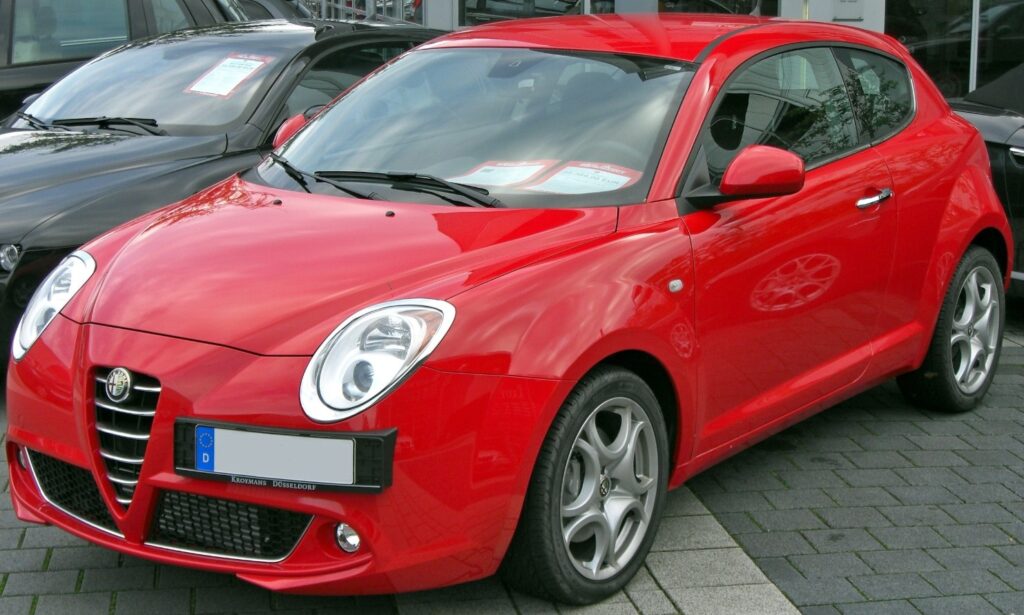
The Alfa Romeo MiTo MPG figures can look almost too good to be true when we browse old brochures and specification sheets. Depending on the engine, official fuel economy ranges from fairly ordinary petrol-hatchback numbers to diesel figures that sound as though the fuel gauge barely moves.
But there is a catch.
The MiTo was sold with a surprisingly broad collection of engines, including naturally aspirated petrol units, turbocharged MultiAir engines, the tiny TwinAir, and several economical JTDm diesels. That means there isn't one meaningful answer to the question, "What MPG does an Alfa Romeo MiTo get?"
A 1.3 JTDm driven gently on a motorway is a completely different animal from a 170 hp Quadrifoglio being pushed along a twisting road.
So, rather than throwing one MPG number at the problem, we're going to look at official Alfa Romeo MiTo fuel economy, realistic MPG expectations, petrol versus diesel consumption, TwinAir economy, MultiAir MPG, motorway performance, city driving, and ways to reduce fuel consumption.
If you're thinking of buying a used MiTo, this matters. A small difference in MPG may not seem dramatic on a test drive, but over thousands of miles it can turn into a sizeable difference at the petrol station.
Content in this publication
- What MPG Does an Alfa Romeo MiTo Get?
- Alfa Romeo MiTo MPG by Engine
- Alfa Romeo MiTo 1.4 MPG
- Alfa Romeo MiTo 1.4 Turbo MPG
- Alfa Romeo MiTo Quadrifoglio MPG
- Alfa Romeo MiTo Diesel MPG
- Alfa Romeo MiTo 1.6 JTDm MPG
- Petrol vs Diesel Alfa Romeo MiTo MPG
- Real-World Alfa Romeo MiTo MPG
- Alfa Romeo MiTo MPG Around Town
- Alfa Romeo MiTo Motorway MPG
- Which Alfa Romeo MiTo Has the Best MPG?
- Is the Alfa Romeo MiTo Fuel Efficient?
- Why Is My Alfa Romeo MiTo MPG So Low?
- How to Improve Alfa Romeo MiTo MPG
- Does Alfa Romeo DNA Mode Affect MPG?
- Does Start & Stop Improve MiTo MPG?
- Alfa Romeo MiTo Fuel Tank and Driving Range
- Is the MiTo TwinAir Really Economical?
- Is a Diesel MiTo Worth Buying for Better MPG?
- What MPG Should You Expect From a Used Alfa Romeo MiTo?
- How to Check MPG Before Buying a MiTo
- Which MiTo Engine Offers the Best Balance?
- Alfa Romeo MiTo MPG: Petrol or Diesel for City Driving?
- Alfa Romeo MiTo MPG: Petrol or Diesel for Motorway Driving?
- Final Thoughts on Alfa Romeo MiTo MPG
- Frequently Asked Questions
What MPG Does an Alfa Romeo MiTo Get?
Depending on the engine and model year, official combined Alfa Romeo MiTo economy can range from roughly the low-40s UK mpg to more than 80 mpg.
The most economical versions are generally the 1.3 JTDm diesel models, while powerful turbocharged petrol versions naturally consume more fuel.
For example, published specifications for some MiTo engines include approximately:
| Alfa Romeo MiTo engine | Approx. official combined economy |
|---|---|
| 0.9 TwinAir | Around 67 mpg UK |
| 1.4 petrol 78 hp | Around 48–50 mpg UK |
| 1.4 MultiAir 105 hp | Around 49 mpg UK |
| 1.4 Turbo MultiAir 135 hp | Around 50 mpg UK |
| 1.4 Turbo 155 hp | Around 43 mpg UK |
| 1.4 MultiAir 170 hp | Around 47 mpg UK |
| 1.3 JTDm | Around 63–83 mpg UK depending on version |
| 1.6 JTDm | Around 59 mpg UK |
These figures should be treated as official laboratory-era numbers rather than guarantees. Most MiTos were homologated under the older NEDC testing system, and actual everyday consumption can be noticeably worse.
That becomes particularly clear with the TwinAir. Owner-submitted data compiled by Honest John puts the real-world average for the regular 0.9 TwinAir at about 40 mpg, despite an official NEDC figure above 67 mpg. Diesel models generally perform closer to their advertised figures.
Alfa Romeo MiTo MPG by Engine
Choosing the right engine is probably the biggest factor determining your MiTo's fuel consumption.
Let's break the range down.
Alfa Romeo MiTo 0.9 TwinAir MPG
The 0.9-litre TwinAir is perhaps the most interesting engine in the MiTo range.
It's tiny.
It has only two cylinders.
And on paper, it looks exceptionally economical.
The 105 PS TwinAir was officially rated at around 4.2 litres per 100 km, equivalent to approximately 67 mpg UK under its original test cycle.
That's excellent for a petrol-powered hatchback.
The trouble is that TwinAir engines are highly sensitive to driving style.
Drive gently, keep the turbo away from constant boost and maintain steady speeds, and fuel economy can be impressive. Drive it enthusiastically and the MPG can tumble surprisingly quickly.
That's almost the TwinAir's personality in a nutshell: it whispers "economy" while quietly tempting us to press the accelerator harder.
Why TwinAir Real MPG Can Be Lower
A small turbocharged engine has to work surprisingly hard when we demand rapid acceleration.
The engine may be physically small, but once the turbo starts supplying boost and we regularly use higher revs, fuel consumption increases.
That's why the official figure shouldn't automatically become our expected everyday MPG.
Owner-reported data illustrates the difference. Honest John's Real MPG database reports averages around 40–41 mpg for the 0.9 TwinAir variants, substantially below their laboratory figures.
So if we're buying a TwinAir specifically to save fuel, a relaxed test drive tells us much more than the number printed in an old brochure.
Alfa Romeo MiTo 1.4 MPG
There were several versions of the 1.4-litre petrol engine, and their fuel economy varies considerably.
The simpler naturally aspirated versions can return respectable economy, while turbocharged engines trade some efficiency for extra performance.
Earlier 78 and 95 hp 1.4 petrol models were officially rated at around 5.9 L/100 km combined, while Start & Stop versions improved slightly.
Translated into UK MPG, that's roughly the high-40s.
It's hardly diesel territory, but for an older petrol supermini, it's perfectly reasonable.
Alfa Romeo MiTo 1.4 MultiAir MPG
MultiAir technology was one of the MiTo's technical highlights.
Rather than treating intake-valve operation as something fixed and mechanical, MultiAir uses sophisticated electro-hydraulic valve control to manage airflow more precisely.
The result was intended to deliver a useful mixture of performance, responsiveness and economy.
A 105 hp 1.4 MultiAir, for example, has published figures of approximately:
- 37.2 mpg UK in urban driving
- 58.9 mpg UK extra-urban
- 48.7 mpg UK combined
That version was rated at 5.8 L/100 km combined.
Those aren't headline-grabbing diesel numbers, but they're decent considering the engine's livelier character.
Alfa Romeo MiTo 1.4 Turbo MPG
Once we move into the more powerful turbo petrol cars, economy becomes less important than performance.
Take the earlier 1.4 Turbo 155 hp.
Its published combined figure is around 6.5 L/100 km, or approximately 43.5 mpg UK, while urban consumption rises to around 8.5 L/100 km.
That's still respectable for a genuinely quick small hatchback.
But drive one hard and you'll quickly discover that the turbocharger doesn't run on enthusiasm alone.
The accelerator becomes something like a tap: open it frequently and the fuel tank empties noticeably faster.
MiTo 135 MultiAir MPG
The 135 hp MultiAir sits in a useful middle ground.
It delivers considerably more urgency than the basic engines without moving fully into hot-hatch territory.
Published figures put consumption at approximately:
- 7.4 L/100 km urban
- 4.5 L/100 km extra-urban
- around 5.6 L/100 km combined
That corresponds to roughly 50 mpg UK combined under the original test cycle.
For someone who wants the MiTo's sporty character without accepting the thirstiest petrol engine, this version can make plenty of sense.
Alfa Romeo MiTo Quadrifoglio MPG
The Quadrifoglio Verde—or Cloverleaf on some UK-market cars—isn't the MiTo we would choose solely to minimise fuel bills.
And that's perfectly fine.
Its 170 hp 1.4 MultiAir engine was built to make the MiTo feel quick and entertaining.
Official consumption for the 170 hp version was around 6.0 L/100 km combined in some specifications, translating to roughly 47 mpg UK under NEDC conditions.
That number looks surprisingly respectable.
Realistically, however, the way these cars tend to be driven matters enormously. Frequent boost, brisk acceleration and short urban journeys can push actual consumption much higher.
We shouldn't buy the sportiest MiTo and then become offended when it behaves like the sportiest MiTo.
Alfa Romeo MiTo Diesel MPG
If sheer fuel economy matters more than engine sound or petrol performance, the diesel MiTos are where things become interesting.
The 1.3 JTDm in particular was capable of outstanding official fuel consumption.
Certain later efficiency-focused versions reached official combined figures of around 80.7–83.1 mpg UK, while other 1.3 JTDm versions were rated in the 60s. Owner-submitted figures compiled by Honest John range from roughly 53 mpg to nearly 70 mpg depending on the diesel version.
That's an important distinction.
An 80-mpg brochure number doesn't necessarily mean we'll achieve 80 mpg every Monday morning.
But a MiTo diesel used on long journeys can still be impressively frugal.
Alfa Romeo MiTo 1.3 JTDm MPG
The 1.3-litre diesel is arguably the economy champion of the range.
One earlier specification produced figures around:
- 48 mpg UK urban
- 72 mpg UK extra-urban
- 63 mpg UK combined
with a 45-litre fuel tank.
Later versions became even more economical on paper.
The particularly efficient 85 and 95 hp JTDm-2 versions could post official consumption around 3.5–3.6 L/100 km in certain configurations.
That's the sort of number that makes long-distance drivers smile.
Is the 1.3 JTDm the Best MiTo for MPG?
In pure fuel-economy terms, yes, it's difficult to beat.
But whether it's the best engine for you is another matter.
A diesel makes much more sense when we regularly cover longer distances. If the car spends its life hopping three miles between home, school, shops and work, buying a diesel solely because its official MPG is higher may be false economy.
Used diesel ownership also brings additional components and maintenance considerations into the equation.
Fuel economy should be part of the buying decision, not the entire decision.
Alfa Romeo MiTo 1.6 JTDm MPG
The larger 1.6 JTDm offers more torque and stronger performance than the 1.3 while remaining economical.
Published figures for the 120 hp version are approximately 5.9 L/100 km urban and 4.1 L/100 km extra-urban, with combined consumption around 4.8 L/100 km in some versions.
That's roughly 59 mpg UK combined.
For frequent motorway driving, the 1.6 can therefore be an appealing compromise.
It doesn't chase every last drop of diesel quite as aggressively as the most economical 1.3, but its additional torque can make overtaking and higher-speed driving feel considerably more effortless.
Petrol vs Diesel Alfa Romeo MiTo MPG
Here's the simple version.
For long journeys and maximum MPG, we'd generally choose the 1.3 JTDm diesel.
For mostly urban use and lower annual mileage, one of the petrol engines may make more sense even if its MPG figure isn't as impressive.
Why?
Because fuel consumption isn't the only cost of running an older car.
Diesel-related maintenance, driving patterns, local emissions regulations, purchase price and mechanical condition all matter.
A beautifully maintained petrol MiTo returning 42 mpg can prove much cheaper to own than a neglected diesel theoretically capable of 65 mpg.
That's why buying on MPG alone is like choosing shoes purely by weight. The number tells us something, but not nearly enough.
Real-World Alfa Romeo MiTo MPG
Official figures and actual consumption are two very different things.
Older MiTos were largely rated using the NEDC test regime, which produced numbers that often proved difficult to reproduce in normal traffic.
Owner-reported data makes this particularly obvious.
Honest John's Real MPG figures list averages of approximately 40 mpg for the 0.9 TwinAir, while several 1.3 JTDm variants achieve averages from the low-50s to almost 70 mpg.
That doesn't mean every owner will obtain those exact numbers either.
Our actual MPG depends on:
- journey length
- average speed
- traffic
- outside temperature
- tyre pressure
- vehicle load
- air-conditioning use
- servicing condition
- wheel and tyre choice
- driving style
Even two identical MiTos driven by different people can return dramatically different fuel economy.
Alfa Romeo MiTo MPG Around Town
Urban driving is the enemy of impressive MPG.
We accelerate.
We brake.
We stop at a light.
We accelerate again.
Then somebody stops in front of us to parallel park.
Every burst of acceleration requires energy, and repeated short journeys often prevent an engine from operating under its most efficient conditions.
Petrol MiTos can easily fall well below their official combined economy during heavy city driving.
Turbocharged versions may be particularly sensitive because enthusiastic acceleration brings boost into the equation.
If we're exclusively driving around town, don't choose an engine because you've seen a glamorous 60-plus-mpg figure online. Look at urban figures and, preferably, owner experiences instead.
Alfa Romeo MiTo Motorway MPG
Motorway driving can reveal a completely different side of the MiTo.
Once we're travelling at a steady speed, there is far less repeated acceleration. That's where the diesel engines shine.
The 1.3 JTDm can be exceptionally economical on a relaxed motorway run, while the 1.6 diesel combines solid fuel economy with extra torque.
Even the petrol cars can produce respectable motorway MPG if we keep our speed sensible.
And that's the important phrase: keep our speed sensible.
Aerodynamic drag rises dramatically as speed increases. Cruising slightly slower can make a surprisingly noticeable difference to fuel use, particularly over several hundred miles.
Which Alfa Romeo MiTo Has the Best MPG?
The winner is generally the 1.3 JTDm-2 diesel, particularly the efficiency-focused 85 and 95 hp versions.
Official numbers for certain variants exceed 80 mpg UK, although real-world economy is typically lower.
If we ranked MiTo engines purely for economy, the broad order would look something like this:
- 1.3 JTDm/JTDm-2 – best overall fuel economy
- 1.6 JTDm – excellent motorway economy with stronger performance
- 0.9 TwinAir – excellent official numbers but highly dependent on driving style
- Lower-powered 1.4 petrol engines – reasonable and relatively straightforward
- 1.4 MultiAir turbo engines – good balance of economy and performance
- Higher-performance turbo models – respectable economy, but MPG isn't their main purpose
Of course, individual versions overlap.
Model year, gearbox, power output and Start & Stop technology can all change the official number.
Is the Alfa Romeo MiTo Fuel Efficient?
Yes—especially considering when it was designed.
The MiTo entered production in 2008 and remained available for roughly a decade.
Its diesel engines can still return fuel economy that looks competitive by used-car standards.
Petrol models vary more.
The basic 1.4 is adequate, MultiAir versions balance performance and consumption well, and TwinAir models can be economical when driven gently.
The important thing is matching expectations to the engine.
Expecting diesel-style economy from a turbocharged performance MiTo while constantly using its power is a recipe for disappointment.
Why Is My Alfa Romeo MiTo MPG So Low?
If your MiTo suddenly seems thirstier than expected, don't immediately assume something expensive has failed.
Start with the basics.
Check Tyre Pressures
Underinflated tyres increase rolling resistance.
The engine then has to work harder just to move the car along the road.
Check the pressures against the specification for your particular wheel size and vehicle load rather than guessing.
Think About Your Driving Pattern
Ten short journeys are usually less efficient than one long journey covering the same total distance.
If your commute recently changed from a 30-mile motorway journey to a five-mile urban crawl, lower MPG isn't surprising.
Watch Your Right Foot
Turbocharged engines reward smooth acceleration.
Stamping on the accelerator at every opportunity forces the engine to deliver power, and power requires fuel.
The MiTo's DNA driving modes can also encourage us to explore its more energetic personality.
Great for smiles.
Not quite as great for MPG.
Keep the Car Properly Serviced
Old spark plugs, dirty filters, incorrect oil, sensor problems and other mechanical issues can influence fuel consumption.
If economy has changed dramatically without an obvious change in driving conditions, having the car checked makes sense.
Don't Trust the Dashboard Completely
The trip computer is useful, but the most reliable way to calculate real-world MPG is manually.
Fill the tank.
Reset the trip meter.
Drive normally.
At the next fill-up, record how much fuel you've used and the distance travelled.
Repeat the process over several tanks.
One tank can be distorted by weather, traffic or an unusual journey. Several tanks give us a much clearer picture.
How to Improve Alfa Romeo MiTo MPG
We don't need to drive like there's an egg taped underneath the accelerator pedal.
A few sensible habits can make a genuine difference.
Try to:
- accelerate progressively rather than aggressively
- anticipate traffic and avoid unnecessary braking
- maintain correct tyre pressures
- remove unnecessary heavy items from the car
- use the highest appropriate gear without labouring the engine
- maintain a steady motorway speed
- avoid unnecessary idling
- service the engine at appropriate intervals
- investigate warning lights promptly
- measure MPG across multiple tanks
Smoothness is usually the secret.
Think of economical driving like carrying a full cup of coffee without a lid. Sudden acceleration, braking and sharp movements are exactly what we're trying to eliminate.
Does Alfa Romeo DNA Mode Affect MPG?
It can.
The MiTo's Alfa DNA system changes the way the car responds depending on the selected mode.
Dynamic mode sharpens the driving experience and can encourage stronger acceleration. Natural mode is better suited to everyday driving, while the precise modes offered differ across versions and years.
The button itself doesn't magically drain the fuel tank.
Our behaviour does.
If sharper throttle response encourages us to accelerate harder and stay on boost more frequently, consumption naturally rises.
So when economy matters, smoother operation is our friend.
Does Start & Stop Improve MiTo MPG?
Start & Stop is primarily useful when we spend time stationary in traffic.
Instead of leaving the engine running unnecessarily, the system can stop it automatically and restart it when required.
The potential saving is therefore greatest in urban use.
On a 200-mile motorway journey where we barely stop, its contribution is essentially irrelevant.
That's why two owners of the same Start & Stop MiTo might have completely different opinions about its usefulness.
Their driving environments may simply be different.
Alfa Romeo MiTo Fuel Tank and Driving Range
Many MiTo versions use a fuel tank of around 45 litres. Published specifications for the 1.3 JTDm, for instance, list a 45-litre capacity.
Real driving range therefore depends enormously on fuel economy.
A diesel averaging around 60 mpg UK can travel considerably farther between fills than a petrol model averaging around 35–40 mpg.
But we shouldn't calculate our maximum road-trip range by multiplying the theoretical tank capacity by official MPG and expect to reach the destination on fumes.
Real traffic exists.
So do diversions, hills, headwinds and service stations mysteriously appearing ten miles after we actually need one.
Leave a sensible reserve.
Is the MiTo TwinAir Really Economical?
This question deserves special attention because the TwinAir's reputation can be confusing.
On paper?
Absolutely.
In everyday driving?
Potentially.
But it depends heavily on the person behind the wheel.
Official figures around 67 mpg UK look spectacular, while owner-reported averages around 40 mpg demonstrate how large the gap can become.
Why such a dramatic difference?
Because extracting performance from a tiny turbo engine requires it to work hard.
If we drive gently, the small capacity works in our favour.
If we constantly demand boost, the theoretical efficiency advantage can disappear like ice cream on a hot pavement.
TwinAir buyers should therefore test the car on roads similar to those they'll actually use.
Is a Diesel MiTo Worth Buying for Better MPG?
It can be—but mileage matters.
Imagine Driver A covers 4,000 miles per year, mostly around town.
Driver B covers 18,000 miles per year, much of it on fast roads and motorways.
Driver B has far more opportunity to benefit financially from a diesel's superior economy.
Driver A may save so little fuel that the difference isn't worth choosing a diesel purely on MPG.
We should also remember that every MiTo is now a used car.
Condition matters more each year.
Service history, previous ownership, mileage, mechanical health and evidence of proper maintenance can all be more important than a few theoretical MPG points.
What MPG Should You Expect From a Used Alfa Romeo MiTo?
Rather than expecting one exact figure, use a sensible range.
For mixed everyday driving, a petrol MiTo may broadly land somewhere in the high-30s to 40s mpg UK, depending heavily on the engine and driving style.
A diesel can reasonably move into the 50s and 60s, with particularly economical examples and favourable long-distance conditions potentially doing better.
These aren't guarantees.
They're expectations.
And expectations are much more useful when shopping for a 10- to 18-year-old vehicle than pretending every car still performs exactly as it did during laboratory certification.
How to Check MPG Before Buying a MiTo
A short test drive can't establish precise fuel economy, but it can reveal warning signs.
Check the dashboard's average consumption if it hasn't recently been reset.
Then look at the average speed.
Those two figures together tell us much more.
A car showing 35 mpg with an average speed of 14 mph may simply have spent its life crawling through traffic.
A diesel showing poor economy despite a high average speed deserves more investigation.
Also ask about the previous owner's typical journeys.
That casual question can reveal a surprising amount.
Which MiTo Engine Offers the Best Balance?
Pure economy and overall usability aren't always the same thing.
For high-mileage drivers, we'd strongly consider the 1.3 JTDm.
For people wanting stronger diesel performance, the 1.6 JTDm offers an attractive combination of torque and efficiency.
For lower-mileage petrol buyers, the 1.4 MultiAir can be an enjoyable compromise.
The TwinAir has charm by the bucketful and good theoretical economy, but we'd buy one because we enjoy its character rather than solely because an old brochure promises spectacular MPG.
And if performance is the priority?
The stronger MultiAir and Quadrifoglio versions bring much more excitement to the table, and accepting slightly higher fuel consumption is simply part of the bargain.
Alfa Romeo MiTo MPG: Petrol or Diesel for City Driving?
For repeated short urban journeys, petrol usually deserves serious consideration.
Diesels produce their biggest MPG advantage when they're properly warmed up and travelling efficiently over longer distances.
Meanwhile, a petrol MiTo is well suited to lower annual mileage and shorter journeys.
Again, we're looking at the entire ownership experience—not awarding a trophy to whichever specification sheet contains the largest number.
A 15 mpg theoretical advantage means little if your annual mileage is tiny.
Alfa Romeo MiTo MPG: Petrol or Diesel for Motorway Driving?
Now the equation changes.
Regular motorway mileage plays directly into the diesel MiTo's strengths.
Both JTDm engines can provide excellent cruising economy, with the 1.3 prioritising maximum efficiency and the 1.6 offering additional performance.
Someone travelling hundreds of motorway miles every week will notice the difference much more than an occasional driver.
This is where those diesel MPG figures become genuinely meaningful rather than simply impressive numbers on a screen.
Final Thoughts on Alfa Romeo MiTo MPG
The Alfa Romeo MiTo MPG story is more complicated—and more interesting—than a single fuel-economy figure suggests.
At one extreme, we have highly economical 1.3 JTDm diesels with official figures exceeding 80 mpg UK in certain versions. At the other, we have sporty turbo petrol cars that sacrifice some economy in exchange for considerably more performance.
Between them sits almost everything else.
The TwinAir demonstrates perhaps the most important lesson. Official economy can look spectacular, yet real-world fuel consumption depends enormously on how and where we drive.
So which MiTo would we choose?
For maximum MPG and plenty of long-distance driving, the 1.3 JTDm is difficult to ignore.
For stronger motorway performance, the 1.6 JTDm makes sense.
For moderate mileage and petrol simplicity, a well-maintained 1.4 deserves consideration.
And if driving pleasure matters as much as what we're spending at the pump, the stronger MultiAir models remind us why people buy Alfa Romeos in the first place.
Ultimately, the most economical MiTo isn't necessarily the one with the highest number in the brochure.
It's the one whose engine, condition and driving characteristics actually fit the way we use our car.
Frequently Asked Questions
1. What is the average MPG of an Alfa Romeo MiTo?
It varies dramatically by engine. Petrol MiTos commonly offer official combined figures somewhere around the high-40s to 60-plus mpg UK depending on specification, while some diesel versions were officially rated above 80 mpg. Real-world consumption is generally lower than older NEDC figures suggest.
2. Which Alfa Romeo MiTo has the best MPG?
The 1.3 JTDm-2 diesel is generally the most fuel-efficient MiTo. Certain 85 and 95 hp versions achieved official combined figures above 80 mpg UK, although normal real-world results are typically lower.
3. What MPG does the Alfa Romeo MiTo TwinAir get?
Official figures for some 0.9 TwinAir versions sit around 67 mpg UK. However, owner-reported data suggests real-world averages closer to roughly 40–41 mpg for certain versions, showing how strongly TwinAir consumption depends on driving style.
4. Is the Alfa Romeo MiTo diesel economical?
Yes. The 1.3 JTDm is particularly economical and can return excellent long-distance fuel consumption. The 1.6 JTDm also performs well while offering extra torque and stronger performance.
5. Why is my Alfa Romeo MiTo using too much fuel?
Low MPG can result from short journeys, heavy traffic, aggressive acceleration, low tyre pressures, cold weather, unnecessary vehicle weight or mechanical problems. Compare consumption across several full tanks before deciding there's a fault.
If you want to know other articles similar to Alfa Romeo MiTo MPG: Real-World Fuel Economy Guide you can visit the category Driving.
Kia Sorento Fuel Economy: MPG, Hybrid, and Plug-In Hybrid Explained
BYD Shark 6 Fuel Consumption: Real-World Economy, Range and What to Expect
Vauxhall Agila MPG: Real-World Fuel Economy and Engine Guide

Honda Passport MPG: Real-World Fuel Economy, Ratings, and What to Expect

Nissan Rogue Fuel Economy: MPG, Range, Costs, and Real-World Efficiency
BYD Shark 6 Long Range Fuel Tank: Is the 120L Upgrade Worth It?
Leave a Reply
More content of your interest