

Nissan Frontier vs Honda Ridgeline: Which Midsize Truck Wins?

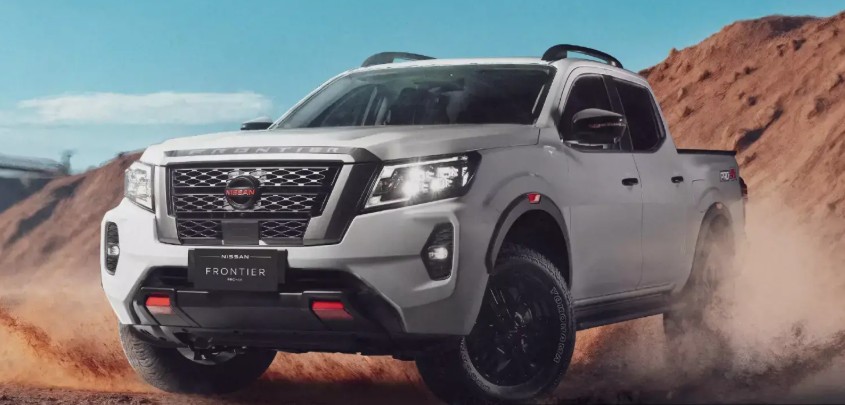
The Nissan Frontier vs Honda Ridgeline comparison is unusual because, although both vehicles sit in the midsize pickup world, they approach the job from opposite directions. The Frontier is the more traditional truck: rugged frame, available 4x4 hardware, muscular styling, and towing capability that encourages us to hook up a trailer and head somewhere dusty. The Ridgeline takes a different road. It blends pickup practicality with SUV-like comfort, clever cargo solutions, and road manners that make everyday driving feel remarkably easy.
So, which one is actually better?
That depends on what we expect a pickup to do.
For 2026, Nissan equips the Frontier with a standard 310-horsepower 3.8-liter V6 and nine-speed automatic transmission, while maximum towing capacity reaches approximately 7,150 pounds, depending on configuration. The Honda Ridgeline uses a 280-horsepower V6, standard all-wheel drive, and carries a maximum tow rating of 5,000 pounds.
Those figures tell part of the story, but numbers alone cannot explain these trucks. The Frontier feels like it wants Saturday morning to begin at a hardware store and end beside a mountain trail. The Ridgeline feels like it would happily do the same trip while keeping our coffee steady and our backs noticeably happier.
Let's dig deeper.
Content in this publication
- Nissan Frontier vs Honda Ridgeline at a Glance
- Performance: Two V6 Engines, Two Different Personalities
- Towing Capacity: Frontier Takes a Clear Lead
- Payload Capacity: Much Closer Than Towing
- Body-on-Frame vs Unibody: The Difference Beneath the Skin
- Ride Comfort: The Honda's Secret Weapon
- Handling and Steering
- Off-Road Capability: Frontier Fights Back Hard
- Cargo Bed Design: Honda Gets Creative
- Interior Space and Passenger Comfort
- Interior Design and Everyday Usability
- AWD vs 4WD: Don't Confuse the Two
- Fuel Economy and Daily Running Costs
- Parking and City Driving
- Work Truck Capability
- Adventure and Camping
- Styling: Rugged vs Refined
- Reliability: Which Truck Should Age Better?
- Frontier vs Ridgeline for Families
- Frontier vs Ridgeline for Towing
- Frontier vs Ridgeline for Off-Roading
- Frontier vs Ridgeline for Daily Driving
- Which Is Better Value?
- Who Should Buy the Nissan Frontier?
- Who Should Buy the Honda Ridgeline?
- Nissan Frontier vs Honda Ridgeline: Final Verdict
- Frequently Asked Questions
Nissan Frontier vs Honda Ridgeline at a Glance
Before we disappear into suspension designs, cargo beds, and towing numbers, here's the personality test.
The Frontier is generally the better fit if we prioritize:
- Traditional pickup construction
- Higher maximum towing capability
- Stronger off-road potential
- Available 4x4 configurations
- Multiple cab and bed combinations
- A more rugged, old-school truck feel
The Ridgeline makes more sense if we value:
- Smooth everyday driving
- Standard AWD
- A spacious, comfortable cabin
- Clever cargo storage
- An innovative dual-action tailgate
- A lockable In-Bed Trunk
- SUV-like road manners
Neither formula is wrong. They're simply solving the pickup-truck problem from opposite ends.
Performance: Two V6 Engines, Two Different Personalities
Nissan Frontier Engine and Power
The 2026 Nissan Frontier comes standard with a 3.8-liter V6 producing 310 horsepower, paired with a nine-speed automatic transmission.
That 310-horsepower figure gives the Nissan a healthy advantage on paper.
More importantly, Nissan hasn't reserved the V6 for expensive trims. The basic recipe remains consistent across the lineup, which simplifies the buying decision. We don't have to climb several trim levels merely to obtain the engine we'd actually want.
The Frontier feels appropriately muscular for a midsize truck. Acceleration isn't sports-car dramatic, but that's hardly the point. The engine works more like a sturdy pair of hiking boots than racing shoes—strong, predictable, and comfortable dealing with work.
Honda Ridgeline Engine and Power
Honda takes a similarly uncomplicated approach.
The 2026 Ridgeline uses a 3.5-liter V6 producing 280 horsepower, and Honda lists maximum towing capacity at 5,000 pounds.
On paper, the Ridgeline gives away 30 horsepower to the Frontier.
Does that make it feel slow?
Not really.
The Honda's powertrain is well suited to normal suburban and highway driving, and its character feels smoother than aggressive. Instead of shouting about horsepower every time we touch the accelerator, the Ridgeline simply gets moving.
Which Engine Wins?
For raw output and truck-oriented capability, we'd give the advantage to the Frontier.
For smoothness in ordinary driving, however, the Ridgeline makes a compelling case.
Towing Capacity: Frontier Takes a Clear Lead
This is one of the simplest categories in the entire Nissan Frontier vs Honda Ridgeline debate.
Nissan lists the 2026 Frontier at up to roughly 7,150 pounds of maximum towing capacity, although the exact figure depends on cab, drivetrain, and trim.
Honda rates the 2026 Ridgeline at a maximum of 5,000 pounds.
That's a difference of more than 2,000 pounds in their maximum ratings.
What Does That Difference Mean in Real Life?
If we're pulling modest utility trailers, motorcycles, smaller boats, or lightweight campers, either truck may provide adequate capability when properly equipped.
Start moving toward heavier recreational trailers or work equipment, though, and the Nissan's additional margin becomes valuable.
Towing isn't merely about whether a truck can technically move the trailer. Extra capacity can make selecting a suitable configuration easier while giving us more breathing room within the manufacturer's limits.
Honda even notes that premium unleaded fuel is recommended when towing more than 3,500 pounds with the Ridgeline.
Towing Winner: Nissan Frontier
If trailers regularly appear in our weekend plans, the Frontier is the obvious choice between these two.
Payload Capacity: Much Closer Than Towing
Interestingly, the Ridgeline fights back when we move from towing to carrying.
Honda publishes payload ratings ranging by trim, with the 2026 Ridgeline topping out at 1,583 pounds. Nissan lists Frontier maximum payload capability at up to approximately 1,620 pounds, depending on configuration.
That means the maximum figures are remarkably close.
And this is an important reminder: towing capacity and payload capacity are not interchangeable.
Put four adults, luggage, camping equipment, coolers, bicycles, accessories, and tongue weight from a trailer into the equation, and payload can disappear surprisingly quickly.
Anyone buying either vehicle for serious hauling should therefore check the yellow payload label on the specific truck instead of relying solely on advertising maximums.
Body-on-Frame vs Unibody: The Difference Beneath the Skin
Here's where the personalities really separate.
Frontier: Traditional Truck Philosophy
The Frontier follows traditional pickup logic, using the kind of rugged truck architecture associated with towing, hauling, and off-road work. Nissan specifically promotes the Frontier's fully boxed ladder frame as part of its towing-oriented design.
That construction contributes to the Frontier's unmistakable truck character.
You feel it.
The driving position, body motions, steering, and suspension constantly remind us that we're piloting a pickup rather than an SUV wearing a cargo bed as a backpack.
For traditional truck buyers, that's exactly the appeal.
Ridgeline: SUV-Like Approach
The Ridgeline takes a fundamentally different path.
Its architecture and suspension philosophy prioritize passenger comfort, handling stability, packaging efficiency, and everyday usability.
The result feels less like a scaled-down work truck and more like a crossover that discovered a surprisingly useful pickup bed.
Does Unibody Make the Ridgeline Less of a Truck?
That's the argument people love having at barbecues.
In practical terms, the answer doesn't matter much.
If the Ridgeline does everything we need—hauls our gear, pulls our trailer, transports the family, and gets through bad weather—calling it “less of a truck” becomes little more than semantics.
But if we need heavier towing or regularly encounter rough off-road terrain, construction differences begin to matter substantially.
Ride Comfort: The Honda's Secret Weapon
If we drive both trucks back-to-back over broken pavement, expansion joints, and city streets, the Ridgeline's strongest advantage becomes obvious.
It simply behaves more like a passenger vehicle.
The Frontier isn't unbearably rough. Far from it. Modern Frontiers are far more civilized than old compact pickups that bounced over potholes like shopping carts with engines.
Still, its traditional truck architecture cannot completely disguise itself.
The Ridgeline generally feels more settled, especially when the bed is empty.
Which Truck Would We Choose for a Long Commute?
Ridgeline.
Pretty easily.
Imagine a Monday-Friday schedule involving school runs, office commutes, supermarkets, parking garages, and perhaps two actual truck-related tasks every month.
In that scenario, the Ridgeline starts looking very clever.
Why accept a more cumbersome daily driving experience just to preserve capabilities we rarely use?
Handling and Steering
The same philosophy carries into corners.
The Honda feels planted and predictable, with road manners closer to a midsize SUV than a conventional pickup.
The Frontier feels taller and more traditional.
Neither is attempting to become a sports car—and thankfully so—but the Ridgeline's handling can make narrow city streets and winding highways less tiring.
Think of it this way.
The Frontier walks into the room wearing work boots.
You may be interested in reading Nissan Frontier vs Titan: Which Nissan Truck Fits You Best?
The Ridgeline arrives in comfortable trainers.
Both can get dirty, but only one of them was designed around comfort from the beginning.
Off-Road Capability: Frontier Fights Back Hard
Move away from smooth pavement and the comparison changes dramatically.
Nissan offers the Frontier with available 4x4 capability, and models such as the PRO-4X are specifically aimed at drivers who want additional trail capability. Nissan highlights the Frontier's 4x4 hardware as one of the truck's central performance attributes.
Honda offers the Ridgeline TrailSport for buyers who want a more adventurous version of the truck, but its mission remains different.
Frontier PRO-4X vs Ridgeline TrailSport
If we're talking about muddy trails, rocks, deep ruts, or repeated off-road adventures, our money would go toward the Frontier PRO-4X.
The Ridgeline TrailSport is better understood as an adventure-focused everyday pickup rather than a hardcore rock crawler.
That's not criticism.
Most “off-roading” in real life means gravel roads, campsites, snow, muddy trailheads, and moderately rough access roads. For those conditions, the Honda can be entirely suitable.
But when terrain becomes genuinely difficult, the Nissan feels closer to its natural habitat.
Off-Road Winner: Nissan Frontier
No surprise here.
Cargo Bed Design: Honda Gets Creative
The Frontier's bed behaves like a traditional truck bed.
Honda asks a different question: what if the bed itself could be dramatically more useful?
The Ridgeline includes one of its signature features, the lockable In-Bed Trunk, plus a lay-flat bed design and a dual-action tailgate that can either fold downward conventionally or swing open sideways.
Those aren't gimmicks.
They're genuinely useful.
Picture buying groceries on a rainy afternoon. Instead of throwing bags into the cab or leaving them sliding around the bed, we can place them inside the secure trunk.
Going camping?
Dirty boots, recovery straps, or wet equipment can live beneath the bed floor instead of beside passengers.
Tailgating?
The Ridgeline practically seems designed around the activity.
Frontier Bed Options
The Nissan counters with versatility of a different type.
Several Frontier configurations offer a roughly 59.5-inch bed, while available long-bed Crew Cab configurations stretch cargo length to about 73.3 inches.
That longer physical cargo floor can be more valuable than Honda's cleverness if our priorities include tools, building materials, motorcycles, landscaping equipment, or bulky loads.
Cargo Winner Depends on the Job
For clever storage: Ridgeline.
For traditional pickup-bed versatility: Frontier.
Interior Space and Passenger Comfort
The Ridgeline's SUV DNA pays dividends inside.
This is the truck we'd rather use when passengers regularly occupy the rear seats. The cabin feels designed around humans first and cargo second.
The Frontier's interior is functional and considerably more modern than Frontiers of decades past, but rear-seat space in conventional midsize pickups can still feel tighter than we'd like on long trips.
Nissan lists approximately 33.2 inches of rear legroom in several 2026 Crew Cab Frontier configurations.
That may be perfectly adequate for children or occasional adult passengers.
For four adults regularly traveling together, we'd lean toward the Honda.
Interior Design and Everyday Usability
Both trucks avoid turning their dashboards into science-fiction control centers, and that's welcome.
Pickup interiors should work when we're wearing gloves, carrying coffee, or trying to adjust something without scrolling through five touchscreen menus.
The Frontier's cabin suits its rugged exterior. The controls generally feel straightforward, and higher trims add enough comfort and technology to stop the truck from feeling bare-bones.
The Ridgeline feels more like a well-equipped Honda SUV inside.
If our idea of luxury is having a cabin that simply makes sense rather than one covered in glittering screens, both trucks understand the assignment.
Still, the Honda feels slightly more refined overall.
AWD vs 4WD: Don't Confuse the Two
Honda gives the Ridgeline a sophisticated AWD system designed to distribute power effectively during normal driving and changing traction conditions.
That's excellent for rain, snow, slippery pavement, dirt roads, and everyday confidence.
The Frontier's available 4x4 setup is more aligned with conventional truck demands.
These systems overlap, but they're not identical in purpose.
Choose Ridgeline AWD If We Mostly Face:
Wet highways, snowy streets, gravel roads, campsites, slippery boat ramps, and moderate trails.
Choose Frontier 4x4 If We Regularly Face:
Rutted trails, deeper mud, rocky terrain, rough access roads, steeper off-road conditions, and more demanding recreational use.
This may be the simplest way to decide between them.
Fuel Economy and Daily Running Costs
Traditional body-on-frame trucks rarely win medals for fuel efficiency.
The Ridgeline's more road-oriented design helps make it appealing to someone who drives substantial mileage but still needs pickup utility.
Exact EPA ratings vary by configuration, so shoppers should compare the specific trims they are considering rather than relying on a single generic number.
But there's a broader lesson here.
If we tow six or seven thousand pounds regularly, worrying excessively about one or two miles per gallon may miss the point. We need the capability first.
If we spend 95% of our time commuting with an empty bed, operating efficiency and comfort suddenly matter much more.
This is why the “better truck” cannot be separated from how we actually live.
Parking and City Driving
Neither vehicle is tiny, but the Ridgeline generally feels friendlier in an urban environment because of its road-focused demeanor.
The Frontier isn't difficult to drive, yet long-bed variants become noticeably truck-like in tight spaces. Nissan lists the 2026 Crew Cab long-bed Frontier at approximately 224.1 inches overall, versus around 210.2 inches for several short-bed Crew Cab configurations.
Fourteen inches may not sound dramatic until we're reversing into the last available parking space downtown.
Anyone living in a dense city should think carefully before automatically selecting the longest bed available.
Work Truck Capability
The Frontier has the stronger argument here.
Nissan offers bed configurations and work-oriented capability that make it easier to imagine the truck carrying tools every day, pulling equipment, or serving as a fleet vehicle. Nissan itself promotes long-bed Frontier models for trades and commercial applications, citing the available 73.3-inch bed and flexible interior storage.
The Ridgeline can certainly work.
But its sweet spot is different.
We see it as ideal for people who need pickup functionality without necessarily running a pickup-intensive business.
Architects, homeowners, cyclists, photographers, outdoor enthusiasts, DIY renovators, and families who occasionally haul bulky items may love it.
For contractors towing equipment several times a week, the Frontier makes more sense.
Adventure and Camping
Here's where the decision gets interesting again.
For aggressive off-road camping, the Frontier wins.
For comfortable road trips that end at campsites, the Ridgeline can arguably be better.
You may be interested in readingNissan Frontier vs Titan: Which Nissan Truck Fits You Best?You may be interested in reading
Nissan Frontier vs Tacoma: Which Midsize Truck Is Better?Why?
Because camping involves more than crossing rocks.
It may involve five hours of highway driving, coolers, folding chairs, bicycles, food, luggage, children, wet equipment, and countless little objects that somehow multiply during every trip.
Honda's In-Bed Trunk and wide, practical cargo area shine in precisely those situations.
So we might summarize it this way:
Frontier for reaching the harder campsite. Ridgeline for making the journey to the campsite easier.
Styling: Rugged vs Refined
Looks are subjective, but these trucks aren't trying to communicate the same message.
The Frontier has square shoulders and traditional pickup proportions. It looks ready for work even when parked outside a coffee shop.
The Ridgeline's styling has become more rugged over time, but the basic proportions remain softer and more integrated.
Some buyers will see that sophistication.
Others will see an SUV with a bed.
Neither camp is objectively correct.
Our recommendation?
Buy the one that makes you glance back at it after parking. We spend too much money on vehicles to feel indifferent about how they look.
Reliability: Which Truck Should Age Better?
Both Nissan and Honda have long histories with naturally aspirated V6 engines, but predicting the future reliability of any specific 2026 vehicle would be irresponsible.
Maintenance matters.
Driving conditions matter.
Towing frequency matters.
Rust exposure matters.
And one poorly maintained “reliable model” can become far more troublesome than a carefully maintained supposedly average one.
For long-term ownership, we'd concentrate on regular servicing, fluid changes, corrosion prevention, sensible towing practices, and avoiding neglected examples when shopping used.
A badge doesn't replace maintenance.
Frontier vs Ridgeline for Families
The Ridgeline wins this category for us.
A family truck has to be more than capable.
It has to deal with child seats, shopping bags, luggage, school backpacks, stop-and-go traffic, highway journeys, and the strange amount of stuff families generate from seemingly nowhere.
Honda's combination of cabin comfort and hidden bed storage is unusually well suited to that lifestyle.
The Frontier works as a family vehicle too, especially in Crew Cab form.
But if family duty dominates and truck duty happens occasionally, the Ridgeline fits the mission better.
Frontier vs Ridgeline for Towing
Frontier.
No complicated argument required.
Its maximum tow rating of roughly 7,150 pounds substantially exceeds Honda's 5,000-pound maximum.
Remember, however, that maximum numbers refer to specific configurations and properly equipped vehicles. Always verify the exact truck's ratings, trailer weight, tongue weight, payload, and gross combined limits before towing.
Frontier vs Ridgeline for Off-Roading
Again, Frontier.
The Nissan's conventional truck construction and available 4x4-oriented models make it the better foundation for drivers who genuinely intend to leave pavement regularly.
The Ridgeline can certainly explore dirt and snow.
The Frontier simply has a higher ceiling when the road becomes a suggestion rather than a road.
Frontier vs Ridgeline for Daily Driving
Ridgeline.
This is arguably the Honda's greatest advantage.
If our truck will spend Monday through Friday behaving like a car, why shouldn't it drive more like one?
The Ridgeline turns that question into its entire philosophy.
Which Is Better Value?
Value isn't simply the lowest sticker price.
A Frontier is better value if we actually use its towing and off-road advantages.
A Ridgeline is better value if comfort, passenger space, AWD, and clever storage improve our life every single day.
Buying capability we never use is like purchasing hiking boots to walk across the living room.
Likewise, buying the more comfortable truck and then discovering it cannot safely tow our trailer isn't smart economy either.
The best value is the vehicle whose capabilities align most closely with our routine.
Who Should Buy the Nissan Frontier?
Choose the Frontier if we:
- Regularly tow heavier trailers.
- Want traditional body-on-frame truck behavior.
- Spend meaningful time off-road.
- Need available long-bed configurations.
- Prefer a rugged, conventional pickup experience.
- Plan to use the truck for work.
- Simply enjoy driving something that feels unmistakably like a truck.
The Frontier doesn't try to reinvent the pickup.
It tries to be a good pickup.
There's something refreshingly straightforward about that.
Who Should Buy the Honda Ridgeline?
Choose the Ridgeline if we:
- Commute daily in our truck.
- Carry passengers frequently.
- Tow less than 5,000 pounds.
- Appreciate clever cargo storage.
- Want standard AWD.
- Need a pickup bed but don't require hardcore truck capability.
- Prioritize comfort and refinement over maximum ruggedness.
The Ridgeline's brilliance comes from understanding that many pickup owners don't spend every afternoon pulling excavators through forests.
Sometimes we just need to transport bikes on Saturday and survive traffic on Monday.
Nissan Frontier vs Honda Ridgeline: Final Verdict
The Nissan Frontier vs Honda Ridgeline battle doesn't produce one universal winner because these pickups answer different questions.
The Nissan Frontier is the truck we'd choose for heavier towing, demanding trails, work duties, and traditional pickup capability. Its 310-horsepower V6, available 4x4 hardware, long-bed configurations, and maximum towing capacity around 7,150 pounds give it a substantial advantage when the job becomes serious.
The Honda Ridgeline is the truck we'd choose for daily life. Its 280-horsepower V6, standard AWD, 5,000-pound towing capacity, versatile bed, dual-action tailgate, and lockable In-Bed Trunk create one of the most practical pickup packages for buyers who spend far more time on pavement than off it.
If we had to reduce the entire comparison to one sentence, it would be this:
Buy the Frontier when truck capability is the priority; buy the Ridgeline when everyday usability is the priority.
The Frontier is a pickup that has learned to be comfortable.
The Ridgeline is a comfortable vehicle that has learned to be a pickup.
And choosing between them really comes down to which side of that sentence sounds more like us.
Frequently Asked Questions
Is the Nissan Frontier better than the Honda Ridgeline?
The Nissan Frontier is better for buyers prioritizing maximum towing capability, traditional truck construction, and more demanding off-road use. The Honda Ridgeline is generally better suited to drivers emphasizing comfort, passenger friendliness, clever cargo storage, and everyday road use. The better vehicle therefore depends on how we intend to use it.
Which can tow more, the Frontier or Ridgeline?
The Frontier wins. Nissan lists 2026 Frontier towing capability at up to roughly 7,150 pounds, depending on configuration, whereas the 2026 Honda Ridgeline is rated to tow up to 5,000 pounds.
Is the Honda Ridgeline good for off-roading?
The Ridgeline can handle gravel roads, snow, campsites, muddy access roads, and moderate trail use, particularly in adventure-oriented configurations. Buyers planning tougher and more frequent off-road driving will generally find the Frontier's traditional truck platform and available 4x4-oriented models more appropriate.
Which is better for commuting, Frontier or Ridgeline?
We'd choose the Ridgeline. Its driving character is more passenger-car-like, making it especially attractive for owners whose pickup spends most of its life on pavement. The Frontier remains perfectly usable every day but retains more of the movement and personality associated with a conventional truck.
Should I buy a Frontier or Ridgeline for camping?
Choose the Frontier if camping trips involve rough trails, heavier trailers, or serious off-road terrain. Choose the Ridgeline if trips involve long highway drives, family passengers, bicycles, coolers, and organized cargo. Honda's lockable In-Bed Trunk and dual-action tailgate are particularly convenient for recreational use.
You may be interested in readingNissan Frontier vs Titan: Which Nissan Truck Fits You Best?You may be interested in reading
Nissan Frontier vs Tacoma: Which Midsize Truck Is Better?You may be interested in reading
Nissan Frontier vs GMC Canyon: Which Midsize Truck Wins?If you want to know other articles similar to Nissan Frontier vs Honda Ridgeline: Which Midsize Truck Wins? you can visit the category Models.
Kia Sorento Models: Complete Guide to Trims, Engines and Versions
BYD Shark 6 vs Ranger vs HiLux: Which Ute Makes the Most Sense in 2026?
BYD Shark 6 vs MG U9: Which Ute Makes More Sense in 2026?
BYD Shark 6 vs Ford Ranger Raptor: Which Performance Ute Is Better in 2026?
BYD Shark 6 vs Kia Tasman: Which Ute Is Better?
BYD Shark 6 vs 7: What We Know So Far
Leave a Reply
More content of your interest