

Nissan Frontier vs GMC Canyon: Which Midsize Truck Wins?

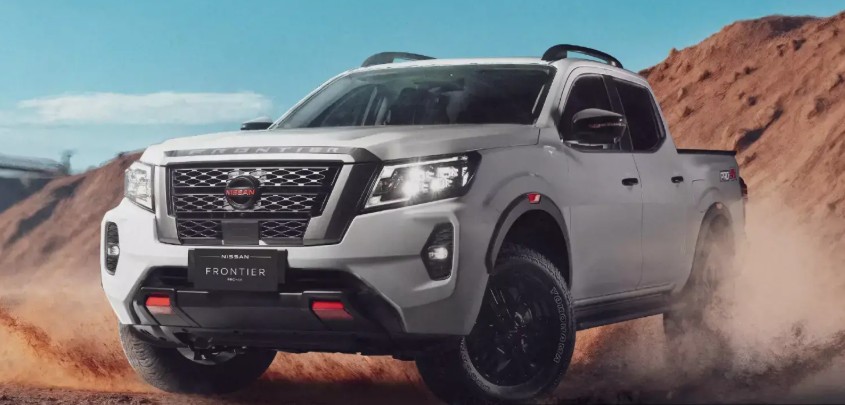
Choosing between the Nissan Frontier vs GMC Canyon is a little like deciding between a sturdy pair of work boots and a high-tech hiking boot. Both are tough, capable, and ready to get dirty, but they approach the midsize-truck formula from noticeably different directions.
For 2026, the matchup is especially interesting because both trucks produce 310 horsepower, yet the way they deliver their muscle is dramatically different. The Frontier sticks with a naturally aspirated 3.8-liter V6 and a nine-speed automatic transmission, while the Canyon uses GMC's turbocharged TurboMax four-cylinder paired with an eight-speed automatic. The Frontier produces 281 lb-ft of torque, while the Canyon pumps out a much stronger 430 lb-ft.
So, is bigger turbo torque automatically better? Not necessarily. Trucks are about much more than one number. We also need to consider towing, payload, off-road capability, interior comfort, technology, everyday drivability, simplicity, and good old-fashioned personality.
Let's put these two midsize pickups side by side and find out which one makes more sense for different types of buyers.
Content in this publication
- Nissan Frontier vs GMC Canyon: Quick Comparison
- Engine Battle: Old-School V6 vs Turbocharged Muscle
- GMC Canyon: Turbo Torque Changes Everything
- Towing Capacity: Canyon Takes the Lead
- Payload: Another Narrow GMC Victory
- On-Road Driving: Which Truck Feels Better Every Day?
- Off-Road Capability: PRO-4X vs AT4 and AT4X
- Interior Design: Rugged Simplicity or Modern Luxury?
- Technology: GMC Pushes Harder
- Bed Utility and Practicality
- Cabin Space and Everyday Practicality
- Fuel Economy: Don't Buy Either Expecting a Prius
- Styling: Two Different Kinds of Tough
- Which Truck Is Better for Work?
- Which Is Better for Weekend Adventures?
- Which Feels More Like a Traditional Truck?
- Which Feels More Premium?
- Reasons to Choose the Nissan Frontier
- Reasons to Choose the GMC Canyon
- Nissan Frontier vs GMC Canyon: Which One Should We Buy?
- Final Verdict
- Frequently Asked Questions
Nissan Frontier vs GMC Canyon: Quick Comparison
Before diving deeper, here's the basic personality of each truck.
| Category | 2026 Nissan Frontier | 2026 GMC Canyon |
|---|---|---|
| Engine | 3.8L naturally aspirated V6 | 2.7L TurboMax turbo four-cylinder |
| Horsepower | 310 hp | 310 hp |
| Torque | 281 lb-ft | 430 lb-ft |
| Transmission | 9-speed automatic | 8-speed automatic |
| Maximum towing | Up to 7,150 lb | Up to 7,700 lb |
| Maximum payload | Up to 1,620 lb | Up to 1,670 lb |
| Character | Traditional, rugged, straightforward | Modern, torquey, technology-focused |
| Off-road highlight | PRO-4X | AT4 / AT4X |
| Best suited to | Buyers wanting V6 simplicity and traditional truck feel | Buyers wanting torque, towing and modern features |
Official manufacturer figures give the Canyon an advantage in outright towing and payload. GMC lists maximum towing at 7,700 pounds and payload at up to 1,670 pounds, while Nissan lists the Frontier at up to 7,150 pounds towing and 1,620 pounds payload. Actual capacities vary by configuration and equipment, so anyone towing near the limit should check the specific truck's ratings rather than relying only on headline figures.
Engine Battle: Old-School V6 vs Turbocharged Muscle
This is where the personalities split almost immediately.
Nissan Frontier: A Naturally Aspirated V6
Pop the hood of the Frontier and we find something increasingly unusual in today's midsize-truck market: a naturally aspirated V6.
The 3.8-liter engine produces 310 horsepower and 281 lb-ft of torque and works with a nine-speed automatic transmission.
There is something refreshingly traditional about this setup. No small turbo engine pretending to be bigger than it is. No complicated hybrid assistance. Press the accelerator, let the revs rise, and the V6 gets to work.
For buyers who enjoy conventional truck power delivery, that's a genuine attraction.
The Frontier's engine also gives the truck a distinctive character. Power builds progressively rather than arriving as a massive low-rpm shove. Around town it feels predictable, while higher engine speeds bring out more of its muscle.
Who Will Prefer the Frontier V6?
We'd lean toward it if we value mechanical simplicity, linear throttle response and the familiar character of a naturally aspirated six-cylinder engine.
Some truck owners simply don't want a turbocharger if they don't need one. The Frontier remains one of the few midsize pickups willing to serve that audience.
GMC Canyon: Turbo Torque Changes Everything
The Canyon takes almost the opposite approach.
Its TurboMax engine produces the same 310 horsepower as the Nissan, but torque jumps to a substantial 430 lb-ft at 3,000 rpm. GMC pairs it with an eight-speed automatic transmission.
That 149 lb-ft torque advantage is impossible to ignore on paper.
Torque is particularly useful when accelerating with a load, pulling a trailer, climbing grades or crawling through challenging terrain. Instead of needing revs, the Canyon can deliver a big wave of pulling power relatively low in the rev range.
Put your foot down and it feels more like someone pushing the truck forward with a giant hand.
Which Engine Is Better?
For outright muscle, the GMC Canyon wins.
Its enormous torque advantage makes the difference clear.
However, "better" becomes more subjective once ownership priorities enter the conversation.
The Canyon gives us stronger low-end pulling power. The Frontier gives us a larger-displacement naturally aspirated V6 with more conventional power delivery.
In other words, the GMC engine wins the numbers game. The Nissan engine may win the heart of traditionalists.
Towing Capacity: Canyon Takes the Lead
If towing is one of the primary reasons we're buying a pickup, the Canyon has a measurable advantage.
The 2026 GMC Canyon can tow up to 7,700 pounds when properly equipped. GMC also equips the truck with Tow/Haul functionality, which adjusts transmission behavior for carrying or pulling heavier loads.
The 2026 Nissan Frontier tops out at 7,150 pounds. Nissan backs that capability with a fully boxed ladder frame and available towing-related technology.
That means the Canyon offers an additional 550 pounds of maximum advertised towing capacity.
Is 550 pounds enormous? Not for everyone.
Someone occasionally towing a pair of dirt bikes, a small boat or a moderate utility trailer could be perfectly happy with either truck. But if our trailer already pushes close to 7,000 pounds, extra capacity becomes far more meaningful.
Towing Isn't Just About the Maximum Number
This deserves emphasis.
A maximum tow rating shouldn't automatically become our target trailer weight. Passengers, cargo, hitch weight, accessories and the truck's specific configuration all influence what we can safely carry and tow.
Still, comparing factory maximums gives us a useful reference point, and the Canyon comes out ahead.
Towing winner: GMC Canyon.
Payload: Another Narrow GMC Victory
Payload matters whenever we're putting substantial weight directly into the truck rather than behind it.
Think camping equipment, landscaping materials, tools, motorcycles, construction supplies or simply four adults plus a heavily loaded bed.
Nissan advertises up to 1,620 pounds of maximum payload for the 2026 Frontier. GMC lists up to 1,670 pounds for the Canyon.
We're talking about a relatively small difference of around 50 pounds at the maximum end, so configuration matters more than the badge.
Still, technically, the Canyon takes another victory.
On-Road Driving: Which Truck Feels Better Every Day?
Specs tell us what a truck can do. Driving character tells us whether we'll actually enjoy living with it.
The Frontier feels unmistakably like a truck. There is a reassuring solidity to its personality, and the naturally aspirated engine reinforces that old-school character.
That's either charming or slightly agricultural depending on our expectations.
The Canyon feels like the more modern interpretation of a midsize pickup. Turbocharged torque gives it effortless shove at lower engine speeds, particularly when accelerating into traffic.
Frontier Keeps Things Familiar
One reason buyers gravitate toward the Nissan is familiarity.
Its powertrain behaves in a straightforward way, and that's appealing if our benchmark for a truck is something rugged, dependable-feeling and uncomplicated.
We press the accelerator. The transmission selects a gear. The V6 revs. The truck moves.
There's little drama.
Canyon Feels More Effortless
The Canyon's torque fundamentally changes the experience.
Rather than waiting for engine speed to build, there's much more grunt available low in the rev range. That makes everyday acceleration and hill climbing feel effortless.
For someone moving from a turbocharged SUV or modern full-size pickup, the GMC may feel more immediately sophisticated.
Off-Road Capability: PRO-4X vs AT4 and AT4X
Here's where things get fun.
Neither manufacturer treats off-roading as an afterthought.
The Frontier's headline off-road trim is the PRO-4X, while GMC offers the AT4 and the significantly more serious AT4X.
Nissan Frontier PRO-4X
The Frontier PRO-4X has become the adventurous face of Nissan's midsize truck.
Its appeal goes beyond equipment. The truck already has a traditional rugged personality, so turning it into a trail machine feels natural rather than forced.
You may be interested in reading Nissan Frontier vs Ford Maverick: Which Pickup Fits Your Life Better?
For weekend explorers who want a capable 4x4 without moving into an extreme off-road specialty truck, PRO-4X strikes an attractive balance.
It looks tough without appearing like it escaped from a monster-truck arena.
GMC Canyon AT4
The AT4 occupies a similar space in GMC's lineup.
It combines everyday usability with additional off-road-oriented capability and styling, making it a sensible option for owners who split their lives between highways and trails.
GMC Canyon AT4X
Then comes the AT4X.
This is where GMC pushes the Canyon toward serious off-road enthusiasts. It is intended to go beyond the occasional forest road and provide more specialized trail hardware.
The result is a fascinating contrast.
The Frontier PRO-4X feels like the classic rugged midsize truck, whereas the Canyon AT4X feels like a technologically advanced off-road machine.
If hardcore trail performance sits at the top of our shopping list, we'd give the Canyon AT4X the overall advantage.
For simpler weekend adventure, the Frontier PRO-4X remains hugely appealing.
Interior Design: Rugged Simplicity or Modern Luxury?
Climb inside and the philosophical differences become even clearer.
The Frontier's cabin has improved dramatically compared with older generations, but Nissan hasn't forgotten that we're sitting inside a truck.
Controls feel purposeful, the dashboard is straightforward, and the overall environment favors function.
The Canyon is more ambitious.
GMC wants us to feel that a midsize pickup can have some of the atmosphere traditionally associated with more expensive full-size trucks and SUVs.
Frontier Interior Strengths
The Nissan cabin works particularly well for buyers who don't want every minor function to become a touchscreen adventure.
There's a reassuring logic to a truck interior that lets us climb in, understand the controls quickly and get moving.
That simplicity matters when wearing gloves, bouncing down a dirt road or simply trying to adjust something without digging through digital menus.
Canyon Interior Strengths
GMC places greater emphasis on presentation, digital technology and premium design, particularly higher in the trim hierarchy.
And the Denali takes things another step.
The Canyon Denali essentially asks, "Why shouldn't a midsize pickup feel luxurious?"
For buyers who commute Monday through Friday and tow boats or explore trails on weekends, that combination can be extremely convincing.
Interior sophistication winner: GMC Canyon.
Straightforward usability winner: Nissan Frontier.
Technology: GMC Pushes Harder
Modern trucks have become rolling electronics departments, and the Canyon embraces that reality.
Available displays, trailering technology, drive modes and off-road information systems help make the GMC feel contemporary.
GMC also highlights selectable drive modes on models such as the Canyon Denali, including Terrain, Off-Road, Normal and Tow/Haul modes.
The Frontier offers its own useful technology, but its philosophy remains somewhat simpler.
And frankly, some of us might consider that an advantage.
Do we really need our truck to behave like a smartphone with a cargo bed?
For technology lovers, the Canyon makes the stronger impression. For people who prefer physical familiarity and fewer layers between themselves and their vehicle, the Frontier can be refreshing.
Bed Utility and Practicality
A pickup can have the nicest leather seats in the world, but sooner or later somebody will throw a muddy toolbox into the bed.
That's the point.
Both trucks provide useful cargo-bed solutions and sufficient capacity for the sort of equipment midsize-truck owners regularly carry.
For real-world shopping, we'd look beyond bed dimensions alone and consider tie-down systems, bed lighting, power availability, factory accessories and how easily we can climb into and reach the cargo area.
The exact configuration matters enormously here.
A contractor and a mountain biker may technically both need a pickup bed, but they use it in completely different ways.
Cabin Space and Everyday Practicality
Modern midsize pickups aren't miniature trucks anymore. They've grown into serious family vehicles.
Still, anyone regularly carrying adults in the rear seat should sit in both trucks before buying.
Front seats in this segment are generally easy to live with, but the rear bench can be where midsize dimensions make themselves obvious.
If we're carrying children most of the time, either truck can perform family duty effectively.
Four large adults on a six-hour highway journey? That's a different question.
Don't shop exclusively from an online specification table. Bring the family to the dealership, adjust the front seats normally, climb into the back and see how the truck actually fits.
Our knees are often better reviewers than the internet.
Fuel Economy: Don't Buy Either Expecting a Prius
Fuel economy matters, but midsize pickups are still relatively heavy vehicles designed for towing, hauling and off-road use.
The Frontier's naturally aspirated V6 isn't designed to chase hybrid-car fuel numbers. Nissan lists efficiency reaching up to 19 mpg city and 24 mpg highway, depending on configuration.
The Canyon's turbocharged four-cylinder theoretically has the downsized-engine advantage, but 430 lb-ft doesn't arrive through magic. Ask for that performance frequently and fuel consumption naturally follows.
More importantly, tires, four-wheel drive, trim, terrain, speed, payload and towing can significantly affect what either truck returns in the real world.
If fuel cost dominates our purchase decision, a pickup may not be the most economical vehicle category to begin with.
Styling: Two Different Kinds of Tough
Looks are subjective, but these trucks send noticeably different messages.
The Frontier looks muscular, traditional and slightly old-school in the best possible way. Its proportions communicate toughness without needing endless visual tricks.
The Canyon looks sharper and more modern, particularly in AT4, AT4X and Denali form.
Imagine the Frontier parked beside a remote cabin covered in dust. It belongs there.
Imagine a Canyon Denali arriving outside an upscale restaurant after spending the afternoon towing a boat. That works too.
Neither approach is wrong.
You may be interested in readingNissan Frontier vs Ford Maverick: Which Pickup Fits Your Life Better?You may be interested in reading
Nissan Frontier vs Toyota Tacoma Reliability: Which Truck Is Built to Last?They're simply selling different versions of the pickup-truck lifestyle.
Which Truck Is Better for Work?
This depends on what "work" actually means.
If our truck spends its life hauling equipment, towing trailers and climbing steep roads, the Canyon's substantial torque advantage and higher maximum tow rating are difficult to dismiss.
For demanding towing, we'd choose the Canyon.
But if work means ordinary job-site transportation, carrying tools, moderate hauling and years of straightforward daily use, the Frontier becomes very attractive.
Its naturally aspirated V6 feels like it was designed with traditional truck buyers firmly in mind.
Our Work-Truck Verdict
Choose the GMC Canyon when maximum capability and low-end torque matter most.
Choose the Nissan Frontier when straightforward, traditional truck character matters more than winning every specification comparison.
Which Is Better for Weekend Adventures?
This race gets much tighter.
The Frontier PRO-4X has exactly the personality we'd want for camping, fishing, mountain biking or exploring rough tracks. There's something charmingly uncomplicated about it.
The Canyon AT4 brings greater technological sophistication, while the AT4X raises the off-road ceiling substantially.
Our choice would therefore depend on the adventure.
For moderate trails, camping and general exploration, Frontier PRO-4X makes a compelling companion.
For more aggressive off-road driving, Canyon AT4X has the stronger performance-oriented proposition.
Which Feels More Like a Traditional Truck?
Frontier.
Easily.
The V6 engine, straightforward power delivery and rugged personality keep it connected to the pickup formula many buyers grew up with.
That distinction matters because the midsize segment is changing rapidly.
Turbochargers, huge screens, advanced driver aids and increasingly elaborate electronic systems are becoming normal. The Frontier isn't devoid of modern technology, but it doesn't seem embarrassed about being a truck first.
For some buyers, that's exactly the point.
The Canyon takes this category, particularly in Denali trim.
GMC has deliberately positioned the Canyon above the basic idea of a small utility pickup. Higher trims can feel more like scaled-down luxury trucks than inexpensive workhorses.
If our pickup serves as our only vehicle, the premium atmosphere becomes easier to justify.
We're not simply buying something to haul lumber on Saturdays. We're spending potentially hundreds of hours every year commuting, traveling and sitting in traffic.
Comfort matters.
Reasons to Choose the Nissan Frontier
The Frontier makes the most sense when we prioritize:
- A naturally aspirated 3.8-liter V6
- 310 standard horsepower
- Traditional truck character
- Straightforward power delivery
- A rugged, functional cabin philosophy
- Strong PRO-4X appeal
- Up to 7,150 pounds of towing capability
- A truck that feels relatively conventional in an increasingly turbocharged segment
It isn't trying to overwhelm the Canyon with technology or torque.
Instead, it offers something increasingly rare: an honest, powerful V6 midsize pickup with a straightforward personality.
Reasons to Choose the GMC Canyon
The Canyon becomes our favorite if we prioritize:
- A massive 430 lb-ft of torque
- 310 horsepower
- Up to 7,700 pounds of towing
- Up to 1,670 pounds of payload
- More sophisticated technology
- A premium-looking interior
- Serious AT4X off-road capability
- Luxurious Denali availability
- Strong low-rpm pulling power
It's the more technologically ambitious truck, and its powertrain numbers are difficult to argue with.
Nissan Frontier vs GMC Canyon: Which One Should We Buy?
If we're judging the trucks purely by capability numbers, the GMC Canyon wins.
It matches the Frontier's 310 horsepower but produces dramatically more torque. It also offers a higher maximum tow rating and slightly higher maximum payload. Add sophisticated off-road options and premium trims, and the Canyon presents an exceptionally complete package.
Yet this comparison isn't a knockout.
Far from it.
The Frontier's biggest advantage is arguably something a spreadsheet can't measure: simplicity of character.
Its naturally aspirated V6 feels increasingly special in a world moving rapidly toward smaller turbocharged engines. The Frontier remains rugged without desperately trying to impress us with technology. It feels honest.
That makes our recommendation surprisingly simple.
Choose the GMC Canyon if you want the stronger towing machine, massive low-end torque, more premium surroundings and the more technologically advanced overall package.
Choose the Nissan Frontier if you want a straightforward V6 pickup, rugged character, respectable towing ability and a truck that still feels refreshingly traditional.
Neither decision is a bad one.
The better question isn't, "Which truck wins?"
It's, "What kind of truck owner are we?"
Final Verdict
After comparing the Nissan Frontier vs GMC Canyon, we'd give the overall advantage to the GMC Canyon, especially for buyers focused on torque, towing, technology and upscale features.
Its 430 lb-ft of torque creates a substantial performance advantage over the Frontier's 281 lb-ft, while its 7,700-pound maximum tow rating also exceeds Nissan's 7,150-pound figure.
But we'd hesitate to call the Frontier the loser.
For buyers who deliberately want a naturally aspirated V6, traditional truck behavior and less technological theater, the Frontier might actually be the more satisfying machine.
Think of the Canyon as the multitool loaded with gadgets.
The Frontier is the heavy steel wrench that's been sitting in the toolbox for years.
Sometimes we want the fancy multitool.
Sometimes we just want the wrench.
Frequently Asked Questions
1. Is the Nissan Frontier better than the GMC Canyon?
The Nissan Frontier may be better for buyers who prefer a naturally aspirated V6, straightforward controls and a more traditional pickup-truck feel. The GMC Canyon has the stronger overall performance numbers, particularly torque and towing capacity.
2. Which can tow more, the Nissan Frontier or GMC Canyon?
The 2026 GMC Canyon has the advantage. GMC advertises maximum towing capacity of up to 7,700 pounds, while Nissan rates the 2026 Frontier at up to 7,150 pounds when properly configured.
3. Which has more horsepower, the Frontier or Canyon?
It's a tie. Both 2026 trucks produce 310 horsepower. The major difference is torque: the GMC TurboMax engine produces 430 lb-ft, compared with 281 lb-ft from the Frontier's 3.8-liter V6.
4. Is the Frontier PRO-4X better than the Canyon AT4?
Both target buyers who want additional off-road ability, but they take slightly different approaches. The Frontier PRO-4X has a rugged, traditional feel, while the Canyon AT4 brings a more modern and technology-heavy personality. Buyers seeking even more specialized off-road capability should also consider the Canyon AT4X.
5. Which truck should we buy for everyday driving?
For buyers who value strong low-rpm acceleration, technology and a more premium environment, we'd favor the GMC Canyon. Those who prefer a simpler-feeling truck with a naturally aspirated V6 may enjoy living with the Nissan Frontier more. A test drive is important because these trucks have noticeably different personalities despite producing identical horsepower.
You may be interested in readingNissan Frontier vs Ford Maverick: Which Pickup Fits Your Life Better?You may be interested in reading
Nissan Frontier vs Toyota Tacoma Reliability: Which Truck Is Built to Last?You may be interested in reading
Nissan Frontier vs Navara: Which Nissan Pickup Is Better?If you want to know other articles similar to Nissan Frontier vs GMC Canyon: Which Midsize Truck Wins? you can visit the category Models.
Honda Passport vs Toyota 4Runner: Which SUV Is Better?
Honda Passport vs Ford Bronco: Which SUV Is Better?
Honda Passport vs Ford Explorer: Which SUV Is Better?
Honda Passport or Pilot: Which SUV Is Better?
Honda Passport vs Jeep Grand Cherokee: Which SUV Is Better?
Honda Passport vs Nissan Pathfinder: Which SUV Is Better?
Leave a Reply
More content of your interest