

Nissan Frontier vs Tacoma: Which Midsize Truck Is Better?

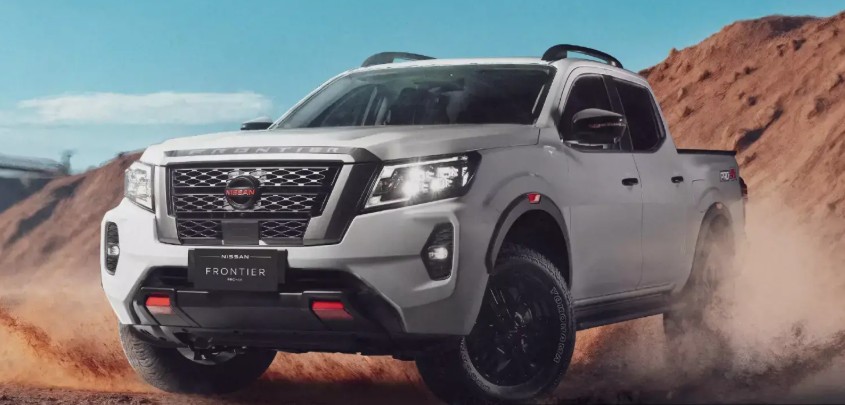
The Nissan Frontier vs Tacoma debate is one of those truck arguments that can keep a garage conversation alive long after the coffee goes cold. Both pickups are rugged, body-on-frame midsize trucks. Both can tow, haul, tackle dirt roads, and serve as daily transportation. Yet underneath those similarities, they approach the job rather differently.
For 2026, the Nissan Frontier sticks to a wonderfully straightforward formula: every model uses a naturally aspirated 3.8-liter V6 producing 310 horsepower and 281 lb-ft of torque, paired with a nine-speed automatic transmission. Nissan rates the Frontier for up to 7,150 pounds of towing capacity.
The Toyota Tacoma takes the opposite route. Its current generation offers turbocharged four-cylinder powertrains and, at the top of the range, the available i-FORCE MAX hybrid system. The hybrid produces up to 326 horsepower and a substantial 465 lb-ft of torque. Toyota rates the 2026 Tacoma to tow up to 6,500 pounds and carry up to 1,705 pounds of payload, depending on configuration.
So, which truck deserves your driveway?
For buyers who value simplicity, strong standard power, conventional V6 character, and towing ability, we think the Frontier makes an extremely persuasive argument. For shoppers wanting a broader model range, more sophisticated powertrain choices, serious off-road variants, and newer technology, the Tacoma is difficult to ignore.
Let's dig much deeper.
Content in this publication
- Nissan Frontier vs Toyota Tacoma at a Glance
- Powertrain Comparison: Old-School Muscle Meets Modern Turbo Power
- Which Truck Feels Faster?
- Nissan Frontier vs Tacoma Towing Capacity
- Payload: Tacoma Strikes Back
- Off-Road Capability: Tacoma Has the Deeper Bench
- Ride Comfort and Everyday Driving
- Interior: Frontier Keeps Things Familiar
- Tacoma Interior: More Modern and More Adventurous
- Cab and Bed Practicality
- Technology and Driver Assistance
- Fuel Economy: Efficiency vs Simplicity
- Reliability and Long-Term Ownership
- Styling: Tough vs Futuristic
- Nissan Frontier vs Tacoma for Work
- Nissan Frontier vs Tacoma for Daily Driving
- Nissan Frontier vs Tacoma for Off-Road Adventures
- Frontier vs Tacoma: Which Offers Better Value?
- Who Should Buy the Nissan Frontier?
- Who Should Buy the Toyota Tacoma?
- Nissan Frontier vs Tacoma: Pros and Cons
- Final Verdict: Is the Nissan Frontier Better Than the Tacoma?
- Frequently Asked Questions
Nissan Frontier vs Toyota Tacoma at a Glance
Before we disappear down the rabbit hole of engines, suspension systems, beds, cabins, and trail equipment, here is the basic picture.
| Category | Nissan Frontier | Toyota Tacoma |
|---|---|---|
| Vehicle type | Midsize body-on-frame pickup | Midsize body-on-frame pickup |
| Main engine approach | 3.8L naturally aspirated V6 | 2.4L turbo four-cylinder / available hybrid |
| Maximum horsepower | 310 hp | Up to 326 hp |
| Maximum torque | 281 lb-ft | Up to 465 lb-ft |
| Transmission | 9-speed automatic | Automatic; manual available on selected versions |
| Maximum towing | Up to 7,150 lb | Up to 6,500 lb |
| Maximum payload | Around 1,600+ lb depending on configuration | Up to 1,705 lb |
| Off-road focus | PRO-4X | TRD Off-Road, Trailhunter, TRD Pro and others |
| Character | Traditional, simple, muscular | Modern, varied, technology-heavy |
Nissan officially lists 310 horsepower and up to 7,150 pounds of towing for the 2026 Frontier, while Toyota lists as much as 326 horsepower and 465 lb-ft from the Tacoma's available hybrid setup.
The table already hints at the biggest philosophical difference. The Frontier gives us one engine and essentially says, "Here's your V6—go use it." Tacoma buyers enter a much larger menu.
Powertrain Comparison: Old-School Muscle Meets Modern Turbo Power
Nissan Frontier: One V6 for Everybody
One of the Frontier's strongest selling points is simplicity.
Every 2026 Frontier uses Nissan's 3.8-liter V6. It produces 310 horsepower and 281 lb-ft of torque and works with a nine-speed automatic transmission.
We like this philosophy because there is very little homework involved.
You don't have to climb several trim levels just to escape an underpowered entry engine. You don't need to decide whether a hybrid system fits your lifestyle. The truck starts with a healthy amount of horsepower and stays mechanically familiar.
The V6 is also naturally aspirated. That means its personality feels more traditional than the Tacoma's turbocharged engines. Power builds progressively as engine speed rises rather than arriving in a thick wave of turbocharged torque.
Some drivers will call that old-fashioned.
Others will call it refreshingly uncomplicated.
Why the Frontier V6 Still Makes Sense
Pickup trucks are tools, and sometimes the best tool is the one with fewer moving pieces in the equation. The Frontier's engine suits buyers who simply want to turn the key, hear a V6 wake up, attach a trailer, and get moving.
It's a steak-and-potatoes powertrain in an era filled with increasingly elaborate tasting menus.
That has real appeal.
Toyota Tacoma: More Powertrain Choices
Toyota has moved the Tacoma decisively into the turbo era.
The current-generation truck uses a 2.4-liter turbocharged four-cylinder architecture, with higher-output versions producing 278 horsepower and 317 lb-ft of torque. An available i-FORCE MAX hybrid takes output much further, reaching 326 horsepower and 465 lb-ft.
That torque figure is the headline.
465 lb-ft is enormous for a midsize pickup. It gives the hybrid Tacoma muscular low-speed response that the Frontier simply cannot duplicate on paper.
Push the accelerator and the Toyota feels less like it needs to gather momentum. The electric assistance and turbocharged engine deliver their punch early.
Which Truck Feels Faster?
This depends heavily on the Tacoma version we choose.
Against ordinary non-hybrid Tacoma models, the 310-horsepower Frontier feels competitive and pleasantly eager. Its nine-speed automatic keeps the V6 in the useful part of its rev range, and the engine has enough muscle that normal highway merging rarely feels like hard work.
Move into the i-FORCE MAX Tacoma, though, and the story changes.
The hybrid's 465 lb-ft torque output gives Toyota a major advantage in low-speed shove.
If raw torque matters most, Tacoma wins.
If we prefer smooth, predictable naturally aspirated power without turbo or hybrid complexity, Frontier wins the personality contest.
Neither answer is wrong. It depends on what we want from a truck.
Nissan Frontier vs Tacoma Towing Capacity
Here the Frontier lands one of its cleanest punches.
Nissan rates the 2026 Frontier for towing up to 7,150 pounds, while Toyota lists a 6,500-pound maximum for the 2026 Tacoma. Exact ratings vary by cab, drivetrain, trim, equipment, and configuration, so buyers should always check the specific truck rather than assuming every model can tow the headline number.
That gives the Nissan a theoretical maximum advantage of roughly 650 pounds.
For somebody towing a small travel trailer, boat, utility trailer, or recreational equipment regularly, that margin could matter.
Frontier Is the Straightforward Tow Rig
The Nissan feels like the more conventional towing proposition.
You get the standard V6, a fully boxed ladder frame, and strong maximum capacity. Nissan also offers towing technology intended to make trailer use easier.
It doesn't try to reinvent towing.
It simply brings muscle.
Tacoma Offers More Towing Technology
Toyota counters with clever available equipment, including Trailer Backup Guide with Straight Path Assist, an integrated trailer brake controller, and trailer-aware blind-spot functionality on suitably equipped versions.
Think of it this way: Frontier arrives with slightly bigger shoulders, while Tacoma can arrive carrying a more sophisticated toolbox.
If maximum published towing capacity is our priority, the Nissan wins.
If technology supporting the towing process matters more, certain Tacoma trims become extremely attractive.
Payload: Tacoma Strikes Back
Maximum towing is only one side of truck capability.
Payload tells us how much weight we can put in the truck itself—including passengers and cargo.
Toyota says the 2026 Tacoma can carry up to 1,705 pounds, while Nissan quotes Frontier payload figures around the 1,600-pound mark depending on configuration; Nissan's own published pages show variation between specific cab and drivetrain combinations.
Again, don't shop using maximum figures alone.
A heavily equipped off-road trim can have significantly less payload capacity than a lighter two-wheel-drive work-oriented version.
The yellow payload label on the actual truck is far more meaningful than a number floating around online.
Off-Road Capability: Tacoma Has the Deeper Bench
Here's where the Toyota reputation becomes difficult to argue with.
Tacoma isn't just offered as one off-road truck. Toyota has created an entire ecosystem around adventure-oriented configurations.
Depending on trim, Tacoma buyers can move through progressively more serious off-road equipment, culminating in models such as the Trailhunter and TRD Pro.
The Frontier lineup is simpler.
Its headline trail model is the PRO-4X, which Nissan equips with Bilstein shocks, an electronic locking rear differential, all-terrain tires, skid plates, and a selectable terrain system.
Frontier PRO-4X: The Sensible Adventurer
We actually like the Frontier PRO-4X partly because it doesn't turn off-roading into a science project.
It's the truck equivalent of hiking boots.
Put them on and go.
The locking differential is useful when traction disappears. The Bilstein dampers help control rough surfaces. Skid plates provide extra protection underneath.
For forest roads, muddy campsites, rocky trails, snow, and weekend exploration, that's plenty of equipment for many buyers.
You may be interested in reading Nissan Frontier vs GMC Canyon: Which Midsize Truck Wins?
Tacoma TRD Pro and Trailhunter: Built for Enthusiasts
Tacoma takes things several steps further.
Toyota has intentionally built the platform around customers who modify, explore, crawl, camp, and occasionally treat an ordinary road as an unnecessary suggestion.
That breadth gives Tacoma the overall win for serious off-road enthusiasts.
But here's the question worth asking: are we actually going rock crawling, or do we simply like looking as though we might?
Buying capability we never use is like buying mountaineering equipment for a walk through the park.
Ride Comfort and Everyday Driving
Midsize pickups have improved enormously as daily drivers, but physics still exists.
These are body-on-frame trucks designed to haul and tow. Empty beds, relatively stiff suspension tuning, large tires, and off-road hardware can affect ride quality.
The Frontier generally has a solid, substantial feel. Steering and control responses are predictable, and the truck's straightforward mechanical character makes it easy to understand quickly.
Tacoma feels more modern in its overall execution, particularly because the newest generation was engineered from the beginning around a much broader range of lifestyles.
For daily commuting, we'd test-drive both over broken pavement rather than judging comfort from a ten-minute loop around a dealership.
Tires Matter More Than Many Buyers Realize
A road-oriented Frontier SV and a heavily equipped Tacoma TRD Pro can behave like completely different species despite both wearing pickup beds.
Aggressive all-terrain tires add noise and weight. Specialized shocks may feel excellent at speed over broken dirt yet unnecessary during a Tuesday morning supermarket run.
Compare equivalent trims whenever possible.
Interior: Frontier Keeps Things Familiar
Inside, Frontier follows much the same logic as its powertrain.
The cabin feels truck-like, understandable, and relatively conventional.
Physical controls remain important. The seating position feels traditional. Higher trims provide the comfort and infotainment technology most drivers expect without turning the dashboard into a rolling electronics demonstration.
For 2026, Nissan offers features such as wireless Apple CarPlay and Android Auto, connected NissanConnect services, Wi-Fi connectivity, remote functions, and available navigation depending on equipment.
That combination works well for us.
There is enough technology, but the truck still remembers that somebody might be wearing gloves.
Tacoma Interior: More Modern and More Adventurous
The Tacoma cabin pushes harder into contemporary design.
Toyota has embraced large screens, digital information, bold dashboard architecture, and features suited to different lifestyles.
Higher trims can feel considerably more expensive and specialized than lower models.
That's an advantage if we enjoy technology.
It's potentially a disadvantage if our dream pickup interior consists of durable switches, simple menus, and nothing requiring a tutorial.
Which Cabin Is Better?
For pure modernity, Tacoma.
For simplicity, Frontier.
And that distinction repeats throughout this comparison.
The Nissan constantly asks, "Why make this more complicated?"
The Toyota frequently answers, "Because we can make it more capable."
Cab and Bed Practicality
Pickup buyers should pay close attention to cab-and-bed combinations before worrying about badges.
Both trucks can be configured for passengers and cargo, but the available combinations vary by trim.
Frontier offers Crew Cab and King Cab configurations and, depending on model, different bed arrangements. Nissan's Utili-track system also provides adjustable channels for securing cargo in the bed.
Tacoma similarly offers multiple body configurations, creating options for shoppers who value either passenger room or bed utility.
The important point isn't which specification sheet contains the largest number.
It's how we actually use the truck.
A shorter bed can make urban parking easier. A longer bed can turn weekend home-improvement runs from an exercise in creative geometry into something wonderfully boring.
Technology and Driver Assistance
Neither truck is stuck in the past.
Frontier is available with modern smartphone connectivity, connected vehicle services, Wi-Fi functionality, remote start features, and Nissan Safety Shield driver-assistance technology.
Tacoma's technology menu stretches particularly far in upper trims, especially in towing, camera visibility, off-road information, and hybrid powertrain integration. Toyota's available Trailer Backup Guide and related towing systems demonstrate how heavily the company has leaned into technology-driven capability.
For somebody moving from a ten-year-old pickup, either can feel like a spaceship.
The Tacoma simply gives that spaceship more buttons.
Fuel Economy: Efficiency vs Simplicity
This comparison becomes nuanced because the Tacoma has multiple powertrain configurations while the Frontier uses one V6.
Nissan lists Frontier fuel-economy figures reaching as high as 19 mpg city and 24 mpg highway for certain configurations, although drivetrain, cab, equipment, tires, and trim affect actual ratings and real-world consumption.
Tacoma's turbocharged and hybrid systems pursue a different balance between efficiency, torque, and capability.
Don't automatically assume "hybrid" means Prius-like fuel consumption, either. In a truck such as Tacoma, electrification is also being used to create torque and performance.
For high-mileage owners, comparing the EPA rating of the two exact configurations being purchased makes far more sense than comparing model-wide marketing numbers.
Reliability and Long-Term Ownership
Now we arrive at the part every pickup discussion eventually reaches.
Which one will last longer?
There is no responsible way to declare that every Frontier will outlive every Tacoma—or vice versa. Maintenance history, operating conditions, corrosion, towing frequency, modifications, driving habits, and individual component failures matter enormously.
What we can say is that these trucks take different mechanical approaches.
Frontier's naturally aspirated V6 and conventional automatic setup will appeal to buyers who prefer mechanical familiarity.
Tacoma's turbocharged engines and available hybrid system offer major advantages in torque and performance but introduce a more technologically complex powertrain strategy.
Complexity isn't automatically unreliability. Simplicity isn't automatically durability.
It simply changes the ownership proposition.
Used Nissan Frontier vs Used Tacoma
In the used market, condition matters more than tribal loyalty.
A meticulously maintained Frontier is a better purchase than an abused Tacoma, and a carefully serviced Tacoma is better than a Frontier that spent its life towing beyond its limits while receiving oil changes whenever somebody remembered.
Our used-truck inspection priorities would include one structured checklist:
- Check frame and underbody corrosion carefully.
- Verify maintenance records rather than trusting verbal claims.
- Inspect four-wheel-drive operation.
- Test the transmission cold and fully warmed up.
- Look for evidence of hard off-road use underneath.
- Inspect tires for uneven wear.
- Check suspension components and wheel bearings.
- Test every electronic feature.
- Examine the bed and hitch for signs of frequent heavy towing.
- Get an independent pre-purchase inspection before paying.
That checklist matters more than the emblem stamped into the grille.
Styling: Tough vs Futuristic
Styling is subjective, but these trucks clearly speak different visual languages.
You may be interested in readingNissan Frontier vs GMC Canyon: Which Midsize Truck Wins?You may be interested in reading
Nissan Frontier vs Ford Maverick: Which Pickup Fits Your Life Better?Frontier has a broad-shouldered appearance without becoming excessively theatrical. PRO-4X versions add the right amount of trail attitude.
Tacoma is more aggressive.
Its current design uses sharper geometry and a more exaggerated off-road personality. Some buyers will love that. Others may find Frontier's cleaner styling ages more gracefully.
We'd describe Frontier as work boots.
Tacoma is technical hiking gear.
Both look ready for dirt. They simply dress differently for the occasion.
Nissan Frontier vs Tacoma for Work
For tradespeople and traditional truck users, the Frontier makes enormous sense.
Its standard V6 means even relatively modest trims begin with substantial horsepower. Maximum towing is strong, the ladder-frame construction is suitably truck-like, and Nissan offers practical cargo-management equipment.
The Tacoma counters with higher maximum payload and more configuration variety.
If we regularly tow heavier recreational loads, Frontier's higher maximum tow rating becomes valuable.
If our job involves loading significant weight into the bed, the specific Tacoma configurations with higher payload ratings deserve attention.
Again, check the sticker on the truck.
Maximum brochure numbers can disappear quickly once four-wheel drive, luxury equipment, larger tires, passengers, accessories, and off-road hardware enter the equation.
Nissan Frontier vs Tacoma for Daily Driving
If our pickup spends 90% of its life commuting, shopping, carrying children, and occasionally hauling furniture, the comparison changes.
Now cabin comfort, parking dimensions, fuel consumption, controls, visibility, ride quality, and purchase price become more important than whether a locking differential can rescue us from a boulder field in Utah.
Frontier's simplicity works beautifully here.
It delivers the truck experience without constantly reminding us that we purchased an engineering showcase.
Tacoma feels newer and offers more ways to customize the experience.
We'd lean Frontier for the buyer who says, "I just want a good truck."
We'd lean Tacoma for the buyer who says, "I know exactly which kind of truck I want."
Nissan Frontier vs Tacoma for Off-Road Adventures
This category goes to Tacoma overall.
Not because Frontier PRO-4X lacks capability—it doesn't. Nissan gives it Bilstein dampers, all-terrain tires, skid plates, terrain selection, and an electronic locking rear differential.
Tacoma wins because Toyota provides a wider ladder of dedicated off-road variants and more specialized configurations.
That's valuable for enthusiasts because we can buy closer to the exact level of capability we need from the factory.
For ordinary camping roads and moderate trails, however, the Frontier PRO-4X offers more capability than many owners will ever exploit.
Frontier vs Tacoma: Which Offers Better Value?
Value is not simply the lowest sticker price.
It's what we receive for the money.
Frontier's biggest value argument is standard power. Every buyer gets the 310-horsepower V6 rather than having to climb through an engine hierarchy.
That keeps the buying process refreshingly straightforward.
Tacoma's value appears differently. Its sprawling range lets buyers spend money on exactly the type of capability they care about—whether that's basic trucking, manual-transmission involvement, sophisticated off-roading, premium features, or hybrid torque.
The danger?
A Tacoma configuration can become expensive very quickly when we begin checking boxes and climbing trims.
The truck equivalent of "I'll just add one option" can be a dangerous sentence.
Who Should Buy the Nissan Frontier?
Frontier makes the most sense for buyers who appreciate traditional pickup qualities.
We'd choose it when we want strong standard horsepower, a naturally aspirated V6, a conventional automatic transmission, competitive payload capacity, high maximum towing capacity, and an off-road model without navigating an enormous trim tree. Nissan officially gives the 2026 truck 310 standard horsepower and a towing ceiling of up to 7,150 pounds.
There is something deeply appealing about that simplicity.
The Frontier isn't trying to predict the future.
It is trying to be a truck.
Who Should Buy the Toyota Tacoma?
Tacoma suits somebody who values choice.
Its available hybrid system delivers up to 326 horsepower and a remarkable 465 lb-ft of torque, while the broader lineup gives shoppers numerous ways to configure the truck around commuting, work, towing, or off-road use.
Toyota also quotes up to 1,705 pounds of payload and 6,500 pounds of maximum towing capacity for 2026.
If we are enthusiastic about cutting-edge midsize-truck engineering, Toyota provides more toys.
And sometimes toys matter.
Nissan Frontier vs Tacoma: Pros and Cons
| Truck | Main Advantages | Main Drawbacks |
| Nissan Frontier | Standard 310-hp V6, simple powertrain strategy, up to 7,150-lb towing, straightforward trim structure, capable PRO-4X | Less maximum torque, fewer extreme off-road variants, less powertrain variety |
| Toyota Tacoma | Up to 326 hp and 465 lb-ft, broad trim selection, specialized off-road versions, strong payload, sophisticated towing technology | Maximum towing is lower, lineup can become complicated, high-end configurations can add considerable complexity |
The numbers come from 2026 manufacturer information and vary by configuration.
Final Verdict: Is the Nissan Frontier Better Than the Tacoma?
There isn't one winner for everybody.
That's actually what makes the Nissan Frontier vs Tacoma comparison interesting.
The Frontier wins our respect by resisting unnecessary complication. It provides a 310-horsepower V6 as standard, a nine-speed automatic, serious towing ability, useful truck hardware, and a genuinely capable PRO-4X model. It feels like a truck designed by people who believe the traditional pickup formula still has plenty of life left in it.
Tacoma represents the other road.
Turbocharging, hybrid assistance, huge available torque, sophisticated towing aids, multiple off-road personalities, and a much broader spectrum of configurations make it the more ambitious machine. Toyota's available 326-horsepower, 465-lb-ft i-FORCE MAX powertrain illustrates just how far the midsize pickup has evolved.
We'd pick the Frontier for simplicity, V6 character, maximum towing, and straightforward value.
We'd pick the Tacoma for powertrain variety, maximum torque, technology, and serious off-road specialization.
If our truck needs to work hard Monday through Friday and pull a trailer on Saturday, Frontier deserves much more consideration than its sometimes larger-shadowed reputation suggests.
If Sunday morning involves studying topographic maps and wondering whether that tiny line through the mountains is technically a road, Tacoma starts looking very tempting.
Either way, we're choosing between two genuine trucks—not lifestyle crossovers wearing pickup costumes.
And that makes this rivalry worth having.
Frequently Asked Questions
1. Is the Nissan Frontier more powerful than the Toyota Tacoma?
It depends on configuration. The 2026 Frontier provides 310 horsepower as standard from its 3.8-liter V6. The Tacoma's available i-FORCE MAX hybrid produces up to 326 horsepower and 465 lb-ft of torque, giving the highest-output Tacoma significantly more torque.
2. Which can tow more, Nissan Frontier or Toyota Tacoma?
The 2026 Nissan Frontier has the higher manufacturer-published maximum towing figure: up to 7,150 pounds versus up to 6,500 pounds for the 2026 Tacoma. Actual capability depends on the individual truck's configuration and equipment.
3. Is the Tacoma better off-road than the Frontier?
For serious off-road enthusiasts, we'd give Tacoma the overall advantage because Toyota offers a wider selection of specialized trail-oriented versions. However, the Frontier PRO-4X is genuinely capable and includes Bilstein shocks, all-terrain tires, skid plates, selectable terrain modes, and an electronic locking rear differential.
4. Which is simpler to own, Frontier or Tacoma?
Mechanically, Frontier follows the simpler powertrain philosophy. Every 2026 model uses a naturally aspirated 3.8-liter V6 paired with a nine-speed automatic, whereas Tacoma offers turbocharged and available hybrid powertrains. Simplicity alone doesn't guarantee lower ownership costs or greater reliability, but some buyers may prefer the Frontier's more conventional layout.
You may be interested in readingNissan Frontier vs GMC Canyon: Which Midsize Truck Wins?You may be interested in reading
Nissan Frontier vs Ford Maverick: Which Pickup Fits Your Life Better?You may be interested in reading
Nissan Frontier vs Toyota Tacoma Reliability: Which Truck Is Built to Last?5. Should I buy a Nissan Frontier or Toyota Tacoma?
Buy the Frontier if standard V6 power, towing capacity, simplicity, and straightforward truck character matter most. Buy the Tacoma if you want more powertrain choices, considerably more available torque, specialized off-road models, and a larger technology menu. Test equivalent trims before deciding because equipment can transform how either truck drives and what it costs.
If you want to know other articles similar to Nissan Frontier vs Tacoma: Which Midsize Truck Is Better? you can visit the category Models.
Kia Sorento Models: Complete Guide to Trims, Engines and Versions
BYD Shark 6 vs Ranger vs HiLux: Which Ute Makes the Most Sense in 2026?
BYD Shark 6 vs MG U9: Which Ute Makes More Sense in 2026?
BYD Shark 6 vs Ford Ranger Raptor: Which Performance Ute Is Better in 2026?
BYD Shark 6 vs Kia Tasman: Which Ute Is Better?
BYD Shark 6 vs 7: What We Know So Far
Leave a Reply
More content of your interest