

Nissan Frontier vs Ford Maverick: Which Pickup Fits Your Life Better?

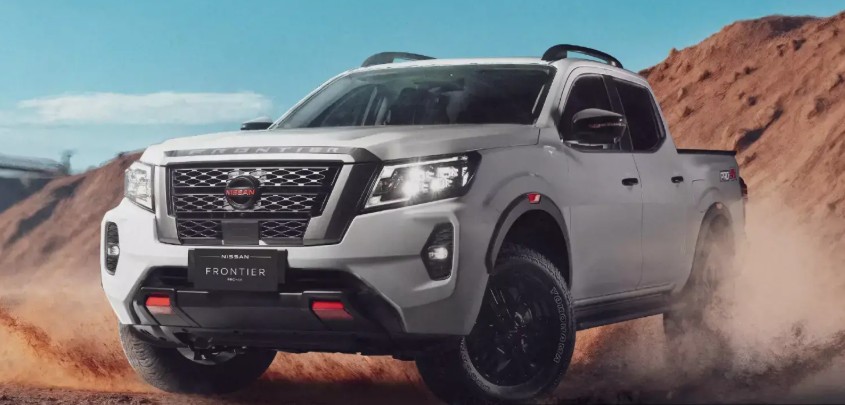
Choosing between the Nissan Frontier vs Ford Maverick is a little like choosing between hiking boots and comfortable sneakers. Both can take us places, both are useful, and both carry the unmistakable shape of a pickup truck. Yet they approach the job from completely different directions.
The Nissan Frontier is a traditional midsize pickup built around a rugged body-on-frame platform, a standard V6 engine, serious towing capability, and available four-wheel drive. The Ford Maverick is a smaller, unibody compact truck that focuses more heavily on fuel economy, maneuverability, affordability, and everyday practicality.
For 2026, Nissan gives every Frontier a 3.8-liter V6 producing 310 horsepower and 281 lb-ft of torque, while maximum towing reaches 7,150 pounds and maximum payload can reach 1,620 pounds depending on configuration.
The 2026 Maverick takes a different route. Ford offers a standard 2.5-liter hybrid powertrain plus an available 250-horsepower 2.0-liter EcoBoost, with maximum payload reaching approximately 1,500 pounds and towing reaching 4,000 pounds when properly equipped with the available 4K Tow Package.
So, which one deserves a spot in our driveway?
Let's dig into the details.
Content in this publication
- Nissan Frontier vs Ford Maverick at a Glance
- Two Trucks With Completely Different Personalities
- Nissan Frontier vs Ford Maverick Engine Performance
- Fuel Economy: Maverick Lands a Heavy Punch
- Towing Capacity: Frontier Wins Easily
- Payload Capacity Is Surprisingly Competitive
- Bed Utility: Bigger Muscle vs Clever Packaging
- City Driving: Maverick Takes the Crown
- Ride Comfort: The Maverick Feels More Car-Like
- Interior Space and Everyday Practicality
- Off-Road Capability: Frontier Has the Stronger Foundation
- AWD vs 4WD: Don't Treat Them as the Same Thing
- Ford Maverick Hybrid vs Nissan Frontier V6
- Ford Maverick EcoBoost vs Nissan Frontier
- Nissan Frontier vs Ford Maverick for Work
- Nissan Frontier vs Ford Maverick for Families
- Reliability and Long-Term Ownership
- Running Costs: Maverick Has the Advantage
- Which Truck Is Easier to Park?
- Which Truck Is Better for Adventure?
- Reasons to Buy the Nissan Frontier
- Reasons to Buy the Ford Maverick
- Who Should Buy the Nissan Frontier?
- Who Should Buy the Ford Maverick?
- Nissan Frontier vs Ford Maverick: Which Is Better Overall?
- Final Thoughts
- Frequently Asked Questions
Nissan Frontier vs Ford Maverick at a Glance
Before pulling these trucks apart piece by piece, here's the fundamental difference.
The Frontier is the better traditional truck.
The Maverick is the better everyday vehicle that happens to have a pickup bed.
That distinction influences nearly everything else.
| Category | Nissan Frontier | Ford Maverick |
|---|---|---|
| Truck class | Midsize pickup | Compact pickup |
| Construction | Body-on-frame | Unibody |
| Main engine | 3.8L V6 | 2.5L hybrid |
| Available performance engine | — | 2.0L EcoBoost |
| Max horsepower | 310 hp | 250 hp EcoBoost |
| Max towing | Up to 7,150 lb | Up to 4,000 lb |
| Max payload | Up to 1,620 lb | Up to 1,500 lb |
| Efficient powertrain | Conventional gasoline | Hybrid available/standard on key trims |
| Best suited for | Towing, trails, truck duties | Commuting, efficiency, light-duty use |
Exact capacities vary by drivetrain, trim, equipment, passengers, and cargo. Nissan's published 2026 figures list up to 7,150 pounds of towing and 1,620 pounds of payload, while Ford lists up to 4,000 pounds of towing and 1,500 pounds of payload on appropriately configured Mavericks.
Two Trucks With Completely Different Personalities
Park them together and the difference becomes obvious.
The Frontier looks like someone designed a pickup and then asked how much comfort and technology could be added.
The Maverick feels almost reversed. It seems as though Ford started with an efficient crossover-style platform and asked, "What happens if we put a useful truck bed behind it?"
Neither philosophy is wrong.
The Frontier Feels Like a Traditional Pickup
The Frontier delivers many ingredients truck buyers expect: a conventional pickup stance, strong V6 power, substantial towing capacity, available 4x4 hardware, and configurations aimed at off-road use.
It feels more appropriate when our weekends involve boats, trailers, rough roads, construction materials, camping equipment, or muddy trails.
The Maverick Thinks Smaller — and That's Its Strength
The Maverick embraces compact dimensions rather than apologizing for them.
Ford even describes its cargo area around the flexible FLEXBED concept, emphasizing creative organization rather than simply trying to build the largest box possible. The 2026 Maverick's bed measures roughly 4.5 feet long, with about 33.3 cubic feet of cargo volume.
That modest footprint helps make the Maverick easier to live with in densely populated areas.
Nissan Frontier vs Ford Maverick Engine Performance
This category immediately exposes their different missions.
Frontier: 310-Horsepower V6 Comes Standard
There isn't much engine-menu anxiety with the Frontier.
Nissan equips the 2026 truck with a 3.8-liter V6 producing 310 horsepower and 281 lb-ft of torque, paired with a nine-speed automatic transmission.
That's refreshing.
We don't need to upgrade several trim levels merely to unlock an engine capable of serious pickup duties. Press the accelerator and the Frontier has the muscular response we expect from a conventional midsize truck.
It won't pretend to be a sports car, but that's hardly the point.
Maverick: Hybrid Efficiency or Turbocharged Punch
Ford gives us more variety.
The standard 2026 Maverick powertrain is a 2.5-liter hybrid paired with an electronically controlled continuously variable transmission, while buyers wanting more conventional turbocharged performance can choose the available 2.0-liter EcoBoost producing 250 horsepower.
That's an appealing menu because the decision can reflect how we actually drive.
Spend most days commuting? Hybrid.
Want quicker acceleration, stronger towing capability, or a more energetic personality? EcoBoost.
Which Engine Strategy Wins?
For raw truck capability, Frontier wins.
For flexibility and efficiency, Maverick wins.
Simple.
Fuel Economy: Maverick Lands a Heavy Punch
Here the little Ford pulls out one of its strongest weapons.
Ford rates the 2026 front-wheel-drive Maverick hybrid at an EPA-estimated 42 mpg city, 35 mpg highway, and 38 mpg combined.
Those are remarkable numbers for something with an open cargo bed.
The Frontier's big naturally aspirated V6 inevitably consumes more fuel. Nissan lists configurations reaching up to around 19 mpg city and 24 mpg highway, although actual ratings vary by drivetrain and configuration.
If we're commuting 15,000 or 20,000 miles annually, that gap matters.
Why the Maverick Makes Sense for Daily Commuters
Imagine someone who needs a pickup bed twice a week but drives to work every day.
Buying more truck than necessary can become expensive.
The Maverick turns that equation around. We can have the open bed for bicycles, gardening equipment, furniture, camping gear, or weekend projects without paying a full-time fuel penalty for capability we rarely use.
The Frontier makes considerably more sense when the extra capability is something we'll actually exploit.
Towing Capacity: Frontier Wins Easily
This isn't particularly close.
The 2026 Nissan Frontier can tow up to 7,150 pounds when properly equipped.
The Maverick normally carries a lower towing rating, though properly equipped versions with Ford's available 4K Tow Package can tow up to 4,000 pounds.
That's still useful.
Four thousand pounds can accommodate plenty of small recreational trailers, utility trailers, personal watercraft, and other light-duty towing jobs.
But if regular towing is central to why we're buying a truck, the Frontier's greater capacity leaves substantially more room to work.
Which Truck Is Better for a Camper?
It depends entirely on the loaded trailer weight.
For a small lightweight camper, the Maverick may be enough.
As trailer size climbs, the Frontier becomes the more logical choice.
We should always compare a trailer's loaded weight rather than its optimistic empty or "dry" figure and account for passengers, cargo, tongue weight, and the specific truck configuration.
Payload Capacity Is Surprisingly Competitive
Here's where things get interesting.
Despite being much smaller, the Maverick punches above its weight.
Ford lists a maximum payload of 1,500 pounds on certain 2026 Maverick configurations. The Frontier reaches as much as 1,620 pounds.
So the Frontier wins on maximum published capability, but the gap isn't enormous.
That's an important distinction because many owners haul considerably more often than they tow.
Mulch?
Furniture?
Tools?
Camping gear?
Bicycles?
Home-improvement supplies?
Both trucks can be genuinely useful.
Bed Utility: Bigger Muscle vs Clever Packaging
A truck isn't much of a truck if its bed doesn't make our lives easier.
Frontier Bed: Designed Around Traditional Truck Work
The Nissan's bed feels more conventional and work-oriented.
Nissan offers its Utili-track channel system, which provides movable tie-down mounting possibilities for securing cargo.
Anyone who regularly carries motorcycles, construction equipment, coolers, lumber, or bulky recreational gear may appreciate that straightforward approach.
You may be interested in reading Nissan Frontier vs Toyota Tacoma Reliability: Which Truck Is Built to Last?
Maverick FLEXBED: Small but Smart
Ford counters with FLEXBED.
Rather than pretending the Maverick has enormous cargo dimensions, Ford focuses on making its available space configurable and useful. On the 2026 XL, Ford lists a bed around 54.4 inches long, with 42.6 inches between the wheel wells and approximately 33.3 cubic feet of volume.
Think of it as a studio apartment with excellent storage solutions.
It isn't huge.
It simply wastes very little.
City Driving: Maverick Takes the Crown
This may be one of the biggest reasons to buy a Maverick.
Traditional pickups can feel like boats navigating crowded parking garages. The Maverick's compact proportions dramatically reduce that sensation.
We can squeeze through congested streets, park more comfortably, and maneuver around supermarkets without feeling as though we're docking a cargo ship.
Frontier Is Manageable but Definitely More Truck-Like
The Frontier is still much easier to maneuver than a full-size pickup.
Yet there's no disguising its midsize dimensions and traditional truck construction.
If we spend most of our life in suburbs, small towns, construction sites, or open highways, that probably won't bother us.
In dense urban environments, Maverick's compact footprint becomes a genuine everyday luxury.
Ride Comfort: The Maverick Feels More Car-Like
Unibody construction brings another advantage: refinement.
The Maverick behaves more like a crossover with a pickup bed. Its steering and road manners generally suit buyers coming from cars and SUVs.
The Frontier has a more traditional pickup character. We can feel more of the road underneath us, and its physical responses communicate that we're driving something engineered around durability and utility.
Neither approach is inherently better.
It's a question of taste.
Which Is Better for Long Commutes?
For commuting alone, we'd lean toward the Maverick.
Its fuel-saving hybrid option, compact size, and road-oriented design make daily driving less demanding.
For someone combining commuting with regular truck work, though, the Frontier may justify its compromises.
Interior Space and Everyday Practicality
Both pickups are designed to carry five occupants in appropriate crew-cab configurations, but they use interior space differently.
Ford lists the Maverick with seating for up to five people across its mainstream configurations.
The cabin feels modern and cleverly packaged, with storage solutions designed around real-life clutter: phones, bottles, bags, cables, and all the random objects we accumulate.
The Frontier's cabin feels more like a conventional midsize truck, with an upright driving position and an atmosphere better suited to buyers who want their pickup to feel substantial.
Frontier for Truck Feel, Maverick for Crossover Familiarity
Coming from a full-size or midsize pickup?
The Frontier will probably feel immediately familiar.
Coming from a CR-V, Escape, RAV4, Corolla, Civic, or similar commuter vehicle?
The Maverick may feel less intimidating.
Off-Road Capability: Frontier Has the Stronger Foundation
This is another category where the Frontier's traditional construction pays dividends.
Nissan offers serious 4x4 capability and the trail-oriented PRO-4X, positioning the Frontier squarely as a truck capable of tackling rough terrain rather than merely surviving gravel roads.
Ford isn't asleep at the wheel, though.
The Maverick lineup includes available AWD, and specialized versions such as the Tremor use Advanced 4WD for additional off-road ability.
Still, these vehicles begin with different foundations.
Frontier PRO-4X vs Maverick Tremor
This matchup perfectly summarizes the broader comparison.
The Maverick Tremor is for people who want a small, efficient pickup that can also venture farther into the dirt.
The Frontier PRO-4X is for people who want an off-road-oriented truck first and are willing to accept greater size and fuel consumption.
For more demanding trail use, we'd choose the Frontier.
For gravel roads, campsites, snowy roads, and lighter adventures mixed with daily commuting, Maverick offers a compelling balance.
AWD vs 4WD: Don't Treat Them as the Same Thing
The terminology matters.
The mainstream Maverick can be equipped with available all-wheel drive, while specific variants provide more specialized systems. Ford even offers the hybrid powertrain with available AWD in the current lineup.
The Frontier follows the more traditional pickup formula with available 4x4 capability.
For snow, wet roads, and occasional dirt tracks, Maverick AWD can be perfectly suitable.
For challenging terrain where low-speed durability and traditional truck capability are more important, we'd rather have the Frontier.
Ford Maverick Hybrid vs Nissan Frontier V6
This might be the most meaningful comparison of all.
These two powertrains represent two philosophies.
The Maverick Hybrid asks:
How little fuel can a useful pickup consume?
The Frontier V6 asks:
How much traditional truck capability can we provide without making buyers upgrade engines?
Choose the Maverick Hybrid If We Want:
- Excellent urban fuel economy
- A comfortable everyday commuter
- Light-duty hauling
- Occasional towing
- Easier parking
- Available AWD
- A compact pickup footprint
Ford's front-wheel-drive hybrid is rated at 42 mpg city, an enormous advantage for frequent urban driving.
Choose the Frontier V6 If We Want:
- 310 standard horsepower
- Higher towing capacity
- More traditional truck construction
- Stronger off-road potential
- Serious recreational hauling
- Greater long-term capability headroom
The Frontier's V6 and maximum 7,150-pound towing capacity clearly put it into a heavier-duty category.
Ford Maverick EcoBoost vs Nissan Frontier
Switching from hybrid to EcoBoost closes the performance gap somewhat.
Ford's available 2.0-liter EcoBoost produces 250 horsepower and can be paired with multiple drivetrain configurations depending on trim.
That makes the Maverick genuinely quick and enjoyable.
But the Frontier still brings 310 horsepower, more maximum towing capability, and the architecture of a traditional midsize pickup.
So even here, they're solving different problems.
The EcoBoost Maverick is the sporty, compact multitool.
The Frontier is the heavier hammer.
Nissan Frontier vs Ford Maverick for Work
The answer depends on what "work" means.
If we're talking contractors hauling heavy equipment, pulling trailers, driving through rough job sites, or loading a truck aggressively day after day, Frontier's traditional pickup construction and greater towing capacity make it the stronger candidate.
But perhaps our work simply means carrying tools, maintenance supplies, landscaping materials, or occasional equipment around town.
Then Maverick becomes extremely attractive.
Small Businesses May Love the Maverick
Think plumbers, photographers, mobile technicians, landscapers, property managers, delivery operators, or service businesses.
Not every business needs a giant pickup.
Sometimes a compact bed, excellent mileage, comfortable cab, and easy parking are worth more than an additional 3,000 pounds of towing capability.
Nissan Frontier vs Ford Maverick for Families
Neither would be our first recommendation if three adults need to occupy the back seat every day.
They're pickups, after all.
But for a small family, both can work.
Maverick has the advantage of behaving more like an everyday crossover, while Frontier gives the family significantly greater capability for boats, trailers, camping, and outdoor recreation.
You may be interested in readingNissan Frontier vs Toyota Tacoma Reliability: Which Truck Is Built to Last?You may be interested in reading
Nissan Frontier vs Navara: Which Nissan Pickup Is Better?Ask one question:
What happens most weekends?
If it's grocery shopping, soccer practice, city driving, bicycles, and occasional DIY projects, Maverick probably fits beautifully.
If it's towing, campsites, rough trails, boats, dirt bikes, or serious outdoor equipment, Frontier starts pulling ahead.
Reliability and Long-Term Ownership
Reliability comparisons deserve nuance.
We should be skeptical whenever someone claims one modern vehicle is automatically "bulletproof" while another is unreliable.
Powertrain complexity, driving environment, maintenance, production changes, and individual vehicle history all matter.
What we can say structurally is that the Frontier uses a conventional naturally aspirated V6 and nine-speed automatic, while Maverick buyers can choose between a hybrid system and turbocharged EcoBoost configuration.
Different buyers will value those technologies differently.
Someone prioritizing simplicity may appreciate the Frontier's conventional V6 approach.
Someone prioritizing fuel savings may happily accept the additional hybrid hardware because reduced fuel consumption could matter every single day.
Running Costs: Maverick Has the Advantage
Purchase price isn't the only expense.
Fuel, tires, insurance, maintenance, depreciation, financing, and repairs gradually become far more significant than whatever difference we negotiated at the dealership.
The Maverick's strongest long-term advantage is obvious: fuel consumption.
At 42 mpg city for the front-wheel-drive hybrid, repeated stop-and-go commuting becomes dramatically easier on the fuel budget than it would in a conventional V6 pickup.
Frontier owners effectively pay for extra capability whether they're using it that day or not.
That's why matching the truck to our real lifestyle matters so much.
Which Truck Is Easier to Park?
Maverick.
No suspense here.
Ford lists a length of roughly 200.6 inches on the current Maverick, reinforcing just how compact the truck remains compared with conventional pickups.
That translates into less stress in garages, parking lots, narrow streets, and tight driveways.
If our truck will spend five days commuting for every one day hauling cargo, that seemingly mundane advantage can become surprisingly important.
Which Truck Is Better for Adventure?
Let's define adventure.
Camping and Mountain Roads
Either.
Light Trails and Forest Roads
Either, especially in appropriate AWD/4WD configurations.
Harder Off-Road Driving
Frontier.
Kayaks, Bikes, and Outdoor Equipment
Either.
Large Camper or Boat
Frontier, assuming trailer weight falls within the specific truck's rated limits.
Long Road Trips Where Fuel Economy Matters
Maverick Hybrid.
That's what makes this comparison fascinating. Neither truck universally defeats the other.
They simply excel on different weekends.
Reasons to Buy the Nissan Frontier
The Frontier makes more sense when capability is non-negotiable.
Its strongest advantages include:
- Standard 310-horsepower V6
- Up to 7,150 pounds of towing capability
- Up to 1,620 pounds of payload
- Traditional body-on-frame truck architecture
- Available 4x4
- Serious PRO-4X off-road configuration
- More conventional pickup feel
- Greater capability margin for demanding jobs
Those capability figures come directly from Nissan's current 2026 Frontier specifications.
Frontier's Biggest Weakness
Efficiency.
A powerful V6 and traditional truck architecture bring unavoidable compromises.
If we rarely tow and spend our life crawling through downtown traffic, Frontier can feel like we're bringing a chainsaw to trim a houseplant.
Reasons to Buy the Ford Maverick
The Maverick's strengths are almost the mirror image:
- Standard hybrid powertrain on core models
- EPA-estimated 42 mpg city with FWD hybrid
- Available 250-hp EcoBoost
- Available AWD
- Up to 4,000 pounds of towing when properly equipped
- Up to 1,500 pounds of payload on select configurations
- Compact dimensions
- Flexible cargo-bed design
- Easy everyday driving
Ford's current specifications confirm its 42-mpg-city hybrid rating, available 250-hp EcoBoost, maximum 1,500-pound payload, and available 4,000-pound towing capability.
Maverick's Biggest Weakness
Its capability ceiling arrives much sooner.
Owners who start towing progressively larger boats, campers, or utility trailers may eventually discover that they've outgrown the truck.
Who Should Buy the Nissan Frontier?
We'd choose the Frontier if:
Truck capability comes before fuel economy.
It's particularly attractive for drivers who regularly tow, travel off-road, carry substantial cargo, or simply prefer a traditional pickup experience.
The Frontier isn't trying to reinvent what a truck is.
It takes the established formula and makes it more approachable than a full-size pickup.
Who Should Buy the Ford Maverick?
We'd choose the Maverick if:
Everyday usability comes before maximum capability.
It's arguably one of the most sensible pickup concepts for buyers who previously thought they didn't need a pickup.
We get a bed when we need one, SUV-like road manners when we don't, and potentially excellent hybrid fuel economy every day in between.
That's a compelling recipe.
Nissan Frontier vs Ford Maverick: Which Is Better Overall?
There isn't one universal winner because the Frontier and Maverick barely compete for the same mission.
For towing, off-roading, rugged work, horsepower, and traditional pickup capability, the Nissan Frontier wins.
For fuel economy, city driving, commuting, maneuverability, and light-duty practicality, the Ford Maverick wins.
If we had to reduce the entire comparison to one sentence, it would be this:
Buy the Frontier when you genuinely need a truck; buy the Maverick when you want truck usefulness without living with all the compromises of a traditional truck.
That distinction matters far more than badge loyalty.
Final Thoughts
The Nissan Frontier vs Ford Maverick debate isn't really about which vehicle is objectively superior.
It's about how much truck we actually need.
The Frontier gives us a powerful standard V6, substantially greater towing capability, traditional body-on-frame construction, and convincing off-road credentials. Nissan lists 310 horsepower and up to 7,150 pounds of towing for the 2026 model.
The Maverick answers with clever packaging, compact dimensions, available AWD, up to 4,000 pounds of towing, and a hybrid powertrain capable of an EPA-estimated 42 mpg city in front-wheel-drive form.
So picture your normal Tuesday rather than your most ambitious Saturday.
If Tuesday means commuting through traffic and Saturday means carrying mountain bikes, we'd take the Maverick.
If Tuesday includes tools and Saturday includes a boat, trailer, or remote trail, we'd lean Frontier.
The best truck isn't the one with the biggest number on the specification sheet.
It's the one whose strengths we actually use.
Frequently Asked Questions
1. Is the Nissan Frontier bigger than the Ford Maverick?
Yes. The Frontier is a traditional midsize pickup, while the Maverick belongs to the compact pickup category. The Maverick's smaller footprint is one reason it is easier to park and maneuver in crowded areas.
2. Can the Ford Maverick tow as much as the Nissan Frontier?
No. Properly equipped 2026 Mavericks can tow up to 4,000 pounds, while the 2026 Frontier reaches 7,150 pounds under the appropriate configuration.
3. Which gets better gas mileage, Nissan Frontier or Ford Maverick?
The Maverick Hybrid is the clear efficiency winner. Ford rates the 2026 front-wheel-drive hybrid at an EPA-estimated 42 mpg city, 35 mpg highway, and 38 mpg combined. The Frontier prioritizes V6 power and heavier-duty truck capability instead.
You may be interested in readingNissan Frontier vs Toyota Tacoma Reliability: Which Truck Is Built to Last?You may be interested in reading
Nissan Frontier vs Navara: Which Nissan Pickup Is Better?You may be interested in reading
Nissan Frontier vs Jeep Gladiator: Which Midsize Truck Wins?4. Is the Ford Maverick good for off-roading?
Certain versions can handle considerably more than pavement. Ford offers AWD, while the Maverick Tremor receives Advanced 4WD and additional off-road-focused hardware. For tougher terrain and more traditional truck-based off-roading, however, the Frontier—particularly the PRO-4X—is the stronger choice.
5. Should we buy a Frontier or Maverick for everyday driving?
For predominantly urban and suburban driving, we'd pick the Maverick because of its smaller dimensions and highly efficient hybrid option. If everyday use regularly includes towing, heavy cargo, rough terrain, or demanding recreational activities, the Frontier's extra capability makes more sense.
If you want to know other articles similar to Nissan Frontier vs Ford Maverick: Which Pickup Fits Your Life Better? you can visit the category Models.
Kia Sorento Models: Complete Guide to Trims, Engines and Versions
BYD Shark 6 vs Ranger vs HiLux: Which Ute Makes the Most Sense in 2026?
BYD Shark 6 vs MG U9: Which Ute Makes More Sense in 2026?
BYD Shark 6 vs Ford Ranger Raptor: Which Performance Ute Is Better in 2026?
BYD Shark 6 vs Kia Tasman: Which Ute Is Better?
BYD Shark 6 vs 7: What We Know So Far
Leave a Reply
More content of your interest