

Nissan Frontier vs Toyota Tacoma Reliability: Which Truck Is Built to Last?

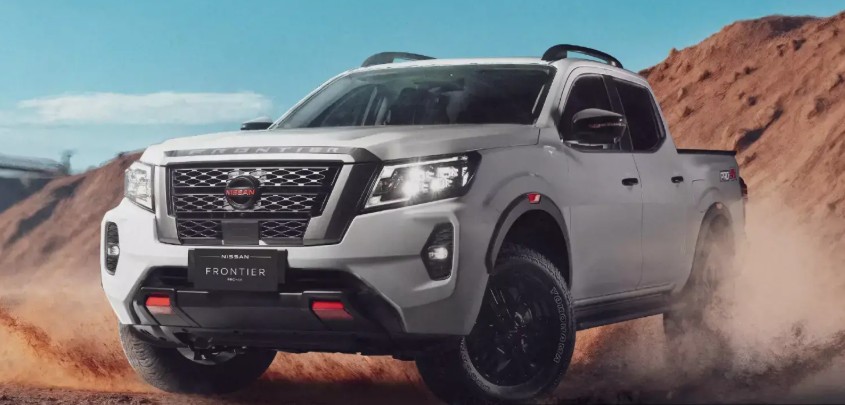
When we compare Nissan Frontier vs Toyota Tacoma reliability, we are putting two of the midsize pickup world’s toughest reputations under a microscope. Both trucks have spent decades hauling tools, tackling trails, surviving winter roads, and collecting the sort of mileage that makes ordinary crossovers nervous. Yet they approach long-term ownership from noticeably different directions.
Toyota’s Tacoma has traditionally been the safe bet—the truck people mention almost automatically when reliability enters the conversation. Nissan’s Frontier, though, has quietly built its own loyal following. It offers a comparatively straightforward formula, and the current 2026 Frontier continues to use a naturally aspirated 3.8-liter V6 paired with a nine-speed automatic transmission.
The modern Tacoma has moved in another direction. The 2026 model uses a turbocharged 2.4-liter four-cylinder, while higher-end versions can be equipped with Toyota’s i-FORCE MAX turbo-hybrid powertrain.
So, which philosophy gives us the more dependable truck?
The short answer is that Toyota still has the stronger historical reliability reputation, particularly when we look at older Tacomas. However, buyers shopping for a new truck face a much more complicated decision. The Frontier’s relatively conventional V6 powertrain may appeal strongly to owners who value simplicity, while the newest Tacoma offers newer technology, greater torque, and improved efficiency—but with less long-term real-world history behind its latest mechanical package.
Let’s dig deeper.
Content in this publication
- Nissan Frontier vs Toyota Tacoma Reliability at a Glance
- Why the Toyota Tacoma Has Such a Strong Reliability Reputation
- Why the Nissan Frontier Deserves More Credit
- Current Frontier vs Current Tacoma: The Reliability Question Has Changed
- Frontier V6 vs Tacoma Turbo Engine Reliability
- What About Tacoma i-FORCE MAX Hybrid Reliability?
- Nissan Frontier 9-Speed Transmission Reliability
- Toyota Tacoma Transmission Reliability
- Do Recalls Mean a Truck Is Unreliable?
- Long-Term Reliability: Which Truck Could Reach 200,000 Miles?
- Which Used Nissan Frontier Years Offer the Best Reliability Potential?
- Which Used Toyota Tacoma Is Most Reliable?
- Rust Can Matter More Than Engine Reliability
- Off-Road Use Changes the Reliability Equation
- Frontier vs Tacoma Maintenance Costs
- Which Truck Is Better for DIY Owners?
- Tacoma Resale Value Changes the Reliability Calculation
- Can the New Tacoma Eventually Prove More Reliable?
- Could the Frontier's Older Technology Be an Advantage?
- Nissan Frontier vs Toyota Tacoma Reliability for Towing
- Frontier vs Tacoma Reliability for Daily Driving
- Reliability for Keeping the Truck 5 Years
- Reliability for Keeping the Truck 10–15 Years
- Which Truck Is More Likely to Reach 300,000 Miles?
- The Biggest Reliability Mistake Buyers Make
- So, Is Nissan Frontier More Reliable Than Toyota Tacoma?
- Is Toyota Tacoma More Reliable Than Nissan Frontier?
- Who Should Buy the Nissan Frontier?
- Who Should Buy the Toyota Tacoma?
- Nissan Frontier vs Toyota Tacoma Reliability: Final Verdict
- Frequently Asked Questions
- 1. Is a Nissan Frontier as reliable as a Toyota Tacoma?
- 2. Which will last longer, a Tacoma or Frontier?
- 3. Is the Nissan Frontier V6 more reliable than the Tacoma turbo engine?
- 4. Should I buy a Frontier or Tacoma if I plan to keep it for 15 years?
- 5. Is a used Tacoma worth paying more for than a Frontier?
Nissan Frontier vs Toyota Tacoma Reliability at a Glance
If we had to summarize the comparison before diving into the details, it would look something like this:
| Reliability Category | Nissan Frontier | Toyota Tacoma |
|---|---|---|
| Historical reputation | Very good | Excellent |
| Current engine simplicity | Excellent | Good |
| Proven older models | Very good | Excellent |
| Current-generation track record | Developing | Developing |
| Powertrain complexity | Lower | Higher |
| Long-term owner confidence | High | Very high historically |
| Maintenance simplicity | Strong | Strong |
| Resale reputation | Good | Excellent |
| High-mileage potential | Excellent with care | Excellent with care |
That table hides plenty of nuance, though.
A truck does not become reliable simply because its badge has a strong reputation. Model year, maintenance history, driving environment, towing frequency, previous accidents, modifications, corrosion, and even tire choice can influence how trouble-free ownership becomes.
Reliability Is More Than Avoiding Engine Failure
When people say, “This truck is reliable,” they often mean, “The engine won’t explode.”
That is certainly useful, but reliability goes much further.
We need to consider:
- Engine durability
- Transmission behavior
- Cooling-system longevity
- Electronics
- Suspension and steering wear
- Four-wheel-drive components
- Sensors and driver-assistance systems
- Corrosion
- Repair costs
- Parts availability
- Frequency of unexpected repairs
A truck that reaches 250,000 miles but needs constant suspension, electrical, and emissions-system repairs along the way may technically survive, yet few owners would describe the experience as painless.
Why the Toyota Tacoma Has Such a Strong Reliability Reputation
The Tacoma did not earn its reputation overnight.
For decades, Toyota followed a fairly conservative truck-building philosophy. Rather than reinventing the Tacoma every few years, Toyota traditionally allowed proven mechanical systems to mature.
That strategy sometimes made the Tacoma feel old-fashioned next to competitors. Interiors could seem dated. Automatic transmissions were not always the smoothest. Fuel economy was hardly revolutionary.
Yet mechanical conservatism has a valuable side effect: problems tend to get ironed out over time.
Older Tacomas Became Known for Longevity
Properly maintained Tacomas have developed a strong reputation as high-mileage vehicles. That reputation also contributes to unusually strong demand in the used-truck market.
Buyers are often willing to consider a Tacoma with mileage that would make them hesitate with another vehicle.
That does not mean every Tacoma is indestructible.
Older trucks can suffer from corrosion, neglected fluids, worn suspension components, leaking seals, abused drivetrains, and other age-related problems. A famous badge cannot undo fifteen years of poor maintenance.
Still, Toyota’s historical consistency gives the Tacoma an important advantage when we discuss proven reliability.
Why the Nissan Frontier Deserves More Credit
The Frontier has always lived somewhat in the Tacoma’s shadow.
Ask ten people to name the most dependable midsize truck, and we would expect the Tacoma to come up repeatedly. Yet the Frontier has long appealed to buyers who want something mechanically straightforward without paying what enthusiasts sometimes jokingly call the “Toyota tax.”
That relative simplicity matters.
The Frontier Uses an Old-School Formula
The 2026 Nissan Frontier continues with a standard 3.8-liter naturally aspirated V6 producing 310 horsepower and 281 lb-ft of torque, paired with a nine-speed automatic transmission.
No turbocharger is required.
No hybrid system is required.
There is still modern direct injection and plenty of electronics, of course, so calling the Frontier mechanically primitive would be inaccurate. But compared with increasingly complicated turbo-hybrid powertrains, its basic engine architecture feels refreshingly conventional.
Think of it like choosing between a highly capable digital multitool and a sturdy mechanical wrench.
Both can work brilliantly. One simply has fewer layers.
Why Simplicity Can Help Long-Term Ownership
Every additional component is not automatically a reliability problem.
Turbochargers can last hundreds of thousands of miles. Hybrid systems can be exceptionally durable. Modern electronics can operate for decades.
Still, additional components create additional potential failure points.
A conventional naturally aspirated V6 eliminates certain hardware associated with turbocharging and hybridization. For someone hoping to own a truck for 12 or 15 years, that simplicity can provide psychological—and potentially financial—comfort.
Current Frontier vs Current Tacoma: The Reliability Question Has Changed
This is where the conversation gets interesting.
We cannot simply look at the Tacoma’s legendary past and assume the newest model will behave exactly like its predecessors.
Toyota completely changed the Tacoma’s mechanical formula beginning with the latest generation.
The 2026 Tacoma’s standard i-FORCE engine is a 2.4-liter turbocharged four-cylinder producing up to 278 horsepower and 317 lb-ft of torque, while the available i-FORCE MAX hybrid combines the turbo engine with electrification for up to 326 horsepower and 465 lb-ft.
Those are impressive numbers.
But from a reliability-analysis perspective, there is an unavoidable issue: time.
The New Tacoma Has Less Long-Term Evidence
No engineering department can accelerate a pickup through twenty years of actual customer ownership.
Laboratory durability testing can be extraordinary. Manufacturers can simulate extreme conditions, run engines continuously, torture-test suspensions, and put development vehicles through brutal environments.
Yet real owners introduce variables laboratories struggle to reproduce.
People forget oil changes.
They tow overloaded trailers.
They idle for hours.
They modify suspension systems.
They drive through road salt.
They make thousands of short cold-start trips.
They keep trucks outdoors for fifteen winters.
That is why long-term reliability eventually becomes a historical question rather than merely an engineering one.
The newest Tacoma simply has not existed long enough for us to know how widespread twenty-year-old examples will someday become.
Frontier V6 vs Tacoma Turbo Engine Reliability
This may be the single most important mechanical distinction between the two trucks.
Nissan Frontier 3.8-Liter V6
The Frontier’s 3.8-liter V6 develops 310 horsepower and comes standard across the current lineup. Nissan describes the engine as part of its VQ family and pairs it with a nine-speed automatic.
Its strongest reliability argument is straightforward: relatively conventional naturally aspirated architecture.
A naturally aspirated engine does not depend on turbocharger boost to generate its output. That generally means lower specific output compared with a smaller turbo engine and eliminates turbo-related plumbing and hardware.
That does not guarantee perfection.
Direct injection brings its own complexity, and modern engines contain sensors, emissions equipment, variable valve timing, sophisticated engine management, and other systems that can eventually require attention.
Still, mechanically, we like the Frontier’s conservative approach for owners whose top priority is keeping a vehicle deep into six-figure mileage.
Toyota Tacoma 2.4-Liter Turbo
The Tacoma takes the modern route.
Turbocharging allows Toyota to extract impressive torque from a relatively small engine. The standard 2026 Tacoma can produce up to 317 lb-ft of torque from its 2.4-liter i-FORCE engine.
That low-end torque can make the truck feel strong without needing a large-displacement engine.
But will the system match the longevity reputation of Toyota’s older naturally aspirated engines?
We need more years of ownership data before declaring a definitive winner.
Does Turbocharging Automatically Mean Poor Reliability?
No.
That assumption is too simplistic.
Manufacturers have built extremely durable turbocharged engines, and turbo technology itself is hardly new.
The question is not whether a turbocharged engine can last.
It absolutely can.
The more useful question is whether its added heat, pressure, components, hoses, lubrication requirements, and control systems create additional opportunities for expensive repairs after 150,000 or 200,000 miles.
Potentially, yes.
That is why meticulous oil maintenance becomes especially important with turbocharged vehicles.
What About Tacoma i-FORCE MAX Hybrid Reliability?
The hybrid Tacoma adds another layer to the conversation.
Toyota’s 2026 i-FORCE MAX Tacoma produces 326 horsepower and 465 lb-ft of torque and uses an eight-speed automatic transmission.
Its torque output is enormous compared with what midsize trucks offered not many years ago.
For performance and effortless acceleration, that is attractive.
For long-term reliability predictions, however, we should separate two ideas.
Toyota has enormous hybrid experience as a manufacturer. That inspires confidence.
At the same time, a turbocharged hybrid pickup powertrain is not identical to the comparatively simple naturally aspirated hybrid systems Toyota has used in many passenger vehicles.
If our sole objective were minimizing mechanical complexity for ownership beyond 200,000 miles, we would personally lean toward the conventional Frontier setup.
If we valued performance, efficiency, and advanced technology alongside durability, the Tacoma hybrid becomes far more compelling.
Nissan Frontier 9-Speed Transmission Reliability
The current Frontier uses a nine-speed automatic transmission.
More gears allow an engine to remain closer to an efficient operating range while still giving the truck short lower ratios for acceleration and taller upper ratios for highway cruising.
The obvious concern is complexity.
Older four- and five-speed automatics were comparatively simple creatures. Modern transmissions contain sophisticated software, numerous shift strategies, tight tolerances, and far more ratios.
Yet number of gears alone does not determine durability.
Maintenance still matters enormously.
Transmission Fluid Should Not Be Forgotten
Many owners meticulously change engine oil while treating transmission fluid as if it were immortal.
It is not.
Heat, towing, repeated stop-and-go operation, steep climbs, and heavy loads stress automatic transmission fluid.
If we plan to keep either truck far beyond the warranty period, following the manufacturer’s maintenance requirements—and shortening service intervals when the vehicle regularly experiences severe use—is one of the smartest things we can do.
Toyota Tacoma Transmission Reliability
Depending on configuration, the current Tacoma can use an automatic transmission, while Toyota also continues to offer a six-speed manual transmission on certain versions.
That manual option is unusual in today’s midsize-truck market and may appeal to enthusiasts who want greater control.
We should not automatically assume a manual is more reliable, though.
Clutches wear.
You may be interested in reading Nissan Frontier vs Navara: Which Nissan Pickup Is Better?
Synchronizers wear.
Poor shifting technique can shorten component life dramatically.
For typical drivers, a properly maintained automatic is usually the easier ownership experience.
Do Recalls Mean a Truck Is Unreliable?
Not necessarily.
This distinction matters because internet discussions often turn recall counts into a scoreboard.
A recall means a manufacturer and safety regulator have identified a safety-related defect that requires correction. It does not automatically tell us whether an engine will last 250,000 miles.
For example, NHTSA documentation shows a safety recall affecting certain 2024–2025 Tacoma vehicles involving potential rear brake-hose damage and loss of brake performance.
Toyota also issued recall activity affecting certain Tacoma and Tacoma Hybrid vehicles in 2026.
Those matters should absolutely be taken seriously.
But they should not be interpreted as proof that every Tacoma is mechanically unreliable.
Likewise, no vehicle should be assumed recall-free forever. NHTSA recommends checking vehicles for open safety recalls periodically.
Long-Term Reliability: Which Truck Could Reach 200,000 Miles?
Both.
That is the answer we would give without hesitation.
A properly maintained Nissan Frontier can reasonably be considered a candidate for very high mileage, and the Tacoma’s historical reputation makes it equally difficult to bet against.
But mileage alone is a crude measure.
We should ask a better question:
What will it cost us to reach 200,000 miles?
A truck might reach that milestone while needing several thousand dollars of repairs. Another could make the journey with little beyond normal maintenance.
That is the kind of reliability that affects our wallet.
Maintenance History Beats Brand Reputation
If we are buying used, we would choose a meticulously maintained Frontier over a neglected Tacoma every time.
Service records matter.
So does evidence of responsible ownership.
Look for regular fluid changes, factory-quality replacement parts, properly matched tires, clean underbody components, and sensible modifications.
A shiny body cannot hide years of neglected drivetrain maintenance.
Which Used Nissan Frontier Years Offer the Best Reliability Potential?
For shoppers prioritizing proven durability, established Frontier generations can be attractive because much more real-world history is available than with brand-new models.
Older Frontiers built around long-running naturally aspirated engines and conventional drivetrains developed reputations as straightforward workhorses.
However, age introduces another danger.
A fifteen-year-old “reliable” pickup is still fifteen years old.
Rubber deteriorates.
Bushings crack.
Hoses harden.
Seals leak.
Electrical connections corrode.
So rather than buying solely by model-year reputation, we should evaluate the individual truck.
What to Inspect on a Used Frontier
A thorough pre-purchase inspection should pay particular attention to:
- Cold-start behavior
- Transmission shifts
- Differential noise
- Four-wheel-drive engagement
- Coolant leaks
- Oil seepage
- Suspension bushings
- Wheel bearings
- Frame and underbody corrosion
- Accident repairs
- Electrical warning lights
- Evidence of heavy towing
- Aftermarket suspension modifications
A $150 inspection can save us thousands.
Which Used Toyota Tacoma Is Most Reliable?
The Tacoma’s strongest reliability argument arguably comes from its older, well-established generations.
These trucks have accumulated huge amounts of real-world mileage, giving buyers an enormous pool of ownership experience to study.
The catch?
Everyone else knows it.
Used Tacomas often command strong prices because buyers trust them.
That creates a fascinating dilemma.
Imagine two similarly aged trucks.
The Tacoma costs several thousand dollars more because of its reputation. The Frontier costs less but may prove equally dependable during our ownership period.
Which is actually the better financial decision?
Reliability and value are not identical.
Paying substantially more to avoid a hypothetical repair does not always save money.
Sometimes buying the cheaper reliable truck and keeping a repair reserve in the bank makes better financial sense.
Rust Can Matter More Than Engine Reliability
This is particularly important for buyers in regions that use road salt.
We can obsess over whether the Frontier V6 or Tacoma engine is more durable while completely ignoring the truck’s frame.
That would be a mistake.
Severe corrosion can turn an otherwise excellent vehicle into a financial nightmare.
Always Inspect Underneath the Truck
We want to look at:
- Frame rails
- Crossmembers
- Suspension mounting points
- Brake lines
- Fuel lines
- Body mounts
- Hitch mounting areas
- Skid-plate mounting points
- Differential housings
Light surface oxidation is very different from deep structural corrosion.
If the metal is flaking heavily, swelling around seams, or losing structural thickness, walk carefully.
Off-Road Use Changes the Reliability Equation
Both trucks attract off-road enthusiasts.
That makes used examples particularly difficult to judge.
A well-maintained truck that occasionally explores forest roads may be perfectly healthy.
A heavily modified truck that spent every weekend bouncing across rocks is another story.
Modifications Can Accelerate Wear
Large tires increase rotating mass.
Lift kits alter suspension geometry.
Aggressive wheel offsets place additional leverage on bearings.
Heavy armor adds weight.
Performance tuning can increase drivetrain loads.
None of those modifications automatically ruins a truck, but they change the reliability equation.
A completely stock pickup with boring maintenance records may be the least exciting truck in the classifieds—and the smartest one to buy.
Frontier vs Tacoma Maintenance Costs
Routine maintenance should be manageable on either vehicle.
Oil changes, filters, brake service, tires, differential fluid, coolant, and other wear items remain normal truck expenses.
Where future costs may diverge is in component complexity.
The Frontier’s naturally aspirated V6 gives us fewer major propulsion-system technologies to consider.
The Tacoma’s available hybrid system adds electric components, while its standard engine introduces turbocharging.
Again, complexity does not equal unreliability.
But once vehicles become old enough that major components eventually fail, complexity can influence repair bills.
Which Truck Is Better for DIY Owners?
We would give the philosophical advantage to the Frontier.
Its conventional gasoline V6 layout will probably feel more familiar to owners accustomed to traditional trucks.
Modern vehicles are still heavily computerized, however, so neither truck is the kind of machine we can maintain indefinitely with only a socket set and a hammer.
Diagnostics increasingly require scan tools.
Software matters.
Sensors communicate across multiple control modules.
Even simple jobs can trigger electronic procedures.
Still, DIY-minded buyers who dislike hybrids and turbocharging may find the Frontier’s mechanical approach easier to embrace.
Tacoma Resale Value Changes the Reliability Calculation
Reliability does something unusual to vehicle economics.
The more people trust a model, the more they are willing to pay for an old example.
Tacoma buyers frequently value not just the truck itself but the expectation that the truck will continue working.
That expectation helps sustain demand.
Frontier Buyers May Get More Truck for Their Money
The Frontier historically has not enjoyed quite the same cult-like used-market reputation.
For value-oriented buyers, that can actually be beneficial.
A less expensive purchase price means more money remains available for maintenance, accessories, tires, insurance, or unexpected repairs.
If both trucks provide dependable service, the Frontier owner may ultimately spend less.
Can the New Tacoma Eventually Prove More Reliable?
Absolutely.
We should not confuse “not yet proven” with “unreliable.”
Toyota engineers did not suddenly forget how to build durable vehicles.
The newest Tacoma could ultimately accumulate an excellent durability record.
But reliability predictions are probabilistic.
We know far more about a powertrain after hundreds of thousands of owners have driven it for ten years than we do after only a few model years.
That is why conservative long-term buyers sometimes avoid the first years of an all-new generation.
You may be interested in readingNissan Frontier vs Navara: Which Nissan Pickup Is Better?You may be interested in reading
Nissan Frontier vs Jeep Gladiator: Which Midsize Truck Wins?They let other owners discover the quirks first.
Could the Frontier's Older Technology Be an Advantage?
Potentially.
Automotive engineering often involves tradeoffs.
The Frontier does not attempt to win every efficiency or technology contest. Instead, it continues to offer a robust V6-centered package.
Its 3.8-liter engine currently produces 310 horsepower, while the standard Tacoma turbo engine offers up to 278 horsepower but significantly more torque at up to 317 lb-ft.
The Toyota is the more technologically ambitious drivetrain.
The Nissan feels more traditional.
For drivers keeping a truck three years, that distinction may barely matter.
For someone planning to own it for eighteen years?
Suddenly it becomes much more interesting.
Nissan Frontier vs Toyota Tacoma Reliability for Towing
Towing places considerably more stress on a truck than commuting unloaded.
Transmission temperatures rise.
Cooling systems work harder.
Brakes absorb additional energy.
Suspension components carry greater loads.
Engines spend more time under heavy throttle.
That means towing reliability depends heavily on how responsibly the truck is operated.
Frequent Towers Should Use Severe-Service Thinking
If we regularly tow, minimum maintenance should not be our goal.
We would rather change fluids too early than too late.
Pay attention to transmission service, differential fluids, cooling-system condition, brake wear, tire load ratings, and actual payload.
Remember that payload can become the limiting factor before maximum trailer weight does.
The toughest truck in the world will suffer if overloaded repeatedly.
Frontier vs Tacoma Reliability for Daily Driving
Daily commuters present almost the opposite scenario.
Light-duty driving places less mechanical strain on the drivetrain, but short trips can create their own challenges.
Engines that rarely reach full operating temperature can accumulate moisture and contaminants.
Batteries may struggle if trips are extremely short.
Brakes can corrode when vehicles sit.
Modern trucks prefer being properly exercised.
For ordinary mixed driving with regular maintenance, either Frontier or Tacoma should make a strong daily companion.
Reliability for Keeping the Truck 5 Years
If we plan to keep our truck around five years, reliability would not be the deciding factor between these two.
Both are modern pickups backed by established manufacturers.
Instead, we would focus on:
- Purchase price
- Warranty coverage
- Fuel use
- Driving comfort
- Payload requirements
- Towing needs
- Off-road capability
- Interior space
- Resale value
Five-year ownership simply does not expose the same aging concerns as fifteen-year ownership.
Reliability for Keeping the Truck 10–15 Years
Now the Frontier starts becoming particularly interesting.
Long-term owners must think about what happens when components age outside warranty coverage.
Would we rather own a conventional V6 or a turbocharged four-cylinder?
Would we feel comfortable maintaining a hybrid system fifteen years from now?
How expensive might proprietary electronic components become?
Nobody can answer those questions perfectly today.
However, buyers who deliberately prioritize mechanical simplicity may reasonably prefer the Frontier.
Which Truck Is More Likely to Reach 300,000 Miles?
We would not declare a universal winner.
Historical Tacoma evidence makes Toyota extremely difficult to dismiss. Plenty of buyers specifically seek Tacomas because of their high-mileage reputation.
Yet the Frontier’s formula is exactly the type we tend to like when planning extremely long ownership: sturdy body-on-frame construction, a naturally aspirated engine, traditional automatic transmission, and fewer propulsion-system layers than the hybrid Tacoma.
At 300,000 miles, maintenance history matters far more than showroom specifications.
A carefully maintained Frontier can outlive an abused Tacoma.
A carefully maintained Tacoma can outlive an abused Frontier.
At that mileage, the owner becomes part of the engineering team.
The Biggest Reliability Mistake Buyers Make
They buy the reputation instead of the vehicle.
A Tacoma badge does not automatically guarantee reliability.
A Nissan badge does not automatically imply inferior durability.
The individual truck sitting in front of us matters enormously.
For Used Trucks, Condition Comes First
Before buying, we should review:
- Service history.
- Accident history.
- Recall completion.
- Frame condition.
- Tire wear patterns.
- Engine leaks.
- Transmission behavior.
- Four-wheel-drive operation.
- Suspension condition.
- Signs of towing or off-road abuse.
NHTSA recommends owners check for outstanding recalls regularly, making VIN-specific recall verification an especially sensible part of any used-vehicle purchase.
So, Is Nissan Frontier More Reliable Than Toyota Tacoma?
Historically?
We would give the advantage to the Tacoma.
Toyota has built an unusually strong reputation around long-lived trucks, and decades of Tacoma ownership provide a deeper body of evidence.
For the newest trucks, however, the decision becomes much closer.
The current Frontier retains its 3.8-liter naturally aspirated V6 and nine-speed automatic, whereas the Tacoma has transitioned to turbocharged four-cylinder and available turbo-hybrid powertrains.
If we define reliability partly as mechanical simplicity plus proven architecture, the Frontier becomes extremely attractive.
Is Toyota Tacoma More Reliable Than Nissan Frontier?
Across the full history of both nameplates, we would still place Toyota slightly ahead.
But we would attach a giant asterisk to that conclusion when comparing brand-new models.
Past Tacoma reliability belonged to different engines, transmissions, and vehicle generations.
The latest Tacoma needs to build its own record.
Brand heritage deserves respect.
It does not deserve a blank check.
Who Should Buy the Nissan Frontier?
We would favor the Frontier if our priorities looked something like this:
- We want a naturally aspirated V6.
- We plan to keep the truck for many years.
- Mechanical simplicity matters.
- We do not need a hybrid powertrain.
- We want strong conventional truck performance.
- Used-market value matters more than prestige.
- We prefer proven-feeling hardware over maximum technology.
The Frontier is almost refreshingly stubborn.
While much of the industry races toward smaller turbo engines and electrification, Nissan still gives us a standard 310-horsepower V6.
For some buyers, that alone will settle the debate.
Who Should Buy the Toyota Tacoma?
We would lean Tacoma if:
- Historical resale value matters heavily.
- We trust Toyota’s long-term engineering reputation.
- We want more modern powertrain choices.
- Strong low-end torque is important.
- We want a hybrid option.
- We value the Tacoma’s extensive aftermarket.
- We are comfortable accepting newer technology.
The Tacoma is no longer the simple old-school truck it once was.
That is not necessarily bad.
It simply changes what we are buying.
The Reliability Winner Depends on Our Definition
If “reliable” means the strongest decades-long reputation, Tacoma wins.
If “reliable” means the simplest current powertrain, Frontier arguably wins.
If “reliable” means lowest-risk used purchase, condition and maintenance history matter more than either badge.
If “reliable” means a truck we intend to own for 200,000-plus miles, both deserve consideration.
That is a much more useful conclusion than pretending one truck destroys the other.
Nissan Frontier vs Toyota Tacoma Reliability: Final Verdict
The Nissan Frontier vs Toyota Tacoma reliability battle does not produce the landslide victory many buyers expect.
The Tacoma remains the historical benchmark. Its reputation was forged over decades, millions of miles, remote trails, construction sites, family duty, and owners who kept their trucks long enough for the seats to become part of the family.
But today's Tacoma is different.
Its turbocharged 2.4-liter engine and available i-FORCE MAX hybrid represent a substantial technological shift from the simple powertrains that helped create the truck’s reputation. Toyota may very well prove that these systems are every bit as durable, but long-term evidence has to accumulate naturally.
The Frontier takes the more conservative road.
Its naturally aspirated 3.8-liter V6 feels almost rebellious in an industry obsessed with downsizing and electrification. Add a conventional nine-speed automatic and we get a powertrain package that long-term owners can understand easily.
So, which would we pick strictly for reliability?
For proven historical reliability, we would pick the Toyota Tacoma.
For current-model mechanical simplicity and long-term ownership confidence, we would give the Nissan Frontier a surprisingly strong edge.
And for a used truck?
We would buy the cleanest, best-maintained example of either one.
Because ultimately, badges tell us where a truck came from.
Maintenance tells us where it is going.
Frequently Asked Questions
1. Is a Nissan Frontier as reliable as a Toyota Tacoma?
The Frontier can be extremely reliable, and a properly maintained example may easily provide many years of dependable service. Historically, however, the Tacoma has the stronger overall reputation and a deeper record of high-mileage ownership. With current models, the gap is harder to judge because the latest Tacoma uses substantially newer turbocharged and hybrid technology.
2. Which will last longer, a Tacoma or Frontier?
Either truck has the potential to reach very high mileage. Maintenance, operating conditions, corrosion, towing habits, and previous ownership matter more than the badge once we start discussing 200,000-mile vehicles. Historically, Tacoma has the stronger longevity reputation, while the Frontier’s relatively simple current V6 drivetrain makes it appealing for long-term ownership.
3. Is the Nissan Frontier V6 more reliable than the Tacoma turbo engine?
We cannot conclusively say it will last longer because the latest Tacoma powertrain needs more years of real-world history. However, the Frontier's naturally aspirated V6 is mechanically less complex in several important respects because it does not require a turbocharger or hybrid assistance. Buyers who place simplicity above efficiency or maximum torque may therefore prefer the Nissan.
4. Should I buy a Frontier or Tacoma if I plan to keep it for 15 years?
Both can make sense, but we would look particularly closely at the Frontier if mechanical simplicity is our top concern. The Tacoma retains Toyota’s powerful reliability reputation, while the Frontier offers a comparatively traditional powertrain. Whichever truck we choose, diligent maintenance will matter enormously over a 15-year ownership period.
5. Is a used Tacoma worth paying more for than a Frontier?
Not automatically. A Tacoma may hold its value better because buyers place significant confidence in the nameplate, but paying thousands more does not guarantee that a particular used Tacoma is healthier than a Frontier. Compare service records, mileage, corrosion, accident history, modifications, drivetrain condition, and purchase price before deciding. A well-maintained Frontier at the right price can be the smarter value.
You may be interested in readingNissan Frontier vs Navara: Which Nissan Pickup Is Better?You may be interested in reading
Nissan Frontier vs Jeep Gladiator: Which Midsize Truck Wins?You may be interested in reading
Nissan Frontier vs Toyota Tundra: Which Truck Makes More Sense?If you want to know other articles similar to Nissan Frontier vs Toyota Tacoma Reliability: Which Truck Is Built to Last? you can visit the category Models.
Kia Sorento Models: Complete Guide to Trims, Engines and Versions
BYD Shark 6 vs Ranger vs HiLux: Which Ute Makes the Most Sense in 2026?
BYD Shark 6 vs MG U9: Which Ute Makes More Sense in 2026?
BYD Shark 6 vs Ford Ranger Raptor: Which Performance Ute Is Better in 2026?
BYD Shark 6 vs Kia Tasman: Which Ute Is Better?
BYD Shark 6 vs 7: What We Know So Far
Leave a Reply
More content of your interest