

Nissan Frontier vs Toyota Tundra: Which Truck Makes More Sense?

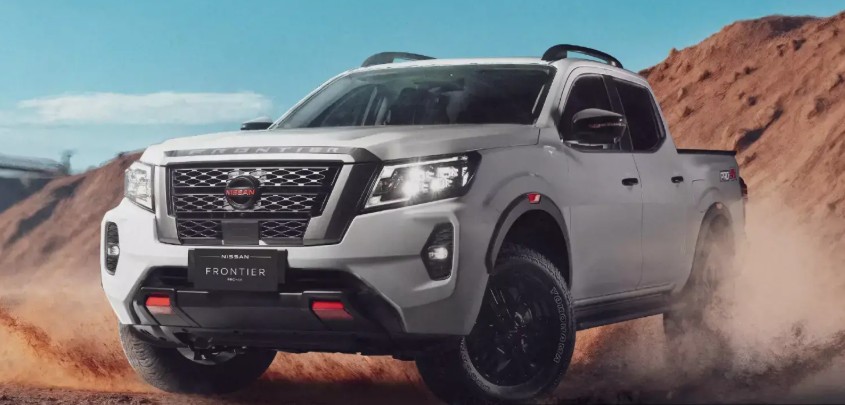
The Nissan Frontier vs Toyota Tundra comparison looks straightforward until we spend a little time with what these trucks are actually designed to do. Yes, they both have pickup beds. Yes, both can tow trailers, haul gear, leave pavement behind, and handle jobs that would make the average crossover sweat. But beyond that shared pickup-truck DNA, they live in noticeably different neighborhoods.
The Nissan Frontier is a midsize pickup. It is relatively compact, traditional in its approach, and aimed at drivers who want genuine truck capability without dragging a full-size footprint everywhere they go.
The Toyota Tundra is a full-size pickup. It is bigger, more powerful, more spacious, and better suited to heavier work. Think of the Frontier as a sturdy multitool you can carry almost anywhere, while the Tundra is closer to a full workshop on wheels.
So which one should we buy?
That depends less on which truck is "better" and more on how much truck we actually need.
Content in this publication
- Nissan Frontier vs Toyota Tundra at a Glance
- Size Difference: This Changes Almost Everything
- Engine Performance: Old-School Simplicity vs Modern Muscle
- Towing Capacity: Tundra Takes the Clear Win
- Payload and Hauling: How Much Stuff Are We Carrying?
- Ride Quality and Daily Driving
- Interior Space: Tundra Wins Comfortably
- Interior Quality and Technology
- Off-Road Capability: Frontier PRO-4X vs Tundra TRD
- Fuel Economy: Frontier Usually Makes More Sense
- Parking and Maneuverability
- Bed Utility: Bigger Isn't Automatically Better
- Reliability and Long-Term Ownership
- Maintenance Costs
- Purchase Price: Frontier's Biggest Advantage
- Nissan Frontier vs Toyota Tundra for Work
- Nissan Frontier vs Toyota Tundra for Families
- Nissan Frontier vs Toyota Tundra for Road Trips
- Which Truck Has Better Resale Value?
- Who Should Buy the Nissan Frontier?
- Who Should Buy the Toyota Tundra?
- Nissan Frontier vs Toyota Tundra: Pros and Cons
- Frontier vs Tundra: Which Is Better Off Road?
- Frontier vs Tundra: Which Is Better for Everyday Driving?
- Is the Tundra Worth the Extra Money?
- Does the Frontier Feel Too Small After Driving a Tundra?
- Nissan Frontier vs Toyota Tundra: The Value Question
- Final Verdict: Nissan Frontier or Toyota Tundra?
- Frequently Asked Questions
- 1. Is the Toyota Tundra bigger than the Nissan Frontier?
- 2. Which is better for towing, Nissan Frontier or Toyota Tundra?
- 3. Is the Nissan Frontier easier to drive than the Tundra?
- 4. Is the Frontier better than the Tundra for off-roading?
- 5. Should I buy a Nissan Frontier or Toyota Tundra for daily use?
Nissan Frontier vs Toyota Tundra at a Glance
Before diving into the details, here's the simplest way to separate them.
| Category | Nissan Frontier | Toyota Tundra |
|---|---|---|
| Truck class | Midsize pickup | Full-size pickup |
| Overall size | Smaller and easier to maneuver | Larger and more substantial |
| Engine character | Traditional naturally aspirated V6 | Turbocharged V6-based powertrains |
| Towing ability | Good for moderate trailers | Better for heavy towing |
| Payload use | Everyday hauling and recreational gear | Larger loads and heavier work |
| Cabin space | Adequate, especially up front | Significantly roomier |
| City driving | Easier | More cumbersome |
| Fuel use | Generally lower | Generally higher |
| Off-road potential | Strong, especially PRO-4X | Strong, especially TRD-equipped versions |
| Best suited to | Daily use and moderate truck duties | Heavy-duty lifestyle and towing needs |
There's already an important clue here: the Frontier and Tundra are not direct competitors in the strictest sense.
And that's precisely why this comparison matters.
A surprising number of buyers know they want a truck but don't yet know whether they need midsize or full-size capability.
Size Difference: This Changes Almost Everything
Park the Nissan Frontier next to a Toyota Tundra and the difference becomes obvious before either truck turns a wheel.
The Frontier occupies the more manageable end of pickup ownership. It's still substantial enough to feel like a proper truck, but it doesn't turn every parking garage into a geometry exam.
The Tundra is another story.
The Frontier Feels Easier Around Town
In crowded streets, shopping-center car parks, narrow driveways, and urban neighborhoods, the Frontier's smaller dimensions are a real advantage.
We can place it more confidently between lane markings. U-turns take less planning. Parking spaces feel less hostile.
That sounds trivial until we're doing it five days a week.
For someone who mainly drives to work, runs errands, visits trailheads on weekends, and occasionally uses the bed for DIY supplies, the Frontier can feel much more natural.
The Tundra Makes Its Size Work for You
The Tundra's dimensions become an advantage when we actually need the space.
Its wider body and larger cabin translate into more room for passengers. The bed and chassis are better suited to serious work, and the truck feels more substantial when towing.
There's simply more metal between us and the horizon.
Which Size Is Better?
Neither universally.
The Frontier's smaller size makes it more convenient.
The Tundra's larger size gives it greater capability.
So rather than asking, "Which truck is bigger?" we should ask, "Will that extra size help me often enough to justify living with it every day?"
Engine Performance: Old-School Simplicity vs Modern Muscle
This is where the personalities of these trucks really separate.
The Nissan Frontier has traditionally leaned on a naturally aspirated V6 paired with an automatic transmission. There's something refreshingly straightforward about that combination.
Press the accelerator, the engine revs, and the truck moves.
No complicated personality crisis. No pretending it's a sports sedan.
The Tundra takes a more modern approach, using turbocharged V6-based powertrains, with hybrid assistance available in parts of the range depending on configuration.
Frontier Performance Feels Predictable
The Frontier's V6 suits the truck's personality.
Power delivery is linear and easy to understand. Around town, there's enough muscle to make the truck feel energetic without overwhelming the rear tires every time we touch the accelerator.
For highway merging, overtaking, gravel roads, and everyday hauling, it has plenty of usable performance.
But load the truck heavily or attach a substantial trailer and we begin to find the Frontier's natural limits.
The Tundra Has Far More Muscle in Reserve
The Tundra plays in another league.
Its turbocharged power gives it significantly more low-end punch, particularly when towing or climbing steep grades.
This matters because horsepower alone doesn't tell the whole story. When we're hauling something heavy, torque is the friend doing the actual lifting.
A full-size truck with abundant low-rpm torque simply feels less stressed pulling weight.
Hit a long incline with a trailer attached and the Tundra is more likely to shrug rather than scream.
Towing Capacity: Tundra Takes the Clear Win
For many buyers, this section could settle the entire Nissan Frontier vs Toyota Tundra debate.
The Frontier is capable of towing boats, small campers, utility trailers, motorcycles, and similar recreational loads when correctly equipped.
That's enough for a huge number of people.
But the Toyota Tundra has substantially greater towing capability in suitable configurations.
When the Frontier Is Enough
The Frontier makes sense if we're towing things like:
- Small or medium travel trailers
- Personal watercraft
- Small fishing boats
- Utility trailers
- ATVs or dirt bikes
- Lightweight construction equipment
There's no reason to buy more truck than necessary simply because a larger number looks impressive on a specification sheet.
When the Tundra Is the Better Tool
The Tundra becomes the logical choice for heavier loads, larger campers, substantial boats, equipment trailers, or frequent towing.
Towing isn't just about whether a truck can technically move the trailer.
It's also about stability, cooling, braking confidence, suspension behavior, and how relaxed the powertrain feels while doing the job.
Frequent Towing Changes the Equation
If we tow twice per year, a midsize pickup may be plenty.
If we tow every weekend, the extra capability of a full-size truck can feel worth every inch of additional width.
That's a distinction worth remembering.
Payload and Hauling: How Much Stuff Are We Carrying?
The same logic applies to payload.
Payload includes everything placed in or on the truck, including occupants, cargo, accessories, and tongue weight from a trailer.
It's easy to underestimate how quickly those numbers add up.
The Nissan Frontier works brilliantly for normal pickup duties: landscaping supplies, camping gear, bikes, tools, home-renovation materials, or a weekend's worth of messy cargo.
The Tundra's larger platform provides greater breathing room for heavier jobs.
Frontier: Ideal for Everyday Truck Work
Need to throw a washing machine in the bed?
No problem.
Moving bags of mulch?
Easy.
Carrying mountain bikes and camping gear?
Exactly the kind of job the Frontier handles beautifully.
Tundra: Built for Bigger Demands
The Tundra becomes more appealing when the truck is part of our work rather than merely supporting our lifestyle.
Contractors, heavy recreational users, farmers, towing enthusiasts, and buyers regularly carrying significant loads are more likely to appreciate its additional capability.
Ride Quality and Daily Driving
Here's where bigger isn't always better.
Pickup trucks must balance unloaded comfort with the ability to support significant weight. That's not easy.
The Frontier has a traditional truck-like feel. It can feel firm over rough pavement, particularly when unloaded, but there's an appealing honesty to the experience.
The Tundra feels larger and more planted.
Frontier Behind the Wheel
Driving the Frontier is relatively easy by pickup standards.
Visibility is generally good, its proportions don't require constant concentration, and it feels narrow enough for regular roads.
The steering isn't designed to imitate a sports car, nor should it be.
It's deliberate.
At highway speed, the Frontier settles comfortably into a cruise.
Tundra Behind the Wheel
The Tundra feels heavier because it is.
There's more truck moving beneath us, and that extra mass creates a different sensation.
On wide highways, the Tundra feels right at home.
On tight urban streets? Less so.
Its size becomes part of every decision.
Want to pull into that tiny coffee-shop parking lot?
Maybe we'll reconsider how badly we need caffeine.
Interior Space: Tundra Wins Comfortably
The Frontier's cabin works well for two adults and can accommodate more passengers depending on cab configuration.
But the Tundra simply offers more room.
This is one of the biggest reasons families often gravitate toward full-size pickups.
Front Seats
Both trucks can provide comfortable front seating, but the Tundra gives occupants more shoulder room and a more expansive environment.
The Frontier feels like we're sitting inside a midsize truck.
The Tundra feels like we're sitting inside a mobile living room that happens to have a cargo bed attached.
Rear-Seat Space
This difference becomes especially important for Crew Cab buyers.
Adult passengers will generally appreciate the Tundra's additional space on long journeys.
You may be interested in reading Nissan Frontier vs F150: Which Pickup Fits You Better?
Kids may be comfortable in either, but rear-facing child seats and bulky family equipment tend to fit more naturally inside a full-size cabin.
Family Buyers Should Think Carefully
If our truck doubles as the primary family vehicle, the Tundra has a strong advantage.
If rear seats are mostly used for bags, dogs, children, or occasional passengers, the Frontier may be completely sufficient.
Interior Quality and Technology
Neither truck is simply a steel box with vinyl seats anymore.
Modern pickups have become tech-heavy vehicles capable of serving as offices, road-trip machines, and family transportation.
The Nissan Frontier's interior has improved enormously compared with older generations, providing modern infotainment, useful storage, and available convenience features.
The Tundra pushes further toward the premium end, especially in higher trims.
Frontier Keeps Things Relatively Straightforward
There's something satisfying about a cabin where controls still resemble controls.
Truck buyers frequently use their vehicles while wearing gloves, working outdoors, or navigating rough terrain.
A physical switch can sometimes be better than diving through touchscreen menus.
Tundra Can Feel Much More Luxurious
Depending on trim, the Tundra can offer the kind of equipment once reserved for luxury sedans.
Large displays, upscale materials, advanced driver assistance, premium audio, sophisticated cameras, and comfort technology can transform it into a remarkably plush machine.
Of course, those upgrades also push the price upward.
Fast.
Off-Road Capability: Frontier PRO-4X vs Tundra TRD
Now things get interesting.
Both manufacturers know their buyers like dirt.
Nissan offers the Frontier PRO-4X, while Toyota has several off-road-oriented Tundra configurations and TRD packages.
Why the Frontier Can Be Excellent Off Road
Smaller trucks often have a hidden advantage in difficult terrain: size.
A shorter, narrower pickup can squeeze through forest trails where a full-size truck feels like a cruise ship exploring a canal.
The Frontier's compact footprint makes it easier to place tires precisely.
Add suitable tires, underbody protection, four-wheel drive, and a locking rear differential in appropriate configurations, and it becomes a genuinely capable adventure truck.
Why the Tundra Is Still Formidable
The Tundra combines power with available off-road equipment.
On wide desert tracks, fire roads, sand, and open terrain, that combination can be fantastic.
But there's no escaping physics.
When the trail narrows, the Tundra's width matters.
Best Choice for Tight Trails
Frontier.
Best Choice for Open Terrain and Power
Tundra.
Simple.
Fuel Economy: Frontier Usually Makes More Sense
Nobody buys a traditional pickup because they enjoy visiting fuel stations, but operating cost still matters.
The Frontier's smaller body, lighter weight, and less powerful drivetrain generally give it an advantage when we're comparing similar driving conditions.
The Tundra has made considerable technological progress compared with older full-size trucks, especially through turbocharging and available electrification, but moving a large pickup still requires energy.
Think Beyond Official Fuel Numbers
Real-world fuel use changes dramatically depending on:
- Vehicle configuration
- Tire choice
- Four-wheel-drive system
- Driving speed
- Traffic
- Towing
- Payload
- Weather
- Terrain
- Driver behavior
A lifted truck with aggressive all-terrain tires rarely rewards us at the pump.
Physics has a sense of humor.
Parking and Maneuverability
We tend to ignore parking during the excitement of buying a truck.
Then we own it.
The Frontier slips into daily life more easily.
The Tundra requires more awareness of length, width, turning radius, and overhead clearance.
Modern cameras and parking sensors help enormously, but electronics can't physically shrink the truck.
Urban Buyers Should Favor the Frontier
If we regularly use:
- Parking garages
- Narrow city streets
- Compact supermarket spaces
- Apartment parking
- Tight driveways
…the Frontier is probably the friendlier companion.
Bed Utility: Bigger Isn't Automatically Better
A pickup bed should match what we carry.
The Frontier's bed is suitable for typical lifestyle cargo, tools, camping gear, household supplies, and outdoor equipment.
The Tundra offers the benefit of a full-size platform and various cab-and-bed configurations depending on model availability.
Ask What Goes in the Bed
This question is more useful than looking at dimensions alone.
Do we haul kayaks?
Construction equipment?
Mountain bikes?
Furniture?
Firewood?
Nothing but groceries 95% of the time?
A truck bed that is theoretically impressive but practically unnecessary is just extra vehicle we're paying to move around.
Reliability and Long-Term Ownership
Toyota and Nissan both have long histories in the pickup market.
The exact reliability experience can vary substantially by model year, powertrain, maintenance, environment, and how the truck has been used.
That's why sweeping statements such as "Toyota lasts forever" or "Nissan is simpler, therefore better" deserve skepticism.
The Frontier's Simpler Philosophy Has Appeal
Some buyers are naturally attracted to the Frontier's conventional powertrain approach.
Fewer layers of complexity can feel reassuring for drivers intending to keep a vehicle for many years.
That doesn't mean simpler automatically means more reliable.
It simply means there may be fewer sophisticated systems influencing the ownership experience.
The Tundra Uses More Advanced Powertrain Technology
Modern Tundras rely heavily on turbocharging and electronic management, while certain versions add hybrid components.
That can deliver excellent performance and impressive flexibility.
It also means long-term ownership involves more advanced hardware.
For buyers keeping either truck well beyond the warranty period, maintenance history matters enormously.
Maintenance Costs
The Frontier's lower purchase price and simpler positioning can translate into more affordable ownership in several areas.
Tires may cost less.
Brakes may cost less.
Fuel use may be lower.
Insurance may be cheaper depending on location and driver profile.
The Tundra's larger components and more sophisticated powertrain can make some maintenance and replacement items more expensive.
Don't Forget Tire Costs
Large truck tires aren't cheap.
Move into premium all-terrain rubber and the difference becomes impossible to ignore.
A larger truck often means larger recurring expenses.
That's something we should budget before signing anything.
Purchase Price: Frontier's Biggest Advantage
This may be the Frontier's knockout punch.
Generally speaking, a midsize pickup costs less than a comparable full-size truck.
That leaves money available for other things.
Accessories.
Fuel.
Insurance.
Camping gear.
A trailer.
Or perhaps the revolutionary concept of keeping money in the bank.
The Tundra Justifies Its Price Through Capability
Paying more isn't inherently bad if we're using what we're purchasing.
If we need substantially greater towing capacity, passenger room, power, and full-size capability, the Tundra's higher price can make complete sense.
But buying a Tundra to carry two people and a grocery bag may be like buying a chainsaw to sharpen pencils.
Impressive?
You may be interested in readingNissan Frontier vs F150: Which Pickup Fits You Better?You may be interested in reading
Nissan Frontier or Similar: What Does It Really Mean?Absolutely.
Necessary?
Probably not.
Nissan Frontier vs Toyota Tundra for Work
For moderate professional use, the Frontier can be a brilliant tool.
Tradespeople who need a bed for tools without requiring heavy towing may appreciate its manageable footprint.
Electricians, technicians, supervisors, inspectors, and small-business owners may find it particularly attractive.
The Tundra suits jobs requiring more substantial towing, larger payloads, more cabin space, or extensive highway travel.
Frontier Advantages for Work
The Frontier offers:
- Easier maneuverability
- Lower entry cost
- Smaller exterior dimensions
- Useful towing capability
- Genuine four-wheel-drive options
- Practical cargo-bed utility
Tundra Advantages for Work
The Tundra brings:
- Greater power
- Higher towing potential
- More passenger room
- Bigger-truck stability
- Strong highway comfort
- More premium configurations
Nissan Frontier vs Toyota Tundra for Families
A pickup can become an excellent family vehicle.
But choosing the right size matters.
The Frontier works for smaller families or households where rear-seat passengers aren't constantly traveling long distances.
The Tundra is easier to recommend for families regularly carrying adults, teenagers, large child seats, pets, luggage, and road-trip gear.
The Tundra Feels More Like an SUV Inside
This is an important point.
A roomy full-size crew-cab pickup can feel surprisingly similar to a large SUV from the front seats forward.
That's one reason full-size trucks have become mainstream family vehicles.
Nissan Frontier vs Toyota Tundra for Road Trips
Long highway trips highlight the Tundra's strengths.
The cabin is larger.
Passengers can spread out.
There's abundant power for overtaking and climbing.
Attach a large camper and the argument becomes even stronger.
However, if we're traveling without heavy trailers, the Frontier offers its own advantages.
It's easier to park at hotels, restaurants, national parks, and tourist attractions. Fuel stops hurt less. Narrow mountain towns feel less intimidating.
Once again, the smaller truck doesn't necessarily lose.
It simply wins differently.
Which Truck Has Better Resale Value?
Toyota trucks have historically developed a strong reputation in the used market, helping certain models maintain attractive resale values.
The Frontier can also represent strong used value, especially because its lower initial cost may reduce the absolute amount of depreciation we're exposed to.
But resale is influenced by much more than the badge.
Mileage, trim, drivetrain, accident history, maintenance records, condition, local demand, and even paint color can affect what someone will pay.
Buying for Resale Alone Is Risky
We wouldn't choose a truck primarily because we hope another person will want it five years later.
Choose the truck that solves our problem now.
Good resale value is the bonus, not the mission.
Who Should Buy the Nissan Frontier?
The Frontier is the stronger choice if we want a pickup that's easy to live with and our towing requirements remain moderate.
It makes particular sense for buyers who:
- Want a genuine truck without full-size bulk
- Spend significant time in cities or suburbs
- Occasionally tow recreational equipment
- Enjoy off-road adventures
- Don't regularly carry large adult passengers
- Want to keep purchase and running costs under control
- Prefer a more traditional truck experience
The Frontier is enough truck for more people than advertising departments might want us to believe.
Who Should Buy the Toyota Tundra?
The Tundra becomes the obvious candidate when our requirements grow.
It suits buyers who:
- Frequently tow heavy trailers
- Need more interior space
- Regularly carry several adults
- Want stronger acceleration and torque
- Spend long periods on highways
- Prefer full-size truck road presence
- Use a pickup for serious recreational or professional work
- Want higher-end trim and luxury options
The Tundra's capabilities aren't subtle.
It's big because the jobs it is designed to perform can be big.
Nissan Frontier vs Toyota Tundra: Pros and Cons
Nissan Frontier Pros
- More manageable dimensions
- Easier city driving
- Lower likely purchase cost
- Traditional V6 powertrain
- Strong off-road potential
- Good capability for its size
- Easier parking
- Lower operating costs in many situations
Nissan Frontier Cons
- Less rear-seat space
- Lower towing potential
- Smaller overall payload envelope
- Less powerful than the Tundra
- Cabin may feel tight for large families
- Fewer ultra-luxury possibilities
Toyota Tundra Pros
- Much stronger towing capability
- More powerful drivetrain options
- Spacious interior
- Excellent highway presence
- Strong family usability
- Wide range of premium and off-road equipment
- Greater capability for demanding jobs
Toyota Tundra Cons
- Larger exterior dimensions
- Harder to park
- Higher purchase price
- Potentially greater fuel expense
- Larger tires and consumables can cost more
- Excessive for buyers who only need light-duty capability
Frontier vs Tundra: Which Is Better Off Road?
This depends heavily on what we mean by off road.
If we're navigating narrow woodland trails, rocky switchbacks, and technical tracks, the Frontier's smaller footprint can be a tremendous advantage.
If we're blasting across broad dirt roads, pulling equipment through remote terrain, or traveling in deep sand where abundant power helps, the Tundra may feel more comfortable.
A smaller off-roader can often travel places a more powerful truck simply can't fit.
That's why dimensions matter as much as horsepower once the asphalt disappears.
Frontier vs Tundra: Which Is Better for Everyday Driving?
For most drivers who don't need heavy towing, we'd lean toward the Frontier.
Why?
Because every extra inch of truck must be managed every day.
The Tundra's capabilities are impressive, but if we use only a fraction of them, we still pay the cost through price, fuel, parking inconvenience, and physical size.
The Frontier keeps the truck experience without making the truck the central challenge of every journey.
Is the Tundra Worth the Extra Money?
It absolutely can be.
But only when we use what we're buying.
If the Tundra allows us to tow a camper the Frontier couldn't safely handle, carry passengers more comfortably, transport larger loads, or support our business, then its additional cost represents capability.
If we simply prefer the Tundra because we like large trucks, that's valid too.
Cars don't need to be purely rational purchases.
But we should at least recognize when we're buying desire rather than necessity.
There's nothing wrong with that.
Does the Frontier Feel Too Small After Driving a Tundra?
Initially, perhaps.
The Tundra creates that classic full-size truck sensation: high seating, broad hood, wide cabin, and plenty of road presence.
Move immediately into a Frontier and it can feel noticeably more compact.
Give it twenty minutes.
Suddenly we notice how easily it turns.
How naturally it fits within lanes.
How much less stressful parking becomes.
Sometimes "smaller" quickly translates into "easier."
Nissan Frontier vs Toyota Tundra: The Value Question
Value isn't simply the cheapest price.
It's capability divided by what we pay to obtain and maintain it.
By that definition, either truck can represent excellent value.
The Frontier wins when we don't need full-size capability.
The Tundra wins when we do.
Imagine paying for a commercial kitchen when all we ever cook is breakfast. The equipment may be fantastic, but that doesn't make the purchase efficient.
Pickup trucks work the same way.
Final Verdict: Nissan Frontier or Toyota Tundra?
The Nissan Frontier vs Toyota Tundra comparison comes down to a surprisingly simple question:
How much truck do we genuinely need?
Choose the Nissan Frontier if we want a capable, relatively compact pickup that can tackle daily driving, weekend adventures, moderate towing, light work, and off-road exploration without the size and expense of a full-size truck.
Choose the Toyota Tundra if we regularly tow heavier trailers, carry more people, need greater power, want more cabin space, or simply require the broader capability of a full-size pickup.
We wouldn't call the Tundra universally better simply because it's bigger.
And we wouldn't call the Frontier better because it's cheaper and easier to maneuver.
They're tools designed for different scales of work.
For the average buyer who wants pickup capability but rarely approaches serious towing limits, the Frontier may actually be the smarter all-rounder.
For someone whose weekends involve big boats, substantial campers, heavy equipment, or long family road trips, the Tundra makes its larger footprint earn its keep.
Ultimately, choosing between them isn't about selecting the strongest truck.
It's about choosing the truck strong enough for our life without hauling around capability we'll never use.
Frequently Asked Questions
1. Is the Toyota Tundra bigger than the Nissan Frontier?
Yes. The Toyota Tundra is a full-size pickup, while the Nissan Frontier belongs to the midsize segment. The Tundra is wider, longer in many comparable configurations, roomier inside, and generally designed for heavier-duty towing and hauling.
2. Which is better for towing, Nissan Frontier or Toyota Tundra?
The Toyota Tundra is the better choice for heavier towing. The Frontier can tow many recreational trailers and boats when properly equipped, but the Tundra offers substantially greater towing potential and is better suited to frequent heavy-trailer use.
3. Is the Nissan Frontier easier to drive than the Tundra?
For city driving, parking, and narrow roads, generally yes. The Frontier's smaller dimensions make it easier to maneuver. The Tundra feels comfortable on wide highways but requires more space in parking lots and urban environments.
4. Is the Frontier better than the Tundra for off-roading?
It can be on narrow or technical trails because the Frontier's smaller size makes precise maneuvering easier. The Tundra offers excellent off-road hardware in selected configurations and has more power, but its larger dimensions can become a disadvantage on tight trails.
You may be interested in readingNissan Frontier vs F150: Which Pickup Fits You Better?You may be interested in reading
Nissan Frontier or Similar: What Does It Really Mean?You may be interested in reading
 Holden Colorado Year Models: Complete Guide from 2008 to 2020
5. Should I buy a Nissan Frontier or Toyota Tundra for daily use?
If heavy towing and large passenger capacity aren't priorities, the Nissan Frontier is likely the more convenient daily driver. If we need greater interior space, substantial towing capability, and full-size truck performance, the Toyota Tundra is worth considering despite its larger footprint and potentially higher ownership costs.
If you want to know other articles similar to Nissan Frontier vs Toyota Tundra: Which Truck Makes More Sense? you can visit the category Models.
Honda Passport vs Toyota 4Runner: Which SUV Is Better?
Honda Passport vs Ford Bronco: Which SUV Is Better?
Honda Passport vs Ford Explorer: Which SUV Is Better?
Honda Passport or Pilot: Which SUV Is Better?
Honda Passport vs Jeep Grand Cherokee: Which SUV Is Better?
Honda Passport vs Nissan Pathfinder: Which SUV Is Better?
Leave a Reply
More content of your interest