

Holden Colorado Year Models: Complete Guide from 2008 to 2020

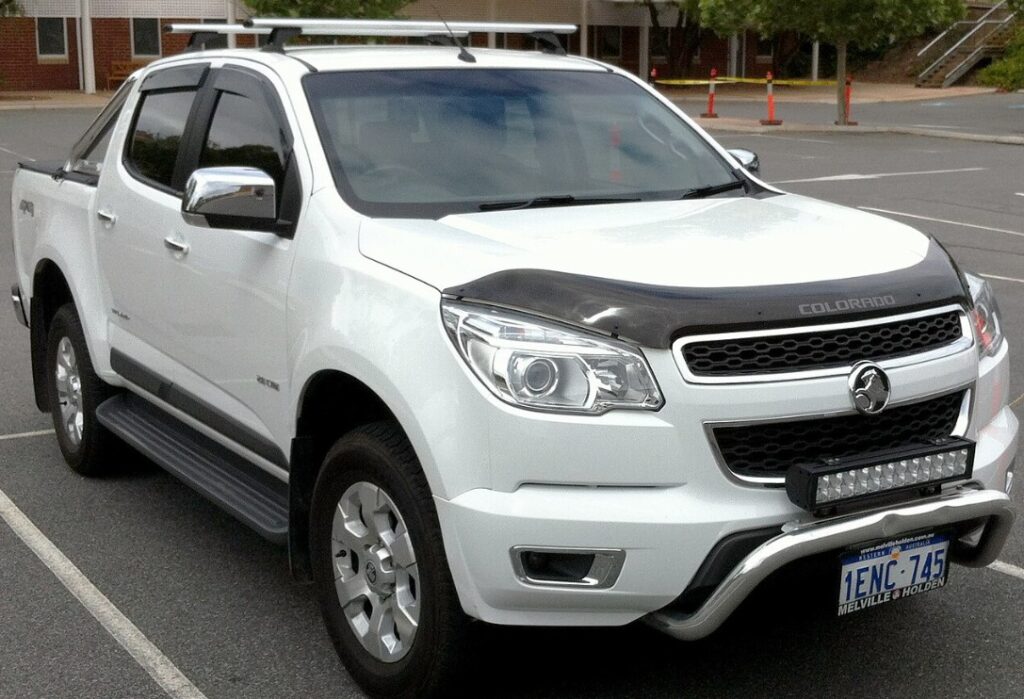
When we look through Holden Colorado year models, the timeline seems simple at first. The Colorado arrived in Australia in 2008, replaced the Holden Rodeo, moved into a completely new generation in 2012, received a substantial overhaul later in the decade, and disappeared when Holden wound down new-vehicle sales in 2020. Yet anyone shopping for a used Colorado quickly discovers that two trucks carrying the same badge can feel remarkably different.
That is why the year on the registration papers matters.
The early RC Colorado has strong links to the Isuzu D-Max of its era, while the later RG Colorado became a distinctly different proposition with a 2.8-litre turbo-diesel engine and a more modern platform. Then came the important update associated with the 2017 model-year period, which improved refinement and helped transform the Colorado from a somewhat agricultural workhorse into a more polished all-round ute. The Colorado nameplate itself ran from 2008 to 2020 in Australia.
So, which Holden Colorado year is the one to buy? Which generation suits hard work? Are later models really better? And should we automatically avoid the earliest examples?
Let's work through the Colorado's evolution year by year.
Content in this publication
- Holden Colorado Year Models at a Glance
- 2008 Holden Colorado: Where the Name Began
- 2009 Holden Colorado: Evolution Rather Than Revolution
- 2010 Holden Colorado: A Mature RC Model
- 2011 Holden Colorado: Near the End of the RC Era
- 2012 Holden Colorado: The Crucial Changeover Year
- 2013 Holden Colorado: Early RG Character
- 2014 Holden Colorado: More Power in the Formula
- 2015 Holden Colorado: The Established Pre-Update RG
- 2016 Holden Colorado: The Transition Point
- 2017 Holden Colorado: The Sweet Spot Begins
- 2018 Holden Colorado: Mature and Well-Rounded
- 2019 Holden Colorado: One of the Strongest All-Round Years
- 2020 Holden Colorado: The Final Chapter
- RC vs RG Holden Colorado: What's the Difference?
- Pre-Update RG vs Updated RG Colorado
- Which Holden Colorado Years Are Best for Towing?
- Which Holden Colorado Years Offer the Best Value?
- Are There Holden Colorado Years to Avoid?
- How to Identify the Holden Colorado Model Year Properly
- Holden Colorado Trim Levels Explained
- Why Later Colorado Models Became So Popular
- What Happened After the Holden Colorado Ended?
- Which Holden Colorado Year Should We Buy?
- Conclusion: Understanding Holden Colorado Year Models Makes Buying Easier
- Frequently Asked Questions
Holden Colorado Year Models at a Glance
The easiest way to understand the Colorado family tree is to split it into two major generations.
| Model period | Series | General character | Major change |
|---|---|---|---|
| 2008–2012 | RC | Traditional, rugged work ute | Replaced Holden Rodeo |
| 2012–2016 | RG | New-generation Colorado | 2.8L turbo-diesel introduced |
| 2017–2020 | Updated RG | More refined and modern | Significant chassis, cabin and refinement update |
The first-generation RC ran from 2008 until 2012. The second-generation RG arrived in Australia in June 2012 and remained the basis of the Colorado until production ended in 2020.
That sounds straightforward, but model-year changes within the RG generation make the story more interesting.
2008 Holden Colorado: Where the Name Began
The Holden Colorado badge entered Australia in 2008 as the successor to the familiar Holden Rodeo. It was not an entirely clean-sheet vehicle. The first-generation Colorado shared much of its underlying engineering with the contemporary Isuzu D-Max, reflecting the lineage of the Rodeo that came before it.
In practical terms, that made the 2008 Colorado a fairly traditional ute. It was designed during an era when dual-cabs were still expected to spend Monday carrying tools before spending Saturday towing a boat.
There was less emphasis on creating an SUV-like driving experience than we see in modern pickups.
What Engines Did the 2008 Colorado Have?
RC Colorado buyers encountered a broader engine range than buyers of later RG models.
Depending on specification, engines included a 2.4-litre four-cylinder petrol, a 3.6-litre Alloytec V6 petrol and a 3.0-litre four-cylinder turbo-diesel. The 3.0-litre diesel produced 120kW, while transmission choices included manuals and four-speed automatics depending on the engine and version.
For modern used buyers, the diesel naturally attracts plenty of attention because it fits the Colorado's workhorse character.
Who Should Consider a 2008 Colorado?
We would view a 2008 example primarily as a budget work ute rather than something to purchase because of equipment or refinement.
Condition becomes more important than model year at this age. A carefully maintained early Colorado can make far more sense than a younger ute that has spent its life overloaded, neglected or repeatedly driven through mud and salt water.
2009 Holden Colorado: Evolution Rather Than Revolution
The 2009 Holden Colorado largely continued the RC formula.
That can actually work in a buyer's favour. Early production wrinkles tend to become better understood as a vehicle accumulates time on the market, while mechanics and owners gain familiarity with common maintenance requirements.
The bigger issue today is simply age.
A 2009 Colorado is now old enough that we need to judge the individual vehicle rather than shopping purely by odometer reading. Suspension bushes, cooling-system components, drivetrain seals, steering components and previous modifications deserve as much attention as the engine itself.
Is a 2009 Holden Colorado Still Worth Buying?
Potentially, yes.
If we want an inexpensive ute for property work, occasional towing or weekend jobs, an older RC can still be appealing. But buying one because it is cheap without allowing money for preventative maintenance is like buying an old fishing boat because the hull looks shiny. The expensive parts may be hidden underneath.
2010 Holden Colorado: A Mature RC Model
By 2010, the first Colorado generation was no longer the new kid in the paddock.
The basic strengths remained familiar: straightforward engineering, multiple cab configurations, 4x2 and 4x4 choices and genuine commercial-vehicle practicality. The RC range had been offered in single-cab, space-cab and crew-cab formats, which gave buyers considerable flexibility.
For used buyers today, a 2010 model occupies an interesting middle ground.
It does not deliver the performance or modernity of the later RG, but it may appeal to someone who actively prefers older, comparatively simple ute design.
What Matters More Than Trim Level?
Service history.
A beautifully presented badge on the tailgate tells us much less than evidence of regular oil changes, coolant maintenance, sensible modifications and responsible towing.
With vehicles of this age, paperwork can be worth almost as much as chrome accessories.
2011 Holden Colorado: Near the End of the RC Era
The 2011 Colorado represents one of the final full years before Holden dramatically changed direction.
That gives it a certain appeal. Buyers who specifically want the old-generation formula can choose a late RC rather than one of the earliest examples.
But there is another side to the argument.
Spend more money and a 2012-or-newer RG may offer a substantially newer platform and more modern drivetrain. Therefore, the price gap matters enormously.
If a clean 2011 RC is considerably cheaper than an equivalent RG, we can understand the attraction. If the two trucks cost nearly the same, the newer generation becomes harder to ignore.
2012 Holden Colorado: The Crucial Changeover Year
Here is where searching for Holden Colorado year models becomes slightly tricky.
A 2012 Colorado can belong to two very different worlds.
The RC generation remained around before the second-generation RG Colorado launched in Australia in June 2012. Therefore, we should never assume that two vehicles advertised simply as "2012 Holden Colorado" share the same design or mechanical package.
Always identify the series.
2012 RG Colorado Arrives
The RG represented a major redesign.
Rather than continuing with the earlier selection of petrol and diesel engines, the Australian RG Colorado centred around a 2.8-litre four-cylinder turbo-diesel. Early versions produced 132kW, with torque varying according to transmission.
The result was a ute better aligned with the direction the Australian dual-cab market was moving.
These vehicles were no longer merely work trucks. Increasingly, owners expected one vehicle to tow the caravan, carry the family, commute to work and head into the bush.
The RG was Holden's answer.
Buying a 2012 Colorado Requires Extra Homework
Check the build date, series designation and engine rather than relying only on the model year in an advertisement.
A late-registered RC and an early RG can both wear 2012 plates while providing significantly different ownership experiences.
2013 Holden Colorado: Early RG Character
The 2013 Colorado continued the second-generation formula.
These early RG models are worth separating mentally from later examples because the engine calibration and broader vehicle development changed as the generation matured.
Initial RG versions of the 2.8-litre turbo-diesel produced 132kW. From around December 2013, output increased to 147kW, while automatic versions reached 500Nm of torque; six-speed manual specifications used 440Nm.
That makes build date particularly relevant when shopping around this period.
Why the 2.8-Litre Diesel Matters
The 2.8 became one of the defining features of the RG Colorado.
By the later specification, the combination of 147kW and up to 500Nm with the automatic placed the ute in serious towing and touring territory.
Numbers are not everything, naturally, but torque shapes how relaxed a loaded ute feels.
A strong diesel engine can make a hill feel like a slope rather than a wall.
2014 Holden Colorado: More Power in the Formula
For many used buyers, 2014 starts to look more interesting because the upgraded 2.8-litre engine specification had arrived.
The later configuration produced 147kW, while automatic variants developed 500Nm.
This gave the Colorado the muscular personality many owners associate with the RG today.
Is the 2014 Colorado a Good Used Buy?
It can be, especially when value matters more than cabin refinement.
However, we need to remember that this remains part of the earlier RG era. Later updates improved the overall package significantly, particularly in the way the Colorado drove and felt.
So a 2014 model can represent good value, but it should be priced accordingly.
You may be interested in reading Alternatives to Volvo XC90: The Best Luxury SUVs Worth Considering
2015 Holden Colorado: The Established Pre-Update RG
By 2015, the RG Colorado had settled into its role in the Australian ute market.
The attraction is easy to understand. Buyers could get genuine towing ability, a strong diesel engine and the practicality of the Colorado platform without paying the prices commanded by much newer examples.
But 2015 sits just before the Colorado's most important evolution.
That makes it a classic value-versus-refinement decision.
Do we buy the cheaper 2015 vehicle and keep several thousand dollars in our pocket, or stretch for an updated version?
Why Condition Can Beat Model Year
A one-year difference matters less than how the ute was treated.
When comparing two Colorados, we should examine:
- complete service history and evidence of regular maintenance;
- cold-start behaviour and engine noises;
- automatic or manual transmission operation;
- evidence of heavy towing or repeated overloading;
- four-wheel-drive engagement on 4x4 versions;
- underbody damage from off-road use;
- suspension wear, uneven tyre wear and steering play;
- aftermarket modifications, especially aggressive engine tuning;
- signs of water ingress or previous flood exposure;
- outstanding recalls using the vehicle's VIN.
Holden continues to provide Australian owners with VIN-based recall information through its support infrastructure.
2016 Holden Colorado: The Transition Point
The 2016 period deserves special attention because this is when Holden began transforming the RG Colorado.
Contemporary retrospective coverage describes the 2016 update as a substantial improvement with meaningful Holden engineering input.
Depending on build date and how a seller describes a vehicle, shoppers may encounter references to the facelift or updated Colorado around the 2016-to-2017 transition.
This is why photos, VIN information and build plates matter more than blindly trusting a classified-ad headline.
Why the Update Was Important
Earlier RG Colorados had plenty of muscle and utility, but refinement was not always their strongest card.
The updated vehicle was developed to feel more composed and polished, making it easier to recommend as a family vehicle as well as a work ute.
Think of the difference as hiking boots becoming comfortable enough to wear through the airport. They did not stop being tough; they simply became easier to live with.
2017 Holden Colorado: The Sweet Spot Begins
If someone asks us which period marks the beginning of the most desirable mainstream Holden Colorado years, 2017 is an obvious place to start looking.
The updated Colorado retained its 2.8-litre turbo-diesel, with later specification rated at 147kW and 500Nm when paired with the six-speed automatic.
What changed was the broader experience.
Contemporary and retrospective assessments credit the major update with making the Colorado significantly better resolved than the earlier RG.
2017 Colorado Trims
Versions across the later RG family included familiar names such as LS, LT, LTZ and Z71, with additional variants and special editions appearing during the closing years of production.
For most buyers, however, equipment level should come after mechanical condition.
A pristine LT can be a smarter purchase than an abused Z71.
Why Used Buyers Like the Updated RG
The appeal is balance.
We still get the recognisable 2.8 Duramax character, serious ute capability and familiar Holden styling, but the vehicle belongs to the more mature phase of RG development.
For buyers wanting one Colorado to do almost everything, this period deserves a prominent place on the shortlist.
2018 Holden Colorado: Mature and Well-Rounded
The 2018 model sits comfortably inside the post-update era.
There was no need for Holden to reinvent the truck again immediately. Instead, buyers received the established later RG package with different trim and equipment combinations available across the range.
This can be good news in the used market.
By this point, the Colorado was well into its product cycle, meaning buyers were purchasing a mature design rather than an all-new platform finding its feet.
What About the HSV SportsCat?
The Colorado story also took a more adventurous turn when HSV introduced the Colorado-based SportsCat in December 2017.
The SportsCat targeted buyers wanting a more distinctive and performance-flavoured interpretation of the ute rather than simply another workhorse.
It shows just how far the Colorado had travelled conceptually since 2008. The nameplate began as the replacement for Rodeo; by the late 2010s, there was enough lifestyle appeal to justify specialised versions.
2019 Holden Colorado: One of the Strongest All-Round Years
By 2019, the Colorado was approaching the end of its Australian life, but the product itself was arguably at one of its most developed points.
In a 2019 ten-vehicle dual-cab comparison referenced by carsales, the Colorado finished fourth and received praise for areas including comfort, road-holding, stability and performance.
That matters because it illustrates how much the later Colorado had matured.
The old stereotype of the Colorado as merely a rough-edged work ute did not tell the whole story anymore.
Is 2019 the Best Holden Colorado Year?
It is certainly one of the easier years to recommend on paper.
We get a late-production vehicle, the developed version of the RG platform and the updated driving experience.
Of course, late model does not mean maintenance-free.
By now, even a 2019 ute can have accumulated considerable kilometres, towing hours and off-road use. A highway-driven 150,000km vehicle may have lived a much gentler life than an 80,000km example that repeatedly dragged heavy trailers through construction sites.
Usage matters.
2020 Holden Colorado: The Final Chapter
The 2020 Holden Colorado carries something no earlier version can: final-year status.
General Motors announced in February 2020 that it would retire the Holden brand in Australia and New Zealand. Colorado production was also tied to GM's Rayong operation in Thailand, where the ute had been built for the region.
The Colorado therefore disappeared not because Holden had simply developed a replacement model wearing the same badge, but because the Holden new-vehicle brand itself was being wound down.
What Was the Final Colorado Range Like?
By the 2020 model year, variants included familiar mainstream and lifestyle-oriented grades such as LS, LT, LSX, LTZ, LTZ+ and Z71 depending on configuration.
The underlying recipe remained centred around the 2.8-litre Duramax turbo-diesel.
So the final Colorado was not a bizarre farewell experiment. It was essentially the mature expression of the RG formula Holden had spent years improving.
RC vs RG Holden Colorado: What's the Difference?
Understanding this distinction makes shopping much easier.
The RC belongs to the Colorado's first chapter. It was produced from 2008 to 2012 and retained a strong engineering relationship with the Isuzu D-Max lineage. It could be purchased with petrol or diesel engines and feels more like a traditional commercial ute.
The RG, launched in 2012, represents the second chapter. It adopted the 2.8-litre turbo-diesel platform and gradually developed into the Colorado most Australians recognise from the later Holden years.
Which Generation Is Better?
For everyday use, touring, towing and family duty, we would generally prefer the RG.
For someone seeking a cheap, comparatively old-school work ute and willing to accept an older driving experience, an RC can still make sense.
Neither answer exists in a vacuum.
Price changes everything.
Pre-Update RG vs Updated RG Colorado
This is arguably a more meaningful comparison for many buyers than RC versus RG.
The early RG gives us the modern Colorado platform and 2.8 diesel at lower used prices. The updated late-era RG gives us a more polished interpretation of essentially the same mission.
If our budget allows it, the updated vehicle is usually the more appealing all-rounder.
Does That Make Early RG Models Bad?
Not at all.
"Newer is better" can become lazy advice in used-car shopping.
You may be interested in readingAlternatives to Volvo XC90: The Best Luxury SUVs Worth ConsideringYou may be interested in reading
 Alfa Romeo MiTo vs Giulietta: Which Used Alfa Is Better?
Suppose we find a beautifully maintained 2015 Colorado with complete history, sensible kilometres and an owner who serviced it meticulously. Beside it sits a neglected 2017 example with questionable modifications and evidence of hard towing.
We would happily investigate the 2015 first.
Model year guides us. Condition makes the final decision.
Which Holden Colorado Years Are Best for Towing?
The RG generation is usually where towing-focused shoppers will concentrate.
Later 2.8-litre automatic Colorados produce 500Nm, giving them the low-down muscle expected from a modern turbo-diesel ute.
But towing ability is about far more than brochure numbers.
When inspecting a used tow vehicle, we should think about what it has already hauled. A ute that spent years pulling a large caravan may have placed considerably more stress on its cooling system, transmission, brakes, differential and suspension than one primarily used for commuting.
A tow bar is not necessarily a warning sign.
It is simply a reason to ask better questions.
Which Holden Colorado Years Offer the Best Value?
For pure value, mid-generation RG models can be compelling.
The 2014–2016 period gives buyers access to the stronger later engine tune without automatically paying the premium attached to newer 2018–2020 examples. The trade-off is the less polished pre-update character.
For broader usability, the 2017–2020 period is arguably the strongest zone.
Those vehicles combine later production dates with the improved RG package that emerged from Holden's major development work.
Best Budget Choice
A well-maintained RC or early RG can be a sensible answer if purchase price matters most.
Best Balance
A clean updated RG around 2017–2019 may provide the sweet spot between age, refinement, capability and used-market cost.
Best Final-Year Choice
A 2020 Colorado suits buyers who specifically want one of the newest examples available and appreciate the historical significance of owning a final-year Holden ute.
Are There Holden Colorado Years to Avoid?
We would be cautious about labelling an entire year "bad."
Used utes experience wildly different lives. One Colorado may have carried nothing heavier than supermarket shopping; another may have spent eight years towing near its limits through heat and dust.
Mechanical history therefore matters enormously.
There is also a current legal context worth knowing about. A class action filed in Australia has alleged defects involving certain GM automatic transmission systems fitted across multiple Holden models, including some Colorados. These remain allegations being litigated rather than proof that every affected vehicle is defective, so buyers should check the exact transmission and vehicle details rather than assuming all Colorados have the claimed problem.
The sensible strategy is simple: investigate the exact ute in front of us.
How to Identify the Holden Colorado Model Year Properly
Do not rely solely on the year displayed in an online advertisement.
Registration year, build year and model year can differ.
A vehicle built late in one calendar year may be marketed as the following model year, while a dealer can register older stock months after production.
Look at the compliance information and VIN, then confirm the series and specification.
This becomes especially important around transition periods such as 2012 and the major 2016–2017 update.
Holden Colorado Trim Levels Explained
Trim names can make the Colorado range look confusing, but the basic philosophy is fairly straightforward.
LS versions generally occupy the work-focused end of the spectrum, while LT adds equipment and comfort. LTZ pushes further towards lifestyle and premium use, and Z71 models add more visual attitude and off-road-oriented positioning. Late in the model's life, other derivatives such as LSX and LTZ+ also appeared.
Trim level matters, but we would never pay a large premium merely for cosmetic extras if the underlying vehicle is less healthy.
Leather and black wheels cannot repair a tired drivetrain.
Why Later Colorado Models Became So Popular
The Colorado landed in an Australian market where the role of the ute was changing.
Buyers increasingly wanted their pickup to replace two vehicles at once.
It had to behave like a commercial machine on Thursday and a family adventure vehicle on Sunday.
The later RG suited that formula considerably better than the early RC.
Its strong turbo-diesel engine, towing credentials, dual-cab configurations and improving refinement allowed it to sit comfortably between old-school workhorse and lifestyle vehicle.
The Colorado did not abandon its boots.
It simply learned to wear a cleaner shirt.
What Happened After the Holden Colorado Ended?
The Colorado nameplate ended with Holden's withdrawal rather than continuing into a third Holden-badged generation.
General Motors announced the retirement of Holden in 2020, while the Thailand operation producing vehicles including the Colorado was also being sold as GM restructured its regional presence.
Holden nevertheless maintains Australian owner-support resources, including service information and VIN-based recall checking.
That distinction matters.
The end of new Holden vehicle sales did not mean every Colorado suddenly became impossible to maintain the next morning.
Which Holden Colorado Year Should We Buy?
If we want the simplest answer, we would divide the choices by budget and purpose.
For a cheap workhorse, a well-maintained late RC may still do the job.
If we want an affordable RG with strong diesel performance and can tolerate less refinement, the 2014–2016 area is worth exploring.
If our goal is the best overall used Colorado experience, we would start with the updated 2017–2020 RG models, then work backwards if prices become uncomfortable.
Among them, 2017–2019 examples may hit a particularly attractive balance because they deliver the improved vehicle without necessarily carrying the final-year premium that some immaculate 2020 examples can command.
Still, we would buy the best history before the newest badge.
That principle matters more than any ranking.
Conclusion: Understanding Holden Colorado Year Models Makes Buying Easier
The Holden Colorado year models tell a story of a ute that evolved dramatically during a relatively short 12-year Australian run.
The 2008–2012 RC Colorado was the rugged first act, closely connected to the ute heritage that preceded it. The 2012 RG brought the Colorado into a new generation with its 2.8-litre turbo-diesel and more modern architecture. Later engine improvements increased performance, while the substantial 2016–2017-era update helped turn the RG into a noticeably more refined and competitive all-round ute. The story ended in 2020 as General Motors retired Holden from new-vehicle sales in Australia and New Zealand.
If we are shopping today, later is generally better—but condition still rules the paddock.
A well-maintained Colorado with documented servicing, careful ownership and sensible modifications can be more attractive than a newer ute whose history resembles a mystery novel.
For many buyers, 2017–2020 represents the strongest part of the Colorado timeline, while 2014–2016 models remain tempting for value hunters. RC versions still have a place for buyers seeking an affordable, old-school work ute.
The badge may no longer be found on new Australian showroom floors, but the Colorado remains common enough on roads, worksites and touring tracks that understanding its model-year evolution is still genuinely useful.
Frequently Asked Questions
1. What years was the Holden Colorado made?
The Holden Colorado nameplate was sold from 2008 to 2020. The first-generation RC ran from 2008 to 2012, while the second-generation RG arrived in 2012 and continued until the Colorado was discontinued as Holden wound down operations.
2. What is the best Holden Colorado year model?
For most used buyers, an updated RG from roughly 2017–2020 is the strongest starting point because it combines the later 2.8-litre turbo-diesel specification with the significant refinement improvements introduced during the later RG years. A well-maintained older model can still represent better value than a neglected late vehicle.
3. What is the difference between RC and RG Holden Colorado models?
The RC is the first-generation Colorado produced from 2008 to 2012 and offered several petrol and diesel engine choices. The RG is the second generation launched in 2012, centred on a 2.8-litre turbo-diesel and representing a substantially different, more modern Colorado platform.
4. Is a 2012 Holden Colorado RC or RG?
It can be either. The second-generation RG went on sale in Australia in June 2012, meaning buyers researching a 2012 vehicle should confirm the series, build date and engine rather than relying solely on the registration year.
You may be interested in readingAlternatives to Volvo XC90: The Best Luxury SUVs Worth ConsideringYou may be interested in reading
Alfa Romeo MiTo vs Giulietta: Which Used Alfa Is Better?You may be interested in reading
Alfa Romeo MiTo vs VW Polo: Which Small Hatchback Should You Buy?5. What was the last Holden Colorado year?
The final Holden Colorado model year was 2020. General Motors announced the retirement of Holden in February 2020 as part of its withdrawal from Australia and New Zealand, bringing the Colorado's Australian new-car story to an end.
If you want to know other articles similar to Holden Colorado Year Models: Complete Guide from 2008 to 2020 you can visit the category Models.
Honda Passport vs Toyota 4Runner: Which SUV Is Better?
Honda Passport vs Ford Bronco: Which SUV Is Better?
Honda Passport vs Ford Explorer: Which SUV Is Better?
Honda Passport or Pilot: Which SUV Is Better?
Honda Passport vs Jeep Grand Cherokee: Which SUV Is Better?
Honda Passport vs Nissan Pathfinder: Which SUV Is Better?
Leave a Reply
More content of your interest