

Alfa Romeo MiTo vs VW Polo: Which Small Hatchback Should You Buy?

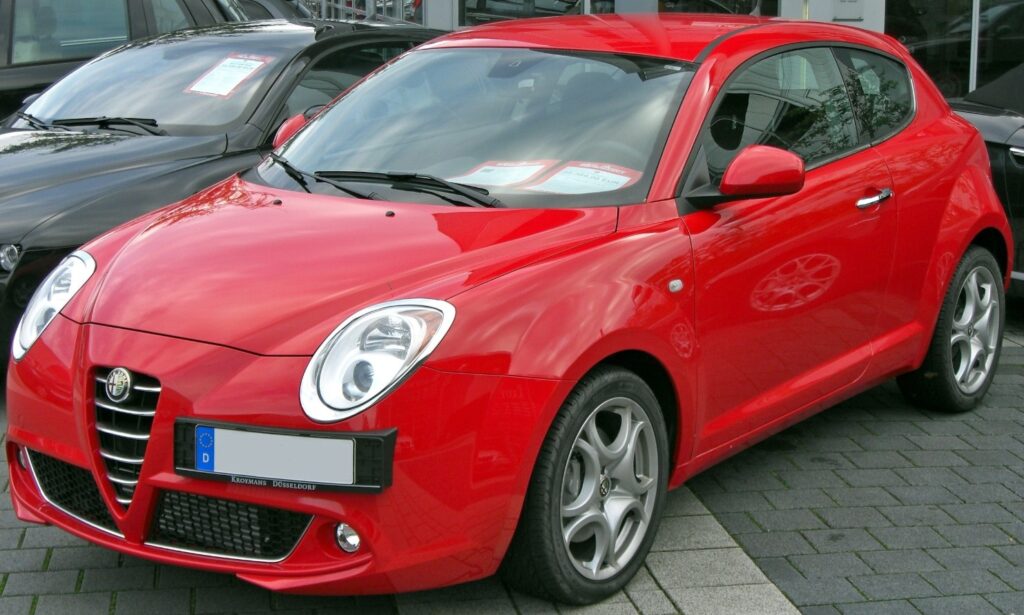
Choosing between the Alfa Romeo MiTo vs VW Polo is a little like choosing between an Italian leather jacket and a well-made German backpack. One turns heads, feels special, and brings a bit of drama to an ordinary day. The other is sensible, beautifully put together, and quietly gets on with life.
Both are compact hatchbacks, both have been popular with younger drivers and city dwellers, and both can make excellent used-car purchases. Yet they appeal to very different personalities.
The Alfa Romeo MiTo sells us emotion. Its curvy styling, distinctive grille, sporty driving position, and unmistakably Italian character make it feel more exotic than many small hatchbacks of its era. The Volkswagen Polo, meanwhile, approaches the same job with calm confidence. It usually feels more practical, more mature, and more conventional.
So which one should we actually buy?
In this detailed Alfa Romeo MiTo vs Volkswagen Polo comparison, we'll look at design, reliability, engines, fuel economy, practicality, running costs, performance, comfort, ownership experience, and used-car value to discover which small hatchback deserves our money.
Content in this publication
- Alfa Romeo MiTo vs VW Polo: Quick Comparison
- What Makes the Alfa Romeo MiTo Different?
- What Makes the Volkswagen Polo Different?
- Alfa Romeo MiTo vs VW Polo Interior Quality
- Practicality: Polo Wins the Family Test
- Alfa Romeo MiTo vs VW Polo Engines
- Diesel MiTo vs Diesel Polo
- Performance: Which One Is More Fun?
- Ride Comfort and Refinement
- Fuel Economy: Which Costs Less to Run?
- Reliability: Alfa Romeo MiTo vs VW Polo
- Manual vs Automatic: Which Should We Choose?
- Maintenance Costs
- Insurance Costs
- Which Is Better for a First Car?
- Which Is Better Around Town?
- Which Is Better for Motorway Driving?
- Which Has Better Resale Value?
- Styling: MiTo Wins Easily
- Technology and Equipment
- Used Alfa Romeo MiTo vs Used VW Polo: What Should We Check?
- Alfa Romeo MiTo vs Polo GTI
- Which Car Feels More Premium?
- What About Safety?
- Who Should Buy the Alfa Romeo MiTo?
- Who Should Buy the Volkswagen Polo?
- Alfa Romeo MiTo vs VW Polo: Pros and Cons
- Which One Is Better Value?
- Alfa Romeo MiTo vs VW Polo: Final Verdict
- Frequently Asked Questions
Alfa Romeo MiTo vs VW Polo: Quick Comparison
Before diving into the details, here's the broad picture.
| Category | Alfa Romeo MiTo | Volkswagen Polo |
|---|---|---|
| Styling | Sporty and distinctive | Conservative and polished |
| Driving character | More playful | More composed |
| Practicality | Limited | Strong |
| Rear-seat access | Three-door layout | Often available with five doors |
| Interior quality | Stylish but mixed | Generally more consistent |
| Engine choice | Wide, including sporty versions | Very broad |
| Fuel economy | Good | Often excellent |
| Reliability reputation | Mixed | Generally stronger |
| Running costs | Potentially higher | Usually easier to predict |
| Personality | High | Moderate |
| Used-car appeal | Enthusiast-focused | Broadly appealing |
If we want the simplest answer, the Polo is usually the safer all-rounder. The MiTo is the more interesting choice.
But that's only the beginning.
What Makes the Alfa Romeo MiTo Different?
The MiTo arrived as Alfa Romeo's answer to premium-leaning superminis such as the MINI Hatch, Audi A1, and higher-spec versions of the Volkswagen Polo.
Its name itself reflects Alfa's Italian roots, linking Milano and Torino, two cities closely associated with the company's history and manufacturing.
More importantly, the MiTo never tried particularly hard to look sensible.
Italian Styling Gives the MiTo Real Personality
The MiTo borrows visual cues from larger Alfa Romeo models. Its shield-shaped grille, rounded headlights, muscular rear arches, and circular tail lamps give it a recognisable appearance even years after production ended.
Park a basic Polo beside a MiTo and the Volkswagen can look almost anonymous.
That isn't necessarily bad. Some drivers prefer subtlety.
But if we want our small hatchback to make us glance back after parking it, the MiTo has an obvious advantage.
The Three-Door Layout Has a Price
Every MiTo uses a three-door body style.
Visually, that works brilliantly. Long doors and hidden-looking proportions give it a sporty coupe-like profile.
Practically, though, things become less charming.
Getting adults into the rear seats means folding the front seats forward. Installing child seats becomes more awkward. Tight parking spaces can make the large front doors inconvenient.
It's a car designed around the driver first and passengers second.
What Makes the Volkswagen Polo Different?
The Polo follows a completely different philosophy.
Instead of trying to seduce us with dramatic styling, Volkswagen focuses on refinement, everyday usability, solid controls, and mature road manners.
Depending on generation and model year, Polo buyers can choose between three-door and five-door versions, although five-door models became increasingly dominant.
The Polo Feels Like a Smaller Golf
That's probably the easiest way to describe it.
Volkswagen has traditionally positioned the Polo as a small car that doesn't necessarily feel cheap. The dashboard design is usually simple, the switches are logically placed, and the cabin often has a reassuring solidity.
There aren't many fireworks.
But everything tends to be where we expect it.
That Simplicity Ages Well
Fashionable interior design can look spectacular when new and strange ten years later.
The Polo's conservative approach tends to age gracefully. A well-kept example can still feel pleasantly modern even when the odometer tells a different story.
Alfa Romeo MiTo vs VW Polo Interior Quality
This is one area where the Volkswagen generally takes the lead.
The MiTo's interior has some attractive touches, including sporty instruments and distinctive dashboard textures on certain versions. Higher trims can feel genuinely special.
However, quality is inconsistent.
Some plastics feel inexpensive, and certain switches don't have the satisfying precision we might expect from a premium-leaning small car.
The Polo is usually less adventurous but more cohesive.
Which Has the Better Driving Position?
Both cars offer comfortable driving positions for most drivers, but the experience differs.
The MiTo places us inside a sportier environment. The dashboard wraps around the driver more noticeably, and versions with supportive seats can feel pleasantly snug.
The Polo feels more upright and conventional.
Visibility is generally easier, controls are intuitive, and adjusting to the car takes almost no time.
For long daily commutes, we'd probably prefer the Polo.
For a Sunday morning drive on an empty road, the MiTo feels more inviting.
Practicality: Polo Wins the Family Test
Practicality isn't glamorous, but it matters the moment we need to transport shopping bags, passengers, luggage, or a child seat.
Here the VW Polo comfortably beats the Alfa Romeo MiTo.
The biggest reason is simple: doors.
Rear-Seat Access
With its three-door layout, the MiTo demands compromise every time someone climbs into the back.
The Polo, particularly in five-door form, behaves like a normal small family hatchback.
Open the door.
Get in.
Done.
That sounds trivial until we do it every morning.
Rear Passenger Space
Neither car is limousine-like, naturally. These are superminis.
However, the Polo tends to make better use of its external dimensions. Rear passengers generally receive more usable headroom and easier access.
The MiTo's sloping, style-driven body creates a more enclosed rear cabin.
Children will probably be fine.
Tall adults may start negotiating for the front seat.
Boot Space
Boot capacity varies by year and configuration, but the Polo typically provides a more practical load area.
The MiTo's boot is usable for everyday errands, shopping, or weekend luggage, yet loading larger objects can be less convenient.
If practicality sits near the top of our shopping list, this round goes to Volkswagen.
Alfa Romeo MiTo vs VW Polo Engines
Engine ranges vary considerably by production year and market, so we shouldn't judge either car based solely on one engine.
Both were offered with multiple petrol and diesel choices.
MiTo Petrol Engines
The MiTo became particularly well known for Alfa Romeo's small turbocharged petrol engines.
Depending on year and market, buyers may encounter engines such as:
- Small naturally aspirated petrol units
- Turbocharged TwinAir engines
- 1.4-litre petrol engines in several power outputs
- More powerful MultiAir versions
- Performance-focused Quadrifoglio models
Some versions feel genuinely energetic.
Others are better suited to city commuting.
Polo Petrol Engines
Volkswagen also offered a broad range of petrol engines.
Depending on generation, these can include small naturally aspirated units, turbocharged TSI engines, and higher-performance GTI variants.
The Polo's strongest characteristic isn't necessarily excitement.
It's variety.
We can find an economical city car, a motorway-friendly turbo petrol, or something far sportier.
Diesel MiTo vs Diesel Polo
Diesel versions of both models were popular during periods when diesel fuel economy was a major selling point in Europe.
A diesel MiTo can be extremely economical on long journeys.
So can a diesel Polo.
However, buying an older diesel for repeated short urban trips deserves careful thought. Modern diesel emissions equipment generally prefers longer journeys where the engine reaches full operating temperature.
If our weekly driving consists mostly of short trips across town, a petrol engine may be the more sensible used-car choice.
Performance: Which One Is More Fun?
This is where the Alfa begins fighting back.
Even when outright speed is similar, the MiTo often feels more energetic.
Its styling creates expectation before we've even turned the key. The firmer driving character and sportier cabin reinforce that impression.
Alfa Romeo DNA Driving Modes
One of the MiTo's signature features is Alfa Romeo's DNA driving-mode system on many versions.
The available modes alter aspects of the car's behaviour, commonly including throttle response and steering characteristics.
Dynamic mode attempts to sharpen the experience.
Normal mode suits everyday driving.
All Weather mode is intended to make the car easier to manage when grip levels fall.
Does it transform the MiTo into a miniature supercar?
No.
But it adds theatre, and theatre matters in a car built around personality.
The Polo Is More Predictable
The Polo's strength is consistency.
It generally feels stable, secure, and easy to place on the road. Steering is usually light enough around town without becoming nervous on faster roads.
Performance-oriented Polo versions obviously raise the excitement level considerably, but mainstream models focus more on composure than entertainment.
You may be interested in reading Alfa Romeo MiTo vs Mini Cooper: Which Stylish Hatchback Wins?
MiTo for Emotion, Polo for Confidence
That's the central difference.
The MiTo says, "Want to have some fun?"
The Polo says, "Don't worry, I've got this."
Ride Comfort and Refinement
On broken roads, potholes, motorway expansion joints, and poorly maintained urban streets, suspension tuning starts mattering much more than horsepower.
The Polo generally offers the more mature ride.
Smaller wheels usually help, while sporty trims on either car can feel considerably firmer.
The MiTo's suspension sometimes sacrifices comfort to maintain its sporty character. Add large alloy wheels and low-profile tyres, and rough roads can make themselves known rather enthusiastically.
Motorway Driving
The Polo normally feels like the more natural motorway companion.
Its mature chassis, relatively refined cabin, practical seating position, and predictable controls make long journeys easy.
The MiTo can certainly handle motorway trips, but we'd probably choose it because we enjoy driving it rather than because it is the ultimate long-distance supermini.
Fuel Economy: Which Costs Less to Run?
There's no single answer because fuel economy depends heavily on engine, transmission, driving conditions, and maintenance.
However, both cars can be economical.
Small petrol Polo engines can deliver excellent everyday consumption when driven gently, while diesel versions can be especially efficient over longer distances.
The MiTo also offers several frugal engines, including small turbo petrol and diesel choices.
Real-World Economy Matters More Than Brochure Numbers
Used cars rarely operate under laboratory conditions.
Tyre pressures, traffic, driving style, temperature, maintenance quality, and even roof racks can influence fuel use.
So when comparing two specific used cars, we should look beyond advertised figures.
A well-maintained MiTo may easily consume less fuel than a neglected Polo.
Condition beats reputation.
Reliability: Alfa Romeo MiTo vs VW Polo
Reliability is probably one of the biggest reasons buyers hesitate over the MiTo.
Alfa Romeo has historically carried a reputation for temperamental ownership, although stereotypes don't always reflect the condition of an individual vehicle.
The MiTo can provide reliable service when properly maintained.
But maintenance history matters enormously.
The Polo generally has the stronger mainstream reputation for durability and predictable ownership.
That doesn't mean every Polo is bulletproof.
Far from it.
Potential MiTo Trouble Areas
Depending on engine, year, and specification, used MiTo shoppers may encounter issues involving:
- Electrical components
- Sensors and warning lights
- Suspension wear
- Gearbox behaviour
- Turbocharger-related systems
- MultiAir-related components on applicable engines
- Stop-start systems
- Interior electronics
Not every car develops these faults.
Still, we'd want a thorough inspection before buying.
Potential Polo Trouble Areas
Used Polos can also develop expensive problems.
Depending on generation and engine, shoppers should investigate:
- DSG transmission behaviour
- Timing-chain or timing-belt history where applicable
- Turbocharged engine maintenance
- Water pumps and cooling-system components
- Electrical issues
- Suspension wear
- Clutch condition
- Oil consumption on certain engines
The badge shouldn't replace an inspection.
Service History Is the Real Winner
Between a neglected Polo and a meticulously maintained MiTo, we'd take the MiTo.
Between equally maintained examples, the Polo may offer a little more peace of mind for cautious buyers.
Manual vs Automatic: Which Should We Choose?
Transmission choice can significantly alter the ownership experience.
Manual versions of both cars can be straightforward and enjoyable, especially when paired with smaller engines.
Automatic versions require more homework.
The MiTo was offered with Alfa Romeo's TCT dual-clutch transmission on certain versions, while many Polos use Volkswagen's DSG dual-clutch gearbox.
Both can provide quick shifts when functioning properly.
Both can also produce expensive repair bills if neglected or malfunctioning.
Test the Gearbox Properly
During a used-car test drive, we should check for hesitation, jerking, warning messages, delayed engagement, or unusual noises.
Don't just drive around the dealership block.
Try parking manoeuvres, stop-start traffic, hills, and normal acceleration.
A gearbox can behave perfectly at 40 mph yet complain bitterly while crawling through traffic.
Maintenance Costs
The Polo usually wins the convenience argument.
Volkswagen parts and specialist knowledge are widely available in many markets, and independent garages are generally familiar with the car.
MiTo maintenance doesn't necessarily have to be expensive, but locating a good Alfa Romeo specialist can make ownership substantially easier.
A specialist who understands the platform is often worth far more than a generic workshop throwing parts at warning lights.
Cheap Purchase Price Doesn't Mean Cheap Ownership
This is especially important with older MiTos.
Depreciation can make attractive examples surprisingly affordable.
That's tempting.
But buying an inexpensive premium-leaning car doesn't suddenly turn replacement components into budget-car parts.
The smartest purchase is usually the best-maintained example we can afford, not the cheapest car in the classifieds.
Insurance Costs
Insurance depends on far more than the badge.
Age, location, driving history, annual mileage, engine power, trim level, security equipment, and local risk calculations all matter.
Basic versions of both cars can be relatively accessible for younger drivers, while powerful MiTo and Polo performance models may attract noticeably higher premiums.
For first-time drivers, we'd compare actual insurance quotes before falling in love with a particular engine.
Nothing spoils the excitement of buying a sporty-looking hatchback like discovering the annual insurance premium resembles a mortgage payment.
Which Is Better for a First Car?
Both can work.
But they suit different first-time buyers.
The Polo is arguably the easier recommendation.
It's practical, easy to drive, widely understood by mechanics, and available in numerous specifications.
The MiTo is more appealing for someone who wants their first car to feel memorable.
Choose the MiTo as a First Car If We Want:
- Distinctive styling
- Sportier personality
- A more unusual choice
- Compact dimensions
- An engaging driving experience
Choose the Polo as a First Car If We Want:
- Easier rear-seat access
- Strong practicality
- Broad parts availability
- Familiar controls
- More conservative ownership
Neither choice is automatically correct.
A first car should fit our actual life, not just our imagination.
Which Is Better Around Town?
The MiTo's compact footprint works well in urban environments.
Parking is easy, visibility is reasonable, and smaller engines suit short journeys.
However, the long doors can become awkward in narrow parking spaces.
The Polo, especially in five-door form, is arguably more convenient.
Passengers can enter without rearranging the front seats, and its controls are typically light and intuitive.
For city living with frequent passengers, we'd take the Polo.
For mostly solo driving, the MiTo becomes much more appealing.
Which Is Better for Motorway Driving?
Again, the Polo gets our vote.
It generally feels more refined and mature at speed, especially when equipped with an engine powerful enough to avoid working hard during overtaking.
The MiTo isn't bad.
But its sportier suspension and more compact-feeling cabin can make the Polo seem like the more relaxed long-distance machine.
Which Has Better Resale Value?
Resale depends heavily on market conditions, mileage, age, specification, condition, and engine.
Polos have broad appeal, which usually makes them relatively easy to sell.
Almost everyone understands what a Polo is.
The MiTo attracts a narrower audience.
That can work both ways.
A well-specified, beautifully maintained MiTo may appeal strongly to someone specifically searching for one. But an average example may take longer to sell because many mainstream buyers simply default to alternatives such as the Polo, Fiesta, Corsa, or Yaris.
Rarity Can Become Part of the Appeal
As the MiTo becomes less common on the road, clean examples may increasingly attract drivers who want something different.
That doesn't automatically make them investments.
But uniqueness has value.
Styling: MiTo Wins Easily
Beauty is subjective.
Still, we'd struggle to call this contest close.
You may be interested in readingAlfa Romeo MiTo vs Mini Cooper: Which Stylish Hatchback Wins?You may be interested in reading
 Hyundai Santa Fe vs Tucson: Which Hyundai SUV Is Better?
The Polo looks clean and respectable.
The MiTo looks designed.
Its body has curves, tension, and details that clearly attempt to provoke an emotional response.
Even a basic MiTo can look special in the right colour and wheel combination.
The Polo needs sportier trim to generate the same visual energy.
If aesthetics matter strongly to us, the MiTo deserves serious consideration.
Technology and Equipment
Equipment varies significantly by model year and trim.
Later Polos generally benefit from newer infotainment technology because the Polo continued evolving long after MiTo production ended.
Depending on the cars we're comparing, equipment may include:
- Bluetooth connectivity
- Navigation
- Parking sensors
- Cruise control
- Climate control
- Steering-wheel controls
- Automatic lights
- Rain-sensing wipers
- Smartphone integration on newer models
The MiTo's cabin technology can feel dated compared with much newer Polos.
But if we're comparing cars of similar age, the difference becomes less dramatic.
Used Alfa Romeo MiTo vs Used VW Polo: What Should We Check?
We should inspect either car carefully before purchasing.
Start with paperwork.
A thick maintenance folder is often more valuable than shiny paint.
Check invoices, service intervals, timing-belt replacement where applicable, tyre condition, brake history, clutch work, gearbox maintenance, warning lights, and previous inspection reports.
Then inspect the car itself.
Used-Car Inspection Checklist
- Start the engine from cold.
- Listen for rattles or abnormal mechanical noises.
- Check for warning lights.
- Test every electrical switch.
- Confirm the air conditioning works.
- Inspect tyres for uneven wear.
- Test clutch engagement.
- Check automatic transmission behaviour carefully.
- Drive over rough roads and listen for suspension knocks.
- Test braking from several speeds.
- Look beneath the car for fluid leaks.
- Check service records against mileage.
- Confirm both keys are present.
- Inspect body-panel gaps for possible accident repairs.
- Verify that the engine reaches and maintains normal temperature.
And most importantly, don't let emotion rush the purchase.
That's particularly difficult with the MiTo.
It looks at us with those round headlights as though saying, "Come on, what's the worst that could happen?"
Sometimes the correct response is to call a mechanic.
Alfa Romeo MiTo vs Polo GTI
Things become more interesting when we compare performance-focused versions.
The Polo GTI usually brings stronger straight-line performance, impressive refinement, and a sophisticated hot-hatch character.
The sporty MiTo variants, particularly higher-output 1.4-litre versions, focus more strongly on Italian flair and driver involvement.
The Polo GTI may feel like the more complete product.
The MiTo can feel like the more memorable one.
That's a theme that follows these cars everywhere.
This is surprisingly difficult.
The MiTo looks more exotic.
The Polo often feels more expensive.
Sit inside both and the Volkswagen's consistent materials, switchgear, and overall construction can create a stronger impression of quality.
The Alfa counters with design.
It doesn't necessarily feel more luxurious, but it often feels more interesting.
Think boutique hotel versus premium business hotel.
One has character.
The other has flawless towels.
What About Safety?
Safety equipment varies by generation, market, and specification, so buyers should examine the exact vehicle they're considering.
Both models were engineered to meet the safety expectations of their respective eras, but newer Polo generations may include driver-assistance features unavailable on older MiTos.
That creates an important point.
When shopping used, we're not just comparing badges.
We're comparing years.
A late-model Polo may be substantially newer than the newest available MiTo, meaning safety technology, infotainment, efficiency, and convenience features may have progressed noticeably.
Who Should Buy the Alfa Romeo MiTo?
The MiTo makes sense if we see cars as more than transportation.
We should choose it when design matters, when we enjoy owning something slightly unusual, and when we're willing to spend time finding a well-maintained example.
It's particularly appealing for drivers who don't regularly carry rear passengers.
A couple or solo commuter can enjoy the MiTo without experiencing many of its practicality compromises.
The right MiTo feels like a small car with personality bubbling out of every panel.
Who Should Buy the Volkswagen Polo?
The Polo works brilliantly for buyers who want one car to handle almost everything.
Commute?
Easy.
Grocery shopping?
Fine.
Motorway trip?
No problem.
Rear passengers?
Choose the five-door.
New driver?
Plenty of sensible engines exist.
That's the Polo's superpower.
It rarely dominates through one spectacular characteristic.
Instead, it quietly avoids major weaknesses.
Alfa Romeo MiTo vs VW Polo: Pros and Cons
Alfa Romeo MiTo Pros
- Beautiful, distinctive styling
- Sporty character
- Interesting engine options
- Compact and easy to park
- More unusual than mainstream rivals
- Potentially attractive used prices
- Strong enthusiast appeal
Alfa Romeo MiTo Cons
- Three-door practicality
- Limited rear-seat convenience
- Mixed reliability reputation
- Interior quality varies
- Some repairs can become costly
- Automatic gearbox versions deserve careful inspection
Volkswagen Polo Pros
- Excellent everyday practicality
- Solid interior design
- Broad engine selection
- Easy to drive
- Good refinement
- Widely available parts and servicing
- Strong all-round usability
Volkswagen Polo Cons
- Styling can feel conservative
- Some engines and DSG gearboxes require careful research
- Sportier versions can become expensive
- Less distinctive than the MiTo
- Well-kept used examples may command stronger prices
Which One Is Better Value?
This depends on how we define value.
If value means maximum practicality, easier resale, broad servicing support, and everyday versatility, the Polo wins.
If value means obtaining a stylish, characterful European hatchback for relatively modest money, the MiTo can be extremely tempting.
That's why comparing asking prices alone doesn't work.
Value isn't what we pay.
It's what we receive relative to what matters to us.
Alfa Romeo MiTo vs VW Polo: Final Verdict
The Volkswagen Polo is the better all-round car, but the Alfa Romeo MiTo may be the more enjoyable car to own.
That distinction matters.
The Polo wins on practicality, rear-seat access, refinement, mainstream appeal, and generally predictable ownership. If we want a small hatchback that simply fits into everyday life without demanding much attention, the Polo is difficult to beat.
The MiTo offers something less measurable.
Character.
Walk toward a MiTo in a parking lot and it can make an ordinary Tuesday morning feel slightly more interesting. The styling has personality, the driving environment feels sporty, and owning one places us outside the usual parade of sensible superminis.
Would we recommend the MiTo to everyone?
No.
Its three-door layout immediately limits practicality, and buyers should approach maintenance history seriously.
Would we recommend the Polo to almost anyone?
Probably.
And that's precisely why choosing between them is fascinating.
The Polo is the head's choice.
The MiTo is the heart's choice.
If we need one car for commuting, family duties, shopping, motorway journeys, and easy resale, we'd buy the Volkswagen Polo.
If we mostly drive alone or with one passenger, care about design, and want something that feels different every time we walk toward it, we'd choose the Alfa Romeo MiTo.
Sometimes the mathematically sensible car isn't the one we remember.
And sometimes that's worth something.
Frequently Asked Questions
1. Is an Alfa Romeo MiTo better than a VW Polo?
The MiTo is better for buyers prioritising styling, personality, and sporty character, while the Polo is generally better for practicality, refinement, passenger access, and everyday usability. For most drivers, the Polo is the stronger all-rounder, but enthusiasts may prefer the MiTo.
2. Is the Alfa Romeo MiTo reliable?
A properly maintained MiTo can be reliable, but condition and service history are extremely important. Certain engines, transmissions, electrical components, and suspension parts may require attention as the car ages. A pre-purchase inspection is strongly recommended.
3. Is the VW Polo cheaper to maintain than the Alfa Romeo MiTo?
In many cases, yes. Polo parts, independent specialists, and mechanical knowledge are widely available. MiTo maintenance can still be affordable, particularly when handled by an experienced Alfa Romeo specialist, but neglected examples can become costly.
You may be interested in readingAlfa Romeo MiTo vs Mini Cooper: Which Stylish Hatchback Wins?You may be interested in reading
Hyundai Santa Fe vs Tucson: Which Hyundai SUV Is Better?You may be interested in reading
Hyundai Santa Fe or Kia Sorento: Which SUV Should You Buy?4. Which is better for a first-time driver, MiTo or Polo?
The Polo is generally the easier first-car recommendation because of its practicality, straightforward driving experience, and broad selection of economical engines. The MiTo suits first-time drivers who prioritise style and character and don't need regular rear-seat access.
5. Should we buy a used MiTo or Polo?
Buy the best-maintained example rather than focusing entirely on the badge. A well-serviced MiTo with documented maintenance may be a better purchase than a neglected Polo. If two cars are equally well maintained, choose the Polo for practicality and the MiTo for personality.
If you want to know other articles similar to Alfa Romeo MiTo vs VW Polo: Which Small Hatchback Should You Buy? you can visit the category Models.
Honda Passport vs Toyota 4Runner: Which SUV Is Better?
Honda Passport vs Ford Bronco: Which SUV Is Better?
Honda Passport vs Ford Explorer: Which SUV Is Better?
Honda Passport or Pilot: Which SUV Is Better?
Honda Passport vs Jeep Grand Cherokee: Which SUV Is Better?
Honda Passport vs Nissan Pathfinder: Which SUV Is Better?
Leave a Reply
More content of your interest