

Alfa Romeo MiTo vs Mini Cooper: Which Stylish Hatchback Wins?

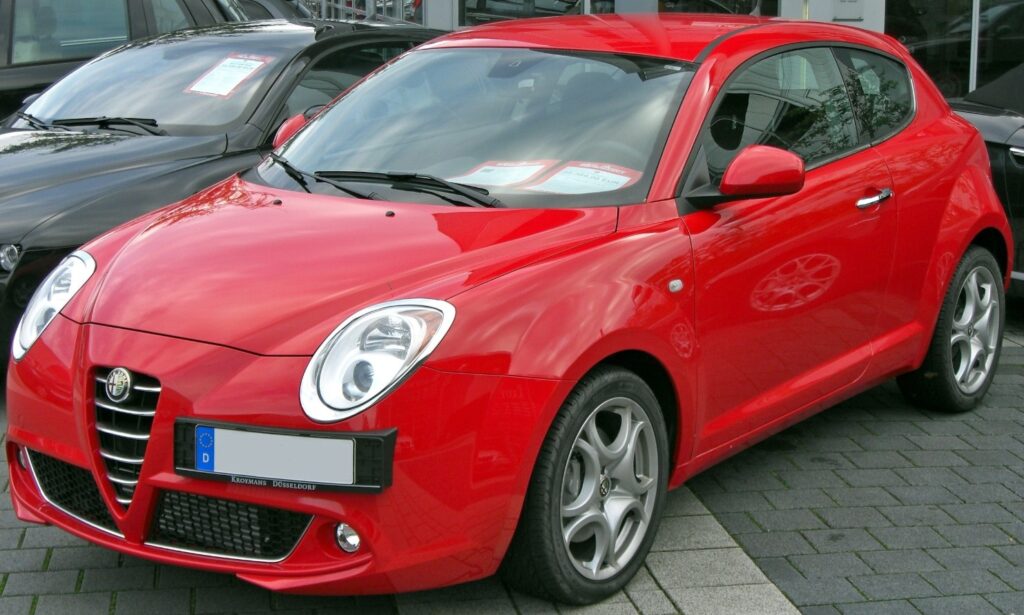
When we compare the Alfa Romeo MiTo vs Mini Cooper, we are not really choosing between two anonymous little hatchbacks. Both cars were created to make a statement. They are compact, stylish, characterful, and far more interesting than the average small car parked outside the supermarket.
Yet they approach the same idea from completely different directions.
The Alfa Romeo MiTo brings Italian flair, sharp detailing, and a slightly rebellious personality. The Mini Cooper mixes retro British design with BMW-era engineering and famously playful handling. One feels like a small Italian fashion accessory with an engine attached; the other resembles a go-kart that somehow learned how to commute.
So, which one deserves a place on our driveway?
That depends on what we value. If driving character, running costs, interior quality, practicality, reliability, and used-car prices all matter, there is plenty to discuss. Let's put these two fashionable hatchbacks under the microscope and see where each one shines.
Content in this publication
- Alfa Romeo MiTo vs Mini Cooper at a Glance
- Design: Italian Drama Meets British Retro
- Interior Quality and Cabin Design
- Alfa Romeo MiTo vs Mini Cooper Driving Experience
- Engine Choices and Performance
- MiTo vs Cooper Performance Versions
- Comfort and Everyday Driving
- Practicality: Which Small Hatchback Is Easier to Live With?
- Fuel Economy
- Reliability: Alfa Romeo MiTo vs Mini Cooper
- Maintenance and Repair Costs
- Technology and Features
- Safety
- Ownership Experience and Personality
- Which Is Better for a First Car?
- Which Car Is Better on the Motorway?
- Resale Value and Used Prices
- Modification Potential
- Alfa Romeo MiTo vs Mini Cooper for Enthusiasts
- MiTo vs Mini: Which Has More Character?
- Which One Should We Buy Used?
- Alfa Romeo MiTo vs Mini Cooper: Our Final Verdict
- Frequently Asked Questions
Alfa Romeo MiTo vs Mini Cooper at a Glance
The MiTo and Cooper occupy broadly similar territory, but there are some fundamental differences.
The Alfa Romeo MiTo was introduced as Alfa's compact three-door hatchback, positioned below the Giulietta. Its styling borrowed cues from larger Alfa models, particularly the distinctive triangular grille and rounded rear lights. It was designed for buyers who wanted something more emotional than a conventional supermini.
The Mini Cooper, meanwhile, belongs to a much bigger family. Depending on generation, buyers can find everything from relatively basic hatchbacks to powerful Cooper S and John Cooper Works versions. The Mini has also enjoyed considerably greater international popularity.
Here's the simplest way to describe them:
| Category | Alfa Romeo MiTo | Mini Cooper |
|---|---|---|
| Styling | Dramatic and distinctly Italian | Retro, premium and instantly recognisable |
| Driving feel | Sporty but relatively comfortable | Sharper and more go-kart-like |
| Interior | Stylish but ageing in places | More distinctive and generally more premium |
| Practicality | Reasonable for a three-door supermini | Similar, generation dependent |
| Engine choice | Broad petrol and diesel range | Very broad petrol/diesel range |
| Performance versions | MiTo Quadrifoglio Verde/Veloce | Cooper S and JCW |
| Used value | Usually cheaper | Often commands a premium |
| Image | Rare and individual | Fashionable and widely recognised |
Neither car completely demolishes the other. Instead, each wins different battles.
Design: Italian Drama Meets British Retro
Let's admit it: nobody buys either of these cars purely because of boot measurements.
Looks matter.
The Alfa Romeo MiTo Still Has Presence
The MiTo has aged surprisingly gracefully. Its shield-shaped Alfa grille immediately gives it an identity that generic hatchbacks struggle to match. Swept-back headlights, frameless-looking side windows, muscular rear arches and circular tail lamps create a design that remains unmistakably Alfa Romeo.
Even today, the MiTo can catch our eye in traffic.
There is something wonderfully unconventional about it. It isn't trying to imitate anything else. Park one beside a conservative small hatchback and the Alfa looks like it turned up wearing an Italian suit while everybody else received the "smart casual" memo.
Why MiTo Styling Works
Its greatest design strength is proportion. The short body, wide stance and sculpted sides make even modest versions look sporty.
Larger alloy wheels improve things further, although we would avoid choosing enormous wheels purely for appearance because ride comfort and tyre costs can suffer.
The Mini Cooper Is More Iconic
If recognition matters, the Mini wins.
The modern Mini deliberately references the original classic Mini through its upright windscreen, circular headlights, contrasting roof options and compact proportions. Rather than simply recreating the old car, BMW transformed those design cues into something significantly more premium.
Few small hatchbacks have maintained such a recognisable identity across several generations.
The Cooper can also be personalised extensively. Roof colours, stripes, mirrors, wheels, interior trim and optional equipment mean finding two identical examples isn't always easy.
Interior Quality and Cabin Design
Climb inside and the differences become clearer.
MiTo Interior: Stylish but Showing Its Age
The Alfa's dashboard has personality. Circular air vents, deeply cowled instruments and textured surfaces give the cabin a sporty theme. Certain versions include attractive trim finishes and supportive seats.
However, age exposes some weaknesses.
Several plastics are less sophisticated than those found in equivalent Minis, particularly lower down the dashboard and around secondary controls. Earlier infotainment systems also feel dated by modern standards.
That doesn't necessarily make the MiTo unpleasant. Quite the opposite. We still get an intimate, driver-focused environment.
It simply isn't the most polished cabin in the class.
Mini Cooper Interior: Theatre Everywhere
The Mini takes interior styling almost absurdly seriously.
Large circular dashboard elements, toggle switches and unusual instrumentation make it feel unlike most conventional hatchbacks. Later-generation cars also deliver considerably better materials, infotainment and perceived quality.
Some owners love the design.
Others wonder why something as basic as adjusting a setting sometimes feels like operating a tiny submarine.
Still, the Mini feels more expensive inside, particularly in well-specified models.
Which Cabin Would We Choose?
For material quality and technology, Mini Cooper wins.
For simplicity and understated Italian character, the MiTo still has appeal.
Alfa Romeo MiTo vs Mini Cooper Driving Experience
This is where things become interesting.
Small cars should feel lively. We don't need huge horsepower figures when the car itself is compact, responsive and eager to change direction.
Both deliver entertainment, but the Mini generally sets the higher benchmark.
How the Alfa Romeo MiTo Drives
The MiTo feels agile and easy to place on narrow roads. Steering is light around town and becomes more purposeful when speeds increase.
Most versions also feature Alfa Romeo's DNA driving-mode system, allowing us to alter characteristics such as throttle response and steering assistance.
The modes typically revolve around Dynamic, Natural and All-Weather settings, although exact functions vary according to model and powertrain.
Dynamic mode gives the MiTo noticeably more attitude.
Throttle response becomes sharper and the little Alfa suddenly feels more awake. It's like someone handed it an espresso.
How the Mini Cooper Drives
The Cooper has long been associated with "go-kart handling," and although the phrase has been heavily marketed, there is truth behind it.
The steering is typically direct, body control is strong and the Mini enjoys corners. Even ordinary Cooper versions can feel energetic without requiring ridiculous speeds.
Higher-performance versions take this significantly further.
A Cooper S delivers considerably stronger acceleration, while the John Cooper Works models move into genuinely serious hot-hatch territory.
Handling Winner: Mini Cooper
If our priority is pure cornering enjoyment, the Mini generally takes the trophy.
The MiTo is entertaining.
The Mini feels engineered around entertainment.
Engine Choices and Performance
Both models were offered with numerous engines over their production lives, so exact power, acceleration and fuel consumption depend heavily on year and specification.
That makes comparing individual cars more useful than comparing badges alone.
Alfa Romeo MiTo Petrol Engines
The MiTo appeared with several petrol options, including naturally aspirated engines and various versions of Fiat's turbocharged MultiAir technology.
Small turbocharged engines suit the car particularly well because they provide useful mid-range torque without turning the MiTo into an expensive performance machine.
More powerful versions, including the Quadrifoglio Verde and later Veloce derivatives in some markets, provide significantly stronger performance.
These are the cars enthusiasts usually want.
Alfa Romeo MiTo Diesel Engines
Diesel versions also existed, including MultiJet-powered models.
For drivers covering long motorway distances, they can deliver impressive fuel economy. However, anyone mainly making short urban journeys should think carefully before buying an older diesel because diesel particulate filter and emissions-system issues can become relevant.
Mini Cooper Engines
The Mini's engine catalogue is even broader because multiple generations exist.
Naturally aspirated petrol engines appeared in earlier cars, while later versions increasingly adopted turbocharging. Diesel variants were offered in numerous markets too.
Then we reach the fun stuff.
Cooper S models bring substantially more power, while JCW versions sit at the top of the performance ladder.
MiTo vs Cooper Performance Versions
Comparing an entry-level MiTo with a Mini JCW would obviously be meaningless.
The more interesting comparison is something like a sporty MiTo Quadrifoglio Verde against a Mini Cooper S.
MiTo Quadrifoglio Verde
The performance-oriented MiTo offers a compelling mixture of compact dimensions, turbocharged performance and rarity.
It feels special partly because we simply don't see many of them.
That exclusivity is valuable to buyers who don't want the obvious choice.
Mini Cooper S
The Cooper S is easier to find and sits among the most established sporty small hatchbacks.
Acceleration is generally strong, the chassis encourages enthusiastic driving, and aftermarket support is huge.
It also has one major advantage: generations of enthusiasts already understand it.
That means finding specialists, replacement parts, tuning advice and owners' communities is relatively straightforward.
Performance Verdict
For outright dynamic ability, we would generally choose the Mini Cooper S.
For character and rarity, a good MiTo Quadrifoglio Verde is hard to resist.
You may be interested in reading Hyundai Santa Fe vs Tucson: Which Hyundai SUV Is Better?
Comfort and Everyday Driving
Performance is fun on Sunday.
Suspension still matters Monday morning.
The MiTo can actually make a good daily driver because ordinary versions tend to balance agility with reasonable comfort. Wheel size makes an enormous difference, though. Sporty examples on large wheels may feel noticeably firmer.
The Mini has traditionally leaned toward a harder ride.
That firmness contributes to its excellent handling, but rough roads can expose the downside. Certain generations and configurations, particularly cars fitted with low-profile tyres or sport suspension, can feel busy over broken surfaces.
If our commute involves potholes rather than mountain passes, the Alfa may surprise us.
Practicality: Which Small Hatchback Is Easier to Live With?
Neither car should be mistaken for a family SUV.
These are style-led compact hatchbacks, and particularly in older three-door forms, access to the back seats requires compromise.
Rear-Seat Space
Adults can fit in the back of both, but neither offers limousine levels of comfort.
The MiTo's three-door layout means passengers must climb behind the front seats. Headroom and legroom are acceptable rather than generous.
Three-door Mini hatchbacks face the same fundamental problem.
Later Minis became more versatile thanks to additional body styles, including five-door versions, but if we're comparing equivalent three-door used cars, practicality remains broadly similar.
Boot Space
Both offer enough luggage capacity for groceries, gym bags or a modest weekend away.
Neither will impress anyone moving furniture.
If boot space dominates the buying decision, we would probably be looking at different cars altogether.
Fuel Economy
Fuel economy varies dramatically by engine, gearbox, generation and driving style.
Small diesel MiTos can be particularly economical on longer runs, while modest petrol versions are also relatively inexpensive to fuel.
Mini efficiency improved substantially across generations, particularly as smaller turbocharged engines became more common.
But there's an important used-car lesson here: advertised economy matters less than mechanical condition.
A theoretically efficient car with worn sensors, neglected servicing, incorrect tyre pressures or engine problems can rapidly turn into a thirsty one.
Which Is Cheaper to Fuel?
For buyers prioritising maximum economy, an efficient MiTo diesel can be difficult to beat.
For mixed everyday driving, comparable petrol versions of both cars can deliver reasonable running costs.
We wouldn't choose between them on fuel consumption alone.
Reliability: Alfa Romeo MiTo vs Mini Cooper
Here comes the question everyone asks.
"Which one breaks less?"
The answer isn't as entertaining as internet stereotypes suggest.
Neither model deserves to be judged purely by its badge, and both can provide reliable service when properly maintained. At the same time, each has specific weak points, and neglect can become expensive quickly.
Alfa Romeo MiTo Reliability
The old joke says that buying an Alfa means becoming friends with your mechanic.
Reality is more nuanced.
The MiTo shares numerous components and engines with other vehicles from the Fiat group, so it isn't some mysterious exotic machine. Parts availability is generally reasonable in markets where Fiat and Alfa products were widely sold.
Potential concerns depend on engine and gearbox but can involve MultiAir-related faults, electrical gremlins, suspension wear, cooling-system problems, diesel emissions equipment and automated transmission issues on certain versions.
Service history matters enormously.
Mini Cooper Reliability
The Mini also has a mixed reputation, particularly because reliability differs substantially across generations and engines.
Some earlier models are associated with issues involving timing-chain systems, cooling components, oil leaks and other engine-related problems. Newer generations changed significantly and should not automatically be treated as identical mechanically.
That's why saying "Mini Coopers are unreliable" is far too simplistic.
Which Mini Cooper?
Which engine?
Which year?
How was it serviced?
Those questions matter more.
Reliability Winner
There is no automatic winner.
We would rather buy a meticulously maintained MiTo than a neglected Cooper, and we'd choose a beautifully documented Mini over an Alfa with mystery mileage and no invoices.
Condition beats reputation.
Maintenance and Repair Costs
The MiTo has one major advantage in the used market: purchase prices can be surprisingly low.
Routine servicing is not necessarily frightening either, especially when handled by an independent specialist.
The Mini can cost more to maintain, depending on generation and engine. Its premium positioning also means owners sometimes encounter premium-sized repair invoices.
However, Mini has the advantage of popularity.
More cars on the road usually means a larger ecosystem of specialists, used components, aftermarket parts and online technical knowledge.
What Should We Inspect Before Buying Either Car?
A pre-purchase inspection is worth every penny. Key areas deserve particular attention:
- Confirm complete service history and verify important scheduled maintenance.
- Start the engine from cold and listen for abnormal rattles or mechanical noise.
- Check for warning lights and scan the car electronically where possible.
- Test the clutch and gearbox carefully.
- Check turbocharged engines for smoke, hesitation or unusual noises.
- Inspect tyres for uneven wear, which may reveal alignment or suspension problems.
- Test every electrical feature, including windows, locks, infotainment and air conditioning.
- Listen for suspension knocks on rough roads.
- Check for fluid leaks around the engine and underneath the car.
- Avoid heavily modified performance versions unless the work is documented and professionally completed.
A shiny paint finish should never distract us from mechanical evidence.
Technology and Features
Neither car began life in today's world of huge touchscreens and constant smartphone integration.
Equipment therefore depends strongly on year.
Later MiTos received upgraded infotainment and connectivity, while newer Minis gained more sophisticated displays, navigation and smartphone-oriented features.
The Mini's premium positioning usually gives it the edge when comparing similarly aged, well-optioned cars.
However, optional equipment complicates used-car shopping.
A basic Mini can feel surprisingly basic.
A high-spec MiTo can feel surprisingly luxurious.
Always inspect the actual car rather than assuming equipment from the model name.
Safety
Both cars were engineered with modern safety structures and available electronic driver aids for their respective eras, but newer vehicles naturally benefit from developments in crash protection and active safety technology.
When shopping used, tyre condition, brake performance, functioning airbags, electronic stability systems and proper accident repairs matter enormously.
A car's original safety specification only tells half the story.
A poorly repaired crash-damaged vehicle should be avoided regardless of badge.
Ownership Experience and Personality
Here is where spreadsheet comparisons fail.
The MiTo makes us feel like we've chosen something unusual.
The Mini makes us feel like we've chosen something iconic.
Neither feeling is wrong.
Why Buy the Alfa Romeo MiTo?
The MiTo suits someone who enjoys standing apart from the crowd. It is less common, unmistakably Italian and often available for tempting prices on the used market.
Pull up beside three Minis and nobody notices another Mini.
Pull up in a clean MiTo Quadrifoglio Verde and enthusiasts may actually look twice.
That counts for something.
Why Buy the Mini Cooper?
The Mini is the more complete premium product.
It generally feels better developed inside, offers broader model choice and delivers sharper handling. Brand recognition is also much stronger, which can help when resale time arrives.
You may be interested in readingHyundai Santa Fe vs Tucson: Which Hyundai SUV Is Better?You may be interested in reading
Hyundai Santa Fe or Kia Sorento: Which SUV Should You Buy?It is the safer recommendation for someone who wants a stylish compact hatchback without venturing too far from the mainstream.
Which Is Better for a First Car?
Both can work as first cars, but insurance, engine output and repair costs should guide the decision.
A modestly powered MiTo may offer an attractive combination of style, compact dimensions and affordability.
Likewise, a basic Mini One or lower-powered Cooper derivative can be easier to manage than a performance model.
Young drivers should resist the temptation to jump immediately into the fastest version available.
A Cooper S sounds exciting until the insurance quote arrives like a brick through the letterbox.
Parking and City Driving
Both cars excel in urban environments.
Compact dimensions make narrow streets and parking spaces easier to negotiate. Visibility is generally reasonable, while parking sensors on suitably equipped versions simplify things further.
The MiTo's light steering is particularly convenient in town.
The Mini feels wonderfully compact from behind the wheel.
Either makes considerably more sense in a crowded city than an oversized crossover.
Which Car Is Better on the Motorway?
The answer depends heavily on specification.
More powerful engines in either car provide enough performance for confident motorway merging and overtaking.
Diesel MiTos can be appealing for long distances thanks to strong torque and good economy.
The Mini usually feels planted at speed, although sporty suspension and large wheels can introduce more road noise and harshness than some drivers expect.
For occasional motorway driving, both are perfectly capable.
For relentless long-distance commuting, we'd choose whichever example has the quieter tyre setup, better seats and more complete service history.
Resale Value and Used Prices
Used MiTos are often attractively priced because Alfa's small hatch never achieved the same cultural status or sales volumes as the modern Mini.
That's bad news for someone who bought one new.
It can be excellent news for us.
A carefully selected MiTo can deliver plenty of personality for relatively little money.
The Mini generally enjoys stronger demand, especially desirable specifications, Cooper S versions and attractive colour combinations.
That can translate into higher purchase prices, but potentially stronger resale performance as well.
The MiTo Is the Value Choice
If our budget is limited, the MiTo deserves serious consideration.
The amount of style available per pound, euro or dollar can be remarkable.
The Mini Is the Market-Friendly Choice
If we care about easier resale and greater buyer recognition, the Mini wins.
More people know what a Cooper is.
More people want one.
That liquidity matters.
Modification Potential
Mini has a huge advantage here.
The aftermarket is enormous.
Owners can find performance upgrades, suspension components, wheels, styling accessories, exhausts, induction systems and countless cosmetic options.
The Alfa community is smaller, although plenty of tuning opportunities still exist, particularly around turbocharged engines.
But modifications need caution.
An aggressively tuned used hatchback may have spent much of its life being driven hard. That's not automatically bad, but we'd want invoices, reputable parts and proof that the supporting maintenance kept pace with the extra performance.
Alfa Romeo MiTo vs Mini Cooper for Enthusiasts
For drivers who genuinely enjoy cars, the decision gets wonderfully difficult.
The Mini is arguably the better driver's machine.
The MiTo is arguably the more interesting object.
A sharp Mini Cooper S rewards a winding road immediately. Steering, chassis balance and turbocharged performance combine into something genuinely engaging.
Yet an Alfa MiTo can generate affection precisely because it isn't perfect.
It has quirks.
It has style.
It feels like a choice rather than a default answer.
And sometimes the cars we remember most fondly aren't the ones that won every comparison test.
MiTo vs Mini: Which Has More Character?
Character cannot be measured with a stopwatch.
But we know it when we feel it.
The Mini's personality is carefully engineered. Everything from the circular dashboard to the steering response reminds us we're driving a Mini.
The Alfa's character feels more spontaneous. Its design, DNA selector and slightly unconventional cabin create a car that feels distinctly Mediterranean.
We might describe the Mini as a beautifully designed cocktail bar.
The MiTo is the tiny espresso shop around the corner where the owner knows everybody by name.
Which sounds better depends entirely on us.
Which One Should We Buy Used?
We should choose the Alfa Romeo MiTo when value, rarity, Italian styling and individuality matter most.
We should choose the Mini Cooper when handling, cabin quality, model variety, aftermarket support and broader desirability matter more.
But there's another rule that matters even more:
Buy the best example, not merely the preferred badge.
A £5,000 MiTo with flawless service records could be a smarter purchase than a £5,000 Mini requiring £2,000 of repairs immediately after purchase.
Likewise, a carefully maintained Cooper can be substantially less risky than a bargain Alfa with questionable history.
Used cars are individuals.
Treat them that way.
Alfa Romeo MiTo vs Mini Cooper: Our Final Verdict
So where does the Alfa Romeo MiTo vs Mini Cooper battle end?
For most buyers, the Mini Cooper is the stronger all-rounder.
It offers excellent handling, a more premium cabin, broader model choice, greater aftermarket support and stronger brand recognition. If we simply want the easiest recommendation, the Mini takes it.
But "best" and "most desirable" aren't always the same thing.
The Alfa Romeo MiTo has something the Mini struggles to replicate: rarity. It feels less expected. It looks distinctly Italian and can represent fantastic value on the used market.
If we buy cars with our heads, the Mini probably wins.
If we occasionally let our hearts interfere, the MiTo starts whispering from the other side of the showroom.
And isn't that exactly what an Alfa Romeo is supposed to do?
Frequently Asked Questions
1. Is an Alfa Romeo MiTo better than a Mini Cooper?
The Mini Cooper is generally the better all-round package thanks to its sharper handling, stronger interior quality, larger model range and extensive specialist support. However, the MiTo can be a better choice for buyers seeking lower used prices, distinctive styling and greater exclusivity.
2. Is the Alfa Romeo MiTo cheaper to maintain than a Mini?
It can be, particularly when using an independent Alfa or Fiat specialist, but maintenance costs vary greatly by engine and condition. Certain MiTo mechanical or electronic faults can still become expensive. The Mini may carry higher repair costs in some cases, especially on complex or performance-oriented versions.
3. Which is more reliable, Alfa Romeo MiTo or Mini Cooper?
There is no universal winner because both cars were produced with multiple engines and configurations. Reliability depends heavily on generation, service history, mileage and previous ownership. A professionally inspected, well-maintained example of either car is preferable to buying purely according to brand reputation.
4. Is a MiTo as fun to drive as a Mini Cooper?
The MiTo is enjoyable, particularly in turbocharged versions and when Dynamic mode is selected. However, the Mini Cooper generally offers more precise steering and sharper chassis responses. Drivers prioritising handling will usually prefer the Mini, while those seeking a mixture of character and comfort may appreciate the Alfa.
5. Should we buy a MiTo Quadrifoglio Verde or Mini Cooper S?
The Mini Cooper S is usually the more accomplished performance hatch and benefits from stronger aftermarket and specialist support. The MiTo Quadrifoglio Verde is rarer and arguably more distinctive. Choose the Mini for outright driving polish and the Alfa for exclusivity and Italian character.
You may be interested in readingHyundai Santa Fe vs Tucson: Which Hyundai SUV Is Better?You may be interested in reading
Hyundai Santa Fe or Kia Sorento: Which SUV Should You Buy?You may be interested in reading
Hyundai Santa Fe vs Toyota Highlander: Which Three-Row SUV Is Better?If you want to know other articles similar to Alfa Romeo MiTo vs Mini Cooper: Which Stylish Hatchback Wins? you can visit the category Models.
Honda Passport vs Toyota 4Runner: Which SUV Is Better?
Honda Passport vs Ford Bronco: Which SUV Is Better?
Honda Passport vs Ford Explorer: Which SUV Is Better?
Honda Passport or Pilot: Which SUV Is Better?
Honda Passport vs Jeep Grand Cherokee: Which SUV Is Better?
Honda Passport vs Nissan Pathfinder: Which SUV Is Better?
Leave a Reply
More content of your interest