

Nissan Frontier vs F150: Which Pickup Fits You Better?

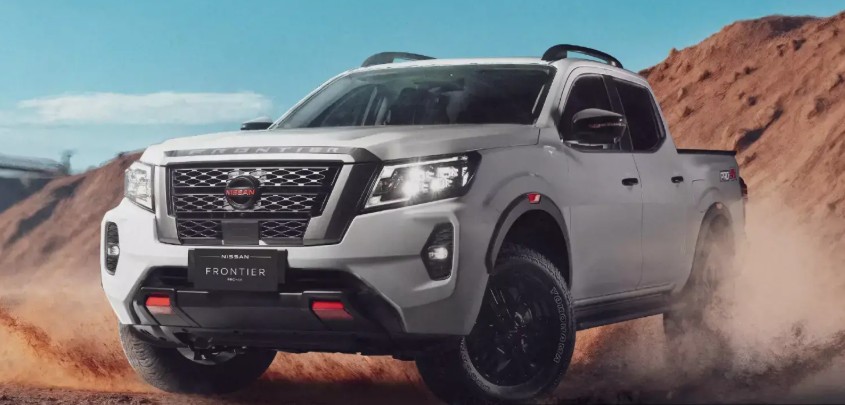
Comparing the Nissan Frontier vs F150 is a little like comparing a rugged hiking boot with a heavy-duty work boot. Both belong in the same general world, both can get dirty, haul equipment, tow trailers, and handle rough roads—but they are designed around noticeably different priorities.
The Nissan Frontier is a midsize pickup that keeps things relatively simple. It is easier to maneuver, easier to park, and generally less intimidating for drivers who do not need a huge truck every day. The Ford F-150, meanwhile, is a full-size pickup with considerably broader capability. It offers more powertrain choices, greater towing potential, more cargo flexibility, and configurations that can range from basic work truck to surprisingly luxurious family vehicle.
So, which one makes more sense?
That depends on what we actually expect our truck to do. If we're hauling large trailers and loading the bed constantly, the F-150 quickly makes a convincing argument. If we're mostly commuting, exploring trails, carrying recreational equipment, and occasionally towing, the Frontier may be the smarter and less complicated tool.
Let's break down the differences.
Content in this publication
- Nissan Frontier vs F150 at a Glance
- Size Difference: Midsize vs Full-Size
- Exterior Design and Road Presence
- Nissan Frontier vs F150 Engine Performance
- Acceleration and Everyday Driving
- Towing Capacity: F150 Takes the Lead
- Payload and Bed Capability
- Bed Size and Practicality
- Nissan Frontier vs F150 Fuel Economy
- Interior Space and Comfort
- Technology and Infotainment
- Off-Road Performance
- Ride Quality and Handling
- Nissan Frontier vs Ford F150 Reliability
- Maintenance Costs
- Daily Driving: Which Truck Is Easier to Live With?
- Work Truck Comparison
- Family Use
- Parking and Garage Space
- Price and Value
- Nissan Frontier vs F150 for First-Time Truck Buyers
- Which One Is Better for Camping and Outdoor Adventures?
- Frontier vs F150: Pros and Cons
- Which Truck Should You Buy?
- Nissan Frontier vs F150 Final Verdict
- Frequently Asked Questions
Nissan Frontier vs F150 at a Glance
Before diving into engines, towing, fuel economy, and cabins, it helps to understand the fundamental distinction between these two pickups.
The Nissan Frontier is a midsize truck. The Ford F-150 is a full-size truck.
That single difference influences nearly everything else.
The Frontier tends to be narrower and shorter, which makes it easier to drive in dense traffic, navigate parking garages, and squeeze onto narrow trails. The F-150 occupies considerably more physical space but gives us more passenger room, bed choices, payload capacity, towing capability, and powertrain variety.
In broad terms:
- Frontier: better suited to buyers wanting manageable dimensions, straightforward performance, and genuine truck capability.
- F-150: better suited to heavy towing, larger families, serious workloads, and buyers who want numerous configurations.
- Frontier advantage: simplicity and maneuverability.
- F-150 advantage: overall capability and versatility.
Neither formula is automatically better. They're simply designed for different jobs.
Size Difference: Midsize vs Full-Size
Size may be the most important factor in the entire Nissan Frontier vs Ford F150 debate.
The F-150 is noticeably larger. You feel the difference almost immediately from behind the wheel. Its hood seems broader, its cabin feels wider, and finding a parking spot suddenly requires a little more attention.
The Frontier feels more compact and approachable.
For suburban or urban drivers, that matters more than specifications on paper suggest. A truck can have incredible towing capacity, but if we're constantly squeezing it between concrete pillars in parking garages, capability can quickly turn into inconvenience.
Why the Frontier Feels Easier Around Town
The Frontier's midsize proportions help when dealing with:
- Narrow streets
- Crowded parking lots
- Tight driveways
- Urban traffic
- Small garages
- Forest roads and narrow trails
We still get the elevated driving position and tough pickup personality without feeling as if we're piloting a small commercial vehicle.
Why the F150's Extra Size Can Be Worth It
The F-150's larger dimensions are not wasted space.
They translate into more interior width, greater rear-seat comfort in many configurations, larger cargo options, stronger hauling capability, and a generally more substantial work platform.
If we regularly carry three adults across the rear seat or need a truck that doubles as a mobile workspace, the Ford's size becomes an advantage rather than a burden.
Exterior Design and Road Presence
Both trucks look appropriately tough, but their personalities differ.
The Nissan Frontier has a chunky, upright appearance that works especially well in rugged trims. Its proportions feel compact yet muscular. Instead of trying to appear enormous, it looks purposeful.
The F-150 has the classic big American pickup stance. It is broad, tall, and unmistakably substantial. Depending on trim, it can look like a straightforward contractor's truck or an upscale pickup wearing enough chrome and technology to rival luxury SUVs.
Which Truck Looks Better?
That's purely subjective, but we can simplify the personalities.
The Frontier feels adventurous.
The F-150 feels authoritative.
If our idea of the perfect truck involves camping equipment, mountain bikes, and muddy trails, the Frontier fits the scene naturally. If we picture towing a large trailer across several states or pulling up to a job site with equipment in the bed, the F-150 seems right at home.
Nissan Frontier vs F150 Engine Performance
Here's where the comparison becomes especially interesting.
The Frontier takes the straightforward approach. Rather than overwhelming shoppers with numerous engine combinations, Nissan revolves the truck around a naturally aspirated V6 paired with an automatic transmission.
The philosophy is simple: one primary engine, predictable performance, and fewer decisions.
Ford goes almost completely in the opposite direction.
The F-150 lineup has historically offered several powertrain strategies, including turbocharged engines, V8 power, and hybrid technology depending on configuration and model year.
Frontier V6: Simple and Predictable
The Frontier's V6 delivers the kind of performance many traditional truck buyers appreciate.
Throttle response feels natural, power builds predictably, and there is no need to decide between half a dozen engine options.
For daily driving, highway merging, light hauling, and moderate towing, it provides more than enough muscle.
That simplicity is part of the Frontier's charm.
Sometimes we don't want a menu the size of a restaurant encyclopedia. We just want the steak.
F150: More Powertrain Choices
The F-150 gives buyers significantly more flexibility.
Depending on configuration, shoppers can choose engines focused on:
- Fuel efficiency
- Low-end torque
- Maximum towing
- Traditional V8 character
- Hybrid capability
- High-performance driving
That variety means the Ford can be tailored much more precisely to a specific job.
Need serious towing ability? There's likely an F-150 configuration designed around it.
Want everyday efficiency without completely sacrificing capability? Ford offers options aimed at that buyer too.
The downside is complexity. Choosing an F-150 can require considerably more homework.
Acceleration and Everyday Driving
Truck owners rarely spend their days drag racing, but acceleration still matters.
The Frontier's V6 gives it responsive everyday performance. Because the truck is smaller than an F-150, it can feel lively even without chasing enormous horsepower numbers.
The Ford's performance varies much more depending on the engine.
Some F-150 configurations feel relaxed and work-oriented. Others provide tremendous torque and acceleration that would have seemed absurd in a pickup a generation ago.
If outright performance is a major priority, the F-150 offers the broader ceiling.
For normal driving, though, the Frontier does not feel underpowered.
Towing Capacity: F150 Takes the Lead
If towing is your primary reason for buying a truck, this may settle the debate quickly.
The F-150 generally occupies a significantly higher towing class than the Frontier when properly equipped.
That's exactly what we should expect from a full-size pickup.
The Frontier can tow boats, utility trailers, small campers, motorcycles, ATVs, and other recreational loads quite comfortably within its rated limits. But the F-150 is built to handle considerably larger trailers when configured appropriately.
Who Needs the F150's Towing Ability?
The F-150 becomes the obvious choice when regularly towing things such as:
- Larger travel trailers
- Heavy boats
- Equipment trailers
- Construction machinery
- Livestock trailers
- Large enclosed cargo trailers
If those loads describe our weekends or our livelihood, buying the smaller truck simply because it is easier to park probably doesn't make sense.
When the Frontier's Towing Capacity Is Enough
Plenty of owners never come close to full-size pickup towing limits.
If we're towing a modest camper a few weekends each year, hauling jet skis, transporting dirt bikes, or pulling a lightweight utility trailer, a Frontier may already provide all the capacity we realistically need.
Buying excessive towing capacity we never use is like buying a commercial oven to toast two pieces of bread.
Payload and Bed Capability
Payload tells us how much weight a truck can carry rather than pull.
Again, the F-150 typically has the advantage because of its larger platform and wider range of configurations.
Contractors, landscapers, construction crews, farmers, and buyers hauling substantial cargo regularly may find the Ford significantly more useful.
The Frontier still offers legitimate pickup utility, however.
Its bed works well for:
- Camping equipment
- Tools
- Home-improvement supplies
- Sports gear
- Furniture
- Bikes
- Garden materials
- Recreational equipment
For occasional hauling, the Frontier may actually be easier to live with because we get useful cargo space without driving an enormous truck every day.
Bed Size and Practicality
Ford typically gives F-150 buyers more flexibility regarding cab and bed combinations.
That matters tremendously for commercial users.
A longer bed makes carrying construction materials, bulky equipment, or larger cargo easier. Pairing different bed lengths with different cab configurations also helps owners prioritize passenger space or cargo space depending on their needs.
The Frontier's options are more limited, but that's not necessarily bad.
Its shorter overall footprint is part of the appeal.
Which Bed Is Better for Weekend Projects?
For typical homeowner tasks, either truck works.
Need mulch from the garden center? Fine.
Moving furniture? No problem.
Buying lumber for a DIY project? Both can help.
The F-150 simply gives us more room to grow if our projects become larger.
Nissan Frontier vs F150 Fuel Economy
This category isn't as simple as assuming the smaller truck automatically wins.
The Frontier is lighter and smaller, which theoretically helps efficiency. However, its conventional V6 design is not primarily built around maximizing fuel savings.
Meanwhile, certain F-150 engines use turbocharging, cylinder-management strategies, hybrid assistance, and other technology designed to improve efficiency.
You may be interested in reading Nissan Frontier or Similar: What Does It Really Mean?
As a result, fuel economy can vary substantially depending on which F-150 configuration we compare.
Real-World Fuel Costs Matter
Fuel economy ratings never tell the entire story.
We should also consider:
- Annual mileage
- City versus highway driving
- Trailer use
- Payload
- Engine choice
- Tire size
- Four-wheel-drive use
- Driving style
A smaller truck driven aggressively can consume more fuel than expected. A carefully driven F-150 with an efficiency-oriented powertrain can sometimes surprise us.
Still, if we're mostly navigating crowded city streets, the Frontier's smaller footprint can make it feel considerably less cumbersome even when fuel savings aren't dramatic.
Interior Space and Comfort
The F-150 begins flexing its full-size muscles the moment we step inside.
Its cabin is wider, and larger crew-cab configurations can offer genuinely generous rear-seat accommodation.
Some versions feel almost SUV-like.
The Frontier's interior is more compact. That's hardly shocking; midsize pickups simply don't have the same cabin width.
For one or two occupants, though, the difference may not matter much.
Frontier Interior Advantages
The Frontier's cabin has an appealing straightforwardness.
Controls are generally easy to understand, the dashboard isn't trying too hard to imitate a spaceship, and the interior feels purpose-built.
We can climb in, find what we need, and drive.
That may sound boring, but there is something refreshing about technology that doesn't require a tutorial.
F150 Interior Advantages
Higher F-150 trims can feel genuinely premium.
Depending on configuration, buyers may find expansive displays, clever storage solutions, sophisticated driver-assistance technology, premium materials, upgraded audio, and features designed around work or travel.
The cabin can essentially become an office, family SUV, and truck rolled into one.
Rear-Seat Comfort
For households carrying adults in the back regularly, the F-150—particularly in spacious crew-cab form—is difficult for the Frontier to match.
A Frontier rear seat is perfectly usable, especially for children or shorter trips.
The F-150 can feel like a living room by comparison.
Technology and Infotainment
Modern pickup trucks have become technology showcases, particularly at higher trim levels.
The Frontier offers the core technology most buyers expect: smartphone integration, touchscreen infotainment, cameras, driver-assistance systems, and available upgrades depending on trim.
The F-150 tends to push farther.
Ford uses its bestselling pickup as a platform for technology ranging from large infotainment displays to towing aids, onboard power features, advanced driver assistance, and productivity tools.
Does More Technology Always Mean Better?
Not necessarily.
Some buyers love exploring menus, camera views, towing interfaces, and digital dashboards.
Others want physical buttons and minimal distractions.
This is an area where the Frontier's relative simplicity may actually become an advantage.
The F-150 offers more.
The Frontier asks less from us.
Off-Road Performance
Both pickups can venture well beyond pavement, especially when equipped in their more adventure-focused configurations.
The Frontier benefits from its smaller size on narrow trails. Less width means fewer nervous moments squeezing between trees, rocks, and obstacles.
Its rugged variants can also provide hardware such as upgraded suspension components, protective equipment, and traction-focused features.
The F-150 offers its own formidable off-road configurations, including models aimed at everything from desert-speed driving to technical trail use.
Frontier Off Road
For exploring forest tracks, muddy campsites, mountain trails, and rocky backcountry roads, the Frontier makes a lot of sense.
Its size becomes an asset.
Think mountain goat rather than Clydesdale.
It may not have the F-150's maximum capability on paper, but sometimes a smaller footprint is exactly what helps a truck navigate challenging terrain.
F150 Off Road
The Ford can become an absolute monster when properly configured.
Specialized versions bring substantial suspension travel, serious tires, powerful engines, electronic traction systems, and off-road technology.
The downside?
It's still a big truck.
On wide-open desert terrain, that may hardly matter. On narrow woodland trails, suddenly every branch looks expensive.
Ride Quality and Handling
Neither truck drives like a compact crossover, and we shouldn't expect one to.
They're pickups.
Still, the difference in size affects how each feels.
The Frontier generally feels easier to place on the road. Its dimensions are simpler to judge, and it can feel more natural in crowded environments.
The F-150 can ride remarkably comfortably for such a large vehicle, particularly in street-oriented trims, but there's no hiding its size.
Highway Driving
On open highways, the F-150 comes into its own.
The large cabin, stable stance, comfortable seats, and available technology make long-distance travel relaxing.
The Frontier also cruises comfortably, though its smaller dimensions create a more conventional midsize-truck environment.
City Driving
In the city, we'd generally rather have the Frontier.
Parallel parking a smaller truck is simply easier.
The same goes for drive-through lanes, underground garages, narrow intersections, and grocery-store parking.
That convenience adds up when the truck is our daily driver rather than something we only use on weekends.
Nissan Frontier vs Ford F150 Reliability
Reliability is more complicated than simply declaring one brand the winner.
Both trucks have long production histories, but individual reliability can depend heavily on model year, powertrain, maintenance history, and how the vehicle has been used.
The Frontier's mechanical simplicity can appeal to buyers who prioritize straightforward ownership.
A simpler powertrain strategy theoretically means fewer combinations to research and fewer decisions during the buying process.
The F-150's many engine options make broad reliability statements harder.
One powertrain may develop an excellent reputation while another generation or configuration may have specific concerns.
Used Truck Buyers Should Research the Exact Configuration
This is crucial.
Don't research merely:
"Is the Ford F-150 reliable?"
Research the exact year, engine, transmission, drivetrain, trim, mileage, and service history.
The same principle applies to a Frontier.
A well-maintained truck with documented servicing usually deserves more confidence than a neglected example wearing a supposedly "reliable" badge.
Maintenance Costs
The Frontier may have an advantage for owners who value simplicity.
There are fewer powertrain combinations to navigate, and its conventional V6 approach is familiar territory.
The F-150's ownership costs can vary widely.
A basic work-oriented model and a high-output, heavily optioned, technology-packed truck are practically different worlds when maintenance and repair bills arrive.
More Features Mean More Things to Maintain
Luxury equipment is wonderful while everything works.
Power accessories, complex cameras, advanced electronics, elaborate driver-assistance systems, turbocharging, hybrid equipment, and specialized suspension components can enhance ownership dramatically.
But complexity rarely comes free forever.
Buyers planning to keep a truck for ten or fifteen years should think beyond showroom excitement.
Daily Driving: Which Truck Is Easier to Live With?
For many private buyers, this category matters more than maximum towing capacity.
Most trucks spend far more time commuting than towing.
You may be interested in readingNissan Frontier or Similar: What Does It Really Mean?You may be interested in reading
 Holden Colorado Year Models: Complete Guide from 2008 to 2020
If we're driving to work five days a week, picking up groceries, visiting shopping centers, and transporting kids, the Frontier's compact proportions become compelling.
The F-150 counters with superior cabin space and comfort.
So the decision comes down to priorities.
Choose the Frontier for Daily Driving If:
We value easy parking, smaller dimensions, straightforward controls, and enough truck capability for occasional work.
Choose the F150 for Daily Driving If:
We regularly carry several passengers, want expansive interior space, enjoy premium technology, or simply prefer the comfort and presence of a full-size truck.
Work Truck Comparison
Now the Ford starts swinging hard.
The F-150 was designed to serve an enormous range of commercial applications.
Its configurations can support tradespeople, contractors, farms, fleets, construction businesses, towing operations, and numerous specialized jobs.
The Frontier can absolutely work, but its capability envelope is smaller.
For light-duty commercial use, it may actually be ideal. We don't necessarily need a full-size truck to carry tools and equipment.
But once heavy payloads and trailers become routine, the F-150 becomes the more appropriate machine.
Family Use
Can a pickup replace a family SUV?
Increasingly, yes.
The F-150 is particularly convincing in this role.
A roomy crew-cab configuration can provide generous seating while the bed carries camping equipment, sports gear, strollers, luggage, or muddy items we'd rather keep outside the passenger compartment.
The Frontier can also work for families, but rear-seat space is naturally tighter.
Families with small children may find it perfectly adequate.
Families with teenagers built like basketball forwards may prefer the Ford.
Parking and Garage Space
This category sounds trivial until we've purchased a truck that barely fits our garage.
Before buying either vehicle, measure your parking space.
Seriously.
Measure it.
The F-150's width and length may create headaches in older garages, narrow urban driveways, or apartment parking spaces.
The Frontier is much friendlier in these environments.
A truck that technically fits but requires a ten-point maneuver every evening stops being charming surprisingly quickly.
Price and Value
The Frontier generally occupies a lower segment than the F-150, although trim levels and options can dramatically affect pricing.
Entry-level comparisons don't tell the complete story because the F-150's lineup stretches across a massive price range.
A modestly equipped Frontier can offer strong value to buyers who simply want a capable pickup without adding dozens of luxury features.
The F-150 offers more ceiling.
More capability, more technology, more engines, more configurations—and potentially much higher prices.
Which One Gives Us More Truck for the Money?
That depends on what "more truck" means.
If it means:
More towing, payload, passenger space, and configuration flexibility: F-150.
If it means:
Useful capability without paying for size and capacity we don't need: Frontier.
Value isn't about buying the most capable vehicle.
It's about paying for capability we will actually use.
Nissan Frontier vs F150 for First-Time Truck Buyers
First-time truck ownership can involve some adjustment.
Pickups are longer, wider, heavier, and differently balanced from compact cars or crossovers.
For someone moving into their first pickup, the Frontier is arguably the gentler transition.
It still feels like a real truck, but its dimensions are less intimidating.
The F-150 isn't difficult to drive once we become accustomed to it, yet new pickup owners may initially find its size daunting.
For that reason alone, the Frontier makes a strong case for beginners.
Which One Is Better for Camping and Outdoor Adventures?
This depends on the kind of adventure.
The Frontier is excellent for travelers who prioritize trail access, maneuverability, basic towing, and carrying recreational equipment.
Mountain bikes, tents, kayaks, coolers, and camping supplies fit naturally into its lifestyle.
The F-150 is better when camping becomes more serious.
Towing a larger travel trailer?
Carrying a family plus several days of equipment?
Bringing generators, cooking gear, water containers, and recreational toys?
The Ford's extra capacity quickly becomes useful.
Frontier vs F150: Pros and Cons
Nissan Frontier Pros
The Frontier makes sense because it offers:
- Manageable midsize dimensions
- Strong conventional V6 performance
- Easier urban driving
- Genuine off-road capability
- Straightforward controls
- Useful towing capacity
- Lower intimidation factor
- Practical everyday usability
Nissan Frontier Cons
Its compromises include:
- Less rear-seat space
- Lower maximum towing capability
- Lower payload potential
- Fewer powertrain choices
- Less bed and configuration flexibility
- Fewer high-end technology options
Ford F150 Pros
The F-150 stands out for:
- Much broader towing capability
- Multiple powertrain choices
- Excellent passenger space
- Numerous cab and bed configurations
- Higher payload potential
- Advanced towing technology
- Strong commercial usefulness
- Luxury-oriented options
- Specialized off-road versions
Ford F150 Cons
The trade-offs include:
- Larger exterior dimensions
- More difficult urban parking
- Potentially higher purchase costs
- Greater mechanical and technological complexity
- More configuration research required
- Capability that many casual owners may never use
Which Truck Should You Buy?
We can make this surprisingly simple.
Buy the Nissan Frontier if you want a pickup because trucks suit your lifestyle but you don't necessarily need full-size capability.
It is particularly appealing for commuters, outdoor enthusiasts, homeowners, weekend DIY projects, light towing, and buyers who prefer simpler mechanical packages.
Buy the Ford F-150 if the truck itself is central to your work or lifestyle.
If towing, hauling, passenger space, bed flexibility, technology, or maximum capability regularly matter, the Ford earns its larger footprint.
Choose the Nissan Frontier If You Want
A more manageable truck with genuine capability, good everyday performance, easier parking, and less complexity.
Choose the Ford F150 If You Want
A larger, stronger, more configurable truck capable of handling heavier workloads while also offering impressive comfort and technology.
Nissan Frontier vs F150 Final Verdict
The Nissan Frontier vs F150 comparison doesn't produce one universal winner because these pickups are playing different positions on the same team.
The Frontier is the easier truck to live with.
It offers enough power, towing capability, bed utility, and off-road confidence for a huge number of drivers without forcing us to manage the dimensions of a full-size pickup every time we visit a grocery store.
The F-150 is the more capable tool.
Its broader powertrain lineup, superior towing ceiling, larger cabin, greater payload potential, and endless configuration possibilities make it better suited to serious workloads and buyers who genuinely need full-size capability.
If our truck spends most days commuting and only occasionally towing or hauling, we'd lean toward the Frontier.
If towing and hauling are routine parts of life—or we simply want maximum versatility—the F-150 is difficult to beat.
The smartest question isn't, "Which truck is better?"
It's this:
How much truck do we actually need?
Answer that honestly, and the decision becomes much easier.
Frequently Asked Questions
1. Is the Nissan Frontier better than the Ford F150?
The Nissan Frontier can be better for buyers who value maneuverability, simpler powertrain choices, easier parking, and adequate capability without full-size dimensions. The Ford F-150 is generally better for heavy towing, large payloads, passenger space, and configuration variety.
2. Which can tow more, the Nissan Frontier or F150?
The Ford F-150 generally offers significantly higher maximum towing capability when properly configured. The Frontier still provides useful towing capacity for smaller campers, boats, recreational trailers, and utility trailers, but it belongs to a lower capability class.
3. Is the Frontier easier to drive than an F150?
For many drivers, yes. The Frontier's smaller dimensions make parking, navigating narrow roads, maneuvering through cities, and using smaller garages easier. Drivers accustomed to full-size pickups may have no difficulty with the F-150, but its physical size is impossible to ignore.
4. Which is better off road, Frontier or F150?
Both can be highly capable off road when properly equipped. The Frontier's smaller size can make it particularly useful on narrow trails, while specialized F-150 models offer impressive suspension, traction, and high-performance off-road hardware. The best option depends on the terrain.
You may be interested in readingNissan Frontier or Similar: What Does It Really Mean?You may be interested in reading
Holden Colorado Year Models: Complete Guide from 2008 to 2020You may be interested in reading
 Alternatives to Volvo XC90: The Best Luxury SUVs Worth Considering
5. Should I buy a Frontier or F150 for everyday use?
If towing and heavy hauling are occasional rather than routine, the Frontier may be the more convenient everyday truck. If you frequently carry passengers, tow substantial trailers, haul heavier loads, or want more luxury and technology options, the F-150 is likely worth the extra size.
If you want to know other articles similar to Nissan Frontier vs F150: Which Pickup Fits You Better? you can visit the category Models.
Honda Passport vs Toyota 4Runner: Which SUV Is Better?
Honda Passport vs Ford Bronco: Which SUV Is Better?
Honda Passport vs Ford Explorer: Which SUV Is Better?
Honda Passport or Pilot: Which SUV Is Better?
Honda Passport vs Jeep Grand Cherokee: Which SUV Is Better?
Honda Passport vs Nissan Pathfinder: Which SUV Is Better?
Leave a Reply
More content of your interest