

Alfa Romeo MiTo vs Giulietta: Which Used Alfa Is Better?

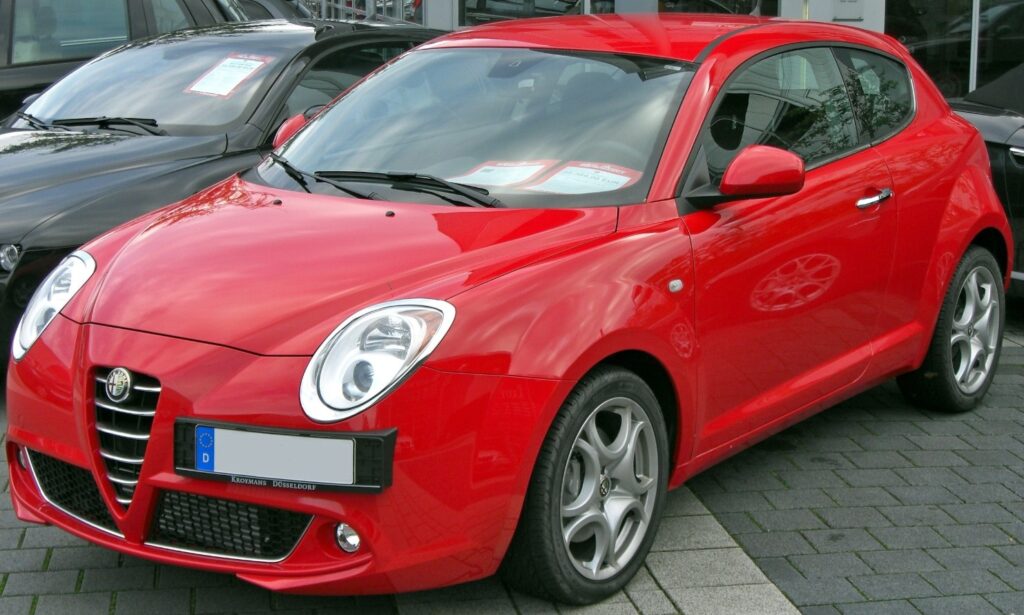
Choosing between the Alfa Romeo MiTo vs Giulietta is a bit like deciding between a sharp espresso and a full Italian dinner. Both have unmistakable Alfa Romeo character, both can make an ordinary commute feel more interesting, and both offer far more personality than many conventional used hatchbacks. Yet they were designed for quite different buyers.
The MiTo is the smaller, lighter, city-friendly option. It feels compact, youthful, and playful. The Giulietta sits one class above it, giving us more room, stronger long-distance ability, greater practicality, and a more mature driving experience.
So, which one should we actually buy?
That depends on what matters most. If we mainly drive around town, rarely carry rear passengers, and want something distinctive without taking up much space, the MiTo has plenty going for it. If we need a genuine everyday family hatchback that can handle motorway journeys, shopping trips, passengers, and luggage without feeling cramped, the Giulietta is usually the stronger all-rounder.
Let's compare them properly.
Content in this publication
- Alfa Romeo MiTo vs Giulietta at a Glance
- Alfa Romeo MiTo vs Giulietta Design
- Size Difference Between Alfa Romeo MiTo and Giulietta
- Interior Quality and Cabin Design
- Rear Passenger Space: Giulietta Wins Easily
- Alfa Romeo MiTo vs Giulietta Boot Space
- Engine Choices
- Performance: Which Is Faster?
- Handling and Driving Experience
- What Is Alfa Romeo DNA Mode?
- Comfort: MiTo vs Giulietta
- Fuel Economy
- Insurance and Running Costs
- Reliability: Alfa Romeo MiTo vs Giulietta
- Manual vs Automatic Gearbox
- MiTo vs Giulietta for a First Car
- Which Is Better for City Driving?
- Which Is Better on the Motorway?
- Which Is Better for Families?
- MiTo vs Giulietta as a Fun Car
- Alfa Romeo MiTo vs Giulietta Used Prices
- What to Check Before Buying a MiTo
- What to Check Before Buying a Giulietta
- Which Holds Its Value Better?
- MiTo vs Giulietta: Which Feels More Special?
- Advantages of the Alfa Romeo MiTo
- Advantages of the Alfa Romeo Giulietta
- Who Should Buy the Alfa Romeo MiTo?
- Who Should Buy the Alfa Romeo Giulietta?
- Alfa Romeo MiTo vs Giulietta: Which One Would We Choose?
- Final Verdict
- Frequently Asked Questions
Alfa Romeo MiTo vs Giulietta at a Glance
Before diving deeper, here's the simplest way to separate these two Alfas.
The MiTo is essentially Alfa Romeo's interpretation of a premium supermini. Think Ford Fiesta, MINI Hatch, Volkswagen Polo, or Audi A1 territory, but with an unmistakably Italian personality.
The Giulietta, meanwhile, competes in the larger family-hatchback class alongside cars such as the Volkswagen Golf, Ford Focus, SEAT Leon, Peugeot 308, and Audi A3.
That difference in class influences almost everything: interior space, boot capacity, comfort, running costs, road manners, and purchase price.
Quick Comparison
| Category | Alfa Romeo MiTo | Alfa Romeo Giulietta |
|---|---|---|
| Vehicle type | Small hatchback | Family hatchback |
| Best environment | City and short journeys | Mixed driving and motorway use |
| Passenger space | Limited | Much better |
| Boot practicality | Modest | More useful |
| Parking ease | Excellent | Good |
| Driving character | Light and playful | More planted and mature |
| Running costs | Usually lower | Usually higher |
| Family suitability | Limited | Much stronger |
| Used-car appeal | Cheap, stylish runabout | More complete everyday car |
If we want the shortest answer possible, the MiTo makes more sense as a compact personal car. The Giulietta makes more sense as our only car.
Alfa Romeo MiTo vs Giulietta Design
Few brands manage to make hatchbacks look quite as distinctive as Alfa Romeo.
The MiTo and Giulietta share obvious family styling cues, including Alfa's traditional shield-shaped grille and flowing body lines, yet they interpret them differently.
The MiTo Looks Small but Dramatic
The MiTo has almost cartoonishly expressive proportions. Its rounded lights, curving rear end, frameless-looking side profile, and compact dimensions make it immediately recognisable.
Even today, a clean example can stand out in a car park filled with anonymous hatchbacks.
That's one of the MiTo's strongest attractions. We don't necessarily buy one because it dominates a spreadsheet. We buy one because every time we walk back to it, it looks a little more interesting than whatever is parked beside it.
The Giulietta Looks More Sophisticated
The Giulietta has a lower, wider, more grown-up stance.
Its hidden rear door handles help give it the appearance of a three-door coupé even though it offers five-door practicality. That design trick remains one of its smartest visual features.
Where the MiTo feels cheeky, the Giulietta feels elegant.
Which Alfa Looks Better?
Purely subjective, of course, but the Giulietta arguably has the more timeless design. It manages to look sporty without trying too hard.
The MiTo is more playful and unusual.
If personality is our priority, either can work. If we want something that still looks relatively sophisticated beside newer cars, the Giulietta probably wins.
Size Difference Between Alfa Romeo MiTo and Giulietta
This is where the comparison becomes much more practical.
The MiTo is noticeably shorter and narrower than the Giulietta. That makes it easier to squeeze through crowded streets, fit into tight parking spaces, and manoeuvre in busy urban environments.
For someone living in a city, that's not a trivial benefit.
The Giulietta occupies considerably more road space, although it is hardly an enormous vehicle. Compared with modern SUVs, it still feels refreshingly manageable.
MiTo Is Better in Tight Spaces
Urban driving is the MiTo's natural habitat.
We can thread it through narrow streets with little effort, and finding parking is generally easier. Its compact footprint also makes it less intimidating for newer drivers.
That alone can make the MiTo appealing as a first car or second household car.
Giulietta Gives Us More Car for the Footprint
Although larger, the Giulietta doesn't feel cumbersome.
Instead, its extra dimensions are used where we actually notice them: passenger space, luggage room, stability, and comfort.
If we regularly travel with more than one other person, the Giulietta's extra size becomes worthwhile very quickly.
Interior Quality and Cabin Design
Neither Alfa offers a cabin that feels quite as clinical or meticulously finished as some German rivals, but that isn't really the point.
Both interiors have character.
The driving position, circular design elements, sporty instruments, and distinctive dashboard styling make them feel different from mainstream alternatives.
Inside the Alfa Romeo MiTo
The MiTo cabin feels cosy.
Depending on specification, we may find attractive trim inserts, sporty seats, and flashes of Italian design flair. However, age reveals itself through some plastics, controls, and infotainment systems.
Storage can also be limited.
For one or two occupants, the cabin works reasonably well. Add passengers, bottles, phones, bags, and everyday clutter, though, and the MiTo can start feeling like a small wardrobe after we've tried to squeeze in another winter coat.
Inside the Alfa Romeo Giulietta
The Giulietta gives us considerably more breathing room.
Front occupants benefit from a wider cabin, and the dashboard feels more substantial. Later versions may also have more modern-looking infotainment arrangements, although technology still isn't the Giulietta's main selling point.
Overall cabin quality varies depending on age, trim, and how well previous owners have looked after the car.
That's important when shopping used. A cherished Alfa and a neglected Alfa can feel like two entirely different vehicles.
Rear Passenger Space: Giulietta Wins Easily
If rear-seat passengers matter, this contest becomes rather one-sided.
The MiTo was never designed to be a serious family carrier. Access to the rear can be inconvenient, and adults may find headroom and legroom restrictive.
Children will usually cope better, but frequently fitting child seats or transporting adults can become frustrating.
The Giulietta is far more practical.
Its rear doors alone make daily life easier, while additional legroom and shoulder room make longer trips less punishing.
Can the MiTo Carry Four Adults?
Technically, yes.
Would we want to cross a country with four adults inside?
Probably not.
For occasional short trips, it can manage. For regular passenger duties, the Giulietta is the sensible choice.
Alfa Romeo MiTo vs Giulietta Boot Space
Boot capacity follows the same pattern as passenger room.
The MiTo gives us enough space for supermarket shopping, a few bags, or light weekend luggage. Fold the rear seats and it becomes more flexible, but this is not a car designed around cargo.
The Giulietta's luggage area is far more useful for normal life.
We can carry larger shopping loads, suitcases, pushchairs, sports equipment, or work gear with less planning.
Which Is Better for Road Trips?
The Giulietta, comfortably.
When travelling, luggage has a strange ability to multiply. What starts as two bags somehow becomes jackets, chargers, water bottles, shoes, snacks, and a mysterious extra backpack nobody remembers packing.
The Giulietta handles that chaos much better.
Engine Choices
Both models were offered with numerous petrol and diesel engines during their production lives, with availability varying according to market and model year.
That variety is good for used buyers because we can choose an engine that matches how we actually drive.
MiTo Petrol Engines
Small petrol engines are particularly well suited to the MiTo's character.
They generally make sense for urban driving, lower annual mileage, and shorter journeys. More powerful turbocharged versions transform the MiTo into a much livelier machine.
Higher-performance variants can be genuinely entertaining.
However, performance models are also more likely to have been driven enthusiastically, so condition and maintenance history matter more than badges alone.
Giulietta Petrol Engines
Petrol Giuliettas range from relatively economical everyday versions to far more powerful derivatives.
Turbocharged engines suit the Giulietta well because the car's larger body benefits from additional torque.
A well-maintained mid-range petrol Giulietta can strike a particularly attractive balance between performance and everyday usability.
Diesel Options
Both cars were available with diesel power in many markets.
Diesels can work well for drivers covering regular motorway mileage, where their strong torque and fuel efficiency come into their own.
For frequent short urban journeys, however, a petrol engine will often be the simpler match.
Used diesel cars also deserve careful inspection of emissions-related equipment and maintenance history.
Performance: Which Is Faster?
There's no single winner because both models came with engines covering a wide performance range.
A modest MiTo obviously won't outrun a powerful Giulietta, while a sporty MiTo can feel much faster and sharper than an entry-level Giulietta.
More importantly, outright speed doesn't tell the whole story.
MiTo Feels Lively
Because it is smaller and lighter, the MiTo can feel energetic even without huge power.
Acceleration, quick direction changes, and a relatively compact driving environment make it feel eager.
You may be interested in reading Alfa Romeo MiTo vs VW Polo: Which Small Hatchback Should You Buy?
On a narrow country road, that agility can be addictive.
Giulietta Feels Stronger and More Stable
The Giulietta generally feels more substantial.
At higher speeds, it settles into the road with greater confidence, particularly on longer journeys.
A more powerful Giulietta can deliver serious pace while remaining practical enough to use every day.
Handling and Driving Experience
This is where Alfa Romeo's personality becomes important.
Neither model exists purely to transport us from one postcode to another. Both attempt to inject some enjoyment into the process.
MiTo: The More Playful Choice
The MiTo feels compact around us.
That creates a sense of immediacy. We turn the wheel, the car changes direction quickly, and narrow roads suddenly feel like somewhere worth exploring.
Depending on engine, suspension, wheels, and tyre condition, ride quality can vary considerably.
Sportier specifications may look great but feel firmer over rough roads.
Giulietta: Better Balance
The Giulietta is less toy-like but more polished.
Its longer wheelbase and larger footprint make it calmer at speed. It can still feel agile, yet it doesn't become tiring as quickly during motorway travel.
If our driving includes everything from school runs to weekend motorway trips, the Giulietta's wider range of abilities is valuable.
What Is Alfa Romeo DNA Mode?
Many versions of both cars use Alfa Romeo's DNA driving-mode system.
The letters traditionally refer to modes intended to alter aspects of the car's behaviour, such as throttle response, steering feel, and electronic assistance.
The exact operation depends on model and specification.
In practice, selecting a sportier setting can make the car feel more alert, while the normal setting generally suits everyday driving.
Is it transformative?
Not necessarily.
But it adds another little layer of Alfa personality—and that's part of the charm.
Comfort: MiTo vs Giulietta
Anyone mainly driving short distances may find the MiTo perfectly comfortable.
However, the longer we stay behind the wheel, the Giulietta's advantages become more obvious.
It usually feels more settled, quieter, and less busy on faster roads.
Motorway Comfort
The Giulietta wins.
The larger car feels more natural at sustained speeds and usually gives passengers more room to stretch out.
Urban Comfort
Here, the MiTo fights back.
Its compact dimensions reduce the stress of tight streets and parking.
The actual ride can be firm on versions fitted with larger alloy wheels, so we shouldn't assume the smallest car automatically rides the softest.
Fuel Economy
Fuel economy depends heavily on engine, gearbox, driving style, wheel size, traffic, and vehicle condition.
As a general rule, smaller-engined MiTo models can be extremely economical when driven gently.
Diesel versions of either model can also return impressive consumption on long journeys.
The Giulietta carries more weight, but an efficient engine combined with steady motorway driving can still produce respectable figures.
Which Costs Less to Fuel?
For equivalent driving and broadly comparable engines, the MiTo will usually have an advantage.
But buying the wrong engine for our usage can erase that difference.
A diesel used only for tiny journeys may bring complications that outweigh modest fuel savings.
Choosing wisely matters more than chasing the lowest advertised consumption figure.
Insurance and Running Costs
The MiTo generally has the potential to be cheaper to run because it is smaller.
Tyres may cost less on modest specifications, fuel consumption can be lower, and some versions sit in more affordable insurance categories.
However, engine choice dramatically affects the picture.
A sporty MiTo may cost considerably more to insure than a basic Giulietta.
The Giulietta's larger tyres, brakes, and sometimes more sophisticated equipment can increase maintenance costs.
Budget for Maintenance, Not Just Purchase Price
This is especially important with older premium or semi-premium European cars.
The cheapest example online is rarely the cheapest car to own.
A £2,000 bargain that immediately needs tyres, suspension work, a timing-belt service, brakes, and electrical repairs can become more expensive than buying a £3,500 car with excellent history.
Service records are worth money.
Reliability: Alfa Romeo MiTo vs Giulietta
Neither car should automatically be dismissed simply because of old stereotypes surrounding Italian reliability.
At the same time, neither should be bought carelessly.
Age, maintenance, engine type, gearbox, mileage, ownership history, and previous repairs have far more relevance to a used example than the badge alone.
Common Areas Worth Checking
When inspecting either model, we should pay attention to:
- Complete service history
- Timing-belt replacement where applicable
- Correct engine oil and servicing intervals
- Suspension knocks or worn bushes
- Warning lights
- Battery condition
- Electrical accessories
- Climate-control operation
- Gearbox behaviour
- Clutch condition on manual cars
- Oil or coolant leaks
- Uneven tyre wear
- Previous accident repairs
- Diesel emissions equipment on diesel versions
A pre-purchase inspection by a specialist can be money exceptionally well spent.
Manual vs Automatic Gearbox
Both cars can be found with manual transmissions, while some versions used Alfa's automated dual-clutch TCT gearbox.
Manual Gearbox
A manual arguably fits the personality of these cars best.
We get more involvement, especially in a smaller petrol MiTo or sporty Giulietta.
When test-driving, watch for clutch slip, excessive pedal weight, difficult shifts, strange noises, or vibrations.
TCT Automatic
The TCT can make urban driving easier and allows quick gear changes when everything is working correctly.
However, used examples require careful evaluation.
Any hesitation, warning messages, unusual noises, or rough behaviour should be investigated before purchase rather than dismissed as "normal Alfa character."
Never buy a questionable automatic gearbox based on hope.
Hope isn't a maintenance strategy.
MiTo vs Giulietta for a First Car
The MiTo can make an attractive first car.
It's small, easy to park, stylish, and available with relatively modest engines.
Yet younger drivers should check insurance quotations before falling in love with a specific version. Powerful or sporty trims may be considerably more expensive to insure.
The Giulietta is larger and may feel more intimidating initially, though it offers much greater practicality.
If we expect to keep the car for several years as our needs change, the Giulietta may save us from upgrading sooner.
Which Is Better for City Driving?
The MiTo.
No suspense here.
Its small footprint makes daily urban driving easier. Tight underground car parks, narrow streets, busy supermarket bays, and crowded neighbourhoods all favour the smaller Alfa.
If 90% of our driving happens within a city and we normally travel alone, buying a Giulietta purely for its extra space may be unnecessary.
The MiTo Makes Sense as a Second Car
For a household already owning something larger, the MiTo can be brilliant.
It handles commuting, errands, and weekend fun without pretending to be a family hauler.
That's arguably where its concept works best.
Which Is Better on the Motorway?
The Giulietta.
Its additional size, refinement, stability, and passenger space give it the advantage.
Diesel versions were especially suited to long-distance driving, although today's used-car buyer should consider how modern emissions restrictions and their own usage affect diesel ownership.
For regular cross-country travel, the Giulietta is simply easier to live with.
Which Is Better for Families?
Again, the Giulietta wins comfortably.
You may be interested in readingAlfa Romeo MiTo vs VW Polo: Which Small Hatchback Should You Buy?You may be interested in reading
Alfa Romeo MiTo vs Mini Cooper: Which Stylish Hatchback Wins?Five doors, more rear space, and a larger boot turn it into a genuinely useful family hatchback.
The MiTo can accommodate children, but regularly wrestling child seats through a small three-door body will quickly test our enthusiasm for Italian style.
Beauty may be important, but convenience becomes remarkably attractive when it's raining and we're trying to buckle a toddler into a seat.
MiTo vs Giulietta as a Fun Car
Now things get closer.
The MiTo's small size can make it wonderfully playful.
A punchy turbo engine, manual gearbox, and winding road are enough to remind us why small hatchbacks remain so enjoyable.
The Giulietta delivers its fun differently.
It's faster and more composed in stronger specifications, providing a blend of performance and everyday usability.
Choose the MiTo if We Want Playfulness
It feels more like a little companion.
Choose the Giulietta if We Want Capability
It feels more like a proper all-round performance hatchback when equipped with the right engine.
Alfa Romeo MiTo vs Giulietta Used Prices
Used prices vary enormously depending on country, age, mileage, trim, engine, condition, and service history.
Generally, the MiTo can provide a cheaper entry point into Alfa Romeo ownership.
That makes it tempting.
However, buying purely on price can be dangerous.
The Giulietta may initially cost more, but its added practicality can make it better value if it eliminates the need for a larger second car.
Condition Should Beat Specification
Suppose we have a choice between:
- a fully loaded car with patchy history, and
- a simpler version with excellent servicing and careful ownership.
We would usually favour the second one.
Fancy wheels are nice. A healthy engine is nicer.
What to Check Before Buying a MiTo
The exact checks depend on engine and transmission, but a sensible MiTo inspection should include the following.
Mechanical Checks
Listen carefully during a cold start. The engine should settle smoothly without concerning rattles, excessive smoke, or warning lights.
Check clutch operation, gearbox feel, brakes, and steering.
Drive over uneven surfaces and listen for suspension knocks.
Check Maintenance Evidence
Don't simply ask whether the timing belt was changed where one is fitted.
Ask for proof.
Invoices are better than verbal promises.
Likewise, look for evidence of proper oil servicing—particularly on engines where oil condition is especially important to correct operation.
Electrical Checks
Test everything.
That includes windows, central locking, infotainment, air conditioning, lights, steering-wheel buttons, dashboard displays, and parking sensors where fitted.
A ten-minute inspection can uncover faults that become remarkably annoying once the car is ours.
What to Check Before Buying a Giulietta
The same principles apply to the Giulietta, but we also want to pay close attention to its larger and potentially more heavily used mechanical components.
Look for suspension noise, clutch wear, gearbox behaviour, tyre condition, and uneven braking.
High-mileage cars aren't automatically bad. A Giulietta with substantial motorway mileage and excellent servicing may be healthier than a lower-mileage car that has endured years of short journeys and neglected maintenance.
Inspect the Interior for Clues
The cabin tells stories.
A severely worn steering wheel, pedals, seat bolster, or gear knob on a supposedly low-mileage vehicle should prompt questions.
Likewise, missing trim pieces, multiple electrical faults, and warning lights can indicate an owner who treated maintenance as optional.
Which Holds Its Value Better?
Residual values vary by market, engine, and condition, but neither model should be treated as an investment in ordinary specification.
That can actually benefit us as used buyers.
Depreciation has already done much of the painful work.
The trick is finding a desirable example that previous owners have maintained properly.
Sportier and rarer versions can attract enthusiast interest, but they also require more scrutiny because enthusiast cars aren't always driven gently.
MiTo vs Giulietta: Which Feels More Special?
This is difficult.
The Giulietta looks elegant and offers a more polished interpretation of Alfa's character.
The MiTo, however, often feels more eccentric.
It's small, slightly unconventional, and proudly different.
Against a sea of sensible superminis, the MiTo has a kind of mischievous charm.
The Giulietta feels more serious—but still far from anonymous.
Advantages of the Alfa Romeo MiTo
The MiTo makes the most sense when simplicity and compact dimensions matter.
Its strongest qualities include:
- Easy urban manoeuvrability
- Distinctive styling
- Potentially lower running costs
- Fun handling
- A wide range of used examples
- Compact exterior dimensions
- Strong appeal as a first or second car
- More personality than many mainstream superminis
Its weakness is equally clear: practicality.
Advantages of the Alfa Romeo Giulietta
The Giulietta takes a more complete approach.
Its major strengths include:
- Better rear passenger room
- Five-door practicality
- Larger luggage capacity
- Greater motorway comfort
- More mature road manners
- Wider suitability as a single household car
- Strong styling
- Potent performance versions
- Better long-distance capability
The price we pay is increased size and potentially higher running costs.
Who Should Buy the Alfa Romeo MiTo?
We should strongly consider the MiTo if:
- Most journeys involve one or two occupants.
- We mainly drive around town.
- Parking space is limited.
- We value styling over maximum practicality.
- We want an inexpensive entry into Alfa ownership.
- We enjoy smaller, lighter cars.
- We already have access to a larger vehicle.
In that scenario, the MiTo can make enormous sense.
Who Should Buy the Alfa Romeo Giulietta?
The Giulietta is likely the better choice if:
- We regularly carry rear passengers.
- We need a useful boot.
- We take motorway trips.
- We have children.
- We only want to own one car.
- We want stronger performance options.
- We expect our transport needs to grow.
In short, the Giulietta asks us to make fewer compromises.
Alfa Romeo MiTo vs Giulietta: Which One Would We Choose?
For most buyers, we'd choose the Alfa Romeo Giulietta.
Not because the MiTo is a poor car. Quite the opposite. The little Alfa can be charming, affordable, stylish, and entertaining.
The Giulietta simply does more.
It gives us enough practicality for family life, enough comfort for longer journeys, enough character to feel special, and enough variety in the used market to suit many budgets.
As an only car, it's the safer recommendation.
As a second car, city runabout, or compact car chosen mainly with the heart, the MiTo becomes much more appealing.
That's the real distinction.
The Giulietta is the Alfa we can justify.
The MiTo may be the Alfa we simply want.
Final Verdict
The Alfa Romeo MiTo vs Giulietta comparison isn't really about determining which vehicle is objectively superior. It's about deciding how much car we need.
The MiTo delivers Alfa Romeo character in a compact package. It's easy to park, enjoyable to drive, distinctive to look at, and potentially inexpensive to buy. For city life or one-person commuting, that recipe can be hard to resist.
The Giulietta takes the same philosophy and stretches it into something far more versatile. We gain rear doors, passenger space, luggage capacity, long-distance comfort, and a more planted driving experience while keeping much of the style and personality that makes an Alfa appealing in the first place.
Whichever we choose, condition matters more than colour, trim badge, or optional equipment.
A well-maintained MiTo is a better purchase than a neglected Giulietta, and vice versa.
Find a car with proper history, inspect it carefully, choose an engine suited to the journeys we actually make, and budget sensibly for maintenance.
Do that, and either Alfa can turn an ordinary used-car purchase into something with considerably more soul.
Frequently Asked Questions
1. Is the Alfa Romeo Giulietta bigger than the MiTo?
Yes. The Giulietta belongs to a larger vehicle class and offers significantly more cabin and luggage space. It is the better choice for passengers, families, and longer journeys, while the MiTo is easier to manoeuvre in towns and cities.
2. Which is more reliable, Alfa Romeo MiTo or Giulietta?
Reliability depends heavily on engine, transmission, age, maintenance, and previous ownership. Rather than choosing purely by model reputation, we should look for a car with documented servicing and have it inspected before buying.
3. Is the Alfa Romeo MiTo cheaper to run than the Giulietta?
Often, yes. Smaller engines, tyres, and overall dimensions can make many MiTo versions less expensive to fuel and maintain. However, sporty MiTo models may cost more to insure and maintain than basic Giuliettas, so comparisons should be made between specific versions.
4. Is the Alfa Romeo Giulietta a good family car?
It can be. The Giulietta offers five-door access, usable rear seating, and a practical boot, making it much more family-friendly than the MiTo. Buyers needing maximum interior space may still find some mainstream rivals roomier, but the Giulietta offers a strong mixture of style and usability.
You may be interested in readingAlfa Romeo MiTo vs VW Polo: Which Small Hatchback Should You Buy?You may be interested in reading
Alfa Romeo MiTo vs Mini Cooper: Which Stylish Hatchback Wins?You may be interested in reading
 Hyundai Santa Fe vs Tucson: Which Hyundai SUV Is Better?
5. Should I buy a MiTo or Giulietta as my first Alfa Romeo?
Choose the MiTo if we mainly want an affordable, compact, stylish car for city use. Choose the Giulietta if we need greater practicality or expect to use the car for commuting, motorway travel, passengers, and family duties. For most people buying only one vehicle, the Giulietta is the more versatile starting point.
If you want to know other articles similar to Alfa Romeo MiTo vs Giulietta: Which Used Alfa Is Better? you can visit the category Models.
Kia Sorento Models: Complete Guide to Trims, Engines and Versions
BYD Shark 6 vs Ranger vs HiLux: Which Ute Makes the Most Sense in 2026?
BYD Shark 6 vs MG U9: Which Ute Makes More Sense in 2026?
BYD Shark 6 vs Ford Ranger Raptor: Which Performance Ute Is Better in 2026?
BYD Shark 6 vs Kia Tasman: Which Ute Is Better?
BYD Shark 6 vs 7: What We Know So Far
Leave a Reply
More content of your interest