

Hyundai Santa Fe vs Tucson: Which Hyundai SUV Is Better?

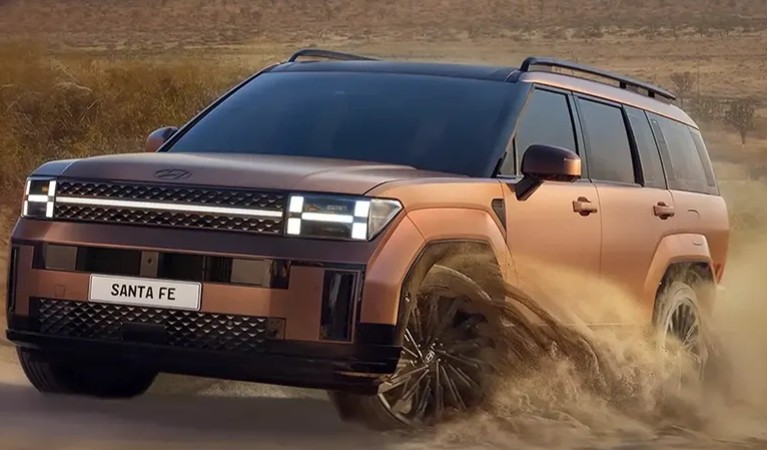
Choosing between the Hyundai Santa Fe and Hyundai Tucson looks easy until we actually start comparing them. They share the same badge, similar technology, familiar Hyundai interior design, and even overlapping hybrid powertrains. Yet they are built for noticeably different buyers.
Think of the Tucson as the sensible everyday backpack: compact enough to carry anywhere, roomy enough for most needs, and relatively inexpensive to run. The Santa Fe is more like a larger travel bag. It occupies more space, but when we need to carry passengers, luggage, child seats, camping equipment, or half the contents of the house, that extra room suddenly makes perfect sense.
The biggest distinction is simple: the Tucson is a five-seat compact SUV, while the Santa Fe offers three-row seating for up to seven passengers on current U.S.-market models.
But seating capacity is only the beginning.
In this Hyundai Santa Fe vs Tucson comparison, we'll examine interior space, performance, hybrid models, fuel economy, technology, comfort, practicality, ownership costs, and which Hyundai SUV makes the most sense for different types of drivers.
Content in this publication
- Hyundai Santa Fe vs Tucson: Quick Answer
- Santa Fe vs Tucson Comparison at a Glance
- Hyundai Santa Fe vs Tucson Size: How Much Bigger Is the Santa Fe?
- Hyundai Santa Fe vs Tucson Seating Capacity
- Santa Fe vs Tucson Interior Comfort
- Hyundai Santa Fe vs Tucson Cargo Space
- Hyundai Tucson vs Santa Fe Performance
- Santa Fe vs Tucson Hybrid
- Santa Fe vs Tucson Fuel Economy
- Hyundai Santa Fe vs Tucson AWD
- Hyundai Tucson vs Santa Fe for City Driving
- Hyundai Santa Fe vs Tucson for Families
- Santa Fe vs Tucson Technology
- Hyundai Santa Fe vs Tucson Safety
- Hyundai Tucson vs Santa Fe Ride and Handling
- Santa Fe vs Tucson Styling
- Hyundai Santa Fe vs Tucson Price
- Santa Fe vs Tucson Ownership Costs
- Hyundai Tucson vs Santa Fe Reliability
- Santa Fe vs Tucson for Road Trips
- Hyundai Santa Fe vs Tucson for Seniors
- Santa Fe vs Tucson for Commuting
- Hyundai Tucson vs Santa Fe: Which Has Better Value?
- Should We Buy the Hyundai Santa Fe or Tucson?
- Hyundai Santa Fe vs Tucson Hybrid: Which Would We Pick?
- Final Verdict: Hyundai Santa Fe vs Tucson
- Frequently Asked Questions About Hyundai Santa Fe vs Tucson
Hyundai Santa Fe vs Tucson: Quick Answer
If we want the simplest possible verdict, it goes like this:
Buy the Hyundai Tucson if we want a compact, efficient, easy-to-drive SUV with five seats and plenty of practicality for everyday use.
Buy the Hyundai Santa Fe if we regularly carry more passengers, want three rows of seats, need additional family versatility, or simply prefer the feel of a larger SUV.
Neither one is universally better.
The Santa Fe gives us more vehicle.
The Tucson gives us more simplicity.
And depending on how we actually use our SUV, simplicity can be worth far more than an extra row of seats.
Santa Fe vs Tucson Comparison at a Glance
| Category | Hyundai Tucson | Hyundai Santa Fe |
|---|---|---|
| SUV class | Compact SUV | Larger three-row SUV |
| Seating | 5 | Up to 7 |
| Third row | No | Yes |
| Best suited to | Couples, commuters, small families | Larger families, road trips |
| Parking | Easier | Requires more space |
| Fuel economy | Generally better | Generally lower |
| Hybrid available | Yes | Yes |
| AWD available | Yes | Yes |
| Cabin flexibility | Excellent | Superior for passengers |
| Purchase price | Lower | Higher |
| Urban driving | Better | Good |
| Family practicality | Very good | Excellent |
The key lesson is that the Santa Fe and Tucson aren't simply two versions of exactly the same vehicle.
They overlap, but each occupies a different point on the SUV ladder.
Hyundai Santa Fe vs Tucson Size: How Much Bigger Is the Santa Fe?
The difference becomes much clearer once we see them parked beside each other.
The Tucson is designed as a conventional compact crossover. It gives us useful passenger and cargo space without becoming cumbersome around town.
The Santa Fe stretches the formula.
Its longer body allows Hyundai to fit a third row and create a noticeably more substantial cabin. That makes it a more natural choice for families who occasionally need six or seven seats.
The Tucson Feels Easier Around Town
For normal urban driving, the Tucson's smaller footprint can be a real advantage.
We notice it when:
- squeezing into parking spaces;
- navigating narrow streets;
- maneuvering in underground garages;
- making tight turns;
- washing and maintaining the vehicle;
- fitting into a smaller home garage.
A bigger SUV might look more impressive in the driveway, but we're the ones who have to park it at the supermarket.
For many drivers, the Tucson hits that sweet spot where the vehicle feels spacious inside without becoming unnecessarily bulky outside.
The Santa Fe Feels More Substantial
Move into the Santa Fe and the atmosphere changes.
The cabin feels broader and more family-oriented, while the additional length creates space for that third seating row.
For parents juggling school bags, groceries, sports equipment, and children, those extra inches aren't merely numbers on a specification sheet. They're breathing room.
The Santa Fe consequently feels closer to a traditional family SUV.
Hyundai Santa Fe vs Tucson Seating Capacity
This is probably the most important difference of all.
Current Hyundai Tucson models seat five passengers, while the 2026 Santa Fe can accommodate up to seven, depending on trim and seating configuration.
That one distinction can effectively make the decision for us.
Choose the Tucson When Five Seats Are Enough
If our household consists of one to four people, the Tucson makes plenty of sense.
Its second row offers enough room for adults, children, or child seats, and we aren't carrying an unused third row everywhere we go.
This matters because buying a seven-seat SUV when we'll never use seats six and seven is a little like buying a six-bedroom house because relatives might visit once every three years.
Possible? Sure.
Necessary? Probably not.
Choose the Santa Fe When Passenger Flexibility Matters
The Santa Fe becomes significantly more attractive if we have:
- three or more children;
- grandparents who frequently travel with us;
- carpools;
- visiting relatives;
- teenagers and their friends;
- regular group road trips.
The third row isn't magic—we shouldn't expect limousine-like space—but simply having those additional seats can solve logistical headaches that a five-seat SUV cannot.
What About Captain's Chairs?
Some Santa Fe configurations also lean toward a six-seat layout with second-row captain's chairs rather than a traditional bench.
Higher-grade current Santa Fe models can offer this kind of arrangement, creating easier access to the rear and making the cabin feel more premium. Hyundai lists six-passenger seating on certain trims while other versions accommodate seven.
For families with older children, captain's chairs can be particularly appealing.
Everyone gets a little more personal territory, which can turn a noisy six-hour road trip into a merely noisy six-hour road trip.
Santa Fe vs Tucson Interior Comfort
Hyundai has become very good at designing interiors that feel modern without forcing us to relearn how to operate a car.
Both SUVs offer spacious cabins, contemporary displays, comfortable seating, connectivity features, and increasingly upscale materials as we climb through the trim levels.
However, the experience isn't identical.
Tucson Interior: Modern Without Feeling Oversized
The Tucson cabin feels airy and intelligently packaged.
Because Hyundai has maximized usable space within a compact footprint, the Tucson often feels bigger from the driver's seat than its external dimensions suggest.
For two adults in front and two children in back, it is difficult to argue that we genuinely need something larger.
The Tucson works particularly well as a commuter during the week and family vehicle on weekends.
Santa Fe Interior: More Like a Family Lounge
The Santa Fe's interior places greater emphasis on family usability.
There is simply more cabin to work with.
Extra passengers, drinks, phones, bags, charging cables and miscellaneous family clutter all seem to generate their own gravitational field. The Santa Fe handles that chaos better.
Move into upper trims and the experience becomes noticeably more luxurious, with features such as premium upholstery and additional driver-assistance technologies. Hyundai's current Santa Fe Calligraphy models, for example, offer upscale equipment including Nappa leather seating surfaces.
Hyundai Santa Fe vs Tucson Cargo Space
Cargo capacity sounds straightforward until we introduce a third row.
The Tucson has only two seating rows, so the cargo area behind the rear seats is always available in essentially the same configuration.
The Santa Fe gives us more flexibility, but the amount of usable luggage room depends on whether the third row is upright or folded.
Tucson Cargo Practicality
The Tucson is exceptionally practical for its size.
A normal grocery run barely challenges it. Pushchairs, luggage, gym bags, shopping and camping equipment are all realistic cargo.
Fold the second row and the Tucson becomes surprisingly useful for larger items.
For most couples and small families, its cargo capacity will rarely feel inadequate.
Santa Fe Cargo Practicality
The Santa Fe's advantage appears when we fold seats and start treating the vehicle as a multipurpose family hauler.
Its larger body gives us more flexibility for long journeys, bulky equipment, pets, luggage, and passengers.
There is one obvious catch.
When the third row is occupied, available cargo room behind it naturally becomes more limited.
That's normal for three-row SUVs.
So if our dream involves seven adults and seven enormous suitcases, we may discover that physics remains undefeated.
Hyundai Tucson vs Santa Fe Performance
Performance depends heavily on market, model year and powertrain, but the basic personality difference remains consistent.
The Tucson feels lighter and slightly more manageable.
The Santa Fe feels bigger, more planted and better suited to carrying a full load.
Neither SUV is really trying to impersonate a sports car.
And that's fine.
The more useful question isn't, "Which one is faster?"
It's, "Which one feels better doing what we actually need?"
Santa Fe vs Tucson Hybrid
This comparison gets particularly interesting when we look at the hybrids.
Both SUVs are available with hybrid powertrains in the U.S., and Hyundai's current 2026 versions use a turbocharged 1.6-liter hybrid setup producing 231 combined horsepower.
So if engine output is similar, why choose one over the other?
You may be interested in reading Hyundai Santa Fe or Kia Sorento: Which SUV Should You Buy?
Because weight, size and fuel economy still matter.
Tucson Hybrid
The Tucson Hybrid gives us an appealing combination of compact dimensions and stronger efficiency.
For 2026, Hyundai lists selected Tucson Hybrid versions at up to 38 mpg combined, depending on drivetrain and trim.
That's excellent territory for a practical SUV.
The hybrid also offers lively low-speed response, which can make everyday driving feel smoother than chasing outright horsepower figures might suggest.
Santa Fe Hybrid
The Santa Fe Hybrid uses its electrification differently.
We're carrying a larger three-row vehicle, so absolute fuel efficiency naturally isn't as strong as the smaller Tucson's best figures.
Hyundai lists the 2026 Santa Fe Hybrid at up to 36 mpg combined with front-wheel drive, while AWD versions are rated around 34 mpg combined.
For a vehicle capable of carrying up to seven people, that's still impressive.
Which Hybrid Makes More Sense?
The Tucson Hybrid is our pick if efficiency takes priority.
The Santa Fe Hybrid makes sense if we want the additional passenger flexibility without accepting the fuel consumption traditionally associated with larger family SUVs.
That's an important distinction.
We shouldn't choose the Santa Fe Hybrid because it beats the Tucson Hybrid at the fuel pump.
We choose it because it makes a larger SUV considerably easier to justify.
Santa Fe vs Tucson Fuel Economy
As a general rule, the Tucson wins.
That shouldn't surprise anyone.
It's smaller and lighter, and the hybrid versions reinforce the advantage.
Consider Hyundai's own current U.S. EPA estimates. The 2026 Tucson Hybrid can return up to 38 mpg combined in certain configurations, whereas the front-wheel-drive Santa Fe Hybrid reaches up to 36 mpg combined.
Two miles per gallon doesn't sound dramatic.
Over years of driving, however, small differences accumulate.
If we're commuting daily with one person aboard, the Tucson's efficiency becomes increasingly persuasive.
If we're routinely filling the Santa Fe with five or six passengers, fuel consumption per passenger suddenly looks far more reasonable.
Context matters.
Hyundai Santa Fe vs Tucson AWD
Both models are available with Hyundai's HTRAC all-wheel-drive technology in relevant configurations.
The important question is whether we actually need it.
AWD can be useful for:
- snowy regions;
- gravel roads;
- wet or slippery conditions;
- steep driveways;
- light trails;
- outdoor recreation.
But AWD doesn't magically transform either Hyundai into a hardcore off-roader.
These remain crossover-based family SUVs.
If our normal adventure involves muddy parking lots, ski resorts and unpaved access roads, they'll make sense.
If it involves axle-deep mud and boulders, we'd be shopping in the wrong aisle.
Hyundai Tucson vs Santa Fe for City Driving
This round goes to the Tucson.
A smaller SUV is simply easier to live with in dense environments.
The Tucson's dimensions make parking and maneuvering less stressful, while five seats are enough for the overwhelming majority of weekday journeys.
We might admire the Santa Fe's extra room on a test drive, but then spend 95% of our ownership experience traveling alone or with one passenger.
That's where buyers occasionally fall into the "more is always better" trap.
More vehicle means more space, yes.
It also means more vehicle to maneuver, purchase and potentially fuel.
Hyundai Santa Fe vs Tucson for Families
Now the Santa Fe starts fighting back.
For a family of three or four, we would still be tempted by the Tucson.
For a family of five, we'd examine how frequently we travel with extra people.
For families regularly needing six or seven seats, the Santa Fe becomes the obvious answer.
Families With Young Children
The Tucson works beautifully when we're dealing with one or two child seats.
Its rear seating area is roomy, and a compact exterior remains useful when we're crawling through a packed school parking lot.
Families With Three Children
Here's where things get interesting.
Three children can fit in a Tucson depending on their ages and child-seat requirements, but the Santa Fe's third row adds dramatically more flexibility.
Instead of playing human Tetris every morning, we can spread passengers between rows.
Families With Teenagers
Teenagers have an irritating habit of becoming adult-sized.
The Santa Fe's larger cabin will therefore age better with a growing family.
A Tucson that seems enormous when our children are five and seven might feel considerably less generous when they're fifteen and seventeen.
Santa Fe vs Tucson Technology
Hyundai's modern SUV interiors are packed with technology, and equipment varies by trim.
We can expect features such as large infotainment displays, smartphone connectivity, digital instrument clusters on selected trims, wireless charging and numerous driver-assistance systems.
For example, Hyundai highlights a 12.3-inch touchscreen on current Tucson Hybrid and Santa Fe Hybrid models.
Higher trims add increasingly sophisticated convenience and safety equipment.
The difference isn't necessarily that one model has "good technology" and the other doesn't.
It's more about how much we're prepared to pay for premium features.
A well-equipped Tucson can easily feel more luxurious than an entry-level Santa Fe.
That's worth remembering when comparing similarly priced vehicles.
Hyundai Santa Fe vs Tucson Safety
Both vehicles benefit from Hyundai's modern suite of driver-assistance features, although exact equipment varies by trim.
Depending on configuration, available technologies can include features designed to help with:
- forward collision situations;
- lane positioning;
- blind spots;
- highway driving;
- parking;
- rear cross traffic.
Higher trims bring more advanced features.
For instance, Hyundai currently lists Highway Driving Assist 2 among features on the Santa Fe Hybrid Calligraphy, while the Tucson Hybrid Limited offers technologies including Blind-Spot View Monitor and Surround View Monitor.
When shopping, we recommend comparing the specific trim levels rather than assuming every safety feature comes standard across every version.
Hyundai Tucson vs Santa Fe Ride and Handling
Behind the wheel, we can feel the difference in their missions.
Tucson Driving Experience
The Tucson generally feels:
- lighter;
- more agile;
- easier to place on the road;
- simpler to park;
- better suited to busy urban environments.
That doesn't mean it drives like a hot hatch.
It simply feels appropriately sized for everyday motoring.
Santa Fe Driving Experience
The Santa Fe feels:
- more substantial;
- more relaxed;
- better suited to long journeys;
- calmer with multiple passengers;
- closer to a traditional family cruiser.
On the highway, that bigger-car sensation can be reassuring.
The Santa Fe isn't trying to dance through corners. Its job is to carry people comfortably, and that's exactly how we should judge it.
Santa Fe vs Tucson Styling
Styling is subjective, but these two Hyundais have increasingly distinct personalities.
The Tucson takes the more conventional crossover route, although its geometric details keep it from looking anonymous.
The Santa Fe is deliberately boxier.
Its upright profile communicates practicality almost immediately, resembling an adventurous outdoor SUV far more than the curvier Santa Fe generations of the past.
Some people will love the blocky design.
You may be interested in readingHyundai Santa Fe or Kia Sorento: Which SUV Should You Buy?You may be interested in reading
Hyundai Santa Fe vs Toyota Highlander: Which Three-Row SUV Is Better?Others will prefer the Tucson's sleeker shape.
There's no correct answer here.
Cars aren't refrigerators. We're allowed to care how they look.
Hyundai Santa Fe vs Tucson Price
The Tucson is the less expensive entry point.
The Santa Fe commands more money because we're buying a bigger vehicle with an additional seating row and greater passenger versatility.
For context, Hyundai lists the 2026 Santa Fe starting at $35,050 MSRP in the U.S. before destination and other charges.
Exact Tucson prices vary by trim and powertrain, but it occupies the lower position in Hyundai's SUV lineup.
Rather than comparing the cheapest Tucson with the cheapest Santa Fe, we recommend comparing equipment-equivalent trims.
That's where the decision becomes more interesting.
A high-spec Tucson may overlap with a lower-spec Santa Fe.
Would we rather have luxury features or additional space?
There is no universal answer.
Santa Fe vs Tucson Ownership Costs
The Tucson should generally cost less to own simply because it sits in a smaller vehicle class.
Potential savings can appear through:
- purchase price;
- fuel;
- tires;
- insurance;
- some consumables;
- long-term depreciation in absolute dollar terms.
However, ownership costs depend heavily on powertrain and trim.
A loaded hybrid Tucson can obviously cost more than an entry-level gasoline Santa Fe in certain situations.
The mistake is focusing exclusively on monthly payments.
If a Santa Fe costs slightly more per month but eliminates the need to replace the car once our family grows, it may prove cheaper in the long run.
Conversely, paying extra for space we'll never use is simply carrying around an expensive empty room.
Hyundai Tucson vs Santa Fe Reliability
The Tucson and Santa Fe share a manufacturer, but reliability isn't something we should judge purely by the Hyundai logo.
Powertrain, production year, trim, maintenance history and driving conditions all matter.
When buying new, warranty coverage reduces some risk.
When buying used, we should investigate the specific model year and engine rather than asking whether every Tucson or every Santa Fe is reliable.
That's especially important because both nameplates have existed across multiple generations with different engines, transmissions and technologies.
A reliability verdict that applies to one generation might be meaningless for another.
Santa Fe vs Tucson for Road Trips
For long-distance family travel, we'd choose the Santa Fe.
The reasons are simple:
more seating flexibility, more cabin space and the ability to spread passengers across three rows.
That extra breathing room becomes increasingly valuable after three or four hours on the highway.
If we're traveling as a couple, though, the argument changes.
A Tucson provides plenty of luggage space and generally better efficiency without forcing us to haul a larger vehicle hundreds of miles.
Best for Two People
Tucson.
Best for Four People
Usually Tucson, unless luggage requirements are huge.
Best for Five People
It depends.
Best for Six or Seven People
Santa Fe.
Sometimes car comparisons really are that simple.
Hyundai Santa Fe vs Tucson for Seniors
Both can work well thanks to crossover-style seating positions that avoid forcing passengers too low to the ground.
The Tucson's advantage is maneuverability.
The Santa Fe's advantage is interior space and passenger flexibility.
If we're buying primarily for two people and occasionally carrying grandchildren, we'd probably choose the Tucson.
If transporting grandchildren is a regular part of life, the Santa Fe's third row becomes considerably more useful.
Santa Fe vs Tucson for Commuting
The Tucson wins again.
If our typical commute consists of one driver, one laptop bag and several traffic jams, dragging around a third seating row makes little sense.
The Tucson is easier to park and generally more economical.
The Tucson Hybrid is particularly compelling here because Hyundai's current 2026 model can achieve up to 38 mpg combined depending on configuration.
The Santa Fe Hybrid still makes a strong commuter if we need its family capabilities after work, but commuting alone favors the smaller SUV.
Hyundai Tucson vs Santa Fe: Which Has Better Value?
Value depends on what we use.
That's the core of this entire comparison.
If we buy a Santa Fe but never use its third row, we're paying for capability that spends most of its life folded away.
If we buy a Tucson and repeatedly discover that we need additional passenger capacity, we saved money on the wrong vehicle.
The Tucson Is Better Value When…
We need five seats, primarily drive around town, want better fuel economy, prefer a lower purchase price and don't expect major changes in our passenger needs.
The Santa Fe Is Better Value When…
We regularly carry more than five people, plan to keep the SUV as our family grows, take frequent road trips, or need the versatility of three rows.
Should We Buy the Hyundai Santa Fe or Tucson?
Let's reduce the decision to real-life scenarios.
Choose the Hyundai Tucson if:
- Five seats are enough.
- We mostly commute or drive in cities.
- Fuel economy is a major priority.
- We prefer easier parking.
- We want to spend less.
- We like compact SUVs but still want strong cargo capacity.
Choose the Hyundai Santa Fe if:
- We genuinely need six or seven seats.
- We have a growing family.
- Long road trips are common.
- We regularly travel with grandparents or friends.
- We value passenger flexibility above outright efficiency.
- We prefer the commanding feel of a larger SUV.
Hyundai Santa Fe vs Tucson Hybrid: Which Would We Pick?
For most five-person households, we'd lean toward the Tucson Hybrid.
It combines a genuinely useful cabin with excellent efficiency, strong hybrid output and manageable dimensions.
The 2026 Tucson Hybrid produces 231 combined horsepower, while selected configurations can reach 38 mpg combined.
If we need a third row, though, the Santa Fe Hybrid becomes the smarter proposition.
It produces the same quoted 231 combined horsepower in the current U.S. model while delivering as much as 36 mpg combined in front-wheel-drive configuration.
That's the version we'd seriously consider for a family wanting seven-seat flexibility without the fuel appetite of a traditional large SUV.
Final Verdict: Hyundai Santa Fe vs Tucson
The Hyundai Santa Fe vs Tucson battle doesn't produce one universal winner because these SUVs solve different versions of the same problem.
The Tucson is the more rational everyday choice.
It's spacious without being cumbersome, efficient without feeling tiny, and versatile enough for the majority of households. If we rarely carry more than four or five people, the Tucson probably gives us everything we actually need.
The Santa Fe earns its extra size when family life becomes complicated.
Its third row, additional passenger flexibility and more substantial cabin make it the better choice for larger households and frequent road trips. Current versions can accommodate up to seven passengers, whereas the Tucson remains strictly a five-seater.
Our decision therefore comes down to one remarkably simple question:
Will we regularly use the Santa Fe's extra space?
If the answer is no, buy the Tucson.
If the answer is yes, buy the Santa Fe.
And if fuel economy worries us but we still need the larger vehicle, the Santa Fe Hybrid makes the compromise far easier to swallow.
Frequently Asked Questions About Hyundai Santa Fe vs Tucson
1. Is the Hyundai Santa Fe bigger than the Tucson?
Yes. The Santa Fe is the larger vehicle and offers three-row seating, while the Tucson is a compact SUV with two rows and seating for five. Current Santa Fe models can accommodate up to seven passengers depending on trim.
2. Which is better, Hyundai Tucson or Santa Fe?
The Tucson is better for drivers who prioritize lower costs, easier parking and fuel efficiency. The Santa Fe is better for larger families or anyone who needs three-row seating. Neither is inherently superior; the right choice depends on passenger and cargo requirements.
3. Which gets better gas mileage, Santa Fe or Tucson?
The Tucson generally has the efficiency advantage. In the current 2026 U.S. hybrid lineup, certain Tucson Hybrid configurations achieve up to 38 mpg combined, while the Santa Fe Hybrid reaches up to 36 mpg combined with front-wheel drive.
You may be interested in readingHyundai Santa Fe or Kia Sorento: Which SUV Should You Buy?You may be interested in reading
Hyundai Santa Fe vs Toyota Highlander: Which Three-Row SUV Is Better?You may be interested in reading
Hyundai Santa Fe vs Toyota RAV4: Which SUV Is Better?4. Does the Hyundai Tucson have a third row?
No. The Hyundai Tucson is designed as a five-passenger, two-row compact SUV. Buyers who need a third row should look at the Santa Fe or another larger Hyundai SUV.
5. Is the Santa Fe worth buying over the Tucson?
Yes, if we'll regularly use its additional seating and larger cabin. If we only need five seats, the Tucson may represent better value because we're not paying for size and seating capacity that remain unused.
If you want to know other articles similar to Hyundai Santa Fe vs Tucson: Which Hyundai SUV Is Better? you can visit the category Models.
Kia Sorento Models: Complete Guide to Trims, Engines and Versions
BYD Shark 6 vs Ranger vs HiLux: Which Ute Makes the Most Sense in 2026?
BYD Shark 6 vs MG U9: Which Ute Makes More Sense in 2026?
BYD Shark 6 vs Ford Ranger Raptor: Which Performance Ute Is Better in 2026?
BYD Shark 6 vs Kia Tasman: Which Ute Is Better?
BYD Shark 6 vs 7: What We Know So Far
Leave a Reply
More content of your interest