

Hyundai Santa Fe and Palisade: Which Hyundai SUV Is Better?

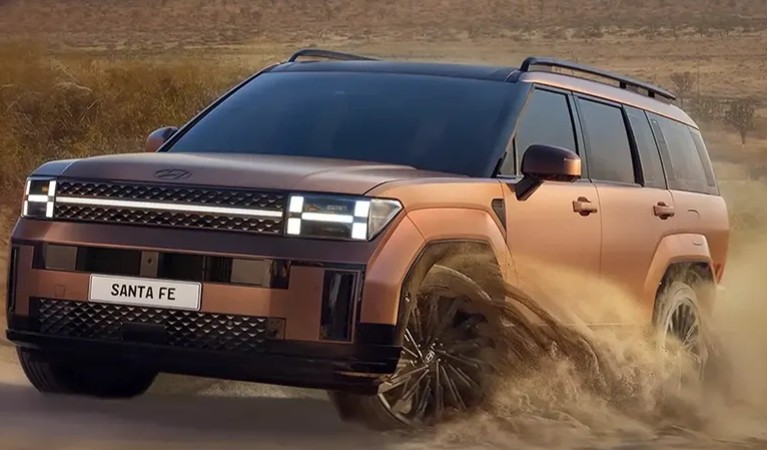
Shopping for a three-row Hyundai can get surprisingly complicated. At first glance, the Hyundai Santa Fe and Palisade seem to be chasing the same buyer. Both offer three rows of seats, modern technology, available all-wheel drive, upscale interiors, and enough practicality to handle everything from school runs to cross-country vacations.
Look closer, though, and they have very different personalities.
The Santa Fe feels like the adventurous younger sibling. It is shorter, easier to maneuver, more distinctive, and available with an efficient hybrid powertrain. The Palisade is the larger family flagship. It offers more passenger space, considerably more cargo room, and a third row that makes more sense when adults or teenagers actually need to use it regularly.
For the 2026 model year, the gap becomes even more interesting because Hyundai now offers hybrid versions of both SUVs in the United States. The Santa Fe Hybrid produces 231 combined horsepower, while the Palisade Hybrid develops a significantly stronger 329 combined horsepower.
So, which one should we buy?
Let's compare the Hyundai Santa Fe vs Palisade from the things that matter in everyday ownership rather than simply staring at specification sheets.
Content in this publication
- Hyundai Santa Fe vs Palisade at a Glance
- Are the Hyundai Santa Fe and Palisade the Same Size?
- Santa Fe vs Palisade Exterior Design
- Hyundai Santa Fe and Palisade Interior Comparison
- Which Has More Passenger Space?
- Santa Fe vs Palisade Third-Row Seating
- Hyundai Santa Fe vs Palisade Cargo Space
- Santa Fe vs Palisade Engine Options
- Which One Is Faster?
- Santa Fe vs Palisade Fuel Economy
- Ride Comfort and Highway Driving
- Santa Fe vs Palisade Technology
- Safety and Driver-Assistance Technology
- Which Is Easier to Park?
- Santa Fe vs Palisade for Large Families
- Santa Fe vs Palisade for Couples and Smaller Families
- Which Is Better for Outdoor Adventures?
- Hyundai Santa Fe vs Palisade Value
- Santa Fe or Palisade: Which One Should We Buy?
- Final Verdict: Hyundai Santa Fe and Palisade Serve Different Families
- Frequently Asked Questions About Hyundai Santa Fe and Palisade
Hyundai Santa Fe vs Palisade at a Glance
The easiest way to understand these SUVs is to think about their priorities.
The Santa Fe tries to squeeze genuine three-row capability into a relatively manageable footprint. Hyundai lists the 2026 Santa Fe at approximately 190.2 inches long with a 110.8-inch wheelbase.
The 2026 Palisade stretches considerably farther, measuring about 199.2 inches long.
Those nine inches may not sound dramatic on paper, but they influence almost everything: parking, passenger space, luggage capacity, third-row comfort, and how substantial the vehicle feels from behind the wheel.
In simple terms:
- Choose the Santa Fe if we want a smaller three-row SUV, distinctive styling, easier urban maneuverability, and strong hybrid efficiency potential.
- Choose the Palisade if passenger room, cargo capacity, third-row usability, and long-distance family comfort matter more.
- Consider the Santa Fe Hybrid if fuel economy is one of our biggest priorities.
- Consider the Palisade Hybrid if we want hybrid efficiency without giving up the space of a larger three-row family SUV.
Neither choice is inherently better. The right answer depends on how often we actually use those extra seats.
Are the Hyundai Santa Fe and Palisade the Same Size?
Definitely not.
Although both now belong in Hyundai's three-row SUV conversation, the Palisade remains the bigger vehicle.
The Santa Fe's roughly 190-inch length puts it in an interesting middle ground. It feels large enough for family duty without becoming cumbersome every time we enter a crowded grocery-store parking lot.
The Palisade, at roughly 199 inches long, is closer to what many shoppers expect from a traditional midsize three-row family SUV.
That additional length isn't wasted sheet metal. Hyundai uses it to create a more spacious cabin and larger cargo area.
Which One Feels Easier to Drive Around Town?
The Santa Fe.
Imagine navigating a narrow parking structure downtown. Nine inches suddenly matter.
The Santa Fe's shorter body makes squeezing into parking spaces, making tight turns, and judging the vehicle's rear end a little less intimidating. It still feels substantial, but not oversized.
For households that spend most of their time driving through suburban streets or dense urban areas, that's worth considering.
The Palisade isn't enormous by full-size SUV standards, but we are more aware of its dimensions. It trades some maneuverability for interior breathing room.
Santa Fe vs Palisade Exterior Design
Styling may be the biggest emotional difference between these two Hyundais.
The current Santa Fe looks almost like someone designed an expedition vehicle using a ruler. Its upright body, squared-off rear, broad stance, and unusually boxy proportions give it a rugged character.
It doesn't blend into traffic particularly well.
And that's exactly the point.
The Palisade takes another path. Its styling feels larger, more polished, and more upscale. Instead of trying to appear outdoorsy, it carries itself like a premium family shuttle.
Santa Fe: Rugged and Unconventional
We'd choose the Santa Fe if we enjoy vehicles that look different.
Its rectangular silhouette also has a practical benefit: boxy vehicles often make better use of interior space than swoopy ones.
The Santa Fe essentially looks like a backpack with wheels—and we mean that as a compliment.
Palisade: Bigger and More Sophisticated
The Palisade aims higher on the luxury ladder.
Its proportions, grille, lighting details, and long body give it more visual presence. Park the two beside each other and the Palisade generally looks like the more expensive vehicle even before we open the doors.
Which Design Will Age Better?
That's difficult to predict.
The Santa Fe is the riskier design. Some people will love its unconventional shape; others simply won't.
The Palisade plays things more safely. If understated elegance is our priority, the Palisade may have broader long-term appeal.
Hyundai Santa Fe and Palisade Interior Comparison
Open the doors and Hyundai's strategy becomes clearer.
Both cabins emphasize wide displays, horizontal dashboard layouts, convenient storage, and the kind of technology buyers increasingly expect from modern SUVs.
Yet the emotional experience differs.
The Santa Fe interior feels modern and adventurous. The Palisade interior leans toward luxury and passenger comfort.
Santa Fe Interior
One of the Santa Fe's strengths is that the cabin doesn't feel like an economy-minded compromise.
Depending on trim, buyers can find features such as heated seats, premium seating materials, Hyundai Digital Key technology, large infotainment displays, and multiple charging points. Hyundai lists a 12.3-inch touchscreen system among the Santa Fe's available technology.
Storage is another strong point.
Family SUVs aren't living rooms. They're moving closets.
Phones, drinks, cables, sunglasses, backpacks, snacks, wipes, toys, receipts and water bottles somehow migrate inside them. The Santa Fe does a good job creating useful places for all that clutter.
Palisade Interior
The Palisade takes the same basic Hyundai philosophy and stretches it.
The larger cabin gives occupants more breathing room, particularly in rows two and three. Higher trims can feel surprisingly close to vehicles wearing premium badges.
Available equipment varies by trim, but Hyundai offers features such as captain's chairs, wireless smartphone integration, wireless charging, heated seating, navigation and upscale convenience equipment.
If we regularly spend several hours at a time inside the vehicle, the Palisade's extra space becomes increasingly persuasive.
Which Has More Passenger Space?
The Palisade wins.
Hyundai lists approximately 151 cubic feet of passenger volume for the 2026 Santa Fe Hybrid.
The 2026 gas-powered Palisade offers around 161.9 cubic feet of passenger volume, while the Palisade Hybrid lists about 159.6 cubic feet.
That difference is significant.
It's the automotive equivalent of moving from a perfectly comfortable apartment into one with an extra room. We may not desperately need the space every day, but once the family piles in, we appreciate having it.
Santa Fe vs Palisade Third-Row Seating
Here's where shoppers should pay close attention.
Both SUVs have a third row.
That doesn't mean the third rows are equally useful.
Santa Fe Third Row
The Santa Fe's third row makes the vehicle wonderfully flexible.
Need to bring two extra kids home from soccer practice? No problem.
Grandparents joining us for a short trip to a restaurant? Fine.
Occasionally carrying six or seven people? That's exactly where the Santa Fe makes sense.
Hyundai includes third-row seating in the 2026 Santa Fe lineup.
But this isn't the SUV we'd choose primarily because we need to transport adults in the third row every day.
Palisade Third Row
The Palisade handles that job better.
On the 2026 Palisade Hybrid, Hyundai lists approximately 32.1 inches of third-row legroom, illustrating how much emphasis the larger SUV places on rear passenger accommodation.
You may be interested in reading Hyundai Santa Fe or Similar Car Rental: What Does It Actually Mean?
The Palisade feels like a vehicle designed from the beginning to carry three rows of passengers.
The Santa Fe feels more like a very practical midsize SUV that happens to have a useful third row.
That distinction matters.
Which Is Better for Families With Three Children?
It depends on age.
With three small children, either vehicle can work.
But once those children become taller—and somehow they always do—the Palisade's additional space becomes much more valuable.
If we expect to keep the SUV for eight or ten years, buy for the teenagers we're going to have, not only the children we have today.
Hyundai Santa Fe vs Palisade Cargo Space
This may be the most convincing reason to upgrade to the Palisade.
The 2026 Santa Fe Hybrid offers approximately:
- 14.6 cu. ft. behind the third row
- 40.5 cu. ft. behind the second row
- 79.6 cu. ft. behind the first row
The Palisade offers approximately:
- 19.1 cu. ft. behind the third row
- 46.3 cu. ft. behind the second row
- 86.7 cu. ft. behind the first row
Those figures come directly from Hyundai's current specifications.
Why Cargo Space Behind the Third Row Matters Most
Maximum cargo capacity makes great advertising material, but we don't normally drive around with every seat folded.
The more revealing measurement is cargo space behind the third row.
That's where the Palisade's advantage becomes meaningful.
Imagine seven passengers heading to the airport.
In the Santa Fe, luggage becomes a game of three-dimensional Tetris.
In the Palisade, we have noticeably more flexibility.
For occasional three-row use, Santa Fe cargo space is perfectly reasonable. For frequent three-row travel, the Palisade is easier to live with.
Santa Fe vs Palisade Engine Options
The powertrain comparison has become far more interesting now that hybrid versions exist on both sides.
Santa Fe Gas Engine
The 2026 Santa Fe is available with Hyundai's 2.5-liter turbocharged four-cylinder engine producing 277 horsepower in applicable trims.
That gives the Santa Fe plenty of muscle for normal driving.
It doesn't need an enormous engine because it's smaller and lighter than the Palisade.
Acceleration feels appropriate for a family SUV, and the turbocharged engine offers stronger punch than we'd expect from its four-cylinder configuration.
Santa Fe Hybrid
The Santa Fe Hybrid uses a turbocharged 1.6-liter four-cylinder hybrid system producing 231 combined horsepower.
This is the version we'd examine closely if efficiency and everyday smoothness rank above outright acceleration.
Hybrids are particularly attractive in stop-and-go suburban and city driving, where electrification can recover energy that conventional vehicles simply turn into heat through the brakes.
Palisade Hybrid
Here's the major change.
The 2026 Palisade Hybrid produces 329 combined horsepower, giving buyers a much stronger electrified option than the Santa Fe Hybrid. Hyundai also advertises an EPA-estimated driving range of up to 619 miles under applicable configurations and conditions.
That's a compelling combination for road-trip families.
Instead of choosing between a big SUV and a hybrid, buyers can finally have both under the Palisade badge.
Which One Is Faster?
Power numbers don't tell the entire story because vehicle weight matters, but the Palisade Hybrid's 329-horsepower combined output gives it a substantial power advantage over the 231-horsepower Santa Fe Hybrid.
Still, we wouldn't choose either SUV based primarily on drag-race performance.
These are vehicles designed to carry children, grandparents, luggage and groceries—not chase lap records.
Smoothness, passing power and relaxed highway performance matter more.
Santa Fe vs Palisade Fuel Economy
This category used to be easy.
Santa Fe won.
Now it's more nuanced because the Palisade has joined the hybrid party.
The Santa Fe's smaller dimensions and hybrid powertrain still make it particularly attractive to buyers obsessed with reducing fuel consumption.
Meanwhile, the Palisade Hybrid gives families who genuinely need more space a way to avoid accepting traditional large-SUV fuel consumption simply because they need three proper rows.
Which Hybrid Makes More Sense?
Choose the Santa Fe Hybrid if we don't really need Palisade dimensions.
Moving less vehicle around generally makes sense when our actual lifestyle doesn't require more.
Choose the Palisade Hybrid when we're already certain we need the Palisade's interior space. Downsizing solely to save fuel can become frustrating if we constantly struggle with passengers or luggage.
Efficiency is useful.
So is sanity.
Ride Comfort and Highway Driving
The Palisade feels more at home devouring highway miles.
Its larger footprint and spacious cabin create the relaxed character we want from a road-trip SUV. With passengers spread across three rows, everyone has more room to settle in.
The Santa Fe feels slightly more agile and compact.
On winding roads and urban routes, some drivers may actually prefer that. It doesn't carry the same sense of bulk.
Which Is Better for Road Trips?
For four people?
The difference is smaller than expected. The Santa Fe gives us plenty of room while leaving substantial cargo capacity available.
For six or seven people?
Palisade.
No contest.
A three-hour trip with cramped passengers feels like six hours. Space has a funny way of becoming more valuable with every mile.
Santa Fe vs Palisade Technology
Hyundai is generous with technology across both vehicles.
Depending on trim, equipment can include large touchscreens, digital instrument displays, wireless smartphone connectivity, wireless charging, digital-key functionality, navigation and numerous driver-assistance systems.
For example, Hyundai lists a 12.3-inch touchscreen display with navigation, wireless Apple CarPlay and wireless Android Auto on certain 2026 Palisade trims.
The Santa Fe likewise offers a 12.3-inch touchscreen interface and modern connectivity features.
Does the Palisade Feel More Luxurious?
Usually, yes—especially higher in the trim hierarchy.
That's part of its mission.
The Palisade is Hyundai's larger premium-oriented three-row SUV, so expensive versions emphasize passenger pampering more heavily.
However, the Santa Fe is hardly bare-bones.
A well-equipped Santa Fe can provide nearly every feature an average family realistically needs without forcing us into the larger SUV.
Safety and Driver-Assistance Technology
Modern Hyundai vehicles have increasingly leaned into active safety technology, and both models offer a wide collection of driver-assistance systems depending on trim.
You may be interested in readingHyundai Santa Fe or Similar Car Rental: What Does It Actually Mean?You may be interested in reading
Hyundai Santa Fe Versus Kia Telluride: Which SUV Makes More Sense?When comparing individual vehicles, we'd focus less on marketing names and more on whether the exact trim includes the features we care about, such as:
- Blind-spot monitoring
- Rear cross-traffic assistance
- Adaptive cruise control
- Lane-centering assistance
- Forward collision mitigation
- Parking assistance
- Surround-view camera systems
Features and packaging can change between trims, so shoppers should always verify the equipment on the specific model they're considering rather than assuming every Santa Fe or Palisade is configured identically.
Which Is Easier to Park?
Santa Fe.
This is one of those mundane advantages that won't excite us during a showroom visit but can influence ownership every single day.
The Santa Fe is roughly nine inches shorter than the 2026 Palisade.
If our daily routine involves:
- Tight home garages
- City parking
- Crowded shopping centers
- Narrow streets
- Underground parking structures
…the smaller Hyundai becomes increasingly appealing.
The Palisade earns back those inches by giving us more interior room, so there's no free lunch here.
Santa Fe vs Palisade for Large Families
For a family that regularly carries five or more people, we'd lean toward the Palisade.
That recommendation becomes stronger if the third row will be occupied frequently.
The Santa Fe is an excellent solution for families that occasionally need seven seats.
The Palisade is better for families that actually live as a seven-seat household.
That's probably the single most useful distinction in this entire comparison.
Think About Your Worst-Case Day
Don't imagine the easiest drive of the week.
Imagine everyone is inside the SUV.
The stroller is in the back.
Two children have backpacks.
Someone bought groceries.
Grandparents are visiting.
And one child suddenly decides the second row belongs exclusively to them.
Which vehicle would we rather have?
Probably the Palisade.
On the other hand, if that scenario happens twice per year, carrying a larger vehicle around for the other 363 days may not make sense.
Santa Fe vs Palisade for Couples and Smaller Families
This is where the Santa Fe shines.
A couple with one or two children may rarely need all three rows.
Fold the third row away and the Santa Fe becomes a spacious two-row SUV with enormous flexibility. When relatives visit, those hidden seats suddenly become useful.
It's like keeping two emergency chairs in a closet.
They're not the centerpiece of the room, but we're glad they're there when needed.
For this type of household, the Palisade can feel unnecessary unless we simply enjoy having extra space.
Which Is Better for Outdoor Adventures?
We'd give the Santa Fe the personality advantage.
Its shorter body, rugged styling, available all-wheel-drive configurations and adventure-oriented image make it feel more natural around campsites, trailheads and outdoor equipment.
The Palisade can certainly handle family adventures, but its personality is more luxury road-trip machine than weekend explorer.
Think of it this way:
The Santa Fe looks ready for a muddy hiking trail.
The Palisade looks ready to carry everyone comfortably to the mountain lodge.
Both arrive at the mountain. They just dress differently for the occasion.
Hyundai Santa Fe vs Palisade Value
Value isn't simply about buying the cheaper vehicle.
It's about paying for things we're actually going to use.
A Palisade buyer gets more interior room, better third-row usability, greater cargo capacity and the option of a powerful hybrid drivetrain.
Those are meaningful advantages.
But they're meaningless if our third row stays folded 95% of the time.
The Santa Fe offers a clever alternative: much of the practicality associated with a three-row SUV without requiring us to drive something quite as large.
When Is Paying More for the Palisade Worth It?
The Palisade starts making more sense when at least two of these statements describe us:
- We frequently carry six or more people.
- Adults regularly sit in the third row.
- We travel with lots of luggage.
- We take frequent family road trips.
- We want a more spacious and premium cabin.
- We plan to keep the SUV while our children grow into teenagers.
- We specifically want the stronger Palisade Hybrid powertrain.
Otherwise, we'd look very seriously at the Santa Fe.
Santa Fe or Palisade: Which One Should We Buy?
Here's the simplest answer.
Buy the Hyundai Santa Fe If…
We want something easier to maneuver, usually carry four or five people, only occasionally need a third row, appreciate distinctive styling, or want a smaller hybrid three-row SUV.
The Santa Fe is the smarter choice when flexibility matters more than maximum capacity.
Buy the Hyundai Palisade If…
We regularly carry six or seven passengers, need more luggage room with all seats occupied, want better third-row accommodation, or simply value a quieter, roomier, more luxurious family-SUV experience.
The Palisade is the better choice when space isn't optional.
Our Overall Winner
There isn't one universal winner, but if we had to divide them by lifestyle, it would look like this:
Santa Fe = better all-rounder for smaller families.
Palisade = better dedicated family hauler for larger families.
And that's exactly how Hyundai seems to have positioned them.
Final Verdict: Hyundai Santa Fe and Palisade Serve Different Families
Comparing the Hyundai Santa Fe and Palisade becomes much easier once we stop asking which SUV is objectively better and start asking how much space we genuinely need.
The Santa Fe is clever, distinctive and surprisingly versatile. At around 190 inches long, it manages to provide three rows without becoming a giant family bus. Its available 231-horsepower hybrid drivetrain makes the package even more attractive for buyers who want practicality without unnecessarily high fuel consumption.
The Palisade plays another game.
Its larger dimensions translate into considerably more passenger volume and cargo capacity, particularly when all three rows are in use. Add the 329-horsepower Palisade Hybrid to the equation, and Hyundai now offers families a compelling way to combine large-SUV practicality with electrification.
For most households with one or two children, we'd probably start with the Santa Fe.
For households that regularly fill all three rows, we'd skip the compromise and buy the Palisade.
Sometimes bigger really is better.
But only when we actually need bigger.
Frequently Asked Questions About Hyundai Santa Fe and Palisade
1. Is the Hyundai Palisade bigger than the Santa Fe?
Yes. The 2026 Palisade is approximately 199.2 inches long, while the Santa Fe is approximately 190.2 inches long. The Palisade also provides more passenger and cargo volume, making it better suited to families that frequently use all three rows.
2. Which has more cargo space, Santa Fe or Palisade?
The Palisade. Hyundai lists approximately 19.1 cubic feet behind its third row, 46.3 cubic feet behind the second row, and 86.7 cubic feet behind the front seats. The Santa Fe Hybrid provides approximately 14.6, 40.5 and 79.6 cubic feet respectively.
3. Does the Hyundai Santa Fe have three rows?
Yes. The current Santa Fe offers standard third-row seating in the U.S. lineup, giving it genuine seven-seat flexibility depending on configuration. However, buyers who frequently carry adults in the third row will probably find the larger Palisade more comfortable.
You may be interested in readingHyundai Santa Fe or Similar Car Rental: What Does It Actually Mean?You may be interested in reading
Hyundai Santa Fe Versus Kia Telluride: Which SUV Makes More Sense?You may be interested in reading
Hyundai Santa Fe vs Subaru Forester: Which SUV Should We Buy?4. Is there a Hyundai Palisade Hybrid?
Yes. The 2026 Palisade Hybrid produces 329 combined horsepower, and Hyundai advertises an EPA-estimated driving range of up to 619 miles in applicable configurations. This makes the Palisade much more interesting for buyers who need a large three-row SUV but also want an electrified powertrain.
5. Is the Santa Fe or Palisade better for a family?
For families that usually carry four or five people and only occasionally need the third row, the Santa Fe is likely the better balance of space and manageable dimensions. For larger families that frequently transport six or seven passengers, the Palisade's bigger third row and greater cargo capacity make it the stronger choice.
If you want to know other articles similar to Hyundai Santa Fe and Palisade: Which Hyundai SUV Is Better? you can visit the category Models.
Kia Sorento Models: Complete Guide to Trims, Engines and Versions
BYD Shark 6 vs Ranger vs HiLux: Which Ute Makes the Most Sense in 2026?
BYD Shark 6 vs MG U9: Which Ute Makes More Sense in 2026?
BYD Shark 6 vs Ford Ranger Raptor: Which Performance Ute Is Better in 2026?
BYD Shark 6 vs Kia Tasman: Which Ute Is Better?
BYD Shark 6 vs 7: What We Know So Far
Leave a Reply
More content of your interest