

Hyundai Santa Fe vs Subaru Forester: Which SUV Should We Buy?

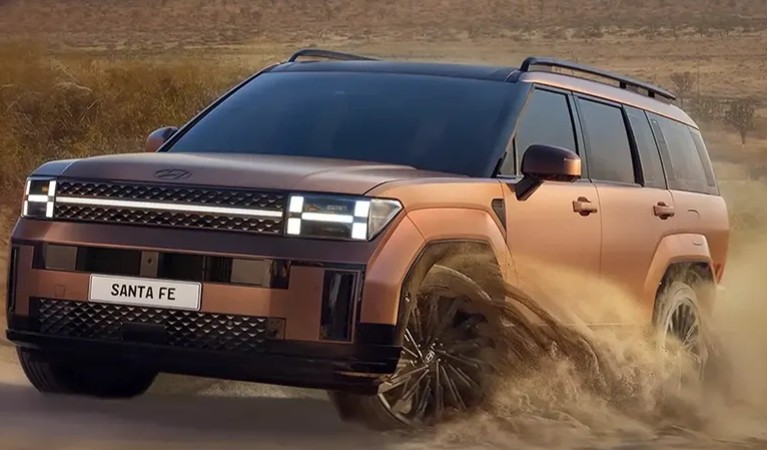
Choosing between the Hyundai Santa Fe vs Subaru Forester looks straightforward until we spend a little time with the specifications. Then something becomes obvious: these SUVs may appear to shop in the same aisle, but they approach family transportation from very different directions.
For the 2026 model year in the United States, the Hyundai Santa Fe is a larger SUV with three rows and seating for up to seven people, while the Subaru Forester remains a five-passenger compact SUV. Hyundai also gives the gasoline Santa Fe a turbocharged 2.5-liter engine producing 277 horsepower, whereas the gasoline Forester uses a naturally aspirated 2.5-liter BOXER engine producing 180 horsepower.
So this comparison isn't simply Hyundai versus Subaru. It is about deciding whether we want additional seating, stronger acceleration and more towing ability, or a smaller footprint, standard all-wheel drive and an SUV particularly comfortable with snow, gravel and everyday outdoor adventures.
Let's dig into the details.
Content in this publication
- Hyundai Santa Fe vs Subaru Forester at a Glance
- Size: The Santa Fe Is the Bigger SUV
- Interior Space and Seating
- Cargo Space: A Surprisingly Close Battle
- Engine Performance: Santa Fe Wins Easily
- Fuel Economy: Forester Fights Back
- AWD: Subaru Makes It Standard
- Off-Road Ability: Forester Has the Natural Advantage
- Towing Capacity: Hyundai Takes the Lead
- Ride Comfort and Highway Driving
- Technology and Cabin Character
- Safety and Driver Assistance
- Snow and Winter Driving
- Reliability and Long-Term Ownership
- Hyundai Santa Fe vs Subaru Forester for Families
- Hyundai Santa Fe vs Subaru Forester for Outdoor Adventures
- Which SUV Is Easier to Live With Every Day?
- Pros and Cons of the Hyundai Santa Fe
- Pros and Cons of the Subaru Forester
- Who Should Buy the Hyundai Santa Fe?
- Who Should Buy the Subaru Forester?
- Hyundai Santa Fe vs Subaru Forester: Which Offers Better Value?
- Hyundai Santa Fe vs Subaru Forester: Our Verdict
- Frequently Asked Questions
- Closing Thoughts
Hyundai Santa Fe vs Subaru Forester at a Glance
The Santa Fe feels like the family-oriented choice. Its boxy body, three-row cabin and generous cargo area make it attractive to parents, road-trippers and anyone who regularly carries several passengers.
The Forester plays a different game. It's smaller, lighter on its feet and built around Subaru's traditional all-wheel-drive formula. Every 2026 Forester includes Symmetrical All-Wheel Drive, while Hyundai offers front-wheel drive on some Santa Fe configurations and HTRAC all-wheel drive on others.
Here is the basic picture:
| Category | 2026 Hyundai Santa Fe | 2026 Subaru Forester |
|---|---|---|
| Seating | Up to 7 | 5 |
| Gas engine power | 277 hp | 180 hp |
| Drivetrain | FWD or available AWD | Standard AWD |
| Maximum cargo space | 79.6 cu ft | Up to 74.4 cu ft |
| Standard-model towing | Up to 3,500 lb | 1,500 lb |
| Rugged-model towing | XRT: up to 4,500 lb | Wilderness: up to 3,500 lb |
| Ground-clearance emphasis | XRT for added capability | 8.7 in standard; 9.3 in Wilderness |
| Best suited to | Families, passengers, towing | AWD driving, outdoors, five-seat practicality |
Hyundai lists 79.6 cubic feet of cargo volume behind the Santa Fe's front seats. Subaru advertises as much as 74.4 cubic feet in the Forester with its rear seats folded.
Already, we can see that neither vehicle automatically beats the other. They simply solve different problems.
Size: The Santa Fe Is the Bigger SUV
This might be the most important section of our Hyundai Santa Fe vs Subaru Forester comparison.
The Santa Fe is physically and functionally the larger vehicle. Hyundai has transformed it into something resembling a scaled-down three-row adventure SUV, complete with upright styling and enough seating for a larger family.
The Forester is a conventional compact crossover. Its five-seat layout makes it easier to understand and arguably easier to live with if we never need a third row.
Why the Size Difference Matters
A bigger SUV sounds better on paper, but bigger isn't automatically better.
The Santa Fe gives us additional passenger flexibility. Have three children? Occasionally carry grandparents? Need to take friends along? That third row becomes valuable.
But every extra inch of vehicle has consequences. A compact SUV can feel less cumbersome in parking garages, narrow streets and crowded shopping-center lots.
This is where the Forester's dimensions become part of its charm. It gives us excellent usable interior room without pretending to be a full-size family hauler.
Which Is Better for City Driving?
We would lean toward the Forester for dense urban driving.
Its compact-SUV dimensions make it a natural fit for drivers who spend much of their time maneuvering through traffic or squeezing into parking spaces.
The Santa Fe isn't excessively large, but its extra cabin capacity naturally requires a larger shell.
Think of the Forester as a comfortable hiking backpack and the Santa Fe as a rolling suitcase. The suitcase carries more, but the backpack is easier to take everywhere.
Interior Space and Seating
The Santa Fe wins decisively when passenger count matters.
Hyundai offers three rows and seating for up to seven occupants, depending on configuration. That alone places it in a different category from the five-seat Forester.
Santa Fe: The Better Family Hauler
If we regularly travel with five or six people, we'd pick the Santa Fe without much hesitation.
The third row may not replace a large three-row SUV for adults on long journeys, but having those extra seats can fundamentally change how useful a vehicle is.
School runs become easier. Visiting relatives no longer automatically require two cars. A family vacation doesn't turn into luggage-and-passenger Tetris before we've even left the driveway.
And when the third row isn't needed, folding it creates a large cargo area.
Forester: Better If Five Seats Are Enough
The Forester counters with an impressively spacious two-row cabin.
Subaru quotes up to 110.8 cubic feet of passenger volume, depending on configuration. Its tall greenhouse and SUV-like seating position also contribute to a cabin that feels open rather than claustrophobic.
For a couple, a family with one or two children, or someone who rarely carries more than four passengers, the Forester may actually make more sense.
Why transport an empty third row every day if we'll almost never use it?
Cargo Space: A Surprisingly Close Battle
We might assume the much larger-looking Santa Fe crushes the Forester here.
Not exactly.
Hyundai lists 79.6 cubic feet behind the front seats in the Santa Fe, while Subaru advertises up to 74.4 cubic feet in the Forester.
That means the Forester punches well above its weight.
When the Santa Fe's Cargo Area Wins
The Hyundai's advantage becomes more obvious when we're trying to combine people and belongings.
Its multiple seating configurations allow us to fold specific rows depending on whether we're carrying passengers, luggage or both.
That flexibility is excellent for family travel.
Think Airports, Camping and Hardware Stores
Imagine two adults, two kids, four suitcases and several backpacks.
The Santa Fe is the vehicle we'd rather have.
Now imagine two adults carrying bicycles, camping equipment or a week's worth of outdoor gear.
The Forester suddenly makes much more sense.
Subaru's squared-off cargo area and large rear opening are designed around exactly that kind of use.
Engine Performance: Santa Fe Wins Easily
If acceleration matters, this portion of the comparison isn't particularly close.
The 2026 gasoline Santa Fe uses a 2.5-liter turbocharged engine producing 277 horsepower. The 2026 gasoline Forester's 2.5-liter BOXER engine produces 180 horsepower.
That's a substantial gap.
How the Santa Fe Feels
The Santa Fe has far more power available for merging, overtaking and climbing hills with passengers aboard.
That doesn't turn it into a sports SUV. This is still a family crossover, not something designed to terrorize racetracks.
But 277 horsepower gives the Hyundai healthy reserves.
Car and Driver recorded a 6.9-second 0-to-60-mph time in a Santa Fe XRT it tested, illustrating the difference between merely adequate acceleration and genuinely useful turbocharged punch.
How the Forester Feels
The Forester's 180 horsepower sounds modest because it is.
Subaru focuses more on predictable response, efficiency and all-weather drivability than dramatic acceleration.
Around town, that usually isn't a problem. The Forester can perform ordinary commuting duties perfectly well.
The weakness appears when we demand more: entering a fast highway, overtaking with several passengers or climbing a steep grade.
Press the accelerator and the Forester gets the job done. The Santa Fe does it with noticeably more authority.
Fuel Economy: Forester Fights Back
Power costs fuel, and this is where the Subaru gets revenge.
EPA estimates for conventional 2026 Forester models reach 26 mpg city and 33 mpg highway, although Sport, Touring and Wilderness versions vary.
You may be interested in reading Toyota Sequoia Trim Levels: Complete 2026 Guide
For the gasoline Santa Fe, EPA estimates vary by drivetrain and trim. Car and Driver reports figures as high as 20 mpg city and 29 mpg highway for front-wheel-drive versions, while AWD and XRT versions consume somewhat more fuel.
So if we're comparing regular gasoline models, the Forester has the advantage at the pump.
What About Hybrid Versions?
This comparison becomes more interesting because both nameplates now offer electrified alternatives.
Hyundai advertises up to 36 mpg combined for the 2026 Santa Fe Hybrid. Subaru also offers Forester Hybrid variants, and Subaru says the hybrid can deliver substantially better city efficiency than its gasoline counterpart.
Therefore, shoppers who prioritize fuel costs should compare specific powertrains rather than simply assuming Forester automatically means lower consumption.
AWD: Subaru Makes It Standard
This may be the Forester's strongest argument.
Every Forester comes with Subaru Symmetrical All-Wheel Drive. Subaru has built much of the model's identity around predictable traction in rain, snow, gravel and loose surfaces.
The Santa Fe is different. Hyundai offers front-wheel drive on certain configurations and HTRAC AWD on compatible versions.
Does Standard AWD Make the Forester Better?
For some buyers, absolutely.
If we live somewhere with snowy winters, regularly drive unpaved roads or simply don't want to pay extra for AWD, Subaru's approach is appealing.
But AWD is not magic. Tires still matter enormously, and neither SUV should be mistaken for a hardcore rock crawler.
Still, having AWD baked into the Forester's basic recipe gives it a reassuring consistency.
Off-Road Ability: Forester Has the Natural Advantage
The standard 2026 Forester offers 8.7 inches of ground clearance, while the Wilderness raises that figure to 9.3 inches. Wilderness models also gain equipment intended specifically for rougher terrain, while Subaru's X-MODE system is designed to optimize traction in slippery conditions.
That's substantial clearance for a compact crossover.
Subaru Forester Wilderness
The Wilderness is where the Forester stops merely looking outdoorsy and begins backing up the image with more useful hardware.
Subaru equips it with additional ground clearance and off-road-focused features. Its towing capability also climbs significantly compared with ordinary Foresters.
For forest roads, muddy campsites and snowy mountain routes, we'd prefer it.
Hyundai Santa Fe XRT
Hyundai hasn't ignored adventurous buyers.
The Santa Fe XRT adds a more rugged orientation and can tow substantially more than an ordinary Forester. Hyundai lists a maximum 4,500-pound towing capacity for the XRT when properly equipped.
So there's an interesting divide: the Forester Wilderness is the vehicle we'd instinctively select for narrower trails and rough surfaces, while the Santa Fe XRT becomes tempting when adventure involves carrying more people or pulling a trailer.
Towing Capacity: Hyundai Takes the Lead
Towing exposes another major difference.
Most 2026 Foresters are rated for 1,500 pounds, while the Forester Wilderness can tow as much as 3,500 pounds.
The gasoline Santa Fe can tow up to 3,500 pounds, and Hyundai lists up to 4,500 pounds for the XRT when properly equipped.
That makes the Santa Fe the stronger towing choice overall.
Who Actually Needs the Extra Capacity?
If we're pulling nothing more demanding than a light utility trailer, the standard Forester may be perfectly adequate.
Start thinking about a larger camping trailer, recreational equipment or heavier loads, though, and the Hyundai's extra capacity becomes meaningful.
A towing number isn't something we'd buy "just in case," either. If we know we're going to tow, we should select the appropriate configuration from the beginning.
Ride Comfort and Highway Driving
These SUVs reveal their personalities even more clearly on the highway.
The Santa Fe feels like the more substantial long-distance machine. The broader family-oriented cabin, stronger engine and larger-vehicle character work nicely for extended journeys.
Load it with people and luggage and it still has meaningful turbocharged power available.
The Forester feels lighter and more straightforward. Excellent outward visibility has long been central to the Forester formula, and Subaru continues to emphasize its spacious cabin and visibility.
Which Would We Choose for a Road Trip?
For four people? Either.
For six people? Santa Fe, obviously.
For two people heading into the mountains with camping equipment? We'd be very tempted by the Forester.
The destination changes the answer.
Technology and Cabin Character
Hyundai has pushed the Santa Fe toward a more contemporary, upscale-looking interior.
Car and Driver notes that higher Santa Fe trims offer premium touches such as Nappa leather upholstery and additional luxury-oriented details.
It feels ambitious.
Subaru takes a more pragmatic approach. Available Forester equipment includes an 11.6-inch touchscreen, wireless charging and a hands-free power rear gate, depending on trim.
If interior presentation influences our buying decision heavily, the Hyundai has the stronger argument.
Its design feels deliberately modern, and upper trims can blur the line between an ordinary family crossover and something considerably more expensive.
Forester Feels More Functional
The Subaru cabin makes sense for people who value practicality.
Large windows, an upright seating position and a spacious layout fit the Forester's personality beautifully.
It doesn't need to impersonate a luxury lounge. It needs to function when our jacket is wet, the dog is muddy and a pair of hiking boots is rolling around behind the driver's seat.
Safety and Driver Assistance
Both vehicles compete in a segment where advanced driver-assistance technology has become expected rather than unusual.
Subaru equips the Forester with its EyeSight driver-assistance technology and prominently positions safety technology as part of the Forester package.
Hyundai likewise equips the Santa Fe family with a broad collection of modern driver-assistance technology, although exact equipment depends on trim and market.
Rather than declaring a universal winner based purely on feature names, we'd compare the exact trim levels under consideration. Features that are standard on one version may be optional or unavailable on another.
Snow and Winter Driving
If someone asks us, "Santa Fe or Forester for snow?" our first answer is the Forester.
Why?
Because standard AWD, generous 8.7-inch ground clearance and Subaru's available X-MODE system create a package clearly designed with poor road conditions in mind.
The Santa Fe with HTRAC AWD can also be a capable winter vehicle, of course. But if we're comparing the basic philosophies of both SUVs, winter capability sits closer to the center of the Subaru's identity.
Don't Forget the Tires
Whichever SUV we buy, quality tires remain crucial.
An AWD badge cannot manufacture grip where tires have none. A front-wheel-drive vehicle on suitable winter tires can sometimes outperform an AWD vehicle wearing inappropriate rubber.
The drivetrain helps. The tires connect everything to the road.
Reliability and Long-Term Ownership
This is an area where simplistic statements can get us into trouble.
You may be interested in readingToyota Sequoia Trim Levels: Complete 2026 GuideYou may be interested in reading
Toyota Sequoia Years to Avoid: Which Models Should We Think Twice About?Saying "Subarus last forever" or "Hyundais are cheaper to own" without considering engine, transmission, model year, maintenance history and usage isn't particularly useful.
The 2026 Forester and Santa Fe also use fundamentally different mechanical formulas. Subaru's conventional Forester combines a naturally aspirated BOXER engine with its AWD system, while the gasoline Santa Fe uses a considerably more powerful turbocharged engine.
If long-term ownership is our priority, maintenance discipline matters almost as much as badge reputation. We would also compare warranty coverage, dealer access and insurance costs in our own area before signing anything.
Hyundai Santa Fe vs Subaru Forester for Families
For a family of five or more, the Santa Fe is the obvious winner.
Its third row completely changes the equation.
For a family of four, however, things become interesting.
A Forester gives two adults and two children ample passenger space while preserving a large cargo area. There's no unused third row taking up space or adding vehicle length.
So we'd frame it this way: the Santa Fe gives us room to grow, while the Forester gives us almost everything a smaller household genuinely needs.
Hyundai Santa Fe vs Subaru Forester for Outdoor Adventures
This time we'd lean Subaru.
The Forester combines standard AWD, strong ground clearance and a spacious cargo compartment inside relatively manageable exterior dimensions. The Wilderness pushes those strengths further with 9.3 inches of ground clearance.
It's a bit like a pair of hiking boots. Nothing about the basic formula is particularly extravagant, but it's designed to go places.
The Santa Fe is closer to a well-equipped base camp. It carries more people, more equipment and can tow more, but it's a larger machine to take down a narrow trail.
Which SUV Is Easier to Live With Every Day?
For many people, the Forester.
Five seats, standard AWD, good gasoline fuel economy and compact dimensions form a wonderfully sensible combination. Its EPA estimates reach 26 mpg city and 33 mpg highway on certain gasoline trims.
But families needing three rows will find the Santa Fe dramatically more useful.
No amount of compact-SUV efficiency can create two additional seats.
That's why this isn't really a contest where one vehicle needs to destroy the other. We're choosing between two different levels of utility.
Pros and Cons of the Hyundai Santa Fe
The Santa Fe's major strengths are its seven-passenger capability, significantly stronger gasoline engine, flexible cabin, generous cargo volume and superior maximum towing capacity. Hyundai's 277-hp gasoline powertrain gives it a substantial performance advantage, and XRT models can tow up to 4,500 pounds when properly configured.
Its drawbacks are the other side of those strengths. It's larger than the Forester, conventional gasoline versions consume more fuel, and buyers who don't need three rows may be carrying around more vehicle than necessary.
Pros and Cons of the Subaru Forester
The Forester shines through standard AWD, generous ground clearance, good visibility, excellent usable cargo space and more favorable gasoline fuel-economy figures. Its 74.4-cubic-foot maximum cargo capacity is particularly impressive considering its compact classification.
The major compromise is performance. The 180-hp gasoline engine is far less powerful than the Santa Fe's turbocharged unit, and regular Foresters are limited to 1,500 pounds of towing capacity. Buyers needing six or seven seats must also look elsewhere.
Who Should Buy the Hyundai Santa Fe?
We'd choose the Santa Fe when our priorities look something like this:
- We regularly need seating for more than five people.
- We want noticeably stronger acceleration.
- We frequently take long family road trips.
- We need substantial cargo flexibility.
- We expect to tow trailers or recreational equipment.
- We prefer a more upscale and contemporary cabin.
- We want one SUV capable of replacing a traditional larger family vehicle.
The biggest reason remains the simplest: three rows.
Once six or seven seats become a requirement rather than a luxury, the Forester effectively removes itself from consideration.
Who Should Buy the Subaru Forester?
The Forester becomes our preferred choice when we only need five seats and place greater emphasis on AWD capability, everyday efficiency, manageable dimensions and outdoor usability.
It makes particular sense for commuters living in snowy regions, active couples, smaller families, hikers, campers, dog owners and drivers frequently encountering dirt or gravel roads.
The Forester Wilderness strengthens that case considerably for buyers who spend meaningful time away from pavement.
Hyundai Santa Fe vs Subaru Forester: Which Offers Better Value?
Value isn't simply the number written on a window sticker.
Suppose we buy the Santa Fe because having seven seats sounds useful but use the third row three times in five years. Did we really get better value?
Maybe not.
Likewise, buying a Forester to save money stops looking clever if we immediately discover that five seats or 1,500 pounds of standard towing capacity aren't enough.
Value comes from paying for capabilities we'll actually use.
That's the key to this comparison.
Choose Capability, Not Just Specifications
We would avoid chasing the longest equipment list.
Instead, think about a normal Tuesday.
How many people are normally in the car? How far do we drive? Do we park on crowded streets? Do we visit ski areas? Do we tow anything? How often do we carry bulky cargo?
Now think about the hardest day the SUV will face each year.
That scenario often tells us more than fifty specification rows ever could.
Hyundai Santa Fe vs Subaru Forester: Our Verdict
The Hyundai Santa Fe wins for families, passenger capacity, horsepower, towing and overall versatility. Its combination of three rows, a 277-horsepower gasoline engine and up to 79.6 cubic feet of cargo space gives it capabilities the smaller Forester simply cannot duplicate.
The Subaru Forester wins for buyers wanting a smaller five-seat SUV with standard AWD, strong ground clearance, better gasoline fuel economy and excellent everyday practicality. Standard models offer 8.7 inches of ground clearance, while the Wilderness increases that to 9.3 inches.
If we had a growing family and needed one vehicle to handle practically everything, we'd take the Santa Fe.
If we had no need for a third row and wanted a practical SUV for commuting, snow, camping and weekend adventures, we'd take the Forester.
It's less about determining which SUV is objectively "better" and more about buying the right amount of vehicle.
The Santa Fe gives us more.
The Forester asks whether we actually need it.
Frequently Asked Questions
Is the Hyundai Santa Fe bigger than the Subaru Forester?
Yes. The Santa Fe is the larger vehicle and offers three-row seating for up to seven passengers, while the Forester seats five. Hyundai lists up to 79.6 cubic feet of cargo capacity behind the Santa Fe's front seats, compared with up to 74.4 cubic feet in the Forester.
Is the Subaru Forester better than the Hyundai Santa Fe in snow?
We would generally favor the Forester for dedicated winter use because every 2026 Forester includes Symmetrical All-Wheel Drive and standard models offer 8.7 inches of ground clearance. The Santa Fe is also available with HTRAC AWD, so a properly equipped Santa Fe remains a capable winter vehicle.
Which is more powerful, the Santa Fe or Forester?
The gasoline Santa Fe is substantially more powerful. Hyundai rates its 2.5-liter turbocharged engine at 277 horsepower, while Subaru rates the gasoline Forester's 2.5-liter BOXER engine at 180 horsepower.
Which has more cargo space, Hyundai Santa Fe or Subaru Forester?
The Santa Fe has the greater maximum figure. Hyundai lists 79.6 cubic feet behind its front seats, while Subaru lists up to 74.4 cubic feet for the Forester with the rear seats folded. The difference is smaller than we might expect considering the Santa Fe also accommodates a third seating row.
Which should I buy, a Hyundai Santa Fe or Subaru Forester?
Buy the Santa Fe if you need three rows, stronger acceleration, more towing capacity or maximum family versatility. Buy the Forester if five seats are sufficient and you prioritize standard AWD, compact dimensions, ground clearance and efficient everyday driving. For many buyers, that single question—do we genuinely need a third row?—will point directly toward the right SUV.
Closing Thoughts
The Hyundai Santa Fe vs Subaru Forester debate reminds us why comparing SUVs solely by price or dimensions can be misleading.
The Santa Fe is the bigger hammer. It seats more people, produces substantially more gasoline-engine horsepower and offers greater towing capability. It's the vehicle we'd want when family duties keep expanding.
The Forester is the more focused tool. It combines five-seat practicality, standard AWD, generous ground clearance and excellent cargo usability in a compact package.
Neither needs to imitate the other.
For expanding families, we'd choose the Hyundai Santa Fe.
For five-seat practicality with an adventurous streak, we'd choose the Subaru Forester.
You may be interested in readingToyota Sequoia Trim Levels: Complete 2026 GuideYou may be interested in reading
Toyota Sequoia Years to Avoid: Which Models Should We Think Twice About?You may be interested in reading
Toyota Sequoia Best Years: Which Model Years Are Worth Buying?And that might be the simplest way to settle the argument.
If you want to know other articles similar to Hyundai Santa Fe vs Subaru Forester: Which SUV Should We Buy? you can visit the category Models.
Nissan Rogue Dark Armor vs Platinum: Which Trim Is Better?

Kia Sorento Models: Complete Guide to Trims, Engines and Versions
BYD Shark 6 vs Ranger vs HiLux: Which Ute Makes the Most Sense in 2026?
BYD Shark 6 vs MG U9: Which Ute Makes More Sense in 2026?
BYD Shark 6 vs Ford Ranger Raptor: Which Performance Ute Is Better in 2026?
BYD Shark 6 vs Kia Tasman: Which Ute Is Better?
Leave a Reply
More content of your interest