
Toyota Sequoia Best Years: Which Model Years Are Worth Buying?

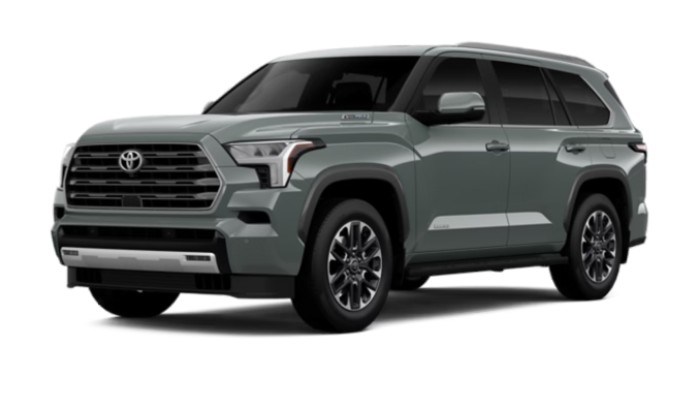
If we're shopping for a used full-size SUV that can haul a family, tow serious weight, swallow road-trip luggage, and keep running long after the monthly payments disappear, the Toyota Sequoia deserves a spot near the top of the list. But there's an important catch: not every Sequoia model year offers the same balance of reliability, value, features, and ownership costs.
So, what are the Toyota Sequoia best years?
For many used-SUV buyers, the sweet spots are found among the later second-generation models, particularly roughly 2018 through 2022, while selected earlier years such as 2012-2017 can also be excellent purchases when maintenance history is strong. Buyers interested in the radically redesigned third generation should look closely at 2024 and newer examples, since they retain the new hybrid powertrain and modern technology while moving beyond the introductory 2023 model year.
That doesn't automatically mean an older or first-year Sequoia is bad. Condition matters enormously. A beautifully maintained 2014 Sequoia can easily be a smarter purchase than a neglected 2021 model.
Let's break down the generations, identify the strongest years, and figure out which Sequoia makes the most sense depending on how we actually intend to use it.
Content in this publication
- What Makes a Toyota Sequoia Year "Good"?
- Toyota Sequoia Generations at a Glance
- Toyota Sequoia Best Years Overall
- Why the 2018-2022 Toyota Sequoia Is Such a Strong Choice
- Is the 2022 Toyota Sequoia the Best Year?
- Is the 2021 Toyota Sequoia a Good Year?
- Why 2020 Is Another Excellent Sequoia Year
- Best Toyota Sequoia Years for Value: 2012-2017
- What About 2008-2011 Toyota Sequoia Models?
- Are First-Generation Toyota Sequoias Worth Buying?
- Best Toyota Sequoia Year for Maximum Simplicity
- Best Toyota Sequoia Years for Towing
- Is the 2023 Toyota Sequoia a Good Year?
- Is the 2024 Toyota Sequoia One of the Best Years?
- What About the 2025 Toyota Sequoia?
- Best Toyota Sequoia Years for Long-Term Ownership
- Best Sequoia Years on a Tight Budget
- Mileage vs. Model Year: Which Matters More?
- 2WD or 4WD: Which Sequoia Should We Buy?
- Which Toyota Sequoia Trim Is Best?
- Common Mistakes When Shopping for a Used Sequoia
- How to Find the Best Used Toyota Sequoia
- Toyota Sequoia Best Years Ranked by Buyer Type
- Should We Buy a Toyota Sequoia With 150,000 Miles?
- Should We Buy the V8 or Hybrid Sequoia?
- Which Toyota Sequoia Year Would We Buy?
- Final Thoughts on the Toyota Sequoia Best Years
- Frequently Asked Questions
What Makes a Toyota Sequoia Year "Good"?
Calling one model year the "best" sounds simple, but buyers rarely want exactly the same thing.
One person may want the cheapest Sequoia capable of towing a boat. Another might want a three-row family SUV with modern driver-assistance technology. Someone else simply wants a rugged V8 that can potentially remain useful for hundreds of thousands of miles.
When judging the Toyota Sequoia best years, we should consider:
- Powertrain durability
- Age-related problems
- Frame condition
- Transmission behavior
- Safety technology
- Towing capability
- Interior comfort
- Fuel consumption
- Repair costs
- Purchase price
- Availability of replacement parts
- Maintenance history
The best model year is therefore less like finding a winning lottery ticket and more like choosing the right pair of boots. The perfect one depends on where we're walking.
Toyota Sequoia Generations at a Glance
The Sequoia has gone through three major generations.
First Generation: 2001-2007
Toyota introduced the Sequoia for the 2001 model year. These SUVs were closely related to the Toyota Tundra and earned a reputation for robust V8 power and traditional body-on-frame construction.
They're now old enough, however, that condition matters far more than model year alone.
Corrosion deserves particular attention on some first-generation vehicles. Toyota documentation relating to earlier Sequoia models addressed frame corrosion concerns affecting certain vehicles, making an underbody inspection especially important when considering an older example.
Second Generation: 2008-2022
The second generation arrived for 2008 and represented a substantial upgrade.
This is arguably the generation most used-Sequoia shoppers should focus on because it combines traditional Toyota truck engineering with the powerful 5.7-liter i-FORCE V8.
Toyota rated the 5.7-liter engine at 381 horsepower and 401 lb-ft of torque in models such as the 2011 Sequoia.
That engine became one of the defining characteristics of the Sequoia.
Third Generation: 2023-Present
Everything changed again for 2023.
Toyota replaced the naturally aspirated V8 with its i-FORCE MAX twin-turbo V6 hybrid system, producing 437 horsepower and 583 lb-ft of torque.
The third-generation Sequoia also brought dramatically newer styling, technology, interior design, and powertrain engineering.
It's faster, more advanced, and generally more efficient than the old V8 SUV—but it's also significantly more complex.
Toyota Sequoia Best Years Overall
If we had to build a practical shortlist for someone shopping today, we'd begin with these groups:
2018-2022: Best Overall Used Sequoia Years
These are arguably the strongest years for buyers who specifically want the traditional 5.7-liter V8 Sequoia.
By this point, the second-generation platform had been in production for many years, meaning Toyota had plenty of time to refine it.
We also get a vehicle that's considerably newer than early second-generation examples without stepping into the more complicated hybrid architecture of the third generation.
The 2020-2022 range is particularly appealing if budget allows.
2012-2017: Best Value Years
These models can offer a compelling middle ground.
They're old enough to have depreciated substantially yet new enough that well-kept examples still feel perfectly usable as daily family SUVs.
Toyota also added useful equipment during this period. For example, the 2012 Sequoia introduced features including Trailer Sway Control, while the 5.7-liter V8 retained its 381-horsepower output.
2024-2026: Best Modern Sequoia Years
If we want modern performance and technology rather than old-school V8 simplicity, newer third-generation Sequoias deserve attention.
The 2026 Sequoia continues with the 437-horsepower, 583-lb-ft i-FORCE MAX hybrid system.
Still, these vehicles are fundamentally different from the older Sequoia. Buying one should be viewed as choosing Toyota's modern truck technology rather than buying a continuation of the old V8 formula.
Why the 2018-2022 Toyota Sequoia Is Such a Strong Choice
There's something appealing about buying a vehicle near the end of a long production cycle.
Manufacturers have typically had years to iron out minor problems, suppliers have produced huge numbers of parts, mechanics understand the platform, and owners have generated mountains of real-world experience.
That's exactly why late second-generation Sequoias are attractive.
The 5.7-Liter V8 Is the Star
The naturally aspirated 5.7-liter V8 doesn't chase efficiency awards.
Instead, it delivers straightforward power.
No turbochargers are needed to generate its torque. There isn't a hybrid battery contributing to acceleration. It's essentially a big engine doing big-engine things.
For buyers planning long-term ownership, that relative mechanical familiarity can be reassuring.
Six-Speed Automatic Transmission
The 5.7-liter V8 was paired with a six-speed electronically controlled automatic transmission. Toyota documentation for the 2012 model confirms this pairing.
Six gears sounds almost quaint next to today's eight-, nine-, and ten-speed transmissions.
But simplicity isn't necessarily a disadvantage in an older SUV.
Fewer ratios can mean fewer constant shifts during everyday driving, and this drivetrain combination became well established over the Sequoia's long production run.
Excellent Towing Ability
Toyota rated properly equipped 5.7-liter Sequoias from this era to tow as much as approximately 7,400 pounds, depending on configuration.
That's plenty for many:
- Travel trailers
- Boats
- Utility trailers
- ATVs
- Small campers
If towing is central to our purchase, however, we should always verify the exact rating for the specific VIN, drivetrain, trim, and equipment package rather than relying on a generic maximum figure.
Is the 2022 Toyota Sequoia the Best Year?
For buyers wanting the old-school Sequoia formula, 2022 may be the most desirable year of all.
Why?
Because it's the final model year of the second generation.
That gives us the newest possible example of the V8-based platform before Toyota switched to the twin-turbo hybrid powertrain.
A lower-mileage 2022 example could therefore appeal to someone who wants:
- The 5.7-liter V8
- Traditional body-on-frame construction
- Proven second-generation engineering
- Modern-enough convenience equipment
- Maximum age advantage within the V8 generation
The downside is price.
Clean 2022 Sequoias can command significant money precisely because buyers know they represent the end of an era.
Is the 2021 Toyota Sequoia a Good Year?
Yes, the 2021 Toyota Sequoia belongs high on our shopping list.
It's mechanically mature, relatively modern, and still powered by the familiar V8 drivetrain.
Compared with much older Sequoias, it also has fewer years of exposure to:
- Road salt
- Moisture
- UV damage
- Interior wear
- Rubber deterioration
- Suspension aging
Mileage still matters, obviously, but calendar age matters too.
An SUV that has spent fifteen winters in a salt-heavy region has lived a very different life from a five-year-old vehicle in a dry climate.
Why 2020 Is Another Excellent Sequoia Year
The 2020 model falls into essentially the same attractive late-generation window.
It offers much of what makes 2021 and 2022 appealing while sometimes carrying a lower used-market price.
That's why we shouldn't become obsessed with buying the absolute newest second-generation vehicle.
A well-maintained 2020 with detailed service records could easily be a better purchase than an abused 2022.
Best Toyota Sequoia Years for Value: 2012-2017
Suppose our budget doesn't stretch to a late second-generation SUV.
That's where the 2012-2017 range becomes interesting.
These vehicles retain most of the qualities that make the second-generation Sequoia desirable while costing considerably less than late-production examples.
Why 2012 Is an Important Year
Toyota added Trailer Sway Control for 2012, along with additional equipment changes.
The model continued offering the 5.7-liter V8, which produced 381 horsepower and 401 lb-ft.
That combination makes the 2012 Sequoia a sensible starting point for value-oriented shoppers.
2013-2015 Sequoia Models
These years can offer excellent value if the vehicle has been maintained properly.
At this age, however, a pre-purchase inspection isn't merely recommended—it should be viewed as mandatory.
A mechanic should inspect:
- Frame and underbody corrosion
- Suspension components
- Brake condition
- Fluid leaks
- Cooling system
- Driveline components
- Wheel bearings
- Tires
- Exhaust condition
- Evidence of accident repairs
A cheap Sequoia with deferred maintenance can devour money remarkably quickly.
2016-2017: A Useful Sweet Spot
The 2016 and 2017 models sit in an appealing place.
They're considerably younger than early second-generation examples yet often cheaper than refreshed 2018-and-newer SUVs.
You may be interested in reading Toyota Sequoia Competitors: The Best Full-Size SUV Alternatives
If we're hunting for value rather than the newest possible vehicle, these years deserve serious consideration.
What About 2008-2011 Toyota Sequoia Models?
These aren't automatically bad years.
In fact, a carefully maintained example can still be an excellent SUV.
But they're getting older, and age gradually becomes the elephant in the garage.
Bushings harden. Seals age. Paint deteriorates. Rubber components crack. Suspension pieces wear. Electrical connectors experience years of temperature cycles.
For that reason, we'd prioritize vehicle condition over model year rankings when shopping in this age range.
A pristine 2009 maintained by one meticulous owner could beat a neglected 2016 every day of the week.
Are First-Generation Toyota Sequoias Worth Buying?
They can be—but we need realistic expectations.
A first-generation Sequoia is now an older vehicle regardless of mileage.
Why People Still Love Them
Their appeal is easy to understand.
They're rugged, comparatively simple, spacious, and have the unmistakable personality of early-2000s Toyota trucks.
Some owners actively prefer this era because these SUVs feel less electronically complicated.
The Biggest Concern: Rust
Frame corrosion deserves serious scrutiny.
Toyota service and campaign documents addressed frame corrosion on certain 2005-2007 Sequoias, and earlier Toyota documentation also references corrosion-related Sequoia actions.
That doesn't mean every older Sequoia has a bad frame.
It does mean we shouldn't buy one without inspecting the underside carefully.
What Should We Look For Underneath?
Surface rust and structural corrosion are very different things.
Light discoloration on exposed metal isn't necessarily catastrophic. Heavy scaling, perforation, weakened mounting areas, or significant frame deterioration is another matter entirely.
If we're uncertain, we should have a qualified shop put the SUV on a lift.
Pictures from a driveway aren't enough.
Best Toyota Sequoia Year for Maximum Simplicity
For shoppers who prioritize long-established mechanical engineering over modern technology, we'd lean toward 2016-2022.
These years give us the mature 5.7-liter V8 platform without going as far back into age-related deterioration.
Think of them as mechanical middle ground.
They're modern enough to live with comfortably but old-school enough to retain the large naturally aspirated V8 that defined this generation.
Best Toyota Sequoia Years for Towing
The answer depends on whether we want traditional V8 behavior or maximum modern capability.
Second-Generation V8 Models
The 5.7-liter Sequoia could tow up to around 7,400 pounds in appropriate configurations.
Its naturally aspirated power delivery makes it predictable and familiar under load.
Third-Generation Hybrid Models
The third-generation i-FORCE MAX system produces far more torque: 583 lb-ft, compared with the older V8's 401 lb-ft.
That enormous torque increase helps explain why the redesigned Sequoia feels so much stronger.
For frequent towing, the newer generation can therefore be compelling, particularly when matched with the right configuration.
Is the 2023 Toyota Sequoia a Good Year?
The 2023 model deserves a nuanced answer.
It was a complete redesign.
Toyota replaced the long-running V8 platform with the twin-turbo V6 hybrid i-FORCE MAX drivetrain. Every 2023 Sequoia used this system, rated at 437 horsepower and 583 lb-ft of torque.
That's a massive technological leap.
But whenever we're buying the first year of a completely redesigned vehicle, we should weigh novelty against maturity.
Reasons to Consider the 2023
The advantages include:
- Much stronger torque
- Dramatically newer cabin
- Modern infotainment
- Updated driver-assistance technology
- Contemporary styling
- Improved powertrain efficiency relative to the V8 concept
- Strong towing capability
Why Some Used Buyers May Prefer 2024 or Newer
Later production years give the manufacturer additional time to refine components, software, manufacturing processes, and small quality issues that occasionally appear after a major redesign.
That doesn't mean 2023 should automatically be avoided.
It simply means buyers who prioritize conservative long-term ownership may feel more comfortable moving one or two years deeper into the generation.
Is the 2024 Toyota Sequoia One of the Best Years?
For someone who specifically wants the new generation, 2024 is arguably more attractive than 2023.
We retain the same basic third-generation advantages without buying the very first model year.
The 2024 Sequoia continued using the 3.445-liter twin-turbo V6 hybrid setup producing 437 horsepower and 583 lb-ft.
That powertrain gives the Sequoia remarkable low-end muscle.
It's less like gently accelerating a family SUV and more like waking a sleeping bear.
What About the 2025 Toyota Sequoia?
The 2025 model expanded the lineup with the 1794 Edition, giving buyers another luxury-oriented configuration while retaining the i-FORCE MAX hybrid system.
If we're buying nearly new, 2025 can make plenty of sense.
However, depreciation becomes important.
A brand-new or nearly new Sequoia can cost dramatically more than a perfectly capable late-model V8 example.
So the better choice depends on whether our priorities are:
Technology and performance: newer generation.
Long-proven drivetrain and lower purchase price: second generation.
Best Toyota Sequoia Years for Long-Term Ownership
If our plan is to buy a Sequoia and keep it for ten years or longer, there are two logical strategies.
Strategy One: Buy the Newest V8 You Can Afford
That generally means looking at 2018-2022 models.
We benefit from a mature drivetrain while minimizing vehicle age.
Strategy Two: Buy a Later Third-Generation Model
A 2024-2026 Sequoia gives us much newer architecture and significantly more torque.
The tradeoff is complexity.
Turbochargers, hybrid components, additional electronics, and modern emissions systems create a very different ownership proposition from the old 5.7-liter V8.
Neither strategy is objectively right.
They simply appeal to different buyers.
Best Sequoia Years on a Tight Budget
If affordability matters most, we'd search approximately the 2012-2017 range before automatically jumping toward the oldest Sequoias.
Why?
Because the cheapest vehicle isn't always the cheapest vehicle to own.
Suppose we save $5,000 by buying a much older SUV, but immediately need:
- Tires
- Suspension repairs
- Brake work
- Cooling-system service
- Rust remediation
- Fluid servicing
- Wheel bearings
Our bargain disappears faster than ice cream on a July sidewalk.
A slightly newer vehicle with excellent records may cost less overall.
Mileage vs. Model Year: Which Matters More?
Mileage gets enormous attention in used-car listings, but it tells only part of the story.
Consider these two vehicles:
Vehicle A: 2017 Sequoia, 160,000 highway miles, complete service records.
Vehicle B: 2017 Sequoia, 85,000 miles, irregular oil changes and long periods sitting outside.
Which one would we choose?
Without inspection, we shouldn't automatically choose Vehicle B.
Maintenance quality matters enormously.
High Mileage Isn't Automatically a Deal Breaker
These are truck-based SUVs designed for substantial workloads.
A higher-mileage vehicle that received consistent maintenance may still have plenty of useful life remaining.
You may be interested in readingToyota Sequoia Competitors: The Best Full-Size SUV AlternativesYou may be interested in reading
Toyota Sequoia Lexus Equivalent: Which Lexus Is Closest?The key word is consistent.
Look for documentation of:
- Engine-oil changes
- Transmission servicing where appropriate
- Differential fluids
- Transfer-case servicing on 4WD models
- Coolant replacement
- Brake-fluid service
- Spark plugs
- Belt inspection
- Battery replacement
- Suspension repairs
Records transform a used-car purchase from guesswork into informed risk.
2WD or 4WD: Which Sequoia Should We Buy?
That depends heavily on where we live.
Choose 2WD If
We mostly drive:
- Highways
- Cities
- Warm climates
- Dry paved roads
Two-wheel drive can simplify ownership and may cost less.
Choose 4WD If
We frequently encounter:
- Snow
- Mud
- Gravel
- Boat ramps
- Mountain roads
- Off-road trails
Four-wheel drive adds versatility, although it also adds drivetrain components that require inspection and maintenance.
Which Toyota Sequoia Trim Is Best?
The answer is simpler than manufacturers would like us to believe.
Buy the trim containing the features we actually use.
SR5
Typically the practical choice.
It delivers the core Sequoia experience without chasing every luxury feature.
Limited
Often the sweet spot for families wanting extra comfort.
Platinum
Best suited to shoppers prioritizing luxury features over simplicity.
TRD-Oriented Models
These are appealing if off-road capability or aggressive styling is genuinely useful rather than merely attractive.
Capstone and 1794
In the newest generation, these trims push the Sequoia further toward premium-SUV territory.
The question is whether we need that luxury or simply enjoy it.
There's nothing wrong with enjoying it—but knowing the difference keeps the budget honest.
Common Mistakes When Shopping for a Used Sequoia
Even buyers who choose one of the Toyota Sequoia best years can end up with a bad SUV.
Why?
Because model-year reputation doesn't erase individual vehicle history.
Ignoring the Frame
This is especially risky on older vehicles from rust-prone areas.
Buying Based Only on Low Mileage
Low mileage is attractive, but maintenance history matters more than the number displayed on the odometer alone.
Skipping a Pre-Purchase Inspection
This may be the most expensive $150-$250 we ever try to save.
A competent mechanic can uncover thousands of dollars in upcoming repairs.
Ignoring Tires
Large SUV tires aren't cheap.
A Sequoia needing four premium replacement tires immediately after purchase can deliver a painful first-month ownership surprise.
Forgetting Fuel Costs
The V8 Sequoia wasn't designed to sip gasoline like a compact crossover.
If fuel expense is our primary concern, a giant body-on-frame SUV probably isn't the most logical answer.
How to Find the Best Used Toyota Sequoia
Instead of searching exclusively by year, use a hierarchy.
Start with the right generation.
Then narrow the model year.
Then evaluate the individual vehicle.
A sensible used-Sequoia buying order might look like this:
- 2018-2022 for the strongest V8-era balance.
- 2012-2017 for value.
- 2024-2026 for buyers wanting the latest hybrid generation.
- Older examples only when condition and inspection results justify the purchase.
From there, compare service records, mileage, rust, accident history, ownership history, and price.
Toyota Sequoia Best Years Ranked by Buyer Type
There isn't one universal winner, so here's a more practical breakdown.
| Buyer Type | Recommended Years |
|---|---|
| Best overall used choice | 2018-2022 |
| Best V8 choice | 2020-2022 |
| Best value | 2012-2017 |
| Best budget choice | 2012-2015 |
| Best modern choice | 2024-2026 |
| Best for latest technology | 2025-2026 |
| Best traditional drivetrain | 2016-2022 |
These ranges aren't guarantees. They're starting points for smarter shopping.
Should We Buy a Toyota Sequoia With 150,000 Miles?
Potentially, yes.
A Sequoia with 150,000 miles shouldn't automatically scare us.
What should scare us is 150,000 undocumented miles.
A well-maintained vehicle with consistent servicing and a clean inspection can remain appealing at high mileage.
But we should budget for age- and mileage-related maintenance.
At this point, items such as suspension components, wheel bearings, hoses, seals, alternators, starters, cooling-system components, and various accessories may eventually require attention.
Even a durable vehicle is still a machine.
Machines wear.
Should We Buy the V8 or Hybrid Sequoia?
This may be the defining Sequoia buying question today.
Choose the 5.7-Liter V8 If We Want
- Long-established drivetrain history
- Naturally aspirated power
- Traditional truck character
- Lower used purchase prices
- Simpler mechanical architecture
- Huge availability on the used market
Choose the i-FORCE MAX Hybrid If We Want
- Far more torque
- Modern technology
- Newer safety features
- New-generation styling
- Better performance
- Strong towing capability
- A newer vehicle overall
Toyota's modern hybrid produces 437 horsepower and 583 lb-ft of torque, substantially exceeding the older 5.7-liter V8's 381 horsepower and 401 lb-ft.
The numbers clearly favor the hybrid.
Long-term simplicity clearly favors the old V8.
Pick the philosophy that suits us.
Which Toyota Sequoia Year Would We Buy?
For a used SUV purchase focused on balancing reliability, capability, and ownership simplicity, we'd start by shopping for a 2020-2022 Toyota Sequoia with the 5.7-liter V8.
These represent the closing years of a remarkably long-lived platform.
If prices were too high, we'd move backward into the 2016-2019 range, emphasizing maintenance history over mileage.
If modern technology mattered more than V8 simplicity, we'd move in the opposite direction and target a 2024 or newer Sequoia.
That's the important takeaway.
We're not searching for a mythical perfect year.
We're searching for the best combination of year, condition, maintenance, mileage, price, and intended use.
Final Thoughts on the Toyota Sequoia Best Years
The Toyota Sequoia has always played a slightly different game from ordinary crossovers.
It's big.
It's heavy.
It drinks fuel.
It takes up plenty of garage space.
Yet those apparent disadvantages become strengths when we need to tow, carry people, travel long distances, or simply want a rugged SUV with genuine truck DNA.
For most used buyers, 2018-2022 represent the Toyota Sequoia best years overall, particularly if we want the familiar 5.7-liter V8 platform.
Value-conscious shoppers should also investigate 2012-2017, where depreciation can make the Sequoia surprisingly attractive.
Meanwhile, buyers wanting the latest performance and technology should focus on the 2024-and-newer third-generation models, powered by Toyota's 437-horsepower i-FORCE MAX hybrid drivetrain.
But remember the golden rule of used Sequoia shopping: a great year cannot rescue a badly maintained vehicle.
Inspect the frame. Review the records. Test every feature. Check the fluids. Look underneath. Pay for an independent inspection.
Do that, and the right Sequoia can feel less like buying an old SUV and more like adopting a mechanical workhorse that's only halfway through its story.
Frequently Asked Questions
1. What is the best year Toyota Sequoia to buy used?
For many buyers, the 2018-2022 Toyota Sequoia models provide the best overall combination of mature engineering, the proven 5.7-liter V8, relatively modern equipment, and manageable age. The 2020-2022 years are especially attractive if the budget allows.
2. Is the 2022 Toyota Sequoia a good year?
Yes. The 2022 model is particularly desirable because it was the final year of the second-generation Sequoia and the last model year before Toyota replaced the 5.7-liter V8 with the i-FORCE MAX hybrid powertrain.
3. Which Toyota Sequoia engine is best?
The answer depends on our priorities. The 5.7-liter V8 is attractive for its long-established design and traditional naturally aspirated power, while the newer i-FORCE MAX hybrid delivers considerably more output at 437 horsepower and 583 lb-ft of torque.
4. Is a high-mileage Toyota Sequoia worth buying?
It can be. Maintenance records, rust condition, accident history, and mechanical condition matter more than mileage alone. A well-serviced high-mileage Sequoia can be a better purchase than a lower-mileage vehicle that suffered neglected maintenance.
5. Should I buy an old Toyota Sequoia or a newer one?
Choose an older second-generation Sequoia if you value a proven V8 drivetrain and lower purchase price. Choose a newer third-generation model if you want stronger performance, newer safety technology, modern infotainment, and Toyota's hybrid i-FORCE MAX powertrain.
You may be interested in readingToyota Sequoia Competitors: The Best Full-Size SUV AlternativesYou may be interested in reading
Toyota Sequoia Lexus Equivalent: Which Lexus Is Closest?You may be interested in reading
 Volvo XC90 vs Audi Q7: Which Luxury SUV Is Better?
If you want to know other articles similar to Toyota Sequoia Best Years: Which Model Years Are Worth Buying? you can visit the category Models.
Volkswagen T-Cross vs Volkswagen T-Roc: Which Is Better?
Hyundai Tucson Weight: Complete Guide to Curb, Gross, and Payload Specs

Honda Passport vs Toyota 4Runner: Which SUV Is Better?
Honda Passport vs Ford Bronco: Which SUV Is Better?
Honda Passport vs Ford Explorer: Which SUV Is Better?
Honda Passport or Pilot: Which SUV Is Better?
Leave a Reply
More content of your interest