

Toyota Sequoia Competitors: The Best Full-Size SUV Alternatives

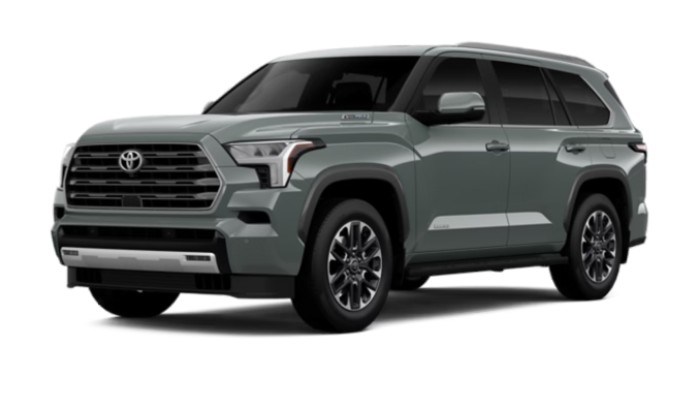
The Toyota Sequoia competitors list is packed with some seriously capable SUVs. We are talking about big three-row machines built for road trips, trailers, large families, camping equipment, and the occasional Costco run that somehow turns into a full-scale logistics operation.
The Sequoia has carved out an interesting position in this group. Toyota gives it a standard i-FORCE MAX twin-turbo V6 hybrid powertrain producing 437 horsepower and 583 lb-ft of torque, while maximum towing capacity reaches roughly 9,500 pounds depending on configuration.
Those numbers make the Sequoia powerful, but they don't automatically make it the perfect full-size SUV for everyone.
Ford, Chevrolet, GMC, Nissan, and Jeep all have alternatives that approach the same mission differently. Some provide more interior room. Others offer superior towing capability, more powertrain choices, or a more traditional luxury experience.
So, which one deserves a spot in your driveway?
Let's compare the strongest Toyota Sequoia alternatives and figure out where each SUV shines.
Content in this publication
- What Kind of SUV Competes With the Toyota Sequoia?
- Toyota Sequoia Competitors at a Glance
- 1. Ford Expedition: One of the Strongest Sequoia Rivals
- 2. Chevrolet Tahoe: The Classic Sequoia Alternative
- 3. Chevrolet Suburban: Better for Maximum Space
- 4. GMC Yukon: A More Premium Alternative
- 5. Nissan Armada: A Much More Serious Rival
- 6. Jeep Wagoneer: Luxury Meets Full-Size Capability
- 7. Toyota Land Cruiser: An Alternative From Toyota's Own Garage
- 8. Toyota Sequoia vs Luxury Competitors
- Which Toyota Sequoia Competitor Has the Best Towing Capacity?
- Which Sequoia Competitor Is Best for Large Families?
- Which Toyota Sequoia Competitor Is Best Off Road?
- Which Sequoia Alternative Is Most Luxurious?
- Is the Toyota Sequoia Better Than Its Competitors?
- What to Consider Before Buying a Sequoia Competitor
- Best Toyota Sequoia Competitor Overall
- Best Value Alternative to the Toyota Sequoia
- Final Verdict: Which Toyota Sequoia Competitor Should You Buy?
- Frequently Asked Questions About Toyota Sequoia Competitors
What Kind of SUV Competes With the Toyota Sequoia?
Before comparing individual vehicles, we need to define the Sequoia's neighborhood.
The Toyota Sequoia is a full-size, three-row SUV. That places it above vehicles such as the Toyota Highlander, Honda Pilot, Kia Telluride, and Hyundai Palisade in terms of basic vehicle class and heavy-duty capability.
True Sequoia competitors typically offer several of these characteristics:
- Three rows of seating
- Truck-based construction
- Available four-wheel drive
- Strong towing capability
- Large engines or high-output turbocharged engines
- Family-oriented interiors
- Considerable cargo capacity
- Off-road or adventure-oriented trims
Think of this class as the SUV equivalent of heavyweight boxing. Everybody here is big, powerful, and expensive enough that choosing poorly can hurt.
Toyota Sequoia Competitors at a Glance
The primary alternatives we would consider are the Ford Expedition, Chevrolet Tahoe, Chevrolet Suburban, GMC Yukon, Nissan Armada, and Jeep Wagoneer.
Each takes a slightly different approach.
The Ford Expedition leans heavily into towing and family versatility. Chevrolet's Tahoe is a traditional all-rounder, while the longer Suburban pushes passenger-and-cargo practicality further. The GMC Yukon adds a more upscale flavor to GM's formula. Nissan has repositioned the Armada as a serious modern competitor, while Jeep aims at buyers who want American luxury mixed with SUV capability.
There isn't one universal winner.
Your winner depends on what you value.
1. Ford Expedition: One of the Strongest Sequoia Rivals
If towing capability sits near the top of your shopping list, the Ford Expedition deserves immediate attention.
Ford's current Expedition can be configured for maximum towing of up to approximately 9,600 pounds, slightly exceeding the maximum figure Toyota publishes for the Sequoia.
That makes this matchup particularly interesting.
Toyota Sequoia vs Ford Expedition
The Sequoia takes a hybrid-first approach. There isn't a conventional naturally aspirated V8 hiding under the hood. Instead, Toyota's twin-turbo hybrid system combines strong low-end torque with respectable efficiency for such a large machine.
Ford approaches things differently, centering the Expedition around its turbocharged EcoBoost engine family.
From behind the wheel, both SUVs deliver the kind of acceleration that almost feels strange in something this big. Press the accelerator and these aren't lumbering school buses. They move.
Where the Expedition Has an Advantage
The Expedition makes particular sense when we prioritize:
- Maximum towing capability
- Interior flexibility
- Long-distance family travel
- Traditional full-size SUV practicality
- Available extended-length configurations
That last point matters.
Ford offers an extended-length Expedition MAX, giving buyers another option when passenger space and luggage constantly fight each other for territory.
The Sequoia has three rows, but buyers frequently carrying seven or eight people plus significant luggage may appreciate the packaging possibilities of its larger rivals.
Where the Sequoia Fights Back
The Sequoia has its own weapons.
Toyota's standard hybrid powertrain develops 437 horsepower and 583 lb-ft of torque, and Toyota lists maximum towing capability around 9,500 pounds.
Add the TRD Pro trim, Toyota's reputation in adventure-oriented vehicles, and the Sequoia begins looking very attractive to buyers who want one SUV to commute Monday through Friday and disappear into the mountains on Saturday.
Who Should Choose the Expedition?
We would lean toward the Ford Expedition if towing and maximum family practicality dominate the buying decision.
Choose the Sequoia if you particularly value its hybrid powertrain, Toyota character, or TRD-focused off-road personality.
2. Chevrolet Tahoe: The Classic Sequoia Alternative
Few SUVs define the American full-size segment as clearly as the Chevrolet Tahoe.
It is almost impossible to discuss Toyota Sequoia competitors without mentioning it.
The Tahoe combines three-row seating, serious towing capability, multiple powertrain choices, and enormous market familiarity. Chevrolet lists a maximum available towing capacity of 8,400 pounds for the 2026 Tahoe.
That figure trails the Sequoia's maximum, but towing numbers tell only part of the story.
Toyota Sequoia vs Chevy Tahoe
The fundamental difference lies in philosophy.
Toyota gives the Sequoia one standard hybridized twin-turbo powertrain.
Chevrolet gives Tahoe buyers a broader range of configurations and engines. That makes the Tahoe appealing to shoppers who enjoy choosing exactly how their full-size SUV is configured rather than accepting one basic mechanical formula.
The Tahoe also feels like a thoroughly established family hauler. It is the type of vehicle equally believable outside a campground, an airport, a construction office, or a suburban school.
Why Pick the Tahoe Over the Sequoia?
The Tahoe becomes particularly attractive if you care about interior packaging and powertrain choice more than headline towing capacity.
Chevrolet has spent decades refining the Tahoe/Suburban formula.
There is something reassuring about that.
It's like buying a pickup truck from a company that has been building pickups forever—you know the engineers understand what customers actually do with them.
Why Pick the Sequoia Instead?
The Sequoia's biggest mechanical argument is straightforward: its standard hybrid powertrain produces huge torque and gives Toyota a distinctive identity within the segment.
It also provides substantially greater maximum towing capability on paper than the Tahoe, with Toyota quoting up to about 9,500 pounds versus Chevrolet's 8,400-pound maximum.
If towing a heavy travel trailer or boat is central to the purchase, that gap deserves consideration.
3. Chevrolet Suburban: Better for Maximum Space
Need something bigger than a Tahoe?
Enter the Chevrolet Suburban.
The Suburban takes the full-size SUV recipe and stretches it—literally.
For families who routinely travel with passengers, suitcases, coolers, sports gear, strollers, camping equipment, and whatever else somehow appears before departure, the Suburban makes a compelling argument.
Toyota Sequoia vs Chevrolet Suburban
This comparison isn't simply about which SUV is "better."
It is about priorities.
The Sequoia feels more adventure-centered. The Suburban feels more like a rolling family command center.
Chevrolet lists maximum available towing capability of up to 8,200 pounds for the 2026 Suburban.
Toyota's maximum towing figure is higher, but the Suburban's reason for existing is largely passenger-and-cargo versatility.
Imagine a road trip involving six people.
In many three-row SUVs, the third row consumes the space where everyone's luggage wants to live. Longer full-size SUVs address that problem by simply giving us more vehicle.
Who Should Buy a Suburban?
The Suburban is especially compelling for:
- Large families
- Frequent airport runs
- Long vacations
- Buyers who routinely use all three rows
- People who prioritize cargo space behind the third row
- Anyone wanting maximum interior practicality
The Sequoia may be more appealing if you want a slightly more manageable package combined with greater headline towing capability.
The GMC Yukon shares plenty of DNA with Chevrolet's full-size SUVs, but GMC aims at a more upscale buyer.
That positioning becomes especially obvious as we move into premium Yukon trims.
Toyota Sequoia vs GMC Yukon
The Sequoia can become surprisingly luxurious in upper trims such as Capstone, but Toyota still gives the vehicle a rugged visual and mechanical identity.
The Yukon feels more traditional.
You may be interested in reading Toyota Sequoia Lexus Equivalent: Which Lexus Is Closest?
Large proportions. American luxury. Strong engines. Serious towing capability. Plenty of technology.
If the Sequoia is hiking boots paired with an expensive jacket, the Yukon is polished leather boots climbing into a first-class lounge.
Both are premium, but they speak different visual languages.
Why Consider the Yukon?
We would put the Yukon high on the shopping list if interior ambiance matters nearly as much as rugged capability.
It also benefits from the breadth of GM's full-size SUV platform, giving shoppers several closely related configurations across Chevrolet, GMC, and Cadillac.
For buyers who like the Tahoe's fundamental formula but want something positioned higher, Yukon is the obvious step.
5. Nissan Armada: A Much More Serious Rival
The Nissan Armada deserves more attention than it sometimes receives.
Nissan's current Armada produces 425 horsepower and 516 lb-ft of torque, while maximum towing capacity reaches 8,500 pounds.
Those are not background-character numbers.
This SUV has arrived ready to fight.
Toyota Sequoia vs Nissan Armada
The Sequoia still wins the maximum-towing contest on paper, but the Armada is close enough that the comparison should involve far more than trailer ratings.
Both vehicles target shoppers who want rugged styling, serious capability, three rows, and something slightly different from the familiar Tahoe/Expedition formula.
Armada PRO-4X vs Sequoia TRD Pro
Here is where things become fun.
Toyota's TRD Pro name already carries considerable recognition among off-road enthusiasts. Nissan's PRO-4X philosophy targets much the same audience.
These are full-size SUVs wearing hiking gear.
Neither magically becomes a tiny trail rig—their dimensions still matter—but buyers who regularly encounter gravel roads, campsites, snow, mud, and uneven surfaces may find these variants far more appealing than luxury-focused alternatives.
Which One Would We Pick?
For maximum towing capacity and Toyota's hybrid torque, Sequoia makes a strong argument.
For shoppers who like Nissan's newer design direction or find a better price/equipment combination, the Armada deserves a proper test drive rather than being dismissed as an outsider.
6. Jeep Wagoneer: Luxury Meets Full-Size Capability
The Jeep Wagoneer represents another interpretation of the full-size family SUV.
Rather than leaning purely toward ruggedness, Jeep mixes capability with an upscale interior and a distinctly American personality.
Toyota Sequoia vs Jeep Wagoneer
This is one of the more interesting comparisons because the two vehicles feel dramatically different despite serving similar customers.
The Sequoia communicates ruggedness immediately.
The Wagoneer communicates size and luxury.
Toyota feels ready for a campsite. Jeep feels ready for the valet stand—and then the campsite.
Where the Wagoneer Makes Sense
The Wagoneer becomes tempting if cabin presentation and passenger comfort rank above the Sequoia's hybrid drivetrain or TRD image.
It can also appeal to buyers migrating upward from vehicles such as the Grand Cherokee who want significantly more room without abandoning Jeep entirely.
7. Toyota Land Cruiser: An Alternative From Toyota's Own Garage
Here's a slightly unusual competitor.
The Land Cruiser and Sequoia don't occupy exactly the same role, yet plenty of shoppers will compare them.
Why?
Because both wear Toyota badges and carry serious adventure credibility.
Sequoia or Land Cruiser?
The decision becomes easier when we think about scale.
The Sequoia is the larger family-oriented full-size choice. It makes more sense when towing, three-row usability, and maximum passenger capacity matter.
The Land Cruiser makes more sense when maneuverability and an off-road-oriented mission carry greater importance than sheer cabin size.
In other words, don't buy more SUV simply because more SUV exists.
Sometimes smaller is smarter.
8. Toyota Sequoia vs Luxury Competitors
Once we climb into upper Sequoia trims, another question appears:
Why not buy a luxury SUV?
That opens the door to vehicles such as the Cadillac Escalade, Lincoln Navigator, Lexus LX, and Infiniti QX80.
Sequoia vs Cadillac Escalade
The Escalade is less a direct practical competitor and more a luxury alternative.
Both are huge three-row SUVs, but their personalities live on opposite sides of the room.
The Sequoia says adventure.
The Escalade says arrival.
If maximum luxury, visual drama, and premium-brand prestige matter, Cadillac has the stronger identity.
If you want something that feels less delicate about dirt roads and camping equipment, the Toyota makes more sense.
The Navigator follows a similar philosophy to the Escalade but with Lincoln's interpretation of American luxury.
We would consider it when second-row comfort, premium surroundings, and highway cruising outweigh any desire for TRD-style ruggedness.
Sequoia vs Lexus LX
The Lexus LX is perhaps the most fascinating premium alternative because Toyota DNA still runs through the equation.
The LX targets a much more luxurious buyer.
The Sequoia, meanwhile, gives us a larger, distinctly American-market full-size Toyota experience at a lower point in the luxury ladder.
Which Toyota Sequoia Competitor Has the Best Towing Capacity?
For shoppers focused on maximum trailer ratings, Ford and Toyota stand out among the direct competitors discussed here.
Ford publishes maximum Expedition towing capability of approximately 9,600 pounds in the appropriate configuration, while Toyota lists the Sequoia at up to approximately 9,500–9,520 pounds, depending on how Toyota rounds and presents the specification.
For comparison, Nissan lists the Armada at up to 8,500 pounds, Chevrolet lists the Tahoe at up to 8,400 pounds, and the Suburban at up to 8,200 pounds.
Still, we shouldn't buy a tow vehicle by sorting a spreadsheet from highest to lowest.
Actual towing capability depends on configuration, passengers, cargo, accessories, axle ratings, trailer setup, and other factors. Ford explicitly notes that maximum ratings vary with configuration and vehicle loading.
Best Sequoia Rival for Heavy Towing
The Ford Expedition is arguably the most obvious direct challenger if maximum towing is the priority.
The difference between its headline rating and the Sequoia's, however, is tiny.
At that point we would compare the exact configurations being purchased rather than obsess over roughly 100 pounds of theoretical maximum capability.
Which Sequoia Competitor Is Best for Large Families?
This is where interior packaging matters more than horsepower.
A 400-plus-horsepower engine sounds exciting in a brochure. It doesn't help when your teenager is sitting beside three suitcases because the cargo area is full.
For families regularly using the third row, longer options such as the Chevrolet Suburban and extended-length Ford Expedition deserve serious attention.
The Tahoe and Yukon also remain excellent family-oriented alternatives.
Don't Ignore Third-Row Cargo Space
When test-driving these SUVs, don't just sit in the driver's seat.
You may be interested in readingToyota Sequoia Lexus Equivalent: Which Lexus Is Closest?You may be interested in reading
 Volvo XC90 vs Audi Q7: Which Luxury SUV Is Better?
Open the cargo area while the third row is upright.
That's the real test.
Ask yourself:
Can we fit luggage for everyone without folding a seat?
If the answer is no and you routinely travel with six or seven passengers, you're going to notice that compromise repeatedly.
Which Toyota Sequoia Competitor Is Best Off Road?
The obvious shortlist includes the Nissan Armada PRO-4X and rugged Expedition configurations alongside the Toyota Sequoia TRD Pro.
But we should be realistic.
Full-size SUVs are huge.
No collection of skid plates, tires, drive modes, or marketing photography changes basic geometry.
If serious technical off-roading is your primary goal, smaller vehicles may make more sense.
If your version of off-roading means forest roads, camping routes, snow, muddy access roads, desert tracks, or getting a trailer into remote recreational areas, these full-size adventure trims become much more logical.
Which Sequoia Alternative Is Most Luxurious?
If luxury dominates the decision, we'd move beyond the mainstream competitors and consider:
- Cadillac Escalade
- Lincoln Navigator
- Lexus LX
- Infiniti QX80
The GMC Yukon also bridges mainstream and luxury territory nicely, particularly in its more premium configurations.
Toyota's Sequoia Capstone gives shoppers a more upscale cabin while retaining the Sequoia's underlying personality, so it can represent a sensible middle ground.
Is the Toyota Sequoia Better Than Its Competitors?
Sometimes.
That's probably less dramatic than saying the Sequoia destroys every competitor, but it is far more useful.
The Sequoia is particularly strong when we want high towing capability, a powerful standard hybrid powertrain, rugged styling, three-row practicality, and Toyota's adventure-oriented personality in one vehicle.
Its i-FORCE MAX powertrain delivers 437 horsepower and 583 lb-ft, and the platform supports towing around the 9,500-pound mark in suitable configurations.
That's an impressive package.
But competitors can beat it in specific areas.
Choose the Ford Expedition If...
You prioritize towing and family practicality, especially if an extended-length configuration fits your life better.
Choose the Chevy Tahoe If...
You want a traditional full-size SUV with broad configuration choices and a well-established family-hauler formula.
Choose the Chevy Suburban If...
Maximum passenger-and-cargo practicality matters more than having the shortest possible full-size SUV.
Choose the GMC Yukon If...
You like the GM full-size architecture but want something positioned more upscale than the Tahoe.
Choose the Nissan Armada If...
You want a powerful, modern alternative that doesn't seem quite as predictable as the usual Ford-versus-Chevy decision.
Choose the Jeep Wagoneer If...
You prioritize interior presence, passenger comfort, and American-style luxury while retaining serious SUV capability.
Choose the Toyota Sequoia If...
You want an unusual combination of hybrid power, enormous torque, high towing capability, Toyota styling, and legitimate adventure-oriented trims.
What to Consider Before Buying a Sequoia Competitor
These SUVs are expensive enough that we should resist buying on emotion alone.
That giant grille may look fantastic under showroom lights, but our future selves still have to fuel, park, insure, maintain, and live with the vehicle.
Before signing anything, compare:
- Real seating needs: Do you genuinely carry seven or eight people?
- Cargo space with every seat occupied: This matters more than maximum cargo volume for large families.
- Towing requirements: Calculate the loaded trailer weight rather than relying on dry weight.
- Parking dimensions: A full-size SUV can turn a small garage into a geometry exam.
- Fuel consumption: Even efficient examples remain big, heavy vehicles.
- Trim pricing: Luxury versions can quickly overlap premium-brand territory.
- Off-road requirements: Don't pay for hardware you'll never use.
- Ride quality: Bigger wheels sometimes look better than they ride.
- Dealer support: Service convenience becomes important over a long ownership period.
- Actual configuration ratings: Towing and payload vary by equipment, so verify the exact vehicle rather than assuming every trim carries the headline maximum.
Best Toyota Sequoia Competitor Overall
If we had to identify the most direct all-around Toyota Sequoia competitor, the Ford Expedition would probably take the title.
Both are large, powerful, truck-based family SUVs with serious towing ambitions.
Ford's maximum towing figure can reach roughly 9,600 pounds, while Toyota's Sequoia reaches approximately 9,500 pounds.
The matchup ultimately becomes philosophical.
Ford emphasizes traditional full-size versatility.
Toyota adds a standard hybrid system and a distinctly Toyota-style rugged personality.
Neither makes the other irrelevant.
That is exactly what makes the comparison useful.
Best Value Alternative to the Toyota Sequoia
Value depends heavily on trim level, incentives, local pricing, and what equipment we actually need, so there isn't a permanent winner.
However, the Nissan Armada deserves particular attention.
Its 425-horsepower engine, 516 lb-ft of torque, three-row layout, available adventure-focused configurations, and 8,500-pound maximum towing capacity make it a legitimate competitor rather than merely a cheaper substitute.
Shoppers should compare transaction prices rather than MSRP alone.
A technically cheaper vehicle can become more expensive after adding the equipment needed to match another model.
Final Verdict: Which Toyota Sequoia Competitor Should You Buy?
The full-size SUV segment isn't short on talent.
The Ford Expedition is arguably the closest Toyota Sequoia competitor and one of the strongest choices for towing.
The Chevrolet Tahoe remains a wonderfully balanced mainstream alternative, while the Suburban is difficult to beat when maximum family and cargo space matter.
The GMC Yukon adds a premium edge.
The Nissan Armada has developed into a particularly compelling alternative for buyers who want serious capability without automatically following the Ford-or-GM crowd.
And the Jeep Wagoneer caters to shoppers who want full-size capability dressed in more luxurious clothing.
Yet the Toyota Sequoia still occupies a distinctive corner of the room.
Its standard 437-horsepower i-FORCE MAX hybrid powertrain, 583 lb-ft of torque, and roughly 9,500-pound maximum towing capability create an unusual blend of performance, towing strength, and electrification.
So, is there a better SUV than the Sequoia?
Certainly—for particular buyers.
But there isn't a universally better one.
If we regularly tow heavy trailers, we'd compare the Sequoia and Expedition first. If we're constantly carrying a full crew plus luggage, we'd look closely at the Expedition MAX or Suburban. If luxury dominates, we'd investigate the Yukon and premium-brand alternatives.
And if we want a full-size SUV that feels equally comfortable pulling a trailer, carrying the family, and wearing a little mud on its tires?
The Sequoia remains awfully hard to ignore.
Frequently Asked Questions About Toyota Sequoia Competitors
What is the closest competitor to the Toyota Sequoia?
The Ford Expedition is arguably the closest overall competitor because both are full-size three-row SUVs with strong towing capability and truck-based underpinnings. The Chevrolet Tahoe, GMC Yukon, and Nissan Armada are also direct alternatives.
Is a Ford Expedition better than a Toyota Sequoia?
It depends on your priorities. The Expedition offers exceptionally strong towing capability and useful family-oriented configurations, while the Sequoia distinguishes itself with its standard 437-horsepower hybrid powertrain and roughly 9,500-pound maximum towing capacity.
Is a Chevy Tahoe bigger than a Toyota Sequoia?
The vehicles compete in the same broad full-size SUV category, but dimensions and usable interior space differ. Buyers should compare passenger space and, especially, cargo room with the third row raised rather than looking only at exterior size.
Which Toyota Sequoia competitor can tow the most?
Among the major rivals covered here, the Ford Expedition can be configured for up to approximately 9,600 pounds of maximum towing capability, narrowly above Toyota's roughly 9,500-pound Sequoia maximum. Exact ratings depend on configuration.
What is the best Toyota Sequoia alternative for a large family?
The Chevrolet Suburban and extended-length Ford Expedition are especially compelling when carrying many passengers and significant cargo simultaneously. If overall vehicle size is less important, the Tahoe, Yukon, Armada, and Sequoia itself remain strong three-row choices.
You may be interested in readingToyota Sequoia Lexus Equivalent: Which Lexus Is Closest?You may be interested in reading
Volvo XC90 vs Audi Q7: Which Luxury SUV Is Better?You may be interested in reading
Volvo XC90 vs BMW X5: Which Luxury SUV Is Better?If you want to know other articles similar to Toyota Sequoia Competitors: The Best Full-Size SUV Alternatives you can visit the category Models.
Kia Sorento Models: Complete Guide to Trims, Engines and Versions
BYD Shark 6 vs Ranger vs HiLux: Which Ute Makes the Most Sense in 2026?
BYD Shark 6 vs MG U9: Which Ute Makes More Sense in 2026?
BYD Shark 6 vs Ford Ranger Raptor: Which Performance Ute Is Better in 2026?
BYD Shark 6 vs Kia Tasman: Which Ute Is Better?
BYD Shark 6 vs 7: What We Know So Far
Leave a Reply
More content of your interest