

Volvo XC90 vs Mazda CX-9: Which Three-Row SUV Is Better?

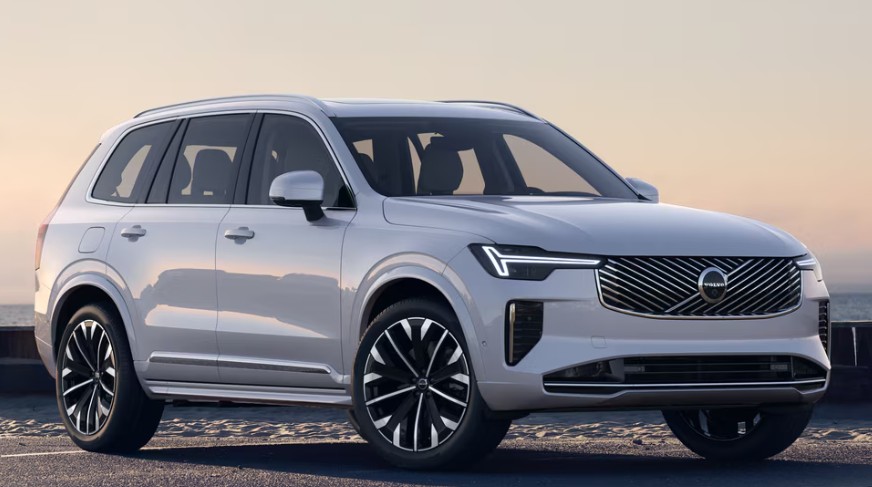
Choosing between the Volvo XC90 and Mazda CX-9 is a little like choosing between a tailored Scandinavian suit and a beautifully made sport jacket. Both look sophisticated, both can carry the family, and neither feels like a boring transportation appliance. Yet underneath that shared upscale character, these SUVs follow very different philosophies.
The Volvo XC90 is unapologetically premium. It focuses on minimalist luxury, advanced technology, comfort, electrified powertrains, and the understated elegance Volvo has turned into a signature. The Mazda CX-9, meanwhile, built its reputation by delivering something unusual for a mainstream three-row SUV: genuinely enjoyable handling wrapped in an interior that often feels more expensive than its price suggests.
There is another important distinction for today's shopper. Mazda discontinued the CX-9 in the United States after the 2023 model year, effectively handing its three-row role to the newer CX-90. That means a modern Volvo XC90 vs Mazda CX-9 comparison is frequently a new-versus-used decision.
And that actually makes things more interesting.
Should we buy the newer, more technologically sophisticated Volvo? Or does a well-kept CX-9 offer enough refinement and driving enjoyment to make spending luxury-SUV money unnecessary?
Let's find out.
Content in this publication
- Volvo XC90 vs Mazda CX-9 at a Glance
- Exterior Design: Scandinavian Restraint Meets Japanese Elegance
- Interior Quality: The XC90 Shows Its Luxury Credentials
- Seating and Passenger Space
- Cargo Space: Volvo Has the More Flexible Approach
- Performance: Two Very Different Approaches
- Driving Experience: The Mazda's Secret Weapon
- Ride Comfort
- Technology and Infotainment
- Safety: Volvo's Reputation Still Matters
- Fuel Economy and Efficiency
- Towing Capacity
- Reliability and Long-Term Ownership
- Maintenance Costs
- Purchase Price and Value
- Volvo XC90 vs Mazda CX-9 for Families
- Volvo XC90 vs Mazda CX-9 for Road Trips
- Volvo XC90 vs Mazda CX-9 in the City
- Which SUV Has More Personality?
- Pros and Cons of the Volvo XC90
- Pros and Cons of the Mazda CX-9
- Who Should Buy the Volvo XC90?
- Who Should Buy the Mazda CX-9?
- Volvo XC90 vs Mazda CX-9: Which One Should We Buy?
- Frequently Asked Questions About Volvo XC90 vs Mazda CX-9
- Conclusion: Luxury or Value?
Volvo XC90 vs Mazda CX-9 at a Glance
At first glance, the XC90 and CX-9 appear to occupy different parts of the SUV market. Volvo competes directly with luxury brands such as BMW, Audi, Mercedes-Benz, and Lexus. Mazda positioned the CX-9 below those vehicles, although its styling and cabin quality often nudged surprisingly close to premium territory.
Their personalities are quite different.
The XC90 feels calm, deliberate, and sophisticated. You don't climb inside expecting drama. You expect serenity.
The CX-9 is more playful. Its steering, suspension tuning, and turbocharged engine give it a lighter personality than we might expect from a three-row crossover.
So the fundamental decision comes down to this: do we prioritize luxury and technology, or value and driving engagement?
Quick Comparison: Volvo XC90 vs Mazda CX-9
Here is the simplest way to understand the matchup:
- Luxury: Volvo XC90 wins
- Driving engagement: Mazda CX-9 has the edge
- Powertrain variety: Volvo XC90 wins
- Purchase value: Mazda CX-9 wins
- Towing ability: Volvo XC90 wins
- Premium interior feel: Volvo XC90 wins
- Used-car affordability: Mazda CX-9 wins
- Technology: Volvo XC90 wins
- Simple conventional ownership: Mazda CX-9 may appeal more
- Overall sophistication: Volvo XC90 wins
That doesn't automatically make the Volvo the smarter purchase, though. Price changes everything.
Both SUVs demonstrate that a family vehicle doesn't have to resemble a refrigerator with wheels.
The XC90 follows Volvo's modern Scandinavian design language. Its upright proportions, tall grille, crisp shoulder lines, and distinctive lighting give it presence without screaming for attention. It looks expensive because it avoids trying too hard.
That's harder to achieve than it sounds.
The Mazda CX-9 takes a different route. Its shape is lower and more flowing, with sweeping curves and a long-looking hood that makes the vehicle appear sportier than most three-row crossovers.
Where the Volvo looks architectural, the Mazda looks sculpted.
Which SUV Looks More Expensive?
We would give the advantage to the Volvo XC90.
Its proportions and detailing make it immediately recognizable as a luxury SUV. Even older XC90 models have aged gracefully because Volvo avoided excessive chrome, fake vents, and overly complicated bodywork.
The CX-9 still looks handsome, however. In fact, one of Mazda's greatest achievements with the CX-9 was making a relatively affordable family SUV look noticeably more upscale than its price category suggested.
Design Winner: Volvo XC90
The Mazda deserves plenty of credit, but the Volvo has a timeless quality that feels closer to high-end European design.
Interior Quality: The XC90 Shows Its Luxury Credentials
Open the door and the price difference becomes easier to understand.
The Volvo XC90 cabin is built around simplicity. Instead of covering the dashboard with buttons, Volvo uses clean surfaces, carefully selected materials, vertical air vents, and a centrally positioned infotainment display.
Depending on specification, you'll find combinations of leather or other upscale upholstery, metal detailing, wood trim, and attractive textured surfaces.
The result feels less like a traditional luxury car and more like an expensive Scandinavian living room.
The CX-9 takes a more conventional approach, but it is impressively executed.
Mazda became very good at making mainstream interiors feel premium through intelligent material placement. Soft surfaces appear where passengers actually touch them, controls generally feel substantial, and the dashboard has a clean horizontal layout.
Is the Mazda CX-9 Almost as Luxurious as the XC90?
Almost—but not quite.
A high-trim CX-9 can feel remarkably upscale. Sit inside one without knowing the badge and we could easily imagine someone guessing it costs considerably more than it actually did when new.
But the XC90 has an extra layer of craftsmanship.
The details feel more intentional. Materials are richer. Seats feel more sophisticated. Lighting feels more carefully integrated. Even the design of switches and vents receives attention.
The Mazda imitates some of the atmosphere of a luxury SUV.
The Volvo actually is one.
Seating and Passenger Space
Both vehicles were designed for families needing three rows, but neither should be confused with a gigantic full-size SUV.
The front seats are comfortable in both.
The second rows are also family-friendly, although configuration and equipment vary depending on trim and model year.
The third row is where expectations need adjustment.
Neither vehicle gives adults limousine-like space in the back. These are crossover third rows, best suited to children, teenagers, or shorter occasional journeys with adults.
Volvo XC90 Third-Row Experience
Volvo has put considerable thought into making its seating layout flexible. Current XC90 configurations offer three rows, with six- and seven-seat arrangements depending on specification. Volvo also allows individual rear seats to fold to create different combinations of passenger and cargo space.
Access is reasonably straightforward, and the cabin's airy design helps prevent the third row from feeling completely enclosed.
Mazda CX-9 Third-Row Experience
The Mazda's third row works well for occasional use, especially for children.
Adults can fit, but we probably wouldn't volunteer to spend a five-hour highway trip back there.
That's the trade-off Mazda made for the CX-9's sleeker exterior proportions. It looks more athletic than many three-row SUVs, but packaging efficiency isn't its strongest weapon.
Cargo Space: Volvo Has the More Flexible Approach
Three-row SUV cargo figures can be surprisingly confusing because measurement methods vary, particularly between manufacturers and markets.
What's more important is how the space works in real life.
With every seat occupied, neither vehicle becomes a moving warehouse. Groceries, backpacks, or a few small suitcases fit easily enough, but large family vacations usually involve folding at least part of the third row.
The XC90 becomes significantly more useful as seats disappear into the floor.
Volvo currently quotes up to 85.7 cubic feet of maximum cargo capacity for the XC90 in the U.S., although real usable volume depends on seating configuration and measurement method.
Which Is Better for Family Luggage?
We prefer the XC90.
The wide, relatively flat load area feels thoughtfully designed, and individually folding seats make it easy to mix passengers and cargo.
The CX-9 remains practical enough for normal family life, but its elegant body shape comes with some packaging compromises.
Performance: Two Very Different Approaches
This section reveals perhaps the biggest philosophical difference between the Volvo XC90 and Mazda CX-9.
Mazda kept things relatively straightforward.
By its final U.S. model year, the CX-9 used a 2.5-liter turbocharged four-cylinder engine paired with a six-speed automatic transmission. Mazda rated it at up to 250 horsepower and 320 lb-ft of torque when running the recommended premium fuel, with reduced output when using regular gasoline.
It's a relatively simple recipe.
Volvo offers a much broader technological menu.
Modern XC90 versions have incorporated electrification through mild-hybrid and plug-in-hybrid powertrains, depending on version and market. That gives buyers considerably more choice but also introduces more mechanical and electronic complexity.
Mazda CX-9 Engine Character
The Mazda turbo engine's biggest strength isn't huge horsepower.
It's torque.
There's useful pulling power at everyday speeds, so the CX-9 doesn't feel like it has to scream its way through every acceleration maneuver.
The six-speed automatic may seem almost old-fashioned next to transmissions with eight, nine, or ten gears, but that's not necessarily bad. Gear changes generally feel intuitive, and the combination suits the engine's broad torque delivery.
Volvo XC90 Engine Character
The XC90 tends to feel more sophisticated rather than more aggressive.
Power delivery varies significantly between versions, particularly when comparing mild-hybrid models with plug-in hybrids.
Electrified versions can deliver the kind of effortless low-speed response that suits a luxury SUV beautifully.
Instead of begging to be driven hard, the Volvo encourages smooth progress.
Performance Winner: Depends on What We Value
For outright sophistication and powertrain technology, we pick the Volvo XC90.
For straightforward, enjoyable turbocharged performance without unnecessary complexity, the Mazda CX-9 remains very appealing.
Driving Experience: The Mazda's Secret Weapon
Here's where the CX-9 refuses to behave like the cheaper vehicle.
Mazda has spent decades building cars around driver involvement, and some of that philosophy found its way into the CX-9.
The steering feels responsive. Body movements are reasonably controlled. The vehicle doesn't suddenly become a sports car—we're still talking about a large family crossover—but it feels more willing to change direction than many competitors.
Imagine wearing hiking boots that somehow move like running shoes.
That's roughly the CX-9 experience.
How Does the Volvo XC90 Drive?
The Volvo takes a calmer approach.
Rather than encouraging us to attack a twisting road, it focuses on isolation, confidence, stability, and refinement.
Steering is lighter and the overall personality is more relaxed.
That makes perfect sense.
The typical XC90 owner probably cares considerably more about arriving refreshed after three hours on the highway than shaving three seconds from the journey through a mountain road.
Which SUV Is More Fun?
The Mazda CX-9.
Its chassis communicates more personality.
You may be interested in reading Volvo XC90 or Range Rover: Which Luxury SUV Is Better?
Which SUV Is More Relaxing?
The Volvo XC90.
It behaves like the luxury SUV it is.
Ride Comfort
Ride quality depends heavily on tire size, wheel choice, suspension configuration, road conditions, and model year, so there is no universal winner.
Broadly speaking, however, the Volvo aims for greater isolation.
The CX-9 has a slightly firmer edge because Mazda's engineers wanted to preserve body control.
On smooth pavement, both feel refined.
On broken roads, larger wheels can expose the limits of either suspension.
Long-Distance Comfort
This is where the XC90 starts earning its higher price.
Volvo has long treated seat design as something more serious than adding extra foam to a chair.
The seating position feels natural, support is excellent, and the overall cabin atmosphere encourages relaxed long-distance travel.
For highway-heavy drivers, that matters more than an impressive acceleration number.
Technology and Infotainment
The technology story changes considerably depending on which model years we compare.
The CX-9 remained on the market for many years, and earlier versions naturally lack some features found on later examples.
Late-model CX-9s feel reasonably modern and include smartphone-oriented connectivity and driver-assistance technologies, depending on trim.
But the XC90 operates at a different level.
Newer examples integrate a more digital cabin experience, with connected services, navigation, digital instrumentation, and extensive driver-assistance technology.
Which Infotainment System Is Easier to Use?
This one can divide drivers.
Mazda historically emphasized physical interaction through a console-mounted control interface, which some drivers appreciate because they don't need to poke at a screen while bouncing down the road.
Volvo places far more functionality into its central touchscreen.
That looks cleaner.
Whether it is better depends on personal preference.
We love the appearance of the Volvo layout, but there are moments when a traditional button is simply faster.
Safety: Volvo's Reputation Still Matters
We cannot compare a Volvo without talking about safety.
Safety has been central to the company's identity for decades, and the XC90 reflects that philosophy through structural engineering and driver-assistance technologies.
Mazda also equipped later CX-9 models with an extensive suite of active-safety features.
The difference isn't that the Mazda ignores safety.
Far from it.
The Volvo simply makes safety feel like part of the entire product philosophy rather than a box on an equipment sheet.
Driver-Assistance Technology
Depending on model year and trim, features across these SUVs can include technology such as adaptive cruise control, lane-support systems, collision mitigation, blind-spot monitoring, parking assistance, and camera systems.
Because specifications vary substantially by year and country, anyone shopping used should verify the exact equipment on the specific vehicle rather than assuming every XC90 or CX-9 contains the same systems.
That's particularly important with the CX-9 because there is a large technological difference between earlier second-generation examples and cars produced near the end of the model's life.
Fuel Economy and Efficiency
The CX-9 follows a conventional gasoline-SUV formula.
Its turbocharged four-cylinder engine can be reasonably efficient when driven gently, but we're still moving a large three-row vehicle through the air.
Drive aggressively and physics sends the bill.
The XC90 is more complicated because powertrain choice matters considerably.
Mild-hybrid versions primarily use electrification to improve smoothness and efficiency around a combustion engine, while plug-in-hybrid versions can cover some everyday journeys using stored electrical energy when regularly charged.
Which SUV Is Cheaper to Fuel?
That depends heavily on how we drive.
A used CX-9 makes sense for owners who want predictable gasoline operation without worrying about charging.
An XC90 plug-in hybrid makes far more sense for someone who can charge regularly and completes many shorter trips.
Buy a plug-in hybrid and never plug it in, however, and we're carrying sophisticated equipment without exploiting much of its advantage.
Towing Capacity
Anyone planning to tow a substantial trailer should pay close attention here.
Mazda rated appropriately equipped CX-9 models for towing up to 3,500 pounds in the U.S.
Volvo currently lists a maximum XC90 towing capacity of 5,000 pounds in the United States, depending on configuration and equipment.
That's a meaningful difference.
Which Is Better for Towing?
The Volvo XC90.
If we're pulling a moderately heavy camper, boat, or trailer, its higher maximum rating offers more flexibility.
Of course, towing capacity isn't just a number. Passenger weight, cargo, hitch equipment, trailer configuration, local regulations, and the specific vehicle's rating all matter.
Reliability and Long-Term Ownership
Now we reach the section that can turn a luxury bargain into an expensive lesson.
A used XC90 may depreciate into the same price neighborhood as a newer mainstream SUV, but its maintenance expectations don't magically become mainstream.
Complex turbocharged engines, sophisticated electronics, advanced driver-assistance equipment, premium suspension components, and electrified systems can all make repairs expensive as vehicles age.
That doesn't mean every XC90 becomes unreliable.
It means we should budget like luxury-car owners.
Mazda CX-9 Ownership Simplicity
The CX-9 is generally the simpler vehicle conceptually.
One turbocharged gasoline engine, a conventional automatic transmission, and fewer luxury-specific systems mean there are fewer layers of high-end technology to worry about compared with a heavily optioned Volvo.
That simplicity can become increasingly valuable after warranties expire.
But no used CX-9 should be purchased blindly either.
Service records matter. Oil changes matter. Accident history matters. How the previous owner treated a turbocharged engine matters.
A neglected reliable car can become considerably more troublesome than a meticulously maintained complex one.
Maintenance Costs
Expect the Volvo to cost more.
Premium-brand labor rates, specialized parts, sophisticated electronics, and more complicated drivetrains can push repair bills upward.
Routine maintenance itself doesn't necessarily ruin the budget.
Unexpected repairs are where luxury-car economics become noticeable.
The Mazda CX-9 should generally be friendlier to maintain, particularly for buyers who have access to independent repair shops familiar with Mazda vehicles.
Used XC90 vs Used CX-9
This might be the most interesting real-world comparison.
Suppose two similarly priced used vehicles appear online: a higher-mileage XC90 and a newer CX-9.
The Volvo will almost certainly feel more special.
But we shouldn't spend every available dollar buying it.
Leave financial room for maintenance.
If the purchase stretches the budget so far that a four-figure repair would become a crisis, the CX-9 is probably the wiser choice.
Purchase Price and Value
When both vehicles were new, they belonged to noticeably different price categories.
Today the gap becomes more complicated because depreciation enters the picture.
The CX-9 was discontinued in the U.S. after 2023, so American buyers are now primarily comparing used CX-9 examples against either used or current XC90s.
That can create some tempting situations.
A several-year-old XC90 may look like extraordinary value when we compare its used price with what it cost originally.
And in one sense, it is.
We're receiving luxury materials, premium engineering, three-row practicality, and expensive-car road manners for a fraction of the original price.
But depreciation doesn't reduce repair costs at the same speed.
A luxury SUV that has lost half its value still contains luxury-SUV components.
Which Gives Us More for the Money?
The Mazda CX-9 usually wins the traditional value argument.
We can obtain a relatively modern, handsome, well-equipped three-row crossover without paying for the badge or maintenance profile of a European luxury SUV.
You may be interested in readingVolvo XC90 or Range Rover: Which Luxury SUV Is Better?You may be interested in reading
Volvo XC90 vs Mercedes GLS: Which Luxury SUV Is Better?The Volvo wins if our definition of value includes having a genuinely premium experience.
Volvo XC90 vs Mazda CX-9 for Families
If children are involved, our priorities change rapidly.
Suddenly nobody cares whether the steering feels 8% sharper.
We care about doors that open wide, seats that fold easily, climate control that reaches rear passengers, charging points, luggage space, visibility, safety equipment, and whether crumbs can be removed without dismantling half the interior.
Both vehicles work well as family SUVs.
The XC90 feels more thoughtfully engineered around a premium family experience.
The CX-9 feels like Mazda tried to make the family SUV enjoyable for the person sitting behind the steering wheel.
For Younger Families
We might lean toward the CX-9 if budget matters.
Children have an extraordinary talent for turning expensive interiors into archaeological sites of juice, crackers, sand, mud, and unexplained sticky substances.
Some parents simply feel more relaxed doing family duty in the Mazda.
For Luxury-Focused Families
The XC90 is the obvious choice.
Its cabin, seats, refinement, technology, and overall atmosphere feel a class above.
Volvo XC90 vs Mazda CX-9 for Road Trips
Road trips expose every weakness in an SUV.
Poor seats become torture devices.
Small cargo areas suddenly seem microscopic.
Harsh suspension becomes exhausting.
Wind noise becomes impossible to ignore.
This is exactly where the XC90 shines.
Its calm character makes long-distance driving feel less demanding.
The Mazda is enjoyable too, particularly when the road becomes interesting, but the Volvo has more of that effortless cross-country personality we expect from an expensive luxury SUV.
Road-Trip Winner: Volvo XC90
If we regularly drive hundreds of miles with passengers aboard, the Volvo's comfort-oriented personality earns the victory.
Volvo XC90 vs Mazda CX-9 in the City
Now reverse the scenario.
Instead of open highways, imagine narrow streets, supermarket parking spaces, school pickups, construction zones, and endless traffic lights.
Both SUVs are large enough that parking sensors and cameras become valuable.
The Mazda feels slightly more driver-oriented from behind the wheel, and its conventional controls can be convenient when we're constantly adjusting settings.
The Volvo's available camera and assistance technologies make maneuvering easier, particularly on well-equipped examples.
Neither vehicle is what we'd call compact-city friendly, though.
If most journeys involve two people and downtown parking garages, perhaps the real question is whether we need a three-row SUV at all.
Which SUV Has More Personality?
This depends on what personality means to us.
The Mazda communicates through movement.
Turn the wheel and it responds eagerly. Accelerate and the turbo engine produces useful torque. Drive down a winding road and the CX-9 reminds us that engineers cared about the person holding the steering wheel.
The Volvo communicates through atmosphere.
The shape of the seats, texture of the materials, simplicity of the dashboard, and quiet behavior of the chassis create a distinct Scandinavian identity.
One talks through the steering wheel.
The other talks through the entire cabin.
Pros and Cons of the Volvo XC90
The XC90's biggest strengths are its beautiful interior, sophisticated design, flexible three-row cabin, stronger towing capability, premium comfort, modern technology, and broad selection of electrified powertrains.
Its weaknesses revolve largely around cost and complexity.
We pay more to buy one, and we should expect to spend more maintaining one. The extensive integration of electronics and sophisticated powertrain technology also means a used example deserves a thorough inspection.
Pros and Cons of the Mazda CX-9
The CX-9's strongest argument is balance.
It looks expensive without costing like a luxury SUV. It drives better than most family crossovers have any right to. Its turbocharged engine provides strong everyday torque, and the cabin can feel impressively premium in higher trims.
Its main limitations are tighter third-row packaging, lower maximum towing capability than the Volvo, fewer powertrain choices, and the fact that the model has left the U.S. new-car market.
Mazda's replacement, the CX-90, is now the closer direct alternative for shoppers buying new.
Who Should Buy the Volvo XC90?
Choose the XC90 if we prioritize premium materials, quiet highway cruising, sophisticated technology, towing capability, flexible seating, and the experience of owning a genuine luxury SUV.
It is particularly compelling for drivers who spend significant time on longer journeys.
We'd also favor it if appearance matters but flashy luxury doesn't.
The XC90 doesn't arrive wearing jewelry on every body panel.
Its confidence is quieter.
Who Should Buy the Mazda CX-9?
Choose the Mazda CX-9 if we want a three-row SUV that feels more special than a typical mainstream crossover without accepting full luxury-SUV ownership costs.
It makes particular sense on the used market.
A carefully maintained late-model CX-9 can deliver elegant styling, respectable technology, strong turbocharged performance, and genuinely entertaining handling at an attractive price.
It is the rational choice with just enough emotion mixed in.
And that's a rare combination.
Volvo XC90 vs Mazda CX-9: Which One Should We Buy?
If price were irrelevant, we'd choose the Volvo XC90.
It offers the more complete premium experience. The cabin is more sophisticated, seating is excellent, cargo flexibility is strong, towing capability is higher, and the overall driving experience feels appropriately polished for a luxury three-row SUV.
But price is rarely irrelevant.
That's where the Mazda CX-9 fights back.
The CX-9 gives us an impressive amount of what people actually enjoy about premium vehicles—attractive materials, distinctive styling, strong torque, refined road manners, and thoughtful design—without demanding the same financial commitment.
For used-car shoppers who want to maximize value, the Mazda may therefore be the smarter decision.
For buyers seeking the better vehicle regardless of cost, the Volvo takes the crown.
Our Final Verdict
The Volvo XC90 wins the overall comparison, but the Mazda CX-9 wins the value argument.
Think of the XC90 as the better restaurant and the CX-9 as the place where we finish dinner wondering how the meal cost so little.
The Volvo is more luxurious.
The Mazda is more affordable.
The Volvo is calmer.
The Mazda is sportier.
The Volvo feels more technologically advanced.
The Mazda feels mechanically more straightforward.
Neither choice is universally right.
The question is what we're willing to pay for that final layer of refinement.
Frequently Asked Questions About Volvo XC90 vs Mazda CX-9
1. Is the Volvo XC90 better than the Mazda CX-9?
Overall, yes. The Volvo XC90 offers a more luxurious interior, greater powertrain variety, higher maximum towing capability, more sophisticated technology, and a genuinely premium ownership experience. However, the Mazda CX-9 can represent better value, particularly for used-car buyers.
2. Is the Mazda CX-9 cheaper to maintain than the Volvo XC90?
In general, we should expect the CX-9 to be the less expensive vehicle to maintain. The XC90 is a premium European SUV containing more sophisticated electronics and, depending on version, electrified drivetrain technology. Actual maintenance expenses depend heavily on age, mileage, condition, location, and service history.
3. Which is better for families, the XC90 or CX-9?
Both work well for families, but the XC90 gets our vote when budget allows. Its flexible seating, premium cabin, long-distance comfort, and practical cargo configuration make it an excellent family SUV. Budget-conscious families may find the CX-9 offers much of the same everyday usefulness at a lower purchase price.
4. Which is more fun to drive, the Volvo XC90 or Mazda CX-9?
The Mazda CX-9 generally feels more engaging. Mazda tuned the CX-9 to provide responsive steering and relatively controlled body movement for a three-row crossover. The XC90 focuses more heavily on refinement, stability, comfort, and relaxed cruising.
5. Can you still buy a new Mazda CX-9?
Not as a current new model in the United States. Mazda officially discontinued the CX-9 there after the 2023 model year and positioned the newer CX-90 as part of its next generation of three-row SUVs. Remaining availability in other countries and used-car markets varies by location.
Conclusion: Luxury or Value?
The Volvo XC90 vs Mazda CX-9 comparison proves that two SUVs can accomplish similar jobs while creating completely different experiences.
The Mazda approaches the problem from below, taking a mainstream family SUV and injecting enough style, craftsmanship, and driving enjoyment to make it feel almost premium.
The Volvo approaches it from above. It starts as a luxury vehicle and then adds the space, flexibility, and three-row practicality needed for family life.
If we want the more luxurious, refined, technologically sophisticated SUV and can comfortably handle higher ownership costs, the Volvo XC90 is our winner.
If we want most of the practicality, plenty of style, enjoyable driving dynamics, and substantially stronger used-market value, the Mazda CX-9 remains an excellent alternative.
Sometimes the smartest choice isn't the vehicle that wins the most categories.
You may be interested in readingVolvo XC90 or Range Rover: Which Luxury SUV Is Better?You may be interested in reading
Volvo XC90 vs Mercedes GLS: Which Luxury SUV Is Better?You may be interested in reading
Volvo XC90 vs Range Rover Sport: Which Luxury SUV Should You Buy?It's the one that gives us exactly what we need without making us pay for everything we don't.
If you want to know other articles similar to Volvo XC90 vs Mazda CX-9: Which Three-Row SUV Is Better? you can visit the category Models.
Kia Sorento Models: Complete Guide to Trims, Engines and Versions
BYD Shark 6 vs Ranger vs HiLux: Which Ute Makes the Most Sense in 2026?
BYD Shark 6 vs MG U9: Which Ute Makes More Sense in 2026?
BYD Shark 6 vs Ford Ranger Raptor: Which Performance Ute Is Better in 2026?
BYD Shark 6 vs Kia Tasman: Which Ute Is Better?
BYD Shark 6 vs 7: What We Know So Far
Leave a Reply
More content of your interest