
Volvo XC90 vs Range Rover Sport: Which Luxury SUV Should You Buy?

Choosing between the Volvo XC90 and Range Rover Sport is a little like choosing between a beautifully designed Scandinavian home and a luxury mountain lodge with a sports car hidden in the garage. Both are premium SUVs. Both can carry a family in serious comfort. Both look expensive without needing to shout about it. Yet once we spend some time with their personalities, the similarities begin to disappear.
The Volvo XC90 approaches luxury through calmness, practicality, safety, and minimalist design. The Range Rover Sport takes another route. It mixes luxury with performance, road presence, and genuine off-road ability.
That difference matters because the better SUV isn't simply the one with the most horsepower or the fanciest badge. It's the one that fits the way we're actually going to use it.
For current context, Volvo positions the 2026 XC90 primarily as a premium six- or seven-seat family SUV, while the Range Rover Sport remains a more performance-focused luxury SUV.
So, Volvo XC90 vs Range Rover Sport—which deserves our money? Let's break the decision down properly.
Content in this publication
- Volvo XC90 vs Range Rover Sport at a Glance
- Design: Scandinavian Restraint Meets British Muscle
- Interior Quality and Cabin Design
- Seating Capacity: A Major Difference
- Cargo Space and Everyday Practicality
- Engine Options and Performance
- Volvo XC90 vs Range Rover Sport Acceleration
- Driving Experience
- Ride Comfort
- Off-Road Capability
- Towing Ability
- Fuel Economy and Efficiency
- Technology and Infotainment
- Safety
- Reliability and Long-Term Ownership
- Running Costs
- Price and Value
- Volvo XC90 vs Range Rover Sport for Families
- Which Is Better for Long Road Trips?
- Which SUV Has More Personality?
- New vs Used: Which Makes More Sense?
- Who Should Buy the Volvo XC90?
- Who Should Buy the Range Rover Sport?
- Volvo XC90 vs Range Rover Sport: Pros and Cons
- So, Is the Range Rover Sport Better Than the Volvo XC90?
- Is the Volvo XC90 Better Value Than the Range Rover Sport?
- Final Verdict: Volvo XC90 vs Range Rover Sport
- FAQs About Volvo XC90 vs Range Rover Sport
Volvo XC90 vs Range Rover Sport at a Glance
Before diving into every detail, we can summarize the personalities of these SUVs fairly easily.
The Volvo XC90 suits buyers who value:
- Seven-seat practicality
- Comfortable family transportation
- Elegant Scandinavian styling
- Strong safety credentials
- Efficient electrified powertrains
- A relaxed driving experience
- Useful cargo space
The Range Rover Sport makes more sense if we prioritize:
- Strong acceleration
- Athletic road manners
- Serious off-road capability
- Dramatic styling
- Premium materials
- Greater performance potential
- A more commanding driving experience
Neither philosophy is wrong.
They're simply aimed at slightly different buyers.
Park these SUVs next to one another and their opposing philosophies immediately become obvious.
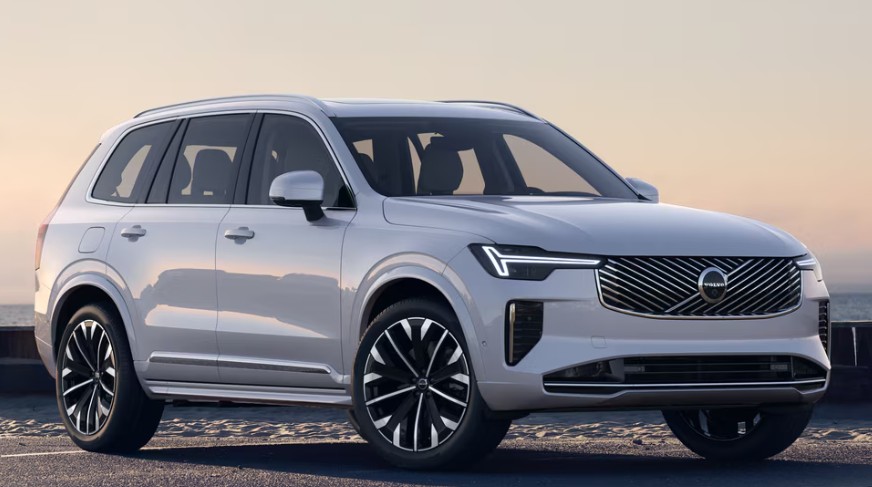
Volvo XC90 Exterior Design
The XC90 has aged remarkably gracefully because Volvo hasn't tried to make it look like a spaceship.
Its tall grille, distinctive Thor's Hammer headlights, clean bodywork, and upright proportions create an appearance that is unmistakably premium yet relatively understated.
It's the luxury SUV for someone who doesn't necessarily want everyone at the supermarket to know how much their SUV cost.
There is something refreshingly restrained about that.
Rather than covering the body with vents, giant spoilers, aggressive creases, and decorative trim, Volvo keeps the design clean.
Does the XC90 Still Look Modern?
We think so.
In fact, its simplicity may help it age better than SUVs chasing today's more aggressive styling trends.
It looks expensive without desperately trying to prove that it is expensive.
Range Rover Sport Exterior Design
The Range Rover Sport takes the opposite approach.
It's wider visually, lower-looking, more muscular, and generally more intimidating.
Slim lighting, flush door handles, a rising beltline, and beautifully controlled body surfaces give the Sport enormous presence.
Pull one into a hotel entrance and nobody will mistake it for an ordinary family crossover.
That's part of the appeal.
The Range Rover Sport turns transportation into theater.
Interior Quality and Cabin Design
Luxury SUVs live or die by their interiors.
Fortunately, neither disappoints.
But once again, they deliver luxury in completely different ways.
Inside the Volvo XC90
Open the XC90's door and the cabin feels almost architectural.
The dashboard isn't cluttered with dozens of switches. Instead, Volvo relies heavily on a central touchscreen, clean horizontal surfaces, elegant materials, and subtle detailing.
It feels more like stepping into an upscale Scandinavian lounge than climbing aboard a traditional luxury SUV.
Wood, metal, carefully selected upholstery, and restrained ambient lighting create an atmosphere that feels sophisticated rather than flashy.
That's important.
Some luxury cabins try so hard to impress us that they eventually become exhausting.
The XC90 rarely does.
Inside the Range Rover Sport
The Range Rover Sport feels richer, darker, and more dramatic.
Its seating position is commanding, its dashboard wraps around the occupants more aggressively, and its materials often feel substantially more indulgent.
Range Rover also gives us that unmistakable sensation of sitting inside something substantial.
There's more ceremony involved.
The steering wheel feels serious. The seats hug us more securely. The dashboard architecture makes the vehicle feel expensive before we've even started the engine.
Which Interior Feels More Luxurious?
If we're measuring traditional luxury, the Range Rover Sport wins.
Its cabin tends to feel more opulent and exclusive.
But if we prefer minimalism, daylight, simplicity, and an uncluttered atmosphere, the XC90 might actually be the place we'd rather spend three hours.
Luxury isn't always about adding more.
Sometimes it's about removing everything we don't need.
Seating Capacity: A Major Difference
Here we arrive at one of the biggest practical differences in the Volvo XC90 vs Range Rover Sport comparison.
The XC90 is available with six or seven seats, making it much better suited to larger families. Volvo explicitly markets the current XC90 around this family-friendly configuration.
The Range Rover Sport is fundamentally a five-seat SUV in its current generation.
That alone could settle the entire decision.
Need room for three children plus occasional grandparents?
XC90.
Rarely carry more than four passengers?
The Sport becomes much easier to justify.
Third-Row Practicality in the XC90
We shouldn't expect limousine accommodations in the XC90's third row, but having those additional seats fundamentally changes what the vehicle can do.
Children can sit there comfortably enough for many journeys, and adults can use the seats occasionally.
When we don't need them, they fold away.
That flexibility is the XC90's secret weapon.
A vehicle can be luxurious Monday through Friday and still transport half the neighborhood's children on Saturday.
Cargo Space and Everyday Practicality
Volvo clearly designed the XC90 around family life.
There are useful storage spaces throughout the cabin, and the folding rear seats allow us to transform it from people carrier to cargo hauler quickly.
Volvo lists up to 85.7 cubic feet of maximum cargo capacity for the current U.S.-market XC90 configuration.
The Range Rover Sport still provides a useful cargo area, but practicality isn't its defining mission.
Its emphasis falls more heavily on styling, performance, and luxury.
Which SUV Is Better for Families?
The XC90 wins this category comfortably.
We're getting:
- More seating flexibility
- Better family-oriented packaging
- Plenty of cabin storage
- A useful cargo floor
- Easier passenger-versus-luggage compromises
Think of the XC90 as an extremely expensive Swiss Army knife.
The Range Rover Sport is more like a luxury wristwatch.
Both are desirable, but only one is designed around solving dozens of everyday problems.
Engine Options and Performance
Now the Range Rover Sport starts fighting back.
Performance is one of the strongest reasons to buy it.
Volvo XC90 Performance
Current XC90 models rely heavily on electrification.
Depending on market and version, buyers can find mild-hybrid and plug-in hybrid configurations.
The U.S.-market B5 mild hybrid produces 247 hp, while Volvo also offers the stronger B6 and plug-in-hybrid variants.
The plug-in-hybrid XC90 is particularly interesting because it combines strong acceleration with the ability to cover shorter journeys using electric power.
Volvo currently quotes up to 32 miles of electric range for the 2026 U.S.-market XC90 plug-in hybrid.
The result isn't a traditional performance SUV.
Instead, it's effortlessly quick.
That's exactly what many family buyers need.
Range Rover Sport Performance
The Range Rover Sport plays in another league when we move toward its more powerful versions.
Its powertrain range extends from efficient electrified configurations to seriously potent performance models. Land Rover's technical material for the current Sport confirms both advanced combustion and plug-in-hybrid options.
At the extreme end sits the Range Rover Sport SV lineage.
For perspective, Land Rover has quoted 0–60 mph in as little as 3.6 seconds for the V8-powered SV.
Three-point-six seconds.
In a big luxury SUV.
That's almost ridiculous—and wonderful.
Volvo XC90 vs Range Rover Sport Acceleration
If performance matters heavily to us, the Range Rover Sport is the obvious choice.
Even before reaching the flagship versions, the Range Rover generally feels more eager and performance-oriented.
The Volvo can be quick.
The Range Rover Sport can feel genuinely fast.
You may be interested in reading Volvo XC90 or BMW X7: Which Luxury SUV Should You Buy?
There's an important distinction.
The XC90 accelerates because we asked it to.
The Range Rover Sport sometimes feels like it has been waiting all morning for us to ask.
Driving Experience
Horsepower numbers never tell the entire story.
How these SUVs move down the road matters more.
How the Volvo XC90 Drives
The XC90 prioritizes serenity.
Steering is relatively light. Ride comfort takes precedence over aggressive cornering. Power delivery tends to feel smooth rather than theatrical.
It's the SUV we'd happily drive after a long day when the last thing we want is another machine demanding our attention.
The XC90 lowers the temperature of the journey.
Everything feels deliberate and calm.
That doesn't mean it's sloppy.
It simply isn't pretending to be a sports car.
How the Range Rover Sport Drives
The Range Rover Sport feels noticeably more athletic.
Turn the steering wheel and the body reacts with greater urgency. Apply the throttle and stronger versions surge forward aggressively. Push it through a sequence of bends and its engineering begins to make sense.
There's still plenty of refinement.
But beneath the luxury sits a genuinely capable performance machine.
Which Is More Fun to Drive?
Range Rover Sport.
No contest.
The XC90 is pleasant.
The Sport can be exciting.
If winding roads form part of our weekend routine, we'd choose the Range Rover almost every time.
Ride Comfort
Interestingly, the Range Rover Sport's stronger performance doesn't necessarily mean poor comfort.
Its sophisticated suspension systems help maintain impressive ride quality while controlling such a large vehicle.
Still, the Volvo's personality naturally suits relaxed cruising.
The XC90 feels particularly comfortable at ordinary speeds, where its seats, cabin isolation, and suspension combine beautifully.
Our preference comes down to priorities.
Want maximum calm?
XC90.
Want comfort without sacrificing athleticism?
Range Rover Sport.
Off-Road Capability
This category isn't particularly close.
Range Rover has decades of experience building vehicles that can leave asphalt behind, and the Sport retains genuine capability despite becoming increasingly luxurious.
Depending on specification, sophisticated all-wheel-drive systems, terrain management technologies, adjustable suspension, and strong ground clearance allow it to tackle situations where most premium crossovers would wisely turn around.
The XC90 offers all-wheel drive and can handle snow, dirt roads, wet fields, and light trails.
But it's primarily a road-focused family SUV.
Do We Actually Need Serious Off-Road Ability?
That's the more useful question.
Most owners will never drive farther off-road than a muddy campsite or gravel driveway.
If that's us, the XC90's capability is probably enough.
If we genuinely travel through rough terrain, tow into remote areas, explore mountain tracks, or regularly encounter challenging conditions, the Range Rover Sport brings a deeper toolkit.
Towing Ability
Buyers planning to tow boats, caravans, horse trailers, or substantial recreational equipment should examine the exact engine and market specifications before purchasing because ratings vary.
Broadly, though, the Range Rover Sport's drivetrain and chassis architecture make it extremely attractive as a tow vehicle.
The XC90 remains capable enough for many recreational towing tasks while giving us better seven-seat practicality.
So again, the decision becomes philosophical.
Do we need maximum capability, or maximum versatility?
Fuel Economy and Efficiency
Large luxury SUVs aren't exactly bicycles.
Nevertheless, electrification has dramatically changed what we can expect.
The XC90's mild-hybrid and plug-in-hybrid powertrains make efficiency a central part of its appeal.
For example, Volvo quotes EPA estimates of 23 mpg city, 30 highway and 26 combined for the current U.S.-market XC90 B5 AWD, although real-world consumption naturally varies.
The plug-in hybrid potentially makes even more sense for owners who charge regularly.
Imagine commuting primarily on electricity during the week while retaining a gasoline engine for long weekend trips.
That's a compelling formula.
Range Rover Sport PHEV
Range Rover hasn't ignored electrification either.
Plug-in hybrid Sport models combine electric capability with stronger performance and serious luxury.
That means the efficiency gap between these vehicles depends heavily on which versions we're comparing.
A sensible XC90 mild hybrid versus a powerful Range Rover Sport V8?
Volvo wins easily.
XC90 plug-in hybrid versus Range Rover Sport plug-in hybrid?
Much closer.
Technology and Infotainment
Luxury buyers expect excellent technology, yet this is also an area where complexity can become annoying.
Volvo's interface prioritizes simplicity and integrates many functions into the central display.
It looks clean and modern.
The downside?
Moving physical controls into menus means simple actions can occasionally require more attention than we'd like.
Range Rover takes a similar screen-focused approach.
Its infotainment system is visually polished and integrates navigation, vehicle settings, media, cameras, and off-road functionality.
Which Infotainment System Is Better?
Neither system should decide the purchase on its own.
Both require some learning.
Volvo's cabin architecture may appeal more to buyers who appreciate minimalist digital design.
Range Rover's system better matches the dramatic, technology-heavy character of the vehicle.
We would strongly recommend spending at least 15 minutes using both systems during a test drive.
A touchscreen that looks gorgeous in a showroom can become annoying remarkably quickly when we're trying to adjust something while driving.
Safety
Safety has been woven into Volvo's identity for generations.
The XC90 therefore feels naturally aligned with buyers who place family security near the top of their priority list.
Modern driver-assistance features vary by market and trim, but the vehicle's entire philosophy feels centered on predictable, reassuring transportation.
Range Rover also packs extensive safety and driver-assistance technology.
The difference is perception more than fundamental intent.
Volvo sells safety as part of the brand's DNA.
Range Rover sells a broader mixture of luxury, capability, performance, and technology.
Which Feels More Reassuring as a Family SUV?
We'd lean toward the XC90.
Not because the Range Rover Sport is somehow an unsafe vehicle, but because Volvo's ergonomics, driving character, packaging, and brand philosophy all work together beautifully for family transportation.
Reliability and Long-Term Ownership
Here things become more complicated.
Luxury SUVs contain enormous amounts of technology.
Air suspension, turbochargers, hybrid systems, large infotainment displays, electronic driver aids, electrically operated accessories, and complex all-wheel-drive hardware can all become expensive when something eventually fails.
Neither vehicle should be maintained like an old economy hatchback.
Range Rover Sport Ownership Considerations
The Range Rover Sport is mechanically sophisticated.
That's part of what makes it so impressive.
It's also why we'd be particularly careful when buying a used example.
A thorough inspection, complete service history, diagnostic scan, and examination of suspension and electronic systems should be considered essential.
Buying the cheapest Range Rover Sport on the market can be a spectacularly expensive way to save money.
You may be interested in readingVolvo XC90 or BMW X7: Which Luxury SUV Should You Buy?You may be interested in reading
Volvo XC90 or Acura MDX: Which Luxury SUV Is Better?Volvo XC90 Ownership Considerations
The XC90 isn't mechanically simple either, especially in plug-in-hybrid form.
However, its family-oriented design and less extreme performance focus may make it more appealing to buyers prioritizing long-term everyday ownership over maximum capability.
Whichever SUV we choose, maintenance history matters enormously.
Running Costs
Let's not romanticize this part.
These are premium SUVs.
Premium SUVs generally bring premium bills.
Expect significant spending on:
- Large tires
- Insurance
- Dealer servicing
- Suspension components
- Brake components
- Electronic repairs
- Premium replacement parts
- Fuel on higher-output versions
The Range Rover Sport's larger performance envelope can make those expenses particularly painful.
Huge wheels look fantastic until it's time to purchase four huge tires.
The Volvo won't suddenly become cheap to own, but buyers selecting sensible wheel sizes and less aggressive configurations may find running costs more manageable.
Price and Value
Pricing varies substantially by country, trim, engine, and options, so comparisons should always be made using local configurators.
As a reference, the 2026 XC90 currently starts at $62,445 MSRP in the United States, while the XC90 plug-in hybrid begins higher.
Range Rover Sport pricing can climb dramatically as we move through stronger engines and high-performance models.
And options matter.
A few seductive clicks on a luxury configurator can transform an already expensive SUV into something carrying a truly extraordinary price tag.
Which Offers Better Value?
For most families, the XC90.
We're getting seven-seat capability, premium materials, elegant styling, strong performance where needed, and excellent practicality without paying primarily for extreme performance or off-road technology.
The Range Rover Sport offers a different type of value.
We pay more because it can do more—and because it feels more special doing it.
Volvo XC90 vs Range Rover Sport for Families
Suppose we have two or three children.
We carry backpacks, sports equipment, luggage, groceries, tablets, water bottles, and occasionally grandparents.
Which SUV makes life easier?
The XC90.
Its available third row changes everything.
That seventh seat might sit unused 90% of the year, but the first time we need to carry six passengers, we'll suddenly understand why it matters.
The Range Rover Sport remains comfortable for five people, but it simply doesn't provide the same seating flexibility.
Which Is Better for Long Road Trips?
This one's closer.
The XC90 makes a terrific highway companion thanks to comfortable seating, its relaxed personality, useful storage, and family-friendly packaging.
The Range Rover Sport counters with exceptional cruising refinement, stronger overtaking performance, and a wonderfully commanding seating position.
Traveling with six people?
XC90.
Traveling with four people and wanting to arrive feeling like royalty?
Range Rover Sport.
Which SUV Has More Personality?
Probably the Range Rover Sport.
The Volvo is elegant, tasteful, and calming.
But tasteful isn't always memorable.
The Range Rover Sport has swagger.
Its driving position, exterior proportions, performance, and brand identity create a stronger sense of occasion.
Every trip can feel slightly more important than it really is.
Heading to the grocery store?
The XC90 makes it comfortable.
The Range Rover Sport can make it feel like we're crossing the Scottish Highlands—even if we're only buying bread.
New vs Used: Which Makes More Sense?
Buying new provides warranty coverage and allows us to select exactly the specification we want.
Used examples can offer serious depreciation savings.
But we'd pay close attention to complexity.
A well-maintained, carefully inspected premium SUV with complete records is usually far more attractive than a cheaper example with a mysterious history.
What to Check on a Used XC90
We'd inspect:
- Complete service records
- Infotainment operation
- Driver-assistance systems
- Hybrid battery and charging operation where applicable
- Suspension condition
- Tires and alignment
- Warning lights
- Electrical accessories
- Evidence of accident repairs
What to Check on a Used Range Rover Sport
Add extra attention to:
- Air suspension operation
- Electronic systems
- Four-wheel-drive functions
- Cooling system
- Transmission behavior
- Oil or coolant leaks
- Suspension noises
- Battery condition
- Brake wear
- Previous off-road use
Never let beautiful leather distract us from mechanical reality.
Who Should Buy the Volvo XC90?
The XC90 makes the most sense if we want a premium SUV without sacrificing common sense.
It's especially compelling for families.
Choose the Volvo if our priorities look something like this:
family space → comfort → safety → efficiency → luxury → performance
That's the XC90 formula.
It gives us enough luxury to feel special without turning every journey into a performance.
Who Should Buy the Range Rover Sport?
The Range Rover Sport is for buyers who want their SUV to feel like more than transportation.
Choose it if our priorities look more like:
luxury → performance → style → capability → comfort → practicality
It's still practical.
It's still comfortable.
But emotion plays a much bigger role in the purchase.
And sometimes that's perfectly reasonable.
Cars aren't spreadsheets.
Volvo XC90 vs Range Rover Sport: Pros and Cons
Here's the simplest way to look at the decision.
| Category | Volvo XC90 | Range Rover Sport |
|---|---|---|
| Family practicality | Excellent | Good |
| Seating | Up to 6 or 7 | 5 |
| Interior style | Minimalist luxury | Dramatic luxury |
| Performance | Strong | Excellent |
| Ride comfort | Excellent | Excellent |
| Handling | Good | Excellent |
| Off-road ability | Moderate | Excellent |
| Cargo flexibility | Excellent | Good |
| Efficiency | Strong | Depends heavily on engine |
| Road presence | Elegant | Exceptional |
| Ownership simplicity | Better of the two | More complexity |
| Fun factor | Good | Excellent |
So, Is the Range Rover Sport Better Than the Volvo XC90?
Technically?
In several categories, yes.
It can be faster, more capable off-road, more exciting to drive, and arguably more luxurious.
But that doesn't automatically make it the better purchase.
Think about cameras.
A professional cinema camera might be objectively superior to a smartphone camera, but if all we need is something convenient for family photographs, the phone may be the smarter tool.
The XC90 understands that principle.
It provides the things most luxury SUV owners actually use every day extremely well.
Is the Volvo XC90 Better Value Than the Range Rover Sport?
For a typical family, we'd say yes.
The XC90's combination of six- or seven-seat flexibility, generous cargo capacity, comfortable road manners, electrified powertrains, and restrained luxury creates an extremely complete package.
It may not generate the same emotional reaction as the Range Rover Sport.
But sometimes the vehicle we appreciate after three years of ownership isn't the one that impressed us most during a 20-minute test drive.
It's the one that made our lives easier every day.
Final Verdict: Volvo XC90 vs Range Rover Sport
After comparing the Volvo XC90 vs Range Rover Sport, we arrive at an unusual conclusion: there isn't really one universal winner because these SUVs excel at different jobs.
For most families, we'd choose the Volvo XC90.
Its available seven-seat configuration, excellent practicality, elegant cabin, comfortable ride, useful cargo space, and efficient powertrain options make it extraordinarily easy to live with. It feels luxurious without forgetting that an SUV still needs to carry people and their stuff.
But we'd choose the Range Rover Sport if we wanted something more emotional.
It's faster, more athletic, more capable off-road, more dramatic, and arguably more desirable. It turns ordinary journeys into events in a way the calmer XC90 rarely attempts.
So here's our simplest recommendation:
Buy the Volvo XC90 with your head. Buy the Range Rover Sport when your heart gets a vote too.
And if our heart and head agree?
Then we've probably already chosen before finishing this comparison.
FAQs About Volvo XC90 vs Range Rover Sport
1. Is the Volvo XC90 bigger than the Range Rover Sport?
Both are substantial premium SUVs, but dimensions alone don't tell the full story. The biggest practical difference is seating: the XC90 can accommodate six or seven people depending on configuration, giving it an advantage for larger families.
2. Which is more reliable, Volvo XC90 or Range Rover Sport?
Reliability depends strongly on model year, engine, maintenance, and individual vehicle history. Both are mechanically sophisticated luxury SUVs, so complete servicing and a professional inspection are particularly important when buying used. We'd generally favor the XC90 for a buyer prioritizing relatively straightforward family ownership over extreme performance and off-road capability.
3. Is the Volvo XC90 more fuel-efficient than the Range Rover Sport?
Often yes, particularly when comparing the XC90's efficiency-oriented mild-hybrid or plug-in-hybrid configurations against powerful Range Rover Sport engines. However, Range Rover also offers electrified powertrains, so the exact answer depends on the versions being compared. Volvo currently quotes up to 32 miles of electric range for the U.S.-market 2026 XC90 plug-in hybrid.
You may be interested in readingVolvo XC90 or BMW X7: Which Luxury SUV Should You Buy?You may be interested in reading
Volvo XC90 or Acura MDX: Which Luxury SUV Is Better?You may be interested in reading
Volvo XC90 vs Palisade: Which Three-Row SUV Is Better?4. Which is better off-road, Volvo XC90 or Range Rover Sport?
The Range Rover Sport is the clear winner. While the XC90's all-wheel-drive configurations can handle snow, gravel roads, and mild trails, the Sport has been engineered with substantially greater off-road capability.
5. Should I buy a Volvo XC90 or Range Rover Sport?
Buy the Volvo XC90 if seven-seat practicality, family comfort, efficiency, and understated luxury matter most. Choose the Range Rover Sport if performance, handling, off-road capability, styling, and a more dramatic luxury experience rank higher on your list.
If you want to know other articles similar to Volvo XC90 vs Range Rover Sport: Which Luxury SUV Should You Buy? you can visit the category Models.
Kia Sorento Models: Complete Guide to Trims, Engines and Versions
BYD Shark 6 vs Ranger vs HiLux: Which Ute Makes the Most Sense in 2026?
BYD Shark 6 vs MG U9: Which Ute Makes More Sense in 2026?
BYD Shark 6 vs Ford Ranger Raptor: Which Performance Ute Is Better in 2026?
BYD Shark 6 vs Kia Tasman: Which Ute Is Better?
BYD Shark 6 vs 7: What We Know So Far
Leave a Reply
More content of your interest