

Mazda 6 Fuel Consumption: Real-World MPG, Efficiency, and Running Costs

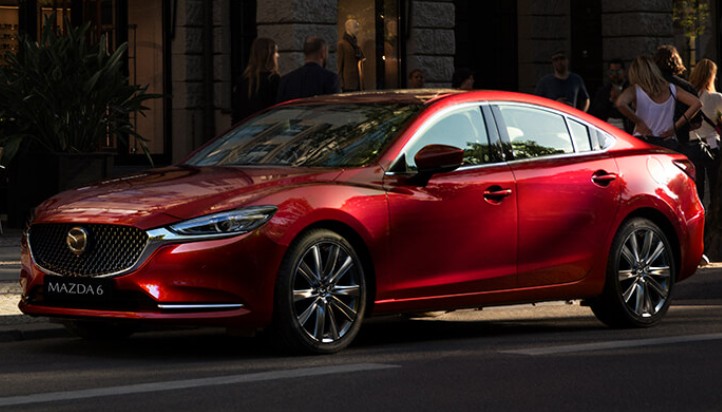
When we look at the Mazda 6 fuel consumption, the numbers tell an interesting story. The Mazda 6 has never been designed as an ultra-economy city car, yet it has consistently offered respectable fuel efficiency for a comfortable midsize sedan or wagon. Depending on the engine, transmission, model year, driving conditions, and even how heavy our right foot feels that morning, fuel consumption can range from impressively economical to surprisingly thirsty.
That is why simply asking, “How much fuel does a Mazda 6 use?” does not have one universal answer.
A small-displacement Skyactiv petrol model cruising steadily along an open highway can behave like a disciplined marathon runner. A turbocharged version driven aggressively through stop-start traffic? That is a completely different animal.
In this guide, we will break down typical Mazda 6 fuel economy, explain why official figures may differ from what we see at the pump, compare petrol and diesel versions, and explore practical ways to reduce fuel usage without turning every journey into an exercise in frustration.
Content in this publication
- What Is the Average Mazda 6 Fuel Consumption?
- Mazda 6 Petrol Fuel Consumption
- 2.5-Litre Mazda 6 Fuel Consumption
- Mazda 6 Diesel Fuel Consumption
- Mazda 6 Fuel Consumption in City Driving
- Mazda 6 Highway Fuel Consumption
- Mazda 6 Automatic vs Manual Fuel Consumption
- Mazda 6 Sedan vs Wagon Fuel Economy
- Does Mazda Skyactiv Technology Improve Fuel Economy?
- Mazda 6 Real-World MPG vs Official Figures
- What Causes High Fuel Consumption in a Mazda 6?
- How Tyre Pressure Affects Mazda 6 Fuel Consumption
- Does Air Conditioning Increase Mazda 6 Fuel Consumption?
- How Driving Style Changes Mazda 6 MPG
- How to Calculate Mazda 6 Fuel Consumption Yourself
- How Far Can a Mazda 6 Travel on a Full Tank?
- Mazda 6 Fuel Economy in Cold Weather
- Does Premium Fuel Improve Mazda 6 Fuel Economy?
- Mazda 6 Fuel Consumption Compared With SUVs
- Is the Mazda 6 Economical Enough for Commuting?
- When Should We Worry About Mazda 6 Fuel Consumption?
- How to Improve Mazda 6 Fuel Consumption
- Is Mazda 6 Fuel Consumption Good Overall?
- Final Thoughts on Mazda 6 Fuel Economy
- Frequently Asked Questions
What Is the Average Mazda 6 Fuel Consumption?
As a broad real-world guide, many Mazda 6 models typically consume approximately 6 to 10 litres per 100 km, depending heavily on engine type and driving environment.
That translates roughly to:
- 6 L/100 km: around 39 mpg US or 47 mpg UK
- 7 L/100 km: around 34 mpg US or 40 mpg UK
- 8 L/100 km: around 29 mpg US or 35 mpg UK
- 9 L/100 km: around 26 mpg US or 31 mpg UK
- 10 L/100 km: around 24 mpg US or 28 mpg UK
Those are general figures rather than guarantees. A Mazda 6 diesel driven mostly on highways may use considerably less fuel, while a larger petrol engine operating predominantly in city traffic can consume more.
Why Mazda 6 Economy Varies So Much
Fuel economy is not determined by the badge on the boot alone.
The Mazda 6 has been sold across several generations and global markets with numerous engines, including naturally aspirated petrol engines, turbocharged petrol units, and diesel alternatives.
Variables that affect consumption include engine displacement, transmission choice, wheel size, vehicle weight, body style, driving speed, road gradient, tyre pressure, climate-control usage, traffic, and maintenance.
In other words, two people can own nearly identical Mazda 6 cars and report noticeably different consumption.
Mazda 6 Petrol Fuel Consumption
Petrol-powered Mazda 6 models are among the most common, particularly versions equipped with Mazda's Skyactiv-G engines.
These engines were developed around relatively high compression ratios, reduced mechanical losses, lower vehicle weight, and efficient combustion rather than relying exclusively on aggressive downsizing.
2.0-Litre Mazda 6 Fuel Consumption
The 2.0-litre petrol Mazda 6 is often one of the more economical petrol choices.
Depending on generation, gearbox, road conditions, and driving style, we might see real-world consumption around 6.5 to 8.5 L/100 km in mixed driving.
Highway journeys can push consumption downward, especially when traffic flows smoothly and speeds remain moderate.
Urban driving naturally moves things in the opposite direction.
If we constantly accelerate from traffic lights, crawl through congestion, and complete short journeys before the engine warms up properly, consumption can climb well beyond the official combined figure.
Is the 2.0 Mazda 6 Good on Fuel?
For a midsize petrol sedan, generally yes.
It is not going to compete with a small hybrid hatchback, but the 2.0-litre Mazda 6 usually offers a sensible compromise between performance, cabin space, comfort, and operating economy.
Think of it like wearing comfortable walking shoes rather than racing spikes. It may not dominate one particular category, but it handles everyday life remarkably well.
2.5-Litre Mazda 6 Fuel Consumption
The larger 2.5-litre engine generally consumes slightly more fuel than the 2.0-litre version.
Real-world figures commonly land somewhere around 7.5 to 10 L/100 km, although highway driving can sometimes produce much better results.
The difference becomes particularly noticeable in urban conditions.
A larger engine typically requires more fuel when accelerating, particularly if we regularly use the available performance.
However, engine size does not tell the entire story.
At steady highway speeds, a larger engine may operate comfortably at relatively low load. Consequently, the gap between the 2.0 and 2.5 can shrink significantly on long-distance journeys.
2.5 Turbo Mazda 6 Fuel Economy
Turbocharged Mazda 6 versions sit at the more performance-oriented end of the range.
The turbo engine delivers considerably more torque, making overtaking and motorway acceleration feel effortless. Naturally, that extra performance can come with an appetite.
Real-world consumption may frequently sit around 8 to 11 L/100 km, depending on conditions.
Drive gently and the turbocharger spends much of its time quietly waiting in the wings.
Push the accelerator deeply, though, and fuel usage can rise rapidly. Turbo engines are a little like enthusiastic dinner guests: perfectly restrained until somebody opens the buffet.
Mazda 6 Diesel Fuel Consumption
Diesel versions of the Mazda 6 have traditionally appealed to high-mileage drivers, particularly in markets where long motorway journeys are common.
Under suitable conditions, a Mazda 6 diesel can deliver excellent economy.
Mazda 6 2.2 Diesel Fuel Consumption
A 2.2-litre Skyactiv-D Mazda 6 might return roughly 5 to 7 L/100 km in mixed real-world use, with long highway trips occasionally producing even lower figures.
That makes diesel particularly attractive for drivers covering substantial annual mileage.
However, fuel economy alone should not determine whether diesel is the right choice.
Modern diesel engines use complex emissions-control equipment, and repeated short journeys may not provide ideal operating conditions. If we mostly drive five minutes to the supermarket and back, buying a diesel purely because its motorway consumption looks attractive on paper may be false economy.
When Diesel Makes the Most Sense
A diesel Mazda 6 tends to make greater sense when we regularly:
- Cover long motorway distances
- Drive high annual kilometres
- Spend substantial time at steady cruising speeds
- Need strong low-speed torque
- Carry passengers or luggage frequently
For predominantly short-distance urban use, a petrol model may prove simpler and more suitable despite consuming slightly more fuel.
Mazda 6 Fuel Consumption in City Driving
City driving is where fuel economy usually suffers most.
Frequent braking throws away momentum. Acceleration then requires the engine to rebuild that momentum using fuel.
Repeat the process dozens of times during a commute and consumption climbs quickly.
A petrol Mazda 6 that manages approximately 6.5 L/100 km during relaxed highway travel could potentially consume 9, 10, or even more litres per 100 km in dense traffic.
Why Short Journeys Increase Consumption
Cold engines are inefficient engines.
When we start the Mazda 6 after it has been sitting overnight, the engine and drivetrain need time to reach their ideal operating temperatures.
During short journeys, much of the trip may occur before this happens.
Heating, air conditioning, heated seats, window demisters, and electrical accessories can also increase the workload indirectly.
That is why ten separate 3-km trips may use considerably more fuel than one uninterrupted 30-km journey.
Mazda 6 Highway Fuel Consumption
The highway is usually where the Mazda 6 shines.
Its aerodynamic shape, tall transmission ratios, and relatively efficient engines allow it to settle comfortably into long-distance cruising.
Depending on the version, highway fuel economy may fall into the approximate 5 to 7.5 L/100 km region.
Diesels can sometimes do even better.
Speed Makes a Bigger Difference Than We Think
Driving at 80 km/h and driving at 120 km/h may feel similarly effortless from inside the cabin, but aerodynamic drag rises rapidly with speed.
That means the engine needs considerably more energy to push the vehicle through the air.
If fuel economy matters, cruising slightly slower can make a meaningful difference.
We do not have to crawl along like we are searching for a lost house number. Simply maintaining a smooth, legal, consistent speed can reduce unnecessary fuel consumption.
Mazda 6 Automatic vs Manual Fuel Consumption
Older generations often offered both manual and automatic transmissions.
Traditionally, manuals had an efficiency advantage because older automatics suffered greater internal losses and sometimes used fewer gears.
That gap has narrowed considerably.
Modern automatic transmissions can select ratios efficiently and may even outperform an average human driver in certain conditions.
Which Transmission Uses Less Fuel?
There is no universal winner.
A skilled manual driver who shifts early and anticipates traffic may achieve excellent economy.
Meanwhile, an automatic Mazda 6 can perform equally well when driven smoothly.
The bigger influence often comes from driving behaviour rather than the gearbox itself.
A manual driven aggressively will not magically become economical because it has a clutch pedal.
Mazda 6 Sedan vs Wagon Fuel Economy
Mazda 6 sedan and wagon models may produce slightly different consumption figures due to differences in body shape, weight, and aerodynamics.
The difference is generally modest.
For many buyers, choosing between sedan and wagon should therefore come down to practicality rather than obsessing over tiny differences in fuel consumption.
If the wagon allows us to carry everything inside instead of attaching a roof box, it might even prove more efficient on a real family trip.
Does Mazda Skyactiv Technology Improve Fuel Economy?
Skyactiv became central to Mazda's engineering philosophy.
Instead of taking one isolated approach to efficiency, Mazda worked on several areas simultaneously, including combustion, transmission efficiency, vehicle weight, and chassis design.
The result was a generation of Mazda vehicles capable of delivering useful performance without dramatically increasing fuel consumption.
High Compression and Efficient Combustion
Skyactiv-G petrol engines use unusually high compression ratios compared with many traditional petrol engines.
Higher compression can improve thermal efficiency, meaning more of the energy contained in the fuel is converted into useful work.
Of course, engineering is more complicated than simply raising compression and declaring victory. Mazda also redesigned exhaust systems, combustion chambers, pistons, and fuel injection to control knock and maintain reliability.
Why Efficiency Matters Beyond MPG
Better efficiency is not simply about bragging at the fuel station.
Reducing fuel consumption means:
- Lower fuel costs
- Fewer fuel stops
- Greater driving range
- Reduced fuel-related emissions
- Less sensitivity to sudden fuel-price increases
Over several years of ownership, small efficiency differences can add up to a considerable amount of money.
Mazda 6 Real-World MPG vs Official Figures
Official fuel-consumption testing is useful for comparing vehicles under controlled conditions.
But controlled testing is exactly that: controlled.
Real life is chaotic.
We encounter hills, traffic lights, potholes, hot weather, cold weather, passengers, luggage, aggressive drivers, roadworks, and the occasional forgotten coffee that requires an unnecessary detour.
Consequently, real-world economy often differs from the advertised number.
Why Your Mazda 6 May Use More Fuel Than Advertised
Higher-than-expected consumption does not automatically indicate a mechanical fault.
Common explanations include:
- Frequent short journeys
- Heavy urban traffic
- Aggressive acceleration
- High cruising speeds
- Low tyre pressures
- Heavy cargo
- Roof racks or roof boxes
- Extensive air-conditioning use
- Winter temperatures
- Poor vehicle maintenance
If fuel consumption suddenly deteriorates without an obvious change in driving conditions, however, investigation is worthwhile.
What Causes High Fuel Consumption in a Mazda 6?
A gradual increase in fuel usage can sometimes point to maintenance problems.
The engine management system relies on numerous sensors and mechanical components to calculate the correct air-fuel mixture.
If something is not working properly, efficiency can suffer.
Mechanical Issues That May Increase Fuel Usage
Possible causes include worn spark plugs, dirty air filters, underinflated tyres, dragging brakes, malfunctioning oxygen sensors, incorrect wheel alignment, problematic fuel injectors, thermostat issues, engine-management faults, and degraded engine oil.
No single symptom proves which component is responsible.
Diagnosis matters.
Replacing random parts because somebody on a forum had similar fuel consumption is the automotive equivalent of treating every headache with new glasses.
Check Engine Warning Lights Should Not Be Ignored
If poor fuel economy appears alongside a check-engine warning light, rough idle, difficult starting, unusual exhaust smoke, or reduced performance, the vehicle should be properly diagnosed.
A fault-code scan can provide valuable clues.
However, diagnostic codes should be treated as starting points rather than automatic instructions to replace a particular component.
How Tyre Pressure Affects Mazda 6 Fuel Consumption
Tyres have a surprisingly large influence on efficiency.
When tyre pressure drops, rolling resistance typically increases. The engine must then work harder to maintain speed.
Imagine cycling with partially deflated tyres. You can still move, but every metre feels more stubborn.
The same principle applies to a car.
Use the Recommended Pressure
We should use the tyre-pressure specification listed for the specific Mazda 6 rather than simply copying a figure found online.
The correct pressure is usually shown on the vehicle placard, often positioned around the driver's door opening.
Pressure requirements can vary with tyre size, load, and market.
Checking tyre pressures approximately once a month is a simple habit that can support fuel economy while improving tyre life and handling.
Does Air Conditioning Increase Mazda 6 Fuel Consumption?
Yes, although the size of the effect varies.
The air-conditioning compressor requires energy, and that energy ultimately comes from the engine or electrical system.
In extremely hot weather, continuously running the system at maximum output can noticeably increase fuel usage.
That does not mean we should sweat through every journey to save a fraction of a litre.
Comfort and clear windows matter.
The sensible approach is moderation rather than suffering.
Open Windows vs Air Conditioning
At low urban speeds, opening the windows may have a relatively small aerodynamic effect.
At motorway speeds, open windows increase drag.
Therefore, using air conditioning with the windows closed can sometimes be more efficient than driving quickly with every window fully open.
How Driving Style Changes Mazda 6 MPG
The person behind the wheel can influence fuel consumption almost as much as the mechanical specification.
Hard acceleration followed immediately by heavy braking wastes energy.
Smooth driving does the opposite.
The objective is not painfully slow acceleration. We simply want to avoid unnecessary bursts of power.
Simple Fuel-Saving Driving Techniques
Try to:
- Accelerate progressively
- Look well ahead
- Avoid unnecessary braking
- Maintain steady speeds
- Use cruise control selectively on flat roads
- Avoid excessive engine idling
- Combine several short journeys
- Remove unnecessary weight
- Take roof racks off when not needed
- Keep tyres properly inflated
None of these habits will transform a Mazda 6 into an electric car overnight.
Together, however, they can make a noticeable difference.
How to Calculate Mazda 6 Fuel Consumption Yourself
The dashboard fuel-economy display is convenient, but calculating consumption manually gives us a useful second reference.
Litres per 100 km Formula
The calculation is straightforward:
Litres used ÷ kilometres travelled × 100 = L/100 km
Suppose we use 45 litres and travel 600 km.
45 ÷ 600 × 100 = 7.5 L/100 km
That is our measured fuel consumption for that tank.
How to Get a More Reliable Number
For better accuracy, fill the tank to a consistent level, reset the trip meter, drive normally, refill the tank, record litres added and kilometres travelled, and repeat the calculation.
One tank can be misleading.
Weather, traffic, unusual trips, and even the angle of the fuel station forecourt can slightly affect measurements.
Tracking five or ten tanks gives us a much clearer picture.
How Far Can a Mazda 6 Travel on a Full Tank?
Driving range depends on fuel-tank capacity and consumption.
Imagine a Mazda 6 with roughly 60 litres of usable fuel.
At:
- 6 L/100 km, theoretical range is around 1,000 km
- 7 L/100 km, theoretical range is around 857 km
- 8 L/100 km, theoretical range is around 750 km
- 9 L/100 km, theoretical range is around 667 km
- 10 L/100 km, theoretical range is around 600 km
Actual range will vary, and we should never assume every litre in the tank can be used before refuelling.
Why Dashboard Range Estimates Keep Changing
The distance-to-empty display calculates range using recent driving conditions.
Cruise gently on the motorway and the predicted range can increase.
Enter heavy traffic and it may fall surprisingly quickly.
The system is essentially making an educated guess based on recent behaviour.
It cannot know that tomorrow's journey will involve mountain roads, strong headwinds, or two hours of traffic.
Mazda 6 Fuel Economy in Cold Weather
Fuel consumption often rises during colder months.
Engines take longer to warm up. Oils become more viscous when cold. Tyre pressure can drop. Heated windows, seats, and climate-control systems place additional demands on the vehicle.
Winter fuel formulations in some regions may also influence economy.
Do Not Warm the Car Up Excessively
Long periods of stationary idling consume fuel while covering exactly zero kilometres.
Unless weather or safety conditions require otherwise, modern vehicles generally benefit from being driven gently after startup rather than left idling for long periods.
Driving brings the engine up to normal operating temperature more efficiently.
This depends on the specific engine and the fuel requirements listed by Mazda for that vehicle.
Using fuel with a higher octane rating than required does not automatically produce dramatically better fuel economy.
Some engines can adjust ignition timing based on fuel quality, but the financial benefit depends on the engine design, fuel-price difference, and actual efficiency improvement.
The correct approach is simple: follow the fuel specification in the owner's manual.
More expensive fuel is not magic potion.
Mazda 6 Fuel Consumption Compared With SUVs
One reason the Mazda 6 still appeals to efficiency-conscious drivers is its relatively low, aerodynamic body.
Compared with similarly powerful SUVs, a midsize sedan often requires less energy to push through the air.
It may also weigh less.
That means a Mazda 6 can provide family-friendly space without paying the full fuel-economy penalty associated with taller vehicles.
Why Sedans Can Be Surprisingly Efficient
SUVs have become enormously popular, but physics has not changed.
A lower vehicle with a smaller frontal area generally creates less aerodynamic drag.
That becomes especially important at motorway speeds.
So if we do not genuinely need high ground clearance or SUV packaging, a Mazda 6 can be an efficient alternative.
Is the Mazda 6 Economical Enough for Commuting?
For many drivers, yes.
A non-turbo petrol Mazda 6 can be reasonably economical in mixed use while remaining comfortable and spacious enough for longer trips.
Diesel versions can be particularly economical for high-mileage motorway commuters.
The key question is not whether the Mazda 6 has the lowest consumption in the entire market.
It probably does not.
The better question is whether its economy makes sense relative to the amount of comfort, performance, equipment, and space we receive.
That is where the Mazda 6 often makes a compelling case.
When Should We Worry About Mazda 6 Fuel Consumption?
We should pay attention when consumption changes dramatically without a corresponding change in driving conditions.
For example, imagine a car that consistently averaged 7.5 L/100 km but suddenly begins consuming 10.5 L/100 km over several tanks.
That deserves investigation.
Signs That Something May Be Wrong
Watch for fuel-economy deterioration combined with:
- Rough idling
- Loss of engine power
- Warning lights
- Fuel smells
- Visible exhaust smoke
- Difficult starting
- Unusual engine temperatures
- Brake wheels becoming unusually hot
- Significant changes in engine sound
Even without additional symptoms, persistently high fuel consumption may justify a mechanical inspection.
How to Improve Mazda 6 Fuel Consumption
Improving economy rarely requires one dramatic change.
It is usually the result of dozens of small improvements working together.
Keep the car maintained. Keep tyres inflated. Remove unnecessary cargo. Plan journeys. Accelerate smoothly. Avoid excessive idling. Watch cruising speeds.
Most importantly, track fuel consumption before and after making changes.
Otherwise, we are guessing.
Maintenance Habits That Support Better MPG
Following the correct maintenance schedule helps preserve efficiency.
Pay particular attention to engine oil specification, air filters, spark plugs where applicable, fuel-system condition, tyres, brakes, wheel alignment, and engine warning lights.
A healthy engine is generally an efficient engine.
Do Not Chase Tiny Savings at the Expense of Maintenance
Delaying maintenance to save money can produce the opposite result.
Skipping an oil service, ignoring dragging brakes, or running tyres at the wrong pressure may increase operating costs far more than the maintenance itself.
Fuel economy is one part of total vehicle ownership—not the entire equation.
Is Mazda 6 Fuel Consumption Good Overall?
Taken as a complete package, the Mazda 6 generally offers solid fuel economy for a conventional midsize car.
Smaller petrol engines tend to provide the best balance for ordinary mixed driving.
Diesel models can excel during long motorway journeys.
Larger and turbocharged petrol versions sacrifice some efficiency in return for stronger performance.
There is no single “best” version because our usage matters.
A driver covering 30,000 km per year on motorways has very different priorities from somebody travelling 5 km through city traffic each morning.
Final Thoughts on Mazda 6 Fuel Economy
The Mazda 6 fuel consumption story is less about chasing one perfect number and more about understanding how the vehicle behaves in the real world.
Depending on the engine and driving environment, we may see anything from impressively low highway consumption to noticeably higher figures in heavy city traffic.
That is normal.
What matters is consistency.
If our Mazda 6 delivers similar economy tank after tank, runs smoothly, and falls within a sensible range for its engine and driving conditions, there is probably little reason for concern.
And if we want to save fuel? The biggest gains usually come from simple habits rather than expensive modifications.
Drive smoothly. Maintain the car properly. Check tyre pressures. Keep unnecessary weight out of the boot. Slow down slightly on long highway journeys.
Fuel economy is like fitness: one heroic effort rarely changes much. The boring habits repeated every week are what ultimately move the numbers.
Frequently Asked Questions
1. What is good fuel consumption for a Mazda 6?
For many Mazda 6 variants, roughly 6 to 8 L/100 km can be considered good mixed-driving consumption. Larger petrol or turbocharged engines may naturally use more, while diesel models can sometimes achieve lower figures during long-distance driving.
2. Why is my Mazda 6 using so much fuel?
Heavy traffic, short journeys, aggressive driving, low tyre pressure, cold weather, excessive idling, or high motorway speeds can all increase consumption. Mechanical issues such as dirty filters, worn spark plugs, sensor problems, dragging brakes, or poor wheel alignment may also contribute.
3. Is a Mazda 6 economical on the highway?
Generally, yes. Highway driving allows the Mazda 6 to maintain steady speeds and operate efficiently. Depending on the engine, conditions, and speed, highway fuel consumption may be around 5 to 7.5 L/100 km, although individual results vary.
4. Does the Mazda 6 2.5 use much more fuel than the 2.0?
Usually, the 2.5-litre engine consumes somewhat more fuel, particularly in city traffic. The difference can become smaller during steady highway cruising because both engines are operating under relatively light load.
5. How can I reduce fuel consumption in my Mazda 6?
Maintain correct tyre pressures, accelerate smoothly, avoid unnecessary idling, reduce excess weight, remove unused roof racks, keep speeds reasonable, combine short journeys, and stay on top of maintenance. Tracking consumption across several tanks is also useful for identifying whether your changes are actually working.
If you want to know other articles similar to Mazda 6 Fuel Consumption: Real-World MPG, Efficiency, and Running Costs you can visit the category Driving.
Kia Sorento Fuel Economy: MPG, Hybrid, and Plug-In Hybrid Explained
BYD Shark 6 Fuel Consumption: Real-World Economy, Range and What to Expect
Vauxhall Agila MPG: Real-World Fuel Economy and Engine Guide

Honda Passport MPG: Real-World Fuel Economy, Ratings, and What to Expect

Nissan Rogue Fuel Economy: MPG, Range, Costs, and Real-World Efficiency
BYD Shark 6 Long Range Fuel Tank: Is the 120L Upgrade Worth It?
Leave a Reply
More content of your interest