
Mazda 6 vs Toyota Avensis: Which Used Family Car Is Better?

Choosing between the Mazda 6 vs Toyota Avensis can feel like deciding between two sensible shoes that happen to have very different personalities. Both cars were designed to handle commuting, family duties, long motorway journeys, and the occasional fully loaded holiday trip without making a fuss. Yet once we look beneath the practical bodywork, their characters begin to drift apart.
The Mazda 6 generally appeals to drivers who want their family car to feel a little sharper, more stylish, and more engaging from behind the wheel. The Toyota Avensis, meanwhile, built its reputation around comfort, restraint, dependability, and the kind of unfussy ownership experience many used-car buyers value above almost everything else.
So which one should we actually buy?
There is no universal winner because model year, engine, transmission, service history, mileage, and local availability matter enormously. Still, the differences between these two cars are clear enough that most buyers can identify the better fit once we compare them carefully.
Content in this publication
- Mazda 6 vs Toyota Avensis at a Glance
- Mazda 6 Design: The More Emotional Choice
- Interior Quality and Cabin Design
- Front Seat Comfort
- Boot Space and Everyday Practicality
- Driving Experience: Where the Mazda 6 Shines
- Ride Comfort
- Engine Choices
- Manual vs Automatic Transmission
- Fuel Economy
- Reliability: Mazda 6 vs Toyota Avensis
- Rust and Body Condition
- Maintenance Costs
- Technology and Infotainment
- Safety
- Noise and Motorway Refinement
- Mazda 6 vs Toyota Avensis for Families
- Mazda 6 vs Toyota Avensis for Commuting
- Resale Value
- Which Car Feels More Modern?
- Used Mazda 6 Buying Checklist
- Used Toyota Avensis Buying Checklist
- Mazda 6 vs Toyota Avensis: Which One Is Cheaper to Own?
- Who Should Buy the Mazda 6?
- Who Should Buy the Toyota Avensis?
- Mazda 6 vs Toyota Avensis: Our Verdict
- Conclusion: Mazda for Character, Toyota for Calm
- Frequently Asked Questions
Mazda 6 vs Toyota Avensis at a Glance
Before diving deeper, it helps to understand the basic personalities of these cars.
The Mazda 6 is usually the more enthusiastic choice. Its steering, chassis tuning, cabin design, and exterior styling tend to give it a sportier flavour than the average mainstream family saloon or estate.
The Toyota Avensis takes a quieter approach. Toyota did not build it to attack corners like a sports sedan. Instead, the Avensis focuses heavily on predictable handling, comfortable cruising, decent practicality, and straightforward everyday use.
Think of the Mazda as the friend who still wants to take the scenic road home. The Toyota is the friend who has already calculated the fastest route, packed snacks, and checked the fuel gauge twice.
Quick Comparison
- Driving enjoyment: Mazda 6
- Conservative comfort: Toyota Avensis
- Exterior style: Mazda 6
- Simple ownership appeal: Toyota Avensis
- Handling: Mazda 6
- Relaxed motorway driving: Both are strong
- Interior practicality: Very close
- Used-car value: Depends heavily on condition and market
- Long-term reliability: Both can perform well with proper maintenance
- Best enthusiast choice: Mazda 6
- Best no-nonsense family choice: Toyota Avensis
Mazda 6 Design: The More Emotional Choice
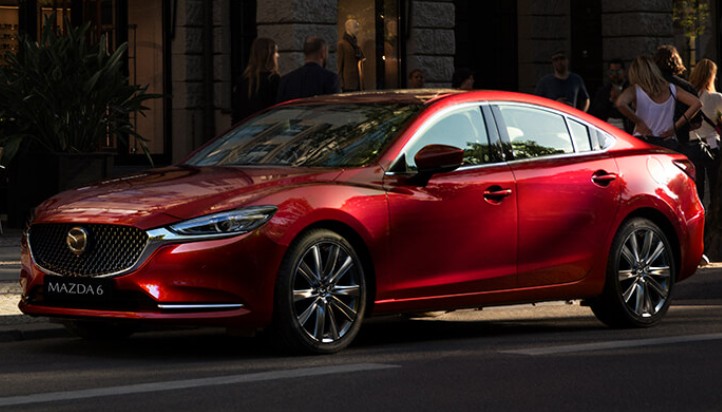
One reason people continue searching for used Mazda 6 models is simple: many of them still look attractive.
Mazda has long tried to inject visual drama into otherwise practical cars. Rather than designing the 6 as a purely functional appliance, Mazda gave later generations long proportions, sweeping lines, prominent grilles, and relatively athletic stances.
Even several years after production, a clean Mazda 6 can look surprisingly modern.
That matters more than we might initially think. Cars are functional objects, yes, but we also spend thousands of hours looking at them, sitting inside them, washing them, parking them outside our homes, and walking toward them every morning.
If a car makes us glance back after parking, that emotional connection has value.
Toyota Avensis Design: Conservative but Purposeful
The Avensis rarely tried to steal attention.
Its design philosophy leaned toward maturity rather than drama. Depending on the generation, the Avensis can look understated, anonymous, or pleasantly restrained.
Some buyers might call that boring. Others will call it timeless.
There is a practical benefit to conservative styling too. A restrained family car is unlikely to feel embarrassing as it ages. It simply blends into daily life.
Which One Looks Better?
We would give the styling advantage to the Mazda 6.
It generally has stronger visual presence and a sportier identity. The Toyota Avensis is perfectly respectable, but Mazda took more aesthetic risks.
Interior Quality and Cabin Design
The cabin is where the comparison becomes more interesting.
Later Mazda 6 interiors often feel surprisingly premium for a mainstream car. Dashboard layouts are relatively clean, controls usually sit where we expect them, and higher trim levels can include materials that make the cabin feel a class above basic transportation.
The Toyota Avensis tends to prioritise functionality.
Its dashboard usually feels logical and easy to understand, though some versions can look less adventurous than the Mazda. Toyota's philosophy seems to have been: make everything understandable, durable, and accessible rather than flashy.
For buyers who dislike complicated controls, that simplicity can actually be refreshing.
In many comparable versions, we would lean toward the Mazda 6.
Its design feels more driver-focused and often more contemporary.
However, trim level makes a huge difference. A well-equipped Avensis can feel considerably nicer than a basic Mazda 6, so we should never compare badges alone when shopping used.
Front Seat Comfort
Both cars were designed with long-distance travel in mind, so front-seat comfort is generally respectable.
The Mazda 6 often provides a slightly more supportive, sporty seating position. The driver sits in a cockpit that encourages involvement.
The Toyota Avensis feels more relaxed.
Its seats and driving position usually favour ease rather than aggression. If our typical journey involves long motorway commutes rather than winding country roads, that calmer personality may be appealing.
Rear Passenger Space
Rear-seat space depends on generation and body style, but both are genuine family cars.
Adults can generally sit comfortably in the back, although taller passengers should test legroom and headroom before buying.
The Mazda's sweeping styling can sometimes make the cabin feel slightly more enclosed, while the Toyota tends to focus more openly on practicality.
If we regularly carry three adults in the rear, neither car should be purchased without a proper test sit.
Boot Space and Everyday Practicality
Practicality is one of the strongest reasons to consider either car.
Both Mazda and Toyota offered body styles capable of handling groceries, luggage, pushchairs, sports equipment, and family clutter.
Estate versions are particularly useful.
A Mazda 6 estate can combine strong cargo capacity with elegant proportions. The Avensis estate, depending on market and generation, is similarly practical and often feels designed almost entirely around everyday usefulness.
Saloon vs Estate
If maximum practicality matters, we would usually choose an estate.
A saloon can have plenty of boot capacity on paper, but the narrow opening limits what we can actually load.
An estate gives us a larger rear hatch and easier access to bulky objects.
Who Wins for Practicality?
This one is almost a draw.
The Toyota may have a tiny philosophical advantage because practicality sits closer to the centre of the Avensis identity, but the Mazda 6 is hardly impractical.
Driving Experience: Where the Mazda 6 Shines
This is where the Mazda begins creating daylight between itself and the Toyota.
Mazda has traditionally cared about steering response and chassis balance, even in mainstream family models. The Mazda 6 usually feels more agile than its size suggests.
Turn the wheel and the car tends to respond with confidence.
The steering often communicates more clearly than we expect from a large family car, while body control is usually good enough to make an empty back road genuinely enjoyable.
No, the Mazda 6 is not a dedicated sports car.
But compared with many conventional family saloons, it feels like somebody in the engineering department still cared whether the driver was having fun.
Toyota Avensis Handling
The Avensis takes the opposite route.
Its handling is generally predictable, safe, and easy to understand. It does not usually encourage us to attack corners.
And that is completely fine.
For many buyers, a family car should simply go where it is pointed without creating drama. The Avensis does that effectively.
Its relaxed road manners can make long drives pleasantly uneventful.
Mazda 6 vs Toyota Avensis Handling Winner
For anyone who enjoys driving, the Mazda 6 wins comfortably.
The Avensis is competent. The Mazda is engaging.
Ride Comfort
Sportier handling sometimes comes with a trade-off: ride quality.
Depending on wheel size, tyres, suspension specification, and road conditions, the Mazda 6 can feel firmer than the Toyota.
Larger wheels can exaggerate this difference.
The Avensis generally aims for a softer, more forgiving personality. Rough roads and motorway imperfections may be absorbed with less fuss.
That does not automatically make Toyota superior. Some drivers prefer the Mazda's tighter body control.
What feels "comfortable" depends on whether we define comfort as softness or control.
Engine Choices
Both models were offered with different petrol and diesel engines depending on generation and region.
Rather than declaring one engine universally best, we need to match the powertrain to how the car will actually be used.
You may be interested in reading Is Ram 1500 V6 or V8? Complete Engine Guide
Petrol Engines
Petrol versions can make a lot of sense for buyers covering moderate annual mileage.
They are often better suited to shorter trips than older diesel configurations and may involve fewer diesel-specific emissions-system concerns.
Mazda's naturally aspirated petrol engines in particular can appeal to drivers who enjoy smooth, predictable power delivery.
Toyota petrol engines typically focus on sensible everyday usability.
Diesel Engines
Diesel versions can be attractive for high-mileage motorway drivers because of their strong low-speed torque and potentially lower fuel consumption.
However, used diesel ownership requires more homework.
Modern and late-era diesel systems may involve components such as:
- Diesel particulate filters
- Exhaust gas recirculation systems
- Turbochargers
- High-pressure fuel systems
- Various emissions-related sensors
A badly maintained diesel can turn an attractive purchase price into an expensive repair story.
Which Engine Should We Choose?
For mixed driving and moderate mileage, petrol is often the simpler route.
For sustained long-distance driving, a well-maintained diesel may still make sense.
The service history matters more than the badge on the bonnet.
Manual vs Automatic Transmission
Both cars can be found with manual or automatic transmissions depending on year and market.
Manual versions may appeal to buyers who want maximum involvement and potentially simpler mechanical ownership.
Automatic versions are more convenient in traffic.
The key is not assuming all automatic transmissions are identical.
When shopping used, we should verify exactly which gearbox is fitted and whether any required transmission servicing has been performed.
A smooth test drive is essential.
Any hesitation, harsh shifting, delayed engagement, or unusual noise deserves investigation.
Fuel Economy
Fuel economy depends on engine, transmission, driving conditions, wheel size, load, and driving style.
Diesel versions generally offer the best highway consumption, while smaller petrol versions can still be reasonably economical.
The Toyota Avensis has a reputation for sensible operating costs, but the Mazda 6 can also deliver respectable efficiency.
Rather than chasing tiny differences in claimed consumption, we should look at total ownership cost.
Saving a small amount of fuel means very little if the car needs an expensive neglected repair immediately after purchase.
Reliability: Mazda 6 vs Toyota Avensis
Toyota's reputation naturally enters the conversation here.
The Avensis belongs to a brand famous for producing durable vehicles, and that makes it especially attractive to conservative used-car buyers.
But we should avoid turning brand reputation into blind faith.
A neglected Toyota can absolutely become expensive.
Likewise, a carefully maintained Mazda 6 can provide excellent service over many years.
What Matters More Than the Badge?
We would prioritise:
- Full maintenance history
- Evidence of regular oil changes
- Correct engine fluids
- Timing belt or chain requirements
- Transmission maintenance
- Suspension condition
- Brake condition
- Rust inspection
- Previous accident repairs
- Warning lights
- Tyre condition and wear pattern
- Cold-start behaviour
A documented Mazda is usually a safer purchase than a mysterious Toyota with gaps in its history.
Rust and Body Condition
Rust deserves special attention when looking at older cars, especially in countries where winter road salt is common.
We should inspect wheel arches, door edges, subframes, suspension mounting areas, the underside, and any places where previous repairs may have trapped moisture.
A beautiful paint finish can hide problems underneath.
Rust is like an iceberg: what we see may only be the beginning.
Check the Car Underneath
Whenever possible, ask a mechanic to put the vehicle on a lift before purchase.
A professional inspection can reveal corrosion, oil leaks, suspension wear, damaged underbody panels, and accident repairs that are invisible during a casual driveway inspection.
That inspection may be the best money we spend during the entire purchase.
Maintenance Costs
Toyota often wins perception battles when maintenance cost enters the discussion.
Its reputation for straightforward engineering and durable components encourages buyers who want predictable running expenses.
Mazda maintenance is not necessarily expensive, but costs depend heavily on the engine and model year.
Parts availability also varies by country.
If we live in a market where one brand has dramatically stronger dealer or aftermarket support, that difference may matter more than any theoretical comparison.
Parts Availability
Before buying either model, it is worth checking local prices for common replacement items:
- Brake pads and discs
- Shock absorbers
- Control arms
- Wheel bearings
- Batteries
- Engine mounts
- Filters
- Spark plugs
- Clutch components
- Timing components
- Sensors
- Body panels
- Headlights
A rare configuration can turn a simple repair into a scavenger hunt.
Technology and Infotainment
Neither the Mazda 6 nor Toyota Avensis should necessarily be purchased primarily for cutting-edge technology, especially when comparing older examples.
However, later versions can offer useful features such as navigation, Bluetooth connectivity, reversing cameras, parking sensors, automatic climate control, and driver-assistance systems.
The Mazda's infotainment presentation can feel more stylish.
Toyota tends to prioritise usability.
Do We Really Need the Highest Trim?
Not necessarily.
Used-car buyers often become obsessed with leather seats, larger wheels, upgraded audio, and panoramic roofs.
But additional equipment also creates additional things that can fail.
Sometimes the sweetest used-car purchase is a mid-range trim with enough comfort features but fewer expensive gadgets.
Safety
Both vehicles were developed as family-oriented cars, so safety was a major consideration.
Available equipment varies significantly by generation and trim, though later versions may include systems such as electronic stability control, multiple airbags, autonomous braking technologies, blind-spot assistance, or lane-related driver aids.
When comparing specific cars, we should compare actual equipment rather than assuming every version has the same safety package.
Noise and Motorway Refinement
Long-distance cruising is one of the strongest talents of both cars.
The Avensis generally feels calm and composed at motorway speed. Its personality fits drivers who want to settle into a seat, activate cruise control, and watch the miles disappear.
The Mazda 6 can also be an excellent motorway car, though some versions may transmit slightly more tyre or road noise depending on wheel size.
Which Is Better for Long Trips?
For pure relaxation, we might choose the Toyota Avensis.
For long trips that include interesting roads, we would rather have the Mazda 6.
It is the difference between a comfortable armchair and a supportive driving seat. Both work; they simply reward different priorities.
Mazda 6 vs Toyota Avensis for Families
Families need more than a nice steering wheel.
We care about rear space, luggage capacity, visibility, ease of entry, running costs, safety equipment, and how stressful the car is to own.
The Avensis makes an excellent case because it feels intentionally sensible.
The Mazda 6 counters with similar practicality while injecting more style and enjoyment into everyday driving.
You may be interested in readingIs Ram 1500 V6 or V8? Complete Engine GuideYou may be interested in reading
 Toyota Sequoia vs Grand Highlander: Which Toyota SUV Is Better?
If one parent genuinely enjoys driving, that may swing the decision toward Mazda.
If the car simply needs to work quietly in the background of family life, Toyota becomes extremely convincing.
Mazda 6 vs Toyota Avensis for Commuting
Daily commuting changes our priorities.
Stop-start traffic makes smooth controls and comfortable seats important. Fuel costs begin accumulating. Visibility matters. So does parking.
Both cars are relatively large compared with compact hatchbacks, so urban buyers should make sure the dimensions suit their parking arrangements.
For heavy traffic, an automatic may be desirable.
For mixed urban and highway use, either model can perform well, but the Toyota's calmer temperament may appeal more to drivers who see commuting purely as transportation.
The Mazda wins if the road home includes a few bends we actually look forward to.
Resale Value
Used-car resale value varies heavily by country.
Toyota's reputation can help the Avensis remain desirable among buyers prioritising durability.
Mazda has also developed a strong reputation among buyers who appreciate styling and enjoyable driving.
However, once these cars reach older ages, condition becomes increasingly important.
A clean, documented, rust-free example will usually be easier to sell than a neglected car with desirable badges or options.
Which Car Feels More Modern?
In comparable later generations, the Mazda 6 often feels more contemporary.
The cabin styling, exterior proportions, and driving experience can give it a younger personality.
The Avensis feels deliberately traditional.
For some buyers, that is exactly the point.
There is something reassuring about a car that does not spend every journey trying to impress us.
Used Mazda 6 Buying Checklist
If we are considering a Mazda 6, we should pay close attention to maintenance history and overall mechanical condition.
Look for signs that the previous owner treated the vehicle as something worth maintaining rather than merely something worth driving.
Before Buying a Mazda 6
Check for:
- Complete service records
- Smooth cold starting
- Warning lights
- Oil leaks
- Unusual diesel smoke where applicable
- Proper operation of the infotainment system
- Suspension knocking
- Uneven tyre wear
- Rust underneath
- Smooth clutch or automatic transmission operation
- Air-conditioning performance
- Electrical accessories
- Evidence of previous collision repairs
Used Toyota Avensis Buying Checklist
The same principles apply to the Avensis.
Toyota reliability does not make inspections optional.
A high-mileage Avensis with meticulous maintenance can be a much better purchase than a lower-mileage car that has been ignored.
Before Buying a Toyota Avensis
Inspect:
- Service records
- Oil condition
- Engine noises during cold startup
- Clutch performance
- Automatic gearbox behaviour
- Suspension wear
- Steering feel
- Brake vibration
- Diesel emissions components where relevant
- Body corrosion
- Interior electronics
- Air conditioning
- Tyres
- Accident repair quality
Mazda 6 vs Toyota Avensis: Which One Is Cheaper to Own?
Toyota might have the theoretical advantage because buyers often associate the Avensis with low-drama ownership.
Yet the cheapest car to own is usually the car that was best maintained before we bought it.
Imagine two cars.
One is a Toyota with incomplete service records, worn tyres, tired suspension, and a clutch nearing the end of its life.
The other is a Mazda with detailed invoices, fresh brakes, new tyres, proper servicing, and one careful owner.
Which one would we rather own?
The Mazda, almost certainly.
Condition trumps reputation surprisingly often in the used-car world.
Who Should Buy the Mazda 6?
The Mazda 6 makes the most sense if we value driving enjoyment without sacrificing practicality.
It is especially appealing if we want a family car that does not feel like we surrendered our personality the moment we needed a bigger boot.
Choose the Mazda 6 if we prioritise:
- Attractive styling
- Sharper steering
- More engaging handling
- Driver-focused design
- A sportier personality
- Strong family practicality
- A cabin that often feels relatively premium
The Mazda's Biggest Strength
Its biggest advantage is balance.
The Mazda 6 does not force us to choose completely between sensible and enjoyable. It manages to offer plenty of both.
Who Should Buy the Toyota Avensis?
The Toyota Avensis makes sense for buyers who want calm transportation with minimal theatre.
Its appeal is almost philosophical.
It does not need to be the fastest, prettiest, or most exciting car in the driveway. It simply needs to start in the morning, carry everyone comfortably, and avoid turning routine journeys into events.
Choose the Avensis if we prioritise:
- Comfortable cruising
- Straightforward controls
- Conservative engineering
- Practicality
- A strong durability reputation
- Uncomplicated family transport
- Relaxed everyday driving
The Toyota's Biggest Strength
Its strongest quality is its lack of drama.
For many people, that is not a weakness. It is precisely why they buy one.
Mazda 6 vs Toyota Avensis: Our Verdict
So, which car wins?
For most drivers who care about how a car feels, we would choose the Mazda 6.
It combines genuine family practicality with sharper handling, attractive styling, and a sense of character that the Toyota rarely tries to match.
But if driving excitement ranks near the bottom of our priorities and dependable, comfortable transportation sits at the top, the Toyota Avensis remains an extremely sensible used-car choice.
Neither should be purchased based on reputation alone.
At this stage in their lives, these cars are individuals.
Their maintenance records, owners, mileage, climate exposure, and mechanical condition matter enormously.
A cared-for example of either model can be excellent.
A neglected example of either can become a wallet with wheels.
Conclusion: Mazda for Character, Toyota for Calm
The Mazda 6 vs Toyota Avensis debate ultimately comes down to personality.
The Mazda 6 says a practical family car can still look elegant and make the driver smile.
The Toyota Avensis replies that cars do not need to entertain us every morning; sometimes dependable transportation is entertainment enough.
We would choose the Mazda if we wanted one car to handle commuting, family duties, holidays, and an enjoyable Sunday drive.
We would choose the Toyota if our priority were comfort, restraint, practicality, and a reassuringly straightforward driving experience.
Most importantly, we would choose the better-maintained vehicle.
When buying used, the badge tells us what the car was designed to be.
The service history tells us what it has become.
Frequently Asked Questions
1. Is the Mazda 6 better than the Toyota Avensis?
The Mazda 6 is generally the better choice for drivers who value handling, styling, and a more engaging driving experience. The Toyota Avensis may suit buyers who prioritise comfort, simplicity, and conventional family-car practicality.
2. Which is more reliable, Mazda 6 or Toyota Avensis?
Both can provide strong long-term service when properly maintained. Toyota has an especially strong reputation for durability, but the condition and maintenance history of an individual used car matter more than reputation alone.
3. Is the Mazda 6 more fun to drive than the Toyota Avensis?
Yes, generally. The Mazda 6 is typically tuned with sharper steering and more controlled handling, giving it a more engaging personality. The Avensis focuses more heavily on comfort and predictable road manners.
4. Which is better for long motorway journeys?
Both work well for long-distance driving. The Toyota Avensis may appeal more to buyers who want relaxed cruising, while the Mazda 6 is a good option for drivers who want motorway comfort without giving up enjoyable handling.
You may be interested in readingIs Ram 1500 V6 or V8? Complete Engine GuideYou may be interested in reading
Toyota Sequoia vs Grand Highlander: Which Toyota SUV Is Better?You may be interested in reading
Toyota Sequoia Versus Chevy Tahoe: Which Full-Size SUV Wins?5. Should we buy a petrol or diesel Mazda 6 or Toyota Avensis?
Petrol can be the simpler option for moderate mileage and frequent shorter journeys. Diesel may suit high-mileage motorway driving, but buyers should carefully inspect emissions-related components and maintenance history before purchasing.
If you want to know other articles similar to Mazda 6 vs Toyota Avensis: Which Used Family Car Is Better? you can visit the category Models.
Haval Jolion vs Omoda C5: Which SUV Is Better?
Haval Jolion vs Chery Tiggo 4 Pro: Full Comparison
Haval Jolion vs H6: Which SUV Is Better in 2026?
Haval Jolion vs Toyota Corolla Cross: Which SUV Is Better?
Haval Jolion vs Jaecoo J5: Which SUV Is Better?

Volkswagen T-Cross vs Volkswagen T-Roc: Which Is Better?
Leave a Reply
More content of your interest