
Toyota Sequoia Versus Chevy Tahoe: Which Full-Size SUV Wins?

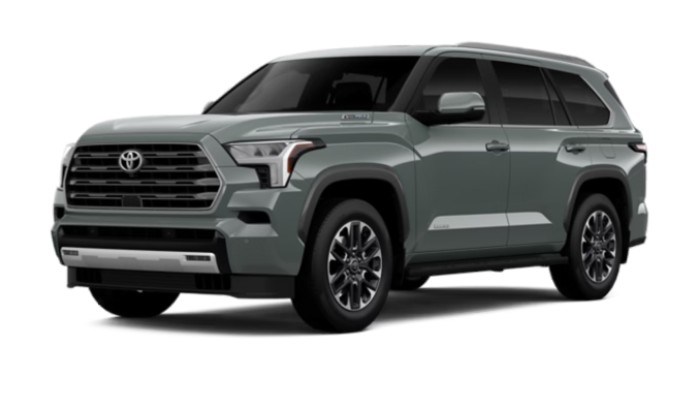
When we compare the Toyota Sequoia versus Chevy Tahoe, we are putting two heavyweight family SUVs into the same ring. Both are large, body-on-frame, three-row machines built for families who need real passenger space, towing ability, road-trip comfort, and enough presence to make compact crossovers look like toys.
Yet they approach the job very differently.
The Toyota Sequoia leans heavily into modern hybrid power, muscular torque, adventurous styling, and Toyota's reputation for building long-lasting trucks and SUVs. The Chevrolet Tahoe follows a more traditional American formula: multiple engines, enormous interior flexibility, available V8 power, an optional diesel, and enough trim choices to build anything from a practical family hauler to a luxury highway cruiser.
For the current 2026 models, the Sequoia produces 437 horsepower and 583 lb-ft of torque from its standard i-FORCE MAX twin-turbo V6 hybrid, while Chevrolet lets Tahoe shoppers choose among a 5.3-liter V8, 6.2-liter V8, and 3.0-liter Duramax turbo-diesel.
So, which should we actually buy? Let's break it down without getting lost in brochure language.
Content in this publication
- Toyota Sequoia vs Chevy Tahoe at a Glance
- Powertrain: Hybrid Muscle Meets Traditional V8 Power
- Towing Capacity: Sequoia Takes the Numerical Win
- Fuel Economy: Toyota's Hybrid Strategy Makes Sense
- Interior Space: Tahoe Strikes Back
- Cargo Space: Tahoe Is the More Natural Hauler
- Ride Comfort: Tahoe Feels Built for Long Highways
- Handling Around Town
- Off-Road Ability: Sequoia TRD Pro vs Tahoe Z71
- Technology: Chevrolet Goes Big
- Safety and Driver Assistance
- Reliability: Can Tahoe Beat Toyota's Reputation?
- Toyota Sequoia vs Tahoe Maintenance Costs
- Pricing and Value
- Which Is Better for Families?
- Which Is Better for Towing?
- Which Is Better for Road Trips?
- Toyota Sequoia Versus Chevy Tahoe: Pros and Cons
- Who Should Buy the Toyota Sequoia?
- Who Should Buy the Chevy Tahoe?
- Final Verdict: Sequoia or Tahoe?
- Frequently Asked Questions
Toyota Sequoia vs Chevy Tahoe at a Glance
The easiest way to understand these SUVs is to think of the Sequoia as the more specialized option and the Tahoe as the more flexible one.
Toyota gives every Sequoia the same powerful hybrid drivetrain. Chevrolet essentially hands us a menu and says, "Build the Tahoe that fits your life."
A few major differences immediately stand out:
- Sequoia: standard 437-hp hybrid powertrain, up to roughly 9,500 pounds of towing capacity, strong low-end torque, distinctive off-road-oriented trims, and potentially better fuel efficiency than a traditional large gasoline SUV.
- Tahoe: three engine choices, up to 8,400 pounds of towing capacity, available diesel power, more seating configurations, fold-flat second and third rows, and a wider selection of trims and personalities.
Neither formula is automatically better. The winner depends on whether we prioritize muscle, interior practicality, towing, fuel choice, off-road personality, or everyday family usability.
Powertrain: Hybrid Muscle Meets Traditional V8 Power
Toyota Sequoia Engine
The Sequoia makes its intentions clear before we even leave the driveway.
Every 2026 Sequoia uses Toyota's i-FORCE MAX twin-turbocharged V6 hybrid, generating 437 horsepower and 583 lb-ft of torque.
Those numbers matter.
Full-size SUVs are heavy, and torque is what makes several thousand pounds of vehicle feel willing rather than sleepy. With 583 lb-ft available, the Sequoia has a deep reserve of pulling power that suits towing, highway passing, steep grades, and loaded family trips.
This is not a Prius wearing hiking boots.
Toyota uses hybrid assistance largely to improve performance and efficiency while maintaining the capability buyers expect from a truck-based SUV.
Why the Hybrid Setup Changes the Character
Electric assistance fills in torque quickly, which gives the Sequoia a muscular personality without requiring a huge naturally aspirated V8.
Around town, we can feel the advantage when leaving intersections or merging into traffic. On the highway, there is enough reserve power that passing slower traffic rarely feels like a negotiation.
It makes the Sequoia feel surprisingly energetic for its size.
Chevy Tahoe Engine Choices
Chevrolet takes the opposite approach.
Instead of forcing one drivetrain on every buyer, the 2026 Tahoe offers three distinct engines.
The standard 5.3-liter EcoTec3 V8 produces 355 horsepower and 383 lb-ft of torque. Buyers wanting more gasoline power can move to the 6.2-liter V8 with 420 horsepower and 460 lb-ft. The optional 3.0-liter Duramax turbo-diesel inline-six produces 305 horsepower and 495 lb-ft of torque.
That variety is one of Tahoe's greatest strengths.
Someone commuting around town may be perfectly satisfied with the 5.3-liter V8. A buyer wanting old-school V8 strength can choose the 6.2. Long-distance drivers and towing enthusiasts may find the Duramax diesel particularly attractive.
Which SUV Is Faster?
The Sequoia has a power-to-weight personality that feels more aggressive than many people expect from a Toyota family SUV.
Its 583 lb-ft torque figure comfortably exceeds the published torque outputs of the Tahoe's available engines. That gives Toyota a considerable paper advantage when immediate pulling force is the priority.
The Tahoe 6.2-liter V8, however, brings something numbers cannot fully describe: traditional V8 response and sound.
Some drivers simply prefer it.
Think of the Sequoia as an electric-assisted hammer and the Tahoe 6.2 as a classic sledgehammer. Both hit hard. They simply deliver the blow differently.
Towing Capacity: Sequoia Takes the Numerical Win
If towing is high on our shopping list, this comparison gets interesting quickly.
Toyota lists maximum Sequoia towing capability at approximately 9,500 pounds, depending on configuration. Toyota also equips the Sequoia with an integrated trailer brake controller and Trailer-Sway Control.
Chevrolet rates the 2026 Tahoe for up to 8,400 pounds when properly configured.
On maximum published ratings alone, the Sequoia wins.
That extra capacity can matter if we're pulling a substantial travel trailer, boat, enclosed vehicle trailer, or recreational equipment.
But Maximum Towing Isn't Everything
Here is where SUV comparisons often become misleading.
A maximum tow rating applies to a particular vehicle configuration. Adding passengers, cargo, accessories, larger wheels, four-wheel drive, and different trims can affect how much weight a specific vehicle can safely handle.
Payload matters too.
So does trailer tongue weight.
So rather than buying a Sequoia simply because "9,500 is greater than 8,400," we should compare the actual door-jamb payload sticker and towing specifications of the exact SUV we intend to purchase.
Still, if maximum rated towing capability is our main metric, Toyota clearly has the stronger headline number.
Fuel Economy: Toyota's Hybrid Strategy Makes Sense
Large SUVs are rarely purchased because we enjoy visiting gas stations.
Fuel consumption matters even more when an SUV becomes a daily driver.
Toyota advertises fuel economy of up to an EPA-estimated 22 mpg combined for the 2026 Sequoia.
Considering its power and dimensions, that is respectable.
The Tahoe approaches efficiency differently because its three powertrains serve different buyers. The 3.0-liter Duramax is especially interesting for long-distance driving, with Chevrolet advertising as much as 624 miles of EPA-estimated maximum highway range per tank in certain configurations.
Sequoia Hybrid vs Tahoe Diesel
This might actually be the more interesting fuel comparison than Sequoia versus Tahoe V8.
The Toyota gives us gasoline convenience plus hybrid assistance.
The Tahoe diesel gives us the relaxed torque and potentially long cruising range traditionally associated with diesel engines.
For short suburban journeys, mixed driving, and drivers who prefer gasoline, the Sequoia makes a lot of sense.
For someone covering enormous highway distances, the Duramax Tahoe deserves serious attention.
Interior Space: Tahoe Strikes Back
Power may favor Toyota, but interior packaging is one area where Chevrolet makes a powerful argument.
The Tahoe is designed like a rolling family room.
Chevrolet offers seating configurations for seven, eight, or even nine occupants, depending on configuration. Its second- and third-row seats can also fold flat.
That flexibility matters more in daily life than a horsepower figure sometimes does.
One weekend we're carrying children and grandparents. The next we're moving furniture. Then comes a road trip with luggage stacked everywhere.
Tahoe handles that changing mission extremely well.
Sequoia Third-Row Packaging
The Sequoia's cabin is comfortable and upscale, but its hybrid architecture influences how Toyota packages cargo space.
Toyota uses a sliding third row and adjustable multi-level cargo shelf system to increase flexibility.
It is clever, but clever isn't necessarily the same thing as cavernous.
If maximum cargo flexibility behind the rear seats is our highest priority, the Tahoe generally feels more naturally suited to the task.
Why Families Should Sit in the Third Row Before Buying
Never buy a three-row SUV after sitting only in the driver's seat.
Bring the family.
Move the second-row seats.
Climb into the third row.
Then load several suitcases behind it.
Specifications tell us how much space exists. Our knees, shoulders, stroller, cooler, and luggage tell us whether that space actually works.
Cargo Space: Tahoe Is the More Natural Hauler
The Chevy Tahoe has long built its identity around moving people and their belongings.
You may be interested in reading Toyota Sequoia vs Ford Expedition: Which Full-Size SUV Is Better?
Its shape helps.
The relatively upright roof, generous rear dimensions, and flat-folding seating arrangement create a cargo area that feels like a small room once the back seats disappear.
For families regularly transporting bicycles, camping gear, large dogs, sports equipment, boxes, or home-improvement supplies, that matters enormously.
The Sequoia remains useful, but the Tahoe's cargo packaging is arguably one of the strongest reasons to choose Chevrolet.
Who Needs the Sequoia Instead?
Not everybody treats an SUV like a delivery van.
If we're usually carrying five people, a moderate amount of luggage, and perhaps a trailer behind us, the Sequoia's compromises become less important.
Its combination of torque and towing capability may outweigh losing some interior optimization.
Ride Comfort: Tahoe Feels Built for Long Highways
Drive hundreds of miles through wide-open interstate country and the Tahoe starts making a lot of sense.
Its long wheelbase and available suspension technology help create the relaxed personality expected from a premium full-size SUV.
Chevrolet offers Magnetic Ride Control and an available Four-Corner Air Ride Adaptive Suspension, depending on trim, which can adapt the vehicle's behavior and ride height to conditions.
The result can feel impressively composed for something this large.
The Sequoia is comfortable too, particularly in luxury-focused trims, but its stronger truck-like character can remain apparent.
Highway Winner
For pure highway cruising, we'd give the Tahoe a slight edge.
It feels designed to swallow interstate miles like a sofa with license plates.
Handling Around Town
Neither SUV shrinks when we enter a crowded parking garage.
That needs to be said.
We're still dealing with two genuine full-size SUVs, and narrow city streets remind us constantly.
The Tahoe measures 211.3 inches long for 2026, according to Chevrolet.
The Sequoia occupies similarly substantial territory.
Parking cameras, sensors, surround-view systems, and driver aids therefore become much more than technological decoration.
They become survival equipment for shopping-center parking lots.
Which Feels Easier to Drive?
The Sequoia's strong torque gives it a responsive personality, while the Tahoe's chassis feels relaxed and predictable.
Neither is genuinely nimble compared with a midsize crossover.
If we spend nearly all our time inside a dense city and rarely tow anything, we might reasonably ask whether either SUV is larger than we actually need.
That question could save a lot of fuel, money, and parking anxiety.
Off-Road Ability: Sequoia TRD Pro vs Tahoe Z71
Now things become entertaining.
Toyota offers the Sequoia TRD Pro for drivers who want their family SUV to look and behave like something ready for a weekend beyond pavement.
Chevrolet counters with the Tahoe Z71.
These trims aren't merely cosmetic exercises. Both cater to buyers who want improved capability on dirt, snow, trails, and rough terrain.
The Toyota Advantage Off Pavement
Toyota has spent decades building its North American truck identity around models such as the Tacoma, 4Runner, Tundra, Land Cruiser, and Sequoia.
That heritage gives the TRD badge genuine credibility.
The Sequoia TRD Pro feels like the natural choice for buyers who imagine towing a camper into the mountains, exploring forest roads, or reaching campsites that would make a luxury crossover turn around.
Where Tahoe Z71 Makes Sense
The Tahoe Z71 takes a slightly different approach.
It blends Chevrolet's big-SUV comfort with a tougher appearance and additional off-road capability without abandoning the Tahoe's family-friendly personality.
For mild trails, snow, dirt roads, hunting trips, and rural driving, it is a compelling compromise.
If serious adventure is a central part of our lifestyle, though, we'd lean toward the Sequoia TRD Pro.
Technology: Chevrolet Goes Big
Modern SUVs have essentially become computers with cupholders.
Chevrolet embraces that reality.
The 2026 Tahoe features an available technology-heavy cabin, including a 17.7-inch diagonal center touchscreen on its listed models, along with an 11-inch Driver Information Center. Chevrolet also offers available Super Cruise hands-free driver-assistance technology on certain trims.
That gives the Tahoe a genuinely modern dashboard.
Toyota's Sequoia also brings contemporary multimedia and driver-assistance equipment, including Toyota Safety Sense 2.5 across the range.
Which Infotainment System Is Better?
This one comes down partly to taste.
Chevrolet's massive display makes a dramatic first impression and gives the Tahoe a very current feel.
Toyota's system is straightforward and generally avoids making basic functions feel unnecessarily complicated.
Tech-focused buyers may gravitate toward the Tahoe.
Drivers who value simplicity may prefer Toyota's approach.
Safety and Driver Assistance
Both vehicles belong to a market where buyers expect substantial active-safety equipment.
Toyota includes its Toyota Safety Sense 2.5 suite, incorporating multiple driver-assistance technologies designed to help identify potential hazards and reduce driving workload.
Chevrolet likewise offers a broad collection of safety and assistance technology, with higher trims adding increasingly sophisticated systems.
The Tahoe's available Super Cruise deserves special mention for drivers who frequently travel compatible divided highways.
However, driver-assistance technology should remain exactly that: assistance.
A huge SUV still carries huge physical dimensions and significant mass. Cameras and sensors are valuable, but awareness behind the steering wheel matters even more.
Reliability: Can Tahoe Beat Toyota's Reputation?
Toyota's reputation is one of the invisible specifications printed on every Sequoia.
Many shoppers walk into a Toyota dealership specifically because they associate the brand with long-term durability.
That gives the Sequoia an emotional advantage.
But we shouldn't simply assume every Sequoia will outlast every Tahoe.
The current Sequoia's powertrain is much more technically complex than the naturally aspirated Toyota V8s that built much of the model's historical reputation. Twin turbochargers, hybrid components, electronics, and associated cooling systems mean this generation shouldn't be judged exclusively through the lens of older Sequoias.
Tahoe's Long-Term Ownership Story
Tahoes are everywhere in North America for a reason.
They serve families, fleets, law-enforcement agencies, commercial operators, towing owners, and long-distance drivers.
That enormous installed base also means independent shops are familiar with them and replacement parts are widely available.
Yet engine choice matters.
Owning a 5.3-liter V8 Tahoe may be a different long-term experience from owning a 6.2-liter or diesel version.
For buyers planning to keep either SUV beyond 150,000 miles, maintenance history and disciplined servicing may ultimately matter more than the badge on the grille.
Toyota Sequoia vs Tahoe Maintenance Costs
Neither belongs to the "cheap transportation" category.
Large tires cost more.
Brakes are larger.
You may be interested in readingToyota Sequoia vs Ford Expedition: Which Full-Size SUV Is Better?You may be interested in reading
Toyota Sequoia vs Nissan Armada: Which Full-Size SUV Wins?Oil capacity can be higher.
Suspension components are heavier.
Insurance may cost more.
And when sophisticated hybrid, diesel, air-suspension, or driver-assistance hardware eventually needs attention, repairs can become expensive.
The Sequoia's hybrid powertrain may reduce fuel consumption compared with conventional gasoline alternatives, but its mechanical complexity shouldn't be ignored.
The Tahoe, meanwhile, allows buyers to avoid some expensive optional systems simply by selecting a simpler configuration.
Which Is Better for Keeping 10 Years?
For long ownership, we'd favor whichever version avoids unnecessary complexity while meeting our needs.
A buyer obsessed with Toyota durability may still prefer the Sequoia.
Someone wanting a huge service network, abundant parts, and familiar American truck hardware could reasonably choose a Tahoe.
Pricing and Value
The 2026 Toyota Sequoia starts at approximately $65,725 MSRP, while Chevrolet lists the 2026 Tahoe LS starting around $60,700.
So Tahoe offers the lower entry point.
That doesn't automatically make it the better value.
Remember what Toyota includes: the Sequoia's powerful hybrid drivetrain is standard rather than optional.
With Chevrolet, moving through engine choices, four-wheel drive, luxury trims, premium suspension equipment, towing packages, and technology can quickly change the equation.
Luxury Trims: Capstone vs High Country
At the expensive end, the Toyota Sequoia Capstone and Chevy Tahoe High Country aim at buyers who want luxury-car comfort without giving up truck-based capability.
Here we're talking upscale upholstery, larger wheels, advanced technology, premium interior finishes, and the sort of equipment once reserved for luxury-brand SUVs.
The decision becomes more emotional.
The Capstone has a distinctive Toyota-truck identity.
The High Country feels more like a traditional American premium SUV.
Both can become expensive enough that buyers may also start considering models from Lexus, Cadillac, Lincoln, and GMC.
Which Is Better for Families?
For a large family using all three rows regularly, we'd lean toward the Chevy Tahoe.
Why?
Its cabin flexibility is difficult to ignore.
Available seating for as many as nine occupants in certain configurations, combined with folding second- and third-row seats, makes it exceptionally adaptable.
The Sequoia still works very well as a family SUV, but Toyota's priorities include towing, hybrid power, and rugged capability rather than squeezing every possible cubic inch out of the interior.
For three children, grandparents, strollers, backpacks, and luggage? Tahoe.
For five people, a boat, camping equipment, and weekend adventures? Sequoia starts looking extremely tempting.
Which Is Better for Towing?
The Toyota Sequoia wins on maximum published towing capacity.
Toyota advertises up to roughly 9,500 pounds compared with the Tahoe's 8,400-pound maximum.
But frequent towing shoppers should investigate more than the headline.
Tahoe's optional diesel deserves consideration because of its torque delivery and highway range.
Someone towing repeatedly across long interstate distances might reasonably prefer diesel even though the Tahoe's absolute trailer rating is lower.
Someone towing a heavier recreational trailer may favor the Sequoia's larger published maximum.
Which Is Better for Road Trips?
This is extremely close.
The Tahoe gets our vote for interior versatility, passenger comfort, cargo practicality, and available diesel range.
The Sequoia counters with massive torque, respectable hybrid efficiency, towing muscle, and Toyota's easygoing ownership appeal.
If the road trip involves hotels, highways, grandparents, children, and luggage, choose Tahoe.
If it involves mountains, trailers, campsites, dirt roads, and outdoor equipment, choose Sequoia.
That distinction captures the personalities of these SUVs remarkably well.
Toyota Sequoia Versus Chevy Tahoe: Pros and Cons
The Sequoia's major strengths are its muscular standard hybrid powertrain, excellent torque, higher maximum towing rating, adventurous personality, and strong Toyota brand reputation. Its main weaknesses are less-ideal cargo packaging and fewer drivetrain choices.
The Tahoe's greatest advantages are cabin space, multiple seating layouts, three available engines, excellent cargo versatility, strong highway comfort, and a massive range of trims.
Its weaknesses?
The base V8 is substantially less powerful than the Sequoia's standard hybrid, maximum towing capacity trails Toyota's figure, and generously optioned Tahoes can become expensive very quickly.
Who Should Buy the Toyota Sequoia?
Choose the Sequoia if power and capability matter more than extracting every last inch of usable interior volume.
It suits buyers who regularly tow, enjoy outdoor recreation, appreciate Toyota trucks, want standard hybrid power, or need an SUV that feels genuinely rugged rather than simply large.
We especially like it for families whose weekends regularly include boats, trailers, mountains, snow, camping, or rough roads.
The Sequoia feels less like a bus and more like an enormous adventure vehicle.
Who Should Buy the Chevy Tahoe?
Choose the Tahoe if the cabin itself is the heart of the purchase.
For big families, road trips, school runs, airport journeys, luggage, sporting equipment, and passengers constantly moving between rows, Chevrolet's packaging is enormously appealing.
The ability to select among three engines is another major advantage.
Maybe we want an affordable 5.3 V8.
Maybe we want a powerful 6.2 V8.
Maybe we drive huge distances and want the Duramax.
Chevrolet lets us decide instead of deciding for us.
Final Verdict: Sequoia or Tahoe?
There is no universal winner in the Toyota Sequoia versus Chevy Tahoe battle because these SUVs solve the same problem from different directions.
The Toyota Sequoia is our choice for towing capacity, standard power, hybrid performance, and adventure-oriented driving. Its 437-horsepower i-FORCE MAX powertrain and maximum towing capability of around 9,500 pounds give it serious credentials.
The Chevy Tahoe is our pick for large families, passenger flexibility, cargo use, engine choice, and highway travel. Its configurable seating, fold-flat rear rows, three available engines, and broad trim range make it extraordinarily adaptable.
So here's the simplest way to choose.
If we're asking, "Which one can work harder?", the Sequoia has the edge.
If we're asking, "Which one can adapt to more everyday family situations?", the Tahoe wins.
The Sequoia feels like a powerful truck wearing an SUV suit.
The Tahoe feels like a family room that learned how to tow.
Pick the personality that matches your life, and either one can make an excellent full-size SUV.
Frequently Asked Questions
1. Is a Toyota Sequoia bigger than a Chevy Tahoe?
Both are full-size, three-row SUVs, but exterior dimensions alone don't tell the entire story. The Tahoe makes particularly effective use of its interior space and offers excellent passenger and cargo flexibility. Buyers who frequently use the third row or carry large quantities of luggage should compare both cabins in person.
2. Which can tow more, Toyota Sequoia or Chevy Tahoe?
The 2026 Toyota Sequoia offers the higher maximum published rating, with Toyota advertising towing capability of roughly 9,500 pounds. Chevrolet lists the 2026 Tahoe at up to 8,400 pounds when properly equipped.
3. Is the Sequoia more powerful than the Tahoe?
In standard form, yes. The Sequoia's i-FORCE MAX hybrid produces 437 horsepower and 583 lb-ft of torque. Tahoe outputs range from 355 horsepower with the 5.3-liter V8 to 420 horsepower with the 6.2-liter V8, while the Duramax diesel produces 495 lb-ft of torque.
You may be interested in readingToyota Sequoia vs Ford Expedition: Which Full-Size SUV Is Better?You may be interested in reading
Toyota Sequoia vs Nissan Armada: Which Full-Size SUV Wins?You may be interested in reading
Toyota Sequoia vs Honda Pilot: Which SUV Makes More Sense?4. Which is better for a large family, Tahoe or Sequoia?
We'd generally choose the Tahoe for a large family because of its flexible cabin and seating arrangements. Chevrolet offers configurations accommodating seven, eight, or nine occupants, depending on equipment, and both rear seating rows can fold flat.
5. Which is better off-road, Toyota Sequoia or Chevy Tahoe?
Both offer off-road-focused versions, but we'd give the Sequoia TRD Pro the advantage for buyers who make off-pavement driving a genuine priority. The Tahoe Z71 remains an excellent alternative for drivers wanting extra trail capability without sacrificing the Tahoe's outstanding family-oriented interior.
If you want to know other articles similar to Toyota Sequoia Versus Chevy Tahoe: Which Full-Size SUV Wins? you can visit the category Models.
Haval Jolion vs Omoda C5: Which SUV Is Better?
Haval Jolion vs Chery Tiggo 4 Pro: Full Comparison
Haval Jolion vs H6: Which SUV Is Better in 2026?
Haval Jolion vs Toyota Corolla Cross: Which SUV Is Better?
Haval Jolion vs Jaecoo J5: Which SUV Is Better?
Volkswagen T-Cross vs Volkswagen T-Roc: Which Is Better?
Leave a Reply
More content of your interest