
Toyota Sequoia vs Grand Highlander: Which Toyota SUV Is Better?

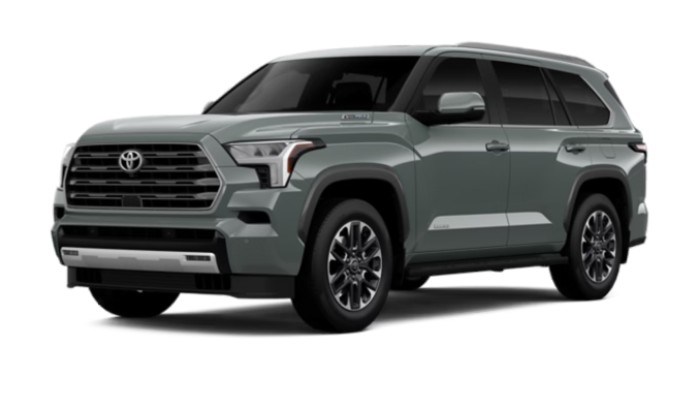
Choosing between the Toyota Sequoia vs Grand Highlander sounds simple until we spend a little time with the numbers. Both are large three-row Toyota SUVs. Both can seat up to eight people. Both offer hybrid technology. And both are designed to haul families, luggage, groceries, sports gear, and whatever else life throws into the cargo area.
Yet these SUVs are fundamentally different animals.
The Toyota Grand Highlander is a spacious, road-focused family crossover designed around comfort, efficiency, and everyday practicality. The Toyota Sequoia, meanwhile, is a full-size, truck-based SUV built with significantly more towing muscle, torque, ground-clearing capability, and heavy-duty character.
For 2026, Toyota lists the Sequoia with a starting MSRP of $65,725, while the Grand Highlander starts at $42,260. That's already a massive clue about where these vehicles sit in Toyota's lineup.
So, should we spend more for the Sequoia, or is the Grand Highlander actually the smarter SUV for most families?
Let's compare them from bumper to bumper.
Content in this publication
- Toyota Sequoia vs Grand Highlander at a Glance
- What's the Main Difference Between the Toyota Sequoia and Grand Highlander?
- Toyota Sequoia vs Grand Highlander Engine Options
- Toyota Sequoia vs Grand Highlander Towing Capacity
- Toyota Sequoia vs Grand Highlander Fuel Economy
- Toyota Sequoia vs Grand Highlander Interior Space
- Third-Row Space: Which SUV Is Better for Families?
- Toyota Sequoia vs Grand Highlander Comfort
- Toyota Sequoia vs Grand Highlander Off-Road Ability
- Toyota Sequoia vs Grand Highlander Size
- Toyota Sequoia vs Grand Highlander Technology
- Toyota Sequoia vs Grand Highlander Safety
- Toyota Sequoia vs Grand Highlander Price
- Toyota Sequoia vs Grand Highlander Ownership Costs
- Toyota Sequoia vs Grand Highlander for Road Trips
- Toyota Sequoia vs Grand Highlander for a Large Family
- Which Has More Cargo Space: Sequoia or Grand Highlander?
- Which Is Faster: Toyota Sequoia or Grand Highlander?
- Which Toyota SUV Is Better for Snow?
- Toyota Sequoia vs Grand Highlander: Pros and Cons
- Who Should Buy the Toyota Grand Highlander?
- Who Should Buy the Toyota Sequoia?
- Toyota Sequoia vs Grand Highlander: Which Is Better Overall?
- Final Thoughts on Toyota Sequoia vs Grand Highlander
- FAQs About Toyota Sequoia vs Grand Highlander
- 1. Is the Toyota Sequoia bigger than the Grand Highlander?
- 2. Which is better, Toyota Sequoia or Grand Highlander?
- 3. Can the Grand Highlander tow as much as the Sequoia?
- 4. Which has better fuel economy, Grand Highlander or Sequoia?
- 5. Does the Toyota Grand Highlander seat as many people as the Sequoia?
Toyota Sequoia vs Grand Highlander at a Glance
Before digging into the details, here's the basic picture.
| Feature | 2026 Toyota Sequoia | 2026 Toyota Grand Highlander |
|---|---|---|
| Vehicle type | Full-size SUV | Three-row crossover SUV |
| Starting MSRP | $65,725 | $42,260 |
| Maximum seating | 8 | 8 |
| Powertrains | i-FORCE MAX hybrid | Gas, Hybrid, Hybrid MAX |
| Maximum horsepower | 437 hp | 362 hp Hybrid MAX |
| Maximum torque | 583 lb-ft | 400 lb-ft Hybrid MAX |
| Maximum towing | 9,500 lbs | 5,000 lbs |
| Maximum cargo space | 86.9 cu. ft. | 97.5 cu. ft. |
| Best fuel economy | Up to 22 combined mpg | Hybrid models can exceed 30 mpg combined |
| Best suited for | Towing, adventure, heavy-duty use | Families, commuting, road trips |
Toyota officially rates the Sequoia at up to 437 horsepower, 583 lb-ft of torque, 9,500 pounds of towing capacity, and 22 mpg combined. The Grand Highlander offers three distinct powertrain families and as much as 97.5 cubic feet of cargo capacity.
And here's the surprise: bigger outside doesn't automatically mean roomier inside.
What's the Main Difference Between the Toyota Sequoia and Grand Highlander?
Think of these SUVs as two different tools stored in the same Toyota toolbox.
The Grand Highlander is essentially optimized around passengers. Its architecture prioritizes interior packaging, smooth road manners, fuel economy, and cargo capacity.
The Sequoia prioritizes capability.
It is Toyota's full-size SUV and shares the rugged philosophy we normally associate with large pickup-based vehicles. Its powerful hybrid drivetrain is designed not merely to save fuel but to provide serious torque.
That's why comparing them purely by dimensions misses the point.
The Grand Highlander Is the Family Specialist
The Grand Highlander makes the strongest argument when daily life involves:
- school runs
- commuting
- family vacations
- grocery trips
- carrying adults in the third row
- maximizing cargo capacity
- minimizing fuel expenses
It gives us three rows without making every parking garage feel like a driving exam.
The Sequoia Is the Capability Specialist
The Sequoia becomes far more appealing when our weekends involve:
- towing a large travel trailer
- pulling a boat
- driving rough roads
- carrying heavy equipment
- venturing farther off pavement
- wanting genuine full-size SUV presence
In other words, the Grand Highlander behaves like an exceptionally large family crossover. The Sequoia feels like an SUV wearing work boots.
Toyota Sequoia vs Grand Highlander Engine Options
This is where the comparison dramatically separates.
Toyota gives the Grand Highlander several personalities. Buyers can select gas, conventional hybrid, or performance-oriented Hybrid MAX configurations.
The Sequoia takes a completely different approach.
Every 2026 Sequoia uses Toyota's i-FORCE MAX twin-turbocharged V6 hybrid powertrain, producing 437 horsepower and 583 lb-ft of torque.
That's enormous torque for a family SUV.
Toyota Grand Highlander Gas Engine
The standard Grand Highlander uses a 2.4-liter turbocharged four-cylinder engine.
It delivers approximately 265 horsepower, which is perfectly adequate for everyday driving.
Don't confuse "adequate" with boring, either. The turbocharged engine gives the Grand Highlander useful low-end response and keeps it from feeling painfully slow when carrying passengers.
Still, put it beside the Sequoia and the difference is obvious.
The Sequoia feels substantially stronger.
Toyota Grand Highlander Hybrid
The regular Grand Highlander Hybrid sacrifices outright acceleration for efficiency.
For many families, this may actually be the sweet spot.
Toyota's 2026 Hybrid XLE, for example, is rated at up to 37 mpg city and 34 mpg highway, while the Hybrid LE is rated at 36/32 mpg.
Those figures are remarkable for something capable of carrying up to eight passengers.
Toyota Grand Highlander Hybrid MAX
Want something quicker?
That's where Hybrid MAX enters.
Toyota rates the 2026 Grand Highlander Hybrid MAX at 362 combined horsepower and 400 lb-ft of torque.
That's enough muscle to make the Grand Highlander surprisingly energetic.
Which Engine Feels Strongest?
Easy win: Sequoia.
Its 583 lb-ft of torque hits with the confidence of a freight locomotive compared with the more road-oriented Grand Highlander.
Yet the Hybrid MAX closes the gap enough that most drivers won't feel underpowered.
Toyota Sequoia vs Grand Highlander Towing Capacity
Here's perhaps the biggest reason to buy the Sequoia.
The 2026 Toyota Sequoia can tow up to 9,500 pounds when properly configured. Toyota also equips it with towing-focused technology including an Integrated Trailer Brake Controller and Trailer-Sway Control.
The Grand Highlander tops out at 5,000 pounds.
That's respectable for a crossover.
But it isn't even close to the Sequoia.
When Does the Sequoia's Towing Advantage Matter?
Imagine pulling:
- a large travel trailer
- a substantial boat
- a car trailer
- multiple recreational vehicles
- a heavy utility trailer
Suddenly those extra 4,500 pounds of maximum towing capability become more than an impressive brochure number.
For serious towing, we'd choose the Sequoia without hesitation.
For the occasional small camper, lightweight boat, or utility trailer, however, the Grand Highlander's 5,000-pound ceiling may be plenty.
Toyota Sequoia vs Grand Highlander Fuel Economy
Here the tables turn.
The Sequoia's hybrid system isn't primarily about maximizing fuel economy. Toyota uses electrification to deliver both efficiency and huge torque.
Toyota advertises up to an EPA-estimated 22 mpg combined for the 2026 Sequoia.
That's reasonable for a powerful full-size SUV.
But the Grand Highlander Hybrid plays an entirely different game.
Some versions deliver EPA ratings in the mid-30-mpg range, including up to 37 mpg city and 34 mpg highway for the Hybrid XLE.
That's a substantial difference.
How Much Does MPG Matter in Real Life?
More than we sometimes admit.
Suppose we rack up thousands of miles each year commuting, taking children to school, running errands, and traveling interstate.
Fuel economy compounds.
A Grand Highlander Hybrid could consume dramatically less fuel over several years than a Sequoia.
If we're towing frequently, that trade-off might be worth accepting.
If 95% of our driving is suburban commuting, however, hauling around the Sequoia's extra capability can feel like wearing hiking boots to walk through a shopping mall.
Toyota Sequoia vs Grand Highlander Interior Space
Here's one of the most interesting parts of this comparison.
You might assume the Sequoia automatically wins because it's Toyota's bigger SUV.
Not exactly.
Toyota says the Grand Highlander offers up to 97.5 cubic feet of cargo space with the rear seats folded.
The Sequoia provides up to 86.9 cubic feet.
Yes, the smaller Grand Highlander actually offers more maximum cargo volume.
Why?
Packaging.
Why the Grand Highlander Uses Space So Well
Crossovers generally package their drivetrains and suspension components more efficiently than traditional truck-based SUVs.
The result?
You may be interested in reading Toyota Sequoia Versus Chevy Tahoe: Which Full-Size SUV Wins?
More room devoted to humans and luggage rather than mechanical hardware.
The Grand Highlander is essentially shaped around family practicality.
The Sequoia's Clever Cargo Solutions
That doesn't make the Sequoia impractical.
Toyota equips it with a sliding third row and an adjustable multi-level cargo shelf system.
The system helps compensate for the Sequoia's unusual cargo-floor arrangement and allows owners to configure storage depending on passenger needs.
Still, if raw cargo volume matters most, the Grand Highlander wins.
Third-Row Space: Which SUV Is Better for Families?
A three-row SUV only earns its keep if the third row can actually be used.
The Grand Highlander was specifically developed to provide substantial passenger space across all three rows.
That makes it particularly attractive for families who routinely carry six, seven, or eight people.
The Sequoia can also seat up to eight, using a second-row bench, while versions with captain's chairs seat seven.
But interior packaging remains one of the Grand Highlander's greatest strengths.
Which Is Better for Adults in the Third Row?
For regular third-row use, we'd lean toward the Grand Highlander.
The Grand Highlander makes its third row feel like part of the cabin rather than emergency seating tucked behind the "real" seats.
That's important when teenagers, grandparents, or adult friends ride along.
Toyota Sequoia vs Grand Highlander Comfort
Both can be comfortable, but they deliver comfort differently.
The Grand Highlander feels more car-like.
Its lower-feeling floor, easy ingress, crossover architecture, and road-oriented suspension make daily driving straightforward.
The Sequoia feels heavier and more substantial.
There's a sense of mass underneath us, which can be relaxing on long highway trips but less elegant when threading through congested parking lots.
Grand Highlander Ride Quality
The Grand Highlander generally suits drivers who prioritize:
- smooth suburban driving
- easy maneuverability
- quiet highway cruising
- predictable handling
- passenger comfort
It's the kind of SUV that disappears underneath us after twenty minutes.
That's a compliment.
Sequoia Ride Quality
The Sequoia constantly reminds us that we're driving something substantial.
It has more of the sturdy character expected from a full-size, body-on-frame SUV.
Available equipment such as load-leveling rear height-control air suspension can improve versatility when hauling or towing.
Toyota Sequoia vs Grand Highlander Off-Road Ability
Another clear win for the Sequoia.
The Grand Highlander offers available all-wheel drive, which is useful for snow, rain, gravel roads, and moderate slippery conditions.
But AWD doesn't magically transform a crossover into an off-road machine.
The Sequoia has configurations designed for much more serious adventure.
Sequoia TRD Pro Changes the Equation
The TRD Pro represents the rugged side of the Sequoia lineup.
It's intended for buyers who legitimately expect to leave pavement rather than simply liking the appearance of an off-road vehicle.
The Sequoia's architecture, available four-wheel-drive hardware, ground clearance, powerful torque delivery, and dedicated off-road equipment make it the better choice for difficult terrain.
Do Most Buyers Actually Need That Capability?
Probably not.
That's the funny part.
We love knowing that our SUV could climb a rocky trail while we're sitting in a Starbucks drive-through.
If our adventures consist mostly of ski resorts, gravel roads, campgrounds, and snowy highways, a Grand Highlander AWD should satisfy many drivers.
Toyota Sequoia vs Grand Highlander Size
Both vehicles are large.
The difference is how they use their size.
The Sequoia carries the visual proportions of a traditional full-size SUV: tall body, commanding stance, substantial ground clearance, and wide shoulders.
The Grand Highlander appears slightly more restrained.
Neither is what we'd call compact, but the Grand Highlander feels considerably more approachable in urban environments.
Which Is Easier to Park?
Grand Highlander.
No contest.
The Sequoia makes parking-space lines suddenly look much narrower than we remembered.
Surround-view cameras and parking sensors help enormously, but physics remains physics.
Anyone living in a dense city or frequently using older parking structures should seriously consider whether they want the additional bulk.
Toyota Sequoia vs Grand Highlander Technology
Technology isn't likely to decide this comparison because both offer modern Toyota multimedia and driver-assistance systems.
Depending on trim, we can find features such as:
- large infotainment displays
- wireless Apple CarPlay
- wireless Android Auto
- digital instrumentation
- surround-view camera systems
- premium audio
- USB charging
- smartphone connectivity
- advanced driver-assistance features
The Sequoia can be equipped with a 14-inch Toyota Audio Multimedia touchscreen, depending on configuration.
The Grand Highlander similarly emphasizes family-friendly connectivity and convenience.
Rather than asking which SUV has more technology, we'd ask which technology package comes with the trim we actually plan to buy.
Toyota Sequoia vs Grand Highlander Safety
Both belong to Toyota's modern family vehicle lineup and offer extensive active safety technology.
Features vary somewhat by model and trim, so shoppers should verify the exact specification of the vehicle they're considering.
The larger philosophical difference concerns vehicle dynamics.
The Grand Highlander is easier to maneuver and lighter on its feet.
The Sequoia's size and weight create a commanding driving position and substantial feel, but they also mean greater mass to manage in emergency situations.
Neither characteristic automatically makes one vehicle "safer." Collision performance, active safety equipment, tires, driver behavior, road conditions, and crash circumstances all matter.
Toyota Sequoia vs Grand Highlander Price
Money may settle the debate faster than horsepower.
For 2026, Toyota lists the Grand Highlander from $42,260, while the Sequoia starts at $65,725.
That's a difference of more than $23,000 before options.
And we're only talking starting prices.
Move toward higher trims and the Sequoia can become significantly more expensive. Toyota lists the 2026 Sequoia Capstone at $86,135 MSRP, for example.
Why Is the Sequoia So Much More Expensive?
We're paying for considerably more hardware.
The Sequoia gives us:
- a 437-hp twin-turbo hybrid powertrain
- 583 lb-ft of torque
- heavy-duty towing capability
- body-on-frame construction
- serious four-wheel-drive potential
- full-size SUV engineering
So the premium isn't imaginary.
The question is whether we'll use what we're buying.
Toyota Sequoia vs Grand Highlander Ownership Costs
Purchase price isn't the only expense.
We should consider:
- fuel
- insurance
- tires
- routine maintenance
- depreciation
- financing
- registration
- repairs
The Grand Highlander should generally be less demanding financially, particularly in efficient hybrid form.
Large tires and heavy-duty components can cost more on a vehicle such as the Sequoia, while its lower fuel economy can substantially increase operating costs for high-mileage drivers.
That doesn't make the Sequoia poor value.
You may be interested in readingToyota Sequoia Versus Chevy Tahoe: Which Full-Size SUV Wins?You may be interested in reading
Toyota Sequoia vs Ford Expedition: Which Full-Size SUV Is Better?It simply means we're buying capability rather than economy.
Toyota Sequoia vs Grand Highlander for Road Trips
This one is closer than expected.
For a family road trip, the Grand Highlander is arguably the better vehicle.
It offers enormous cargo capacity, a usable third row, excellent available hybrid efficiency, comfortable road manners, and enough power for interstate driving.
It asks less from us.
Load the luggage, fill the tank, connect the phones, and go.
When the Sequoia Becomes the Better Road-Trip SUV
Add a big trailer.
Suddenly everything changes.
If our version of a family vacation includes towing a travel trailer across several states, the Sequoia earns its keep quickly.
Its 583 lb-ft of torque and available 9,500-pound towing capacity provide a margin of capability that the Grand Highlander simply cannot match.
Toyota Sequoia vs Grand Highlander for a Large Family
Most large families should look at the Grand Highlander first.
That might sound strange considering the Sequoia's position as Toyota's largest SUV, but the Grand Highlander's combination of third-row usability, cargo capacity, fuel efficiency, and lower price makes a powerful argument.
Consider the Grand Highlander if:
- all three rows are occupied frequently
- you drive primarily on pavement
- fuel economy matters
- cargo space matters
- towing needs are moderate
- you want to keep purchase costs reasonable
Consider the Sequoia when the family's lifestyle requires more capability than a crossover can comfortably provide.
Which Has More Cargo Space: Sequoia or Grand Highlander?
The Grand Highlander.
Toyota lists up to 97.5 cubic feet behind the front row with the rear seats folded, compared with 86.9 cubic feet in the Sequoia.
The difference demonstrates why exterior dimensions can be misleading.
Bigger vehicle doesn't automatically equal bigger cargo hold.
The Grand Highlander is an excellent example of efficient crossover packaging.
Which Is Faster: Toyota Sequoia or Grand Highlander?
The answer isn't as straightforward as horsepower might suggest because acceleration depends on weight, drivetrain, traction, and configuration.
The Sequoia has more power: 437 hp.
The Grand Highlander Hybrid MAX produces 362 hp.
However, the Grand Highlander is also lighter.
In normal traffic both offer plenty of performance, particularly in Hybrid MAX form.
The Sequoia's biggest advantage isn't necessarily stoplight acceleration.
It's effortless torque.
Load passengers, luggage, and a trailer behind it, and that 583 lb-ft figure starts making perfect sense.
Which Toyota SUV Is Better for Snow?
Both can be strong winter vehicles when equipped appropriately.
A Grand Highlander with AWD and quality winter tires should perform very well during typical snowy-road driving.
The Sequoia's available 4WD equipment gives it another level of capability for deep snow, rugged terrain, or poorly maintained roads.
But tires matter enormously.
A Sequoia on inappropriate tires isn't automatically superior to a Grand Highlander wearing excellent winter rubber.
For normal winter commuting, we'd happily take either.
For a remote mountain property buried beneath deep snow, give us the Sequoia.
Toyota Sequoia vs Grand Highlander: Pros and Cons
Toyota Sequoia Pros
- Massive 583 lb-ft of torque
- Up to 9,500 pounds of towing capacity
- 437-hp standard hybrid powertrain
- Serious off-road potential
- Available TRD Pro model
- Commanding driving position
- Up to eight seats
- Excellent choice for trailers and boats
Toyota Sequoia Cons
- Much higher starting price
- Lower fuel economy
- Less maximum cargo volume than Grand Highlander
- Large exterior dimensions
- Harder to park
- Overkill for many suburban families
Toyota Grand Highlander Pros
- Lower purchase price
- Up to eight seats
- Excellent interior packaging
- Up to 97.5 cubic feet of cargo volume
- Very efficient hybrid options
- Available 362-hp Hybrid MAX
- Easier everyday driving
- Up to 5,000 pounds of towing capacity
Toyota Grand Highlander Cons
- Cannot match Sequoia towing ability
- Less suited to serious off-roading
- Less torque
- Doesn't provide the same heavy-duty character
- Buyers needing true full-size capability may outgrow it
Who Should Buy the Toyota Grand Highlander?
Buy the Grand Highlander if the primary mission is moving people.
It's especially compelling for parents who need a genuine three-row vehicle but don't want the fuel bills, cost, and bulk of a full-size SUV.
The regular hybrid is particularly attractive.
Imagine getting three-row SUV practicality while seeing fuel economy figures normally associated with much smaller vehicles.
That's difficult to ignore.
The Hybrid MAX is the alternative for buyers who want more punch without jumping all the way to Sequoia territory.
Who Should Buy the Toyota Sequoia?
Buy the Sequoia when capability isn't optional.
If you're towing 7,000 or 8,000 pounds, the Grand Highlander essentially removes itself from the discussion.
The same logic applies to difficult off-road use.
The Sequoia also makes sense for buyers who simply prefer the driving character of a traditional full-size SUV: taller seating position, muscular torque, rugged architecture, and a commanding road presence.
We just wouldn't buy all that capability merely because it looks impressive.
Unused capability is expensive luggage.
Toyota Sequoia vs Grand Highlander: Which Is Better Overall?
For the average family, we'd choose the Toyota Grand Highlander.
That's not because the Sequoia is inferior.
It's because the Grand Highlander better matches what most people actually do with a three-row SUV.
It carries up to eight people. It offers more maximum cargo volume. Its hybrid versions consume dramatically less fuel. It costs substantially less. And it remains capable of towing up to 5,000 pounds in appropriately equipped configurations.
That's a remarkably complete package.
The Sequoia wins when the job becomes tougher.
Need nearly 10,000 pounds of towing capacity? Sequoia.
Planning legitimate off-road adventures? Sequoia.
Want 583 lb-ft of torque? Sequoia.
Pulling a large camper through mountain passes? Definitely Sequoia.
Our Simple Decision Rule
We can make the choice surprisingly easy:
Buy the Grand Highlander for people and cargo. Buy the Sequoia for towing and rugged capability.
There are exceptions, naturally, but that principle captures the fundamental difference better than any spreadsheet full of specifications.
Final Thoughts on Toyota Sequoia vs Grand Highlander
The Toyota Sequoia vs Grand Highlander debate isn't really about determining which Toyota built the "better" SUV.
It's about matching the machine to the mission.
The Sequoia is a heavyweight. Its 437-hp i-FORCE MAX hybrid powertrain, 583 lb-ft of torque, and available 9,500-pound towing capacity make it the obvious choice when our SUV genuinely has to work.
The Grand Highlander takes the opposite route. It gives families an enormous cabin, as much as 97.5 cubic feet of cargo capacity, three available powertrain types, up to eight seats, and significantly better potential fuel efficiency at a far lower starting price.
For everyday suburban life, we'd take the Grand Highlander.
For trailers, boats, rough trails, and heavy-duty adventures, we'd take the Sequoia.
It's a bit like comparing a roomy hiking backpack with a pickup bed. Both carry plenty. One simply handles much heavier jobs.
FAQs About Toyota Sequoia vs Grand Highlander
1. Is the Toyota Sequoia bigger than the Grand Highlander?
Yes, the Sequoia is positioned as Toyota's full-size SUV and has the more imposing exterior footprint and truck-based architecture. Interestingly, however, the Grand Highlander offers more maximum cargo volume, reaching 97.5 cubic feet compared with the Sequoia's 86.9 cubic feet.
2. Which is better, Toyota Sequoia or Grand Highlander?
The Grand Highlander is generally better for families prioritizing fuel economy, interior space, everyday comfort, and affordability. The Sequoia is better for buyers who need serious towing, off-road capability, greater torque, or traditional full-size SUV capability.
3. Can the Grand Highlander tow as much as the Sequoia?
No. The 2026 Grand Highlander can tow up to 5,000 pounds, while the 2026 Sequoia reaches as much as 9,500 pounds when properly equipped.
4. Which has better fuel economy, Grand Highlander or Sequoia?
The Grand Highlander Hybrid wins comfortably. Certain 2026 Grand Highlander Hybrid trims are rated as high as 37 mpg city and 34 mpg highway, whereas Toyota advertises up to 22 mpg combined for the Sequoia.
5. Does the Toyota Grand Highlander seat as many people as the Sequoia?
Yes. Both SUVs can accommodate up to eight passengers depending on seating configuration. The Grand Highlander is particularly attractive for buyers who expect to use all three rows regularly because its interior is designed heavily around passenger and cargo packaging.
You may be interested in readingToyota Sequoia Versus Chevy Tahoe: Which Full-Size SUV Wins?You may be interested in reading
Toyota Sequoia vs Ford Expedition: Which Full-Size SUV Is Better?You may be interested in reading
Toyota Sequoia vs Nissan Armada: Which Full-Size SUV Wins?If you want to know other articles similar to Toyota Sequoia vs Grand Highlander: Which Toyota SUV Is Better? you can visit the category Models.
Haval Jolion vs Omoda C5: Which SUV Is Better?
Haval Jolion vs Chery Tiggo 4 Pro: Full Comparison
Haval Jolion vs H6: Which SUV Is Better in 2026?
Haval Jolion vs Toyota Corolla Cross: Which SUV Is Better?
Haval Jolion vs Jaecoo J5: Which SUV Is Better?
Volkswagen T-Cross vs Volkswagen T-Roc: Which Is Better?
Leave a Reply
More content of your interest