
Toyota Sequoia vs Ford Expedition: Which Full-Size SUV Is Better?

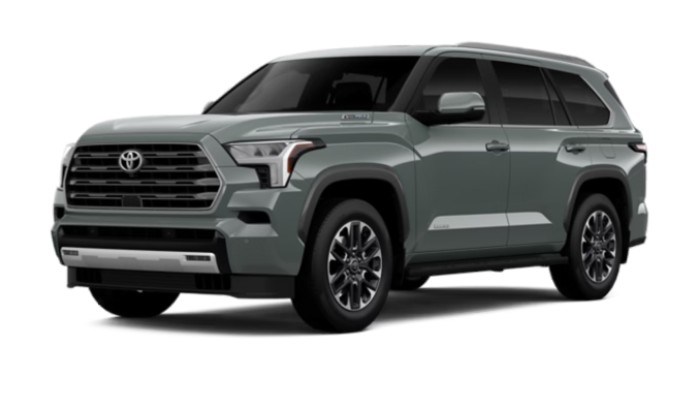
When we compare the Toyota Sequoia vs Ford Expedition, we are looking at two full-size SUVs designed for families who think a regular crossover feels a little too small. Both offer three-row seating, serious towing ability, truck-based construction, powerful turbocharged V6 engines, and enough road presence to make compact SUVs look like toys.
Yet they approach the full-size SUV formula differently.
The Toyota Sequoia leans heavily into its hybrid powertrain, rugged personality, Toyota truck heritage, and impressive torque. The Ford Expedition focuses more aggressively on passenger room, cargo capacity, towing flexibility, and highway comfort.
That creates an interesting choice. The Sequoia can feel like a sophisticated off-road machine that happens to carry a large family. The Expedition often feels like a rolling family room capable of towing a substantial trailer behind it.
So which one deserves a spot in our driveway?
For this comparison, we're primarily using the latest 2026 U.S.-market models as our reference point. Exact specifications, pricing, fuel economy, and equipment can vary by trim and configuration.
Content in this publication
- Toyota Sequoia vs Ford Expedition at a Glance
- Powertrain: Hybrid Muscle Meets EcoBoost Power
- Toyota Sequoia vs Ford Expedition Towing Capacity
- Fuel Economy: Does the Sequoia Hybrid Make a Big Difference?
- Interior Space: Ford Lands a Heavy Punch
- Cargo Capacity: Expedition Takes the Lead
- Ride Comfort and Highway Driving
- Off-Road Ability: Sequoia Fights Back
- Sequoia vs Expedition Technology
- Safety and Driver Assistance
- Exterior Size and Maneuverability
- Toyota Sequoia vs Ford Expedition Reliability
- Maintenance and Ownership Costs
- Sequoia vs Expedition Interior Quality
- Toyota Sequoia vs Ford Expedition Price and Value
- Which SUV Is Better for a Large Family?
- Which SUV Is Better for Outdoor Adventures?
- Main Toyota Sequoia vs Ford Expedition Pros and Cons
- Who Should Buy the Toyota Sequoia?
- Who Should Buy the Ford Expedition?
- Toyota Sequoia vs Ford Expedition: Which Is Better Overall?
- Final Verdict
- Frequently Asked Questions
- 1. Is the Toyota Sequoia better than the Ford Expedition?
- 2. Which can tow more, the Sequoia or Expedition?
- 3. Is the Toyota Sequoia more fuel-efficient than the Ford Expedition?
- 4. Which has more cargo space, Toyota Sequoia or Ford Expedition?
- 5. Which is better for a family, Sequoia or Expedition?
Toyota Sequoia vs Ford Expedition at a Glance
The biggest difference becomes obvious before we even drive them.
Toyota uses one electrified powertrain throughout the Sequoia lineup: an i-FORCE MAX twin-turbo V6 hybrid producing 437 horsepower and 583 lb-ft of torque. Toyota also rates the Sequoia to tow as much as 9,500 pounds and achieve up to an EPA-estimated 22 mpg combined.
Ford takes another path.
The 2026 Expedition uses a 3.5-liter EcoBoost twin-turbo V6. Standard versions produce 400 horsepower and 480 lb-ft of torque, while the high-output version increases that to 440 horsepower and 510 lb-ft. Properly configured short-wheelbase Expeditions can tow as much as 9,600 pounds, while Expedition MAX models sacrifice a little towing capacity in exchange for considerably more body length and cargo room.
In other words, this battle isn't about weak versus powerful.
It's powerful versus powerful.
The real differences appear in how those capabilities are delivered.
Powertrain: Hybrid Muscle Meets EcoBoost Power
Toyota Sequoia: One Engine, Plenty of Torque
Toyota doesn't make us spend twenty minutes studying an engine chart.
Every current Sequoia uses the i-FORCE MAX hybrid system. The setup pairs a twin-turbocharged V6 with an electric motor integrated into the drivetrain.
Together, they produce 437 horsepower and a muscular 583 lb-ft of torque.
That torque figure deserves attention.
The Sequoia isn't using hybrid technology primarily to behave like an oversized Prius. Toyota has designed the electrification around performance as much as efficiency.
Press the accelerator and the Sequoia feels strong immediately. The electric assistance helps provide the low-end shove we want in a heavy SUV, particularly when pulling onto a highway or towing something substantial.
It's less "eco appliance" and more "electrified sledgehammer."
Ford Expedition: Conventional Twin-Turbo Strength
Ford sticks with its proven 3.5-liter EcoBoost V6 architecture.
The regular engine delivers 400 horsepower and 480 lb-ft of torque, while the high-output version reaches 440 horsepower and 510 lb-ft.
Interestingly, the high-output Expedition technically edges the Sequoia in horsepower.
Toyota still wins the torque contest by a considerable margin.
Does that automatically make the Sequoia faster or better?
Not necessarily.
Power figures tell us what an engine can produce, but transmission calibration, vehicle weight, gearing, traction, throttle response, and tires all affect how that performance reaches the pavement.
Which Engine Would We Pick?
For sheer character, we give the advantage to Toyota.
The hybrid system makes the Sequoia unusual within its segment, and 583 lb-ft of torque is hard to ignore.
Ford counters with a simpler choice for buyers who don't particularly care about electrification and want the familiar characteristics of a powerful turbocharged gasoline SUV.
Powertrain winner: Toyota Sequoia
Toyota Sequoia vs Ford Expedition Towing Capacity
Full-size SUVs aren't merely enormous family cars.
Many people buy them because they need to pull boats, travel trailers, utility trailers, or recreational equipment without moving into a pickup truck.
Here the contest becomes remarkably close.
Toyota rates the Sequoia for up to 9,500 pounds of maximum towing capacity when properly configured.
Ford says the 2026 Expedition can reach 9,600 pounds of conventional towing capacity in certain short-wheelbase 4x4 configurations. The Expedition MAX can reach 9,000 pounds, while the more off-road-focused Tremor is rated as high as 9,300 pounds.
That 100-pound headline difference between the standard models is practically meaningless in everyday ownership.
Payload, passengers, tongue weight, cargo, hitch equipment, individual trim configuration, and Gross Combined Weight Rating matter far more than simply chasing the largest number printed in a brochure.
Which SUV Is Better for Towing?
We would call this category almost even.
The Expedition wins narrowly on maximum capacity.
The Sequoia's massive hybrid-assisted torque makes it an exceptionally compelling tow vehicle, though.
Toyota also equips the Sequoia with towing-oriented technology such as an integrated trailer brake controller and Trailer-Sway Control.
Ford has decades of experience developing towing systems for its trucks and SUVs, and the Expedition benefits from that ecosystem.
If our main priority were regularly pulling a large trailer, we'd compare the exact trim, payload sticker, hitch setup, and trailer specifications rather than choosing purely according to the advertised maximum.
Towing winner: Ford Expedition, by a whisker
Fuel Economy: Does the Sequoia Hybrid Make a Big Difference?
Here's where expectations need adjusting.
Seeing the word "hybrid" might make us picture dramatically lower fuel bills.
The Sequoia is still a large, heavy, body-on-frame SUV with considerable aerodynamic drag. Physics doesn't suddenly take a vacation because there's an electric motor under the floor.
Toyota advertises efficiency of up to an EPA-estimated 22 mpg combined, depending on configuration. Some 2026 Sequoia variants are listed by Toyota at 21 mpg city and 24 mpg highway, while other configurations return lower estimates.
That's respectable for something this large.
But the hybrid system's biggest benefit isn't necessarily Prius-like fuel economy. It also contributes substantially to performance and torque.
Real-World Fuel Costs Still Matter
Neither SUV qualifies as inexpensive transportation.
We're moving three rows of seats, heavy frames, substantial tires, powerful turbocharged engines, and the aerodynamic equivalent of a garden shed through the atmosphere.
Driving style also matters enormously.
A gentle right foot can make these SUVs reasonably efficient on long highway trips. Repeated short journeys, cold weather, heavy traffic, towing, large wheels, and aggressive acceleration can send consumption upward quickly.
For efficiency-focused shoppers, we'd lean toward the Sequoia.
Fuel-economy winner: Toyota Sequoia
Interior Space: Ford Lands a Heavy Punch
This may be the most important difference in the entire Toyota Sequoia vs Ford Expedition comparison.
Both SUVs are enormous outside.
They don't use that space equally inside.
Toyota lists the Sequoia with seating for as many as eight occupants and up to 86.9 cubic feet of maximum cargo volume with the rear seats folded.
That's plenty of room by ordinary automotive standards.
The Expedition, however, has traditionally made interior packaging one of its strongest weapons.
And then there's the Expedition MAX, the extended-wheelbase version.
It stretches the basic full-size SUV formula into something resembling a passenger-friendly moving van.
Third-Row Space Matters More Than Spec Sheets Suggest
Anyone can make a three-row SUV.
Making the third row genuinely pleasant for adults is harder.
A third row useful only for children may technically turn a vehicle into an eight-seater, but that doesn't help much when we're carrying teenagers, grandparents, friends, or colleagues.
The Expedition's boxier proportions and packaging generally make it the more convincing choice when all three rows will be used frequently.
The Sequoia isn't cramped. Far from it.
But Toyota's hybrid system and rear suspension arrangement introduce packaging compromises that become noticeable around the third row and cargo area.
The Sliding Sequoia Third Row Is Clever
Toyota responds with an unusual sliding third-row system and adjustable cargo shelf.
That flexibility helps us trade passenger space for luggage capacity.
It's clever.
Still, clever engineering can't completely replace raw cubic footage.
If we routinely travel with six or seven people and their luggage, the Expedition is easier to recommend.
Passenger-space winner: Ford Expedition
You may be interested in reading Toyota Sequoia vs Nissan Armada: Which Full-Size SUV Wins?
Cargo Capacity: Expedition Takes the Lead
Cargo capacity is often overlooked until the first big family trip.
Seven seats sound wonderful.
Then seven people arrive carrying seven suitcases.
Suddenly we're playing three-dimensional Tetris at the curb.
Toyota says the 2026 Sequoia offers up to 86.9 cubic feet of cargo volume with its rear seats folded.
That's useful, but buyers who prioritize maximum storage should pay close attention to the Expedition—especially the longer Expedition MAX.
Its stretched body provides exactly what we'd expect: more usable space behind the passengers.
For camping equipment, sports gear, airport runs, large dogs, road-trip luggage, and bulky purchases, those extra cubic feet can matter more than another twenty horsepower ever will.
Cargo winner: Ford Expedition
Ride Comfort and Highway Driving
This is where an enormous SUV either earns its keep or becomes exhausting.
Both vehicles are truck-based, yet neither drives exactly like an old pickup with a roof attached.
Expedition Feels Built for Long Journeys
The Ford's spacious cabin, substantial wheelbase, and relaxed road manners make it especially appealing for interstate travel.
We can imagine covering 600 miles in an Expedition without feeling as though we've spent the day wrestling a machine.
That's the point.
A good family SUV should fade into the background on a road trip.
The Expedition generally feels engineered around that mission.
Sequoia Feels More Truck-Like
The Toyota has a slightly different personality.
There's more emphasis on strength and ruggedness. Depending on trim and wheel size, it can communicate more of its body-on-frame DNA through the cabin.
Some drivers will actually prefer that.
It makes the Sequoia feel substantial, deliberate, and tough.
But shoppers whose number-one priority is cushy family transportation may find the Ford more natural.
Highway-comfort winner: Ford Expedition
Off-Road Ability: Sequoia Fights Back
Take the pavement away and the Toyota's personality suddenly makes much more sense.
The Sequoia shares plenty of engineering philosophy with Toyota's truck family, and Toyota offers versions aimed specifically at people who aren't buying all-terrain tires as decorations.
Toyota Sequoia TRD Pro
The TRD Pro is the obvious choice for serious Toyota enthusiasts.
It combines four-wheel-drive capability with off-road-focused hardware and styling, creating something much more adventurous than an ordinary suburban people mover.
The result feels like a giant expedition vehicle in the literal sense of the word.
Snow?
Mud?
Rocky access roads?
Remote campsites?
The Sequoia looks at them with the automotive equivalent of a raised eyebrow.
Ford Expedition Tremor
Ford isn't surrendering the trail.
The Expedition Tremor brings its own off-road-oriented equipment and receives the higher-output 440-horsepower EcoBoost engine. Ford rates that engine at 510 lb-ft of torque.
That turns the comparison into something genuinely interesting.
For serious recreational off-road use, either could work beautifully.
We still give Toyota the emotional edge because off-road durability and truck ruggedness are so deeply woven into the Sequoia's identity.
Off-road winner: Toyota Sequoia
Sequoia vs Expedition Technology
Modern full-size SUVs have essentially become rolling electronics stores.
Large touchscreens, wireless smartphone integration, camera systems, digital displays, driver assistance, premium audio, connected services, and towing technology are no longer unusual.
Toyota offers an available 14-inch Toyota Audio Multimedia touchscreen with wireless Apple CarPlay and Android Auto compatibility.
Ford has also moved the Expedition toward an increasingly digital cabin.
Which interface we prefer will ultimately be personal.
Toyota's system feels straightforward once we're familiar with it, while Ford has pushed harder toward a broad, screen-focused dashboard experience in the latest Expedition generation.
Neither vehicle feels technologically outdated.
Safety and Driver Assistance
Toyota equips the Sequoia with Toyota Safety Sense 2.5, its collection of active driver-assistance systems.
Ford likewise equips the Expedition with a broad suite of modern driver assistance and safety features, with available technology varying according to trim and configuration.
For family buyers, these systems matter.
But we shouldn't treat them as autopilot.
Adaptive cruise control, lane assistance, automatic emergency braking, blind-spot monitoring, cameras, and parking sensors can reduce workload. They don't replace attention.
And in SUVs this large, parking cameras may become one of the features we appreciate most.
Trying to maneuver a full-size SUV into a tight urban parking garage can feel like docking a yacht through a letterbox.
Exterior Size and Maneuverability
Nobody buys either SUV because it is small.
The current Sequoia measures roughly 208 inches long depending on configuration, placing it firmly in traditional full-size SUV territory. Toyota's own comparison information lists a length of 208.1 inches for the referenced Sequoia configuration.
The Expedition occupies a similar footprint, while the Expedition MAX extends considerably farther.
That matters in real life.
Before buying either SUV, we'd measure the garage.
Seriously.
City Driving Requires Adjustment
Narrow parking spaces, older parking structures, crowded downtown streets, and tight drive-through lanes remind us constantly that these vehicles are huge.
Parking cameras and sensors help enormously.
Still, drivers moving from a compact crossover such as a RAV4, CR-V, or Escape will need an adjustment period.
The standard Expedition and Sequoia remain manageable once we're accustomed to them.
The Expedition MAX asks for more commitment.
Maneuverability winner: Toyota Sequoia
Toyota Sequoia vs Ford Expedition Reliability
This is probably one of the most searched questions surrounding these SUVs.
Toyota carries an exceptionally strong reputation for long-term durability, especially among its trucks and traditional SUVs.
That reputation gives the Sequoia a psychological advantage before we've even looked at ownership data.
But modern Sequoias aren't mechanically simple old-school Land Cruisers.
The current model combines twin turbochargers, direct technology, substantial electronics, a hybrid system, a large battery, and sophisticated drivetrain controls.
That's a very different machine from an ancient naturally aspirated Toyota V8.
The Expedition Has Proven EcoBoost Experience
Ford has used EcoBoost technology across millions of vehicles.
The Expedition's 3.5-liter twin-turbo V6 has evolved through multiple generations, meaning the basic concept is far from experimental.
Still, long-term reliability depends heavily on maintenance, driving conditions, individual model year, and previous ownership.
When shopping used, we'd choose a well-maintained Expedition over a neglected Sequoia without hesitation.
Brand reputation can't replace maintenance records.
Toyota's Hybrid Warranty Adds Confidence
Toyota states that hybrid batteries in applicable vehicles from the 2020 model year onward receive warranty coverage for 10 years or 150,000 miles, whichever comes first.
That's useful reassurance for buyers nervous about hybrid ownership.
You may be interested in readingToyota Sequoia vs Nissan Armada: Which Full-Size SUV Wins?You may be interested in reading
Toyota Sequoia vs Honda Pilot: Which SUV Makes More Sense?Over the very long term, however, both SUVs are complex enough that maintenance history matters tremendously.
Reliability confidence winner: Toyota Sequoia
Maintenance and Ownership Costs
A full-size SUV operating budget doesn't stop with fuel.
We've also got tires, brakes, insurance, maintenance, registration, depreciation, and potentially expensive suspension or powertrain components.
Large wheels mean expensive tires.
Heavy vehicles can consume brakes faster.
Turbocharged engines require good maintenance.
And complicated luxury equipment becomes less charming when something breaks outside warranty.
The Toyota may offer stronger resale value in many markets thanks to the brand's durability reputation.
Ford, however, sells enormous numbers of trucks and SUVs in North America, making service knowledge widespread.
Neither is what we'd call a budget vehicle.
If running costs are a major concern, we'd seriously question whether we need a full-size SUV in the first place.
Sequoia vs Expedition Interior Quality
Neither cabin feels cheap.
Toyota gives upper Sequoia trims a genuinely premium atmosphere. The 1794 Edition, for example, uses distinctive Saddle Tan leather and real American walnut trim, while Capstone models push even further toward luxury territory.
Ford follows a similar strategy with luxury-oriented Expedition trims.
At the upper end, these SUVs start overlapping with luxury-brand territory in both equipment and price.
Toyota Feels Rugged-Luxurious
The Sequoia mixes large controls, tough-looking shapes, upscale materials, and truck-like design cues.
It feels adventurous.
Ford Feels Spacious-Luxurious
The Expedition's strongest impression is scale.
The dashboard is broad.
The cabin is wide.
The rows feel separated by acres of air.
Where Toyota whispers "premium off-road truck," Ford says "first-class family transport."
Neither philosophy is wrong.
Toyota Sequoia vs Ford Expedition Price and Value
Toyota lists the 2026 Sequoia with a starting MSRP of $65,725 before destination charges and optional equipment, with higher trims climbing substantially beyond that point.
An SR5 isn't a cheap SUV, and top-tier Sequoias can quickly enter luxury-vehicle territory.
Ford Expedition pricing similarly rises sharply once we move through higher trims, four-wheel-drive configurations, premium packages, and the Expedition MAX.
This makes value more complicated than simply asking which model starts cheaper.
We need to compare what we're actually getting.
A buyer wanting hybrid power, serious towing and Toyota's reputation may see the Sequoia as the better investment.
Someone prioritizing passenger room and maximum cargo capacity may get more utility per dollar from the Expedition.
Which SUV Is Better for a Large Family?
For most large families, we'd choose the Ford Expedition.
Why?
Because space becomes king when people use every seat regularly.
Extra third-row room and a more generous cargo area can change everyday life in ways that horsepower figures don't.
Think about school backpacks, grocery bags, strollers, sports equipment, suitcases and pets.
Suddenly cubic feet become more exciting than torque.
The Expedition MAX amplifies that advantage.
If the vehicle will spend most of its life transporting six or more people, Ford's packaging is difficult to beat.
Family winner: Ford Expedition
Which SUV Is Better for Outdoor Adventures?
Now we'd switch sides.
The Sequoia makes more sense for buyers who imagine their SUV covered in mud rather than parked outside a hotel.
Toyota's powerful hybrid drivetrain, available four-wheel drive, TRD Pro model and overall rugged personality make it especially appealing for camping, overlanding and outdoor recreation.
Ford's Tremor is absolutely capable.
Yet the Sequoia feels as though adventure sits closer to the center of its personality.
Adventure winner: Toyota Sequoia
Main Toyota Sequoia vs Ford Expedition Pros and Cons
If we strip away the marketing language, the differences become easier to understand:
- Choose the Toyota Sequoia if we prioritize hybrid performance, enormous torque, off-road character, Toyota's reputation for durability, strong resale appeal and respectable fuel economy.
- Choose the Ford Expedition if we prioritize interior room, third-row comfort, cargo capacity, highway refinement and maximum family practicality.
- Choose the Expedition MAX if cargo space behind three occupied rows is one of our biggest concerns.
- Choose the Sequoia TRD Pro if trails, camping and rugged travel matter more than squeezing every possible cubic foot from the cabin.
- Compare exact towing configurations if pulling a heavy trailer is essential because maximum advertised ratings don't apply to every version.
Who Should Buy the Toyota Sequoia?
The Sequoia suits us particularly well if we're the type of owner who wants one SUV to do almost everything.
It can haul children during the week, tow a trailer on Saturday and explore an unpaved mountain road on Sunday.
Its hybrid system also gives it an unusual combination of torque and efficiency for something weighing well over two tons.
We would lean Sequoia if durability perception, rugged capability and powertrain character rank above absolute cabin volume.
Who Should Buy the Ford Expedition?
The Expedition makes more sense when passenger comfort sits at the top of our list.
It's the SUV we'd choose for frequent long-distance family travel, particularly with adults occupying the second and third rows.
And if we need even more room?
That's exactly why the Expedition MAX exists.
For people whose idea of an expedition involves luggage, children, grandparents and several hundred highway miles rather than boulders and muddy trails, the Ford arguably understands the assignment better.
Toyota Sequoia vs Ford Expedition: Which Is Better Overall?
There isn't a knockout winner because these SUVs excel in different ways.
The Toyota Sequoia wins for powertrain character, torque, fuel efficiency potential, rugged personality and off-road appeal.
The Ford Expedition wins for passenger space, cargo capacity, long-distance comfort and overall practicality.
If we had four children and regularly traveled with everyone's luggage, we'd probably take the Expedition.
If we needed three rows but also wanted something capable of towing, camping, tackling rough terrain and feeling genuinely adventurous, we'd gravitate toward the Sequoia.
That's the simplest way to frame the decision.
The Expedition is the better people mover.
The Sequoia is arguably the better adventure machine.
Final Verdict
The Toyota Sequoia vs Ford Expedition debate demonstrates why spec-sheet comparisons only take us so far.
Toyota gives us a sophisticated 437-horsepower hybrid drivetrain producing 583 lb-ft of torque, as much as 9,500 pounds of towing capacity and up to an estimated 22 mpg combined.
Ford counters with up to 440 horsepower, as much as 9,600 pounds of properly equipped towing capacity, enormous interior flexibility and the option of the extended Expedition MAX.
The numbers are close.
Their personalities aren't.
We'd pick the Sequoia for ruggedness, hybrid torque and outdoor versatility, while we'd pick the Expedition for space, family comfort and road-trip practicality.
Neither is objectively better for everyone.
But once we decide whether our perfect weekend involves hauling a packed trailer into the wilderness or carrying seven people and their luggage across three states, the right SUV becomes much easier to spot.
Frequently Asked Questions
1. Is the Toyota Sequoia better than the Ford Expedition?
The Sequoia is better for buyers prioritizing hybrid performance, strong torque, rugged capability and Toyota's durability reputation. The Expedition is generally more appealing when passenger space, cargo capacity and family practicality are the priorities.
2. Which can tow more, the Sequoia or Expedition?
They're extremely close. Toyota rates the 2026 Sequoia for up to 9,500 pounds, while Ford rates properly configured 2026 Expedition models for up to 9,600 pounds. Exact capacity depends on trim, drivetrain, equipment, passengers and cargo.
3. Is the Toyota Sequoia more fuel-efficient than the Ford Expedition?
The Sequoia's hybrid system gives it a strong efficiency advantage in certain configurations. Toyota advertises up to an EPA-estimated 22 mpg combined, although actual consumption depends heavily on trim and driving conditions.
4. Which has more cargo space, Toyota Sequoia or Ford Expedition?
The Ford Expedition has the advantage, particularly if we choose the longer Expedition MAX. Toyota's Sequoia offers up to 86.9 cubic feet with the rear seats folded and uses a sliding third row plus adjustable cargo shelf to improve flexibility.
5. Which is better for a family, Sequoia or Expedition?
For a large family regularly using all three rows, we'd favor the Ford Expedition because passenger and cargo space are among its greatest strengths. The Sequoia remains an excellent alternative for families that place greater emphasis on towing, outdoor recreation and rugged capability.
You may be interested in readingToyota Sequoia vs Nissan Armada: Which Full-Size SUV Wins?You may be interested in reading
Toyota Sequoia vs Honda Pilot: Which SUV Makes More Sense?You may be interested in reading
Toyota Sequoia vs Lexus GX: Which SUV Should We Buy?If you want to know other articles similar to Toyota Sequoia vs Ford Expedition: Which Full-Size SUV Is Better? you can visit the category Models.
Haval Jolion vs Omoda C5: Which SUV Is Better?
Haval Jolion vs Chery Tiggo 4 Pro: Full Comparison
Haval Jolion vs H6: Which SUV Is Better in 2026?
Haval Jolion vs Toyota Corolla Cross: Which SUV Is Better?
Haval Jolion vs Jaecoo J5: Which SUV Is Better?
Volkswagen T-Cross vs Volkswagen T-Roc: Which Is Better?
Leave a Reply
More content of your interest