
Toyota Sequoia vs Honda Pilot: Which SUV Makes More Sense?

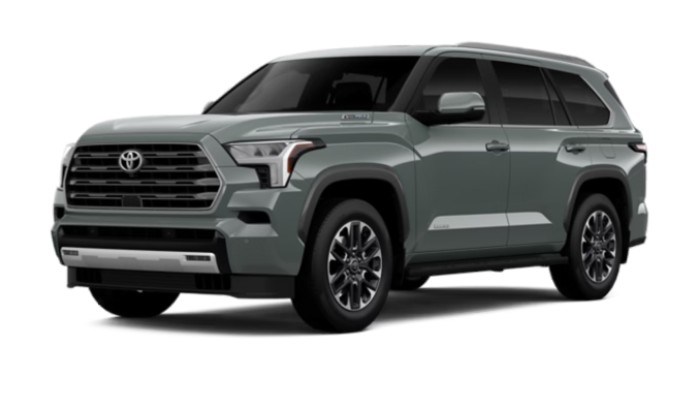
At first glance, comparing the Toyota Sequoia vs Honda Pilot may seem a little unusual. Both are three-row SUVs from Japanese manufacturers, both can carry a large family, and both have reputations built around dependability. Yet once we look beneath the sheet metal, these vehicles approach the family-SUV formula from completely different directions.
The Toyota Sequoia is a body-on-frame, full-size SUV with serious towing muscle, a powerful hybrid drivetrain, and the sort of rugged hardware we normally associate with pickup trucks. The Honda Pilot is a unibody crossover designed primarily around comfortable family transportation, manageable dimensions, flexible cargo space, and lower everyday running costs.
For 2026, that contrast is especially sharp. The Sequoia produces 437 horsepower and 583 lb-ft of torque from its standard i-FORCE MAX twin-turbo V6 hybrid system and can tow as much as 9,500 pounds. The Pilot uses a naturally aspirated 3.5-liter V6 producing 285 horsepower, with towing capacity reaching 5,000 pounds when properly equipped with AWD.
So which one belongs in our driveway? That depends less on which SUV is "better" and more on what we expect it to do.
Content in this publication
- Toyota Sequoia vs Honda Pilot at a Glance
- Size and Philosophy: Full-Size SUV vs Family Crossover
- Exterior Presence: Sequoia Looks Bigger Because It Is Bigger
- Engine Comparison: Hybrid Muscle Meets Traditional V6
- Fuel Economy: Surprisingly Close on Paper
- Towing Capacity: Sequoia Wins Easily
- Passenger Space: The Pilot Makes Clever Use of Its Footprint
- Cargo Space: Honda Pilot Has a Secret Weapon
- Ride Comfort and Road Manners
- Off-Road Capability
- Technology and Infotainment
- Safety Features
- Toyota Sequoia vs Honda Pilot Reliability
- Maintenance and Ownership Costs
- Price and Value: The Gap Is Massive
- Who Should Buy the Toyota Sequoia?
- Who Should Buy the Honda Pilot?
- Toyota Sequoia vs Honda Pilot for Road Trips
- Toyota Sequoia vs Honda Pilot for City Driving
- Toyota Sequoia vs Honda Pilot for Snow
- Which SUV Feels More Luxurious?
- Toyota Sequoia vs Honda Pilot: Which One Would We Buy?
- Final Verdict: Choose Capability or Everyday Efficiency
- Frequently Asked Questions
Toyota Sequoia vs Honda Pilot at a Glance
Before diving deeper, the easiest way to understand these SUVs is to think of them as two different tools.
| Category | 2026 Toyota Sequoia | 2026 Honda Pilot |
|---|---|---|
| Vehicle type | Full-size body-on-frame SUV | Three-row unibody crossover |
| Engine | Twin-turbo V6 hybrid | 3.5L naturally aspirated V6 |
| Horsepower | 437 hp | 285 hp |
| Torque | 583 lb-ft | Lower than Sequoia |
| Maximum towing | Up to 9,500 lb | Up to 5,000 lb AWD |
| Seating | Three rows | Up to 8 |
| Best EPA combined figure | Up to 22 mpg | Up to 22 mpg on 2WD configurations |
| Starting MSRP | $65,725 | $42,395 |
| Best suited for | Heavy towing, rugged use, large SUV buyers | Families, commuting, road trips |
Toyota lists the 2026 Sequoia from $65,725, while Honda lists the 2026 Pilot Sport from $42,395. That roughly $23,000 starting-price gap immediately tells us something important: these SUVs overlap in purpose, but not really in market positioning.
Size and Philosophy: Full-Size SUV vs Family Crossover
The Sequoia feels like it arrived at the school parking lot after spending the weekend pulling a boat through the mountains. The Pilot feels like it spent the same weekend carrying kids, luggage, groceries, and bicycles to a vacation rental.
Neither approach is wrong.
The Sequoia shares its rugged philosophy with Toyota's truck-based vehicles. Its body-on-frame construction gives it the strength buyers expect when towing larger trailers or venturing onto difficult terrain. You sit high, the hood stretches out in front of you, and there is a definite sense that you are piloting something substantial.
The Pilot uses unit-body construction, which Honda explicitly lists in its specifications. That architecture tends to pay dividends in ride comfort, packaging efficiency, weight, and everyday maneuverability.
For families who rarely tow anything larger than a small trailer, the Pilot's design may actually be the more logical solution.
Exterior Presence: Sequoia Looks Bigger Because It Is Bigger
Toyota Sequoia Styling
The Sequoia has presence in capital letters. Its large grille, tall body, pronounced wheel arches, and squared-off proportions give it the visual confidence of a truck wearing an SUV suit.
Depending on trim, Toyota can push the personality toward rugged, luxurious, or almost Western-themed. The 1794 Edition, for example, includes a Saddle Tan interior and real American walnut trim, showing how far Toyota is willing to move the Sequoia beyond pure utility.
It looks expensive because it is expensive.
Honda Pilot Styling
The current Pilot has become noticeably more rugged than earlier generations. Honda has moved away from the softer, minivan-adjacent appearance of older Pilots and embraced a squarer silhouette.
TrailSport models take that idea further with all-terrain tires, 18-inch wheels, an off-road-tuned suspension, and TrailWatch camera technology.
Still, park the Pilot next to the Sequoia and the Honda looks restrained. That can be an advantage. A Pilot attracts less attention, fits more naturally into suburban life, and generally feels easier to place on narrow roads.
Engine Comparison: Hybrid Muscle Meets Traditional V6
This is where the Toyota Sequoia vs Honda Pilot comparison really splits apart.
Toyota Sequoia i-FORCE MAX Hybrid
Every 2026 Sequoia uses Toyota's i-FORCE MAX twin-turbo V6 hybrid powertrain. Output is rated at 437 horsepower and 583 lb-ft of torque.
Those numbers are enormous compared with the Pilot.
And the hybrid system should not be confused with the fuel-economy-first philosophy of something like a Prius. Here, electrification works partly as a performance enhancer. Electric assistance helps deliver strong low-speed response and torque, which is exactly what we want when moving a heavy SUV or pulling a trailer.
Press the accelerator and the Sequoia should feel effortless rather than frantic. There is a deep reservoir of torque waiting beneath your right foot.
Honda Pilot 3.5-Liter V6
The Pilot's formula is refreshingly traditional. Honda gives every 2026 Pilot a 3,471-cc V6 producing 285 horsepower at 6,100 rpm.
It cannot match the Toyota's outright thrust, but it doesn't need to.
The Honda weighs substantially less and isn't trying to pull nearly five tons of trailer. For normal commuting, merging, family road trips, and mountain highways, 285 horsepower is perfectly reasonable.
Which Engine Would We Choose?
If acceleration, towing, and effortless low-end torque matter, Sequoia wins by a landslide.
If our priority is smooth family transportation without paying for capability we'll rarely use, Pilot makes more sense.
It's a little like comparing a professional cordless impact wrench with a good household drill. The heavier tool is objectively stronger, but that doesn't mean we need it to hang a picture frame.
Fuel Economy: Surprisingly Close on Paper
Here's where things become interesting.
Toyota advertises the Sequoia at up to an EPA-estimated 22 mpg combined. Honda lists the Pilot at 19 mpg city, 27 highway, and 22 combined in 2WD form, while many AWD versions are rated at 19/25/21 mpg. TrailSport drops to 18/23/20 mpg.
At first glance, that's an impressive result for the much more powerful Toyota.
But we need context.
The Sequoia is still a large, heavy vehicle. Real-world fuel consumption can vary dramatically with driving conditions, tire choice, speed, cargo, terrain, and especially towing. The Pilot's lighter weight and less powerful drivetrain make it easier to operate efficiently during normal suburban driving.
Honda also recommends regular unleaded fuel for the Pilot and gives it an 18.5-gallon fuel tank.
Which SUV Is Better for Daily Commuting?
We would take the Pilot.
Even if EPA combined figures can appear surprisingly close in certain configurations, the Honda's smaller footprint, lighter weight, lower purchase price, and crossover architecture are much better aligned with repetitive commuting.
Driving an enormous SUV through tight city streets when we don't need its capability can feel like wearing hiking boots to walk around the kitchen.
Towing Capacity: Sequoia Wins Easily
If towing plays a serious role in this decision, the comparison becomes much easier.
Toyota rates the 2026 Sequoia to tow up to 9,500 pounds. Toyota also equips the model with useful towing technology, including an integrated trailer brake controller and Trailer-Sway Control.
Honda rates 2WD Pilot configurations at up to 3,500 pounds, while AWD models can reach 5,000 pounds when properly equipped.
That means both can tow, but they live in different neighborhoods.
What Can the Honda Pilot Tow?
The Pilot can be perfectly appropriate for smaller recreational loads. Think compact campers, personal watercraft, small utility trailers, or lighter boats, provided the trailer and vehicle remain within Honda's applicable weight limits.
What Can the Toyota Sequoia Tow?
The Sequoia is the more convincing solution when trailers become substantially heavier.
Its high torque output, truck-based construction, and 9,500-pound maximum rating make it much more appropriate for buyers who regularly tow heavier campers or boats.
Towing Winner: Toyota Sequoia
This category isn't close. If towing sits near the top of our priority list, Sequoia earns its higher price far more easily.
Passenger Space: The Pilot Makes Clever Use of Its Footprint
The Honda Pilot can seat up to eight people, depending on trim and seating configuration. Honda lists second-row legroom at 40.8 inches and third-row legroom at 32.5 inches, giving passengers a reasonably accommodating three-row environment.
The removable or stowable second-row middle seat available on several Pilot trims is one of those features that sounds minor until we actually live with it.
Want maximum seating? Keep the middle seat installed.
Want easier third-row access and a captain's-chair-like arrangement? Remove or store it.
That flexibility is family engineering at its best.
You may be interested in reading Toyota Sequoia vs Lexus GX: Which SUV Should We Buy?
The Sequoia also provides three-row seating, but its truck-based packaging and hybrid hardware create some compromises, particularly when we're judging interior efficiency rather than exterior size alone.
Cargo Space: Honda Pilot Has a Secret Weapon
Large exterior dimensions don't automatically create better cargo packaging.
Honda lists 18.6 cubic feet of standard cargo space behind the third row, 48.5 cubic feet behind the second row, and 87 cubic feet behind the first row. Depending on how Honda measures maximum cargo volume with underfloor areas included, figures can exceed 110 cubic feet.
That's excellent flexibility for a family SUV.
Toyota takes a different approach with the Sequoia's adjustable cargo system. Its third row can slide, and Toyota provides a multi-level adjustable cargo shelf to help owners configure the space.
The Sequoia therefore gives us clever flexibility, but if our regular routine involves folding seats, loading strollers, carrying sports equipment, or maximizing usable interior volume, the Pilot's crossover packaging is extremely attractive.
Which Is Better for a Large Family?
For most families, we'd lean Pilot.
That may sound surprising considering the Sequoia's imposing dimensions, but everyday family practicality is about more than exterior size. The Honda is easier to enter, easier to park, cleverly packaged, spacious inside, and available with seating for eight.
The Toyota becomes more compelling when the family's lifestyle includes heavy trailers, serious outdoor recreation, or frequent journeys on rough terrain.
Ride Comfort and Road Manners
Honda Pilot on Pavement
The Pilot's unit-body structure, independent suspension layout, and road-focused engineering give it the advantage in ordinary driving.
Honda uses MacPherson struts up front and a multi-link rear suspension.
That combination helps the Pilot behave more like a large car than a traditional truck. Steering should feel lighter, body motions more controlled, and rough pavement less dramatic.
Around town, those traits matter every single day.
Toyota Sequoia on Pavement
The Sequoia has grown significantly more refined over the years, but physics never disappears.
A tall, heavy, truck-based vehicle carries itself differently. You'll feel more mass beneath you, and its overall footprint demands greater awareness in parking lots.
Available load-leveling rear height control air suspension helps broaden the Sequoia's comfort and capability envelope.
Still, if smooth urban driving is the goal, Pilot has the more natural architecture.
Off-Road Capability
This category is more nuanced than it first appears.
Toyota clearly starts with the stronger foundation for difficult terrain. The Sequoia's truck-based architecture and available off-road-focused configurations suit buyers who intend to explore genuinely challenging roads.
Yet Honda has worked hard to make the Pilot TrailSport more than an appearance package.
The 2026 Pilot TrailSport includes all-terrain tires, an off-road-tuned suspension, TrailWatch camera system, and AWD, along with drive modes including Trail and Sand.
That makes the TrailSport surprisingly capable for a family crossover.
Sequoia vs Pilot TrailSport
If we're dealing with forest roads, campsites, snow, dirt tracks, or moderate trails, the Pilot TrailSport may offer all the capability most owners realistically need.
If we're deliberately shopping for an SUV because rugged terrain is a major part of life, we'd choose the Sequoia.
Technology and Infotainment
Technology has become almost as important to modern families as horsepower.
The 2026 Pilot now offers a 12.3-inch touchscreen on applicable configurations, and Honda includes Google built-in functionality among key features. Higher trims can add equipment such as a Bose premium audio system, head-up display, panoramic moonroof, and multiview camera system.
Toyota likewise positions the Sequoia as a premium, technology-rich SUV, especially as we climb through higher trims.
The difference is less about whether either vehicle has enough technology and more about the atmosphere surrounding it.
The Pilot's controls and cabin feel designed around family usability.
The Sequoia feels more like a premium adventure machine.
Safety Features
Honda equips the Pilot with its Honda Sensing suite. Listed driver-assistance technologies include Collision Mitigation Braking System, Road Departure Mitigation, Lane Keeping Assist, Adaptive Cruise Control with Low-Speed Follow, Traffic Sign Recognition, and Traffic Jam Assist.
Toyota equips the 2026 Sequoia with Toyota Safety Sense 2.5, according to Toyota's current model information.
Both manufacturers therefore provide extensive modern driver assistance.
Rather than choosing solely from the length of the feature list, we'd test the systems ourselves. How smoothly adaptive cruise responds, how naturally lane centering intervenes, and how clearly warnings are presented often matters more than how many acronyms appear in the brochure.
Toyota Sequoia vs Honda Pilot Reliability
Toyota and Honda have both built enormous reputations around longevity.
That doesn't mean every Sequoia or Pilot will be trouble-free. Modern vehicles include turbochargers, complex electronics, sophisticated emissions systems, advanced transmissions, driver-assistance sensors, and—in the Sequoia's case—a hybridized powertrain.
The Pilot's naturally aspirated V6 is conceptually simpler than the Sequoia's twin-turbo hybrid system. Simplicity can be attractive for buyers planning very long ownership periods, although actual long-term reliability depends on engineering quality and maintenance, not simply component count.
Toyota, meanwhile, has extensive experience with hybrid technology.
For either SUV, we'd put more emphasis on service history, correct maintenance, warranty coverage, and how long we intend to keep the vehicle than on brand reputation alone.
Maintenance and Ownership Costs
This is another category where the Pilot should enjoy a natural advantage.
Consider the basics. The Honda starts at $42,395. The Toyota starts at $65,725.
That gives the Pilot a huge head start before we buy a gallon of fuel.
A less expensive vehicle also commonly means lower financing exposure and potentially lower insurance costs, although insurance varies heavily by driver, location, trim, and coverage.
The Pilot also uses smaller-scale hardware than a full-size truck-based SUV. Tires, brakes, and suspension components can become meaningful expenses over long ownership periods on any heavy vehicle.
Which Is Cheaper to Own?
Almost certainly the Pilot for the typical family.
The Sequoia makes financial sense when we actually use the capability we're paying for.
Buying it solely because we like its imposing appearance is perfectly valid—but we shouldn't pretend that's the economical choice.
Price and Value: The Gap Is Massive
The starting MSRP difference deserves its own discussion.
The 2026 Honda Pilot starts at $42,395, while the 2026 Toyota Sequoia starts at $65,725.
That's roughly $23,330 before considering destination fees, options, taxes, financing, or dealer pricing.
You may be interested in readingToyota Sequoia vs Lexus GX: Which SUV Should We Buy?You may be interested in reading
Toyota Sequoia vs Sienna: Which Toyota Fits Your Life Better?Move farther up the Pilot range and Honda currently lists models including the TrailSport at $50,595, Touring at $51,295, Elite at $53,695, and Black Edition at $55,195.
In other words, even a well-equipped Pilot can still sit below the Sequoia's entry point.
Is the Toyota Sequoia Worth the Extra Money?
Yes—if we need what makes a Sequoia a Sequoia.
That means substantially greater towing capacity, tremendous torque, full-size-SUV presence, and heavier-duty capability.
If our life consists mainly of commuting, family errands, school runs, and road trips, the Pilot offers more value per dollar.
Who Should Buy the Toyota Sequoia?
The Sequoia makes the most sense when capability isn't hypothetical.
We'd put it at the top of the list for someone who regularly tows a substantial camper or boat, wants a large and commanding SUV, frequently travels into remote areas, or simply prefers the sturdy feel of a truck-based platform.
Its strongest advantages are straightforward:
- 437-hp hybrid powertrain with 583 lb-ft of torque
- Up to 9,500 pounds of towing capacity
- Strong truck-based architecture
- Serious off-road potential
- Premium trims and imposing road presence
- Surprisingly respectable EPA fuel-economy potential for its performance
If several of those attributes describe our needs, the extra money begins to look justified.
Who Should Buy the Honda Pilot?
The Pilot fits a much broader range of everyday buyers.
It offers three rows, up to eight seats, abundant cargo flexibility, available AWD, a comfortable road-oriented platform, modern technology, and enough towing capacity for lighter recreational use.
Most importantly, it delivers those things without forcing us into the size, price, and ownership commitment of a full-size SUV.
If our family wants one vehicle capable of handling Monday morning school drop-off and Saturday morning camping trips without feeling oversized during the other five days of the week, the Pilot is extremely persuasive.
Toyota Sequoia vs Honda Pilot for Road Trips
This one depends on the road trip.
For a normal interstate vacation with several passengers and lots of luggage, we prefer the Pilot. Its spacious cabin, strong cargo packaging, manageable proportions, and comfortable chassis fit the job beautifully.
For a trip involving a large travel trailer, rough access roads, or serious towing, the equation flips immediately toward Sequoia.
Think of the Pilot as a comfortable pair of running shoes. The Sequoia is more like a pair of rugged hiking boots. Both can walk down the sidewalk, but only one was designed with mountains in mind.
Toyota Sequoia vs Honda Pilot for City Driving
Pilot wins.
There's little suspense here.
A lighter, smaller unibody crossover is simply better matched to parking garages, narrow streets, crowded shopping centers, and stop-and-go traffic.
The Sequoia isn't impossible to drive in the city, of course. Plenty of owners do it every day. But using a full-size SUV in dense urban environments requires accepting its width, turning radius, parking demands, and overall bulk.
If 90 percent of our driving happens around town, buying the Sequoia for the other 10 percent deserves careful thought.
Toyota Sequoia vs Honda Pilot for Snow
Both can be compelling with the right configuration and, critically, the right tires.
Honda's available i-VTM4 AWD system and selectable drive modes give AWD Pilot models strong all-weather versatility. Honda lists Snow mode, and AWD variants add Trail and Sand modes in applicable configurations.
The Sequoia's available four-wheel-drive-oriented configurations and higher-capability platform make it attractive for deeper snow and more demanding conditions.
But drivetrain technology cannot overcome poor tires.
For most winter driving on maintained roads, an AWD Pilot wearing quality winter tires could be a better tool than a larger SUV on inappropriate rubber.
Which SUV Feels More Luxurious?
At the upper end, Sequoia.
Toyota has intentionally positioned higher Sequoia trims as premium vehicles. Real wood trim, upscale upholstery, large displays, available sophisticated suspension hardware, and the sheer sense of size all contribute to an expensive atmosphere.
The Pilot is comfortable and can become impressively well equipped. Elite and Black Edition trims include features such as a head-up display, heated and ventilated front seats, and premium cabin touches.
But even in expensive form, the Pilot remains fundamentally focused on practical family luxury rather than full-size prestige.
Toyota Sequoia vs Honda Pilot: Which One Would We Buy?
For the majority of families, we'd buy the Honda Pilot.
That doesn't mean it wins more enthusiast points. It means it solves the typical family-SUV problem with fewer compromises.
It carries up to eight people. It has a useful third row. Cargo packaging is excellent. The V6 provides adequate power. AWD is available. Towing reaches 5,000 pounds on properly equipped AWD versions. And the starting price is dramatically lower than the Sequoia's.
The Toyota Sequoia, however, is the easy choice once our requirements become more demanding.
Need to tow something approaching 9,000 pounds? Pilot exits the conversation.
Want enormous torque? Sequoia.
Prefer a truck-based SUV capable of taking harder abuse? Again, Sequoia.
That's why declaring a universal winner would miss the point.
Final Verdict: Choose Capability or Everyday Efficiency
The Toyota Sequoia vs Honda Pilot battle isn't really a fight between equals. It's a choice between two philosophies.
The 2026 Toyota Sequoia is the heavyweight. With 437 horsepower, 583 lb-ft of torque, up to 9,500 pounds of towing capacity, and a truck-based attitude, it is engineered for buyers who want substantial capability.
The 2026 Honda Pilot is the pragmatic family specialist. Its 285-hp V6, seating for up to eight, excellent cargo flexibility, available AWD, and starting MSRP of $42,395 make it far easier to justify as an everyday vehicle.
We'd choose the Pilot for normal family life and the Sequoia for towing, rugged adventures, or buyers who genuinely want a full-size SUV.
Sometimes bigger really is better.
But only when we actually need bigger.
Frequently Asked Questions
1. Is the Toyota Sequoia bigger than the Honda Pilot?
Yes. The Toyota Sequoia is a full-size, truck-based SUV, whereas the Honda Pilot is a lighter unibody three-row crossover. The Sequoia feels noticeably larger and more substantial on the road, while the Pilot is easier to maneuver and park.
2. Which can tow more, the Toyota Sequoia or Honda Pilot?
The Toyota Sequoia wins decisively. The 2026 Sequoia can tow up to 9,500 pounds, while the 2026 Pilot is rated for up to 5,000 pounds with AWD when properly equipped.
3. Is the Honda Pilot more fuel-efficient than the Toyota Sequoia?
Not always by as much as we might expect. Honda lists certain 2WD Pilot configurations at 19/27/22 mpg city/highway/combined, while Toyota advertises the Sequoia at up to 22 mpg combined. Actual fuel consumption will depend heavily on configuration and driving conditions.
4. Which is better for a family, Sequoia or Pilot?
For most families, the Pilot is the easier recommendation because it offers up to eight seats, generous cargo space, a comfortable ride, and a substantially lower starting price. The Sequoia is preferable when the family also needs heavy towing or stronger off-road capability.
5. Is the Toyota Sequoia worth the extra cost over a Honda Pilot?
It can be. The Sequoia's extra cost buys much more power, nearly double the Pilot's maximum towing potential, a full-size platform, and greater heavy-duty capability. If we don't need those advantages, however, the Pilot usually provides better everyday value.
You may be interested in readingToyota Sequoia vs Lexus GX: Which SUV Should We Buy?You may be interested in reading
Toyota Sequoia vs Sienna: Which Toyota Fits Your Life Better?You may be interested in reading
Toyota Sequoia vs GMC Yukon: Which Full-Size SUV Is Better?If you want to know other articles similar to Toyota Sequoia vs Honda Pilot: Which SUV Makes More Sense? you can visit the category Models.
Haval Jolion vs Omoda C5: Which SUV Is Better?
Haval Jolion vs Chery Tiggo 4 Pro: Full Comparison
Haval Jolion vs H6: Which SUV Is Better in 2026?
Haval Jolion vs Toyota Corolla Cross: Which SUV Is Better?
Haval Jolion vs Jaecoo J5: Which SUV Is Better?
Volkswagen T-Cross vs Volkswagen T-Roc: Which Is Better?
Leave a Reply
More content of your interest