
Toyota Sequoia vs GMC Yukon: Which Full-Size SUV Is Better?

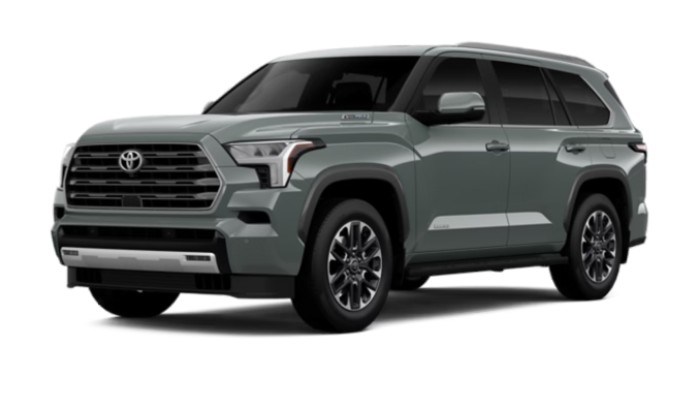
Choosing between the Toyota Sequoia vs GMC Yukon is a little like choosing between two heavyweight athletes with very different fighting styles. Both are large, three-row SUVs built for families, towing, road trips, and the occasional adventure far beyond the grocery-store parking lot. Yet they go about those jobs in surprisingly different ways.
The Toyota Sequoia leans into a rugged truck-based personality, pairing its body-on-frame construction with a standard twin-turbo hybrid powertrain. The GMC Yukon takes a broader approach. It offers multiple engines, a more spacious cabin, upscale Denali trims, available diesel power, and even the longer Yukon XL for buyers who think a normal full-size SUV somehow still isn't big enough.
For the current 2026 models, Toyota gives every Sequoia its i-FORCE MAX twin-turbo V6 hybrid producing 437 horsepower and 583 lb-ft of torque, while GMC offers three Yukon engine choices. Toyota also rates the Sequoia for up to roughly 9,500 pounds of towing, giving it an important advantage for certain trailer owners.
So, which one deserves a place in our driveway? Let's break it down without drowning ourselves in brochure language.
Content in this publication
- Toyota Sequoia vs GMC Yukon at a Glance
- Powertrain: Hybrid Muscle vs Traditional Choice
- Toyota Sequoia vs Yukon Performance
- Towing Capacity: Sequoia Takes the Headline Victory
- Fuel Economy: The Answer Isn't as Obvious as “Hybrid Wins”
- Interior Space: Yukon Lands a Heavy Punch
- Third-Row Seating: GMC Is Better for Adults
- Yukon XL: Toyota Has No Direct Answer
- Ride Comfort and Highway Manners
- Off-Road Capability: TRD Pro vs AT4
- Luxury: Yukon Denali vs Sequoia Capstone
- Technology and Infotainment
- Driver Assistance: Yukon Has the Flashier Trick
- Exterior Size and Parking
- Styling: Rugged Toyota or Sophisticated GMC?
- Reliability and Long-Term Ownership
- Price and Value
- Toyota Sequoia vs GMC Yukon for Families
- Toyota Sequoia vs Yukon for Road Trips
- Toyota Sequoia vs GMC Yukon for Towing
- Pros and Cons of the Toyota Sequoia
- Pros and Cons of the GMC Yukon
- Toyota Sequoia vs GMC Yukon: Which Should We Buy?
- Final Verdict
- Frequently Asked Questions
Toyota Sequoia vs GMC Yukon at a Glance
Before getting into the details, here's the personality difference we should understand.
The Sequoia feels like the SUV for someone who might genuinely use the words trail, boat, camper, and weekend in the same sentence. Its powertrain is muscular, its styling is bold, and versions such as the TRD Pro put serious emphasis on outdoor capability.
The Yukon feels more like a rolling luxury lounge that hasn't forgotten how to work. Even the standard-length Yukon has enormous cargo capacity, while Denali and Denali Ultimate trims chase premium SUVs with elaborate interiors and advanced technology.
In simple terms:
- Choose the Sequoia for stronger maximum towing, standard hybrid power, rugged character, and Toyota's adventure-oriented trims.
- Choose the Yukon for greater cargo room, more engine choices, available diesel power, luxury features, and adult-friendly third-row packaging.
- Choose the Yukon XL if maximum passenger and luggage space matters more than manageable dimensions.
Neither answer is automatically right. The better SUV depends heavily on what we're actually carrying.
Powertrain: Hybrid Muscle vs Traditional Choice
Toyota Sequoia Engine
Toyota makes the engine decision remarkably easy because there isn't one.
The current Sequoia comes with the i-FORCE MAX hybrid system, combining a twin-turbocharged V6 with an electric motor. Output reaches 437 horsepower and 583 lb-ft of torque.
Those numbers matter because the Sequoia's hybrid system isn't designed primarily as an eco-car solution. This isn't a Prius that spent six months lifting weights.
Toyota uses electrification to create substantial low-end torque, which is exactly what we want when moving a heavy SUV, climbing grades, or pulling a trailer. Throttle response feels appropriately muscular for something this large.
What the Hybrid System Changes
The electric assistance fills in power quickly while the turbocharged engine builds momentum. Around town, that can make the Sequoia feel more eager than its size suggests.
It also eliminates one buying decision: we don't have to debate whether we should pay extra for a larger engine.
Every Sequoia starts with serious power.
GMC Yukon Engine Options
GMC takes the opposite approach.
The Yukon lineup offers a 5.3-liter V8, an available 6.2-liter V8, and an available 3.0-liter Duramax turbo-diesel inline-six.
That flexibility is a significant strength.
Someone who simply wants a conventional full-size SUV can stick with the 5.3-liter V8. Buyers looking for stronger acceleration can step up to the 6.2-liter. Drivers who pile on highway miles or appreciate diesel torque can choose the Duramax.
The 3.0-liter diesel produces 305 horsepower and 495 lb-ft of torque in the 2026 Yukon.
Which Engine Strategy Is Better?
Toyota wins on simplicity and standard torque.
GMC wins on choice.
If we know exactly what we want, GMC lets us tailor the SUV around that requirement. If we'd rather buy one powerful configuration without spending hours staring at engine-option boxes, the Sequoia is refreshingly straightforward.
Toyota Sequoia vs Yukon Performance
Straight-line acceleration isn't usually the first reason anyone purchases a three-row SUV weighing several thousand pounds, but effortless power matters every single day.
The Toyota's 583 lb-ft of torque makes it feel strong when pulling away from a stop or merging onto the highway. There's very little sense that the hybrid V6 is struggling with the Sequoia's mass.
The Yukon with the smaller V8 offers the traditional character many full-size SUV buyers love, while the 6.2-liter V8 gives the GMC a noticeably more enthusiastic personality.
Then there's the diesel.
It doesn't chase horsepower numbers. Instead, it delivers the relaxed, low-rpm shove that suits highway cruising and towing beautifully.
Think of the Sequoia as a powerful cordless tool: instant response, modern engineering, plenty of muscle.
The Yukon feels more like a toolbox containing three different tools. We choose whichever one matches the job.
Towing Capacity: Sequoia Takes the Headline Victory
If towing sits near the top of our shopping list, the Toyota deserves serious attention.
The 2026 Sequoia offers maximum towing capability of about 9,500 pounds when properly configured, with Toyota also providing trailer-focused equipment such as an integrated trailer brake controller and Trailer-Sway Control.
GMC lists maximum Yukon trailering capacity of up to roughly 8,400 pounds when properly equipped, although exact ratings vary by engine, drivetrain, and configuration.
That's a meaningful difference.
Which Is Better for Towing?
For pure maximum rating, the Sequoia wins.
That could matter for:
- Larger travel trailers
- Boats
- Utility trailers
- Recreational equipment
- Families regularly towing near the upper limits of a full-size SUV
However, maximum towing capacity never tells the whole story.
Payload, hitch weight, passenger load, drivetrain configuration, trailer brakes, cooling equipment, and specific trim can all reduce how much we can safely tow in practice.
GMC also counters Toyota with sophisticated available trailering technology. The Yukon can even combine certain driver-assistance features with trailering, giving it a very polished towing experience.
So the Sequoia wins the numbers battle, while the Yukon remains an exceptionally capable tow vehicle.
Fuel Economy: The Answer Isn't as Obvious as “Hybrid Wins”
Here's where things become interesting.
We might look at the word hybrid on the Toyota badge and assume the Sequoia will crush the Yukon at every fuel pump.
Not necessarily.
Toyota estimates up to 22 mpg combined for certain 2026 Sequoia configurations.
That's respectable for such a powerful body-on-frame SUV.
But GMC's optional diesel changes the conversation completely. GMC lists the rear-wheel-drive 3.0-liter Duramax Yukon at approximately 21 mpg city and 26 mpg highway, making it particularly attractive for long-distance driving.
Sequoia Hybrid vs Yukon Diesel
The Toyota makes sense for drivers who want strong torque with gasoline convenience.
The diesel Yukon can be especially compelling for highway-heavy ownership, but diesel prices, maintenance patterns, short-trip usage, and local fuel availability should all influence the decision.
If most of our driving happens in suburban traffic, the comparison won't look the same as it does for someone covering 25,000 highway miles every year.
That's why we'd avoid choosing solely from the EPA figure.
Interior Space: Yukon Lands a Heavy Punch
This is one of the clearest differences in the entire Toyota Sequoia vs GMC Yukon debate.
Toyota says the Sequoia offers up to 86.9 cubic feet of maximum cargo space with rear seating folded.
The standard-length 2026 Yukon offers approximately:
- 25.5 cubic feet behind the third row
- 72.5 cubic feet behind the second row
- 122.8 cubic feet behind the first row
That's not a minor victory.
It's a landslide.
Why Is the Yukon So Much Roomier?
The Sequoia's hybrid hardware and rear suspension packaging affect the shape and usability of its cargo area. Toyota compensates with clever features, including a sliding third row and adjustable cargo shelf system, but clever organization can't create cubic feet out of thin air.
GMC simply gives us more interior volume.
For families traveling with strollers, suitcases, sports equipment, coolers, and everything else children somehow require for a two-day trip, that extra room can become the difference between relaxed packing and playing luggage Tetris at 6 a.m.
Third-Row Seating: GMC Is Better for Adults
Both SUVs can seat up to eight people in appropriate configurations.
Toyota offers eight-passenger layouts with a second-row bench and seven-passenger versions with captain's chairs.
GMC also offers configurations for up to eight passengers, while certain premium versions seat seven.
Yet numbers alone don't reveal comfort.
Yukon Third Row
The Yukon provides about 34.9 inches of third-row legroom, while the stretched Yukon XL increases that to approximately 36.7 inches.
That's useful space rather than emergency seating.
Adults can actually spend meaningful time back there.
Sequoia Third Row
Toyota's sliding third row adds flexibility, allowing us to trade passenger room for cargo room depending on the situation.
Still, if routinely carrying six or seven adults is part of life, we'd lean toward the Yukon.
And if we routinely carry seven people plus all their luggage?
You may be interested in reading Toyota Sequoia vs Chevy Suburban: Which Full-Size SUV Is Better?
The Yukon XL isn't just preferable. It's almost playing a different sport.
Yukon XL: Toyota Has No Direct Answer
One major GMC advantage deserves its own section.
The Yukon comes in two body lengths.
Toyota offers only one Sequoia.
The 2026 Yukon XL stretches to roughly 225.2 inches long and provides up to 144.5 cubic feet of cargo volume behind the first row, with approximately 41.5 cubic feet remaining behind the third row.
That's enormous.
A standard Yukon is already spacious. The XL is basically a family room with license plates.
For large families, airport transfers, road-trip addicts, or anyone frequently filling every seat while carrying luggage, GMC's extended-length version is one of the strongest arguments against the Sequoia.
The tradeoff is obvious: parking.
A Yukon XL in a tight urban garage feels about as graceful as docking a yacht in a bathtub.
Ride Comfort and Highway Manners
GMC Yukon Comfort
The Yukon generally emphasizes relaxed road manners.
Its independent rear suspension contributes to its combination of ride quality, third-row space, and cargo packaging. Available four-corner Air Ride Adaptive Suspension can further adjust ride height and comfort depending on conditions.
Long interstate drives are exactly where the Yukon makes sense.
It feels substantial and composed without constantly reminding us that there's truck engineering underneath.
Toyota Sequoia Comfort
The Sequoia also provides available load-leveling rear air suspension, and upscale trims are designed for considerably more than muddy trails.
Still, Toyota maintains more of the rugged, truck-derived personality.
Some shoppers will prefer that.
There's something satisfying about an SUV feeling sturdy and deliberate rather than isolated from the road.
For pure highway comfort, though, we'd give the Yukon an edge.
Off-Road Capability: TRD Pro vs AT4
Here's where the matchup gets entertaining.
Toyota has the Sequoia TRD Pro, while GMC counters with the Yukon AT4 and AT4 Ultimate.
Both push their enormous bodies beyond paved suburbia, but their personalities aren't identical.
Toyota Sequoia TRD Pro
Toyota has spent decades building credibility around its TRD branding. The Sequoia TRD Pro follows that formula with hardware and tuning intended for real off-pavement driving rather than a cosmetic appearance package.
Its combination of standard hybrid torque and Toyota's off-road focus makes the TRD Pro an appealing choice for buyers who camp, explore dirt roads, or regularly drive through challenging terrain.
Who Should Choose TRD Pro?
We'd favor it if adventure capability carries more weight than maximum luxury.
The Sequoia looks and feels comfortable getting dirty.
GMC Yukon AT4
The Yukon AT4 family blends rugged styling and trail-oriented capability with GMC's increasingly premium interior philosophy.
It feels less like a stripped-down expedition machine and more like an upscale SUV wearing hiking boots.
For buyers who want serious capability but don't want to sacrifice high-end comfort, AT4 and particularly AT4 Ultimate make a persuasive case.
Luxury: Yukon Denali vs Sequoia Capstone
The Sequoia isn't merely a rugged family hauler anymore.
Toyota offers premium trims such as Platinum, Capstone, and the 1794 Edition. For 2026, Toyota expanded some interior treatments, including revised premium leather appointments for the Capstone.
But GMC has been cultivating Denali as a luxury sub-brand for years.
Yukon Denali Advantage
The Yukon Denali and Denali Ultimate push much harder toward Cadillac territory.
Available features across the Yukon range include technologies such as:
- Massaging front seats
- Air Ride Adaptive Suspension
- Rear entertainment screens
- Large premium infotainment display
- Super Cruise hands-free driver assistance
- Night Vision on certain configurations
The result is an SUV that can feel genuinely luxurious rather than simply expensive.
Sequoia Capstone Appeal
The Capstone has its own charm.
Toyota uses upscale materials and distinctive trim to turn the rugged Sequoia into something far more elegant.
Yet if maximum luxury is our goal, the Yukon Denali Ultimate generally provides the broader technology and comfort experience.
Technology and Infotainment
Modern full-size SUVs have basically become rolling electronics stores.
The 2026 Yukon offers a 16.8-inch diagonal infotainment display, while upper Sequoia configurations offer Toyota's 14-inch multimedia touchscreen.
Screen size isn't everything, of course.
What matters is how easily we can operate navigation, media, climate functions, cameras, and smartphone integration without needing a computer science degree.
Toyota's interface is relatively clean and modern.
GMC's system benefits from deep Google integration on applicable versions and arguably feels more technology-forward overall.
Driver Assistance: Yukon Has the Flashier Trick
Both SUVs offer extensive safety and driver-assistance technology.
Toyota equips the Sequoia with Toyota Safety Sense 2.5, which bundles technologies such as pre-collision assistance, adaptive cruise control, automatic high beams, and other driver aids depending on configuration.
GMC, however, has a headline feature Toyota doesn't directly match in this segment: available Super Cruise.
Super Cruise allows hands-free driving on compatible roads when system conditions are satisfied, and GMC even offers functionality designed around trailering in certain configurations.
If advanced highway driver assistance excites us, Yukon has the stronger technology story.
Exterior Size and Parking
These are enormous SUVs.
Nobody should pretend otherwise.
The Sequoia measures roughly 208 inches long depending on configuration, while the current Yukon is approximately 210.1 inches long. The Yukon XL stretches dramatically farther to 225.2 inches.
A couple of inches between the Sequoia and regular Yukon won't radically change ownership.
The XL absolutely will.
Which Is Easier Around Town?
Between the standard Yukon and Sequoia, both require awareness in:
- Parking structures
- Narrow driveways
- Older urban streets
- Tight shopping-center spaces
- Small residential garages
If maneuverability is a major concern, neither is ideal.
That's the price we pay for driving something capable of swallowing three rows of passengers and towing a substantial trailer.
Styling: Rugged Toyota or Sophisticated GMC?
Design is subjective, but these SUVs communicate very different messages.
The Sequoia is blocky, upright, and aggressive. Its face resembles Toyota's contemporary trucks, particularly the Tundra from which much of its engineering DNA originates.
It looks adventurous.
The Yukon looks more formal.
AT4 versions introduce rugged cues, while Denali models turn up the chrome and sophistication. There's more visual separation between Yukon trims, meaning buyers can choose whether they want rugged, understated, or unapologetically luxurious.
We'd call the Sequoia more distinctive.
We'd call the Yukon more versatile.
Reliability and Long-Term Ownership
Toyota's reputation for long-lived trucks is one of the biggest reasons shoppers gravitate toward the Sequoia.
That history matters.
However, we shouldn't assume a modern twin-turbo hybrid Sequoia has exactly the same ownership profile as an old naturally aspirated V8 model simply because both wear Toyota badges.
They're fundamentally different machines.
The current Yukon is also mechanically complex, particularly when equipped with advanced suspension systems, high-end electronics, or diesel power.
You may be interested in readingToyota Sequoia vs Chevy Suburban: Which Full-Size SUV Is Better?You may be interested in reading
Toyota Sequoia vs Jeep Wagoneer: Which Full-Size SUV Is Better?Which One Would We Keep for 10 Years?
For someone prioritizing long-term ownership, we'd compare:
- Warranty coverage
- Dealer availability
- Local labor rates
- Insurance
- Fuel costs
- Expected annual mileage
- Complexity of the chosen trim
- Maintenance history when buying used
Toyota probably enters the conversation with stronger brand perception for durability.
But individual vehicle history matters more than badge mythology once we're shopping used.
Price and Value
The 2026 Toyota Sequoia starts at roughly $65,725 MSRP before destination, options, taxes, and dealer-related charges.
Both the Sequoia and Yukon can become dramatically more expensive as we climb the trim ladder.
That's where the comparison becomes philosophical.
Do we want maximum utility for the dollar?
Or are we building a luxury SUV?
Where Sequoia Delivers Value
Toyota includes its powerful hybrid powertrain across the lineup.
We don't need to upgrade engines to unlock 437 horsepower and 583 lb-ft.
That's meaningful.
Where Yukon Delivers Value
GMC gives us greater flexibility.
Maybe we don't need the biggest engine.
Maybe diesel efficiency matters more.
Maybe what we really need is 122.8 cubic feet of cargo space.
Maybe we want a near-luxury Denali without stepping into an Escalade.
The Yukon's value depends heavily on configuration, but its broader lineup lets more buyers find a version suited to their needs.
Toyota Sequoia vs GMC Yukon for Families
For a family with two or three children, either SUV offers tremendous capability.
But we'd give the Yukon the family-practicality advantage.
Why?
Cargo space.
Third-row usefulness.
Available Yukon XL.
Those three factors matter every day.
A Sequoia can carry the family comfortably, but its comparatively compromised cargo packaging becomes more noticeable whenever the third row stays in regular use.
For families that only occasionally use row three, the Toyota's limitation becomes far less important.
Toyota Sequoia vs Yukon for Road Trips
Long-distance driving favors different qualities:
Comfort.
Range.
Cargo capacity.
Quietness.
Passenger room.
Technology.
Here, the Yukon—especially with the diesel engine—makes a compelling argument.
GMC says the diesel Yukon can provide an available maximum highway range of up to approximately 624 miles per tank under the specified configuration and conditions.
That's the sort of number road-trip travelers appreciate.
The Sequoia counters with excellent torque and capable highway manners, but its smaller cargo area could become the bigger issue on a week-long family journey.
Toyota Sequoia vs GMC Yukon for Towing
Flip the priorities toward trailers and Toyota moves back ahead.
The Sequoia's roughly 9,500-pound maximum rating gives it a stronger ceiling than the regular Yukon.
That doesn't automatically make it better for every trailer.
A lightly loaded travel trailer could be handled brilliantly by either vehicle.
But if we're shopping specifically because our trailer approaches 8,000 pounds before passengers and gear enter the equation, those specification differences become much more important.
Always check the exact vehicle's door-jamb payload sticker and configuration-specific towing limits rather than relying entirely on a manufacturer's headline maximum.
Pros and Cons of the Toyota Sequoia
Sequoia Pros
The Sequoia stands out for its powerful standard hybrid system, abundant torque, strong towing potential, rugged styling, and genuine off-road credibility.
The TRD Pro gives adventure-oriented buyers an especially compelling factory package, while Capstone and 1794 Edition models prove Toyota hasn't forgotten buyers who prefer leather to mud.
Sequoia Cons
Cargo room is its biggest weakness.
There's simply less usable maximum interior space than in the Yukon, and that can matter significantly for three-row families.
We also don't get multiple engine choices or an extended-length body.
Pros and Cons of the GMC Yukon
Yukon Pros
The Yukon wins major points for interior volume, engine variety, luxury options, available diesel power, advanced driver-assistance technology, and the availability of the gigantic Yukon XL.
It's arguably the more versatile vehicle because it can transform from a relatively straightforward family SUV into an off-road AT4, luxurious Denali, or enormous XL.
Yukon Cons
The lineup can become expensive very quickly.
More engines and more options also mean more decisions.
And depending on configuration, the Yukon can't match the Sequoia's highest advertised towing capacity.
Toyota Sequoia vs GMC Yukon: Which Should We Buy?
For most buyers, the decision comes down to one question:
Do we need more towing strength and rugged character, or more passenger-and-cargo practicality?
Choose the Toyota Sequoia if we prioritize powerful standard performance, maximum towing capacity, hybrid technology, Toyota's truck reputation, and off-road personality.
Choose the GMC Yukon if we prioritize cargo volume, a roomier third row, engine choice, diesel availability, highway comfort, and advanced luxury technology.
And choose the Yukon XL if our family somehow turns every road trip into a small-scale moving operation.
Final Verdict
The Toyota Sequoia vs GMC Yukon battle doesn't produce one universal winner because these SUVs solve the full-size SUV problem differently.
The Sequoia is the more focused machine. Its standard 437-horsepower hybrid powertrain delivers massive torque, its maximum towing figure is excellent, and its tougher personality will appeal to buyers who want their family SUV to feel like genuine truck-based equipment.
The Yukon is the more flexible machine. It offers three engine choices, dramatically greater cargo capacity, available diesel power, high-end driver technology, luxury-focused trims, and an XL body for buyers who need enormous amounts of space.
If we frequently tow heavy trailers or head into rough terrain, we'd put the Sequoia near the top of our list.
If our SUV will spend most of its life carrying people, luggage, groceries, and road-trip gear, we'd lean toward the Yukon.
Sometimes the smartest comparison isn't about deciding which vehicle is objectively better.
It's about figuring out which compromise we're less likely to notice.
Frequently Asked Questions
1. Is the Toyota Sequoia better than the GMC Yukon?
The Sequoia is better for certain buyers, particularly those prioritizing maximum towing capability, standard hybrid power, strong torque, and rugged character. The Yukon is generally more practical for large families because it offers significantly more cargo space, multiple engines, and an available extended-length Yukon XL.
2. Which is bigger, the GMC Yukon or Toyota Sequoia?
The regular Yukon is slightly longer than the Sequoia, but the biggest difference is interior cargo volume. GMC lists up to 122.8 cubic feet behind the first row in the standard Yukon, compared with Toyota's 86.9-cubic-foot maximum for the Sequoia. The Yukon XL is substantially larger still.
3. Which can tow more, the Toyota Sequoia or GMC Yukon?
The Toyota Sequoia has the higher headline maximum. Toyota rates the 2026 Sequoia for up to approximately 9,500 pounds when properly equipped, while GMC lists the Yukon at up to roughly 8,400 pounds depending on configuration.
4. Is the Sequoia more fuel-efficient than the Yukon?
Not in every configuration. The Sequoia's standard hybrid can achieve up to an EPA-estimated 22 mpg combined, but the available 3.0-liter Duramax diesel Yukon is rated as high as approximately 21 mpg city and 26 mpg highway in rear-wheel-drive form.
You may be interested in readingToyota Sequoia vs Chevy Suburban: Which Full-Size SUV Is Better?You may be interested in reading
Toyota Sequoia vs Jeep Wagoneer: Which Full-Size SUV Is Better?You may be interested in reading
Toyota Sequoia and Land Cruiser: Which Toyota SUV Is Better?5. Which is better for a large family, Sequoia or Yukon?
We'd generally choose the Yukon for a large family because it offers more cargo capacity behind every seating row, generous third-row space, and the option of the much larger Yukon XL. The Sequoia remains attractive for families who value towing and outdoor capability more than maximum interior volume.
If you want to know other articles similar to Toyota Sequoia vs GMC Yukon: Which Full-Size SUV Is Better? you can visit the category Models.
Haval Jolion vs Omoda C5: Which SUV Is Better?
Haval Jolion vs Chery Tiggo 4 Pro: Full Comparison
Haval Jolion vs H6: Which SUV Is Better in 2026?
Haval Jolion vs Toyota Corolla Cross: Which SUV Is Better?
Haval Jolion vs Jaecoo J5: Which SUV Is Better?
Volkswagen T-Cross vs Volkswagen T-Roc: Which Is Better?
Leave a Reply
More content of your interest