
Toyota Sequoia vs Chevy Suburban: Which Full-Size SUV Is Better?

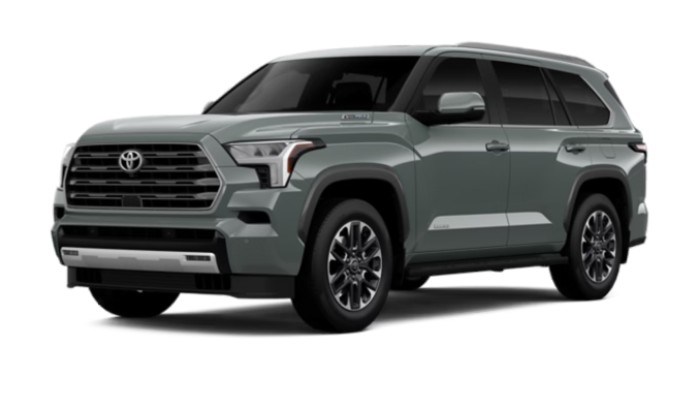
The Toyota Sequoia vs Chevy Suburban debate is a fascinating one because these two SUVs attack the same basic mission from very different angles. Both are big, powerful, three-row family vehicles. Both can tow serious weight. Both can carry a crowd. Yet once we get beyond the oversized dimensions and commanding driving positions, their personalities split like two roads at a mountain pass.
The Toyota Sequoia feels more like an adventure-focused SUV with truck DNA and a powerful hybrid heart. The Chevrolet Suburban is essentially a rolling family headquarters—a huge, comfortable, cargo-swallowing machine designed to make long journeys with people and luggage feel surprisingly easy.
For 2026, Toyota equips every Sequoia with its i-FORCE MAX twin-turbo V6 hybrid, producing 437 horsepower and 583 lb-ft of torque, while maximum towing capacity reaches 9,500 pounds. Chevrolet takes a different approach, offering the Suburban with three engines, including two V8s and a 3.0-liter Duramax diesel.
So which one should we choose? That depends heavily on whether our priorities lean toward towing, cargo space, third-row comfort, fuel economy, off-road ability, or simply having the biggest family hauler possible.
Let's break it all down.
Content in this publication
- Toyota Sequoia vs Chevy Suburban at a Glance
- Exterior Size: Big Versus Really Big
- Engine Comparison: Hybrid Power Meets Classic American Muscle
- Chevy Suburban Engine Options
- Sequoia vs Suburban Performance
- Toyota Sequoia vs Chevy Suburban Towing Capacity
- Cargo Space: The Suburban Strikes Back Hard
- Third-Row Seating Comparison
- Interior Quality and Cabin Design
- Technology and Infotainment
- Fuel Economy: Is the Sequoia Hybrid Better?
- Ride Comfort and Highway Driving
- Off-Road Capability: Sequoia Takes the Gloves Off
- Toyota Sequoia vs Suburban Reliability
- Maintenance and Ownership Costs
- Sequoia vs Suburban for Families
- Toyota Sequoia vs Chevy Suburban for Towing and Camping
- Trim Levels and Personality
- Advantages of the Toyota Sequoia
- Advantages of the Chevy Suburban
- Who Should Buy the Toyota Sequoia?
- Who Should Buy the Chevy Suburban?
- Toyota Sequoia vs Chevy Suburban: Which Is Better Overall?
- Final Verdict
- Frequently Asked Questions
Toyota Sequoia vs Chevy Suburban at a Glance
Before getting buried in specifications, here's the simplest way to understand these SUVs.
| Category | Toyota Sequoia | Chevy Suburban |
|---|---|---|
| Vehicle type | Full-size body-on-frame SUV | Extended-length full-size SUV |
| Main engine | 3.4L twin-turbo V6 hybrid | 5.3L V8 |
| Other engines | None | 6.2L V8, 3.0L diesel |
| Maximum horsepower | 437 hp | 420 hp |
| Maximum torque | 583 lb-ft | 495 lb-ft diesel |
| Maximum towing | Up to 9,500 lb | Up to 8,200 lb |
| Seating | Up to 8 | Up to 9 |
| Maximum cargo space | Considerably less than Suburban | 144.5 cu. ft. |
| Best strength | Power, towing, off-roading | Passenger and cargo space |
Current manufacturer specifications list the Suburban with up to 144.5 cubic feet of maximum cargo volume, while Chevrolet offers seating configurations for as many as nine occupants.
On paper, we can already see the battle lines forming: Sequoia wins the muscle contest, while Suburban wins the space race.
Exterior Size: Big Versus Really Big
Nobody is going to mistake either SUV for a compact crossover.
The Sequoia has the classic proportions we expect from a modern truck-based SUV: tall hood, substantial ground clearance, broad shoulders, and enough physical presence to make smaller vehicles disappear in the mirrors.
Then the Suburban pulls alongside.
The Chevy is exceptionally long because it essentially takes the Tahoe formula and stretches it to provide additional passenger and cargo space. That's the whole point of the Suburban, and Chevrolet has been refining that idea for generations.
Which SUV Is Easier to Drive Around Town?
The Sequoia generally feels like the more manageable choice.
Don't misunderstand us—it is still enormous by ordinary vehicle standards. Parking garages and narrow urban streets require attention. But compared with the Suburban, the Toyota doesn't feel quite as much like we're docking a yacht every time we enter a parking space.
The Suburban demands more planning. Tight parking lots can be awkward, parallel parking isn't exactly recreational entertainment, and older garages may suddenly feel much smaller than we remembered.
If most of our driving happens in crowded city environments, the Sequoia has an advantage.
Where the Suburban's Size Pays Off
Once passengers climb aboard, however, the Chevrolet's extra length begins earning its keep.
Instead of being unnecessary bulk, those additional inches translate into more breathing room and significantly more luggage capacity.
That's why families who routinely travel with six or seven people often love vehicles like the Suburban.
Large SUVs are rarely bought because somebody wants less room.
Engine Comparison: Hybrid Power Meets Classic American Muscle
This may be the most interesting difference between the Toyota Sequoia and Chevy Suburban.
Toyota gives us essentially one powertrain philosophy.
Chevrolet gives us three.
Toyota Sequoia i-FORCE MAX Hybrid
Every current 2026 Sequoia uses Toyota's i-FORCE MAX twin-turbocharged V6 hybrid powertrain.
It produces:
- 437 horsepower
- 583 lb-ft of torque
- Up to 9,500 pounds of towing capacity
- Up to an EPA-estimated 22 mpg combined, depending on configuration
Don't think of this hybrid system as something designed primarily for gentle, fuel-sipping commuting. The electric component works with the turbocharged gasoline engine to provide substantial low-end torque.
Step on the accelerator and the Sequoia doesn't move like a vehicle that needs to apologize for its weight.
Why the Sequoia Hybrid Feels Different
Electric assistance helps torque arrive quickly.
That matters in a heavy SUV. Rather than waiting for the engine to gather momentum, the Sequoia feels eager from low speeds. When merging, climbing grades, or pulling a trailer, that muscular torque delivery becomes one of the Toyota's strongest qualities.
It's less “eco-friendly hybrid hatchback” and more “electric torque wrench attached to a truck engine.”
Chevy Suburban Engine Options
Chevrolet gives buyers considerably more freedom.
For 2026, the Suburban can be equipped with three engines.
5.3-Liter V8
The standard 5.3-liter EcoTec3 V8 produces 355 horsepower and 383 lb-ft of torque.
It won't win the specification battle against the Sequoia, but it provides the familiar, relaxed power delivery many full-size SUV buyers appreciate.
6.2-Liter V8
Move up to the 6.2-liter V8 and output climbs to 420 horsepower and 460 lb-ft of torque. Chevrolet makes this engine standard on the High Country and available on several other trims.
This is the engine for buyers who still want the unmistakable character of a big naturally aspirated V8.
Push the throttle and the response feels linear, strong, and satisfyingly traditional.
3.0-Liter Duramax Diesel
Then we have the wildcard.
The available 3.0-liter Duramax turbo-diesel produces 305 horsepower and 495 lb-ft of torque. Chevrolet also advertises an EPA-estimated maximum highway range of up to 728 miles per tank under the applicable configuration.
For long-distance drivers, that engine deserves serious consideration.
Sequoia vs Suburban Performance
If we're chasing outright horsepower and torque numbers, Toyota walks into this contest swinging.
The Sequoia's 437 horsepower edges out the strongest Suburban V8, while its 583 lb-ft of torque exceeds the output listed for any current Suburban engine.
That doesn't automatically make it better.
Performance isn't only about peak output.
The Suburban's engines offer different personalities. Buyers can choose the simplicity and familiarity of the 5.3-liter V8, the stronger 6.2-liter, or the relaxed long-distance character of the Duramax diesel.
The Toyota gives us one very powerful solution.
Chevrolet gives us a menu.
Toyota Sequoia vs Chevy Suburban Towing Capacity
Here Toyota earns one of its clearest victories.
The 2026 Sequoia can tow up to 9,500 pounds when properly configured. Toyota also includes an integrated trailer brake controller and Trailer-Sway Control.
The 2026 Chevrolet Suburban has a maximum available towing capacity of 8,200 pounds.
That puts the difference at as much as 1,300 pounds.
Which Is Better for Towing?
If maximum trailer weight is the deciding factor, we'd lean toward the Sequoia.
Its immense torque output also suits towing extremely well.
But maximum ratings never tell the whole story. Payload, passenger weight, hitch equipment, axle configuration, trim level, and trailer tongue weight all affect what a specific SUV can safely handle.
A family with five passengers, luggage, and camping equipment can eat into payload surprisingly quickly.
Always check the actual door-jamb certification label and configuration-specific towing limits before attaching a heavy trailer.
Cargo Space: The Suburban Strikes Back Hard
Remember that towing victory Toyota just enjoyed?
Chevrolet answers with cargo capacity.
And it isn't particularly close.
The 2026 Suburban provides up to:
- 41.5 cubic feet behind the third row
- 93.8 cubic feet behind the second row
- 144.5 cubic feet behind the first row
That enormous interior is one of the Suburban's defining advantages.
Imagine packing luggage for a week-long road trip.
With many three-row SUVs, using every seat means playing automotive Tetris with suitcases. In the Suburban, we have considerably more freedom to carry both passengers and their belongings.
The Sequoia Cargo Compromise
The Sequoia's interior packaging is less straightforward.
Its hybrid hardware and rear suspension design contribute to a cargo area that isn't as expansive or as conveniently flat as some competitors. Toyota tries to compensate with a sliding third row and multi-level adjustable cargo shelf system.
That adds flexibility, but it doesn't magically transform the Sequoia into a Suburban.
If maximum cargo volume is near the top of the shopping list, Chevy wins.
Comfortably.
Third-Row Seating Comparison
Three-row SUVs often advertise seating for seven or eight passengers, but there's a gigantic difference between having a third row and having a third row adults actually want to use.
That's another place where the Suburban's dimensions help.
Suburban Third Row
The Chevrolet is particularly appealing for families who regularly use all three seating rows.
Adults can occupy the third row without feeling as if they've lost an argument.
There's also meaningful cargo room remaining behind them, which is crucial. A third row isn't particularly useful on vacation if deploying it leaves nowhere to put everyone's luggage.
Sequoia Third Row
Toyota's sliding third-row design lets us prioritize either passenger space or cargo room.
That's clever.
You may be interested in reading Toyota Sequoia vs Jeep Wagoneer: Which Full-Size SUV Is Better?
However, the Sequoia's rear compartment remains one of the areas where its truck-based packaging becomes apparent. If we're carrying adults in the third row every day, we'd strongly suggest sitting in the back of both SUVs before making a decision.
Winner for Large Families: Suburban
For a household routinely carrying six, seven, or more people, we'd pick the Suburban.
It's simply built around that mission.
Interior Quality and Cabin Design
Size isn't everything.
Climb into the Sequoia and the Toyota immediately feels more modern than older generations did. Large displays, chunky controls, broad horizontal surfaces, and available premium materials create an environment that can range from rugged to genuinely luxurious depending on trim.
Higher models such as Platinum, 1794 Edition, and Capstone move the Sequoia well beyond basic utility.
Chevrolet's cabin also becomes increasingly upscale as we climb through the lineup. Higher Suburban trims bring premium materials, advanced suspension technology, large screens, and a more luxurious atmosphere.
Which Interior Feels Better?
This becomes subjective.
We'd describe the Sequoia as rugged-modern.
The Suburban feels spacious-modern.
Toyota's driving position and dashboard make us more aware that we're piloting something descended from a truck.
The Chevrolet's gigantic cabin creates the sensation of sitting inside a private lounge that happens to have four wheels.
Neither approach is wrong.
Technology and Infotainment
Technology has become critical in family SUVs because these vehicles frequently serve as mobile living rooms.
Toyota offers an available 14-inch Toyota Audio Multimedia touchscreen, with wireless Apple CarPlay and Android Auto compatibility among its connectivity features.
Chevrolet likewise equips the latest Suburban with an increasingly technology-heavy cabin and numerous convenience and driver-assistance features.
For everyday use, our priorities would be straightforward:
Does wireless smartphone connectivity work reliably?
Can we operate climate controls without digging through endless menus?
Can third-row passengers charge their devices?
Will navigation and camera views make maneuvering a giant SUV easier?
Fancy graphics matter far less after six months than simple, predictable operation.
Fuel Economy: Is the Sequoia Hybrid Better?
This section requires a little nuance.
Toyota's hybrid badge might lead us to expect small-crossover fuel consumption.
That's not happening.
We're still moving a massive body-on-frame SUV through the air.
Toyota advertises up to an EPA-estimated 22 mpg combined for the 2026 Sequoia, while specific city/highway ratings vary by version and drivetrain.
That's respectable for something this powerful.
The Suburban Diesel Changes the Equation
The diesel Suburban deserves special attention for people who spend huge amounts of time on highways.
Diesel engines traditionally thrive in long-distance situations, and Chevrolet's advertised highway range of up to 728 miles per tank demonstrates one of the Duramax version's biggest attractions.
So the efficiency winner isn't as simple as saying “hybrid beats V8.”
Driving patterns matter enormously.
Mostly Urban Driving
The Sequoia hybrid's electric assistance makes sense.
Frequent Interstate Travel
The Suburban diesel becomes very compelling.
Want a Traditional Gasoline V8
Only Chevrolet offers that option in this matchup.
Ride Comfort and Highway Driving
This is where the Suburban feels most at home.
Picture a 600-mile interstate journey with children, grandparents, luggage, drinks, chargers, pillows, and enough snacks to survive a minor apocalypse.
That's Suburban territory.
Its long wheelbase and available sophisticated suspension systems give it the ingredients for an exceptionally composed highway ride. Chevrolet offers available Magnetic Ride Control and Four-Corner Air Ride Adaptive Suspension depending on trim and configuration.
The Sequoia remains comfortable, particularly on higher trims, but its personality leans slightly more toward rugged utility.
Long-Distance Winner: Chevy Suburban
For uninterrupted highway cruising, we'd take the Chevrolet.
Its enormous passenger compartment, vast cargo capacity, and available diesel engine make it a formidable road-trip machine.
Off-Road Capability: Sequoia Takes the Gloves Off
Now point both SUVs toward dirt and the balance changes.
Toyota offers the Sequoia TRD Pro, a version deliberately built for buyers who intend to venture beyond paved roads.
That's important because off-road capability isn't just about four-wheel drive.
Suspension tuning, tires, underbody protection, traction systems, approach angles, ground clearance, and durability all matter.
Chevy Suburban Z71
Chevrolet isn't helpless here.
The Suburban Z71 targets buyers wanting additional off-road capability and tougher styling. It can absolutely handle trails, snow, dirt roads, and outdoor adventures.
But physics remains physics.
The Suburban is extremely long.
That extra wheelbase that feels wonderful on the highway becomes less convenient on tight trails, sharp crests, and narrow terrain.
Off-Road Winner: Toyota Sequoia
For genuinely adventurous use, we'd rather have the Sequoia—particularly in TRD Pro form.
It's the easier SUV to imagine disappearing down a rocky trail without immediately wondering whether we should have brought something shorter.
Toyota Sequoia vs Suburban Reliability
Reliability comparisons become tricky because we're comparing not only brands but also different engines, transmissions, trims, model years, and maintenance histories.
Toyota has built a powerful reputation for long-term vehicle durability, and the Sequoia nameplate benefits enormously from that perception.
However, the current Sequoia is technologically very different from the old naturally aspirated V8 models that built much of that reputation.
A twin-turbo hybrid V6 is a considerably more sophisticated powertrain.
The Suburban has its own long history and massive owner base, but its reliability record can vary depending on engine and model year.
What Should Used Buyers Actually Do?
Instead of assuming every Toyota will automatically outlive every Chevy, we'd focus on:
- Exact model year
- Engine choice
- Maintenance records
- Open recalls
- Accident history
- Oil-change history
- Previous towing use
- Diagnostic scan results
- Independent pre-purchase inspection
A well-maintained Suburban is preferable to a neglected Sequoia, and vice versa.
Brand reputation matters.
Vehicle condition matters more.
Maintenance and Ownership Costs
These are expensive SUVs to buy, fuel, insure, repair, and equip with tires.
There's no escaping that reality.
Twenty-plus-inch wheels look fantastic until four premium replacement tires appear on a credit-card statement.
The Sequoia adds the complexity of a hybrid powertrain, though Toyota provides substantial hybrid component coverage. Toyota states that hybrid batteries on applicable vehicles from the 2020 model year forward receive warranty coverage for 10 years or 150,000 miles, whichever occurs first.
The Suburban's ownership expenses vary considerably by engine. Diesel ownership may involve different service requirements than gasoline models, while the 6.2-liter V8 can demand pricier fuel: Chevrolet recommends 91-octane premium for the 6.2, while the 5.3-liter is listed for regular 87-octane gasoline.
Sequoia vs Suburban for Families
Here's where we stop staring at horsepower numbers and think about Tuesday morning.
Three kids need to get to school.
Somebody has hockey equipment.
Somebody else has a backpack the size of a refrigerator.
Groceries need to come home.
Grandparents are visiting.
Which SUV would we rather own?
Choose the Suburban for Maximum Family Practicality
The Suburban's gigantic cargo area is difficult to beat.
You may be interested in readingToyota Sequoia vs Jeep Wagoneer: Which Full-Size SUV Is Better?You may be interested in reading
Toyota Sequoia and Land Cruiser: Which Toyota SUV Is Better?Even with the third row occupied, Chevrolet lists 41.5 cubic feet of cargo room.
That space can make daily family life easier.
And practicality has a funny habit of becoming more valuable the longer we own a vehicle.
Choose the Sequoia for an Active Family
If weekends frequently involve trailers, mountains, camping, rough roads, boats, or off-road destinations, the Toyota becomes more compelling.
It's slightly less of a people-and-luggage limousine and more of a multipurpose adventure machine.
Toyota Sequoia vs Chevy Suburban for Towing and Camping
Suppose we're buying an SUV specifically because we have a travel trailer.
The Sequoia's maximum 9,500-pound towing capacity immediately catches our attention.
Its hybrid torque also feels practically designed for pulling heavy loads away from a stop.
The Suburban counters by giving us enormous interior storage.
And that's a bigger advantage than it initially sounds.
Camping trips involve far more than the trailer itself: coolers, tools, chairs, clothes, toys, food, batteries, cables, pets, and countless mysterious objects that somehow appear five minutes before departure.
So we'd divide the decision this way.
Sequoia: Better When the Trailer Is the Priority
Higher maximum towing capacity gives Toyota the edge.
Suburban: Better When People and Gear Are the Priority
Its enormous interior gives Chevrolet the advantage.
Trim Levels and Personality
Toyota offers the 2026 Sequoia in SR5, Limited, Platinum, TRD Pro, Capstone, and 1794 Edition trims.
That lineup covers a wide range of personalities.
The SR5 gives us the essential Sequoia formula. Limited adds comfort and technology. Platinum leans toward luxury. TRD Pro emphasizes off-road capability. Capstone pushes toward premium territory, while the 1794 Edition brings its own upscale Western-inspired character.
The Suburban likewise spans from relatively practical configurations to luxurious versions such as High Country, with alternatives such as Z71 focusing more on rugged use.
This creates an interesting buying strategy.
Don't simply compare “Sequoia versus Suburban.”
Compare the specific trims we'd actually purchase.
A Sequoia TRD Pro and Suburban High Country may share a showroom category, but they target dramatically different experiences.
Advantages of the Toyota Sequoia
The Sequoia makes the strongest argument when we value performance and capability over maximum interior volume.
Its biggest strengths include:
- Powerful 437-hp hybrid powertrain
- Massive 583 lb-ft of torque
- Up to 9,500 pounds of towing capacity
- Strong off-road potential
- Dedicated TRD Pro model
- More manageable dimensions than the Suburban
- Up to an estimated 22 mpg combined in applicable configurations
- Distinctive truck-like personality
It's the SUV we'd choose if we wanted something capable of commuting Monday through Friday and pulling a trailer toward the mountains on Saturday morning.
Advantages of the Chevy Suburban
The Suburban fights back with a completely different set of strengths:
- Massive 144.5-cu-ft maximum cargo capacity
- 41.5 cu. ft. even behind the third row
- Available seating for up to nine
- Three engine choices
- Available 6.2-liter V8
- Available 3.0-liter Duramax diesel
- Excellent highway-road-trip personality
- Spacious third-row accommodations
- Available advanced suspension systems
- Greater flexibility for large families
If we need one vehicle to carry what feels like an entire household across several states, the Suburban is difficult to ignore.
Who Should Buy the Toyota Sequoia?
We'd put the Sequoia at the top of the list if our priorities look something like this:
We tow frequently.
We want excellent low-end torque.
We enjoy camping or off-road travel.
We want eight-passenger capability but don't necessarily need class-leading cargo volume.
We prefer Toyota.
We like the idea of a hybrid but still want serious truck-like performance.
We don't want an SUV quite as long as a Suburban.
For those buyers, the Sequoia strikes a compelling balance between ruggedness, modern technology, power, and everyday usability.
Who Should Buy the Chevy Suburban?
The Suburban makes more sense when space dominates our decision.
Maybe we have four children.
Maybe grandparents travel with us.
Maybe we're constantly hauling sports equipment.
Maybe our family vacations resemble a small logistical operation.
That's where the Suburban shines.
Its ability to carry passengers and substantial cargo simultaneously is the key advantage. We also appreciate having several powertrain options instead of being locked into one engine.
Long-distance travelers should pay special attention to the Duramax diesel.
Toyota Sequoia vs Chevy Suburban: Which Is Better Overall?
There isn't one universal winner because these SUVs optimize different things.
The Toyota Sequoia is the better choice for towing, power, and off-road-oriented driving.
The Chevy Suburban is the better choice for passenger space, cargo capacity, and large-family road trips.
Think of the difference this way.
The Sequoia is a powerful hiking boot.
The Suburban is a first-class suitcase.
One makes us want to explore difficult terrain.
The other makes us wonder how much stuff we can bring.
Our Pick for Most Buyers
If our household regularly uses the third row and carries lots of luggage, we'd pick the Chevy Suburban.
Its interior practicality is simply enormous, and that's something families benefit from every single day.
But if towing capacity, torque, rugged use, and manageable dimensions matter more, we'd take the Toyota Sequoia without hesitation.
Neither is objectively superior.
They're simply built around different definitions of what a full-size SUV should accomplish.
Final Verdict
The Toyota Sequoia vs Chevy Suburban contest illustrates why specifications can't choose a vehicle for us.
Toyota gives the Sequoia a muscular 437-horsepower hybrid powertrain, 583 lb-ft of torque, up to 9,500 pounds of towing capability, and a personality that feels equally comfortable approaching a campground or interstate on-ramp.
Chevrolet answers with something Toyota cannot easily replicate: sheer room. With up to 144.5 cubic feet of cargo volume, seating configurations for as many as nine occupants, three available powertrains, and a maximum towing rating of 8,200 pounds, the Suburban remains one of the ultimate large-family vehicles.
Our final choice is therefore surprisingly simple.
Buy the Toyota Sequoia if capability comes first.
Buy the Chevy Suburban if space comes first.
If we're still stuck between them, there's one test more useful than another hour of specification hunting: load the entire family into both vehicles.
Put the adults in the third row. Bring the stroller. Bring the child seats. Imagine the luggage.
The SUV that still feels easy after doing all of that is probably the one we'll appreciate five years from now.
Frequently Asked Questions
1. Is the Toyota Sequoia bigger than the Chevy Suburban?
No. Both are full-size SUVs, but the Chevrolet Suburban is substantially more focused on maximizing overall passenger and cargo space. Its extended body allows Chevrolet to provide up to 144.5 cubic feet of cargo volume with the rear seating areas folded.
The Sequoia remains a very large SUV, but its dimensions and interior packaging make it feel less enormous than the Suburban in everyday driving.
2. Which can tow more, the Sequoia or Suburban?
The Toyota Sequoia wins on maximum advertised towing capacity. Toyota rates properly configured 2026 Sequoia models for up to 9,500 pounds, compared with up to 8,200 pounds for the 2026 Chevrolet Suburban.
Actual towing limits depend on trim, drivetrain, passengers, payload, equipment, and other factors, so buyers should verify the rating for the exact vehicle they're considering.
3. Does the Toyota Sequoia have a V8 engine?
Not in the current generation. The 2026 Toyota Sequoia uses an i-FORCE MAX twin-turbo V6 hybrid producing 437 horsepower and 583 lb-ft of torque.
Older Sequoia generations did use V8 engines, which is why used-vehicle shoppers may still encounter V8-powered models.
4. Which is better for a large family, Sequoia or Suburban?
We'd generally choose the Chevy Suburban for a large family, particularly when the third row will be occupied frequently. Its enormous cargo compartment means we don't have to choose as often between carrying passengers and carrying luggage.
The Sequoia remains a capable family vehicle, but families that routinely fill every seat should carefully compare third-row and cargo usability before buying.
5. Is a Toyota Sequoia or Chevy Suburban better for road trips?
For traditional highway road trips, we'd give the Suburban a slight advantage because of its passenger space, enormous cargo capacity, and available Duramax diesel powertrain.
You may be interested in readingToyota Sequoia vs Jeep Wagoneer: Which Full-Size SUV Is Better?You may be interested in reading
Toyota Sequoia and Land Cruiser: Which Toyota SUV Is Better?You may be interested in reading
Toyota Sequoia or 4Runner: Which Toyota SUV Should You Buy?For road trips that include towing, camping, mountain roads, or off-pavement exploration, we'd favor the Sequoia, particularly a four-wheel-drive or TRD Pro version.
If you want to know other articles similar to Toyota Sequoia vs Chevy Suburban: Which Full-Size SUV Is Better? you can visit the category Models.
How to Identify Your Ford Fiesta Model
Toyota RAV4 Engine Oil Capacity: Complete Guide

Vauxhall Corsa Models: Complete Guide to Generations, Trims and Versions (1993–2026)
Kia Sportage Trim Levels: Complete 2027 Comparison
Toyota Corolla Cross vs RAV4: Which SUV Is Better?
Haval Jolion vs Omoda C5: Which SUV Is Better?
Leave a Reply
More content of your interest