
Toyota Sequoia vs Jeep Wagoneer: Which Full-Size SUV Is Better?

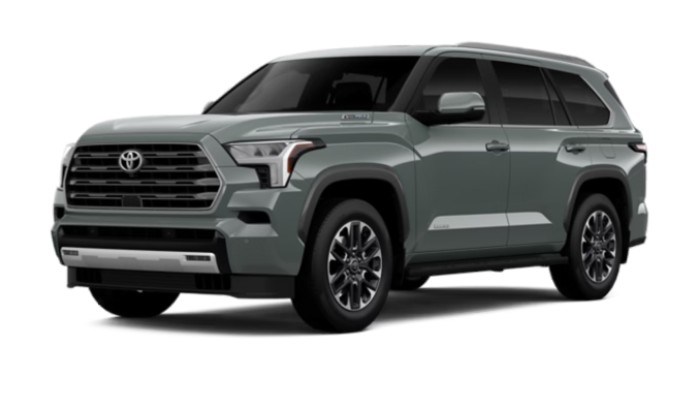
Choosing between the Toyota Sequoia and Jeep Wagoneer is a little like choosing between two very different vacation homes. Both give us plenty of room, considerable muscle, three-row practicality, and the ability to tow serious weight. Yet they approach the full-size SUV formula from completely different directions.
The Toyota Sequoia feels like the rugged outdoors enthusiast who cleaned up nicely for dinner. The Jeep Wagoneer, meanwhile, puts greater emphasis on passenger space, road-trip comfort, and an upscale atmosphere.
There is also an important model-year detail for shoppers today. Jeep has discontinued the regular Wagoneer nameplate for the 2026 model year and consolidated its full-size offering around the 2026 Jeep Grand Wagoneer. Jeep itself states that the Wagoneer is no longer being produced. So, when discussing a new 2026 vehicle, the closest current comparison is technically Toyota Sequoia vs Jeep Grand Wagoneer. Used and remaining previous-model-year Wagoneers are still highly relevant, however, which is why shoppers continue searching for this matchup.
For 2026, Toyota lists the Sequoia with a standard 437-horsepower i-FORCE MAX hybrid powertrain, up to roughly 9,500 pounds of towing capability, and fuel economy reaching an estimated 22 mpg combined. The current Grand Wagoneer counters with up to 420 horsepower and as much as 10,000 pounds of maximum available towing capacity.
Numbers tell only half the story, though. Which SUV actually makes more sense when there are kids in the third row, luggage behind them, a trailer on the hitch, and several hundred highway miles ahead?
Let's find out.
Content in this publication
- Toyota Sequoia vs Jeep Wagoneer at a Glance
- Exterior Size and Road Presence
- Engine Performance: Hybrid Muscle vs Hurricane Power
- Toyota Sequoia vs Jeep Wagoneer Towing Capacity
- Fuel Economy: Sequoia Takes the Lead
- Interior Comfort and Cabin Quality
- Third-Row Seating: Wagoneer Has the Advantage
- Cargo Space and Everyday Practicality
- Ride Quality and Highway Comfort
- Off-Road Capability: Sequoia Strikes Back
- Technology and Infotainment
- Safety and Driver Assistance
- Reliability and Long-Term Ownership
- Toyota Sequoia vs Jeep Wagoneer Price
- Trim Levels and Personality
- Where Each SUV Clearly Wins
- Toyota Sequoia vs Jeep Wagoneer for Families
- Toyota Sequoia vs Wagoneer for Towing
- Toyota Sequoia vs Jeep Wagoneer for Off-Road Driving
- What About a Used Jeep Wagoneer?
- Which SUV Is Easier to Live With?
- Pros and Cons of the Toyota Sequoia
- Pros and Cons of the Jeep Wagoneer
- Which One Offers Better Value?
- Toyota Sequoia vs Jeep Wagoneer: Which Should We Buy?
- Final Verdict
- Frequently Asked Questions
Toyota Sequoia vs Jeep Wagoneer at a Glance
At their core, both vehicles are large, truck-based SUVs created for families who have outgrown ordinary crossovers.
The Sequoia leans toward efficiency, durability, torque, and adventure capability. The Wagoneer family puts a heavier emphasis on sheer interior volume, premium comfort, towing, and passenger accommodation.
| Category | Toyota Sequoia | Jeep Wagoneer / Current Grand Wagoneer |
|---|---|---|
| Vehicle type | Full-size body-on-frame SUV | Full-size body-on-frame SUV |
| Seating | Up to 8 | Up to 8 |
| Current powertrain | 3.4L twin-turbo V6 hybrid | Hurricane twin-turbo inline-six |
| 2026 horsepower | 437 hp | Up to 420 hp |
| 2026 torque | 583 lb-ft | Up to 468 lb-ft |
| Maximum towing | Around 9,500 lb | Up to 10,000 lb |
| Main strength | Hybrid torque and rugged capability | Interior room and towing |
| Best suited for | Adventure-focused families | Large families and highway travel |
Toyota officially quotes 437 horsepower and 583 lb-ft of torque from the 2026 Sequoia's i-FORCE MAX system. Jeep lists its 2026 full-size Grand Wagoneer with 420 horsepower and 468 lb-ft of torque.
Already, we can see the personalities separating.
The Toyota carries substantially more torque on paper. The Jeep fights back with greater maximum towing capability and a cabin designed to swallow passengers and cargo with remarkable ease.
Exterior Size and Road Presence
Neither vehicle is going to disappear in a crowded parking lot.
The Sequoia looks tall, muscular, and almost pickup-like because it shares much of its underlying engineering philosophy with Toyota's full-size truck lineup. Chunky proportions, an upright front end, and pronounced bodywork make the SUV look ready to head toward a campground even when it is sitting outside the supermarket.
The Wagoneer takes a different approach. Its shape is large and imposing, but there is more emphasis on understated luxury. Rather than shouting about off-road capability from every body panel, it feels like a premium family hauler wearing Jeep styling cues.
Which One Feels Bigger?
Behind the wheel, both require some adjustment if we are moving up from a midsize crossover.
The Jeep generally feels more spacious because the vehicle makes excellent use of its large exterior dimensions. There is an extended-wheelbase option in the current Grand Wagoneer family as well, further increasing its usefulness for families who regularly carry several passengers plus luggage. Jeep specifically highlights standard- and long-wheelbase configurations for its current full-size SUV.
The Sequoia is certainly not small, but its packaging is not quite as space-efficient. Toyota gives us a massive SUV on the outside, yet the hybrid hardware and rear suspension configuration create compromises inside the cargo area.
That becomes one of the most important differences in this comparison.
Engine Performance: Hybrid Muscle vs Hurricane Power
Press the accelerator in either SUV and we quickly remember that modern full-size vehicles no longer need huge naturally aspirated V8 engines to move with authority.
Toyota Sequoia i-FORCE MAX
Every current Sequoia uses Toyota's i-FORCE MAX twin-turbocharged V6 hybrid powertrain.
This is not a hybrid designed primarily to creep silently through city traffic and chase economy-car fuel consumption. Toyota uses electrification to add torque and responsiveness.
The result is 437 horsepower and an impressive 583 lb-ft of torque.
Put your foot down and the Sequoia feels strong almost immediately. The electric assistance fills in power delivery while the turbocharged engine gets to work, creating the sort of low-speed shove that suits a heavy SUV beautifully.
It feels less like a conventional eco-hybrid and more like a diesel locomotive that happens to have an electric motor helping it leave the station.
Jeep Wagoneer Hurricane Engine
Recent Wagoneer models transitioned away from the old V8 formula toward Stellantis' Hurricane twin-turbo inline-six engine family.
The current 2026 Grand Wagoneer produces up to 420 horsepower and 468 lb-ft of torque, according to Jeep.
Although the Toyota has the numerical torque advantage, the Jeep powertrain is smooth, refined, and well suited to highway driving.
Which Engine Is Better?
For effortless low-end torque and technical sophistication, we would lean toward the Sequoia.
For buyers who simply want a powerful conventional gasoline SUV without Toyota's hybrid hardware, the Hurricane-powered Jeep remains highly appealing.
Neither is slow. Neither feels overwhelmed by its own size.
But the Toyota's enormous torque output gives it a particularly muscular personality.
Toyota Sequoia vs Jeep Wagoneer Towing Capacity
This is where full-size SUVs earn their keep.
We can buy a comfortable three-row crossover for considerably less money. What makes the Sequoia and Wagoneer different is their ability to combine family transportation with legitimate truck-like towing.
Toyota lists the 2026 Sequoia with maximum towing capability of approximately 9,500 pounds, depending on configuration.
Jeep goes slightly further. The current Grand Wagoneer offers up to 10,000 pounds of available maximum towing capacity.
That gives Jeep the paper victory.
The difference, however, is not enormous. For most boats, travel trailers, utility trailers, or recreational equipment that comfortably fit within either SUV's ratings, both vehicles are serious tow machines.
Which SUV Should We Choose for Frequent Towing?
The Wagoneer gets our nod if maximum capacity is the priority.
Its extra ceiling can matter to buyers who already own a heavier trailer. Just remember that maximum tow ratings depend heavily on configuration, equipment, passengers, cargo, hitch setup, and payload.
A 10,000-pound advertised rating does not automatically mean every Wagoneer should pull a 10,000-pound trailer.
The Sequoia remains extremely capable and offers one additional advantage: 583 lb-ft of torque arrives from its hybrid-assisted powertrain, which can make launching and accelerating with weight behind the vehicle feel wonderfully effortless.
Fuel Economy: Sequoia Takes the Lead
Fuel economy probably isn't the first reason anyone buys a huge three-row SUV.
Still, nobody enjoys watching the fuel gauge fall like sand through an hourglass.
Toyota's hybrid system becomes particularly attractive here. The 2026 Sequoia reaches an EPA-estimated up to 22 mpg combined, depending on configuration.
Jeep's current 2026 Grand Wagoneer is listed at up to 17 mpg city and 24 mpg highway in Jeep's model comparison information. Real-world efficiency will naturally change with trim, drivetrain, terrain, temperature, speed, and towing.
For mixed everyday use, the Sequoia's hybrid drivetrain gives Toyota an important efficiency advantage, especially considering how much torque the vehicle produces.
Does the Sequoia Hybrid Save Huge Amounts of Fuel?
We should keep expectations realistic.
This is still a full-size, body-on-frame SUV with considerable mass and aerodynamic properties roughly resembling a luxury apartment building.
The hybrid system improves efficiency; it does not transform the Sequoia into a Prius.
Yet over years of commuting, errands, school runs, and highway trips, even a few additional miles per gallon can become meaningful.
Interior Comfort and Cabin Quality
Open the doors and the personality gap becomes even wider.
Toyota gives the Sequoia a modern, rugged cabin. Higher trims become genuinely luxurious, particularly Platinum, Capstone, and 1794 Edition models.
Large screens, quality materials, comfortable seats, and attractive trim make it feel expensive enough for its price.
Jeep, however, treats the Wagoneer as something closer to a luxury SUV.
The Wagoneer Feels More Like a Lounge
The Jeep's cabin is its strongest weapon.
The dashboard is broad, the seating feels substantial, and technology seems to appear everywhere. Depending on trim and model year, passengers can be surrounded by multiple displays, high-grade materials, large storage spaces, and upscale details.
The current Grand Wagoneer continues that philosophy with extensive technology and more than 170 standard and available safety and security features, according to Jeep.
Where Toyota says, "Let's drive somewhere adventurous," Jeep seems to say, "Sure, but first adjust your seat and get comfortable."
For families spending hours on interstate highways, that distinction matters.
Third-Row Seating: Wagoneer Has the Advantage
A three-row SUV isn't automatically a good eight-passenger vehicle.
Some third rows look acceptable in a brochure but feel like punishment once an adult actually climbs back there.
The Wagoneer is better suited to regularly carrying passengers in all three rows. Its boxy proportions and clever packaging provide a generous feeling of space.
The current Grand Wagoneer seats up to eight people, and Jeep specifically promotes passenger room as a major part of the vehicle's family-focused design.
The Sequoia also accommodates up to eight depending on configuration, but its third row and cargo-floor arrangement can feel more compromised.
Best Choice for Large Families
If we regularly transport six, seven, or eight people, the Jeep gets the advantage.
That doesn't make the Sequoia bad for families. Far from it.
But the Wagoneer feels as though interior packaging was one of the first items on its design brief, whereas the Toyota balances passenger accommodation against hybrid hardware, ruggedness, and truck-based utility.
You may be interested in reading Toyota Sequoia and Land Cruiser: Which Toyota SUV Is Better?
Cargo Space and Everyday Practicality
Now we arrive at perhaps the Sequoia's most controversial characteristic.
Toyota says the 2026 Sequoia provides up to 86.9 cubic feet of maximum cargo space with the rear seats folded. It also uses a sliding third row and an adjustable cargo-shelf system intended to increase flexibility.
Those features are clever.
But clever is necessary because the cargo floor is not as straightforward as what we find in some rivals.
The hybrid battery placement and third-row design create a raised cargo-floor arrangement. When we fold seats and start moving luggage around, the Sequoia doesn't always deliver the wonderfully flat, cavernous space we might expect from such a large exterior.
Wagoneer Cargo Space Feels More Natural
The Jeep's traditional full-size SUV packaging is easier to appreciate on a family road trip.
We can load suitcases, sports equipment, shopping bags, coolers, and the strange collection of objects that somehow follows children everywhere without playing quite as much cargo Tetris.
If maximum interior usefulness matters more than powertrain efficiency, the Jeep makes an extremely persuasive case.
Ride Quality and Highway Comfort
Both SUVs are comfortable, but they communicate with the road differently.
The Sequoia retains a hint of truck DNA. That is part of its charm. It feels robust, confident, and substantial.
Its ride becomes increasingly sophisticated on higher trims, especially when equipped with available suspension technology, but we rarely forget that this is a serious utility vehicle.
The Wagoneer is more focused on isolating passengers.
Long highway stretches suit it beautifully. The seating position is commanding, the cabin is roomy, and the vehicle tends to settle into interstate cruising like a large yacht finding calm water.
Which Is Better for Road Trips?
For long family trips, we favor the Wagoneer.
More usable passenger space and a relaxed cabin give it an edge when everyone needs to remain comfortable for several hours.
The Sequoia catches up when the journey ends somewhere muddy, rocky, snowy, or remote.
Off-Road Capability: Sequoia Strikes Back
Jeep practically owns the word "off-road" in popular culture, so calling the Sequoia the more adventure-focused choice might sound unusual.
But trim selection changes everything.
The Sequoia TRD Pro is specifically developed for buyers who intend to leave pavement behind. Toyota gives it equipment and tuning aimed toward demanding terrain rather than merely adding rugged-looking cosmetic pieces.
That makes the Sequoia particularly attractive for camping, mountain roads, desert driving, or overlanding.
Jeep certainly offers genuine four-wheel-drive expertise as well. Current Grand Wagoneer models can offer features such as Quadra-Lift air suspension, skid plates, and tow hooks.
Still, the Toyota TRD identity gives the Sequoia a more obvious factory-built adventure personality.
Technology and Infotainment
Neither manufacturer wants us staring at a tiny screen anymore.
Toyota offers a large 14-inch Toyota Audio Multimedia touchscreen on equipped Sequoia trims, along with wireless Apple CarPlay and Android Auto compatibility. The interface is modern and generally easy to understand.
Jeep takes a more theatrical approach.
Depending on configuration, the Wagoneer experience can include an array of displays and entertainment features designed to keep front and rear passengers occupied.
For technology lovers, the Jeep cabin can feel like walking into an electronics showroom.
Simple Technology vs Maximum Technology
Toyota's setup may appeal more to drivers who prefer fewer distractions.
Jeep gives us the bigger wow factor.
Think of the difference this way: Toyota hands us a high-quality smartphone and says, "Everything important is right here."
Jeep hands us the smartphone, a tablet, another display, and asks whether the passenger would like a screen too.
Neither philosophy is wrong.
Safety and Driver Assistance
Family SUVs need more than size to make us feel secure.
The Sequoia comes with Toyota Safety Sense 2.5, incorporating a suite of active driver-assistance technologies. Toyota lists systems including pre-collision assistance and dynamic radar cruise-control functionality.
Jeep similarly loads its full-size SUV with advanced driver-assistance features. For 2026, Jeep advertises more than 170 standard and available safety and security features on the Grand Wagoneer.
The precise equipment varies by trim, so comparing individual vehicles is more useful than simply counting technologies.
Reliability and Long-Term Ownership
This category is harder to reduce to one specification, but it can strongly influence a six-figure ownership decision.
Toyota has spent decades building a reputation around long-term durability, and that brand reputation is one reason many buyers gravitate toward the Sequoia.
The current generation is technologically much more complicated than older Sequoias, though. Twin turbochargers, hybrid components, batteries, electronics, and sophisticated emissions systems mean we should not assume that an older V8 Sequoia's ownership experience predicts everything about today's model.
Toyota does provide substantial hybrid-battery coverage. Its hybrid battery warranty extends to 10 years or 150,000 miles, whichever comes first, for qualifying vehicles.
Jeep's Wagoneer family contains plenty of sophisticated hardware of its own.
Which Would We Keep for 10 Years?
If our priority were long-term ownership confidence, we would lean toward the Toyota.
That doesn't guarantee a trouble-free experience. No modern vehicle deserves that promise.
But Toyota's reliability reputation, widespread familiarity with hybrid systems, and generally strong resale perception make the Sequoia easier to recommend to buyers who view an SUV as a decade-long investment.
Toyota Sequoia vs Jeep Wagoneer Price
Pricing is interesting because the current versions sit unusually close together at the entry point.
Toyota lists the 2026 Sequoia SR5 from $65,725 before destination charges and options.
The redesigned 2026 Jeep Grand Wagoneer starts at $63,995, according to Jeep's current pricing information.
Climb through the trims, though, and prices rise dramatically.
Luxury-focused Jeep versions can exceed $90,000 and even move beyond $100,000, while Toyota's premium Capstone trim also pushes deep into luxury-SUV territory. Jeep currently lists its highest Grand Wagoneer trims above $100,000 before additional costs.
The question therefore isn't simply which vehicle costs less.
It is which one delivers more of what we actually value.
Trim Levels and Personality
Toyota makes the Sequoia lineup easy to understand because each trim has a relatively distinct personality.
SR5 is the practical entry point. Limited adds comfort and equipment. Platinum pushes deeper into premium territory. TRD Pro is the adventurer. Capstone emphasizes luxury, while the 1794 Edition blends premium appointments with Western-inspired style.
For 2026, Toyota lists SR5, Limited, Platinum, TRD Pro, Capstone, and 1794 Edition configurations.
Jeep's current Grand Wagoneer range likewise stretches from well-equipped family transport to extremely luxurious configurations, including Limited Altitude, Upland, Limited Reserve, Summit Obsidian, and Summit Reserve variants.
Where Each SUV Clearly Wins
If we strip away marketing language and focus on practical strengths, the differences become easier to digest:
- Choose the Toyota Sequoia for stronger torque, hybrid efficiency, TRD Pro off-road personality, and a compelling long-term ownership proposition.
- Choose the Jeep Wagoneer for passenger room, third-row comfort, conventional cargo practicality, premium cabin ambience, and maximum towing capability.
- Choose the Sequoia if weekend adventures matter as much as weekday commuting.
- Choose the Wagoneer if most of life happens on pavement with a cabin full of people and luggage.
- Consider the Sequoia when resale value and keeping the SUV for many years are major priorities.
- Consider the Wagoneer when interior space is the deal-breaker and we refuse to compromise on room.
That is really the heart of this comparison.
Neither SUV wins everywhere.
Toyota Sequoia vs Jeep Wagoneer for Families
Let's imagine a typical household with three children.
Most weekdays involve school runs, groceries, sports practices, and commuting. Weekends bring trips away from home, sometimes with grandparents or friends joining us.
The Wagoneer's additional sense of interior room becomes extremely appealing in this scenario.
Adults can use the third row without feeling like unwanted luggage, and the cargo area handles family clutter gracefully.
Now imagine another family that owns a camper, regularly heads into the mountains, takes long outdoor trips, and plans to keep its SUV for eight or ten years.
Suddenly the Sequoia becomes more attractive.
Its hybrid torque, capable towing, off-road-focused trim availability, and Toyota ownership appeal line up beautifully with that lifestyle.
For Everyday Family Duty
We give the Wagoneer a narrow win.
For an Active Outdoor Family
We give the Sequoia the edge.
You may be interested in readingToyota Sequoia and Land Cruiser: Which Toyota SUV Is Better?You may be interested in reading
Toyota Sequoia or 4Runner: Which Toyota SUV Should You Buy?Toyota Sequoia vs Wagoneer for Towing
If our decision begins and ends with the biggest number printed in the brochure, Jeep wins.
Its current full-size Grand Wagoneer offers up to 10,000 pounds of maximum available towing compared with roughly 9,500 pounds for the Sequoia.
But actual towing involves far more than one headline figure.
Payload matters. Passenger weight matters. Tongue weight matters. Equipment matters. Trailer brakes matter. Stability matters.
The Sequoia's enormous 583 lb-ft torque output means it deserves serious consideration even when its maximum rating falls slightly below Jeep's.
For heavy but reasonable recreational towing, either can be a fantastic tool.
Towing Winner: Jeep Wagoneer
A small advantage is still an advantage.
Toyota Sequoia vs Jeep Wagoneer for Off-Road Driving
This category depends enormously on trims.
Comparing a two-wheel-drive luxury-oriented SUV to a TRD Pro would hardly be fair.
With equivalent four-wheel-drive versions, both have genuine capability. Jeep offers tremendous institutional knowledge in four-wheel-drive systems, while Toyota's TRD engineering gives the Sequoia particularly strong credibility beyond pavement.
We prefer the Sequoia TRD Pro for buyers whose idea of a family holiday includes dirt roads, rocks, mud, and tents.
Off-Road Winner: Toyota Sequoia
The Jeep remains capable, but the Sequoia's adventure-focused personality feels more cohesive.
What About a Used Jeep Wagoneer?
This comparison becomes especially interesting in the used market.
Because the regular Wagoneer is no longer produced for 2026, buyers searching "Toyota Sequoia vs Jeep Wagoneer" may actually be cross-shopping a new or lightly used Sequoia against a 2022-2025-era Wagoneer.
That could dramatically change the value equation.
Depreciation sometimes makes a well-equipped used luxury SUV tempting compared with a new Toyota. A Wagoneer that originally carried a substantial sticker price may become available for considerably less after several years.
But purchase price is only one part of ownership.
We should consider warranty coverage, financing rates, maintenance history, previous towing use, tires, suspension condition, electronics, and future depreciation before declaring the used Jeep the bargain.
A cheap luxury SUV can be wonderful.
A neglected cheap luxury SUV can become an expensive hobby.
Which SUV Is Easier to Live With?
The answer depends on what "easy" means.
In tight urban streets, neither vehicle is especially relaxing. They're enormous.
For loading passengers and cargo, Jeep is easier.
For reducing trips to the gas station, Toyota has the advantage.
For navigating rough terrain, we prefer the Sequoia.
For highway cruising with several adults, the Wagoneer is more appealing.
For buyers worried about the vehicle becoming increasingly complicated and expensive as the odometer climbs, Toyota is likely to inspire more confidence.
Pros and Cons of the Toyota Sequoia
The Sequoia's biggest strength is how many jobs it can perform reasonably well.
It can transport a large family, tow substantial weight, tackle difficult terrain, deliver enormous torque, and still offer respectable efficiency for a vehicle of its size.
Its Achilles' heel is packaging.
The unusual rear cargo arrangement means the cabin doesn't always make the best use of the SUV's giant exterior dimensions. Buyers coming from something like a minivan may wonder where some of the expected space went.
Yet for adventure-minded owners, those compromises may be perfectly acceptable.
Pros and Cons of the Jeep Wagoneer
The Wagoneer makes an immediate argument the moment passengers climb aboard.
Space is abundant. The cabin feels expensive. Highway comfort is excellent. Towing credentials are serious.
It behaves like the family road-trip machine many people imagine when they hear "full-size SUV."
The trade-off is complexity and ownership uncertainty relative to Toyota's reputation. Fuel consumption can also become significant if we drive substantial annual mileage.
And because the original Wagoneer has now exited production, new-car shoppers must understand that Jeep's 2026 equivalent is the consolidated Grand Wagoneer lineup rather than a direct continuation of the same badge.
Which One Offers Better Value?
This is surprisingly close.
The Toyota gives us expensive hybrid engineering as standard. Even the entry-level Sequoia receives the powerful i-FORCE MAX drivetrain rather than forcing buyers to climb through several engine options.
The Jeep counters with interior room, strong equipment levels, and a starting price for the current Grand Wagoneer that sits surprisingly close to the Sequoia.
For buyers who measure value in longevity, torque, efficiency, and adventure capability, the Toyota looks stronger.
For buyers who measure value in passenger space, cabin luxury, towing, and road-trip comfort, the Jeep makes more sense.
Value isn't the cheapest sticker.
It's receiving more of the things we actually intend to use.
Toyota Sequoia vs Jeep Wagoneer: Which Should We Buy?
After looking at the entire picture, we would choose the Toyota Sequoia for most long-term owners, but this is not a runaway victory.
The Toyota's combination of 437 horsepower, 583 lb-ft of torque, hybrid efficiency, serious towing ability, available TRD Pro capability, and strong ownership reputation creates a remarkably versatile package.
It feels engineered for people who expect their SUV to do more than simply carry passengers.
The Wagoneer remains the better answer to one extremely important question:
Which one is the better giant family vehicle?
Probably the Jeep.
Its cabin is roomier, the third row is easier to appreciate, cargo usability is more natural, and maximum towing capacity reaches 10,000 pounds in the current Grand Wagoneer.
So our decision comes down to lifestyle.
If we regularly carry a full cabin and piles of luggage, choose the Wagoneer.
If we regularly tow, explore, drive long distances, care about fuel consumption, and want a vehicle we may keep for many years, we'd lean toward the Sequoia.
Final Verdict
The Toyota Sequoia vs Jeep Wagoneer battle doesn't produce one universal champion because these SUVs solve slightly different problems.
The Wagoneer is the better rolling living room.
The Sequoia is the better Swiss Army knife.
Jeep gives us a wonderfully spacious full-size family SUV with tremendous towing ability and an upscale interior. Toyota gives us muscular hybrid power, better efficiency, rugged character, strong towing credentials, and a lineup that ranges from comfortable family transportation to legitimate off-road machine.
If third-row comfort and cargo room sit at the top of our shopping list, the Wagoneer deserves the first test drive.
If long-term ownership, torque, efficiency, and adventure capability matter more, the Sequoia gets our vote.
Sometimes the better SUV isn't the one with the biggest number.
It's the one whose compromises match our life.
Frequently Asked Questions
Is the Toyota Sequoia better than the Jeep Wagoneer?
The Toyota Sequoia is better for buyers prioritizing hybrid efficiency, torque, off-road capability, and long-term ownership confidence. The Wagoneer is stronger for families prioritizing third-row room, cargo versatility, premium comfort, and maximum towing capacity. Neither is universally better.
Which is bigger, the Toyota Sequoia or Jeep Wagoneer?
Both are full-size SUVs, but the Wagoneer generally makes better use of its dimensions for passenger and cargo accommodation. Jeep's current Grand Wagoneer can also be configured with a longer wheelbase, making it particularly attractive for large families.
Which can tow more, the Sequoia or Wagoneer?
The current Jeep Grand Wagoneer has the advantage, offering up to 10,000 pounds of maximum available towing capacity. Jeep's official specifications confirm that figure. The 2026 Toyota Sequoia can tow approximately 9,500 pounds when properly configured.
Does the Toyota Sequoia get better gas mileage than the Jeep Wagoneer?
Generally, yes. The Sequoia uses Toyota's i-FORCE MAX hybrid powertrain and reaches an EPA-estimated maximum of about 22 mpg combined, depending on configuration. Its electrified drivetrain gives it a meaningful efficiency advantage for many full-size SUV shoppers.
Is Jeep still making the Wagoneer?
Not under the regular Wagoneer name for 2026. Jeep officially states that the Wagoneer is no longer being produced and directs shoppers toward the redesigned 2026 Grand Wagoneer, which now serves as its current full-size SUV offering. Used and remaining prior-year Wagoneers may still be available.
You may be interested in readingToyota Sequoia and Land Cruiser: Which Toyota SUV Is Better?You may be interested in reading
Toyota Sequoia or 4Runner: Which Toyota SUV Should You Buy?You may be interested in reading
 Cars Similar to Hyundai Veloster: 12 Alternatives Worth Considering
If you want to know other articles similar to Toyota Sequoia vs Jeep Wagoneer: Which Full-Size SUV Is Better? you can visit the category Models.
How to Identify Your Ford Fiesta Model
Toyota RAV4 Engine Oil Capacity: Complete Guide

Vauxhall Corsa Models: Complete Guide to Generations, Trims and Versions (1993–2026)
Kia Sportage Trim Levels: Complete 2027 Comparison
Toyota Corolla Cross vs RAV4: Which SUV Is Better?
Haval Jolion vs Omoda C5: Which SUV Is Better?
Leave a Reply
More content of your interest