
Toyota Sequoia and Land Cruiser: Which Toyota SUV Is Better?

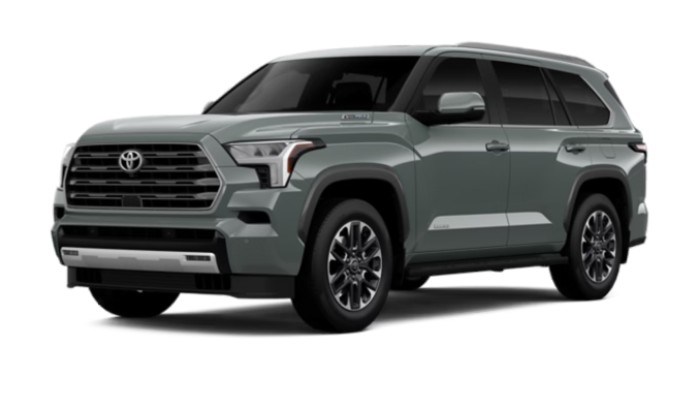
Few Toyota SUVs carry as much weight—literally and figuratively—as the Toyota Sequoia and Land Cruiser. Both sit on rugged truck-based foundations, both use Toyota’s modern i-FORCE MAX hybrid technology, and both are capable of leaving pavement behind without immediately regretting the decision.
Yet these two SUVs are far less interchangeable than they first appear.
The Sequoia is Toyota's big family hauler: powerful, spacious, capable of seating up to eight people, and strong enough to tow a substantial trailer. The Land Cruiser takes a different path. It is shorter, easier to maneuver, permanently four-wheel drive, and more deliberately engineered around serious off-road travel.
For current U.S. models, the difference is especially obvious. The 2026 Sequoia uses a twin-turbo V6 hybrid producing 437 horsepower and 583 lb-ft of torque, while the 2026 Land Cruiser uses a turbocharged 2.4-liter four-cylinder hybrid producing 326 horsepower and 465 lb-ft.
So which one belongs in our driveway? Let's compare them where it actually matters.
Content in this publication
- Toyota Sequoia and Land Cruiser at a Glance
- Are the Toyota Sequoia and Land Cruiser Basically the Same SUV?
- Toyota Sequoia vs Land Cruiser Size
- Interior Space and Practicality
- Engine and Hybrid Performance
- Fuel Economy: Land Cruiser Takes the Advantage
- Toyota Sequoia vs Land Cruiser Towing Capacity
- Off-Road Capability: Land Cruiser Strikes Back
- Daily Driving and Highway Comfort
- Interior Luxury and Technology
- Styling: Two Very Different Kinds of Tough
- Sequoia vs Land Cruiser Price and Value
- Reliability and Long-Term Ownership
- Who Should Buy the Toyota Sequoia?
- Who Should Buy the Toyota Land Cruiser?
- Toyota Sequoia vs Land Cruiser for Families
- Toyota Sequoia vs Land Cruiser for Camping
- Toyota Sequoia vs Land Cruiser for Overlanding
- Toyota Sequoia vs Land Cruiser for Towing
- Which One Is Better: Toyota Sequoia or Land Cruiser?
- Final Verdict
- Frequently Asked Questions
Toyota Sequoia and Land Cruiser at a Glance
Before digging into the details, this table gives us the basic personality of each SUV.
| Feature | Toyota Sequoia | Toyota Land Cruiser |
|---|---|---|
| Engine | 3.4L twin-turbo V6 hybrid | 2.4L turbo four-cylinder hybrid |
| Power | 437 hp | 326 hp |
| Torque | 583 lb-ft | 465 lb-ft |
| Transmission | 10-speed automatic | 8-speed automatic |
| Drivetrain | 2WD or part-time 4WD, depending on trim | Full-time 4WD |
| Seating | Up to 8 | 5 |
| Maximum towing | About 9,500 lb | 6,000 lb |
| Combined fuel economy | Up to 22 mpg | EPA-estimated 23 mpg |
| Best suited for | Families, towing, long trips | Off-roading, adventure, daily versatility |
Toyota lists the Sequoia with towing capability of roughly 9,500 pounds and fuel economy as high as an EPA-estimated 22 mpg combined. The Land Cruiser is rated to tow up to 6,000 pounds and carries an EPA-estimated 23 mpg combined rating.
Already, the battle lines are clear. The Sequoia brings the muscle. The Land Cruiser brings the trail equipment.
Are the Toyota Sequoia and Land Cruiser Basically the Same SUV?
No. They share some Toyota engineering philosophy, but they solve different problems.
Think of them as two tools from the same toolbox. The Sequoia is the big cordless impact wrench: powerful, substantial, and built for heavy jobs. The Land Cruiser is the rugged multitool we'd take deep into the wilderness.
The Sequoia prioritizes passenger capacity, towing strength, highway comfort, and sheer presence. The Land Cruiser prioritizes maneuverability, traction, off-road hardware, and a somewhat simpler adventure-oriented character.
That distinction becomes more important the longer we live with them.
Neither vehicle is a soft crossover pretending to be rugged.
The modern Sequoia shares architecture with Toyota's body-on-frame truck family, and the Land Cruiser similarly relies on Toyota's TNGA-F body-on-frame platform. That construction gives both vehicles a tougher foundation than we'd normally find underneath a car-based crossover.
For buyers planning to tow, venture onto rough trails, travel far from paved highways, or simply keep an SUV for many years, that rugged foundation matters.
Where Their Missions Separate
The easiest distinction is this:
The Sequoia is a full-size SUV that can go off-road.
The Land Cruiser is an off-road SUV that also works remarkably well on the road.
There is plenty of overlap, but that simple distinction tells us more than pages of specifications.
Toyota Sequoia vs Land Cruiser Size
Size may be the deciding factor before horsepower, fuel economy, or fancy differential locks even enter the conversation.
The Sequoia is clearly the larger vehicle. It gives us three rows and seating for as many as eight occupants depending on configuration. Toyota specifically offers a second-row bench for maximum seating capacity or available captain's chairs for a seven-seat arrangement.
The Land Cruiser sold in the U.S., by comparison, is a five-passenger SUV.
That changes everything.
Sequoia Wins for Large Families
If we regularly transport six, seven, or eight people, this comparison becomes wonderfully simple.
Buy the Sequoia.
Its third row turns it into a legitimate family SUV rather than an adventure vehicle that happens to have a roomy back seat.
School runs, grandparents, kids, friends, sports equipment, road-trip luggage—the Sequoia is designed for those situations.
Land Cruiser Is Easier to Live With in Tight Spaces
Bigger isn't always better.
A smaller footprint can make the Land Cruiser less intimidating in parking garages, urban streets, narrow trails, and crowded parking lots. Anyone who has tried placing a huge SUV between two concrete pillars knows that an extra few inches can suddenly feel like several feet.
For five people or fewer, we may never need the Sequoia's additional bulk.
Interior Space and Practicality
This category exposes the philosophical difference between the two SUVs better than almost anything else.
Toyota says the 2026 Sequoia provides as much as 86.9 cubic feet of maximum cargo space with the rear seating folded. It also uses a sliding third row and an adjustable cargo-shelf system intended to make the luggage area more flexible.
That makes the Sequoia the obvious choice when our weekends involve strollers, large coolers, suitcases, camping equipment, or the mysterious mountain of belongings children somehow require for a two-day trip.
The Land Cruiser doesn't try to beat it at that game.
Sequoia Cargo Space Has One Important Catch
Although the Sequoia is enormous outside, its hybrid hardware and third-row packaging mean its interior isn't simply one gigantic rectangular cargo box.
The adjustable rear cargo shelf helps compensate, but buyers should still physically inspect the cargo area rather than assuming that the biggest Toyota SUV automatically delivers the most convenient floor shape.
Numbers tell us volume. They don't tell us how easily a large dog crate, stroller, or stack of suitcases actually fits.
Land Cruiser Keeps Things Simpler
With only two seating rows, the Land Cruiser has a more straightforward mission.
Five passengers get a practical cabin without the complications of squeezing adults into a third row. For couples, smaller families, campers, hikers, and overlanding enthusiasts, that's often preferable.
We aren't hauling unused seats everywhere we go.
Engine and Hybrid Performance
Here the Sequoia swings a very big hammer.
Every current Sequoia uses Toyota's i-FORCE MAX twin-turbo V6 hybrid, producing 437 horsepower and a muscular 583 lb-ft of torque. Toyota pairs it with a 10-speed automatic transmission.
The Land Cruiser also wears the i-FORCE MAX badge, but don't assume that means the engines are identical.
Its system combines a turbocharged 2.4-liter four-cylinder engine with hybrid assistance, producing 326 horsepower and 465 lb-ft of torque through an eight-speed automatic transmission.
The Sequoia Feels Like the Powerhouse
With another 111 horsepower and 118 lb-ft of torque, the Sequoia has the obvious performance advantage.
That additional torque is especially useful when accelerating with passengers, merging onto highways, climbing steep grades, or towing.
The hybrid system isn't primarily trying to turn the Sequoia into a Prius wearing hiking boots. Toyota designed it to supplement a heavy-duty powertrain with strong low-end response and improved efficiency.
More Torque Changes the Driving Experience
Horsepower gets attention, but torque is what we often feel first.
Push the accelerator in the Sequoia and its 583 lb-ft provides the effortless shove we'd expect from a large premium SUV. We don't need to wind out the engine every time we want meaningful acceleration.
It suits the Sequoia perfectly.
The Land Cruiser Has Enough Power Without Chasing Numbers
The Land Cruiser's 326 horsepower doesn't look spectacular beside the Sequoia, but 465 lb-ft is hardly weak.
More importantly, the vehicle's purpose isn't winning highway drag races.
Strong torque at low engine speeds helps when crawling through difficult terrain, climbing grades, or moving through mud and loose surfaces. Toyota says peak torque arrives at 1,700 rpm, giving the Land Cruiser useful low-speed muscle.
It's less sledgehammer, more mountain goat.
Fuel Economy: Land Cruiser Takes the Advantage
Large body-on-frame SUVs aren't purchased because we enjoy whispering sweet words to the fuel gauge.
Still, fuel economy matters.
Toyota gives the Land Cruiser an EPA-estimated 22 mpg city, 25 mpg highway, and 23 mpg combined.
You may be interested in reading Toyota Sequoia or 4Runner: Which Toyota SUV Should You Buy?
The Sequoia reaches up to an EPA-estimated 22 mpg combined, although exact ratings vary with trim and drivetrain.
The difference isn't enormous, but the Land Cruiser generally gets the efficiency advantage.
Why the Land Cruiser Uses Less Fuel
Its smaller turbocharged four-cylinder hybrid powertrain and smaller overall vehicle are working in its favor.
The Sequoia's hybrid system has a different personality. Efficiency matters, but delivering huge torque and serious towing capability matters too.
Anyone expecting small-car hybrid fuel consumption from either SUV will be disappointed. These remain heavy, squared-off, truck-based machines.
Toyota Sequoia vs Land Cruiser Towing Capacity
If our SUV needs to double as a serious tow vehicle, the Sequoia runs away with this category.
The 2026 Sequoia can tow approximately 9,500 pounds when properly configured, while Toyota rates the Land Cruiser for 6,000 pounds.
That's a 3,500-pound gap.
Choose the Sequoia for Heavy Trailers
That additional capability opens the door to larger travel trailers, substantial boats, and heavier recreational equipment.
Toyota also offers towing-oriented technology on the Sequoia, including an integrated trailer brake controller and Trailer Sway Control.
If towing is one of our top three purchasing priorities, the Sequoia makes much more sense.
The Land Cruiser Still Tows Plenty
Six thousand pounds is hardly token capability.
That's enough for many moderate-size boats, utility trailers, campers, motorcycles, ATVs, and similar recreational equipment.
For the occasional trailer owner, the Land Cruiser may provide everything required without forcing us to drive a larger vehicle every day.
Off-Road Capability: Land Cruiser Strikes Back
Now we've reached the category that makes the Land Cruiser name special.
All 2026 Land Cruisers come with full-time four-wheel drive, a center locking differential, and an electronically locking rear differential. Toyota also equips the vehicle with a two-speed transfer case.
Standard CRAWL Control can manage very low-speed progress across difficult terrain, while Multi-Terrain Select provides settings designed for different surfaces. An available Stabilizer Disconnect Mechanism improves suspension articulation by allowing the front wheels to maintain better contact with uneven terrain.
This isn't cosmetic ruggedness. It's proper off-road equipment.
What Full-Time 4WD Adds
Full-time four-wheel drive continually sends power through both axles rather than requiring us to manually engage 4WD whenever conditions deteriorate.
That helps on wet roads, snow, gravel, rapidly changing surfaces, and trails.
Combine it with locking differentials and low range, and the Land Cruiser can methodically work through terrain where ordinary crossovers would quickly start flashing warning lights and reconsidering their career choices.
Can the Sequoia Go Off-Road? Absolutely
We shouldn't interpret a Land Cruiser victory as a Sequoia failure.
Toyota offers the Sequoia in serious off-road configurations, particularly the TRD Pro and models equipped with the TRD Off-Road package. Features can include Multi-Terrain Select and dedicated off-road hardware.
The TRD Pro is legitimately capable.
However, the Sequoia's greater size is unavoidable. On narrow trails, sharp breakovers, and technical routes, physical dimensions matter almost as much as drivetrain technology.
Land Cruiser Feels More Purpose-Built for Trails
Imagine maneuvering between trees or around large rocks.
Would we rather be threading a giant three-row SUV through the gap or the more compact Land Cruiser?
Exactly.
The Sequoia can conquer rough terrain. The Land Cruiser feels like it was expecting to be there.
Daily Driving and Highway Comfort
Most owners spend vastly more time on pavement than crossing deserts, no matter how heroic the dealership brochure makes us feel.
For long highway trips, the Sequoia's size, power, available luxury equipment, and relaxed character make it an excellent cruiser.
Its tremendous torque makes passing effortless, and higher trims can become genuinely luxurious.
The Land Cruiser has a different flavor. Its smaller dimensions can make everyday maneuvering less stressful, while the standard full-time 4WD provides reassuring all-weather traction.
Which Is Easier Around Town?
We'd give this one to the Land Cruiser.
Parking, making U-turns, maneuvering through tight streets, and negotiating cramped shopping centers are simply easier when we're not piloting Toyota's largest SUV.
The Sequoia's cameras and driver-assistance technology help, but technology can't shrink sheet metal.
Which Is Better for Long Family Road Trips?
The Sequoia.
Three-row seating and greater overall passenger capacity matter more with every additional hour on the road.
A family of seven doesn't care that the Land Cruiser fits more neatly into a parking space. They care that two people don't have seats.
Interior Luxury and Technology
Neither SUV is primitive.
The Sequoia offers increasingly premium cabins as we move through grades such as Limited, Platinum, 1794 Edition, and Capstone. Toyota's 1794 Edition, for example, features leather trim and real open-pore American walnut interior trim.
Available heated and ventilated seating and large infotainment displays help the Sequoia move surprisingly close to luxury-SUV territory.
The Land Cruiser can also be well equipped. Higher versions offer features such as a 12.3-inch Toyota Audio Multimedia touchscreen, heated and ventilated front seats, and modern smartphone connectivity.
But the atmosphere is different.
The Sequoia can become plush.
Higher trims emphasize leather, comfort, technology, and visual richness. If we want something that can pull a trailer on Saturday and arrive at an expensive restaurant Saturday night without looking out of place, it delivers.
Land Cruiser Keeps More Utility in Its Personality
Even with modern technology, the Land Cruiser retains a squared-off, functional character.
That's part of the appeal.
Its interior doesn't need to pretend we're sitting inside a rolling private jet. It feels appropriate for a vehicle whose historical identity revolves around reaching places ordinary vehicles cannot.
Styling: Two Very Different Kinds of Tough
Design is subjective, but these SUVs communicate different messages.
The Sequoia is massive and assertive. Its tall front end, broad body, and truck-like stance give it substantial road presence.
The Land Cruiser leans into retro inspiration with a boxier silhouette and classic off-road proportions.
One says, "I brought everybody."
The other says, "The road ended 30 miles ago."
Which Design Will Age Better?
We'd lean toward the Land Cruiser.
Simple, squared-off SUVs have a habit of aging gracefully because their proportions aren't tied as heavily to short-lived styling trends.
Then again, buyers who love the commanding American-style full-size SUV look may find the Sequoia much more impressive.
You may be interested in readingToyota Sequoia or 4Runner: Which Toyota SUV Should You Buy?You may be interested in reading
 Cars Similar to Hyundai Veloster: 12 Alternatives Worth Considering
Sequoia vs Land Cruiser Price and Value
The Land Cruiser starts below the Sequoia in the U.S. lineup.
Toyota announced a 2026 Land Cruiser starting MSRP of $57,200, while the 2026 Sequoia starts at $65,725.
Regional pricing, destination charges, options, dealer inventory, and trim selection can significantly change what buyers actually pay, so sticker-price comparisons should always be made using similarly equipped vehicles.
Still, that starting-price gap matters.
Land Cruiser Offers a Lot of Hardware for the Money
Remember that full-time four-wheel drive is standard on the Land Cruiser.
So are its center and rear locking differentials.
For a buyer specifically interested in off-road capability, that's serious value.
Instead of paying primarily for size and horsepower, we're getting hardware that directly supports the Land Cruiser's mission.
The Sequoia costs more, but we're also getting considerably more engine, potentially three additional passenger seats, and substantially greater maximum towing capability.
Value depends entirely on what we use.
Paying extra for eight seats when only two people normally ride in the vehicle isn't value. Neither is saving money with a five-seat Land Cruiser when our family needs seven seats every weekend.
Reliability and Long-Term Ownership
Toyota's reputation plays a major role in the appeal of both nameplates, but we shouldn't automatically assume that modern hybrid SUVs will behave exactly like the relatively simple Toyota trucks built 20 years ago.
Both powertrains combine turbocharging, combustion engines, hybrid systems, electronics, and sophisticated transmissions.
That means there is more technology involved.
Toyota does provide substantial coverage for hybrid components. Its hybrid battery warranty for applicable modern Toyota hybrids extends to 10 years or 150,000 miles, whichever comes first.
Which One Should Last Longer?
There isn't enough evidence to responsibly declare one current-generation model inherently longer-lasting based purely on its specification sheet.
Maintenance history, usage, climate, towing frequency, off-road exposure, and individual component reliability will all matter.
The more meaningful rule is simple: buy the SUV whose capability fits our actual use. A Land Cruiser constantly towing near its limits isn't necessarily experiencing an easier life than a Sequoia comfortably towing the same trailer.
Who Should Buy the Toyota Sequoia?
The Sequoia makes the strongest case when space and heavy-duty versatility come first.
We'd favor it if our priorities include:
- Carrying six to eight passengers regularly.
- Towing heavier boats or travel trailers.
- Taking long family road trips.
- Getting maximum horsepower and torque.
- Combining genuine off-road ability with full-size SUV practicality.
- Choosing from several increasingly luxurious trims.
- Owning one SUV that can function as family transport, tow vehicle, and adventure machine.
In other words, the Sequoia is the broader tool.
It asks us to tolerate its size in exchange for enormous capability.
Who Should Buy the Toyota Land Cruiser?
The Land Cruiser becomes more compelling when we don't need a third row.
Its combination of five-seat practicality, full-time four-wheel drive, locking differentials, low-range gearing, manageable dimensions, and strong hybrid torque creates a particularly attractive package for outdoor-oriented buyers.
It's also less excessive for everyday use.
If we're carrying four people and camping equipment, why maneuver a three-row giant every morning?
Toyota Sequoia vs Land Cruiser for Families
For bigger households, Sequoia wins.
There's simply no replacement for physical seating capacity.
The Land Cruiser can make an excellent family SUV for households with one, two, or perhaps three children, provided five seats are sufficient.
But once we routinely need a third row, the argument ends quickly.
Toyota Sequoia vs Land Cruiser for Camping
This one is closer.
For camping at established sites while carrying lots of passengers and equipment, we like the Sequoia.
For reaching remote campsites over difficult trails, the Land Cruiser becomes more appealing.
That's the recurring theme of the whole comparison: the Sequoia carries more adventure gear and people; the Land Cruiser is better shaped for penetrating farther into the adventure.
Toyota Sequoia vs Land Cruiser for Overlanding
We'd choose the Land Cruiser for most dedicated overlanding builds.
Its size, standard full-time 4WD system, locking center and rear differentials, low-range transfer case, CRAWL Control, and available articulation-enhancing Stabilizer Disconnect Mechanism provide an excellent starting point.
The Sequoia could make a fascinating overlander—especially when additional passengers or towing capability matter—but its larger footprint can become a disadvantage on tighter routes.
Toyota Sequoia vs Land Cruiser for Towing
No mystery here.
Sequoia wins decisively.
A roughly 9,500-pound maximum versus 6,000 pounds is too large a difference to dismiss.
For someone towing a lightweight trailer a few weekends per year, however, the Land Cruiser's 6,000-pound rating could still be more than adequate.
Always remember that maximum tow ratings aren't universal numbers for every configuration. Payload, passengers, cargo, accessories, tongue weight, trim, and equipment all affect real-world towing limits.
Which One Is Better: Toyota Sequoia or Land Cruiser?
There isn't a universal winner because Toyota has cleverly avoided making these SUVs duplicates.
Choose the Toyota Sequoia if we need maximum passenger space, stronger acceleration, greater towing ability, and full-size family practicality.
Choose the Toyota Land Cruiser if we want a smaller five-seat SUV with more standard off-road equipment, standard full-time four-wheel drive, better maneuverability, and slightly stronger fuel economy.
The most important question isn't "Which Toyota is better?"
It's "Which capability are we actually going to use?"
A Sequoia carrying two people and never towing anything is a lot of vehicle to feed, park, and maneuver. A Land Cruiser for a seven-person household is simply one row of seats short of solving the problem.
Final Verdict
The Toyota Sequoia and Land Cruiser share rugged engineering and hybrid power, but they occupy distinct corners of Toyota's SUV family.
The Sequoia is the big one—the highway bruiser, family carrier, and towing champion. Its 437-horsepower twin-turbo hybrid drivetrain delivers enormous torque, while its available eight-seat configuration gives it practicality the Land Cruiser cannot match.
The Land Cruiser is the focused adventurer. With 326 horsepower, 465 lb-ft of torque, full-time 4WD, locking center and rear differentials, and a 6,000-pound towing rating, it sacrifices some brute strength for a more compact and deliberately off-road-oriented package.
If we routinely tow something heavy or need three rows, we'd take the Sequoia.
If five seats are enough and the trail matters as much as the highway, we'd take the Land Cruiser.
Sometimes choosing between two excellent SUVs isn't about finding the stronger machine. It's about avoiding paying for strengths we'll never use.
Frequently Asked Questions
1. Is the Toyota Sequoia bigger than the Land Cruiser?
Yes. The Sequoia is Toyota's larger full-size SUV and offers seating for up to eight passengers. The current U.S.-market Land Cruiser seats five. That makes the Sequoia considerably better suited to large families.
2. Which is better off-road, the Sequoia or Land Cruiser?
For serious off-roading, we'd generally choose the Land Cruiser. It comes standard with full-time 4WD plus center and rear locking differentials, and Toyota equips it with trail-focused systems such as CRAWL Control. The Sequoia TRD Pro is still highly capable, especially for buyers who also require more space.
3. Which can tow more, the Toyota Sequoia or Land Cruiser?
The Sequoia. Its maximum towing capability is approximately 9,500 pounds when properly equipped, compared with 6,000 pounds for the Land Cruiser.
You may be interested in readingToyota Sequoia or 4Runner: Which Toyota SUV Should You Buy?You may be interested in reading
Cars Similar to Hyundai Veloster: 12 Alternatives Worth ConsideringYou may be interested in reading
 Volkswagen Amarok Life: The Sweet Spot in the Amarok Range?
4. Does the Toyota Land Cruiser have a third row?
The current U.S.-market Toyota Land Cruiser is configured as a five-passenger, two-row SUV. Buyers who need a third row should look toward the Sequoia, which can seat up to eight depending on configuration.
5. Is the Land Cruiser more fuel-efficient than the Sequoia?
Generally, yes. The 2026 Land Cruiser carries an EPA-estimated 23 mpg combined rating, while Toyota lists the Sequoia at up to an EPA-estimated 22 mpg combined depending on configuration. The difference is relatively small, so fuel economy alone probably shouldn't decide the purchase.
If you want to know other articles similar to Toyota Sequoia and Land Cruiser: Which Toyota SUV Is Better? you can visit the category Models.
How to Identify Your Ford Fiesta Model
Toyota RAV4 Engine Oil Capacity: Complete Guide

Vauxhall Corsa Models: Complete Guide to Generations, Trims and Versions (1993–2026)
Kia Sportage Trim Levels: Complete 2027 Comparison
Toyota Corolla Cross vs RAV4: Which SUV Is Better?
Haval Jolion vs Omoda C5: Which SUV Is Better?
Leave a Reply
More content of your interest