
Volkswagen Amarok Life: The Sweet Spot in the Amarok Range?

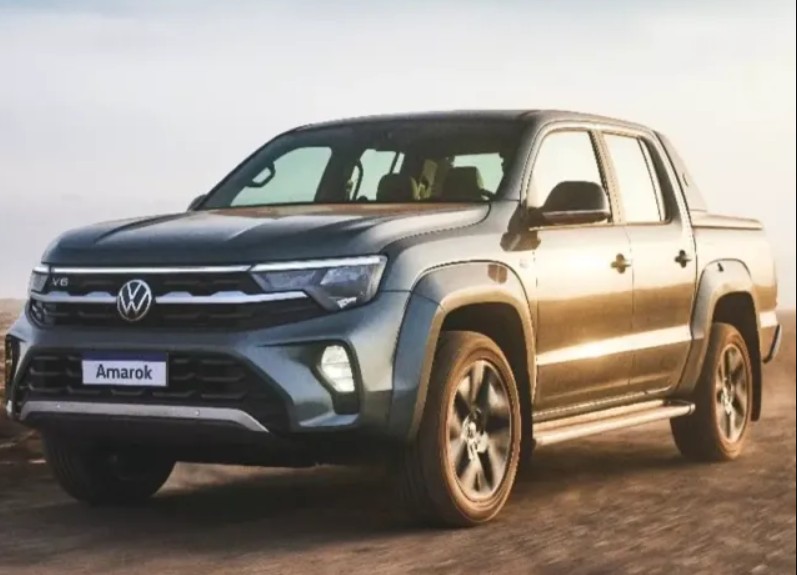
The Volkswagen Amarok Life sits in an interesting position. It is not the stripped-back workhorse at the bottom of the Amarok family, yet it does not wander into the expensive, luxury-focused territory occupied by higher trims. Instead, the Life aims for something many ute and pickup buyers actually want: a vehicle comfortable enough for everyday driving while remaining genuinely useful when there is work to be done.
That balance matters.
A pickup can have enormous towing figures, chunky tyres and enough off-road hardware to crawl across a mountain, but if we hate driving it to work every morning, those abilities start to feel a little academic. Likewise, a beautifully equipped dual-cab loses some of its appeal if we are afraid to put muddy boots inside it.
That is where the Amarok Life makes sense.
Depending on the country and model year, exact engines, equipment and option packages differ, so buyers should always check their local Volkswagen specification sheet. In markets such as Australia and the UK, however, Life has served as an important mid-range Amarok specification positioned below more premium versions such as Style, PanAmericana and Aventura.
So, is it the Amarok we should actually buy? Let's dig into the details.
Content in this publication
- What Is the Volkswagen Amarok Life?
- Volkswagen Amarok Life Engine and Performance
- Volkswagen Amarok Life 4x4 Capability
- Volkswagen Amarok Life Towing Capacity
- Volkswagen Amarok Life Payload
- Amarok Life Tray Dimensions
- Volkswagen Amarok Life Interior
- Technology in the Amarok Life
- Volkswagen Amarok Life Safety
- Volkswagen Amarok Life Size and Dimensions
- How Does the Amarok Life Drive?
- Volkswagen Amarok Life Fuel Economy
- Volkswagen Amarok Life vs Style
- Volkswagen Amarok Life vs Core
- Amarok Life Reliability and Ownership
- Advantages of the Volkswagen Amarok Life
- Potential Disadvantages of the Amarok Life
- Who Should Buy a Volkswagen Amarok Life?
- Is the Volkswagen Amarok Life Worth It?
- Volkswagen Amarok Life: Final Verdict
- Frequently Asked Questions About the Volkswagen Amarok Life
What Is the Volkswagen Amarok Life?
The Amarok Life is essentially the step where Volkswagen's pickup starts moving from purely functional transport toward something we could comfortably use as a family vehicle.
Think of the range like climbing a staircase. Entry-level versions focus heavily on value and utility. Move upward and we start getting more convenience, smarter cabin equipment and better styling. Eventually, the range reaches versions designed almost as lifestyle SUVs with cargo beds.
The Life lives near the middle of that staircase.
It retains the Amarok's fundamental toughness while adding enough everyday equipment to stop the cabin feeling like a mobile toolbox.
For many drivers, that is precisely where the value lies.
Where the Life Fits in the Amarok Lineup
The exact trim structure depends on location, but common current-generation Amarok names include:
- Amarok Core or entry-level equivalents
- Amarok Life
- Amarok Style
- Amarok PanAmericana
- Amarok Aventura
Volkswagen's Australian range, for example, has positioned the TDI500 Life above Core and below Style, while the UK catalogue similarly places Life beneath Style, PanAmericana and Aventura.
That positioning tells us quite a lot about the vehicle.
Life isn't intended to be the cheapest Amarok possible. Nor is it trying to impress us with every luxury feature Volkswagen can squeeze into a pickup.
It is designed to be useful first and pleasant second—with considerably more emphasis on "pleasant" than an entry model.
Volkswagen Amarok Life Engine and Performance
Engine specifications are one area where we need to be careful because Volkswagen sells different Amarok configurations across different markets.
In Australia, for example, the MY25 Amarok Life is marketed as the TDI500 Life, while Volkswagen's UK material has listed a four-cylinder 2.0-litre automatic Life configuration. Local availability can therefore differ significantly.
Rather than assuming every Amarok Life on the planet is identical, we should treat the trim name as an equipment level and confirm the actual engine before buying.
Does the Amarok Life Have Enough Power?
For most people, yes.
The Life is not necessarily the Amarok version we choose because we want the most dramatic engine in the catalogue. Higher trims in some markets gain access to stronger V6 powertrains.
Instead, the Life is about usable performance.
In daily driving, torque matters enormously in a pickup. We want the vehicle to pull confidently away from intersections, climb hills without feeling strained and maintain speed when carrying equipment or towing.
A strong turbo-diesel engine fits that job beautifully.
It behaves more like a heavy hammer than a delicate scalpel. We are not chasing high-rpm excitement; we want effortless shove when the vehicle is carrying weight.
Automatic Transmission
Modern Amarok Life variants are commonly paired with an automatic transmission, although specifications should again be checked by market.
The automatic suits the character of the vehicle particularly well.
Around town, it takes much of the effort out of piloting a large dual-cab. On highways, it allows the engine to settle into a relaxed rhythm. Off-road or while towing, the gearbox can manage ratios without asking the driver to constantly work a clutch.
For somebody using the Amarok both professionally and personally, that versatility matters more than a flashy badge.
Volkswagen Amarok Life 4x4 Capability
This is still an Amarok, not a crossover dressed in hiking boots.
Volkswagen promotes the current Amarok family with serious utility credentials, including four-wheel-drive systems, low-range capability on applicable versions and a locking rear differential depending on configuration. Its Australian material also quotes up to six selectable drive modes across the broader Amarok range.
What does that mean in everyday language?
It means the Amarok has been engineered to venture significantly farther from smooth pavement than an ordinary SUV.
Is the Amarok Life Good Off-Road?
For recreational off-roading, farm roads, gravel tracks, campsites and rough worksites, the Amarok Life can be very capable.
Its strengths go beyond simply sending power to four wheels.
The current-generation Amarok platform offers useful geometry and ground clearance. Volkswagen Australia's MY25 specifications list approximately 235 mm of ground clearance, an approach angle of 30 degrees, a departure angle of 25.6 degrees and an 800 mm wading depth across the listed Amarok range.
Those are meaningful figures.
An 800 mm quoted wading depth, for example, gives the Amarok useful potential for properly assessed water crossings, although no one should interpret a brochure figure as permission to charge blindly into a flooded road.
Water is unpredictable. Capability still needs judgment.
Tyres Can Matter More Than the Badge
Here is something easily overlooked: a Life on suitable all-terrain tyres may be more useful off-road than an expensive Amarok wearing road-biased rubber.
Tyres determine how effectively the truck puts its capability onto the ground.
If serious trails are part of our plans, tyre choice should be near the top of the upgrade list.
Volkswagen Amarok Life Towing Capacity
Towing is one of the main reasons buyers move from SUVs into dual-cab pickups, and the Amarok has traditionally taken this job seriously.
Volkswagen Australia's MY25 specification sheet lists a maximum 3,500 kg braked towing capacity for the Amarok Life when appropriately equipped, along with a 750 kg unbraked figure.
That gives it the numbers needed to compete with many major pickups in its segment.
But maximum towing capacity only tells part of the story.
Why Maximum Towing Capacity Isn't Everything
Suppose the brochure says 3,500 kg. Great.
Can we simply hook up a 3.5-tonne caravan, fill the tray with camping equipment, load five adults into the cabin and head for the mountains?
Not necessarily.
We also need to consider:
- Gross vehicle mass
- Gross combination mass
- Payload
- Tow-ball download
- Passenger weight
- Accessories
- Cargo
- Local towing regulations
Every kilogram matters.
The Amarok Life can be an excellent tow vehicle, but safe towing is mathematics rather than marketing.
Volkswagen Amarok Life Payload
Payload is equally important for anyone buying a pickup because they actually intend to use the bed.
Volkswagen Australia's MY25 specification sheet lists the Life with a calculated 920 kg payload based on kerb mass, although actual available payload changes with vehicle configuration and fitted accessories.
That distinction is important.
Add a canopy, bull bar, recovery equipment, drawers, passengers and a tow-ball load, and our usable capacity begins shrinking remarkably quickly.
Is the Amarok Life Suitable for Work?
Absolutely—particularly for tradespeople who want one vehicle to perform multiple roles.
The Life can make sense for:
- Construction supervisors
- Electricians
- Plumbers
- Agricultural users
- Mobile technicians
- Small-business owners
- Caravan owners
- Recreational 4x4 drivers
It feels less spartan than a basic fleet ute while remaining practical enough that we do not need to treat it like fine furniture.
That middle ground is its strongest argument.
Amarok Life Tray Dimensions
Pickup beds live or die by practicality.
For the Australian MY25 Amarok range, Volkswagen lists a tray measuring approximately 1,544 mm long, 1,224 mm wide and 529 mm deep.
Volkswagen also highlights the Amarok's ability to accommodate a Euro pallet in the tray.
That is not merely a marketing trivia point. It demonstrates how the bed has been designed around genuine cargo usability.
Living With the Bed Every Day
Measurements only tell us so much.
What matters is how the tray fits our lifestyle.
Throwing in work tools? Easy.
Mountain bikes? No problem with the right rack or mounting system.
Camping equipment? Plenty of possibilities.
Furniture from the local store that seemed much smaller inside the showroom? That is exactly when owning a pickup suddenly feels brilliant.
You may be interested in reading VW Amarok vs Ford Ranger 2025: Which Pickup Is the Better Buy?
Add a tonneau cover or canopy and the Amarok Life becomes even more versatile.
Volkswagen Amarok Life Interior
The interior is one of the biggest reasons someone might choose Life over an entry-level Amarok.
Modern pickups are no longer expected to feel like agricultural equipment with number plates. Buyers want comfortable seats, useful storage, large displays and smartphone connectivity.
The Amarok embraces that expectation.
Volkswagen promotes the broader current-generation model with digital instrumentation and touchscreen infotainment, alongside smartphone integration technologies such as Apple CarPlay and Android Auto, although screen sizes and individual features vary by specification.
Does It Feel Like a Volkswagen Inside?
Yes and no.
There is recognizable Volkswagen design thinking, but the Amarok is a rugged commercial vehicle, so we should not expect every surface to feel as plush as one in a premium passenger SUV.
Some hard plastics are perfectly reasonable here.
In fact, they make sense.
When we climb aboard with dusty trousers, muddy shoes or wet camping gear, easy-to-clean surfaces suddenly seem much more intelligent than delicate materials.
Front-Seat Comfort
A pickup can have enormous towing capacity and brilliant off-road hardware, but uncomfortable seats will make a five-hour highway trip feel like twelve.
The Amarok's more lifestyle-oriented cabin design helps here.
The elevated seating position gives the driver a commanding view, while generous cabin dimensions make the truck feel substantial.
The key question for buyers should be whether the specific Life version available locally includes the seat adjustment and climate-control features they expect.
Rear-Seat Space
As with most double-cab pickups, rear-seat comfort is good but not limousine-like.
Adults can travel in the rear, and children should have plenty of space, but anyone routinely carrying four large adults over long distances should sit in the back before signing a purchase agreement.
Never buy a dual-cab purely from the driver's seat.
Technology in the Amarok Life
Technology can make or break a modern pickup.
A giant touchscreen looks impressive in photographs, but usability matters more. When we are bouncing down a dirt road, tiny digital controls become considerably less charming.
The Amarok combines modern displays with the connectivity expected from a current vehicle.
Features vary by country and model year, but equipment available across the Amarok family includes digital instrumentation, large infotainment displays, smartphone connectivity and driver-assistance technologies.
The Right Amount of Technology
This is another reason we like the concept behind the Life trim.
Many buyers do not need every electronic feature in the catalogue.
What we usually want is:
- Easy phone connectivity
- Clear navigation or smartphone mapping
- A reversing camera
- Useful driver information
- Effective air conditioning
- Convenient charging
- Sensible safety assistance
Life aims closer to that practical sweet spot.
Volkswagen Amarok Life Safety
Safety has become increasingly important in the pickup segment because these vehicles often double as family cars.
Volkswagen Australia highlights nine airbags and a five-star ANCAP safety rating for the current Amarok range.
Again, specific assistance systems should be checked against the specification sheet for the model year and country being considered.
Driver-Assistance Features
Modern Amarok variants can offer technology designed to assist with lane positioning, speed management, parking, towing and collision avoidance.
Some buyers initially dismiss these systems as unnecessary electronic interference.
Then they spend three hours on a motorway after a long working day.
At that point, well-calibrated assistance can feel less like a gimmick and more like an invisible second pair of eyes.
Volkswagen Amarok Life Size and Dimensions
The Amarok is a large vehicle.
Volkswagen Australia's MY25 figures list overall dimensions of roughly 5,350 mm in length, 2,208 mm wide including mirrors, 1,886 mm tall and a 3,270 mm wheelbase.
Those measurements create two completely different personalities.
On an open road, the Amarok feels planted and substantial.
Inside a tight city car park, it can feel like we have brought a fishing boat into a bathtub.
Is the Amarok Life Easy to Park?
"Easy" is relative.
Compared with another modern dual-cab pickup, it is manageable.
Compared with a Volkswagen Golf? Definitely not.
Volkswagen lists a roughly 12.8-metre turning circle in its Australian specifications.
Parking sensors and cameras therefore become genuinely useful rather than merely decorative features.
Before buying one, we should measure our garage as carefully as we examine the engine specifications.
How Does the Amarok Life Drive?
One of the most important characteristics of a modern Amarok is how little it asks us to sacrifice during normal driving.
It remains a body-on-frame pickup, and physics cannot be negotiated away. An unloaded rear end will never behave exactly like the suspension of a soft family crossover.
But that does not mean it has to ride like a wheelbarrow.
Around Town
In urban driving, the Amarok's biggest challenge is size rather than performance.
Its elevated driving position gives us excellent visibility ahead, and an automatic gearbox takes stress out of stop-start traffic.
Narrow parking structures are another story.
We become very aware of the mirrors.
After a few weeks, though, drivers usually adapt to the truck's dimensions and begin positioning it almost subconsciously.
On the Highway
This is where the Amarok Life begins making a compelling case for itself.
A long wheelbase contributes to a settled highway character, while diesel torque suits relaxed cruising and overtaking.
If our routine includes long distances between cities or towing a caravan on holiday, the Amarok feels far more at home than it might while squeezing between compact cars downtown.
On Rough Roads
Gravel is where a pickup starts earning its keep.
The Amarok's ground clearance, robust drivetrain and four-wheel-drive hardware mean that badly surfaced roads become far less intimidating.
That does not mean potholes magically disappear.
It means we can approach rough terrain with the confidence that the vehicle was designed with those conditions in mind.
Volkswagen Amarok Life Fuel Economy
Fuel consumption is understandably a big concern.
A large dual-cab pickup carries significant weight, pushes plenty of air and often operates with four-wheel-drive hardware. No amount of engineering turns that recipe into the fuel consumption of a small hatchback.
Official numbers also vary by engine, transmission, testing standard and region.
For that reason, buyers should compare the official figure attached to the exact Life configuration they are considering rather than assuming one global MPG or L/100 km number applies everywhere.
What Affects Real-World Consumption?
Real-world fuel use can change dramatically because of:
- Heavy towing
- Roof racks
- Bull bars
- Oversized tyres
- Constant city traffic
- Short trips
- Aggressive acceleration
- High motorway speeds
- Payload
- Off-road driving
A roof-top tent may transform the Amarok into an adventure machine, but aerodynamically it can resemble driving around with a small shed strapped above our heads.
Everything has a cost.
Volkswagen Amarok Life vs Style
This may be the comparison that matters most.
Should we save money with the Life or spend more on the Style?
The answer depends less on capability than on what we value inside the cabin.
Style variants generally move toward more sophisticated technology, trim and appearance. For example, Volkswagen Australia's current Amarok Style specification highlights equipment such as a 12.3-inch Digital Cockpit, 12-inch infotainment display, 360-degree camera, enhanced lighting and upgraded interior treatment.
Choose the Amarok Life If...
Life is likely the better match when we:
You may be interested in readingVW Amarok vs Ford Ranger 2025: Which Pickup Is the Better Buy?You may be interested in reading
Volkswagen Amarok vs Toyota Hilux: Which Pickup Is Better?- Prioritize value
- Want strong towing ability
- Need genuine 4x4 capability
- Prefer useful equipment over luxury
- Regularly carry dirty or bulky equipment
- Want an Amarok that can serve work and family duties
Choose the Amarok Style If...
Style becomes more tempting when we:
- Spend many hours commuting
- Want higher-grade interior materials
- Value larger displays
- Want more parking technology
- Prefer a more premium visual appearance
- Don't mind paying extra for convenience
There is no wrong answer.
The trick is recognizing which upgrades we will actually notice six months after buying the vehicle.
Volkswagen Amarok Life vs Core
Moving in the opposite direction gives us another interesting question.
Why not simply buy the cheaper entry version?
For pure work use, that can be sensible.
If the vehicle spends every weekday transporting tools between construction sites, extra luxury equipment may deliver little value.
Life starts making more sense when our Amarok also needs to become the household car after 5 p.m.
The extra comfort features may seem optional on the showroom floor but become much more important after thousands of kilometres.
Amarok Life Reliability and Ownership
Reliability cannot be reduced to a trim badge.
The Life shares major mechanical architecture with other versions using the same engine and drivetrain. What matters more is maintenance history, operating conditions, modifications and how the vehicle has been treated.
A carefully maintained Amarok that has spent its life cruising highways is a very different used-car proposition from one that has spent years towing near maximum capacity through dust and mud.
Maintenance Matters
If we want an Amarok to last, routine maintenance should not be treated like an optional subscription.
Oil changes, filters, transmission servicing, brake inspections, cooling-system maintenance and drivetrain checks all matter.
Owners who tow or regularly drive off-road should be particularly disciplined.
Dust, heat and heavy loads are relentless.
Used Amarok Life Buying Tip
When shopping second-hand, inspect the accessories as closely as the truck.
A heavily modified pickup can be excellent—but modifications may also reveal how it has been used.
Look underneath.
Scrapes, damaged protection panels, poorly installed wiring and mud packed into awkward areas often tell a more interesting story than a freshly polished bonnet.
Advantages of the Volkswagen Amarok Life
The appeal of the Life becomes clearer when we stop looking at individual features and consider the overall package.
Its biggest advantages are balance, capability and flexibility.
We get a vehicle capable of serious towing and cargo work without automatically jumping to the expensive end of the range.
It also looks and feels modern enough that driving it every day does not seem like a compromise.
In many ways, the Life is the Amarok that understands what real buyers actually do.
We commute.
We carry children.
We tow.
We visit building sites.
We buy furniture.
We go camping.
Sometimes all with the same vehicle.
Potential Disadvantages of the Amarok Life
No vehicle is perfect, and the Amarok Life has compromises worth considering.
First, it is large.
Drivers living in dense cities may quickly discover that underground garages and narrow parking bays were not designed with a 5.35-metre pickup in mind.
Second, running costs will naturally exceed those of a smaller SUV or car.
Tyres are larger. Fuel consumption is higher. Insurance may cost more. Maintenance involves a substantial four-wheel-drive vehicle.
Finally, buyers tempted by luxury equipment may eventually wish they had stretched to Style or another higher specification.
That is why the Life should be bought deliberately, not merely because it sits in the middle of the price list.
Who Should Buy a Volkswagen Amarok Life?
The ideal Amarok Life owner wants one vehicle that refuses to stay in a single category.
It is particularly well suited to somebody who needs genuine pickup capability but does not want a bare-bones commercial vehicle.
Tradespeople may appreciate its practicality.
Families may appreciate the double-cab layout.
Campers may value the four-wheel-drive hardware.
Caravan owners may focus on towing ability.
And somebody who simply likes driving a substantial, capable truck may enjoy all of those qualities even without using them every weekend.
Who Should Look Elsewhere?
The Amarok Life probably isn't ideal if our priorities revolve around:
- Maximum fuel economy
- Small exterior dimensions
- Sports-car handling
- Seven-seat practicality
- Extremely soft suspension
- Luxury above utility
A pickup is inherently a compromise.
The clever part is choosing one whose compromises align with our lifestyle.
Is the Volkswagen Amarok Life Worth It?
For the right buyer, yes.
The Volkswagen Amarok Life makes a convincing argument because it avoids both extremes of the pickup market.
It is not excessively basic.
It is not excessively luxurious.
Instead, it gives us much of what makes the Amarok attractive—strong utility, serious towing capability, useful off-road credentials, a modern cabin and genuine everyday comfort—without requiring us to climb immediately into the highest-priced versions.
That makes it particularly interesting for buyers who intend to keep their vehicle for several years.
A fancy trim feature might entertain us for the first month.
A comfortable seat, useful payload, good towing ability and dependable four-wheel-drive capability can matter every single day.
Volkswagen Amarok Life: Final Verdict
The Amarok Life may not be the version that dominates showroom posters, but that is almost part of its charm.
Higher-spec Amaroks naturally attract attention with bigger wheels, richer interiors and more dramatic styling. Entry versions appeal to buyers focused almost entirely on price and utility.
Life quietly occupies the territory between them.
And for many of us, that middle ground is exactly where the smartest purchase lives.
It can head to a job site during the week, swallow camping equipment on Friday evening, tow a trailer on Saturday and carry the family to lunch on Sunday.
Few vehicles change personalities that easily.
Before buying, we should still compare the Life against adjacent Amarok trims and verify the exact engine, safety equipment, towing specifications and standard features offered in our country, because Volkswagen's specifications vary between markets and model years.
But judged as a concept, the Volkswagen Amarok Life gets the formula remarkably right.
It is not the Amarok with everything.
It may simply be the Amarok with enough of everything.
Frequently Asked Questions About the Volkswagen Amarok Life
1. What is the Volkswagen Amarok Life?
The Volkswagen Amarok Life is a mid-range version of the Amarok pickup positioned between more work-oriented entry models and premium trims such as Style, PanAmericana and Aventura in markets where those grades are offered. It combines practical pickup capability with additional comfort and technology.
2. How much can a Volkswagen Amarok Life tow?
Towing capacity depends on the country and exact configuration. As one current example, Volkswagen Australia's MY25 specification lists the Amarok Life with a maximum 3,500 kg braked towing capacity when properly equipped. Buyers should verify their vehicle's plate, owner's manual and local specification before towing.
3. Is the Amarok Life good for off-road driving?
Yes. Its four-wheel-drive hardware, useful ground clearance and pickup-oriented chassis make it suitable for gravel roads, worksites and recreational off-roading. Australian specifications quote 235 mm of ground clearance and an 800 mm wading depth for the MY25 range, though safe operation always depends on terrain, tyres, conditions and driver judgment.
You may be interested in readingVW Amarok vs Ford Ranger 2025: Which Pickup Is the Better Buy?You may be interested in reading
Volkswagen Amarok vs Toyota Hilux: Which Pickup Is Better?You may be interested in reading
Volkswagen Amarok vs Mercedes X Class: Which Premium Pickup Wins?4. Is the Amarok Life better than the Amarok Style?
Not necessarily better—just aimed at a different buyer. Life generally focuses more heavily on value and practical equipment, while Style adds additional technology, cabin refinement and visual upgrades. Buyers who prioritize capability over luxury may find Life offers the stronger value proposition.
5. Is the Volkswagen Amarok Life a good family vehicle?
It can be. The double-cab layout, modern safety equipment, infotainment and comfortable highway manners make the Amarok Life far more family-friendly than traditional work pickups. However, its large exterior dimensions, running costs and pickup-style rear suspension mean buyers should compare it with an SUV if passenger comfort is their main priority.
If you want to know other articles similar to Volkswagen Amarok Life: The Sweet Spot in the Amarok Range? you can visit the category Models.
How to Identify Your Ford Fiesta Model
Toyota RAV4 Engine Oil Capacity: Complete Guide

Vauxhall Corsa Models: Complete Guide to Generations, Trims and Versions (1993–2026)
Kia Sportage Trim Levels: Complete 2027 Comparison
Toyota Corolla Cross vs RAV4: Which SUV Is Better?
Haval Jolion vs Omoda C5: Which SUV Is Better?
Leave a Reply
More content of your interest